
Key Takeaways
1. The ThinkPad P16v Gen 3 features a Core Ultra 7 255H and Nvidia RTX PRO 2000, providing solid performance for professional software despite being lower in Lenovo’s lineup.
2. Priced around €2,800, the RTX PRO 2000’s performance is limited due to Lenovo choosing a 60W version, resulting in about 30% lower performance compared to the consumer GeForce RTX 5060.
3. The workstation’s cooling system is relatively weak, capping total CPU and GPU consumption at 80 Watts, which is disappointing for a 16-inch chassis.
4. In comparison, the Lenovo Legion 7 16 gaming laptop can handle up to 145 Watts, offering significantly better performance under load.
5. While the RTX PRO 2000 comes with certified drivers ensuring stability for professional software, its higher price may not justify the performance differences compared to consumer GPUs.
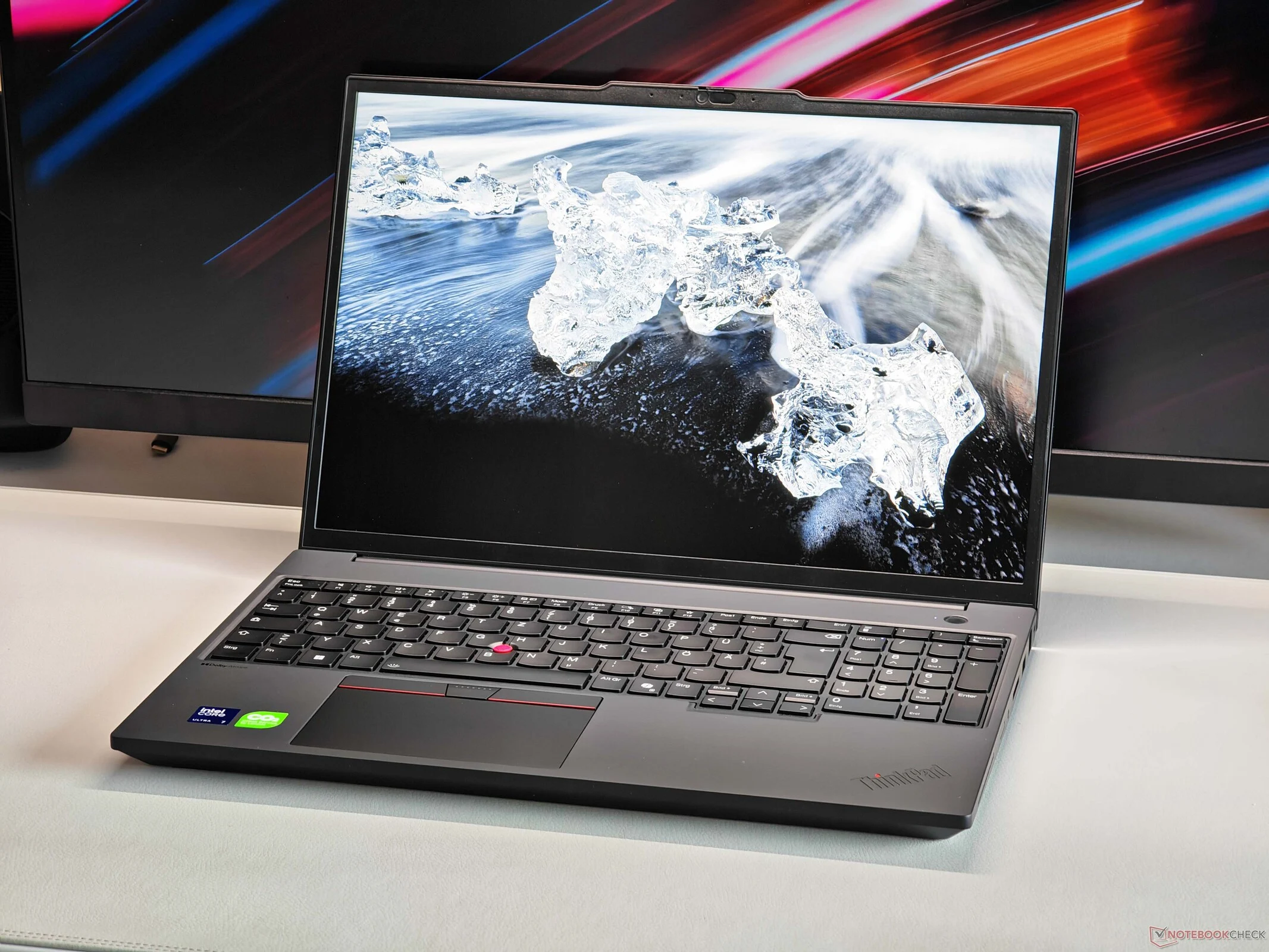
We recently took a close look at the ThinkPad P16v Gen 3 mobile workstation, which is positioned lower than both the ThinkPad P16 and the ThinkPad P1 in Lenovo’s lineup. This positioning means we miss out on the most powerful hardware, but the combo of the Core Ultra 7 255H and the Nvidia RTX PRO 2000 (from the Blackwell Generation) still packs a punch. Notably, the professional GPU stands out because it comes with certified drivers, ensuring stability and reliability for professional software like AutoDesk, Adobe, Blender, Dassault Systems, and Siemens Digital Industries Software.
Pricing Overview
Our review unit of the ThinkPad P16v Gen 3 is priced at approximately €2,800, which isn’t exactly a steal, and the inclusion of the RTX PRO 2000 contributes to that cost. However, a closer look at the GPU’s performance might reveal that Lenovo has opted for the 60W version of the RTX PRO 2000, even though it has a TGP limit of 115 Watts. In our tests, we compared the RTX PRO 2000 with the 115W version of the consumer GeForce RTX 5060 (which shares the same specs), and we found that the raw performance of the consumer GPU is roughly 30% higher. This indicates that while you pay full price for the RTX PRO 2000, you don’t get the complete performance.
Cooling Concerns
One of the main issues here is the relatively weak cooling system. Under combined workloads, the CPU and GPU are limited to a total consumption of 80 Watts, which is disappointing given the large 16-inch chassis. For reference, the Lenovo Legion 7 16 gaming laptop, equipped with a much more powerful processor and the 115W version of the GeForce RTX 5060, can manage up to 145 Watts—almost double what the pricier ThinkPad P16v Gen 3 can handle. While we acknowledge that the Legion is noisier under load, the performance difference remains significant.
Leave a Reply