Tag: Xiaomi

  • HyperOS 3 Stable Update Coming Soon for Xiaomi and Redmi Devices

    HyperOS 3 Stable Update Coming Soon for Xiaomi and Redmi Devices

    Key Takeaways

    1. Xiaomi is set to launch HyperOS 3, based on Android 16, with a clear roadmap for updates for various models.
    2. New “stable beta” versions of HyperOS 3 have been identified for at least 14 devices, indicating readiness for the final update.
    3. Users in the beta program can expect the stable beta update soon; public rollout notifications will follow for others.
    4. Currently, stable beta builds are available for three global devices, with more models expected to receive updates shortly.
    5. The stable HyperOS 3 update is projected to roll out for additional devices between October and November.


    When a company holds one of the largest and most varied smartphone line-ups in the market, providing Android updates becomes quite a challenge. Nevertheless, Xiaomi has done a great job keeping us informed about its upcoming HyperOS 3, the latest software release based on Android 16. The Chinese manufacturer has already released a complete roadmap showing which models—both in China and worldwide—will receive the update, and it looks like the official stable version might be just around the corner for the first set of phones and tablets.

    New Builds for Various Devices

    Recently, new “stable beta” HyperOS 3 versions have been identified for at least 14 devices, which includes the Xiaomi 15 series, Xiaomi Pad 7 Pro, Redmi K80, and Redmi Turbo 4 Pro. The term stable beta usually suggests that the software has achieved a satisfactory level of stability. If no significant problems are discovered, this same version could be made public as the final update, which XiaomiTime believes might occur as soon as next week.

    Upcoming Updates for Users

    For those who have already signed up for the beta program, the stable beta update should arrive shortly. If you haven’t joined yet, keep an eye out for an OTA notification in the next few weeks, since the public rollout is likely imminent.

    More Devices to Come

    Currently, stable beta builds have only been seen for three global devices: the Xiaomi 15 Ultra, Xiaomi 15, and Redmi Pad 7 Pro. However, it is anticipated that more devices will soon follow, including the Redmi Note 14 series, Xiaomi Mix Flip, POCO F7 series, POCO X7 lineup, and Xiaomi Pad Mini. All these devices are confirmed to receive the stable HyperOS 3 update sometime between October and November.

    Source:
    Link


  • Xiaomi Redmi Note 15 Pro 5G Global Launch: Key Upgrades Revealed

    Xiaomi Redmi Note 15 Pro 5G Global Launch: Key Upgrades Revealed

    Key Takeaways

    1. The Redmi Note 15 Pro is set for international launch a few months after its initial unveiling in China on August 21.
    2. Xiaomi plans to offer both 4G and 5G versions of the Redmi Note 15 series for global markets.
    3. The phone features a MediaTek Dimensity 7400 Ultra processor, a 7,000 mAh battery, and a 50 MP main camera (Sony LYT-600).
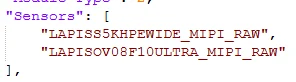
    4. The Redmi Note 15 Pro 5G will use the same Samsung ISOCELL S5KHPE camera sensor as the Redmi Note 15 Pro Plus.
    5. The global version may differ from the Chinese model, with additional details on pricing and availability yet to be announced.


    The Redmi Note 15 Pro is expected to be a few months away from its international launch. Xiaomi plans to introduce 4G versions of the Redmi Note 15 series, which suggests that the name ‘5G’ will likely be added to the standard Redmi Note 15 Pro when they start selling it outside of China.

    Specifications Overview

    The Redmi Note 15 Pro was unveiled in Xiaomi’s home country on August 21. It features a MediaTek Dimensity 7400 Ultra processor, a robust 7,000 mAh battery, and a Sony LYT-600, which acts as its 50 MP main camera. Initial firmware insights indicate that the global model of the Redmi Note 15 Pro might differ from its current Chinese version upon its release.

    Camera Features

    Earlier this month, similar details about the Redmi Note 15 Pro Plus surfaced. According to PaperKing13, the Redmi Note 15 Pro 5G will utilize the same Samsung ISOCELL S5KHPE camera sensor found in the Redmi Note 15 Pro Plus, setting it apart from the already available Redmi Note 14 Pro 5G (currently priced at $309 on Amazon).

    Future Innovations

    Sadly, advancements in camera technology may not go much further. On X, PaperKing13 mentioned that the OmniVision OV08F will be making a comeback from the Redmi Note 14 Pro 5G, featuring an 8 MP ultra-wide-angle lens. Likewise, the Redmi Note 15 Pro 5G will be equipped with a new 200 MP primary camera alongside a 20 MP front-facing camera. However, the complete details on global pricing and availability are still uncertain at this time.

    Source:
    Link


  • Xiaomi Pad 8 and Pad 8 Pro Global Release Confirmed

    Xiaomi Pad 8 and Pad 8 Pro Global Release Confirmed

    Key Takeaways

    1. Xiaomi is launching the Redmi Note 15 series globally after its debut in China, including the Redmi Note 15, Redmi Note 15 Pro, and Redmi Note 15 Pro Plus.
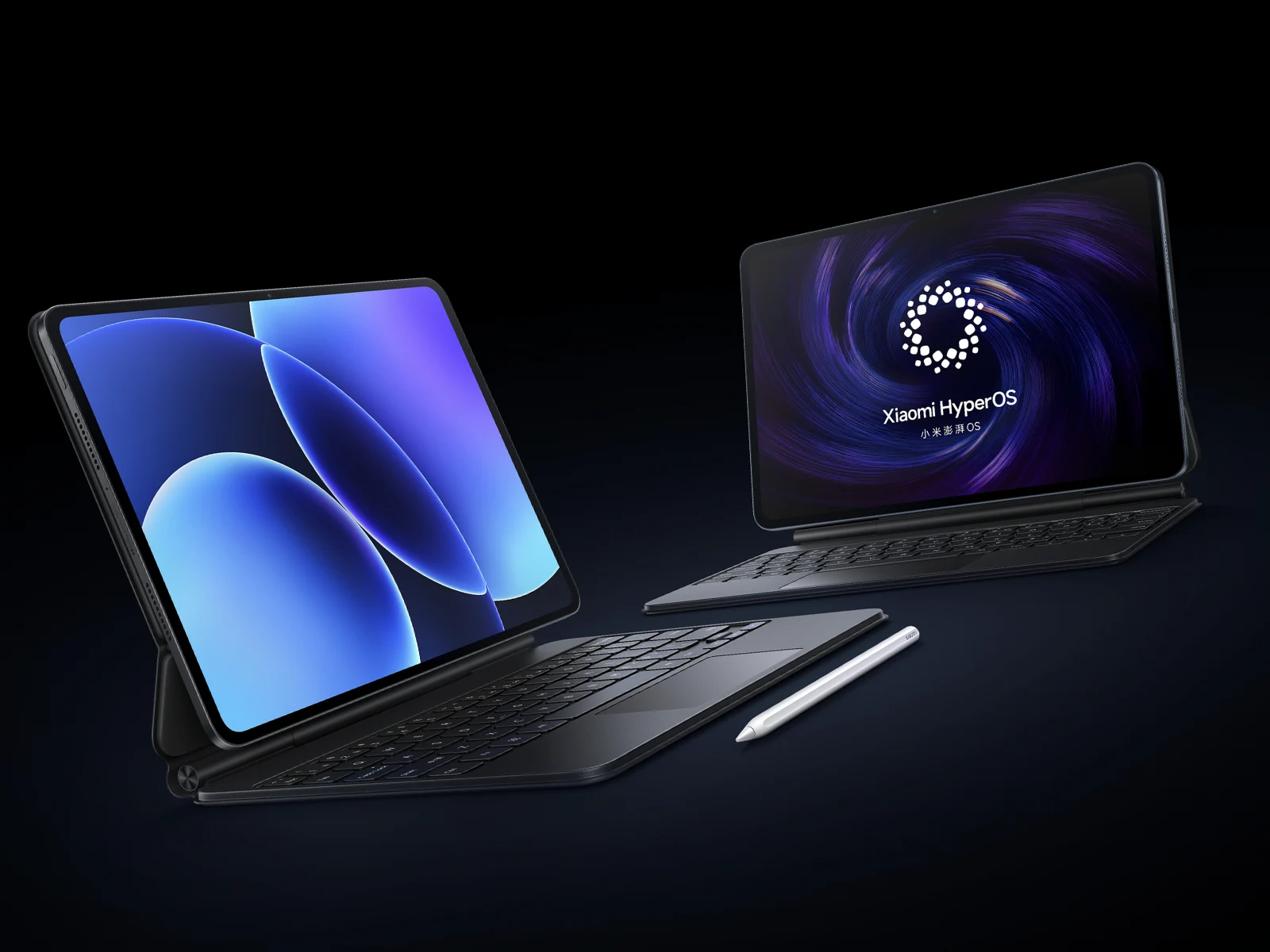
    2. The new high-end Android tablets, Pad 8 and Pad 8 Pro, were announced in China and will replace the Pad 7 series.
    3. Model numbers for the Pad 8 series have been confirmed, with the Pad 8 linked to model number 25097RP43 and the Pad 8 Pro to 25091RP04.
    4. Regulatory listings in Singapore and India indicate preparations for a global release of the Pad 8 series tablets.
    5. There is no official announcement on global release dates for the Pad 8 series, but previous models suggest a potential wait until March 2026.


    Xiaomi is all set to launch the Redmi Note 15 series worldwide after revealing the Redmi Note 15, Redmi Note 15 Pro, and Redmi Note 15 Pro Plus in China last month. In addition, it appears that the company is also gearing up to release its new high-end Android tablets outside of China.

    New Tablets Unveiled

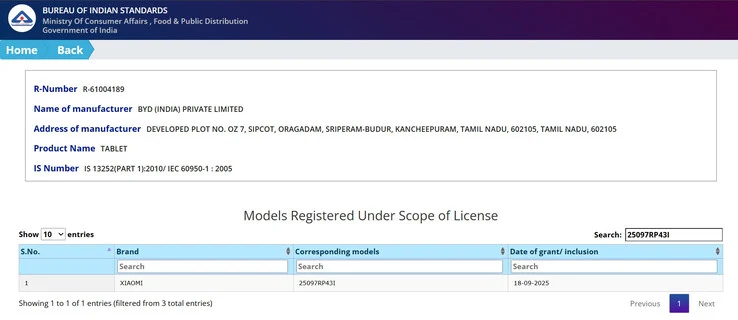
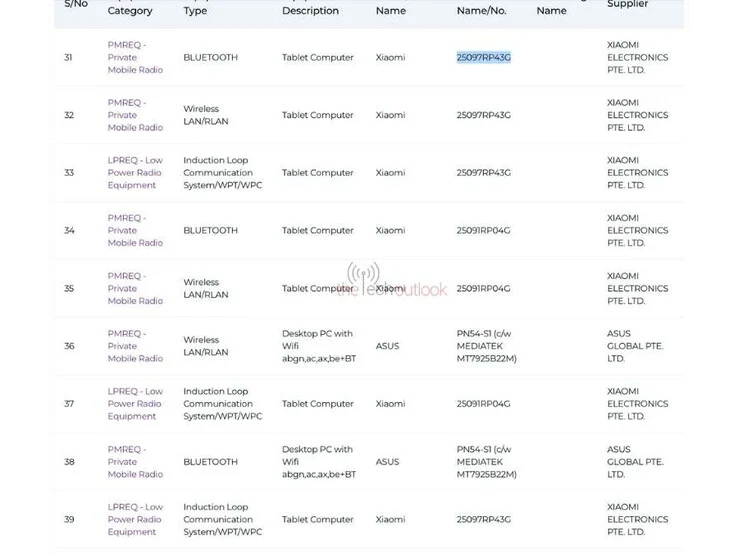
    The Pad 8 and Pad 8 Pro were announced in China yesterday and will replace the Pad 7 and Pad 7 Pro (currently priced at $599 on Amazon), which Xiaomi released globally around six months ago. Recently, the Pad 8 models have been spotted on the Infocomm Media Development Authority (IMDA) registry in Singapore, bearing the model numbers 25097RP43G and 25091RP04G. Furthermore, the first model has also been listed in the Bureau of Indian Standards’ database, but under the model number 25097RP43I.

    Model Numbers Confirmed

    While neither regulatory body discloses the retail names of these tablets, pre-launch leaks have made it clear that ‘25097RP43’ is the model number that corresponds to the Pad 8. On the other hand, 25091RP04 is associated with the Pad 8 Pro, with the letters C, G, or I added to indicate Chinese, global, or Indian versions, respectively.

    At this moment, Xiaomi has not made any statements regarding the global release dates for the Pad 8 series tablets. If we look at the Pad 7 series, fans might have to wait until MWC 2026 in March 2026. In the meantime, importers have already begun to sell the Pad 8 Pro worldwide, and we have provided comprehensive details separately.

    Source:
    Link


  • Xiaomi BE10000 Pro: WiFi 7 Router with 10,024 Mbps & NAS Feature

    Xiaomi BE10000 Pro: WiFi 7 Router with 10,024 Mbps & NAS Feature

    Key Takeaways

    1. Xiaomi is expanding its product lineup beyond smartphones and tablets, now including networking solutions like the BE10000 Pro WiFi 7 router.
    2. The BE10000 Pro targets demanding users with high-speed capabilities, featuring two 10 Gbps Ethernet ports and four 2.5 Gbps ports.
    3. Wireless performance reaches up to 10,024 Mbps, supported by twelve internal antennas and AI for traffic prioritization.
    4. The router allows for extensive connectivity, supporting up to 300 devices via Bluetooth and network storage options with M.2 SSD or USB drives.
    5. The BE10000 Pro is priced around $240 in China, with potential for higher pricing in global markets.


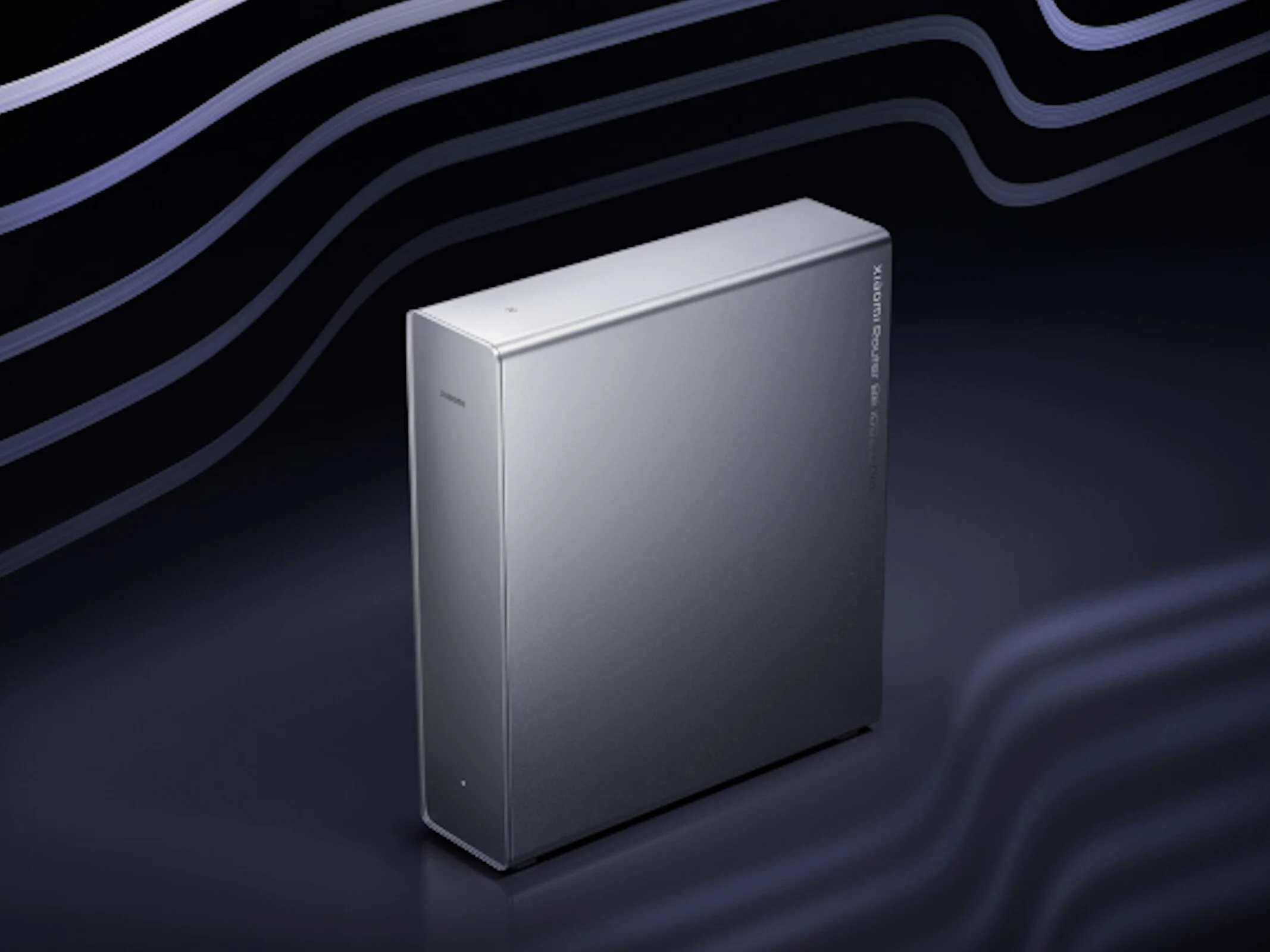
    Xiaomi is well-known for its smartphones and tablets, but the brand also operates in several other areas, such as smart home gadgets and accessories. Additionally, the company offers networking solutions. The latest addition to its lineup is the BE10000 Pro, a new WiFi 7 router, although information about its global availability is still unclear.

    Targeting Demanding Users

    Clearly, the Xiaomi BE10000 Pro is designed for users with high demands. It features two Ethernet ports that support a whopping 10 Gbps for wired connections, along with four more ports that offer 2.5 Gbps. Many homes still use traditional Gigabit Ethernet, and to take full advantage of these impressive speeds, there shouldn’t be any slowdowns. For instance, a standard HDD-based NAS may struggle to keep up with such high data transfer. The Xiaomi BE10000 Pro can also function as network storage, allowing for an M.2 SSD installation. Alternatively, users can share files from a USB drive within the network.

    Impressive Wireless Performance

    The wireless data transfer capabilities peak at 10,024 Mbps. It’s important to note that these figures are cumulative across all bands and devices connected. The router comes with twelve antennas neatly tucked away inside the chassis, moving away from the traditional external antenna design. Customers can expect a more attractive look from this WiFi 7 router. Moreover, it is equipped with AI that aims to prioritize specific traffic, potentially enhancing connections to PCs for lower latency during online gaming. Bluetooth connectivity allows for up to 300 devices to connect to the smart home network through the WiFi 7 router. In China, the BE10000 Pro is priced around $240, but the MSRP could be higher if it becomes available in other markets.

    Conclusion

    In summary, Xiaomi continues to expand its reach beyond smartphones and tablets by introducing innovative products like the BE10000 Pro. With its cutting-edge features and design, this router is tailored for tech-savvy users seeking high-performance networking solutions.

    Source:
    Link


  • HyperOS 3 Beta Now Available for 12 More Xiaomi and Redmi Phones

    HyperOS 3 Beta Now Available for 12 More Xiaomi and Redmi Phones

    Key Takeaways

    1. Xiaomi has launched the HyperOS 3 beta program for select Xiaomi and Redmi devices, inviting users to test the software ahead of its official release.
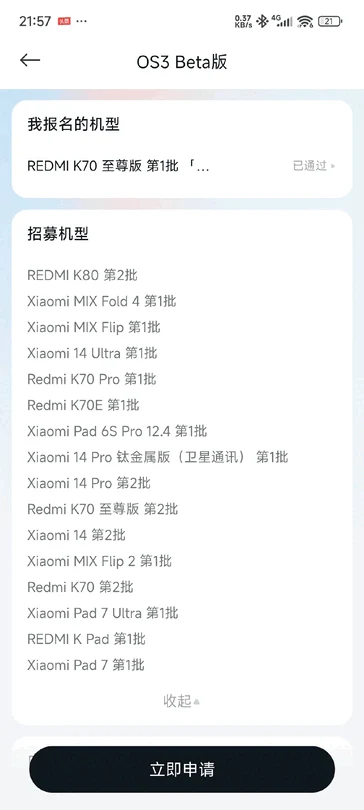
    2. Eligible devices include the Xiaomi 14 series, MIX Flip, Redmi K70 series, and Xiaomi Pad 6S Pro, currently limited to Chinese models.
    3. Users can apply for the beta program through the Xiaomi Community app, with testers divided into two groups for access timing.
    4. The stable version of HyperOS 3 is expected to be released in November for various devices in China and globally.
    5. Participants are advised to back up their devices completely and follow instructions before applying for the beta program.


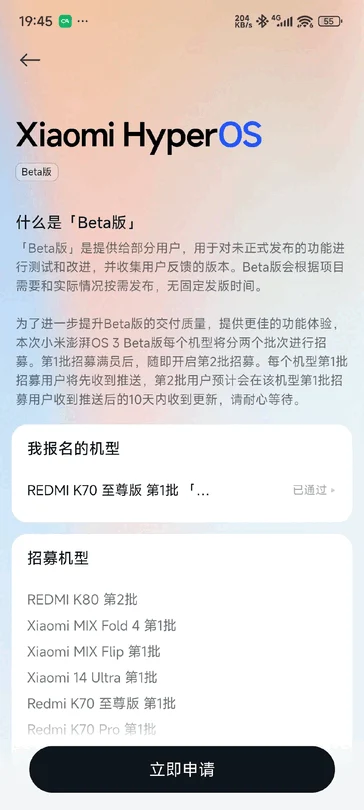
    Xiaomi has just launched the HyperOS 3 beta program for a new group of Xiaomi and Redmi devices, giving some users the chance to test the latest software ahead of its official release. This time, the company is inviting users who own the Xiaomi 14 series, MIX Flip, Redmi K70 series, and Xiaomi Pad 6S Pro to experience an early version of HyperOS 3, which is based on Android 16. Participants will help the development team fix any major glitches or problems before the stable version is rolled out.

    Devices Eligible for Testing

    The current closed beta is limited to Chinese models, but it will likely expand to global versions soon. Xiaomi has already begun beta tests for international models, including the Xiaomi 14 Ultra, Xiaomi 14T, POCO F7, Redmi 15C, and POCO C85, suggesting that a broader release is on the horizon.

    If you own one of the devices mentioned above with a China ROM and are interested in HyperOS 3, you will need to apply for a spot in the program through the Xiaomi Community app. Testers will be selected in two groups for each device; those in the first group will gain immediate access to the update, while second group testers may have to wait for up to 10 days. It’s important to follow the provided instructions and back up your device completely before proceeding.

    Stable Release Timeline

    The stable version of HyperOS 3 is expected to be released in November for the Xiaomi 14 series, MIX Fold 4, MIX Flip, and Redmi K70 devices in China. For global models, including the Xiaomi 14 family, the POCO F6 Pro (which is a rebranded Redmi K70), the POCO X6 Pro (a rebadged Redmi K70E), and the Xiaomi Pad 6S Pro 12.4, the rollout will also take place in November, with the full deployment expected to continue into December.

    Source:
    Link


  • Affordable Redmi Bluetooth Speaker 2: Compact & Water-Resistant

    Affordable Redmi Bluetooth Speaker 2: Compact & Water-Resistant

    Key Takeaways

    1. Compact and Lightweight Design: The Redmi Bluetooth Speaker 2 is small and easy to carry, making it portable for various settings.

    2. Multiple Playback Options: It supports Bluetooth 5.3, microSD card playback, and wired connection via USB-C for versatile music listening.

    3. Long Battery Life: The speaker features a 1,000 mAh battery, offering up to 5 hours of playtime on a single charge.

    4. Durability and Outdoor Features: With an IP67 water-resistance rating and a removable buckle for attachment, it’s well-suited for outdoor use.

    5. Affordable Pricing: Launched in China at CNY 99 (about $14), it offers budget-friendly access to quality audio.


    The Redmi Bluetooth Speaker 2 is a fresh entry into Xiaomi’s expanding range of gadgets. This budget-friendly wireless speaker boasts a small and light form factor, but Xiaomi asserts that it provides comprehensive audio thanks to its dual-driver setup.

    Various Playback Options

    In addition to wireless streaming via Bluetooth 5.3, the Redmi Bluetooth Speaker 2 can also play music from a microSD card. Users have the option of wired playback through the USB-C connection, which allows for use of the speaker even if the battery is running low.

    Impressive Battery Life

    The speaker is powered by a 1,000 mAh battery, promising up to 5 hours of use on a single charge. There’s also the option to link two of these speakers together for a stereo sound experience, which is said to be ideal for outdoor gatherings.

    Handy Features and Durability

    Similar to other portable speakers, such as the JBL Clip 5 (curr. $69.95 on Amazon), this model includes an easy-to-remove buckle for attaching it to a backpack. Additionally, the Bluetooth speaker has an IP67 water-resistance rating, making it suitable for outdoor conditions.

    The Redmi Bluetooth Speaker 2 also features a rounded design for a comfortable grip, is available in three colors, and comes with built-in buttons for straightforward control. It made its debut in China with a price of CNY 99, roughly $14. However, Xiaomi has not yet announced when this portable speaker will be available worldwide.

    Source:
    Link


  • Xiaomi Pad Mini Launches as Compact Tablet Rival to RedMagic Astra

    Xiaomi Pad Mini Launches as Compact Tablet Rival to RedMagic Astra

    Key Takeaways

    1. Xiaomi launched several products, including the Redmi Pad 2 Pro, Xiaomi 15T, and Xiaomi 15T Pro, along with various smart home devices.
    2. The Pad Mini was notably absent from the event, despite being listed in the UAE with a price of AED 1,599 (approximately $435).
    3. The Pad Mini features a MediaTek Dimensity 9400 Plus chipset, similar to the Xiaomi 15T Pro and Galaxy Tab S11 Ultra.
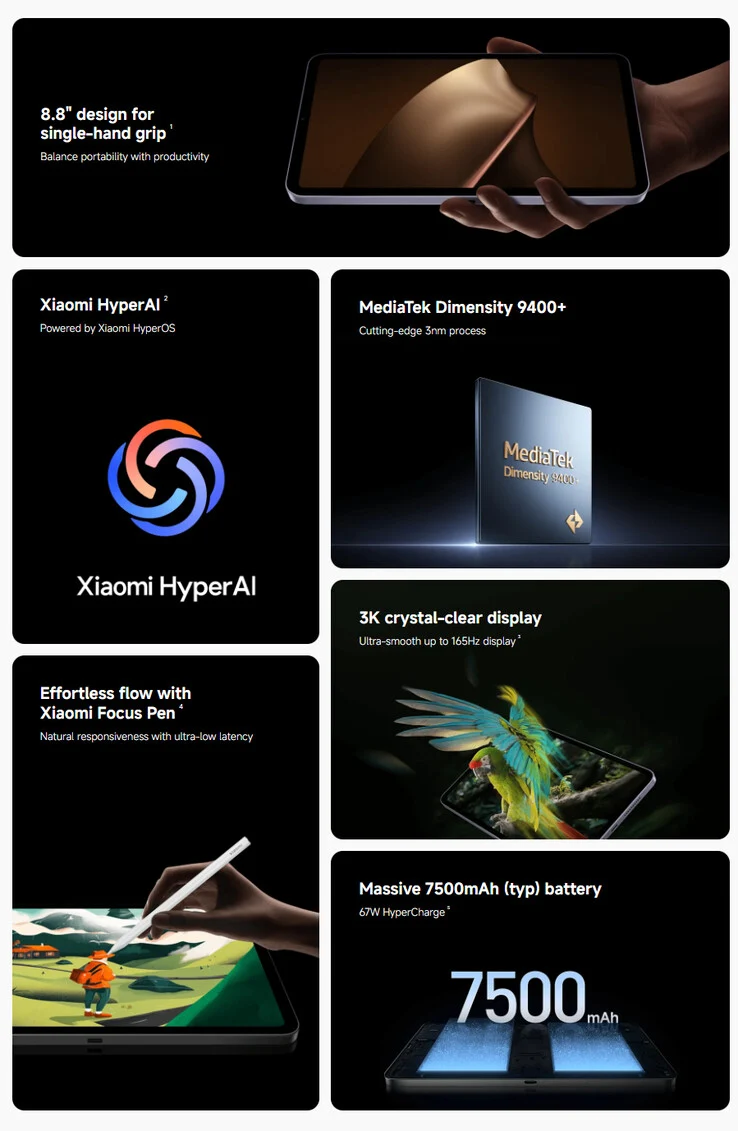
    4. Key specs of the Pad Mini include an 8.8-inch display, 16:10 aspect ratio, 3,008 x 1,880 pixel resolution, 165 Hz refresh rate, and a 7,500 mAh battery with 67 W fast charging.
    5. The Pad Mini is equipped with a 13 MP rear camera, an 8 MP front camera, and will come with 8 GB of RAM and 256 GB of storage.


    Xiaomi has introduced a variety of gadgets today during a big launch event. The main highlights include the Redmi Pad 2 Pro, Xiaomi 15T, and Xiaomi 15T Pro. Besides these, the company also presented the OpenWear Stereo Pro, Smart Camera C701, and many other smart home products.

    Missing Product

    One product that was notably missing is the Pad Mini, which Xiaomi previously announced wouldn’t be part of today’s showcase. Despite this, the company has listed the smaller tablet in the United Arab Emirates (UAE), where it is priced at AED 1,599 (approximately $435) for the version with 12 GB of RAM and 512 GB of storage. Unfortunately, details about an international launch are still not clear.

    Specs and Features

    In the meantime, the UAE listing has revealed some important details like the display and camera specs. Ultimately, the Pad Mini is essentially a rebranded Redmi K Pad. This means it shares a MediaTek Dimensity 9400 Plus chipset with the Xiaomi 15T Pro and the Galaxy Tab S11 Ultra and S11 (currently priced at $859.99 on Amazon).

    Additionally, the Pad Mini features an 8.8-inch display with a 16:10 aspect ratio that boasts a resolution of 3,008 x 1,880 pixels, delivering 403 PPI, a refresh rate of 165 Hz, and a peak brightness of 700 nits. Furthermore, the tablet is equipped with a 13 MP rear camera and an 8 MP front camera, alongside a 7,500 mAh battery that supports fast charging at 67 W. According to Xiaomi’s website, the tablet will come with 8 GB of LPDDR5X RAM and 256 GB of UFS 4.1 storage, suggesting that it might be priced a bit lower in other regions compared to the UAE.

    Source:
    Link


  • Xiaomi Redmi Pad 2 Pro Launches with 5G, Battery, and Performance Upgrades

    Xiaomi Redmi Pad 2 Pro Launches with 5G, Battery, and Performance Upgrades

    Key Takeaways

    1. The Redmi Pad 2 Pro features the Qualcomm Snapdragon 7s Gen 4 chipset, offering improved performance over the previous generation.
    2. Battery capacity has increased to 12,000 mAh, supporting 33 W wired charging, though charging speed may be slower than earlier models.
    3. The display remains a 12.1-inch size with a resolution of 2,560 x 1,600 pixels, a 120 Hz refresh rate, and peak brightness of 600 nits.
    4. The rear camera has been upgraded to 13 MP, while the front camera is 8 MP.
    5. Pricing starts at €279.90 for the base model with 6 GB RAM and 128 GB storage, with an option for a 5G model priced at €409.


    Xiaomi has introduced a new device, the Redmi Pad 2 Pro, building on the previous year’s Redmi Pad Pro and the Redmi Pad 2 (currently priced at $199 on Amazon). Instead of naming it the Redmi Pad Pro 2, the company has opted for a different title. The Redmi Pad 2 Pro is available in both 5G and non-5G versions, but both models come with the same chipsets.

    Performance Enhancements

    Both versions of the Redmi Pad 2 Pro are powered by the Qualcomm Snapdragon 7s Gen 4, which is also featured in the Redmi Note 15 Pro Plus. Since the Snapdragon 7s Gen 4 and its predecessor, the Snapdragon 7s Gen 3, share many similarities, the new Redmi tablets are expected to significantly outperform the older models in tasks that require heavy CPU and GPU usage. In fact, benchmarks show that the Snapdragon 7s Gen 2 found in the previous Redmi Pad Pro variants is about 15% slower than the Snapdragon 7s Gen 3.

    Improved Battery Life

    The battery capacity has increased from 10,000 mAh to 12,000 mAh, although it still supports 33 W wired charging. This means that the Redmi Pad 2 Pro will charge at a slower rate compared to its predecessor. However, it appears that Xiaomi has retained the 12.1-inch display from last year, which maintains a resolution of 2,560 x 1,600 pixels along with a refresh rate of 120 Hz and a peak brightness of 600 nits.

    Camera and Pricing

    The device comes with an 8 MP, f/2.28 front camera, while the rear camera has been upgraded from an 8 MP sensor to a new 13 MP, f/2.2 camera. The Redmi Pad 2 Pro series starts at €279.90 for the model with 6 GB of RAM and 128 GB of storage, including a €20 early bird discount. Alternatively, customers can choose a model with up to 8 GB of RAM, 256 GB of storage, and a 5G option for €409, available in two different colors.

    Source:
    Link


  • Xiaomi Introduces Smart Air Conditioners in New Market

    Xiaomi Introduces Smart Air Conditioners in New Market

    Key Takeaways

    1. Xiaomi launched the Mijia Air Conditioner Pro Eco 2.6kW and 3.5kW models in Europe, priced at €599 and €699, respectively.
    2. Both models offer cooling and heating options with a heating capacity of 3.6 kW and an A+++ energy efficiency rating.
    3. The Mijia AI Energy Saving mode optimizes settings based on user habits and environmental conditions.
    4. The 2.6kW model is suitable for spaces of 10 to 20 m², while the 3.5kW model accommodates areas up to 25 m².
    5. Users can control the air conditioners via the Xiaomi Home app or Google Assistant voice commands.


    Xiaomi has unveiled its Mijia Air Conditioner Pro Eco 2.6kW and Mijia Air Conditioner Pro Eco 3.5kW models in Europe. These products were first seen on the company’s global website back in July 2025.

    Official Launch in Europe

    Now, Xiaomi has confirmed that the Mijia Air Conditioner Pro Eco series is available in Europe. The Mijia Air Conditioner Pro Eco 2.6kW is priced at €599, while the Mijia Air Conditioner Pro Eco 3.5kW costs €699. You can buy these units directly from Xiaomi’s online store or through selected retailers.

    Features and Efficiency

    Both Mijia Air Conditioner Pro Eco models provide both cooling and heating options, featuring a heating capacity of 3.6 kW and an impressive A+++ energy efficiency rating for both functions. This efficiency is partly due to the Mijia AI Energy Saving mode, which smartly adjusts settings according to your habits and surrounding conditions. They come equipped with a 108 mm (~4.3 inch) cross-flow fan that ensures an even air distribution. Users also have access to modes like Turbo, which can temporarily boost the fan speed. The Mijia Air Conditioner Pro Eco can be managed via the Xiaomi Home app, allowing you to monitor energy consumption and check the filter status. Alternatively, you can use Google Assistant voice commands to make adjustments.

    Model Differences

    There are some distinctions between the two models. The 2.6kW variant has a cooling capacity of 2.6kW and an airflow rate of 600 m³/h (~21,190 ft³/h), making it suitable for spaces between 10 to 20 m² (~108 to 215 ft²). On the other hand, the 3.5kW model is ideal for larger rooms, accommodating areas up to 25 m² (~161 to 270 ft²) with an airflow rate of 650 m³/h (~22,955 ft³/h).

    Source:
    Link


  • HyperOS 3 with Android 15 Found on 16 Xiaomi and Redmi Devices

    HyperOS 3 with Android 15 Found on 16 Xiaomi and Redmi Devices

    Key Takeaways

    1. Xiaomi is beta-testing its HyperOS 3 update on various devices, targeting a stable release by the end of October for top models like the Xiaomi 15 series and Redmi K80 Pro.
    2. Internal tests for Android 15-based builds of HyperOS 3 are underway for at least 16 additional Xiaomi and Redmi smartphones, including the Redmi K50 Ultra and Xiaomi 12.
    3. The internal test builds are based on Android 15, which may disappoint some users since newer devices have Android 16 betas, but major improvements are related to the custom HyperOS skin.
    4. No public beta programs have been launched for the newly tested models yet, but access to the new software is expected soon.
    5. The official roadmap states that HyperOS 3 will be available for the Xiaomi 12 series and other models in January 2026.


    Xiaomi has been actively beta-testing its HyperOS 3 update on many devices, aiming to roll out the stable version for its newest and top-tier models by the end of October. Users who own the Xiaomi 15 series, Redmi K80 Pro, and Xiaomi Pad 7 Pro can already experience an early version of the HyperOS 3 skin, which is based on Android 16. Now, even more devices are on the verge of joining this testing phase.

    New Devices in Testing

    XiaomiTime reports that Xiaomi is conducting internal tests of Android 15–based builds of HyperOS 3 for a new wave of Xiaomi and Redmi smartphones. At least 16 models have been identified running the internal firmware OS3.0.250923, which includes well-known devices such as the Redmi K50 Ultra, Xiaomi 12, Redmi Note 13 5G, and POCO F5 Pro.

    What’s Inside the Update?

    These internal test builds are said to be built on Android 15, which might be a letdown for some, since newer Xiaomi gadgets have already received HyperOS 3 betas based on Android 16. However, this shouldn’t concern most users too much, as the significant changes and enhancements are mostly connected to Xiaomi’s custom skin, HyperOS, anyway.

    Looking Ahead

    Xiaomi has not yet launched any public beta programs for these particular models, but since internal testing is ongoing, users will likely not have to wait too long before they can access the new software.

    And if you’re curious about when the stable update will arrive, Xiaomi’s official roadmap indicates that HyperOS 3 is set to be available for the Xiaomi 12 series, MIX Fold 2, Redmi Note 12T Pro, and Redmi K50 Ultra in January 2026.

    Source:
    Link