Tag: Xiaomi

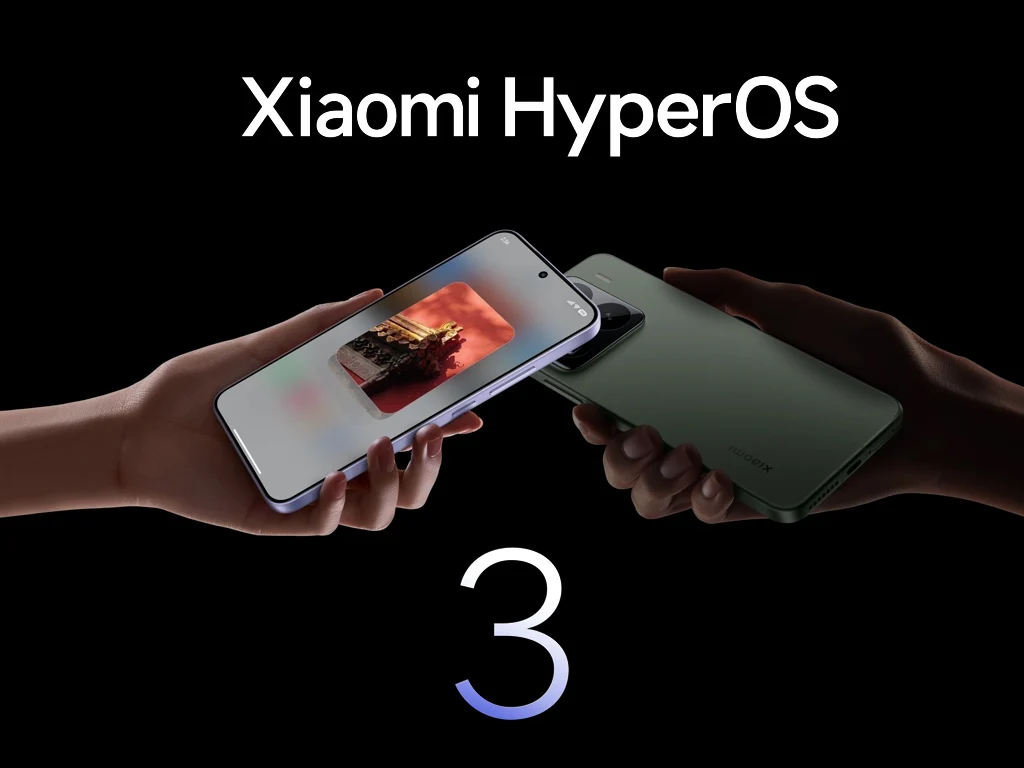
  • Over 80 Xiaomi Devices Test Android 16-Based HyperOS 3 Update

    Over 80 Xiaomi Devices Test Android 16-Based HyperOS 3 Update

    Key Takeaways

    1. Xiaomi launched its Android 16 skin called HyperOS 3 in late August 2025.
    2. A beta program for HyperOS 3 started for a select number of devices.
    3. Over 80 devices are currently undergoing internal testing for HyperOS 3.
    4. 22 of these devices are already part of the beta program.
    5. The expansion of the testing list shows Xiaomi’s commitment to wide compatibility for the new software update.


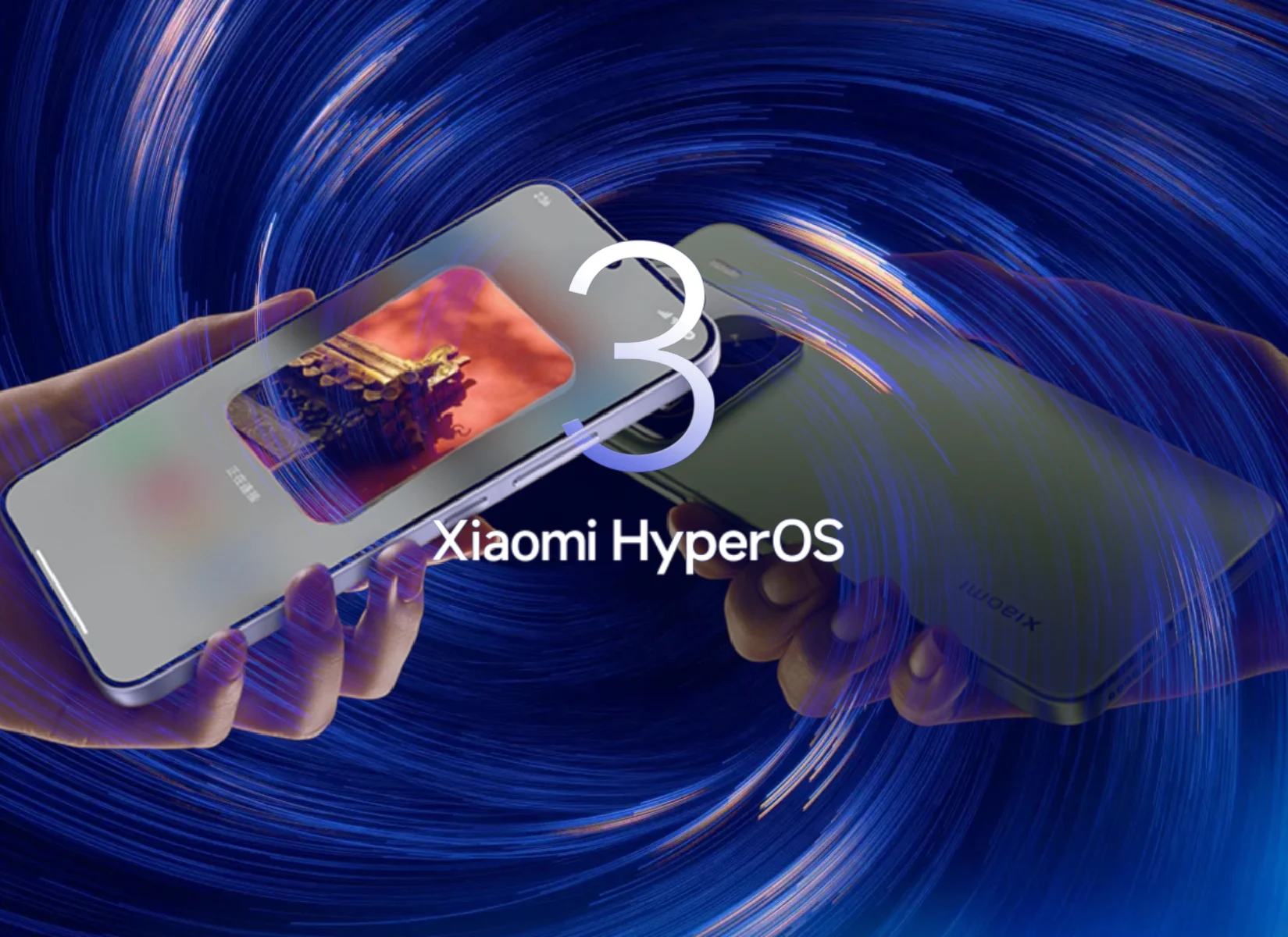
    In late August 2025, Xiaomi revealed its latest Android 16 skin, named HyperOS 3. Shortly after this announcement, the company began a beta program for a select number of devices. However, it appears that the list of devices undergoing internal testing goes beyond just the phones and tablets currently part of the beta version.

    Internal Testing Devices

    According to reports from XiaomiTime, the company is actively testing HyperOS 3 on more than 80 different devices. Below is a comprehensive list of the phones and tablets included in both the internal testing and beta program:

    It’s important to mention that 22 devices from the aforementioned list are already participating in the beta program. For the remaining devices, if they are indeed being tested internally for HyperOS 3, they are likely to receive the stable update in the near future. To find out more about the launch, you can check our initial coverage on Xiaomi’s new skin.

    Beta Program Insights

    XiaomiTime has provided valuable insights into the ongoing testing process. The expansion of the testing list indicates Xiaomi’s commitment to ensuring a wide compatibility of their new software update. Users can expect news and updates as the beta program progresses.

    Source:
    Link


  • Buy Affordable Xiaomi Smart Camera CW100 Dual in Europe Now

    Buy Affordable Xiaomi Smart Camera CW100 Dual in Europe Now

    Key Takeaways

    1. Xiaomi has launched the Outdoor Camera CW100 Dual in the UK, with plans to expand availability across Europe soon.
    2. The camera features dual lenses for an ultra-wide view, 2K HD video, and smart night vision capabilities up to 10 meters.
    3. It includes intelligent recognition for people and vehicles, along with audible and visual alarms to deter intruders.
    4. Users can control the camera through the Xiaomi Home app, which offers live feeds, recording reviews, and two-way communication.
    5. The camera is priced at £39.99 in the UK, with a planned European price of €44.99, and is expected to be available in other countries soon.


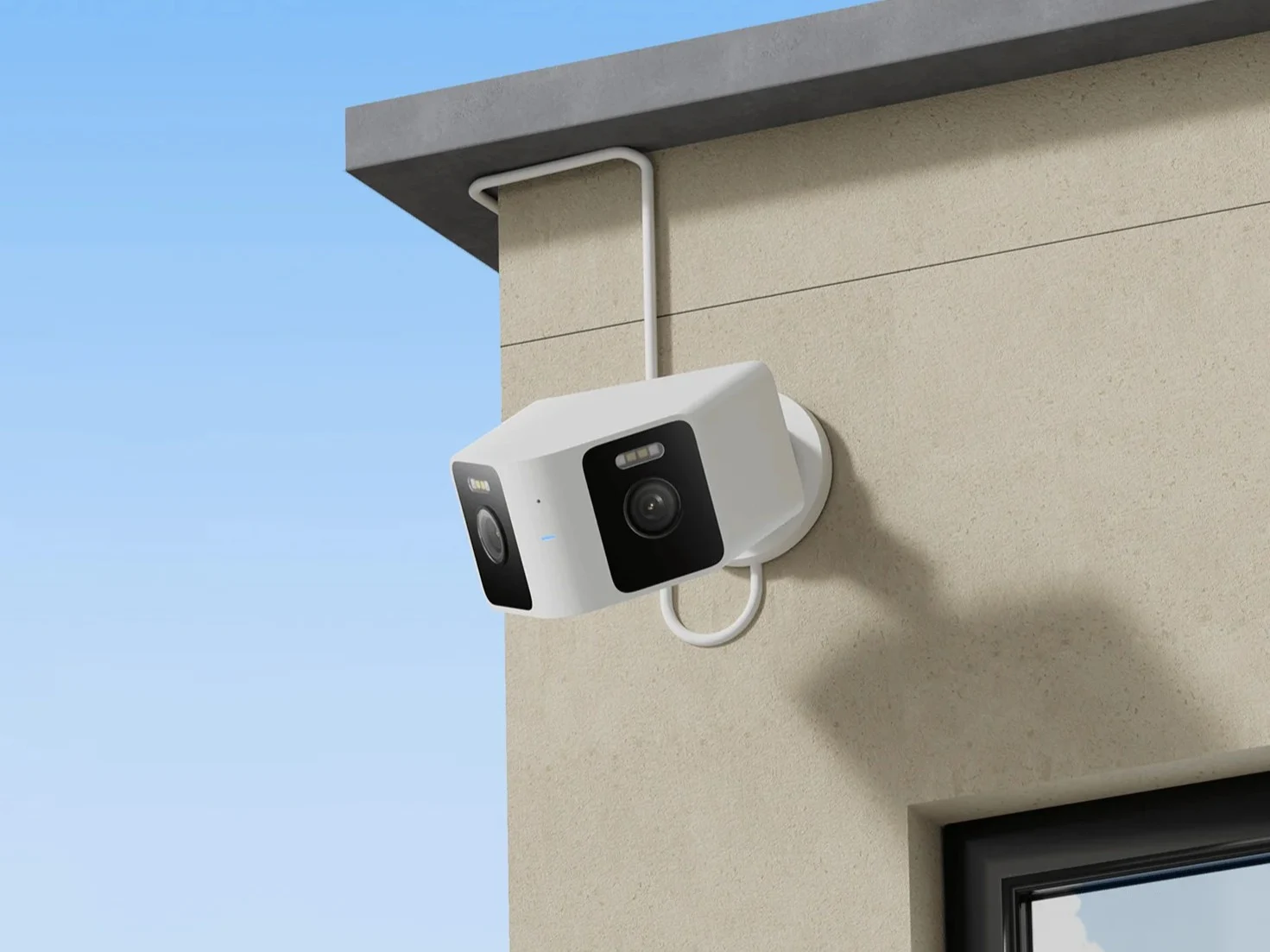
    Xiaomi has introduced the Outdoor Camera CW100 Dual across Europe. At the moment, it’s only available in the UK, but the company is planning to expand its reach to additional countries in the region soon. They claim that this new smart security camera enhances home safety.

    Features of the Camera

    As indicated by its name, the Outdoor Camera CW100 Dual is equipped with two cameras that work together to provide an ultra-wide viewing perspective. These cameras deliver 2K HD video and are built with a 3MP sensor and an f/1.6 aperture. They also feature Wide Dynamic Range (WDR) technology, along with built-in infrared and white lights, which allow for smart, full-color night vision up to a distance of 10 m (~33 ft). This means you can capture clear footage around the clock. The camera is capable of intelligently recognizing people and vehicles, sending alerts if someone unexpectedly approaches your car. Additionally, there are both audible and visual alarms to help scare away trespassers.

    Remote Control and Connectivity

    You can manage the Xiaomi Outdoor Camera CW100 Dual via the Xiaomi Home app. This app allows you to watch a live video feed, with options for both vertical and horizontal views, or review past recordings. It also lets you create a virtual boundary and engage in two-way voice communication with visitors. The device is compatible with 2.4 GHz Wi-Fi 6, Bluetooth, and 100 Mbps Ethernet, and it can save footage to a microSD card with a capacity of up to 256 GB, in the Cloud, or on a connected NAS. This wired security camera comes in a white casing and can operate in temperatures ranging from -30 to 60°C (~-22 to 140°F), boasting an IP66 rating for dust and water resistance.

    Availability and Pricing

    You can now purchase the Xiaomi Outdoor Camera CW100 Dual in the UK for £39.99 from the brand’s online store. Listings on Amazon in other European nations, such as the Netherlands and Germany, indicate that it will be available more widely soon. In those markets, it’s listed with a recommended retail price of €44.99 and is expected to be delivered sometime between November 2025 and March 2026.

    Source:
    Link


  • Xiaomi Smart Graphene Heater Launches in Europe

    Xiaomi Smart Graphene Heater Launches in Europe

    Key Takeaways

    1. The Xiaomi Smart Graphene Heater is now available in several European countries after its initial launch in China in 2023.
    2. It offers up to 2,000W of power, heats up in three seconds, and features three airflow settings and adjustable oscillation.
    3. Users can control the heater via an integrated panel or the Xiaomi Home app, with smart home integration for Google Home.
    4. The heater has safety features to prevent overheating and automatically turns off if it tilts.
    5. Pricing varies by country, with €79.99 in Spain and €89.99 in Italy; availability in other regions like Germany is still uncertain.


    Xiaomi has begun to release the Smart Graphene Heater throughout Europe, and it’s now available in several countries. This product was first launched in China in 2023, with a global rollout announced for June 2025.

    Features and Functionality

    The Smart Graphene Heater is a small-sized model that offers up to 2,000W of power. Thanks to graphene heating technology, it can provide warmth in as little as three seconds, while its far infrared resonance (FIR) heating replicates the feeling of sunlight. Users can adjust the device’s oscillation up to 70° and choose from three airflow settings: hot, warm, and natural breeze. These options can be adjusted via the integrated control panel or through the Xiaomi Home app.

    Smart Home Integration

    Within the app, users have the ability to set a desired temperature or create a schedule for the Smart Graphene Heater. It is also compatible with Google Home, allowing adjustments through Google Assistant voice commands. The heater is designed to prevent overheating and will automatically turn off if it detects tilting. It comes in a white casing, with dimensions of 176 x 467 mm (about 6.9 x 18.4 inches) and weighs roughly 2.3 kg (approximately 5.1 lbs).

    Pricing Information

    In Spain, the Xiaomi Smart Graphene Heater is priced at €79.99, while in Italy, it is currently listed at €89.99. It is still uncertain when this heater will be available in other regions, such as Germany.

    Source:
    Link


  • Xiaomi Dismisses Popular Redmi Executive Over Misconduct Allegations

    Xiaomi Dismisses Popular Redmi Executive Over Misconduct Allegations

    Key Takeaways

    1. Wang Teng, a prominent Weibo user, has been a key figure in sharing official Redmi teasers until August 2025.
    2. He expressed “deep sadness” over his departure from the Redmi brand.
    3. Xiaomi dismissed Wang Teng for a significant violation of company rules, specifically for leaking confidential information.
    4. Wang Teng admitted to making mistakes and feels “deeply ashamed” of his actions.
    5. The recipients of the leaked information remain unknown, and a notable leaker posted a sad emoji in response.


    If there’s been one Weibo user who has been leading the way with the most captivating official Redmi teasers over the past few years, it’s Wang Teng – but that’s changed now.

    The executive had been sharing updates right up until August 2025, keeping Redmi enthusiasts informed about the new HyperOS beta. But his final post expressed his “deep sadness” about departing from the brand.

    Xiaomi has dismissed Wang Teng (often called Wang Teng Thomas) for a significant violation of its rules and conduct. The company has now confirmed that its former staff member was let go for leaking confidential information.

    Wang Teng has admitted that he has “made mistakes in the past” and feels “deeply ashamed,” ready to deal with the repercussions of his actions.

    The recipients of his supposedly leaked information are still a mystery to the public. However, in what might be an unrelated event, well-known leaker Digital Chat Station posted a single sad emoji on Weibo.

    Source:
    Link


  • Affordable Redmi Desktop Speaker 2 Pro with Wireless Playback

    Affordable Redmi Desktop Speaker 2 Pro with Wireless Playback

    Key Takeaways

    1. Budget-Friendly Design: The Redmi Desktop Speaker 2 Pro is an affordable option priced at CNY 369 (approximately $52).

    2. Advanced Driver Setup: It features a four-driver arrangement with two passive woofers and two racetrack-style speakers, each rated at 10 watts, providing an expansive soundstage.

    3. Versatile Connectivity: Users can connect via USB, Bluetooth 5.3, or AUX input; however, the speaker must remain plugged into a wall outlet as it lacks a built-in battery.

    4. Modern Aesthetic: The speaker has a metal grille design with a side knob and integrated RGB lighting that offers six effects, which can sync with music.

    5. Customizable Audio Options: It includes five EQ presets, including a game mode for an enhanced audio experience tailored to user preferences.


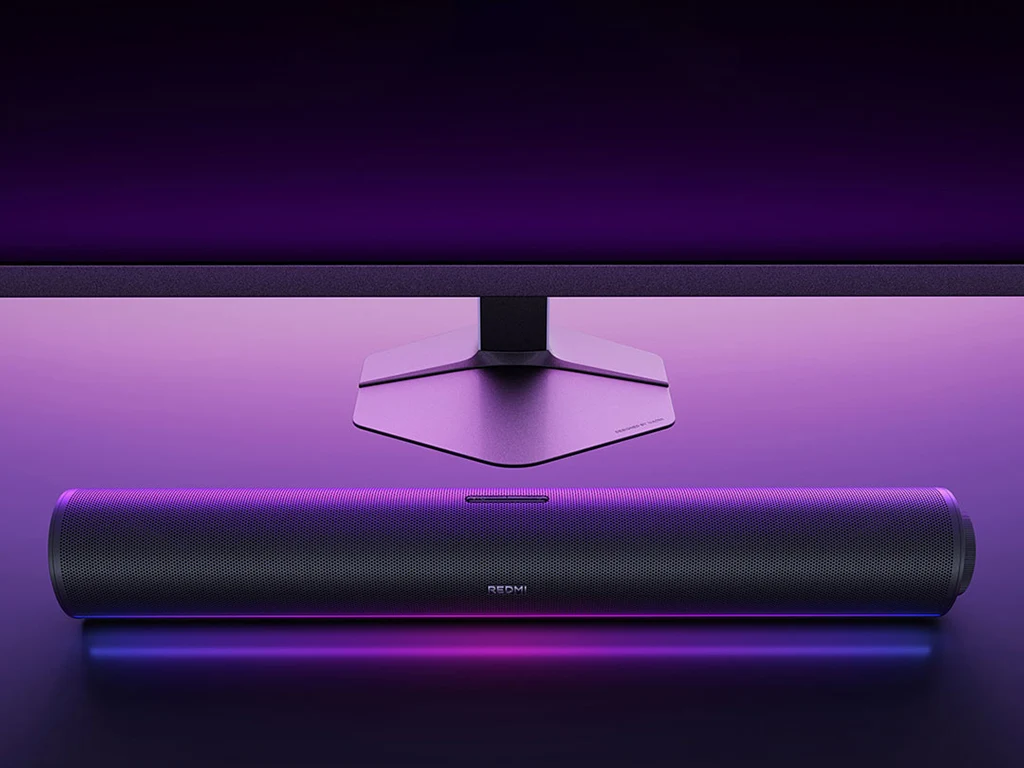
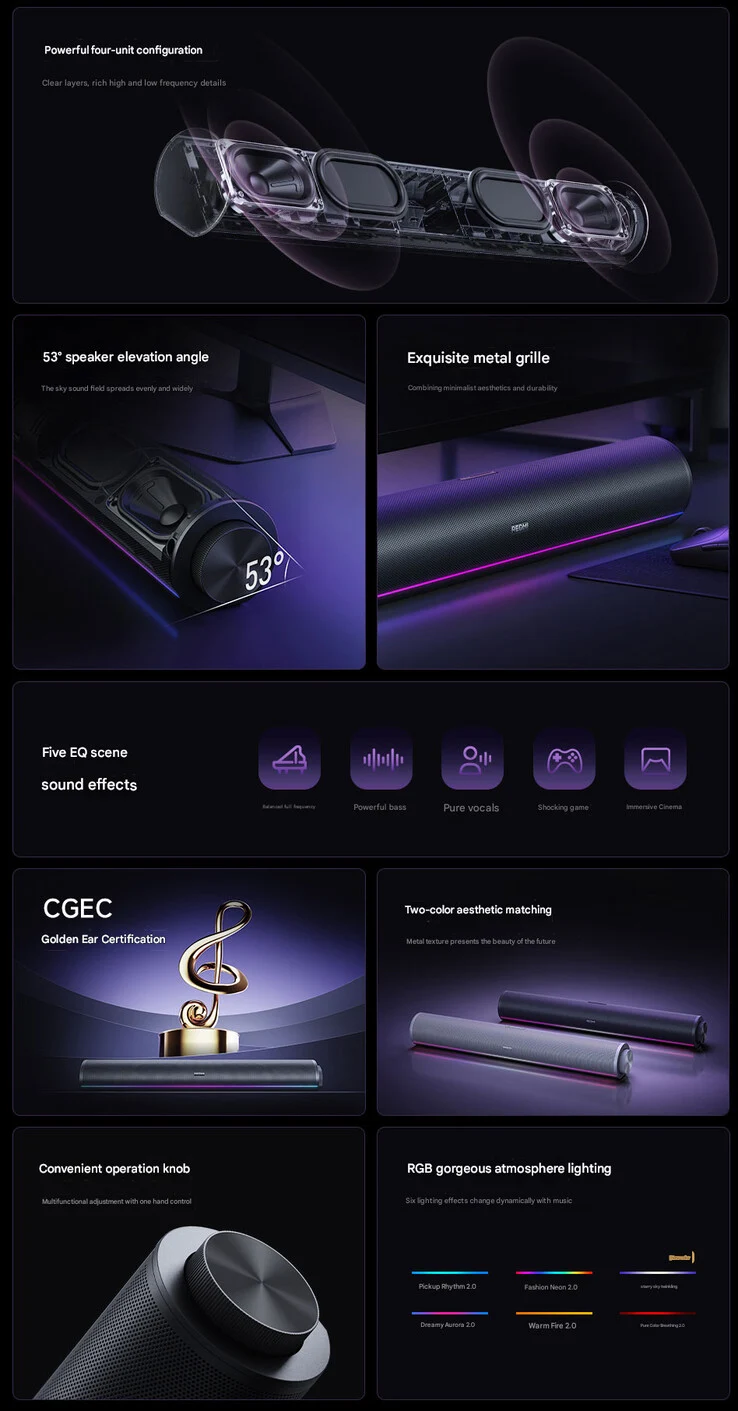
    Xiaomi has launched a new budget-friendly desktop speaker called the Redmi Desktop Speaker 2 Pro. It’s presently offered on the crowdfunding site Youpin, featuring a four-driver setup. This setup includes two passive woofers along with two racetrack-style speakers, each rated at 10 watts.

    Wide Soundstage

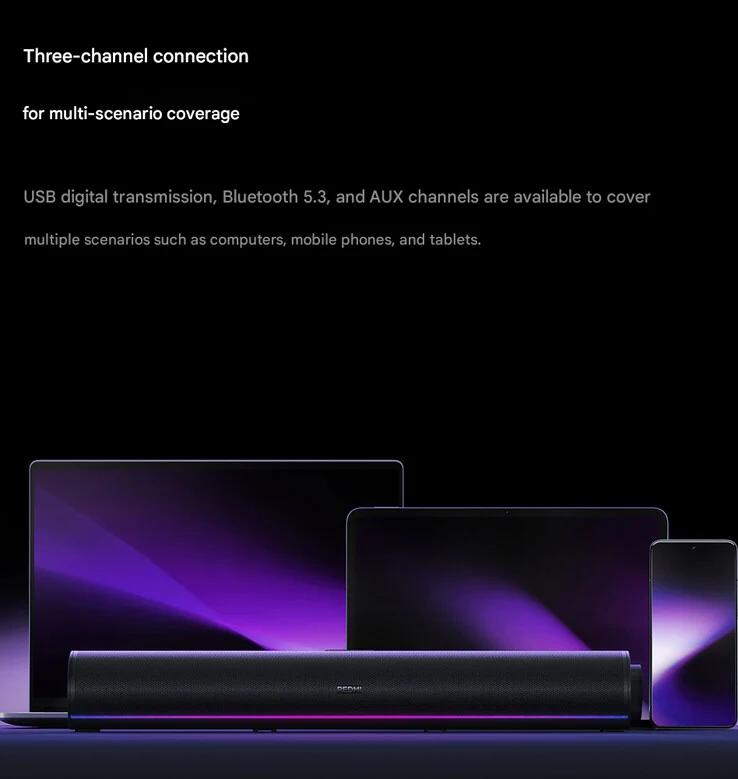
    According to Xiaomi, this driver arrangement enables the speaker to deliver an expansive soundstage. The Redmi Desktop Speaker 2 Pro also boasts versatile connectivity options. Users can enjoy audio through USB, connect wirelessly via Bluetooth 5.3, or use the AUX input for a wired connection.

    Connectivity and Design

    It’s important to mention that this speaker lacks a built-in battery. Therefore, it must stay plugged into a wall outlet, even when using the wireless mode. Xiaomi does provide a separate power adapter for this purpose.

    One of the standout features of this new budget speaker is its metal grille design. Combined with a side knob, it gives the desktop speaker a modern and elegant appearance. Additionally, it comes with integrated RGB lighting that can be set to six different effects, which can sync with the music (10-feet Philips Hue Lightstrip Base Kit currently priced at $61.99 on Amazon).

    Customizable Sound Experience

    Users can also choose from five different EQ presets depending on their listening preferences. Among these is a game mode that promises an engaging and responsive audio experience.

    In terms of pricing, the Redmi Desktop Speaker 2 Pro is available on Youpin for CNY 369, which is roughly $52. There has been no announcement regarding its international release, though Xiaomi does offer a similar model, the Xiaomi Desktop Speaker.

    Source:
    Link


  • Xiaomi Confirms HyperOS 3 Won’t Launch on These 6 Smartphones

    Xiaomi Confirms HyperOS 3 Won’t Launch on These 6 Smartphones

    Key Takeaways

    1. Xiaomi has launched HyperOS 3 in China, currently available in beta for eight devices.
    2. The Pad 7 Pro is priced at $679 on Amazon and is one of the devices receiving the update.
    3. More than twelve additional devices are expected to get HyperOS 3 Beta later this month.
    4. Some recent smartphones from Redmi, Poco, and Xiaomi will not receive the update, with their support ending this month.
    5. Xiaomi has not provided a global list of devices eligible for the stable version of HyperOS 3.


    Xiaomi has officially introduced HyperOS 3 in China as its latest significant update for mobile software. To summarize, the company has made this new version available in beta to eight devices so far, including the Pad 7 Pro, currently priced at $679 on Amazon. At this moment, the devices set to receive the HyperOS 3 Beta updates in China include:

    Upcoming Devices

    In addition, more than twelve other devices are expected to get access to HyperOS 3 Beta later this month. Nevertheless, Xiaomi Adictos has found out that many current smartphones will probably not receive the next OS update when it becomes stable. Currently, Xiaomi has not released a global list of eligible devices.

    Devices Missing Out

    Interestingly, Xiaomi Adictos has noted that six recent smartphones from Redmi, Poco, and Xiaomi will cease to receive updates at the end of this month. Since even security updates will stop after this point, it seems unlikely that these devices will transition from HyperOS 2 to HyperOS 3.

    Source:
    Link


  • Xiaomi Hits 30,000 EV Deliveries in August, YU7 SUV Wait Times Rise

    Xiaomi Hits 30,000 EV Deliveries in August, YU7 SUV Wait Times Rise

    Key Takeaways

    1. Xiaomi delivered over 30,000 electric vehicles (EVs) in August 2025, marking a significant sales milestone for the company.

    2. The Xiaomi YU7 SUV has been a major success, receiving over 200,000 orders within three minutes of its launch.

    3. Deliveries for the YU7 began in July, contributing to a 20% increase in sales compared to the previous month.

    4. Customers face long wait times of up to 56 weeks for EV deliveries, prompting CEO Lei Jun to suggest considering other brands.

    5. Xiaomi plans to enter the European EV market by 2027, emphasizing its commitment to international growth.


    Xiaomi has shared its sales figures for August 2025, revealing another impressive month for the company. The electronics powerhouse, which has expanded into the electric vehicle space, announced via Weibo that it has delivered over 30,000 electric vehicles (EVs) for the second time ever.

    Sales Numbers and Growth

    The exact figures weren’t specified, but the company reported sales exceeding 30,000 units in July. Data from the China Passenger Car Association shows that deliveries reached 30,452 vehicles, marking a 20 percent increase compared to the previous month.

    Popularity of the YU7 SUV

    This surge is likely attributed to the overwhelming success of the Xiaomi YU7 SUV. The electric vehicle received over 200,000 orders within just three minutes of its launch. Deliveries for the YU7 began in July after its introduction in June, igniting discussions about the competition between Xiaomi and Tesla, as the YU7 is a direct rival to Tesla’s Model Y.

    Customer Experience Challenges

    However, this success might not be as thrilling for many customers, since wait times for EV deliveries have stretched up to 56 weeks, as per the company’s EV ordering app. This situation persists despite Xiaomi’s efforts to increase production by hiring a large number of workers for its manufacturing facility in July. CEO Lei Jun has even suggested that customers consider purchasing from other brands.

    Future Plans

    Despite the expansion of its EV factory, Xiaomi’s international ambitions remain intact. The company plans to enter the European EV market in 2027, indicating a strong focus on growth beyond its home country.

    Source:
    Link


  • Samsung Galaxy S26 Edge Design and Battery Upgrades Leaked

    Samsung Galaxy S26 Edge Design and Battery Upgrades Leaked

    Key Takeaways

    1. The Galaxy S26 Edge is expected to feature an average battery capacity of 4,200mAh, surpassing its predecessor.
    2. Samsung has registered a component with a capacity of 4,078mAh, which may be rounded to 4,200mAh.
    3. The smartphone is rumored to be powered by a high-performance Qualcomm processor in select markets by 2026.
    4. Speculations suggest the adoption of silicon-carbon battery technology for a slimmer design, but latest certifications indicate a standard lithium-ion battery may be used.
    5. The S26 Edge could offer better battery life than the iPhone 17 Air, despite potentially not being as thin as initially expected.


    A smartphone with a 3,900mAh battery probably wouldn’t be seen as worth $980 on Amazon right now, unless it boasts an ultra-thin 5.8 millimeter (mm) frame enhanced with titanium to provide better durability without adding bulk.

    Galaxy S26 Edge Enhancements

    The Galaxy S26 Edge is expected to surpass its “beyond slim, beyond light” predecessor, featuring a battery capacity of 4,200mAh on average.

    Rumor has it that Samsung has registered a component that aligns with this capacity with China’s 3C regulator. The EB-BS947ABY’s rated capacity is listed at 4,078mAh, which could be rounded to 4,200mAh for an average value.

    Rumors and Speculations

    Interestingly, the model number hints at a smartphone named the SM-S947, indicating that this sleek device is likely to be powered by a high-performance Qualcomm processor in select markets come 2026.

    Some speculations have pointed out that the Galaxy S26 Edge may adopt silicon-carbon battery technology to fit this increased capacity into an even slimmer design.

    Battery Technology Updates

    However, the latest certification indicates the use of a standard lithium-ion battery, which might mean that the S26 Edge won’t actually be only 5.5mm thin after all.

    Still, it could offer better battery life compared to the iPhone 17 Air, especially since the S25 Edge was noted for its reasonable screen-on times despite having a relatively small battery.

    Source:
    Link


  • Xiaomi Recalls 146,891 Power Banks Due to Safety Risks

    Xiaomi Recalls 146,891 Power Banks Due to Safety Risks

    Key Takeaways

    1. Xiaomi has recalled its 33 W power bank model PB2030MI, with a capacity of 20,000 mAh, due to safety risks.
    2. The recall affects units manufactured between August 2024 and September 2024, totaling 146,891 units.
    3. The recalled power banks contain a specific battery cell version 2.0 that may pose hazards like overheating or fires in extreme conditions.
    4. Customers can receive a full refund of CNY 159 for the recalled power bank.
    5. There is no confirmation if the international units also use the risky battery cell, so users should handle the power bank with care.


    Xiaomi has recalled its 33 W power bank that has a capacity of 20,000 mAh and comes with a built-in cable in China. The model number for this portable charger is PB2030MI. While it’s available internationally, the company has not made any official statements regarding this issue on its global website.

    Recall Details

    The official announcement in China indicates that the Xiaomi 20,000 mAh power banks with the model PB2030MI, which were manufactured between August 2024 and September 2024, could pose a risk. The company mentioned that some units contain a “certain supplier’s 126280 battery cell version 2.0.”

    According to Xiaomi, this specific battery cell version 2.0 has the potential to create safety hazards in extreme situations. Although Xiaomi didn’t elaborate on the exact risks, it is presumed that these issues may stem from the batteries struggling to perform well under harsh weather or temperature conditions. This could result in overheating, fires, or even explosions.

    Production and Refund Information

    Xiaomi has pointed out that a total of 146,891 units of the power bank were made during the specified period, all of which have been recalled due to safety worries. Customers who possess a unit that qualifies for the recall can receive a refund of CNY 159, which is the same price as when the 33 W Xiaomi 20,000 mAh power bank was first launched.

    At this moment, it’s uncertain if the power banks sold globally were also manufactured using the 126280 battery cell version 2.0 from the mentioned supplier. Therefore, it would be wise for international users of the PB2030MI to handle the portable charger carefully and avoid leaving it plugged in overnight.

    Source:
    Link


  • First HyperOS 3 Beta Update Released for 8 Xiaomi Devices

    First HyperOS 3 Beta Update Released for 8 Xiaomi Devices

    Key Takeaways

    1. Eight Xiaomi devices will receive the initial beta version of HyperOS 3 with Android 16.
    2. Users need to sign up for the beta testing program to download the test build.
    3. Seven additional devices will get the HyperOS 3 beta starting September 17, 2025, with 10 more by September 30.
    4. HyperOS 3 features a redesigned user interface and introduces Super Island, similar to Apple’s Dynamic Island.
    5. The update promises a 30% boost in system efficiency and improved security with detailed app permission management.


    Following the recent reveal of Xiaomi HyperOS 3, eight devices have been selected to receive the initial beta version of the Android 16 update. As mentioned in our previous discussions, the devices that are first on the list to receive this test build are:

    Users with these specific models must sign up for the beta testing program in order to download the test build update. For more details on how to enroll, take a look at Xiaomi’s beta tester recruitment guide. Additionally, seven more devices are slated to receive the HyperOS 3 beta next, which include:

    Upcoming Device Releases

    This second group of devices will start to receive the new update on September 17, 2025. Then, by September 30, an additional 10 devices will also get the beta update. For anyone who may have missed our earlier report, HyperOS 3 introduces a significant redesign in terms of user interface and aesthetics. A standout feature is Super Island, which is Xiaomi’s take on Apple’s Dynamic Island.

    Performance Enhancements

    Xiaomi asserts that this update includes numerous enhancements aimed at boosting system performance and overall user experience. The company claims there is a 30% increase in overall system efficiency, while gaming performance could see an improvement of up to 15%.

    HyperOS 3 is also said to provide better security compared to earlier versions of the Android interface. Xiaomi has highlighted that this update includes detailed app permission management, granting users more control over which apps can access sensitive data. For more information about this new Xiaomi software update, check out the video below.

    Source:
    Link