Tag: Valve

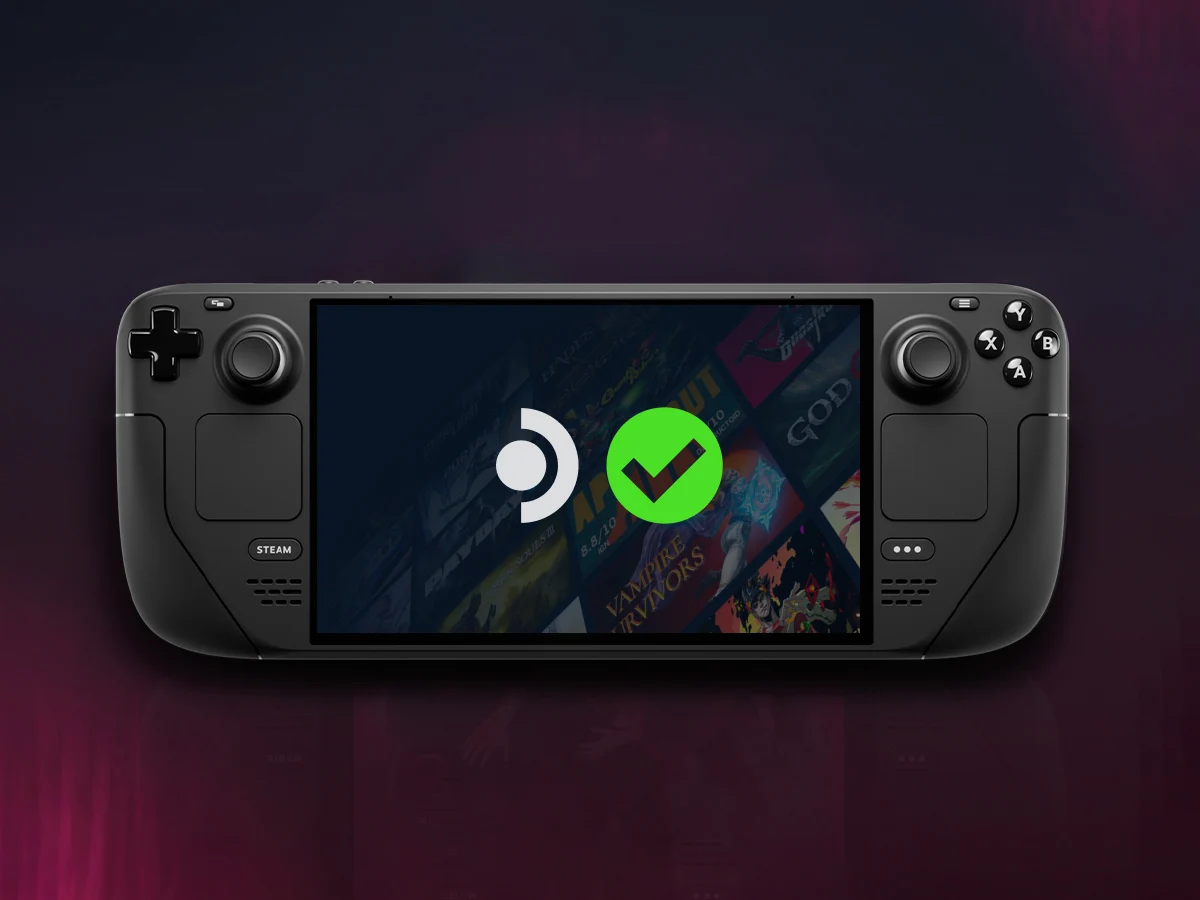
  • Steam Deck Verified Program Surpasses 25,000 Playable Games

    Steam Deck Verified Program Surpasses 25,000 Playable Games

    Key Takeaways

    1. Valve’s Steam Deck Verified program helps gamers navigate the extensive Steam library, with over 31,000 games categorized for the handheld device.

    2. More than 25,000 games are marked as Verified or Playable, indicating their compatibility with the Steam Deck.

    3. Verified games may not always perform perfectly, as some require manual adjustments for optimal play.

    4. Games labeled as Unsupported can still be playable on the Steam Deck, highlighting the complexity of game compatibility.

    5. Valve remains committed to supporting the Steam Deck, suggesting ongoing improvements even as they prepare for future releases like the Steam Deck 2.


    Valve has rolled out the Steam Deck Verified to help gamers sift through the extensive Steam library. Despite some shortcomings, this system sets a standard for what the handheld gaming device can manage effectively.

    Ongoing Support for Steam Deck

    Nearly four years post the launch of the Steam Deck, Valve appears to be keeping the program in good shape. According to information from SteamDB, there are more than 31,000 Steam games that have been officially classified for the handheld. This figure represents about 19% of all games available on the platform.

    Game Categories on Steam Deck

    Of the over 31,000 games that have been categorized, more than 25,000 are labeled as either Verified or Playable. To clarify, the Verified label indicates that the game will perform seamlessly on the handheld device (the upgraded JSAUX dock for this device is currently priced at $32.79 on Amazon), without the need for any adjustments. On the other hand, the Playable tag signifies that while the game is compatible, some manual configurations may be necessary.

    Not All Verified Games Perform Perfectly

    Nonetheless, not every game marked as Steam Deck Verified works as smoothly as Valve suggests. Titles like Baldur’s Gate 3, Warhammer 40K: Space Marine 2, and Hellblade 2 carry the Verified label, but they still need some manual adjustments for an optimal experience. Furthermore, just because a game is labeled Unsupported by Valve doesn’t imply that it cannot run on the handheld device.

    A number of games with the Steam Deck Unsupported tag are actually playable, like Silent Hill 2. In defense of Valve, the company has stated that it judges each game for the handheld based on a rigorous set of criteria, which explains why certain titles receive the Unsupported label despite being technically playable.

    In any case, this ongoing enhancement of the program clearly demonstrates Valve’s dedication to supporting its product, and it will be fascinating to see if the company continues this trend when the Steam Deck 2 is released.

    Source:
    Link


  • UK Tribunal Dismisses £656M Valve Class-Action Over Steam Fees

    UK Tribunal Dismisses £656M Valve Class-Action Over Steam Fees

    Key Takeaways

    1. A class-action lawsuit against Valve regarding Steam’s pricing and commission structure has been approved to advance, totaling £656 million.
    2. The lawsuit, initiated by Vicki Shotbolt, represents around 14 million UK Steam users and examines whether Steam’s business strategies have led to inflated prices for gamers.
    3. Central to the case is Steam’s 30% commission fee, which the lawsuit claims is excessively high and contributes to elevated consumer prices due to Valve’s dominant market position.
    4. The lawsuit also addresses how Steam restricts access to additional content, forcing users to purchase DLC exclusively through its platform, limiting competition.
    5. If successful, UK Steam users who bought games or DLC since 2018 may receive compensation, with projected payouts ranging from £22 to £44 per individual.


    Valve is facing a significant legal hurdle in the UK, as a class-action lawsuit regarding Steam’s pricing and commission structure, amounting to £656 million, has been approved to advance. This case examines the operational methods of Steam as a digital marketplace and whether its business strategies have led UK gamers to pay inflated prices.

    Lawsuit Background

    The lawsuit was initiated in June 2024 by Vicki Shotbolt, who represents about 14 million Steam users in the UK. Recently, the Competition Appeal Tribunal in London determined that the lawsuit can move forward to a complete trial. Valve attempted to halt the proceedings at an earlier stage, but the tribunal denied that request.

    Commission Fees at Issue

    At the heart of the matter is Steam’s commission fee of 30%, which Valve collects from sales of games, downloadable content (DLC), and in-game transactions. The lawsuit claims that this fee is excessively high, resulting in elevated prices for consumers. It argues that Valve’s dominant position in the PC gaming industry allows it to maintain this commission without significant competition that might lower prices.

    Handling of Additional Content

    Another important aspect of the lawsuit concerns how Steam manages additional content. When a player purchases a game on Steam, any DLC or add-ons must also be acquired through the same platform. The lawsuit contends that this effectively confines players to Valve’s ecosystem, even when they may wish to explore other options for better pricing or offers.

    The lawsuit also addresses Steam’s policies affecting developers and publishers. Shotbolt claims that Valve coerces developers into maintaining uniform prices across all platforms. This practice prevents a game from being offered at a lower price or being released earlier on competing platforms, thereby limiting competition and choices available to both developers and gamers.

    Potential Impacts

    Due to these practices, the lawsuit asserts that UK gamers have been overcharged over the years. If the lawsuit is successful, Steam users in the UK who purchased games or DLC since 2018 could be eligible for compensation. Initial projections suggest that payouts may vary from £22 to £44 per individual, depending on their expenditure. In total, damages could amount to £656 million.

    Valve earlier contended that the lawsuit failed to adequately clarify how users would be identified or how claims would be accurately calculated. The company also raised concerns about the funding of the case, even though Shotbolt has obtained over £18 million to support the legal fight. The tribunal ruled that these concerns were not substantial enough to impede the progression of the case.

    Source:
    Link


  • Steam Machine Launches Flexible Steam Deck Verification Program

    Steam Machine Launches Flexible Steam Deck Verification Program

    Key Takeaways

    1. The Steam Machine is more powerful than Valve’s handheld device, but some games may not run smoothly in a living room setting.
    2. Game compatibility will be assessed similarly to the Steam Deck verified program, with easier requirements for developers.
    3. Compatibility with input devices, especially Valve’s new game controller, is crucial, and Windows games must run on Proton or properly in Linux.
    4. The Steam Machine’s specs include a 6-core AMD Zen 4 processor and RDNA 3 graphics, but there are concerns about system and GPU memory affecting performance at higher resolutions.
    5. Game studios may face less strict standards for compatibility, and there are speculations about a potential delay in the Steam Machine’s launch due to rising storage and memory costs.


    The Steam Machine is much stronger than Valve’s handheld device. However, some games might not provide a smooth experience in the living room. In an interview with Game Developer, a designer from Valve explained how the company will assess game compatibility. This process is similar to the Steam Deck verified program, but developers should face easier requirements.

    Compatibility Considerations

    Lawrence Yang mentioned that most candidates with the Steam Deck verified badge are likely to get approved. Still, the company will evaluate each game’s performance on the compact gaming PC. For mobile devices that have 7 or 7.4-inch screens, text should be easy to read. Since the Steam Machine is made for larger TVs, this isn’t as big of a concern.

    Similar Requirements

    Many of the requirements for the Linux-based handheld and the soon-to-be-released cube will be alike. Being compatible with input devices, like Valve’s new game controller, is also very important. Even more crucial, Windows games will need to either run on Proton in SteamOS or function properly in Linux. Unfortunately, DRMs will still block popular games like Battlefield 6 and Black Ops 7.

    Specs and Concerns

    The specs for the Steam Machine, which include a 6-core AMD Zen 4 processor and RDNA 3 graphics, should be able to handle most games. However, there are concerns about the amount of system and GPU memory before it even launches. The 8GB of VRAM may create challenges for achieving 4K at 60fps.

    It’s uncertain if Valve will clarify when demanding games struggle with higher resolutions. Even for some games that are verified on Steam Deck, the company might recommend better settings. Players have noted that the green checkmark doesn’t always mean smooth gameplay without adjustments.

    Future Outlook

    Given Yang’s description of the process, it appears that game studios won’t need to meet very strict standards. Unfortunately, he did not share any updates on whether the mini PC is still expected to launch in early 2026. Some insiders have speculated that there could be a delay because of increasing prices for storage and memory. A delay would provide developers ample time to resolve any issues.

    Source:
    Link


  • Steam Machine Price Leak Disappoints Gamers Amid Release Date Uncertainty

    Steam Machine Price Leak Disappoints Gamers Amid Release Date Uncertainty

    Key Takeaways

    1. The Steam Machine’s price may be higher than popular consoles, potentially reaching around $950 for the 512GB version and $1,069 for the 2TB version according to a Czech retailer leak.
    2. A social media update suggests lower pricing projections, estimating $814 for the 512GB model and $916 for the 2TB variant if a 17% profit margin is applied.
    3. The price leak originated from source code on a Czech website, and potential buyers should wait for Valve’s official announcement before making assumptions.
    4. Concerns about rising memory prices may delay the Steam Machine’s release to Q1 2026, as competitive pricing relies on adequate supply of DDR5 RAM.
    5. Insiders speculate about a barebones version of the Steam Machine, allowing users to customize RAM and storage, but Valve likely prefers to offer a fully assembled version.


    After the Steam Machine was revealed in November, people quickly started guessing its price. A Valve engineer hinted that it might be priced similarly to a gaming PC with matching specs. Considering the rising costs of storage and memory, this could mean a suggested retail price (MSRP) significantly higher than popular consoles. According to a Czech retailer, the Steam Machine’s price could be even steeper than expected.

    Pricing Details

    It’s important for potential buyers not to take this recent leak too seriously until Valve officially announces anything. Nonetheless, Smarty.cz has posted the price for the 512GB version at 19,826 CZK, approximately $950. In contrast, the 2TB version would set buyers back 22,305 CZK, or around $1,069 when converted to USD.

    Alternative Projections

    In a new social media update, Clawsomegamer suggests lower figures. If the retailer aims for a 17% profit margin, the 512GB model might be priced at $814, while the 2TB variant could go for $916.

    The price leak for the Steam Machine originated from the source code on the Czech website, rather than being outright displayed. In various countries, Valve primarily sells hardware like the Steam Deck through its official store. However, in certain regions, third-party retailers do offer new devices.

    Speculations and Concerns

    There is a chance that Valve has finalized its pricing, and Smarty.cz accidentally made it public. Alternatively, Valve may have changed its plans and will provide an update in the future. Regardless, many gamers are pondering whether the compact PC will justify such a hefty price tag.

    As memory prices continue to soar, sources such as Insider Gaming have raised concerns about the Steam Machine’s release date being delayed to Q1 2026. The reasoning behind this is that without enough supply of DDR5 RAM, Valve wouldn’t be able to offer competitive pricing. Laptop manufacturers, who use similar components, have already raised their prices.

    Other insiders, including Moore’s Law Is Dead, have suggested a barebones version of the system. Users could look for affordable RAM and storage to install themselves. Nonetheless, Valve would probably prefer to provide a fully assembled version as well.

    Hopefully, the Czech pricing isn’t what most gamers will have to pay for the Steam Machine. Not only would it be more expensive than the PS5, but the PS5 Pro is also a better deal in comparison. Valve’s listed specs promise a faster processor and the potential for enhanced upscaling and ray tracing. Even so, it might be wise to wait for the AI-driven memory crisis to resolve.

    Source:
    Link


  • Analyst: PS6 and Steam Machine Release Delays Due to Memory Costs

    Analyst: PS6 and Steam Machine Release Delays Due to Memory Costs

    Key Takeaways

    1. Rising memory costs may lead Sony and Valve to reassess pricing or delay the launch of the PS6 and Steam Machine.
    2. Increased demand from the AI sector is reducing the availability of memory for consumers, causing price hikes in laptops and PCs.
    3. Valve may have secured LPDDR5 memory for the Steam Machine, but industry experts predict high prices for DRAM and storage to persist for several years.
    4. The PS6 is expected to launch in 2027 or 2028, influenced by rising GDDR7 VRAM costs and declining console sales.
    5. Manufacturers face pressures from declining sales and rising memory prices, potentially leading to postponed release dates for new consoles.


    As the cost of memory increases, the outlook for gaming hardware is becoming more and more unpredictable. This situation may compel Sony and Valve to reassess the prices for the upcoming PS6 and Steam Machine. Another option could be that the launch dates for these devices may be pushed back until prices stabilize. A recent article from Reuters cites an analyst who has made this concerning forecast.

    Impact of AI on Memory Market

    The piece by Zaheer Kachwala explains how the growing demand from the AI sector is influencing the memory market. With companies like Micron concentrating on business clients, there is a reduced amount of storage and memory accessible for regular consumers. Additionally, manufacturers of laptops and preassembled PCs have started to announce increases in their prices.

    Valve’s Strategy for Memory Supply

    Valve might have arranged to secure a stockpile of LPDDR5 memory ahead of the anticipated Steam Machine launch in early 2026. Nevertheless, some experts in the industry predict that the prices of DRAM and storage will not decrease for several years. This situation could force the company to either transfer these additional costs to gamers or to delay the release altogether.

    PS6 Launch Timeline

    The timing for the introduction of the PS6 is not as clear-cut, but many insiders expect it to arrive in 2027 or 2028. The rising costs of GDDR7 VRAM are putting pressure on the suggested retail prices of Nvidia RTX 50-series graphics cards and the next PlayStation console.

    Another challenge that both Valve and Sony face is the decline in console sales. Circana’s U.S. statistics for November 2025 indicated that hardware sales dipped by 27% when compared to the previous year. Due to tariffs and various economic hurdles, the Xbox Series X and PS5 have already seen price increases.

    Concerns for Manufacturers

    Both the warning signs related to retail performance and the escalating memory prices are factors that manufacturers must consider. The Reuters article quotes analyst Jacob Bourne from eMarketer, who expresses this concern. Bourne notes that, due to disappointing sales, “we could see console makers postpone their release dates.”

    Valve may still opt to move forward with the launch of its gaming system. One suggestion from the insider site Moore’s Law Is Dead is to provide a stripped-down version without memory and storage. This would keep the price of the Steam Machine reasonable, but would require gamers to finish the setup themselves. However, it seems quite unlikely that Sony would adopt a similar strategy for the PS6.

    Reuters, Valve YouTube

    Source:
    Link


  • Valve Sets 2026 Deadline to Transition Steam to 64-Bit Windows

    Valve Sets 2026 Deadline to Transition Steam to 64-Bit Windows

    Key Takeaways

    1. Valve is transitioning to a fully 64-bit Steam client, ending support for the 32-bit version by January 1, 2026.
    2. Users on 32-bit Windows will be placed on a separate branch with no updates or security fixes after the cutoff date.
    3. Only about 0.01% of Steam’s user base is still using 32-bit Windows, making the impact of this change minimal.
    4. 32-bit games will still function on 64-bit Windows due to compatibility layers, so users need not worry about losing access to these games.
    5. Many users on 32-bit systems likely have the hardware to upgrade to 64-bit, but those with outdated 32-bit processors will lose access to Steam.


    Valve is making a significant transition to a fully 64-bit Steam client on compatible Windows PCs, gradually eliminating support for the 32-bit version. In a December update, many users observed that Steam is now operating as a native 64-bit application on Windows 10 64-bit and Windows 11.

    Changes for 32-bit Users

    For those still using 32-bit versions of Windows, they are placed on a separate branch that will no longer be updated after 1 January 2026. This isn’t a subtle shift by Valve; the company had previously announced in September that support for 32-bit Windows would be dropped next year due to its incompatibility with core Steam features. Moreover, only a very small percentage of users were on older systems to run Steam.

    Future of Steam on 32-bit Systems

    For users on 32-bit Windows, Steam will continue to work as it does currently, but after the cutoff date, the client will no longer receive updates or security fixes. There also won’t be any assurance that new games will function correctly on these systems. Valve has made it clear in its Steam Support FAQ, stating, “As of 1 January 2026, Steam will stop supporting systems running on 32-bit versions of Windows.” Future versions of Steam will exclusively support 64-bit setups, and customer support for outdated 32-bit PCs will also stop at the same time.

    User Impact

    This decision is unlikely to impact many users, considering the small number of Steam’s user base still utilizing 32-bit Windows. Valve found that only about 0.01% of active systems are still using 32-bit Windows. The most recent Steam Hardware Survey shows that 65.59% of Windows-based Steam users are on Windows 11 64-bit, 29.06% on Windows 10 64-bit, and a mere 0.08% on Windows 7 64-bit.

    Additionally, this change will not affect 32-bit games on Steam, as they will continue to operate correctly on 64-bit Windows due to existing compatibility layers from Microsoft’s Windows on Windows (WOW64) enhancements. Valve highlighted this to prevent any misunderstandings among Steam users.

    Upgrading Considerations

    Many users still on 32-bit Windows likely have the hardware needed for a 64-bit upgrade. The main drawback is the tedious task of installing a fresh operating system. However, those still using nearly obsolete 32-bit processors will need to say farewell to Steam.

    Source:
    Link


  • Half-Life 3 Expected as Steam Machine Launch Title in Spring 2026

    Half-Life 3 Expected as Steam Machine Launch Title in Spring 2026

    Key Takeaways

    1. Half-Life 3 is rumored to launch alongside Valve’s Steam Machine in Spring 2026.
    2. Insider Mike Straw confirms that Half-Life 3 will likely be a launch title for the new gaming system.
    3. Valve has used past announcement dates as traps to catch leakers, complicating the release timeline.
    4. Rising RAM costs are delaying the final pricing announcement for the Steam Machine.
    5. Leaks suggest that Half-Life 3 may conclude Gordon Freeman’s story without cliffhangers.


    Despite the high hopes of Half-Life enthusiasts, Half-Life 3 did not make an appearance during The Game Awards on December 12. New reports have emerged, however, indicating that Valve’s Half-Life 3 might launch alongside the Steam Machine in Spring 2026.

    Podcast Insights

    In a recent episode of the Insider Gaming Weekly Podcast, Mike Straw reinforced the rumors surrounding Half-Life 3. He expressed his confidence, stating, “Now, everything I have, everybody I’ve talked to is still sure that Half-Life 3 will be a launch title for the Steam Machine.”

    Straw added, “The timeframe I was given was Spring 2026, for the Steam Machine, Steam Frame, Steam Controller, and of course, Half-Life 3. Ultimately, the game is indeed real.”

    Valve’s Strategy

    Straw clarified that past announcement dates were actually traps set by Valve to catch leakers. In November 2025, Valve revealed their updated console, known as the “Gabecube,” which is a SteamOS-based living room gaming system. This announcement came alongside their competitor to the Meta Quest, the Steam Frame VR headset, and a revamped Steam controller.

    So far, it’s confirmed that Valve’s new hardware ecosystem is set to release in Q1 2026, ahead of GTA VI. Rumors suggest that the Steam Machine will come equipped with 16GB of DDR5 RAM, 8GB of GDDR6 VRAM, and will have pricing similar to PCs.

    Pricing Challenges

    However, nailing down the price of the Steam Machine seems to be tricky, particularly due to rising RAM costs since October. Straw remarked:

    “PC RAM prices have shot up 200%, 300%, or even 500% compared to what they were in October, and it’s only getting worse. They haven’t finalized the pricing, which is delaying the announcement of anything else.”

    There’s definitely a sense that Valve is still weighing options due to ongoing issues in the component market.

    More Leaks and Speculation

    These claims corroborate earlier leaks shared by Tyler “Hype Merchant” McVicker. Tyler previously mentioned that Half-Life 3 is currently playable from start to finish. Additionally, Valve’s concept artist Evgeniy Evstratiy confirmed he was involved in the development space for Half-Life 3.

    Other leaks indicate that Half-Life 3 may conclude Gordon Freeman’s saga, suggesting that players will finally experience the end of the Half-Life series, with no cliffhangers this time around.

    Source:
    Link


  • Steam Introduces Sale Price Notifications to Help Gamers Save

    Steam Introduces Sale Price Notifications to Help Gamers Save

    Key Takeaways

    1. Steam is generally favored by customers compared to its competitors, despite some negative feedback.
    2. A new feature alerts buyers when a bundle offers a better discount than individual game purchases.
    3. Players can save money by purchasing bundles, as the price of owned games is subtracted from the total.
    4. There is a distinction between packages and bundles; owning part of a bundle does not reduce the sale price of the remaining games.
    5. Steam’s community engagement allows for user reviews and discussions, but concerns about moderation and censorship persist.


    While Steam faces some negative feedback, it is generally seen as more favorable to customers compared to its competitors. Valve has introduced a new feature that could help gamers save money when buying games. A Reddit user named ShiraNamiNani shared that buyers now receive alerts when a Steam sale price for a bundle provides a better discount.

    Example of Smart Shopping

    In a post on the Steam subreddit, a player put Unrailed 2: Back on Track in their shopping cart. Interestingly, the cooperative railroad construction game was offered at a lower price within the Unrailed Collection bundle. The platform pointed this out to ShiraNamiNani before they finalized their purchase.

    Cost Savings with Bundles

    When a player already possesses a game included in a Steam bundle, the system automatically subtracts that game’s price from the overall total. In certain instances, it can be cheaper to buy a bundle instead of getting a game separately. This means that buyers can often save money for other items on their wishlist.

    Clarifications on New Feature

    There has been some misunderstanding about this new feature. It’s important to know that packages are different from bundles, as the prices for Steam games are fixed. Even if a buyer owns part of the bundle, they won’t see the reduced sale price. However, with over 100,000 titles available, this update simplifies the search for the best bargains.

    Valve has cultivated a dedicated fanbase thanks to its focus on community engagement. The platform allows users to leave reviews and ratings, giving insights into new releases from fellow gamers. Discussion forums provide additional information on game performance and player concerns. Plus, if players have less than two hours of gameplay, they can take advantage of a return policy within two weeks of buying.

    Community Concerns

    The social functionalities of the marketplace can sometimes lead to worries about a lack of moderation. Occasionally, forum moderators have faced allegations of censorship or ignoring inappropriate behavior. Nonetheless, the majority of gamers seem to prefer the autonomy Steam provides, in contrast to options like the Epic Games Store.

    Source:
    Link


  • First Generative AI Game Releases Demo, Publisher Announces

    First Generative AI Game Releases Demo, Publisher Announces

    Key Takeaways

    1. Codex Mortis as an AI-Driven Game: Codex Mortis is promoted as the first fully playable game created entirely by AI, showcasing its integration of AI tools throughout the development process.

    2. Debate on AI Usage: The claim of being the only AI-driven game is contested, with other titles like Oasis also utilizing generative AI technology.

    3. Valve’s Disclosure Requirement: Starting in early 2024, Valve requires games to disclose any use of generative AI, ensuring transparency about AI-generated content in titles like Codex Mortis.

    4. Gameplay Mechanics: Codex Mortis features “necromantic bullet hell” gameplay, allowing players to mix dark magic and build armies of spirits for solo or cooperative play.

    5. User Experience and Graphics: The demo has a tricky interface and retro graphics that may not meet player expectations, similar to other indie titles, but a reasonable price for the final game could mitigate potential backlash.


    Some developers shy away from acknowledging the effects of generative AI on their creations. Nevertheless, Codex Mortis stands out as its studio embraces this technology as a key feature. According to Insider Gaming, the publisher boasts that it’s the “first fully playable game in the world made entirely by AI.” This bullet hell game, inspired by Vampire Survivor, has recently released a demo on Steam ahead of its complete launch.

    Debates on AI in Gaming

    The claim that Codex Mortis is the sole AI-driven game is open to discussion. For example, Oasis presents a web-based open-world experience that is crafted using this rapidly advancing technology. Nonetheless, the publisher behind the new Steam title asserts that their team has integrated AI tools in every phase of development.

    Valve’s New Requirements

    In early 2024, Valve started mandating that titles disclose any use of generative AI. In this instance, the disclaimer states, “All code is AI vibe codes, also arts, sounds, music, texts.” The game’s trailer makes it clear that the visuals were not created through conventional methods. It seems the studio based the characters on their own faces, which appear to be copied and pasted into the game.

    Despite the fact that Codex Mortis is generated by machines, it still provides fun gameplay. Labeled as “necromantic bullet hell,” players mix five kinds of dark magic to fend off waves of resurrected foes. Additionally, gamers have the option to build their own armies of these unfortunate spirits in solo or cooperative play.

    Gameplay Experience

    When players start the free demo, they might find the interface a bit tricky to use, especially with controllers. Before the action kicks off, the retro graphics from a top-down perspective don’t align with what’s shown in the YouTube trailer. However, it’s worth noting that the visuals in more widely recognized titles like Vampire Survivor also aren’t cutting-edge.

    With the criticism regarding the limited use of generative AI tools in games such as Arc Raiders, Codex Mortis might struggle to win fans over. Even many indie developers are hesitant to give this technology complete creative authority. On a positive note, a reasonable price for the final product could help sidestep the backlash faced by major projects.

    Insider Gaming, Codex Mortis Steam page, Crunch Fest YouTube, Oasis AI game

    Source:
    Link


  • YouTuber Explains Why Valve Steam Machine May Cost $50 Less than PS5 Pro

    YouTuber Explains Why Valve Steam Machine May Cost $50 Less than PS5 Pro

    Key Takeaways

    1. Valve has not confirmed the price of the upcoming Steam Machine, leaving speculation open.
    2. Estimates suggest the Steam Machine may be priced at around $699 to ensure profitability.
    3. Unlike traditional console makers, Valve intends to price its hardware without subsidies for long-term profitability.
    4. The Steam Machine could be priced just below the PlayStation 5 Pro, which is currently priced at $648.99.
    5. Despite concerns over its price, the Steam Machine may offer good value compared to the rising costs of DIY PC setups, potentially exceeding $800.


    The cost of Valve’s eagerly awaited return to the Steam Machine platform remains unclear. So far, the company has only shared a few vague hints, which we have discussed in a separate article. However, some insiders have been providing estimates based on what they know.

    Pricing Speculations

    For example, it has been reported that Valve quickly ruled out the possibility of the Steam Machine being priced at $500. Recently, Linus Sebastian shared his thoughts on what the price might be when Valve’s gaming desktop becomes available next year. In a broader discussion featured in a Linus Tech Tips video, he suggested that due to the limited profit margin for PC makers, Valve might need to set the price of the Steam Machine at $699 to make any profit at all.

    Market Comparisons

    Traditionally, companies like Microsoft, Nintendo, and Sony subsidize the prices of their consoles, banking on sales of accessories, games, and services to cover the costs. However, since Valve aims to operate its hardware division as a profitable venture, Sebastian believes it’s unlikely that the Steam Machine will be priced around $600 at launch. Essentially, the Steam Machine could fall just below the PlayStation 5 Pro, which is currently priced at $648.99 on Amazon, even though it might offer lesser performance.

    Value Considerations

    While the Steam Machine priced at $699 doesn’t sound like an attractive deal, especially given the flexibility SteamOS provides, Sebastian and his team caution that the current prices of PC components could push a similar DIY setup over $800. Therefore, the Steam Machine might actually represent a decent value at $699 next year, particularly considering the trends in memory pricing as we move toward 2026.

    Source:
    Link