Tag: Valve

  • Steam Deck Maker Earns $50M Per Employee with $16.2B Revenue

    Steam Deck Maker Earns $50M Per Employee with $16.2B Revenue

    Key Takeaways

    1. Valve is a well-known name in gaming, recognized for both hardware (Steam Deck) and software (Steam platform).
    2. The Steam Deck has revitalized the Linux gaming scene and Steam is the primary platform for purchasing video games.
    3. Valve operates with a small team of around 336 employees, generating over $50 million in revenue per employee.
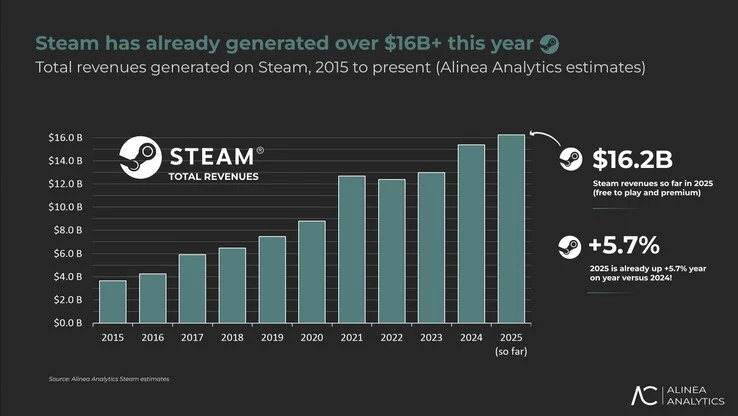
    4. Analysts estimate Valve’s earnings from Steam at approximately $16.2 billion, projected to reach $17 billion by year’s end.
    5. Since 2015, Valve’s revenue has nearly quadrupled, showing strong profitability without signs of slowing down.


    Valve is a name that is well-known among gamers, whether they’re into hardware or software. The Steam Deck stands out as one of the top gaming handhelds, having revitalized the Linux gaming scene. Meanwhile, Steam has established itself as the go-to platform for purchasing video games, much like iTunes does for music.

    Valve generates a significant amount of revenue from its highly regarded products. Remarkably, it operates with a comparatively small team when you consider the vastness of its business. Unlike major technology firms like Google and Meta, Valve remains a private entity, meaning it doesn’t have to disclose its financial details.

    Financial Insights

    Despite being a private company, analysts have become quite skilled at estimating Valve’s earnings. Alinea Analytics reports that Valve has generated approximately $16.2 billion from Steam alone, with projections suggesting it could reach $17 billion by year’s end.

    In 2021, estimates indicated that Valve employed around 336 people, which translates to more than $50 million in revenue per employee. This is a stark contrast to Microsoft, where the revenue per employee is about $1.1 million. Clearly, Valve can boast about its impressive profitability on a per-employee basis. Since 2015, the company’s revenue has nearly quadrupled, and there are currently no signs of it slowing down.

    Conclusion

    Alinea Analytics, through Rhys Eliott, was identified by Tom’s Hardware as the source of these insights.

    Source:
    Link


  • Valve Interview: Steam Machine Price Similar to Gaming PCs

    Valve Interview: Steam Machine Price Similar to Gaming PCs

    Key Takeaways

    1. The Steam Machine’s pricing will align with gaming PCs, not consoles, and will likely exceed $400-500.
    2. Pricing estimates for the Steam Machine are projected between $700 to $900, similar to high-end gaming PCs.
    3. The device features a semi-custom CPU and GPU, making it hard to find comparable gaming PCs.
    4. The Steam Machine boasts unique features like quiet cooling, HDMI-CEC, and controller power-on functionality.
    5. The release is scheduled for Q1 2026, with pricing still uncertain due to industry factors like RAM shortages.


    After comments from a Valve designer and programmer, players can make better guesses about the Steam Machine’s pricing. Although they didn’t specify an MSRP, Lawrence Yang and Pierre-Loup Griffais shared additional details during a Skill Up interview. They indicated that the pricing will not be comparable to consoles. Rather, it will be aligned with a gaming PC that offers similar performance.

    Price Comparison

    Griffais mentioned that the Steam Machine’s price would be about the same as a custom or pre-built desktop that has similar components. He also discussed whether Valve would provide subsidies for the Steam Machine, like Microsoft and Sony have done with the Xbox Series X and PS5: “No, it’s more in line with what you might expect from the current PC market.”

    Unfortunately, it appears increasingly likely that the Steam Machine won’t fall within the $400-500 price category. Valve seems unwilling to incur losses on each unit sold to position it as a competitor to consoles.

    Specifications and Performance

    Given that the Steam Machine features a semi-custom CPU and GPU, it can be challenging to create a gaming PC with the same specs. However, estimates for matching the same performance level range between $700 to $900. Some models of the Xbox Series X and the PS5 Pro are in a similar price range, but it will probably be pricier than the standard PS5. The variant of Valve’s cube with 2 TB of storage could require an even bigger financial commitment.

    Despite a potentially high price tag, Yang and Griffais emphasized the benefits that the Steam Machine would provide. They believe that creating this small-form-factor PC was a difficult task. Competing systems might have trouble achieving its quiet cooling system. The Steam Machine also includes user-friendly features, like HDMI-CEC and the ability to power on the system using a controller.

    Launch Timeline

    Slated for release in Q1 2026, Valve isn’t rushing to reveal the prices for its new hardware. As mentioned in the interview, “external factors” in the industry could be one reason for the uncertainty. Recently, a significant shortage of RAM has complicated the process of building affordable PCs. Hopefully, Valve has taken steps to prepare and can steer clear of even higher costs than expected.

    Source:
    Link


  • Steamworks SDK Adds Android ARM Support with Walkabout Mini Golf VR

    Steamworks SDK Adds Android ARM Support with Walkabout Mini Golf VR

    Key Takeaways

    1. Valve’s ARM-based Steam Frame VR headset will support Android games, starting with Walkabout Mini Golf VR.
    2. The Android version of compatible games will be available on Steam without separate listings, enhancing user convenience.
    3. Recent updates to the Steamworks SDK indicate support for distributing Android APK files on the Steam Frame, initially focused on VR games.
    4. The integration of PC and Android gaming could lead to smoother multi-platform releases, benefiting both players and developers.
    5. Valve’s testing with the Waydroid emulator suggests potential future support for Android emulation on PC Steam, expanding access to more games.


    Following the reveal of the ARM-based Steam Frame VR headset, Valve has confirmed that Android games will be available on Steam for this device. It was just a matter of time before we discovered the first game that will be compatible with the Frame, and that game is Walkabout Mini Golf VR (check out the YouTube video review).

    Game Compatibility

    Walkabout Mini Golf VR, created using the Unity engine, is currently accessible for both ARM Android headsets such as the Meta Quest and PCVR (x86) users through its existing Steam page. A notable update was found on X/Twitter by @SadlyItsBradley, who used SteamDB to highlight that the Android APK will be available for current owners on Steam Frame right from the start. The Android version is now simply an additional option under the same Steam title.

    New Developments

    This update, along with the recently released Steamworks SDK 1.63, confirms the introduction of libraries for “linuxarm64” and “androidarm64” on Steam. This implies that Android APK files should soon be distributable through Steam for the Steam Frame, although at the moment it seems to be limited to VR games and SteamOS.

    Future of Multi-Platform Gaming

    The smooth integration of this system raises the hope that future multi-platform releases between PC and Android could eventually enable Steam users to play games on PCs, standalone VR headsets, and even smartphones. However, Valve might have reasons to proceed with caution. The primary concern would be upsetting Google, even though its recent legal defeat against Epic Games suggests that Steam could distribute games freely without being removed from the Play Store. Such a move would make cross-platform gaming between Android and PC much smoother, benefiting both Valve and developers.

    Additionally, Valve’s internal tests with the Waydroid Android emulator, reported last year, might hint at the potential for Android emulation being introduced to PC Steam. This would enhance the playability and distribution of Android games that might not even have PC versions.


    Source:
    Link


  • CheckMag Steam Machine: Best Community Concept Designs

    CheckMag Steam Machine: Best Community Concept Designs

    Key Takeaways

    1. Valve’s Steam Machine features a cube-like design, runs on SteamOS, and supports Proton for game compatibility, with a price tag of $743.
    2. The device includes magnetic, interchangeable front panels, allowing for creative expression through custom designs, such as LED displays and popular franchise themes.
    3. Community members have shared humorous and nostalgic designs, like a GameCube-themed skin and a mockup resembling Marvel’s Kingpin, reflecting the desire for dynamic and recognizable aesthetics.
    4. Dbrand is set to release a premium Companion Cube skin, indicating potential for cohesive, collectible accessories that align with popular franchises.
    5. Challenges remain, including limitations on interactive front panels and potential legal barriers for official franchise skins, but there’s a clear demand for unique third-party accessories.


    Valve’s latest Steam Machine made its debut this week, sparking a flurry of online chatter. The cube-like design, emphasis on SteamOS, and the potential for interchangeable front panels have not only captured attention but also ignited a wave of humorous responses from the community. Artists and modders have taken to Reddit to share creative renderings and skin concepts, transforming what appears to be a simple black box into a vibrant expression of individuality.

    The Device Specs

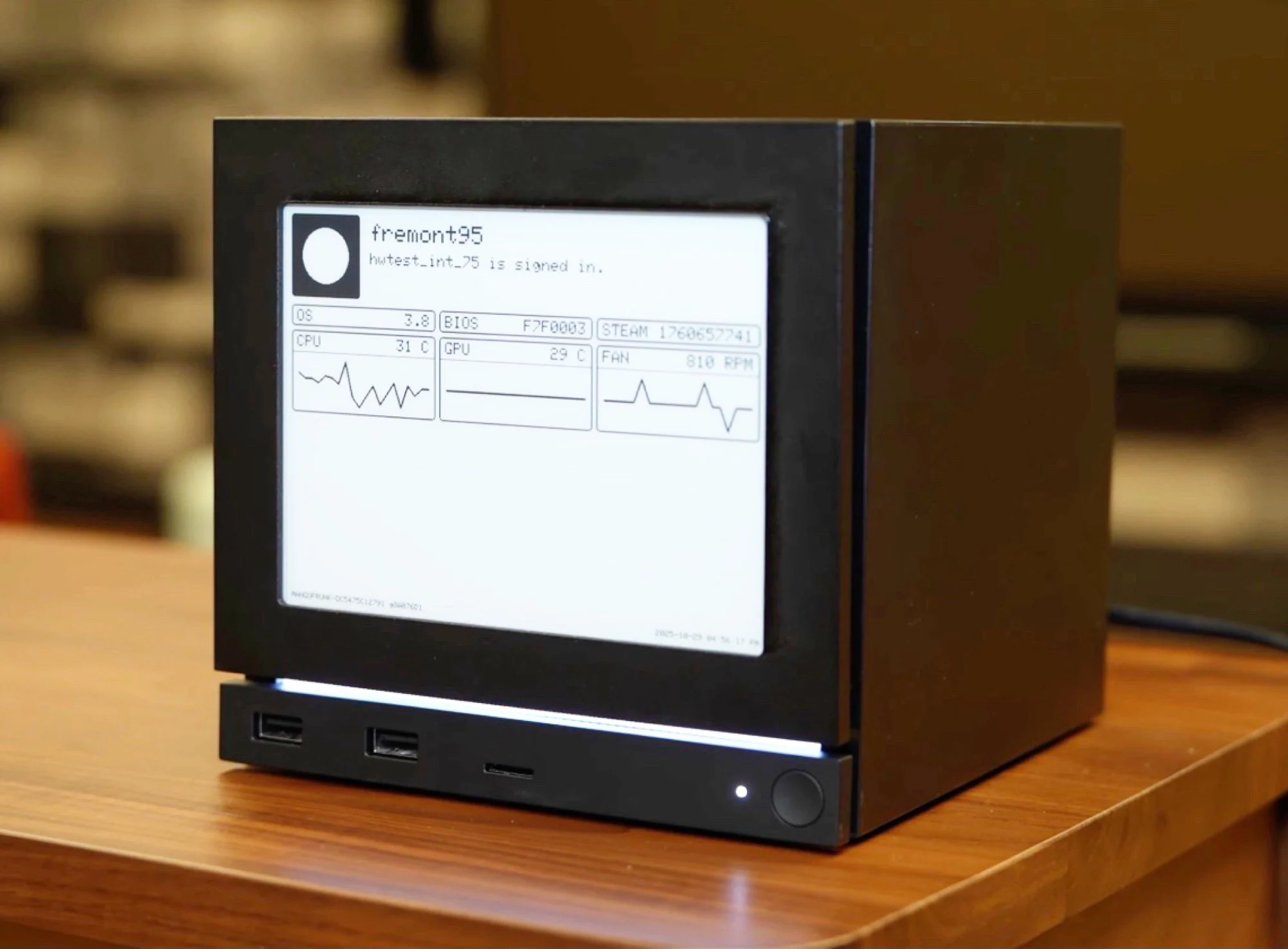
    Diving deeper, the actual device is a compact cube aimed at living room use, operating on SteamOS and supporting Proton for game compatibility. It features microSD for easy library transfer with the Deck, which is currently priced at $743 on Amazon. The machine includes magnetic, interchangeable front panels, one of which displayed an e-ink test screen. This straightforward hardware setup provides a basic framework for creators to work with, allowing for either artistic designs or functional displays. Here’s a look at eight standout community designs and what they suggest about the Steam Machine’s potential future.

    Creative Expressions

    One imaginative concept transforms the machine’s front into a fully functional dot-matrix LED display, reacting to sound. This is a clever nod to early 2000s desktop visualizers and modern smart speakers. It shows that users desire more than just static skins—they want dynamic features that make the cube seem alive next to their TV.

    In another idea, a pixel-art Minecraft skin turns the cube into a block from the game. This design is both visually appealing and functional, as the low-resolution texture is easily recognizable from a distance. It indicates that popular franchises with iconic designs could inspire official skins that players would actually buy, rather than just create for fun. This could be a straightforward win for a skin manufacturer.

    Fun Concepts

    A design likening the Steam Machine to Marvel’s Kingpin is among the most amusing concepts. It’s simplistic yet incredibly funny, as it looks like Kingpin’s head was meant to be placed there. This version of Kingpin is inspired by his portrayal in “Spider-Man: Into the Spider-Verse,” and fans of the film will appreciate how comically true to the comic it is.

    Another mockup illustrates the front of the cube as an active Steam interface, showcasing the Store page and highlighting featured games and promotions. While it may not be feasible at this time, it demonstrates that users are eager for front panels that serve a purpose rather than remain idle. This design unintentionally affirms Valve’s choice to explore display-based fronts.

    Nostalgic Designs

    A purple GameCube-themed Steam Machine gained traction for its obvious appeal. The shape closely resembles that of the GameCube, and the design captures nostalgic elements beautifully, including controller ports, vents, and the signature purple color associated with Nintendo’s console. This illustrates how quickly fans connect new devices with classic designs that still hold significant cultural value.

    One user envisioned the iconic red Valve wheel on the front of the machine, and it actually looks appealing. This is a clever play on the company’s name and branding. While it’s unlikely to become a real accessory, it highlights the Steam Machine’s flat surfaces, making it easy to attach physical props. It wouldn’t be surprising if quirky front-panel knobs emerged as a new category on Etsy.

    More Polished Ideas

    In a more refined approach, Dbrand has teased a Companion Cube skin set to launch alongside the Steam Machine in 2026. This design reimagines the cube as a Portal-themed Companion Cube, complete with a coordinating controller in soft greys and pastel blues. Compared to more humorous designs, this concept showcases what a premium themed bundle could look like should Valve or a partner decide to create one. The polished execution demonstrates that the machine’s design can accommodate cohesive, franchise-aligned accessories that feel collectible instead of gimmicky.

    One design features the cube wrapped in a pink-and-black checkerboard pattern reminiscent of the missing texture from Source Engine games. Anyone who’s played a modded Source map would recognize this instantly. It’s a humorous nod to Valve’s engine history, and the simple geometric pattern fits the cube nicely. This skin manages to look bold while still being clean, and the joke would likely resonate with even casual gamers.

    The Challenges Ahead

    However, there are limitations to consider. Many designs envision interactive or high-refresh-rate front panels, but Valve’s current e-ink tests suggest low-power, low-refresh options are more realistic for launch. Although the company has confirmed that this add-on is only for internal testing and won’t be sold commercially, legal and licensing barriers could restrict many official franchise skins unless Valve collaborates with rights holders. Still, the demand for third-party skins and unique front covers is clearly evident, presenting a practical opportunity for accessory creators.

    This lively conversation is already happening on the r/Steam subreddit!

    Source:
    Link



  • Half-Life 3 Release Date Rumored for March with Steam Machine Launch

    Half-Life 3 Release Date Rumored for March with Steam Machine Launch

    Key Takeaways

    1. Valve has launched new devices, including the Steam Frame VR headset, Steam Machine, and Steam Controller, while fans await news on Half-Life 3.
    2. Speculation suggests Half-Life 3 might release alongside the Steam Machine in March 2026, according to insider Tom Henderson.
    3. There are no major announcements expected at The Game Awards on December 11th, but Valve’s next news may involve a significant launch title for the Steam Machine.
    4. The journey for Half-Life 3 has been difficult, with plans dating back to 2013 and recent developments hinting at a game referred to as HLX.
    5. While a new game may be exclusive to the Steam Machine, it is likely that Half-Life 3 will also be available on Steam, making it attractive to a wider audience.


    Valve has recently unveiled a set of new devices, which includes the Steam Frame VR headset, Steam Machine, and Steam Controller. At the same time, fans are eagerly awaiting news about the long-anticipated Half-Life 3. Tom Henderson from Insider Gaming has now suggested that this game might launch alongside the Steam Machine in March 2026.

    Podcast Predictions

    This speculation emerged during a podcast featuring Henderson and Mike Straw. One of Straw’s informants indicated that there won’t be a significant announcement at The Game Awards on December 11th. However, Henderson noted that the next big news from Valve will probably revolve around a launch title for the Steam Machine. He mentioned he “heard there’s a big game coming out in March” that fans are really looking forward to.

    Ongoing Rumors

    Even though there’s no confirmed game to go with Valve’s new hardware, rumors about a Half-Life 3 release keep circulating. Nick “Shpeshal Nick” Baker from XboxEra is among those who believe that more updates will be shared soon. The Game Awards now appear to be an unlikely venue for such news. Nevertheless, changes noted on the Steam website have gamers looking towards November 18th for possible announcements.

    A Rocky Journey

    The journey toward a potential Half-Life 3 has been quite challenging. A sequel to Half-Life 2 was planned back in 2013, but it never came to fruition. Half-Life: Alyx was released in 2020 as a virtual reality experience, initially set to launch with the Index VR headset in 2019, but it faced delays. Since that time, dataminers have discovered hints about another game in development, often referred to as HLX.

    Valve has stated that it does not have any other virtual reality projects in the pipeline. This increases the likelihood that HLX is a follow-up to Half-Life 2, intended specifically for the Steam Machine, rather than the Steam Frame.

    Future Exclusivity

    Henderson mentioned a game that might be exclusive to the Steam Machine. However, instead of being limited to just this console, it seems more plausible that Half-Life 3 would be accessible on Steam. In any case, as a title that PlayStation and Xbox would be eager to have, it could serve as a strong motivation for gamers to consider purchasing the new console.


    Source:
    Link


  • Valve Unveils Steam Machine Featuring E-Ink Display

    Valve Unveils Steam Machine Featuring E-Ink Display

    Key Takeaways

    1. The Steam Machine is a small, cube-shaped device that functions as both a Linux desktop and a gaming console running on Steam OS.
    2. Its performance is lower than that of the Sony PlayStation 5, which is priced starting at $499.
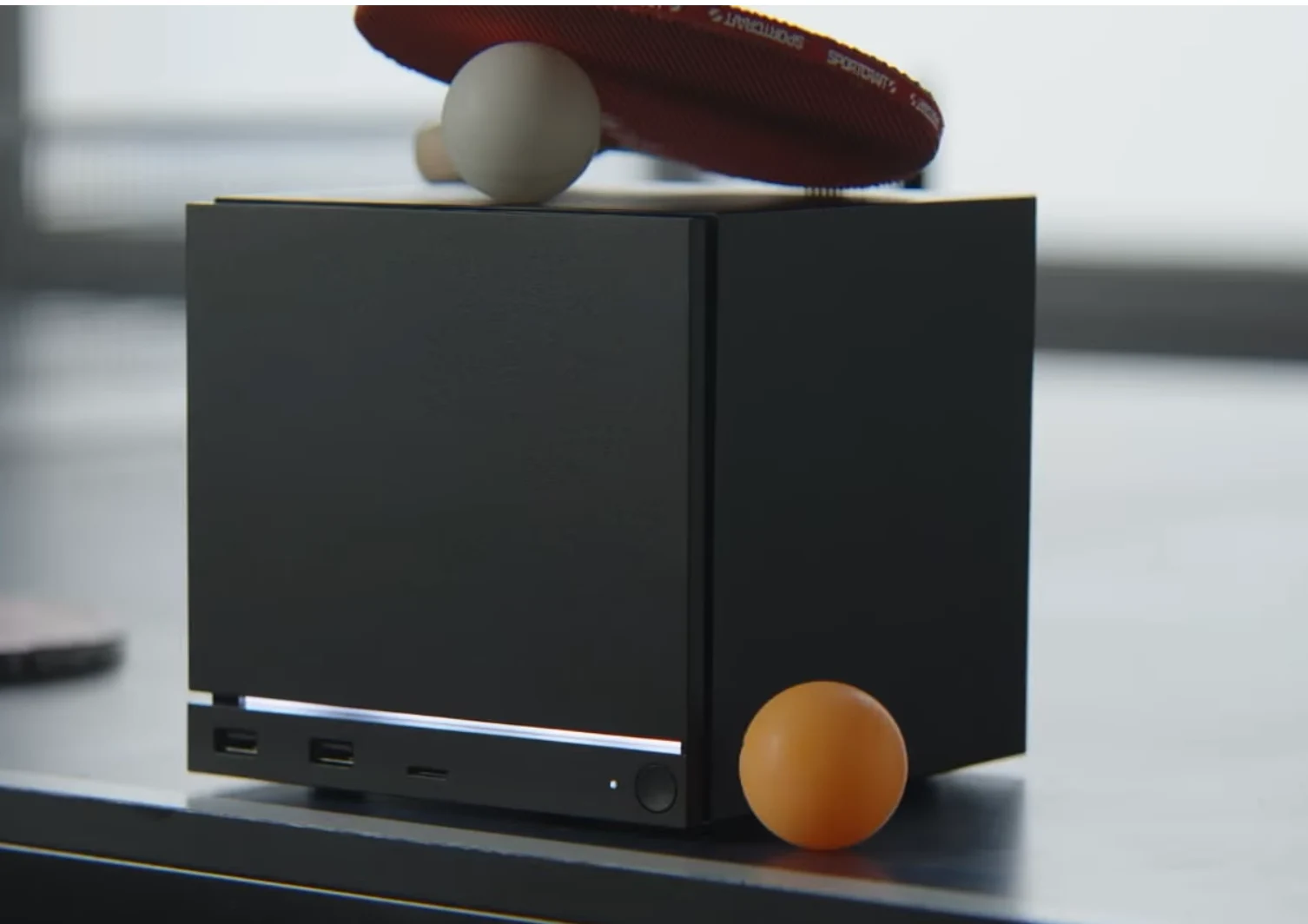
    3. The design features a sleek black casing with a front LED strip, and third-party accessories are expected to launch soon.
    4. Users can customize the Steam Machine with interchangeable front panels, including a unique e-ink display for real-time metrics (though not for sale).
    5. Steam OS allows for extensive hardware and software customization, enabling users to tailor their Steam Machine experience.


    The Steam Machine was finally revealed on Wednesday. This small, cube-shaped gadget acts as both a Linux desktop and a gaming console, operating on Steam OS. Its performance is a bit underwhelming when compared to the Sony PlayStation 5, which starts at $499 on Amazon. At first glance, the design seems quite basic.

    Design and Accessories

    Valve chose a sleek black casing with an LED strip located on the front. To help with what some might see as a “problem,” third-party accessories are anticipated to launch alongside the device early next year. Notably, dbrand has already shared plans for a skin inspired by the Companion Cube from Valve’s popular puzzle game, Portal, which we mentioned earlier today.

    Customization Options

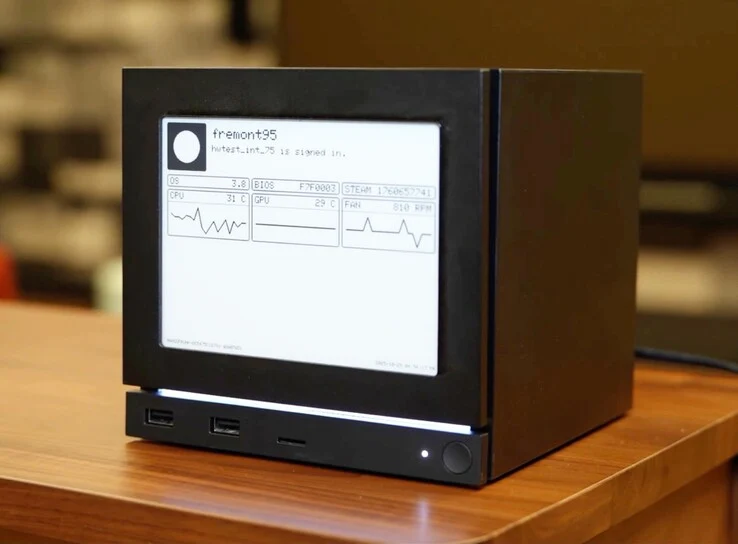
    In addition, Valve has introduced several printed front panels with various designs that users can easily change. The front cover of the Steam Machine attaches magnetically, making swaps simple. One of the most intriguing front panels showcased to select press includes an e-ink display capable of showing real-time metrics such as CPU and GPU load, along with fan speed.

    Sadly, this add-on is meant only for internal testing and won’t be available for purchase. Nevertheless, it’s likely that a third-party company will create something similar before long. Since Steam OS is built on Linux, users will have the ability to customize both the hardware and software, enabling them to modify their Steam Machine to fit their preferences. More information about Valve’s latest gaming console is available in our launch article.


    Source:
    Link


  • Affordable Steam Machine: Leaker Predicts Sub-$600 Price Tag

    Affordable Steam Machine: Leaker Predicts Sub-$600 Price Tag

    Key Takeaways

    1. The Steam Machine features a Zen 4 CPU, RDNA 3 GPU, and DDR5 memory, but its performance is expected to be similar to current-gen consoles like Xbox and PlayStation.

    2. The estimated hardware cost for the Steam Machine is around $425, suggesting a final price below $1,000.

    3. Valve may price the Steam Machine between $449 and $600, making it competitive with existing consoles.

    4. A price point under $600 would be beneficial for gamers, especially given the rising costs of gaming PCs and components.

    5. The official launch and final pricing details for the Steam Machine are expected in early 2026.


    Steam Machine, Valve’s upcoming home gaming console, is officially announced. This console comes equipped with a Zen 4 CPU, an RDNA 3 GPU, and DDR5 memory, all in a compact design. Despite these features, the specs and anticipated performance suggest that the Steam Machine may not stand out significantly. Gamers can expect it to perform similarly to the current-gen Xbox and PlayStation consoles.

    Affordable Options for Gamers

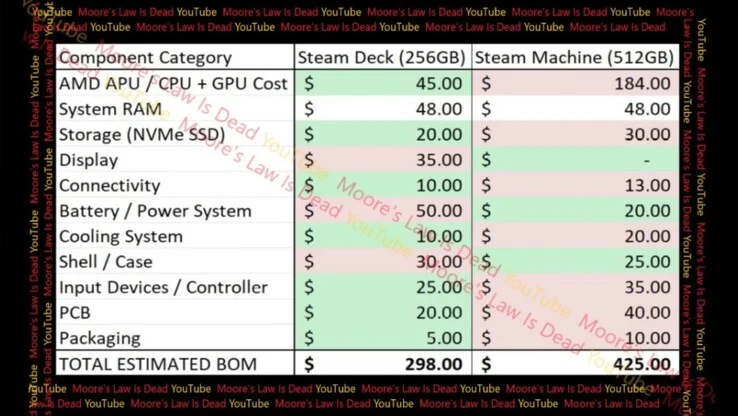
    While the performance of the Steam Machine may disappoint some, it brings good news for gamers who have faced high prices. With its low-end to mid-range components, the final cost is likely to be well below $1,000, as estimated in a Bill of Materials report by Moore’s Law Is Dead.

    According to MLID, the approximate hardware cost for the Steam Machine is around $425, compared to $298 for the Steam Deck (Available on Amazon). Given that Valve sells the 256 GB Steam Deck for $399, the Steam Machine could be priced at about $570 if Valve keeps the same 34% markup. It’s important to note that MLID’s price estimate does not factor in research and development and other related costs.

    Pricing Expectations

    MLID suggests that Valve might price the Steam Machine somewhere between $449 and $600. This pricing seems logical, as it aligns the Steam Machine with the Xbox Series X and the Sony PS5 (Available on Amazon).

    A price point of $600 or less would be excellent news for gamers overall. Due to issues like COVID-related shortages, the lack of affordable GPUs, and the continuous rise in DDR memory prices, putting together a decent budget gaming PC for under $600 has become almost impossible. Hence, the Steam Machine being available for below $600 would be a breath of fresh air.

    In conclusion, we won’t know the final pricing for the Steam Machine until its full launch scheduled for early 2026. So, it’s best to consider MLID’s estimate as simply that and nothing further.


    Source:
    Link


  • Valve Updates on Steam Deck 2 Plans After Steam Machine Launch

    Valve Updates on Steam Deck 2 Plans After Steam Machine Launch

    Key Takeaways

    1. Valve has launched new hardware, including the Steam Machine, but there is no news on the Steam Deck 2.
    2. Valve plans to release an enhanced version of the Steam Deck, but it will take time due to the need for significant technological advancements.
    3. The company is not interested in minor yearly upgrades, focusing instead on substantial improvements in performance and efficiency.
    4. Valve aims for a more significant performance increase rather than just incremental gains at the same battery life.
    5. The current handheld market has seen devices with high performance, but these often rely on external batteries, which Valve is not keen on.


    Valve has recently unveiled a fresh batch of hardware, and among them is the Steam Machine. This product represents Valve’s attempt to penetrate the home console market, yet there’s still no news about the anticipated Steam Deck 2. Despite this, the company did give some updates regarding their next-gen gaming handheld.

    Future Plans for Steam Deck

    In a chat with IGN, Pierre-Loup Griffais, a software engineer at Valve, mentioned that the firm intends to introduce an enhanced version of the Steam Deck in the future. Nevertheless, the timeline for this release appears to be more in the distant future, primarily due to the current technological landscape.

    Griffais echoed sentiments shared by Lawrence Yang from Valve, who pointed out that the company is waiting for a significant leap in both performance and efficiency. Reflecting on past comments, Yang had also mentioned to Reviews.org in 2024 that Valve is not keen on making minor upgrades every year, a principle that the company continues to uphold.

    Performance Expectations

    During the IGN discussion, Griffais emphasized that the team isn’t aiming for just a “20 or 30 or even 50% more performance at the same battery life.” Instead, Valve is looking for a change that is “a little bit more demarcated than that.” He indicated they have a “pretty good idea” about what the next Steam Deck could entail, but he also highlighted that there’s currently no System on Chip (SoC) option that meets Valve’s high standards.

    The Current Handheld Market

    Examining the current market, it’s clear that gaming handhelds have made significant strides in performance. Devices such as the OneXFly Apex and GPD Win 5 provide RTX 4070 Laptop-level GPU performance in a compact form. However, both of these options depend on external batteries (like the 100 W Anker 25K power bank, currently priced at $91.99 on Amazon), which is likely not something Valve is enthusiastic about.

    Source:
    Link


  • Valve’s Steam Machine: Compact Gaming PC with Custom AMD Chip

    Valve’s Steam Machine: Compact Gaming PC with Custom AMD Chip

    Key Takeaways

    1. The new Steam Machine features custom AMD hardware with six Zen 4 cores and a scaled-down Radeon RX 7600 GPU.
    2. It comes with 16 GB of DDR5 RAM and storage options of 512 GB and 2 TB, expandable via microSD.
    3. Connectivity includes multiple USB ports, HDMI 2.0, DP 1.4, Ethernet, Wi-Fi 6E, and Bluetooth 5.3.
    4. The console can run games at 4K resolution, likely requiring FSR support, and runs on SteamOS 3.
    5. Valve has not yet announced a price or release date, making a launch before 2026 unlikely.


    Valve’s previously abandoned Steam tabletop console has been revived as a new Steam Machine. Similar to the Steam Deck, it features custom AMD hardware with six Zen 4 cores and a 28 CU GPU (110 W TDP), which is a scaled-down variant of the Radeon RX 7600. Though not explicitly mentioned, this was verified by a Geekbench listing.

    Specifications and Features

    The new Steam Machine is equipped with 16 GB of DDR5 RAM and 8 GB of GDDR6 VRAM. For storage options, Valve offers models with 512 GB and 2 TB, with the potential for further expansion through a microSD card. It’s still unclear if users can upgrade the internal storage manually, but based on the Steam Deck, it seems likely.

    Connectivity Options

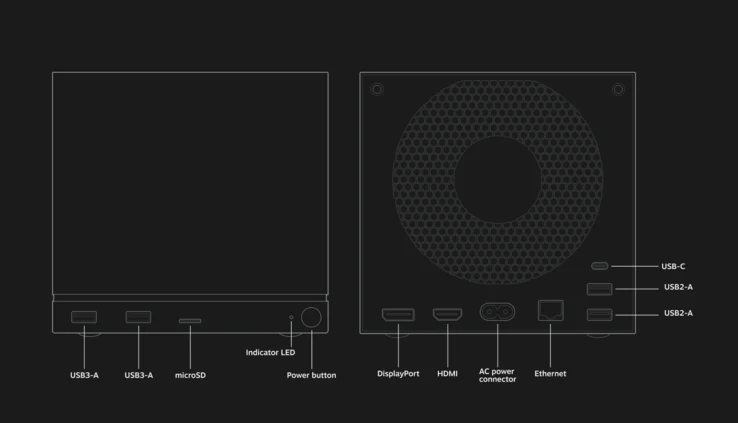
    In terms of connectivity, the Steam Machine includes a DP 1.4 port, an HDMI 2.0 port, two USB 3.2 Type-A ports, two USB 2.0 Type-A ports, one USB 3.2 Gen2 port, a 1 Gb/s Ethernet port, along with Wi-Fi 6E and Bluetooth 5.3.

    Valve asserts that the Steam Machine is capable of running games at 4K resolution, but this may require significant support from FSR due to the hardware’s limitations. It runs on SteamOS 3 right out of the box and features 17 addressable LEDs for extra personalization. The console’s dimensions are 152 mm x 162.4 mm x 156 mm, and it weighs 2.6 kilograms.

    Price and Release Date Uncertain

    Sadly, Valve hasn’t announced a price or release date yet. With the holiday season getting closer, it’s improbable that it will launch before 2026.

    Source:
    Link


  • Official New Steam Controller Features TMR Thumbsticks and Unique Look

    Official New Steam Controller Features TMR Thumbsticks and Unique Look

    Key Takeaways

    1. The new Steam Controller features a traditional layout similar to PlayStation controllers, moving away from the old design.
    2. It includes two capacitive touch zones below the thumbsticks for navigation, though they may cause unintentional inputs.
    3. The controller is equipped with innovative haptic gyro technology for enhanced control and four extra mappable buttons on the back.
    4. It charges via USB-C or a magnetic puck and is compatible with Steam Deck, Steam Machine, and any PC with Steam.
    5. Details about pricing and release date are currently unavailable.


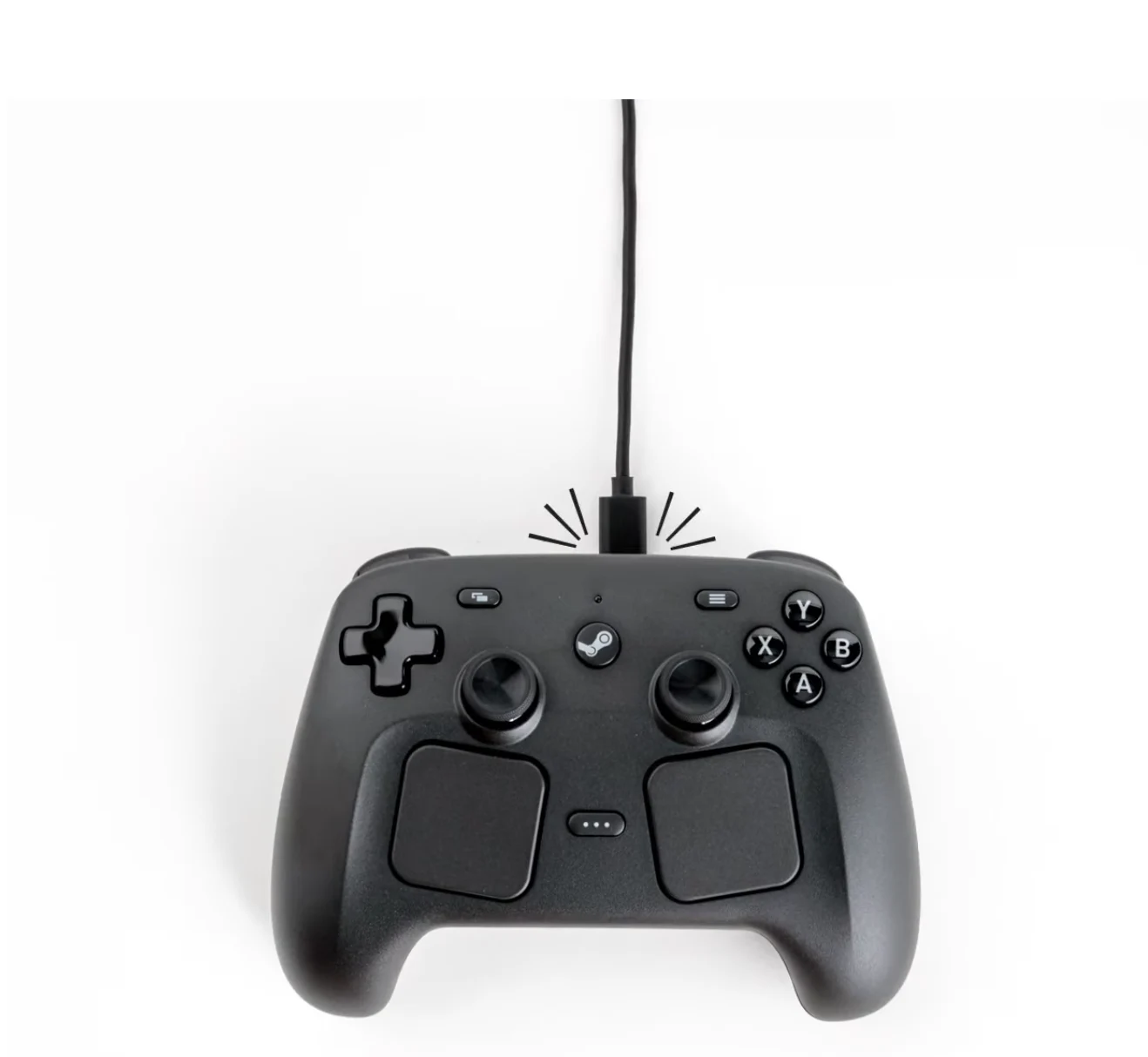
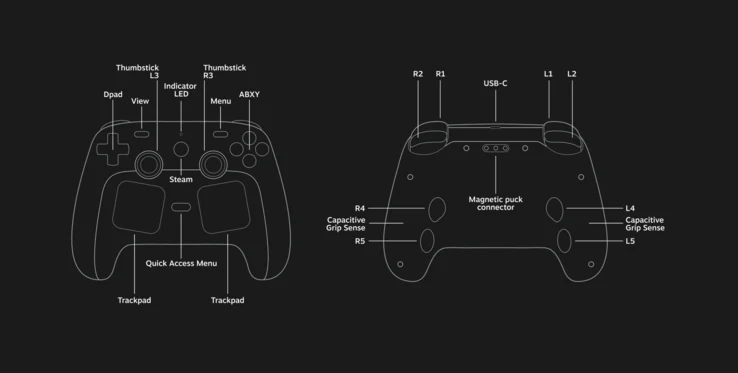
    Valve has finally revealed its anticipated Steam Controller successor. This new version abandons the design of the old model in favor of a more traditional layout similar to that of the PlayStation. It includes two capacitive touch zones located just below the thumbsticks, which could lead to a lot of unintentional inputs. These touch zones are likely intended to facilitate navigation through menus, similar to their function on the Steam Deck.

    Exciting New Features

    In addition to the new layout, the updated Steam Controller boasts Valve’s innovative haptic gyro technology, which allows for gyro controls when the controller is held at specific positions. Users can also assign additional functions to these touch zones. As a bonus, the controller features four extra mappable buttons located on the back. There’s a Steam button for quick access, along with another button specifically designed for fast access to Steam chat and other functionalities.

    Compatibility and Charging

    In contrast to the first-party controllers from Sony, Microsoft, and Nintendo, the Steam Controller is equipped with TMR sticks. It can be charged using a USB-C cable or a magnetic puck that connects to its pogo pins. This controller is compatible with the Steam Deck, Steam Machine, or any PC that has Steam. Other specifications include four haptic motors and support for both 2.4 GHz and Bluetooth connectivity.

    At the moment, similar to the Steam Frame and Steam Machine that were announced previously, there are no details regarding the price or release date for the Steam Controller.

    Source:
    Link