Tag: Unreal Engine

  • New Action-RPG Satire Game Launches on Steam with Discount

    New Action-RPG Satire Game Launches on Steam with Discount

    Key Takeaways

    1. Launch Details: Escape from Ever After was released on January 23, 2026, after six years of development, and it is available on Steam with a 20% launch discount.

    2. Gameplay Features: The game features a 2.5D paper aesthetic inspired by the original Paper Mario series, incorporating “timed-hit” action commands for battles and exploration in a corporate headquarters hub.

    3. Storyline: Players control Flynt Buckler, a hero who discovers that fairytale lands have been turned into labor hubs by a corporation called Ever After Inc.

    4. Initial Reception: The game has received positive reviews, especially for its soundtrack, but has faced criticism for technical issues and lack of localization in certain languages.

    5. System Requirements: Escape from Ever After runs on Unreal Engine, requires only 4 GB of RAM, and is playable on Steam Deck, though some text may be hard to read on the handheld display.


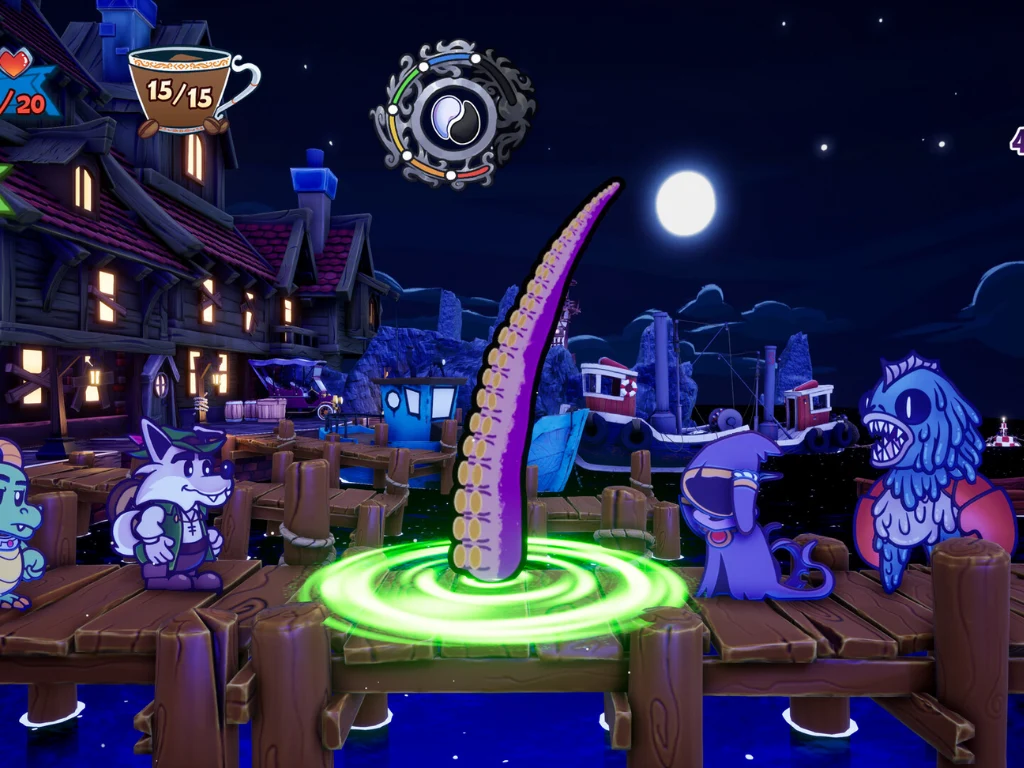
    After almost six years of hard work, Sleepy Castle Studio and HypeTrain Digital have finally launched Escape from Ever After on January 23, 2026. This game first gained some attention with its Onboarding prologue back in 2024, and it has now made its way to Steam, offering a 20% discount at launch. The game aims to stand alongside classic turn-based RPGs with a clear focus on satire. Players take on the role of Flynt Buckler, a hero from storybooks, who learns that his dragon enemy has been swapped out for middle managers. A real-world corporation, Ever After Inc., has turned fairytale lands into places for cheap labor.

    Gameplay and Mechanics

    The gameplay pays tribute to the beloved original Paper Mario series, featuring a 2.5D paper aesthetic and “timed-hit” action commands. To succeed in battles, players must actively hit buttons for extra damage and perform “flawless blocks” during defense. Beyond battles, players can explore the corporate headquarters hub where they can style their own office, chat with coworkers, and recruit other employees to fight against the board of directors.

    Initial Reception

    Though just released, the game has received very positive reviews so far, especially for its “jazzy, big-band soundtrack.” However, similar to other recent game launches, the 1.0 version of Escape from Ever After isn’t without its flaws. According to early feedback from Steam users, there are some “Day 1” technical issues, such as inconsistent parry timings and occasional softlocks in side quests. Additionally, there’s a lack of localization for certain languages, particularly French, which has left some players in the community hub feeling dissatisfied.

    System Requirements

    Escape from Ever After runs on Unreal Engine and is relatively easy to access. It requires only 4 GB of RAM and a basic GPU to run smoothly. For Steam Deck players, the experience is somewhat mixed: while the game is completely playable and performs decently, some in-game text can appear small and challenging to read on the handheld display. Despite these minor issues, the overall opinion is that Escape from Ever After effectively utilizes its storytelling, backed by sharp writing. The game is available for $19.99 after applying the 20% launch discount.

    Source:
    Link


  • New MMORPG on Steam: 5,000+ Reviews by Ex-Blizzard Team

    New MMORPG on Steam: 5,000+ Reviews by Ex-Blizzard Team

    Key Takeaways

    1. Unique Gameplay Approach: Eldegarde offers a different take on the extraction genre by incorporating fantasy elements with classes like Paladin, Rogue, and Wizard, moving away from traditional firearms.

    2. PvE-Only Mode Addition: The introduction of a PvE-only mode caters to players who prefer exploring and battling bosses without the threat of PvP, stabilizing the player community.

    3. Mixed Player Reviews: The game currently holds a “Mostly Positive” rating at 70%, but recent feedback for version 1.0 has dipped to 53%, with long-time players liking the “Lodge” system and newcomers criticizing combat and UI.

    4. Technical Demands: Built on Unreal Engine, Eldegarde has modern graphics but is resource-intensive, requiring manual adjustments for stable performance, especially on mid-range systems and Steam Deck.

    5. Monetization Concerns: While the game is free to play, players have expressed dissatisfaction with the costs of supporter packs and cosmetic items, raising questions about its monetization strategy.


    The extraction genre is really gaining traction these days. Many gamers are familiar with the shooting mechanics of titles like Tarkov or the newer games such as Arc Raiders. However, Notorious Studios is taking a different approach, believing that players might enjoy trading in their rifles for broadswords and magical spells. Eldegarde, which spent the past year in early access under the name Legacy: Steel & Sorcery, officially launched its version 1.0 on January 21, 2026. Led by Chris Kaleiki, a veteran from Blizzard, the team has worked for eleven months to find a balance between “hardcore PvPvE” and a more laid-back “mini-MMO” atmosphere.

    Simple Gameplay Mechanics

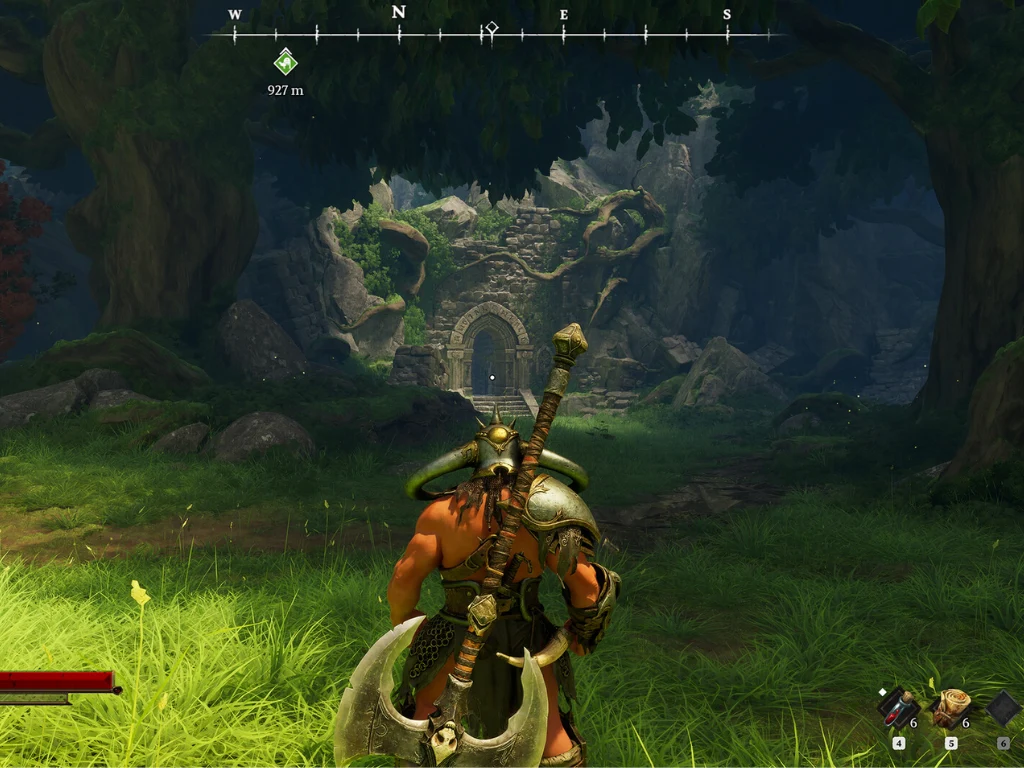
    The gameplay is quite simple: you choose one of six classic classes, including the Paladin, Rogue, or Wizard, and enter one of five distinct zones to hunt monsters, gather loot, and hopefully escape before another player gets you. A significant addition in the 1.0 release is a PvE-only mode, which the developers added after noticing that a large part of their player base just wanted to explore the world and battle bosses like Mor’thog the Cruel without the fear of being “ganked” by others. This was a clever decision that seems to have helped stabilize the player community, which saw a peak of 689 concurrent users within 24 hours of the update going live.

    Mixed Reviews and Player Feedback

    Currently, the reviews stand at a “Mostly Positive” 70%, but recent feedback on version 1.0 shows a more mixed sentiment at 53%. Long-time players appreciate the depth of the “Lodge” system, where you can create functional furniture like forges and beds for rested XP. However, newcomers have pointed out that the combat can feel somewhat “stiff,” and the user interface is a bit of a cluttered mess. There’s also some dissatisfaction regarding monetization; while gameplay is free, the costs of “God Tier” supporter packs and cosmetic items have raised some eyebrows among players.

    Technical Aspects and Performance

    Built on Unreal Engine, the game features modern enhancements like DLSS and Frame Generation. However, it can be quite resource-intensive, often requiring players to manually adjust settings to achieve stable frame rates on mid-range systems. For those using Steam Deck, it’s a “Some Assembly Required” scenario. The game is playable, but players may struggle with the default controls and often need to pull up the virtual keyboard just to navigate basic UI elements. It’s evident that this is a passion project from a team with AAA backgrounds, but the long-term sustainability of its community will depend on how quickly they can improve movement animations.

    Source:
    Link


  • New Space Colony Simulation Launches on Steam with Discount

    New Space Colony Simulation Launches on Steam with Discount

    Key Takeaways

    1. Realism Focus: Solargene emphasizes realistic space exploration, requiring players to perform actual calculations for transfer orbits and manage various challenges related to space missions.

    2. Crew Management: Players must ensure the survival of a crew with unique skills and characteristics, facing threats like radiation and temperature changes.

    3. Mixed Reviews: The game has an overall positive rating of 80%, but recent reviews have dropped to 71%, indicating challenges for new players with the user interface and learning curve.

    4. Lightweight Requirements: Solargene runs on Unreal Engine and can function on basic computers, needing only 4 GB of RAM, making it accessible to a wider audience.

    5. Discounted Price: The game is currently available for $29.74 during its launch discount, encouraging players to try it out.


    Space colony builders often take one of two paths. You might find yourself in the “choose your own tragedy” approach of RimWorld or opt for the more simplified management-style gameplay like in Surviving Mars. However, there’s a unique group of enthusiasts in this genre that actually desires a challenging mathematical experience. Solargene is a game that delivers on that front. After an extensive four years in early access, solo developer Alexander Semenov finally released the 1.0 version on January 20, 2026. This ambitious project encourages players to think beyond just one planet and focus on how to industrialize the entire solar system.

    Realism as a Key Feature

    The primary draw of this game appears to be its realism. You’re not merely pressing a button to dispatch a ship; you’re engaging in real calculations for transfer orbits. If you neglect to consider mass, fuel, and engine specifications, your mission will fail to launch. You’re running a private space corporation where every station on the Moon or mining operation on an asteroid presents its own unique challenge. Furthermore, you must ensure the survival of your crew, who aren’t just faceless drones—they possess their own characteristics and skills that develop over time. With threats like radiation, solar flares, and extreme temperature fluctuations, Solargene provides a simulation that truly captures the perilous nature of outer space.

    Mixed Reviews Since Launch

    Currently, the game holds an 80% positive rating from around 690 reviews, but most of these were submitted during its early development stages. Since the 1.0 release, the “Recent Reviews” have dropped to a 71% “Mostly Positive” based on a mere 21 new submissions. A glance at the latest reviews suggests that while long-time supporters are thrilled to see the game completed, new players are facing the typical solo-dev challenges: a user interface that resembles an engineering spreadsheet and a steep learning curve that may seem quite harsh.

    System Requirements and Availability

    Surprisingly, the game is quite lightweight. It operates on Unreal Engine and can run on virtually any basic computer system, requiring only 4 GB of RAM to get going. Though it’s technically “Playable” on the Steam Deck, be warned: the text is small and you might struggle with the on-screen keyboard at times. According to SteamDB, the 1.0 launch saw a peak of 244 players. If you’re interested in diving in, it’s available for $29.74 (down from $34.99) until the 15% launch discount expires.

    Source:
    Link


  • Ancient China City Builder Game Launches on Steam with Early Access Discount

    Ancient China City Builder Game Launches on Steam with Early Access Discount

    Key Takeaways

    1. Cultural Heritage and Gameplay: Celestial Empire combines the rich culture of imperial China with strategic city-building mechanics in a sandbox environment.
    2. Positive Reception: The game has received strong reviews, with a very positive rating from 53 reviews, highlighting its stunning visuals and deep mechanics.
    3. Immersive Environments: Players can build and manage their empire across beautifully rendered terrains, utilizing advanced graphics technology.
    4. Complex Gameplay Elements: The game features handcrafted terrains, over 120 unique buildings, and various resources, with challenges such as natural disasters and citizen morale.
    5. Single-Player Focus: Celestial Empire is designed exclusively for single-player gameplay, lacking a multiplayer mode.


    President Studios, a game dev team based in Warsaw, has launched its new title, Celestial Empire, into Early Access. City-building fans are keeping a close eye on this game, which is currently ranked #38 on Steam’s wishlists, quite an achievement in its own right.

    A Blend of Culture and Mechanics

    Celestial Empire brings together the rich cultural heritage of imperial China with intricate, strategic city-building gameplay. The game mixes production and management elements in a sandbox environment, adding layers of complexity that many city builder enthusiasts would enjoy.

    Positive Reception and Visual Splendor

    The game has received strong reviews, with a very positive rating from a sample of 53 at the time this was written. It boasts stunning visuals that draw inspiration from the aesthetics of ancient Chinese empires and offers a depth of mechanics deeply rooted in the lore of that era.

    Founded in 2018, President Studios has a strong focus on narrative-driven simulators and strategy games, aligning their designs with popular cultural trends. Their most well-known title is Crime Scene Cleaner. With a team of about 26, Celestial Empire has been in the works for over five years.

    Immersive Gameplay and Stunning Landscapes

    Players can construct, manage, and expand their empire across breathtaking terrains such as bamboo forests, rugged mountains, lakes, and rivers, all beautifully rendered using the advanced Unreal Engine’s Nanite Geometry System and NVIDIA DLSS 3.

    Celestial Empire features handcrafted terrains rather than randomly generated maps, with more than 120 unique buildings, over 60 types of resources, and a production pipeline designed to challenge players with various events and scenarios. Players must prepare for seasonal changes, fires, floods, and other natural disasters, while also managing citizen morale, divine favors, and the mystical elements of a complex system to “maintain the Mandate of Heaven.”

    Single-Player Focus

    For those looking for a multiplayer experience, Celestial Empire may not meet expectations; it is entirely focused on your single-player journey to shape the destiny of your dynasty.

    Source:
    Link


  • First Look at Kojima’s New OD Xbox Game Revealed

    First Look at Kojima’s New OD Xbox Game Revealed

    Key Takeaways

    1. Hideo Kojima announced his collaboration with Xbox for a new game titled “OD,” featuring a blend of gaming and cinematic experiences that explore deep themes of fear.

    2. The recently released trailer showcases a tense atmosphere with impressive details, highlighting the use of Unreal’s MetaHuman technology for realistic facial animations.

    3. The game’s subtitle, “Knock,” is inspired by Kojima’s personal fear of loud knocks, emphasizing his focus on rooting horror in everyday experiences.

    4. Jordan Peele is involved in the broader OD project, suggesting that OD may evolve into something larger than just one release.

    5. Development is progressing well, with Xbox providing significant technical support, while Kojima teases that the game will be truly terrifying, leaving many details intentionally vague.


    Hideo Kojima first revealed his collaboration with Xbox to create a new game back in 2022, later sharing a teaser that unveiled the title OD along with some of the cast. Recently, a three-minute trailer was released during the Kojima Productions: Beyond the Strand livestream, showcasing the game and reinforcing Kojima’s claim that it will be both one-of-a-kind and deeply immersive. The game is promoted as a blend of gaming and cinematic experience, aimed at exploring themes that push “your fear threshold.”

    Tension in the Trailer

    The trailer begins with Sophia Lillis’ character using a red card to open a red door, leading her into a dimly lit room filled with candles. The atmosphere is quiet but thick with tension. Outside the rain falls, and there are knocking sounds, while the candles themselves are unsettling—some even resembling the creepy baby pods from Death Stranding. This suggests that the real danger lies not in what is visible but in the unseen. At one point, a noise reminiscent of a Geiger counter grows louder as a shadow looms closer, culminating in a shocking moment where the figure grips Lillis’ head, creating a sense of intimate fear.

    Impressive Details and Inspiration

    The level of detail is remarkable. The facial animations, crafted with Unreal’s MetaHuman technology, capture every flicker of fear from quivering lips to shifting eyes, making the atmosphere feel more like a psychological film than a typical game trailer. Kojima shared on stage that the game’s subtitle, Knock, stems from his personal fear of loud knocks, a sound that disturbs him more than anything else. This seemingly straightforward choice underscores his continuous focus on rooting horror in mundane details that suddenly feel strange and unsettling.

    Kojima also mentioned that Jordan Peele, who is involved in the broader OD project, is working on a different segment of the experience. This may clarify why there’s a distinction in branding between OD Knock and Peele’s role, hinting that OD could eventually evolve into something larger than just one release. Xbox is offering significant technical assistance for the project, with Phil Spencer emphasizing that Microsoft’s involvement extends far beyond just visual support.

    Ongoing Development and Mystique

    Spencer described OD as “bold, unique, and unmistakably from this studio,” while confirming that development is advancing well. Meanwhile, Kojima praised Unreal Engine as a significant improvement compared to the technology used for Death Stranding 2, which continues to utilize Sony’s Decima engine.

    What makes OD particularly captivating is how little we actually know about it. The trailer hints at a storyline that may occur ten years after a mysterious incident, but the specifics are purposefully hidden, leaving viewers with more questions than clarity. Kojima also cautioned the audience that the game will be truly terrifying, even joking that players might end up soiling themselves during gameplay. This kind of statement is typical of him, but combined with the footage, it carries a heavier significance.

    Source:
    Link


  • Subnautica 2 Dev Vlog: New Leviathan Collector Revealed

    Subnautica 2 Dev Vlog: New Leviathan Collector Revealed

    Key Takeaways

    1. The Collector Leviathan is designed with a “Cthulhu-inspired” aesthetic featuring four terrifying tentacles for interaction with players.
    2. The modeling process involved starting from a single sphere and required extensive detail work to ensure visual realism due to the creature’s large size.
    3. Innovative technologies like Blender and Unreal Engine’s new rigging system were utilized for advanced modeling and animation techniques.
    4. Complex tentacle physics were developed to create realistic interactions between the creature and players, enhancing immersion.
    5. The creature’s AI features dynamic behavior that adapts in real-time based on player actions, contributing to unique gameplay experiences.


    Unknown Worlds Entertainment has shared a sneak peek of one of the most fearsome creatures in Subnautica 2 via their third developer vlog. This 10-minute video digs deep into the creation journey of the frightening Collector Leviathan. Previous leaks have already hinted at the biomes, and this new information about the Leviathan aligns with another leak regarding the Subnautica 2 playtest.

    The Creatures Early Design

    The video kicks off with Cory Strader, the Visual Development Lead, who mentions that the creature started with “multiple rounds of quick, low-detail thumbnail sketches,” focusing on various shapes and silhouettes. The team intentionally designed a “Cthulhu-inspired beast” that has “four tentacles that grab, crush, swat, and terrify players.”

    The Modeling Process

    Lead Character Artist Marcelo Figueredo shared insights into the modeling phase, beginning from “a single sphere” and expanding outwards similar to traditional clay sculpting. Due to the creature’s massive proportions, it took “many, many hours of drawing little wrinkles and pores” to keep the visual quality high and ensure it looks believable up close.

    Innovative Technologies

    Principal Animator Colin Knueppel discussed the use of innovative technology, showcasing Blender for modeling and Unreal Engine’s control rigging system for the first time in the series’ history. “The workflow has some cool innovations new to rigging systems,” he stated, making possible “previously impossible rigging techniques.”

    Tentacle Physics

    Senior Technical Animator Stefaan Sorensen developed complex tentacle physics that function entirely within Unreal’s system, aimed at providing “a sense of weight and flow within water.” The main hurdle was crafting seamless interactions between the player and tentacles using “custom-built synchronization systems.”

    Reactive Intelligence

    AI Gameplay Lead Antonio Muñoz Gallego presented the creature’s smart behavior, utilizing enhanced behavior trees with “dual utility reasoning.” The leviathan “constantly re-evaluates the situation in real time,” leading to dynamic encounters that adjust based on player actions and environmental elements like flares.

    Development Overview

    Lastly, Designer Louis Karim discussed the thorough development process, which began with detailed documentation and storyboards. VFX Artist Laura Nedal elaborated on how particle effects transform “gameplay into visual cues” while emphasizing the creature’s alien characteristics.

    The Collector Leviathan reveal comes at a time when Subnautica 2’s future appears uncertain. Initially set for Early Access in 2025, the game has been pushed back to 2026 due to major leadership shifts at Unknown Worlds. Despite the controversy surrounding Krafton’s acquisition of the studio and the exit of series creators, the sequel’s development seems to be progressing well.

    Source:
    Link


  • CheckMag Steam Launch: New Half-Life Style Co-Op Game Hits 1K Reviews

    CheckMag Steam Launch: New Half-Life Style Co-Op Game Hits 1K Reviews

    Key Takeaways

    1. Successful Launch: Abiotic Factor gained nearly 1,000 “Overwhelmingly Positive” reviews on Steam within a day of its version 1.0 release, achieving a 96% approval rating from over 32,000 reviews.

    2. Creative Gameplay: Players are encouraged to use creativity over repetitive tasks, crafting weapons from everyday items while managing vital stats like hunger and fatigue.

    3. Cooperative Features: The game supports up to six players sharing world saves and includes twelve unique scientific roles, enhancing cooperative gameplay and role-playing opportunities.

    4. Community Engagement: The game has a growing community, with its subreddit reaching over 20,000 members on launch night and extensive guides and wikis emerging shortly after release.

    5. Ongoing Support: Deep Field Games has committed to year-one support with regular updates, including seasonal content and patches, while the game has already sold nearly 1 million copies.


    Abiotic Factor is a fresh and uncommon survival-crafting game that combines nostalgia reminiscent of Half-Life, cooperative fun, and intricate systems design. When version 1.0, titled “Cold Fusion,” was released on July 22, 2025, it quickly gained nearly 1,000 “Overwhelmingly Positive” reviews on Steam within just one day, boosting its total approval rating to 96 percent from over 32,000 user reviews.

    The Creators Behind the Game

    Deep Field Games, the studio behind this title, is an independent company based in New Zealand. It was established by Geoff “Zag” Keene, known for creating Unfortunate Spacemen, along with several industry experts who share a passion for cooperative storytelling. In various interviews, the developers express their goal of prioritizing “brains over brawn,” suggesting that players should depend on creativity rather than repetitive tasks like chopping wood endlessly.

    Early Success and Features

    The game’s demo was released in February 2024 and was met with remarkable success, generating close to 250,000 wishlists on Steam in its opening week. The initial early access phase (version 0.8) came out over a year later, priced at $24.99, with a 20% discount available. Regular updates every three to five weeks introduced features like fishing, jetpacks, quantum exchangers, and sector expansions. Additionally, Deep Field’s clear Trello roadmap and Discord AMAs helped build a community of nearly 101,000 followers on Steam.

    In Abiotic Factor, players find themselves in 1997 beneath the Gate Cascade Research Facility after a tier-one containment breach releases anomalies and cult soldiers. Scientists must creatively craft weapons using everyday items like desk lamps and couch cushions while figuring out how to navigate inter-dimensional portals.

    Gameplay Mechanics

    Players must manage vital stats such as hunger, thirst, fatigue, and continence, which can affect buffs and debuffs, including one called Souper Satisfied. The night cycle introduces power outages at 9 PM, prompting security-bot sweeps; players can reduce risks with portable batteries or sleeping pods. Crafting is enhanced by a minigame where players mentally “design” gadgets before making them.

    Character and Co-op Features

    There are twelve scientific roles available—like Plant Geneticist, Structural Engineer, and Gastro-Chef—that provide different stats and unique blueprints. A trait economy also supports role-playing among players. Up to six players can share world saves, and physics-based logistics—like forklifts, hand-carts, and teleporters—enable teams to move entire bases across sectors. The game now allows Steam cross-play with PS5 and Xbox servers, creating unified friends lists.

    Technical Aspects

    Built on the Unreal Engine, the game offers full controller mapping and is certified as “Steam Deck (currently $780 on Amazon) Playable.” It also features dedicated servers available through a free depot. Version 1.0 includes console HDR calibration, haptic triggers, and performance presets aiming for 60 fps on Series S consoles.

    PC Gamer has praised Abiotic Factor as “one of the greatest survival-crafting games ever made,” following 80 hours of group gameplay. YouTube reviewers have likened its “N64-era colors and mad-science slapstick” to a blend of Lethal Company and Half-Life, both considered iconic games.

    Community Engagement

    The subreddit r/AbioticFactor grew to over 20,000 members on launch night. Streamers like Dr Incompetent and Worth A Buy produced 90-minute beginner guides just days after the early access launch, contributing to a well-developed wiki that now receives over 2 million monthly views.

    Abiotic Factor’s release is part of a five-year trend of “intelligent” survival sandboxes, such as Palworld, Enshrouded, and V Rising, where creative sub-themes (like Pokémon guns, voxel fog, and a vampiric renaissance) breathe new life into familiar gameplay loops. For instance, the focus on bodily functions, straightforward objective chains, and limited firearms demonstrates how smaller studios are exploring new angles that build on risk.

    Deep Field has committed to providing year-one support, including seasonal anomalies, a mod-kit beta, and console parity patches every six weeks. With ownership estimates nearing 1 million copies sold and a 4.43-star rating on PlayStation, the game seems poised for mainstream success. Abiotic Factor shows that survival can be even more enjoyable with safety goggles and humor. Check out the game here, priced at $27.99 after a 20% launch discount.

    Source:
    Link


  • AMD Zen 6 Leak: Targeting Up to 7 GHz Boost for Gaming Performance

    AMD Zen 6 Leak: Targeting Up to 7 GHz Boost for Gaming Performance

    Key Takeaways

    1. AMD’s upcoming Zen 6 CPUs may reach clock speeds of 7 GHz or more, marking a significant increase over previous Ryzen chipsets.
    2. The Zen 6 architecture will feature a “two to three node jump” from Zen 5, improving architectural efficiency and transistor density.
    3. Zen 6 is expected to have 12 unified cores, while Intel’s Nova Lake may include 16 unified P-cores, raising concerns about high core counts in gaming.
    4. High core counts can lead to trade-offs, such as race conditions and rendering issues, complicating game development despite improvements in parallel workload handling.
    5. Low-power Zen 6 cores under 1 watt could enhance efficiency for devices like the Steam Deck, though there are concerns about compatibility with older games at high clock speeds.


    A recent leak from Moore’s Law Is Dead reveals that AMD’s upcoming Zen 6 CPUs might showcase significantly higher clock speeds than any Ryzen chipsets seen before. Although the precise figures aren’t made public, the leak, discussed by Tom Guinet and guest Jesse Brandon, hints at speeds that could reach or even exceed 7 GHz in certain situations, described as “as crazy as you think it is.”

    Next-Level Technology

    According to Tom, the Zen 6 architecture will represent a “two to three node jump” from Zen 5, indicating not only a remarkable increase in clock speeds but also a notable improvement in architectural efficiency and transistor density. The Zen 6 X3D versions are expected to incorporate extensive 3D V-Cache alongside these high clock speeds, potentially changing the gaming performance landscape, as Tom suggests.

    Core Count Competition

    During their discussion, Jesse pointed out that AMD is aiming for 12 unified cores in Zen 6, while Intel’s upcoming Nova Lake is anticipated to feature 16 unified P-cores.

    Additionally, they brought up worries from various game developers, especially those using Unreal Engine, about the long-term feasibility of very high core counts in consumer CPUs.

    Trade-offs in Performance

    While Unreal Engine 5.6 has improved in handling parallel workloads, Jesse claims this development often brings trade-offs. These trade-offs include more race conditions, rendering issues, and greater complexity, which complicates both development and debugging processes.

    Race conditions happen when multiple threads try to access or change the same data at once, causing unpredictable bugs that are hard to reproduce and resolve. Jesse believes that maintaining strong single-threaded performance and high clock speeds is vital for consistent gaming performance today.

    Low-Power Potential

    Tom also mentioned the exciting possibility of low-power Zen 6 cores that use less than 1 watt. He argues that such efficiency could make these cores suitable for devices like the Steam Deck or future gaming consoles. For context, the PS4 had a dedicated ARM chip for managing sleep mode and background tasks, and while the PS5 is suspected to follow a similar approach, there’s yet to be any official confirmation or teardown proof to confirm the existence of a dedicated ARM processor.

    Concerns were raised about possible compatibility issues with older games when operating at extremely high clock speeds, leading to a wider discussion about the balance between frequency and core counts. For a more detailed look and technical insights, be sure to check out the full video linked below.

    Source:
    Link

  • Epic Games Enhances Live Link Face for Real-Time iPhone Mocap

    Epic Games Enhances Live Link Face for Real-Time iPhone Mocap

    Key Takeaways

    1. Epic Games released version 1.4.2 of the Live Link Face app, improving real-time facial capture for iPhone users by fixing a manual IP address entry issue.
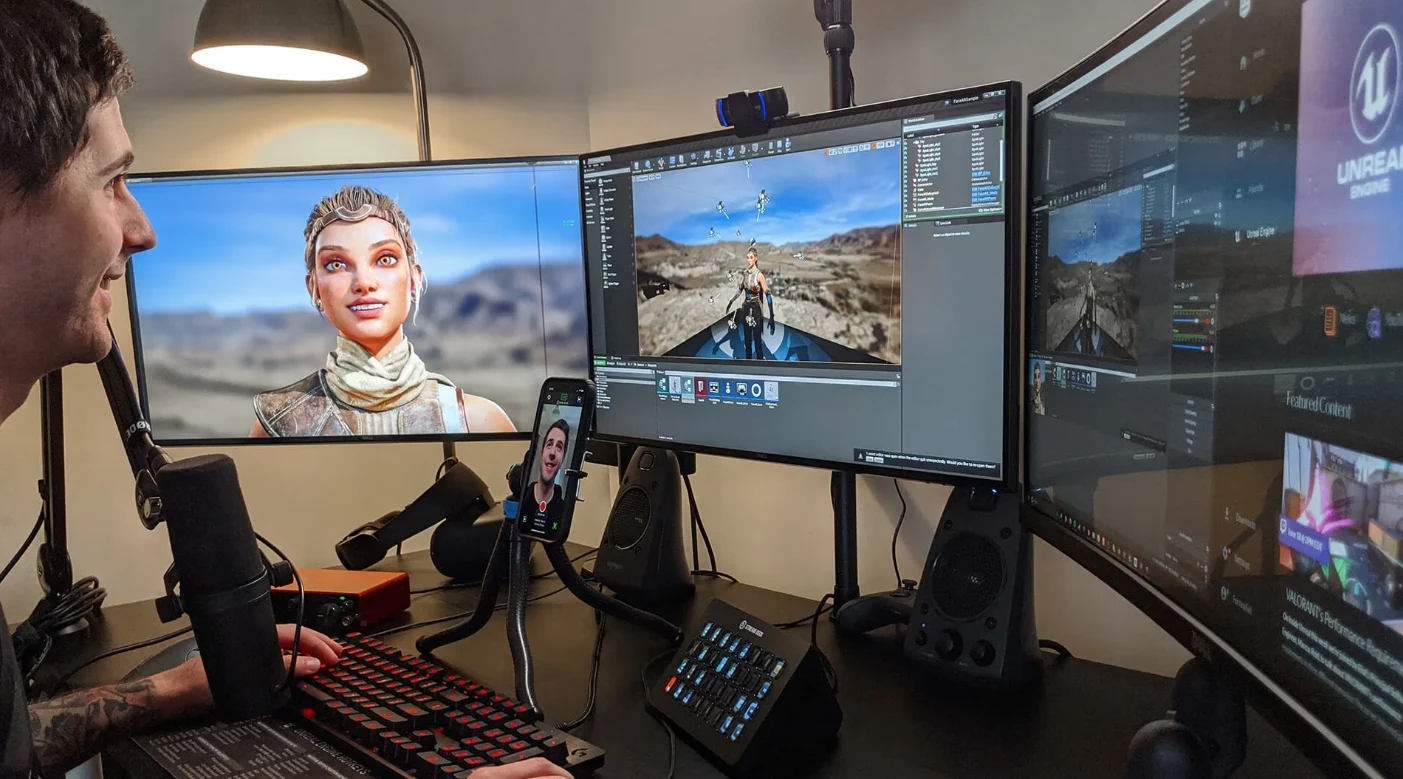
    2. Live Link Face allows users to stream facial motion data directly from an iPhone’s TrueDepth camera into Unreal Engine, enhancing digital character animation.
    3. The app supports creators in various fields, such as indie game development and livestreaming, by making high-quality facial animation accessible with common devices.
    4. Epic Games explored biometric applications, proposing a facial recognition system for age estimation to enhance online safety for kids, though the FTC rejected the proposal.
    5. Live Link Face remains free on the App Store and is regularly updated, with version 1.4.2 providing important usability improvements for creators in unique network setups.


    Epic Games has rolled out version 1.4.2 of its Live Link Face app, bringing a small yet meaningful fix that improves the real-time facial capture for iPhone users. This update addresses a regional problem that had stopped some users from entering IP addresses manually, which is essential for connecting the app to Unreal Engine in various network settings.

    Enhancing Real-Time Facial Capture

    Originally launched in 2020, Live Link Face allows users to stream facial motion data straight from an iPhone’s TrueDepth camera into Unreal Engine. When paired with MetaHuman Animator, creators can apply detailed facial movements to digital characters instantly, eliminating the need for complex studio motion capture setups.

    Epic Games remarked in their announcement, “Every subtle expression, look, and emotion is accurately captured and faithfully replicated on your digital human.”

    Valuable Tool for Creators

    This technology is becoming more important in many creative fields. Indie game developers, animation studios, VTubers, and livestreamers are all leveraging this tool to bring their digital characters to life with expressive, real-time performances. Aaron Sims, a well-known character designer from films like Men in Black and Gremlins 2, has commended this progress, saying, “We can take the realism all the way down to the pore. As someone who used to make puppets and prosthetics, now I can do anything I want.”

    Epic’s app also supports the company’s larger goal of making high-end animation workflows accessible to more people. By reducing the entry barriers, they allow smaller teams and individual creators to achieve professional-level facial animation using commonly available devices like the iPhone.

    Exploring New Applications

    Beyond just performance capture, Epic has also looked into biometric uses. In 2023, the company collaborated with identity verification companies Yoti and SuperAwesome to suggest a facial recognition system for estimating age. This proposal was submitted to the US Federal Trade Commission, aiming to enhance online safety for kids with privacy-focused age verification methods. Although the FTC ultimately rejected the proposal, PC Gamer mentioned that the concept may not be entirely off the table.

    As of April 2025, Live Link Face is still available for free on the App Store and continues to get regular updates. While version 1.4.2 is somewhat minor, it provides crucial usability enhancements for creators dealing with non-standard or limited network configurations.

    Source:
    Link


  • Unity 6 Launches with Windows on Arm Support and Enhanced Graphics

    Unity 6 Launches with Windows on Arm Support and Enhanced Graphics

    Unity has released its newest game development engine, Unity 6, enabling game developers to build video games efficiently on Windows, Macs, and Linux systems.

    Custom Engines vs. Unity

    Game studios, such as Kojima Productions, often utilize proprietary game engines tailored for their major titles. This approach allows them to integrate distinctive features that are absent in standard game engines and address bugs swiftly. Among the game development engines available, Unreal Engine is recognized as the most robust and feature-rich. Although it’s a commercial product, it has been utilized to create blockbuster games like BioShock, Fortnite, and Black Myth: Wukong.

    Simplicity for Smaller Studios

    Nevertheless, the intricacy of custom engines or Unreal Engine can slow down the development process for smaller studios. The complexity and the multitude of operating systems, CPUs, and GPUs can pose challenges. In such cases, a more straightforward commercial engine like Unity can significantly reduce the time and resources needed to test and release simpler games.

    New Features in Unity 6

    The latest version introduces various essential features aimed at helping developers produce visually appealing games more swiftly. Graphics rendering has been enhanced, boasting up to 50% better performance compared to its predecessor. Unity 6 incorporates Spatial-Temporal Post-Processing (STP), which upscales low-resolution images in real-time, contributing to improved game performance. Additionally, the rendering of environmental elements such as skies, water, foam, and plants has been upgraded for a more lifelike gaming experience.

    Moreover, Unity 6 brings an upgraded Sentis AI library, enabling games to respond in real-time to inputs from cameras, microphones, and other sensors. Developers can select AI tools from well-known sources like Hugging Face. The UI (User Interface) Toolkit and game editing tools, including ProBuilder and Cinemachine, have been refined to enhance developer efficiency. The latest iteration also introduces support for Windows on Arm for both the editor and compiled applications, making it compatible with the specialized Snapdragon X computers. However, game developers usually require high-performance machines with strong graphics cards, such as the ASUS ROG Strix Scar 16 (available on Amazon), to ensure high productivity and compatibility with widely used tools like Autodesk Maya and Adobe Creative Cloud, which are not compatible with Snapdragon X CPUs.

    Unity 6, Unity on YouTube, Unity blog post.