Key Takeaways
1. Apple introduced the Foundation Models framework as part of Apple Intelligence, enabling developers to use large language models directly on devices.
2. The framework emphasizes user privacy and offline functionality, with inference done at no cost to reduce server dependency.
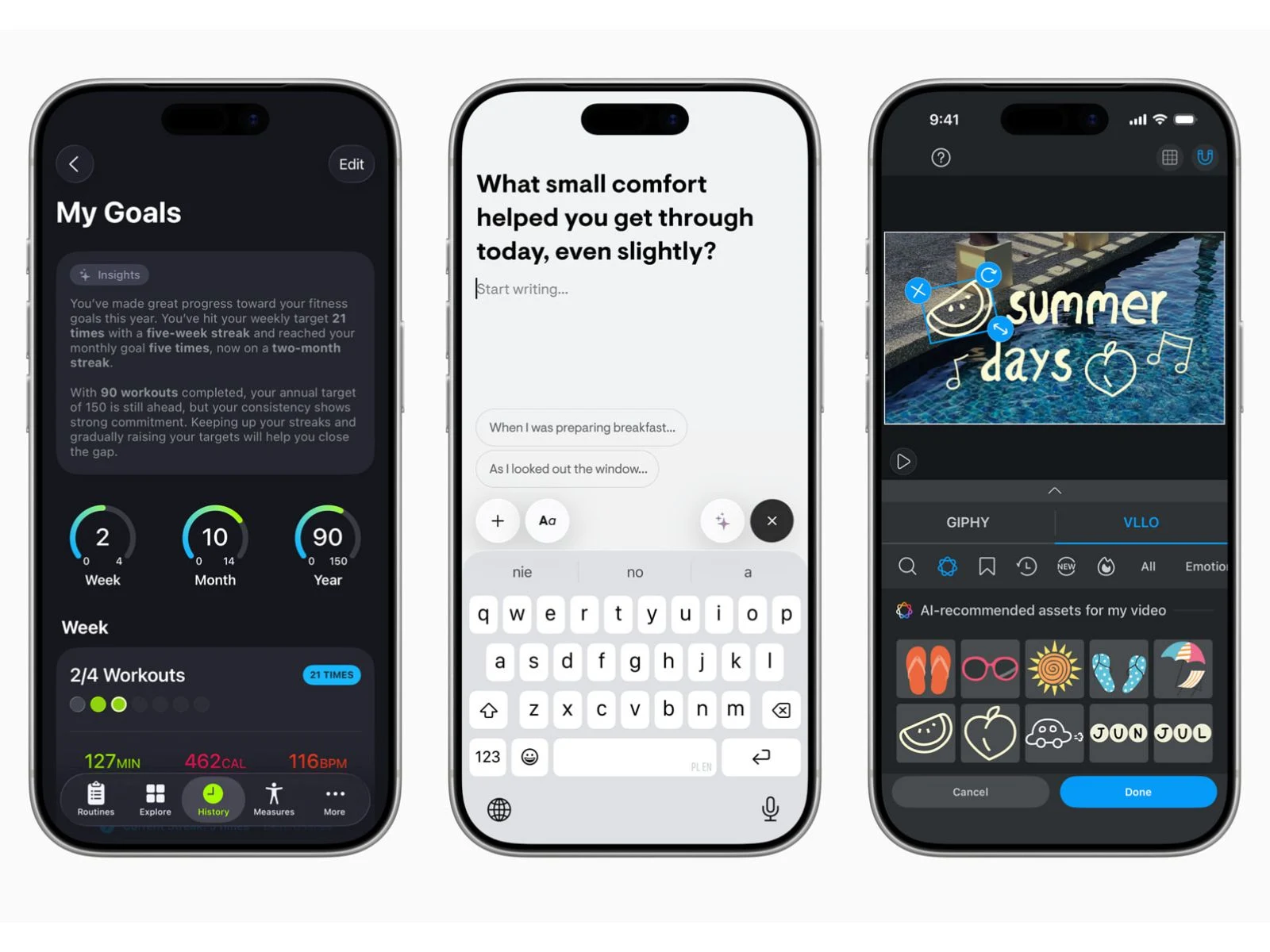
3. Early feedback from developers highlights impressive use cases, such as journaling prompts in Stoic and scientific explanations in CellWalk.
4. The framework supports various app categories, including health (SmartGym), education (CellWalk), and productivity tools (Stuff, VLLO).
5. Foundation Models is integrated with Swift and offers beta support for nine languages, including English, French, and Japanese.
Apple has introduced its Foundation Models framework, which is an essential component of Apple Intelligence, alongside the launch of iOS 26, iPadOS 26, and macOS 26 this month. The company claims that this framework allows developers to incorporate large language models directly on devices, opening up new functionalities while maintaining user privacy and ensuring that apps can work offline. Furthermore, Apple mentions that inference is done at no cost, minimizing the reliance on server infrastructure.
Adoption and Feedback
Susan Prescott, who is Apple’s vice president of Worldwide Developer Relations, mentioned that early uptake has been impressive. “From creating journaling prompts that ignite creativity in Stoic, to providing conversational explanations of scientific terms in CellWalk, it’s amazing to witness the new powerful capabilities that are already improving the applications people utilize each day,” she stated.
Examples Across Categories
Apple showcased various examples spanning different app categories. In the health and fitness realm, SmartGym supposedly allows users to articulate their workouts in everyday language, transforming them into structured routines, while Stoic offers journaling prompts based on recent entries, all processed on the device. Other applications such as SwingVision, 7 Minute Workout, Gratitude, and Train Fitness are reportedly offering personalized coaching and summaries through this framework.
Educational and Creative Applications
Educational apps like CellWalk, Grammo, and Platzi are said to give conversational explanations of scientific or grammatical concepts, generate new practice questions, or respond to lesson-specific inquiries. Additionally, productivity and creative tools such as Stuff and VLLO are claimed to take advantage of task automation and video editing suggestions that are powered by Apple Intelligence.
Apple asserts that the Foundation Models framework is closely integrated with Swift, offering guided generation and tool calling. It is currently available on devices compatible with Apple Intelligence, with beta support for nine languages, which include English, French, German, Japanese, and simplified Chinese.
Source:
Link