Tag: OLED display

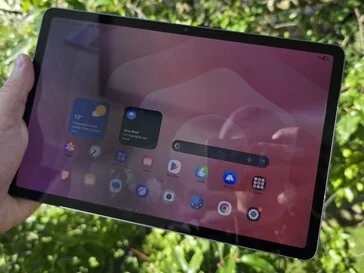
  • Samsung Galaxy Tab S11 vs. Galaxy Tab S20: A Missed Opportunity

    Samsung Galaxy Tab S11 vs. Galaxy Tab S20: A Missed Opportunity

    Key Takeaways

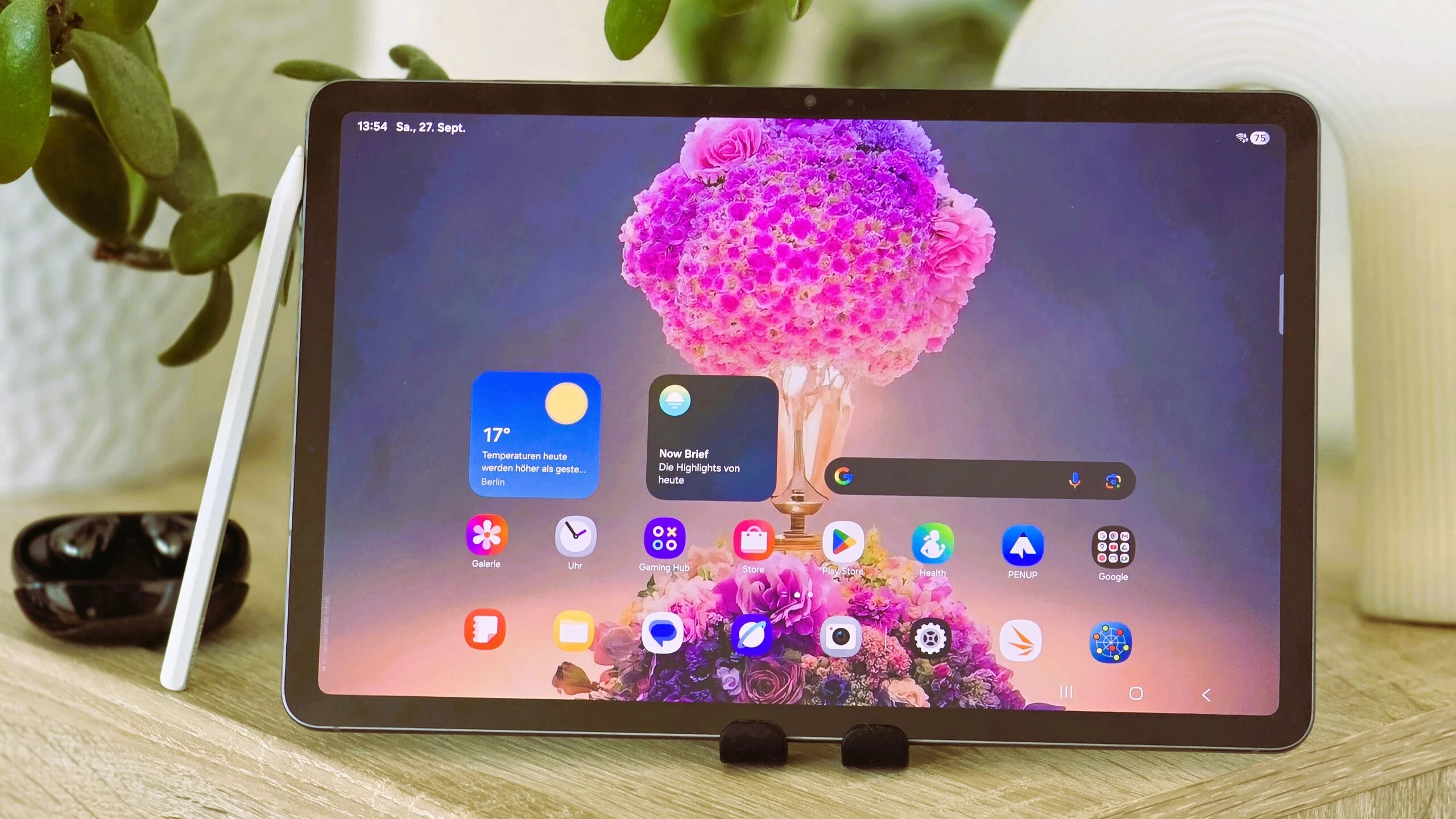
    1. The Samsung Galaxy Tab S11 features a durable, waterproof aluminum body and an impressive 11-inch OLED screen with peak brightness over 1,600 cd/m².
    2. The tablet’s display performs well in HDR video playback, reaching brightness levels up to 1,648 cd/m², with quick response times suitable for gamers.
    3. Color accuracy is a concern, with increased DeltaE values indicating less precise color reproduction compared to competitors like the Xiaomi Pad 7 Pro.
    4. The Dimensity 9400+ chipset provides strong performance, but the Galaxy Tab S11 experiences thermal throttling under heavy use and has lower benchmark results than the Ultra variant.
    5. Battery life is below expectations, achieving only 11 hours in real-world testing, which is less competitive than rivals like the Galaxy Tab S9.


    In our analysis, the Samsung Galaxy Tab S11 stands out as a high-end tablet, constructed with a durable and waterproof aluminum body. It features an 11-inch OLED screen that shines brightly, boasting a peak brightness exceeding 1,600 cd/m², which aligns with the brightness claims made by Samsung.

    Display Performance

    Using a spectrophotometer and the APL18 testing pattern, we observed a notable luminance of 1,575 cd/m². During HDR video playback, the Galaxy Tab S11 reached up to 1,648 cd/m². The OLED screen also showcases impressively quick response times, which gamers will definitely appreciate.

    Color Accuracy Analysis

    An examination of the color accuracy of the Samsung Galaxy Tab S11, conducted with a photospectrometer and CalMAN software, reveals that the tablet has increased DeltaE values when compared to the sRGB color space. This indicates that the color calibration isn’t perfect, leading to less precise color reproduction in contrast to alternatives like the Xiaomi Pad 7 Pro. Particularly, the red and green hues are less than satisfactory.

    Performance and Thermal Issues

    There are few issues regarding the selection of the chipset, as the Dimensity 9400+ is a current SoC that delivers strong performance. Nevertheless, we noticed some thermal challenges, especially in comparison to the Galaxy Tab S11 Ultra. During our evaluations, the Galaxy Tab S11 showed noticeable throttling under heavy use. The benchmark results also fell short compared to those of the Ultra variant.

    Battery Life Concerns

    The battery performance of the Galaxy Tab S11 leaves much to be desired. In our real-world testing at a brightness of 150 cd/m², it didn’t perform as well as its rivals. For instance, the Galaxy Tab S9 managed 9 hours during the Wi-Fi test, while the Galaxy Tab S11 only achieved 11 hours.

    It would have been beneficial if Samsung had made a significant upgrade to its tablet series, akin to what was done with its smartphones, by introducing a Galaxy Tab S20. With an extended battery life of 20 hours, this compact Samsung tablet would have been much more competitive in the Android market.

    Source:
    Link


  • Galaxy S26 Ultra Upgrade Still Planned Despite Recent Reports

    Galaxy S26 Ultra Upgrade Still Planned Despite Recent Reports

    Key Takeaways

    1. Big companies like Samsung, Google, and Apple lag behind in battery size and charging speeds compared to some Chinese brands.
    2. The upcoming Galaxy S26 Ultra was initially expected to support fast charging up to 65W, but certification documents denied this upgrade.
    3. Recent confirmation indicates the Galaxy S26 Ultra will feature 60W fast charging instead of the previously rumored 45W.
    4. Samsung is also enhancing display technology for the Galaxy S26 Ultra with new M14 material and CoE technology for a thinner, brighter, and more energy-efficient screen.
    5. Previous flagship devices used M13 material; the new upgrades reflect ongoing improvements in Samsung’s display technology.


    For a long time, big companies like Samsung, Google, and Apple have been behind others when it comes to battery size and how fast they charge. Some Chinese brands have really pushed the limits, offering batteries with 7,000 mAh or more and charging speeds up to 120W. Although the top three brands aren’t likely to hit those figures soon, Samsung seems to be getting closer with its fast charging feature in the upcoming Galaxy S26 Ultra, despite recent reports.

    Galaxy S26 Ultra Charging Speed Update

    Recently, there have been many leaks about the Galaxy S26 Ultra, which hinted at an important upgrade in charging speed. However, a new certification document indicated that none of the Galaxy S26 models would receive this upgrade. Specifically, the Galaxy S26 Ultra was thought to support fast charging of up to 65W, but that hope has been dashed by the certification news.

    Confirmation of Charging Specs

    Now, well-known leaker PhoneArt (@UniverseIce on X) has confirmed that the Ultra will actually feature 60W fast charging instead of 45W. The post didn’t provide any extra details or sources, but it does confirm this expected upgrade for the Galaxy S26 Ultra once again.

    Display Technology Enhancements

    This charging improvement isn’t the only thing changing for the phone. A recent report suggests that Samsung plans to incorporate the new M14 material alongside CoE display technology for the OLED screen. This would make the display not just thinner but also brighter and more energy-efficient. In the last two generations, Samsung has employed the M13 material with a polarizing layer for its flagship devices, although its foldable phones since the Galaxy Z Fold 3 have already included CoE technology.

    Source:
    Link


  • Huawei MatePad Mini: Compact OLED Tablet Competes with iPad Mini

    Huawei MatePad Mini: Compact OLED Tablet Competes with iPad Mini

    Key Takeaways

    1. The MatePad Mini is a new compact tablet from Huawei, competing with models from Apple, Lenovo, Xiaomi, and RedMagic.
    2. It features a lightweight design at 255 g and an 8.8-inch OLED display with a resolution of 2,560 x 1,600 pixels and a peak brightness of 1,800 nits.
    3. The tablet includes a 50 MP main camera, an 8 MP ultra-wide-angle lens, and supports BeiDou satellite, cellular connectivity, and Wi-Fi 7.
    4. It has a powerful 6,400 mAh battery with 66 W wired charging via USB Type-C.
    5. The MatePad Mini is currently available in China, starting at CNY 3,899 (approximately $546) for the 12 GB RAM and 256 GB storage model.


    The MatePad Mini is making a splash as the latest compact tablet contender. In the past few years, only Apple and Lenovo have introduced new premium models. However, this year has seen Xiaomi and RedMagic join the fray with their Redmi K Pad and the RedMagic Astra, currently priced at $799 on Amazon. Although Huawei hasn’t revealed the chipset details for the MatePad Mini, this new tablet is expected to shine in various aspects.

    Design and Display

    One noteworthy feature is its lightweight design, weighing in at just 255 g. The MatePad Mini has dimensions of 198 x 127 x 5.1 mm, all while boasting an 8.8-inch display. Huawei claims that the OLED screen delivers a resolution of 2,560 x 1,600 pixels, includes a 120 Hz refresh rate, and achieves a peak brightness of 1,800 nits. The display is complemented by a 32 MP front camera, making it 12.5% brighter than the 1,600 nit display seen in the RedMagic Astra. For comparison, Apple lists the peak brightness of the iPad mini 7 at 500 nits.

    Camera and Connectivity

    In addition, Huawei has equipped the device with a 50 MP main camera (f/1.8) and an 8 MP ultra-wide-angle lens (f/2.2), both housed in a camera setup similar to that of the Mate XTs Ultimate Design. The MatePad Mini also supports BeiDou satellite and cellular connectivity, along with Wi-Fi 7 for local networks. All this advanced hardware is powered by a robust 6,400 mAh battery, which supports 66 W wired charging through its USB Type-C port.

    Availability and Pricing

    So far, the MatePad Mini has only been launched in China, with no word yet on when it might be available internationally. The starting price for the tablet is CNY 3,899 (approximately $546) for the model with 12 GB of RAM and 256 GB of storage, with an increase of CNY 500 (around $70) for the 512 GB storage option, totaling CNY 4,399 (about $617). Additionally, Huawei offers a PaperMatte version featuring a matte display for CNY 4,899 (approximately $687).

    Source:
    Link


  • Huawei MatePad Mini Leaked Images: Kirin 9010 May Disappoint

    Huawei MatePad Mini Leaked Images: Kirin 9010 May Disappoint

    Key Takeaways

    1. Huawei is set to launch the MatePad Mini on September 4, alongside the Mate XTs smartphone.
    2. The MatePad Mini features a thin design with a small round camera and narrow display bezels.
    3. It has an 8.8-inch OLED display with a resolution of 2,560 x 1,600 pixels and very thin bezels (2.99 mm).
    4. The tablet is rumored to weigh only 255 g and have a thickness of 5.1 mm.
    5. There are concerns about Huawei using the Kirin 9010 chipset in the MatePad Mini, as it is the same one used in previous models.


    A few days ago, Huawei began hinting at its eagerly awaited rival to compact flagship tablets, similar to the Apple iPad mini 7 and the RedMagic Astra (currently priced at $699 on Amazon). Just to summarize, Huawei confirmed that the MatePad Mini would launch on September 4 alongside the Mate XTs tri-foldable smartphone.

    Latest Teasers and Reveals

    In addition, the company shared a shadowy outline of the new compact tablet, suggesting that the MatePad Mini is quite thin as well. Recently, Huawei unveiled this same tablet in a follow-up Weibo post. The image above shows the MatePad Mini from both the front and back, where you can see features like a small round camera housing and relatively narrow display bezels.

    Hands-On Photos Emerge

    On the other hand, hands-on images that have been shared on Chinese social media give us a sneak peek of the MatePad Mini in real life before its official announcement. According to Digital Chat Station, the MatePad Mini boasts an 8.8-inch OLED display with a 16:10 aspect ratio, featuring a resolution of 2,560 x 1,600 pixels and bezels measuring just 2.99 mm thick on all sides. Furthermore, rumors suggest that the tablet weighs only 255 g with a case thickness of 5.1 mm. Nonetheless, Digital Chat Station has raised eyebrows over Huawei’s supposed choice to use the Kirin 9010 chipset, the same as last year’s Pura 70 Ultra and Mate XT, deeming it a ‘questionable’ decision.

    Conclusion

    In conclusion, as the launch date approaches, excitement builds around the MatePad Mini and what it brings to the table, especially in competition with established devices.

    Source:
    Link


  • OLED vs IPS: Best Display for Outdoor Phones Explained

    OLED vs IPS: Best Display for Outdoor Phones Explained

    Key Takeaways

    1. OLED displays offer vibrant colors, rich blacks, and potential energy efficiency by turning off individual pixels.
    2. Many outdoor devices still use IPS screens due to underutilization of OLED technology benefits, as seen in the Oukitel WP210.
    3. The Oukitel WP210’s OLED display has brightness limitations and calibration issues, resulting in less impressive performance compared to IPS displays.
    4. Flickering from OLED displays, caused by Pulse Width Modulation (PWM), can lead to discomfort for sensitive users, emphasizing the need for proper testing.
    5. Effective implementation of OLED technology is crucial for outdoor smartphones to maximize visibility and color accuracy, which is often lacking in budget models like the Oukitel WP210.


    An OLED display is a fantastic feature: vibrant colors, precise reproduction, and rich blacks. Moreover, high-end panels can provide intense brightness and possibly lower energy usage since they can turn off individual pixels entirely.

    The Appeal of OLED for Outdoor Devices

    This seems perfect for smartphones designed for outdoor use, especially in bright conditions and during extended periods away from power outlets. However, many devices in this category still rely on IPS screens. What’s the reason for this?

    We recently evaluated the Oukitel WP210, which is currently priced at about 340 euros (it’s even pricier on amazon.com right now), and it boasts an IP68/69K rating for water and dust resistance, along with an OLED display. This gives us an opportunity to see if this display technology truly offers any benefits.

    Brightness and Calibration Issues

    However, the manufacturer hasn’t fully utilized the brightness advantage: with a brightness level of approximately 523 cd/m², the screen is not significantly brighter than similar devices featuring IPS technology. The display on the Oukitel WP210 is not particularly well-tuned. While there are several modes for color calibration, they don’t really enhance the quality. Whites appear fairly accurate, but the darker gray tones have a bluish tint.

    The colors are also excessively oversaturated. This indicates that proper calibration is essential; otherwise, OLED displays can really shine for outdoor smartphones. A good example of successful implementation is the Motorola ThinkPhone 25, which offers brightness and exceptional color accuracy.

    The Drawback of Flickering

    One significant drawback of OLED displays is that they must use PWM (Pulse Width Modulation) to adjust brightness levels. This can lead to flickering, which may cause headaches or eye strain for those who are sensitive. While DC dimming can help mitigate these issues, it needs to be executed properly. In the case of the Oukitel WP210, the flickering is synced with the frame rate of the display, making it less noticeable. Nevertheless, it’s advisable to test the screen before purchasing to ensure comfort.

    Final Thoughts

    In theory, OLED technology is very suitable for outdoor smartphones: it can enhance visibility in bright settings, deliver accurate colors for professional use, and conserve battery life during long trips with many dark images. However, the implementation must be done right, which is often not the case in budget-friendly outdoor phones like the Oukitel WP210.

    Additionally, in our comprehensive review of the Oukitel WP210, we closely examined the OLED display and presented the PWM chart from our oscilloscope, along with color measurement data obtained using a spectrophotometer.

    Source:
    Link


  • MacBook Pro Rumored to Feature OLED Display and Dynamic Island

    MacBook Pro Rumored to Feature OLED Display and Dynamic Island

    Key Takeaways

    1. The upcoming MacBook Pro will feature minor updates with the M5 Pro and M5 Max chipsets, but the next model with the Apple M6 is expected to have a major redesign.
    2. The new MacBook Pro is rumored to be lighter and slimmer than previous models, marking a significant design change since the 2021 M1 Max version.
    3. A key highlight of the new model will be a cutting-edge tandem OLED display, which may offer improved contrast, brighter colors, and better energy efficiency.
    4. The new display is expected to replace the criticized notch with a punch-hole design for the webcam, allowing for a more modern look and additional features like notifications.
    5. The OLED-equipped MacBook Pro M6 is anticipated to be released towards the end of 2026.


    While the upcoming MacBook Pro is rumored to have only minor updates alongside the Apple M5 Pro and M5 Max chipsets, whispers indicate that the next model featuring the Apple M6 will make a significant jump. For the first time since the 2021 model with the Apple M1 Max, Apple is likely to give its most powerful laptop a fresh design that will be both lighter and slimmer.

    A New Display Experience

    Along with the new processors from the Apple M6 line, the screen is said to be the standout feature of the new MacBook Pro. Reports suggest that Apple will swap out the current mini LED display for a cutting-edge tandem OLED panel. This new screen may offer a better contrast ratio, brighter colors, and improved energy efficiency. It is still unclear if the OLED display will be brighter, considering the existing MacBook Pro (starting at $1,499 on Amazon) can achieve an impressive peak brightness of 1,600 nits in HDR mode. According to analysts from Omdia (via DigiTimes), the upcoming screen is also rumored to eliminate the rather criticized notch.

    A Modern Look with New Features

    Instead, Apple might position the MacBook Pro’s webcam in a punch-hole that could act like a Dynamic Island, akin to the iPhone 16. The display area surrounding this punch-hole might be used to display items like timers or alert users about important notifications such as incoming calls. Although a punch-hole design is somewhat uncommon for laptops, it should provide the MacBook Pro with a more updated appearance compared to the large notch. The OLED-equipped MacBook Pro M6 is anticipated to launch towards the end of 2026.

    Source:
    Link


  • Apple Watch Ultra 3 Leak Reveals Bigger Display Details

    Apple Watch Ultra 3 Leak Reveals Bigger Display Details

    Key Takeaways

    1. The Apple Watch Ultra 2, priced at $649, was released in September 2023 and is nearing two years old.
    2. An updated version, the Apple Watch Ultra 3, is expected to be announced on September 9, with a slightly larger OLED display (514 x 422 pixels).
    3. The new display will provide 5.4% more screen space due to design changes, potentially reducing bezels even if the case remains the same.
    4. Anticipated features for the Ultra 3 include satellite connectivity, a newer LTPO3 OLED panel, an integrated 5G modem, and an upgraded Apple S11 chipset.
    5. A basic blood pressure measurement feature may be included, offering warnings for high blood pressure rather than exact values.


    The Apple Watch Ultra 2, starting at $649 on Amazon, was released in September 2023, making it nearly two years old. This September, Apple is anticipated to introduce an updated version of the Apple Watch Ultra. MacRumors has already shared information regarding the screen resolution of this upcoming smartwatch, which was discovered in the code of the new iOS 26 beta.

    Display Enhancements

    The flagship smartwatch’s OLED screen will feature a resolution of 514 x 422 pixels, compared to the 502 x 410 pixels of the Apple Watch Ultra 2. Assuming the pixel density remains the same, the device will offer a display that is 2.9% wider and 2.3% taller, resulting in 5.4% additional screen space. This leak indicates that Apple might make some design changes to the smartwatch. Even if the case design stays the same, the larger display should significantly reduce the size of the bezels.

    Anticipated Features

    The Apple Watch Ultra 3 is likely to be officially revealed on Tuesday, September 9. Besides the slightly larger display, several other features are rumored to be included, such as satellite connectivity for emergency calls, a newer LTPO3 OLED panel that allows for a more frequently updated always-on display, an integrated 5G modem, and an upgraded Apple S11 chipset. There might also be a basic blood pressure measurement feature, which, while it might not provide exact values, could offer warnings for high blood pressure.

    MacRumors believes that these enhancements will make the new smartwatch more appealing to consumers looking for advanced features in wearables.

    Source:
    Link


  • OnePlus 15R Leaks: 165Hz Display and Snapdragon 8 Elite Features

    OnePlus 15R Leaks: 165Hz Display and Snapdragon 8 Elite Features

    Key Takeaways

    1. The OnePlus 15R will feature a flat OLED display with a 1.5K resolution and a refresh rate of 165Hz.
    2. It is expected to be powered by the Snapdragon 8 Elite chipset, used in other flagship devices.
    3. The phone will include a triple rear camera system with a main lens, ultrawide lens, and telephoto lens.
    4. The OnePlus 15R is rumored to have a large battery exceeding 7,000mAh and may include an ultrasonic fingerprint scanner.
    5. Both the OnePlus 15 and 15R are anticipated to launch globally in early 2026.


    The OnePlus 13R was launched globally in January as a budget-friendly alternative to the flagship OnePlus 13. The next version, likely to be named OnePlus 15R, skips the number 14 because of its negative meaning in Chinese culture. While there are no official details about the new device yet, recent leaks have revealed some important specifications for the OnePlus 15R.

    Key Display Features

    A leak from @Gadgetsdata on social media platform X indicates that the OnePlus 15R will boast a flat OLED display with a 1.5K resolution. The most notable upgrade will be an increase in the refresh rate to 165Hz, compared to the 120Hz found in the earlier model. The phone is expected to be powered by the Snapdragon 8 Elite chipset, a flagship SoC that has also been used in devices like the OnePlus 13, Xiaomi 15, and iQoo 13.

    Camera and Battery Specs

    The OnePlus 15R is rumored to come equipped with a triple rear camera system, which includes a main lens, an ultrawide lens, and a telephoto lens. Another impressive feature is said to be a large battery exceeding 7,000mAh. Reports suggest the phone may also include an ultrasonic fingerprint scanner and could feature a metal frame for added durability.

    Launch Timeline

    Both the OnePlus 15 and 15R are anticipated to hit the global market in early 2026. For context, the OnePlus 13R has a 6.78-inch OLED display and is powered by the Snapdragon 8 Gen 3 processor. This device also features a triple rear camera setup with a 50 MP primary sensor, a 50 MP telephoto lens, and an 8 MP ultrawide lens. Additionally, it has a 16 MP front camera for selfies and is supported by a 6,000mAh battery with 80W wired fast charging. In the United States, it is available in a single variant with 12GB of RAM and 256GB of internal storage, priced at $599.

    Source:
    Link


  • Lenovo Legion 5 15 Launches with Top OLED Display

    Lenovo Legion 5 15 Launches with Top OLED Display

    Key Takeaways

    1. Lenovo has improved the image quality of their laptops, particularly with the new OLED displays.
    2. The Legion 5 15 features a 15.1-inch OLED display with a resolution of 2560 x 1600 pixels and a refresh rate of 165 Hz.
    3. The display reaches impressive brightness levels of around 500 nits in SDR mode and over 1,000 nits in HDR mode, enhancing the gaming experience.
    4. The included X-Rite Color Assistant software provides pre-calibrated color profiles, allowing for accurate color management for photo and video editing.
    5. The Legion 5 15 offers one of the best screens in a gaming laptop, outperforming many more expensive competitors.


    Lenovo has not always stood out for the image quality of their laptops in previous years, however, this year, the company has made significant improvements to their OLED displays. We’ve already looked at a few multimedia laptops featuring this latest generation of OLED screens. In particular, the maximum brightness level is impressive, which also applies to the newly reviewed 15-inch gaming laptop, the Legion 5 15.

    Display Details

    The 15.1-inch OLED display offers a resolution of 2560 x 1600 pixels and a refresh rate of 165 Hz. The overall image quality is excellent, with vibrant colors enhanced by the glossy surface of the panel. We didn’t notice any graininess in bright areas; instead, users can experience true blacks, high contrast ratios, and incredibly quick response times. The brightness performance is also impressive, reaching around 500 nits in SDR mode and over 1,000 nits in HDR mode. This is an area where many competitors struggle, and HDR games on the Legion 5 15 look absolutely breathtaking. The only feature that could enhance this experience would be G-Sync.

    Software and Performance

    For a gaming laptop starting at $1300, these results are already commendable, but Lenovo goes a step further by including the X-Rite Color Assistant software with the device. This software offers pre-calibrated color profiles for sRGB and P3, and our analysis showed that the colors are very accurate. Therefore, the Legion can easily manage photo and video editing, which is why we would have appreciated the inclusion of a card reader. We did notice some PWM flickering, but it uses DC-Dimming with a small amplitude across a wide brightness range, and flickering occurs above 1 kHz at lower brightness settings.

    Conclusion

    In summary, Lenovo presents one of the finest screens available in a gaming laptop, outperforming many pricier competitors. For more in-depth information, feel free to check out our review of the Legion 5 15, which includes a thorough analysis of the display.

  • RedMagic Launches New Gaming Tablet with Faster Charging and Bigger Battery

    RedMagic Launches New Gaming Tablet with Faster Charging and Bigger Battery

    Key Takeaways

    1. The Gaming Tablet 3 Pro features an OLED screen that flickers at 5,280 Hz, certified as ‘eye-friendly’ by SGS.
    2. It has an 8,200 mAh battery and supports 80 W wired charging, surpassing competitors in both capacity and speed.
    3. The tablet is set to launch on June 11, but a global release date has not yet been announced.
    4. RedMagic aims to minimize eye strain and enhance user experience with its latest gaming tablet.
    5. The Gaming Tablet 3 Pro is anticipated to compete strongly in the gaming tablet market.


    Unfortunately, the Gaming Tablet 3 Pro comes with an OLED screen that can lead to pulse-width modulation (PWM), which might cause eye discomfort and headaches for some users. Nonetheless, RedMagic has announced that the OLED display in its newest gaming tablet will flicker at 5,280 Hz, a significantly higher rate compared to most OLED devices. Because of this, RedMagic asserts that the Gaming Tablet 3 Pro has been certified by SGS as having an ‘eye-friendly’ screen.

    Battery and Charging Features

    RedMagic has also shared details regarding the tablet’s battery and charging features. In various posts on Weibo, the company stated that the Gaming Tablet 3 Pro is set to launch on June 11, equipped with an 8,200 mAh battery and capable of 80 W wired charging. This means that RedMagic’s latest tablet will surpass the current Legion Y700 in both battery capacity and charging speed. However, RedMagic has yet to announce any plans for a global release, but recent product launches suggest that it may become available worldwide sometime later this year.

    Conclusion

    With these specifications and features, the Gaming Tablet 3 Pro aims to provide a better user experience, minimizing eye strain while offering impressive battery performance. Users are eagerly awaiting its release to see how it stacks up against competitors in the gaming tablet market.

    Source:
    Link