Tag: NVIDIA

  • Nvidia Expands AI Chip Market with New Shanghai R&D Hub

    Nvidia Expands AI Chip Market with New Shanghai R&D Hub

    Key Takeaways

    1. Nvidia is negotiating for office space in Shanghai to establish a research-and-development center focused on local customer preferences.
    2. The new team in China will verify chip designs and improve existing products but will not design new graphics-processing units due to U.S. export laws.
    3. U.S. export regulations have significantly reduced Nvidia’s revenue share from China, prompting the development of lower-specification chips.
    4. Nvidia plans to launch a modified H20 accelerator in July to comply with stricter U.S. regulations, featuring reduced memory and performance.
    5. Nvidia aims to maintain its presence in China to tap into the growing AI-chip market, projected to reach $50 billion in three years, while staying compliant with export controls.


    Nvidia is currently in talks with officials in Shanghai to secure office space for a new research-and-development center. This facility aims to monitor local customer preferences and relay that information back to the company’s main office. During a visit in April, CEO Jensen Huang gained preliminary backing from the city’s mayor, who promised tax incentives and less bureaucratic hurdles for the initiative.

    Focus on Verification and Optimization

    The new team will not be involved in designing or altering graphics-processing units while in China. Instead, the engineers will focus on verifying chip designs, improving current products, and engaging in specific projects like research in autonomous driving, as per sources familiar with the initiative. Key intellectual property development will still take place outside of China to comply with U.S. export control laws.

    Impact of U.S. Export Licenses

    Since 2022, Washington has mandated export licenses for Nvidia’s most advanced AI processors. These regulations have reduced the revenue share from China to 13% in the last fiscal year, a drop from 26% prior to the enforcement of these rules. In response, Nvidia has begun to develop lower-specification versions of several chips, which has faced criticism from some U.S. officials.

    Upcoming Product Adjustments

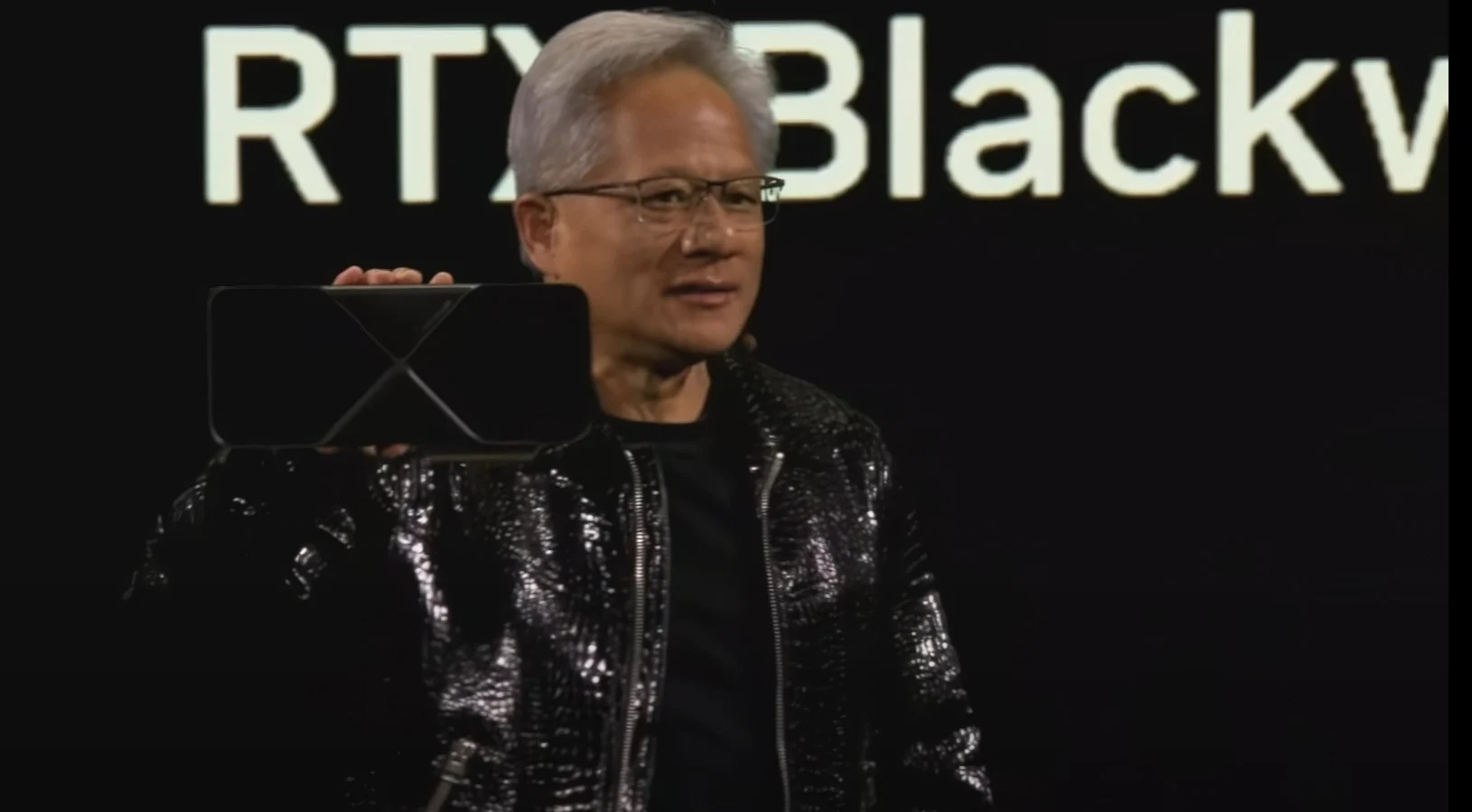
    In its latest development, Nvidia has informed major Chinese cloud service providers that it will launch a modified H20 accelerator in July. This new version will have reduced memory capacity and performance to comply with the stricter U.S. regulations. Additionally, a Blackwell-based component that adheres to these limits is under development, but any shipments will need approval from Washington.

    Nvidia has a workforce of around 4,000 in China, with nearly half located in Shanghai. The new office space is expected to support existing employees and future recruits, enhancing local R&D efforts without relocating sensitive chip design tasks abroad. Huang has estimated that the AI-chip market in China could grow to about $50 billion within three years; he emphasized that maintaining a presence is crucial to prevent losing ground to local competitors like Huawei.

    Source:
    Link

  • Nvidia RTX 5090 Giveaway for Doom: The Dark Ages Launch Celebration

    Nvidia RTX 5090 Giveaway for Doom: The Dark Ages Launch Celebration

    Key Takeaways

    1. Nvidia is giving away a themed GeForce RTX 5090 GPU to celebrate the release of Doom: The Dark Ages.
    2. The giveaway is open worldwide, excluding certain areas in the US, Canada, and Australia, and participants must be adults and legal residents of eligible regions.
    3. To enter, leave a comment with #RTXON on social media before 5:00 PM PST on May 22nd, 2025.
    4. Winners will be announced on a separate page, but the exact announcement date is not specified.
    5. Doom: The Dark Ages offers a unique gaming experience with significant gameplay changes and is powered by the impressive idTech 8 engine.


    Now that Doom: The Dark Ages has been officially released for everyone, Nvidia is excited to mark this occasion by giving away a brand new GeForce RTX 5090. Since it’s an Nvidia-promoted title, the GPU features a unique Doom theme with custom artwork that will surely enhance your PC setup.

    Terms and Conditions

    The rules for the giveaway are quite simple. Although Nvidia’s wording suggests the offer is only for Australia, it’s actually open worldwide, except for certain areas in the US, Canada, and Australia. To join in, you need to be an adult and a legal resident of the regions mentioned on the giveaway page.

    How to Enter

    To enter, just leave a comment saying #RTXON on this X post (or on any social media platform you prefer, like Facebook, Instagram, TikTok, Threads, or Twitch) before 5:00 PM PST on May 22nd, 2025. Similar to past giveaways, the winners will be revealed on a different page. Nvidia hasn’t mentioned when they will announce the chosen gamer, so be prepared to wait a little while.

    Game Review

    In our review of Doom: The Dark Ages, we discovered that the game offers a thoroughly enjoyable experience that distinguishes itself from earlier versions. The combat feels completely different from Doom Eternal, with the shield playing a crucial role in the gameplay. Technically, its idTech 8 engine is impressive, and while the RTX 5090 will allow you to enjoy the best graphics, the game is still playable on the Steam Deck.

    Source:
    Link

  • Nvidia RTX 5050 Mobile GPU with 8GB VRAM Found in Lenovo Leak

    Nvidia RTX 5050 Mobile GPU with 8GB VRAM Found in Lenovo Leak

    Key Takeaways

    1. Nvidia’s RTX 5050 mobile GPU is expected to launch soon, with Lenovo providing specs and pricing for upcoming laptops.
    2. The official release of the RTX 5050 may coincide with the availability of the desktop RTX 5060, but Nvidia has not confirmed this yet.
    3. Pricing for the RTX 5050 laptops in the UK includes import taxes, with the LOQ model at £1,150 (~$1,430) and the Legion 5 at £1,350 (~$1,680).
    4. In the US, RTX 5050 laptops are expected to retail for around $1,100 or less, based on current RTX 5060 prices.
    5. The RTX 5050 will feature 8 GB of VRAM, an increase from the 6 GB found in RTX 4050 models, and is likely based on the GB207 model with 20 Streaming Multiprocessors.


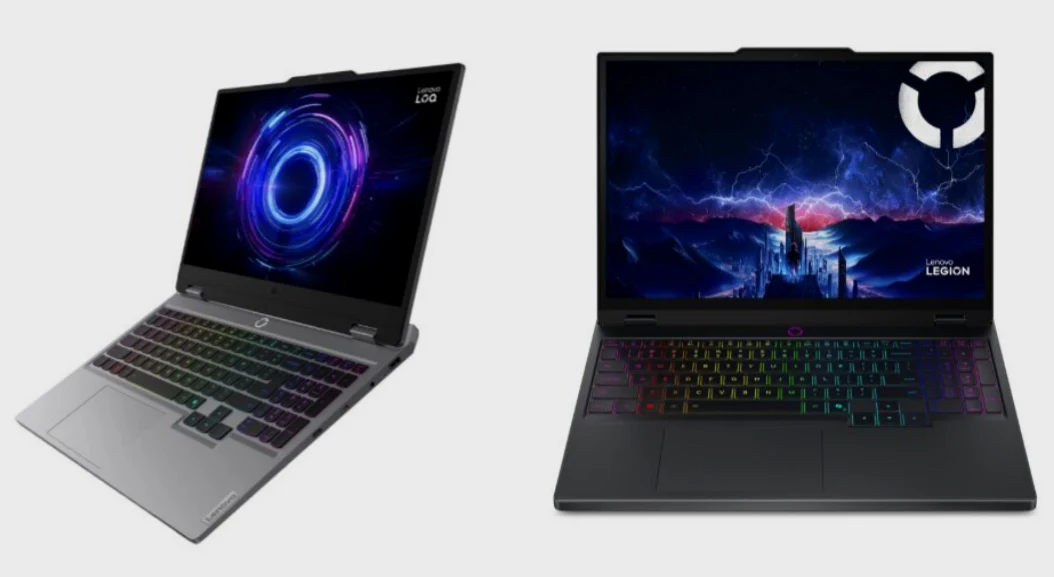
    With the ongoing delays and issues around the availability of Nvidia’s RTX 5000 mobile series, the debut of the entry-level RTX 5050 dGPU has remained somewhat unclear since its unofficial announcement at CES 2025 earlier this year. Reports from Laptops Direct, as noted by Videocardz, hint that laptops featuring the RTX 5050 might be launching soon, as Lenovo has already shared specifications and pricing for the LOQ and Legion 5 models, which are expected to begin shipping in about three weeks.

    Potential Launch Timing

    Videocardz indicates that the official release of the RTX 5050 could happen around the same time the desktop RTX 5060 cards become available. However, Nvidia has yet to confirm the existence of this SKU. In the meantime, the UK retailer has taken down the two models from its search results.

    Pricing Details

    The listings from Laptops Direct show UK pricing that likely includes European import taxes, so these figures might not directly translate to the US market. The LOQ model, which also features an Intel i5-13450HX CPU, is priced at £1,150 (~$1,430), while the Legion 5 with an i7-13650HX can be pre-ordered for £1,350 (~$1,680). In the US, it’s expected that retailers will offer the RTX 5050 laptops for around $1,100 or less, especially since the RTX 5060 laptops currently retail for no more than $1,300.

    Specifications Overview

    According to the specifications shared by Lenovo, the RTX 5050 is confirmed to come with 8 GB of VRAM, which is an increase of 2 GB compared to the earlier RTX 4050 models. While no additional specifications have been confirmed at this time, Videocardz suggests that this SKU is likely based on the GB207 model, featuring 20 Streaming Multiprocessors, and it might be limited to GDDR6 128-bit memory.

    Source:
    Link


  • Nvidia Increases Prices by 5-15% Due to Export Restrictions

    Nvidia Increases Prices by 5-15% Due to Export Restrictions

    Key Takeaways

    1. Nvidia faced a $5.5 billion loss due to U.S. government restrictions on chip shipments to China.
    2. Rising costs from material, logistics, and tariffs have led Nvidia to increase prices for nearly all its products.
    3. The GeForce RTX 5090 price rose by over 10%, with other RTX 50-series cards increasing by 5-10%.
    4. AI silicon demand remains strong despite export restrictions, supporting Nvidia’s financial stability.
    5. Nvidia projects significant revenue growth, estimating around $43 billion for the upcoming quarter, a 65% increase year-on-year.


    Nvidia is changing its pricing approach due to a mix of outside challenges. As per supply-chain reports from Digitimes Taiwan, the firm faced a hefty loss of $5.5 billion after the U.S. government stopped shipments of its H20 chips to China. At the same time, the transfer of Blackwell production to TSMC’s facility in Arizona, along with increased costs for materials, logistics, and tariffs, has caused expenses to rise significantly.

    Price Increases for Products

    To safeguard its profit margins, Nvidia has raised the official prices “for nearly all of its products” and has permitted board partners to do the same. The channel price for the prominent GeForce RTX 5090 has surged from about NT$90,000 to NT$100,000 ($2,966 to $3,295)—an over 10 percent rise since its launch. Other cards in the RTX 50-series have also seen price hikes of 5-10 percent. Datacenter equipment hasn’t been immune either: the H200 and B200 modules now carry an increase of around 10-15 percent, a cost that server vendors are starting to transfer to their customers.

    Continued Demand for AI Silicon

    Even with the export restrictions and rising tariffs, the need for AI silicon from both U.S. and global cloud service providers remains robust. Therefore, supply-chain insiders anticipate that Nvidia’s financial results for the quarter ending in late May will align with their previous guidance and exhibit “excellent profit performance.” The company reported a revenue of $39.3 billion in its last quarter and has projected around $43 billion for the upcoming period, suggesting a year-on-year growth of approximately 65 percent.

    Source:
    Link

  • Malaysia GPU Imports Surge 3,400% Amid Stockpiling Concerns

    Malaysia GPU Imports Surge 3,400% Amid Stockpiling Concerns

    Key Takeaways

    1. Malaysia’s GPU imports reached $2.74 billion in April 2025, a 3,400% increase from April 2023.
    2. Total GPU imports from January to April 2025 amounted to $6.45 billion, up 32% compared to all of 2024.
    3. Nvidia is the primary source of these imports, accounting for about 13% of its total sales in Q1 2025.
    4. Regulatory concerns arise over whether Malaysia is stockpiling GPUs for local use or acting as a shipping point for buyers in mainland China.
    5. The upcoming AI Diffusion Rule, effective May 15, 2025, may further increase scrutiny on Malaysia’s GPU import practices.


    Malaysia saw a massive increase in GPU imports, totaling $2.74 billion in April 2025, which marks a staggering 3,400 percent growth compared to the same month two years ago. This new record for monthly imports pushes the total for January to April to an impressive $6.45 billion, which is already 32 percent higher than the entire sum for 2024.

    Monthly Import Trends

    The rise in monthly import figures has been notable, starting with $1.12 billion in January, reflecting a 700 percent increase from the previous year. This was followed by $627 million in February, a jump to $1.96 billion in March, and finally reaching $2.74 billion in April, each showing a significant 3,400 percent rise compared to the same period in 2023.

    Source of Shipments

    The majority of these imports can be traced back to Nvidia. For the April quarter, Malaysia’s GPU imports, valued at around $5.33 billion, account for approximately 13 percent of Nvidia’s total sales of $43 billion in the first quarter. Normally, such a substantial figure would require Nvidia to disclose details about the specific country under U.S. Securities and Exchange Commission rules. However, the company’s new method of reporting revenue based on customer billing location obscures the actual destination of these products.

    Regulatory Concerns

    This situation has raised questions among regulators and industry experts about whether Malaysia is hoarding these accelerators for its own cloud services or acting as a shipping point for buyers in mainland China who are attempting to avoid stricter U.S. export restrictions. The upcoming AI Diffusion Rule, which takes effect on May 15, 2025, is likely to increase this scrutiny.

    As there is no available data on where the GPUs are ultimately headed, Malaysia’s unexpected rise to prominence underscores the lack of transparency in supply-chain reporting and the complex geopolitical issues that come with the surge in AI hardware demand.

    Source:
    Link

  • Unreleased Nvidia Titan Ada GPU: The RTX 4090 That Wasn’t

    Unreleased Nvidia Titan Ada GPU: The RTX 4090 That Wasn’t

    Key Takeaways

    1. The Titan Ada was a fully developed Nvidia graphics card that was ultimately discarded before launch, intended to be the flagship of the Ada Lovelace generation.
    2. It features a fully unlocked AD102 chip with 18,432 CUDA cores and 48 GB of GDDR6X memory, surpassing the RTX 4090 in both performance and design.
    3. Benchmark tests showed the Titan Ada outperforming the RTX 4090 by 10-15% while offering better performance-per-watt, but it was less compatible with newer games due to driver limitations.
    4. Reasons for its cancellation include potential market positioning issues with the RTX 5090, its large size and complex design, and a lack of strong performance-per-dollar ratio for consumer applications.
    5. The Titan Ada represents a significant yet unrealized engineering achievement in GPU history, highlighting Nvidia’s capabilities beyond what was released to consumers.


    In a surprising turn of events, the much-discussed Nvidia graphics card—the Titan Ada—has been uncovered and evaluated, revealing a GPU that was entirely developed but ultimately discarded prior to its launch. This card was intended to be the pinnacle of Nvidia’s Ada Lovelace generation, set to surpass the RTX 4090 in performance and aesthetics, giving us a peek at what could have truly represented the flagship of the RTX 40-series.

    Specifications and Features

    The Titan Ada operates on a fully unlocked AD102 chip, which is the same die found in the RTX 4090 but with additional hardware enabled. It boasts 18,432 CUDA cores—12.5% more than the 4090—and includes a whopping 48 GB of GDDR6X memory, twice as much as Nvidia’s most advanced consumer GPU to date. Despite its enormous capabilities, the design of the Titan Ada is sleek, featuring a large quad-slot cooler, two 12VHPWR connectors, and an attractive Titan-logo light. When compared to the already sizable RTX 4090, the Titan Ada is not only wider and heavier but also more imposing in every aspect.

    Benchmark Performance

    In various benchmark evaluations, such as 3DMark Time Spy Extreme and 3DMark Speedway, the Titan Ada consistently achieved remarkable scores. It outperformed the RTX 4090 by 10–15% while only consuming about 14% more power, showcasing a significant enhancement in performance-per-watt. For instance, in Remnant 2, it secured an average of 82 FPS, which is 10% above the RTX 4090’s performance, and in Cyberpunk 2077, it provided a 22% increase. Efficiency tests revealed that the Titan Ada slightly surpassed both the 4090 and even the newer RTX 5090 in terms of FPS-per-watt, a unique occurrence in high-end GPU assessments.

    Reasons for Its Cancellation

    Nonetheless, there are some concerns. The GPU was assessed with a 2023 driver, which restricts compatibility with newer games—numerous titles either failed to start or showed performance issues. Furthermore, while the RTX 5090 still outperformed the Titan Ada in absolute terms (by 11–26% based on the test), the Titan Ada’s impressive performance highlighted a surprisingly small difference between the two generations.

    So, what caused this monster to never hit the shelves?

    There are several plausible explanations. Firstly, from a product positioning perspective, launching a Titan Ada too close to the 5090—especially with only minor improvements—could have undermined Nvidia’s next-gen flagship. The success of the RTX 5090 might have been harder to defend had the Titan Ada been released first. Secondly, the card’s large size and complex design, particularly its substantial quad-slot cooler, would have presented challenges for both system builders and end users. The Titan Ada is physically daunting and not practical for many setups.

    Lastly, and possibly most importantly, Nvidia might have concluded that the performance-per-dollar ratio wasn’t strong enough to warrant a commercial release. The card seemed better suited for high-end professional or workstation applications, but would have likely needed specialized drivers and support infrastructure that Nvidia wasn’t prepared to provide for a single product launch.

    While the Titan Ada may never grace retail shelves, its existence illustrates that Nvidia had taken Ada Lovelace further than consumers ever expected. It remains an intriguing “what-if” scenario in GPU history—an engineering feat crafted to conquer, yet ultimately left unexploited.

    Expect more teardown videos and in-depth analysis of the Titan Ada’s internals and cooling systems in the future. For now, this insight into the card-that-never-came gives fans a rare glimpse at a phantom within Nvidia’s realm.

    Source:
    Link

  • RTX 5060 Laptop Launches on Geekbench, Beats RTX 4060 Performance

    RTX 5060 Laptop Launches on Geekbench, Beats RTX 4060 Performance

    Key Takeaways

    1. Only RTX 5090 and RTX 5080 laptop graphics cards are currently available, with RTX 5060 performance details recently revealed.
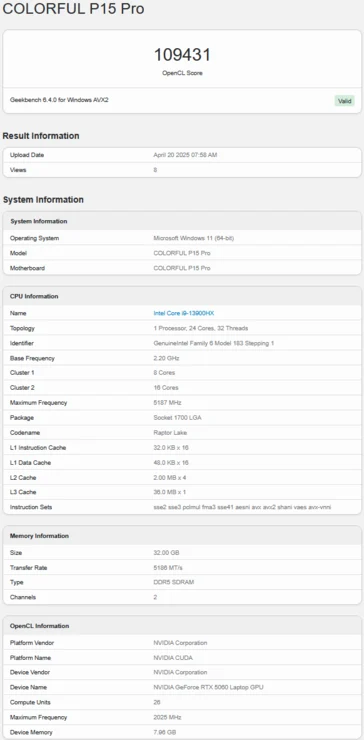
    2. The RTX 5060 scores 109,431 in Geekbench’s OpenCL test with an Intel Core i9-13900HX, and 102,564 with a Core Ultra 9 285H.
    3. The RTX 5060 is potentially 18% faster than the RTX 4060, which averages 93,132 points in the same benchmark.
    4. The RTX 5060 features a higher CUDA core count (3,328 vs. 3,072) and a boost clock of 2.5 GHz, though it hasn’t reached that clock speed in tests.
    5. The RTX 5060 may offer notable upgrades over the RTX 20 or 30 series due to its Ada Lovelace architecture, GDDR 7 VRAM, and AI-powered features.


    While many of Nvidia’s GeForce RTX 50 series desktop graphics cards have been released, the same is not true for their laptop versions. Currently, only the RTX 5090 and RTX 5080 are available, and they can be found in a limited selection of high-end laptops. A new listing on Geekbench offers a first look at the RTX 5060 laptop, and the results are not very promising.

    Performance Details

    It powers Colourful laptops that have different setups, one featuring an Intel Core i9-13900HX and the other with a Core Ultra 9 285H. The RTX 5060 laptop achieves a score of 109,431 in Geekbench’s OpenCL test with the first setup, but this score falls to 102,564 with the second. Both models include 32 GB of DDR5 RAM operating at slightly varied speeds.

    Comparison to RTX 4060

    Based on our benchmark data, the RTX 4060 laptop averages about 93,132 points in the Geekbench OpenCL test, making the RTX 5060 potentially 18% faster. Although Geekbench isn’t the best benchmark for GPUs, it provides a rough estimate of performance upgrades. This improvement can be credited to a slightly higher CUDA core count (3,328 compared to 3,072) and a boost clock of 2.5 GHz.

    Potential for Higher Performance

    Interestingly, neither of the RTX 5060 samples mentioned reaches the 2.5 GHz mark, so the actual performance gains might be even better at launch. Coupled with advancements from the Ada Lovelace architecture, GDDR 7 VRAM, and AI-powered features, the RTX 5060 could be a compelling upgrade for those coming from the RTX 20 or 30 series.

    Source:
    Link


  • GeForce RTX 50 Super to Launch with Essential VRAM Upgrades

    GeForce RTX 50 Super to Launch with Essential VRAM Upgrades

    Key Takeaways

    1. Nvidia’s GeForce RTX 50 series has been released, sparking discussions about upcoming mid-cycle updates known as the Super refresh.
    2. The RTX 5080 Super is expected to feature 24 GB of VRAM, while the RTX 5070 Super will have 18 GB, enhancing their specifications.
    3. The RTX 5080 Super may compete closely with the RTX 4090 desktop, while the RTX 5070 Super will be the first mainstream Nvidia card with 18 GB of video memory.
    4. The release of these Super models is unlikely to happen soon, as Nvidia typically takes about a year for mid-cycle refreshes.
    5. The Super refresh is anticipated to address increasing VRAM needs in future gaming and applications.


    Now that a majority of Nvidia’s GeForce RTX 50 series is released, talks about its mid-cycle updates have started popping up online. This is the highly awaited Super refresh, and it seems they might come with some essential VRAM enhancements. A lesser-known leaker from Chiphell mentions the GeForce RTX 5080 Super and RTX 5070 Super specifically.

    Specifications of the New Models

    The RTX 5080 Super is expected to feature 24 GB of VRAM, while the RTX 5070 Super will have 18 GB. In terms of specifications, the RTX 5080 Super might resemble the RTX 5090 laptop equipped with a GB203 GPU. When it comes to performance, it should be able to compete closely, if not rival, the RTX 4090 desktop. The RTX 5070 Super stands out as the more intriguing model. It not only boasts more VRAM than the RTX 5070 Ti, but it will also be the first mainstream Nvidia product to offer 18 GB of video memory.

    Timing of the Release

    However, it’s doubtful these models will hit the market anytime soon. Nvidia usually takes about a year before unveiling mid-cycle refresh SKUs, so we likely won’t see them until next year at the earliest. Still, they should provide a refreshing change in a time when VRAM needs continue to rise with each new release.

    Source:
    Link

  • Nvidia Faces Rising AI Competition from Huawei Amid US Export Limits

    Nvidia Faces Rising AI Competition from Huawei Amid US Export Limits

    Key Takeaways

    1. Nvidia is facing increased competition from Huawei, which is launching new AI chips, including the Ascend 910D and 910C.
    2. Regulatory challenges from the Biden administration restrict Nvidia’s ability to sell high-tier AI chips, particularly in China, impacting its market position.
    3. The company’s financials are affected by a $5.5 billion charge due to restrictions on selling its H20 chip in China.
    4. Skepticism exists regarding Huawei’s claims about the performance of its chips compared to Nvidia’s, but the competition still poses a significant threat.
    5. Nvidia is investing $500 billion in AI in the U.S. but may not see expected returns due to regulatory hurdles and market limitations.


    Nvidia Corporation has been facing challenges since the beginning of 2025, as it tries to maintain its position as a leader in AI amidst growing competition from both domestic and foreign companies in the inference and training markets. At the same time, it also has to navigate a complicated regulatory environment due to decisions made by the current US administration.

    Competition from Huawei

    Recent reports from The Wall Street Journal (paywall) suggest that Nvidia might soon experience another setback, this time from Huawei, China’s leading AI chip manufacturer, which is preparing to launch its new Ascend 910D chip. This follows closely after the announcement of the Ascend 910C, which is expected to be revealed in the next few days.

    Regulatory Challenges

    Nvidia is already constrained by the Biden-era AI Diffusion Rule, which aims to restrict top-tier AI chips for use within the U.S. and a select group of allies. The previous Trump administration has also implemented licensing measures that limit Nvidia’s ability to sell its essential H20 chip in China, a situation that has led to a significant $5.5 billion charge in the company’s SEC filings ahead of their earnings report set for May 28th.

    Market Impact

    Huawei claims that its Ascend 910C chips offer performance similar to Nvidia’s H100. However, the Ascend 910D’s capabilities are currently unverified, and engineers remain skeptical about Huawei’s performance and efficiency claims until further evidence is presented. This skepticism could extend to the new chip as well.

    Consequently, Nvidia’s inability to sell even a modified version of its H20 chip in China is likely to influence China’s rapidly growing ambitions in AI and chip design, pushing them toward domestic solutions. At the same time, Nvidia may suffer significant financial losses and reduced profitability due to being effectively locked out of this expansive market.

    Nvidia’s Adaptations

    In the past, Nvidia has released performance-limited versions of its RTX 4090 and more recently, the RTX 5090 GPUs, including specific models like the RTX 4090D and RTX 5090D aimed at gamers and productivity users in China. Despite this, the company has committed to a whopping $500 billion in AI-related investments in the U.S. to satisfy the current administration, which may not have yielded the results Nvidia anticipated, especially considering the latest developments.

    Source:
    Link

  • TSMC Launches 1.4nm Process Technology for Next-Gen Devices

    TSMC Launches 1.4nm Process Technology for Next-Gen Devices

    Key Takeaways

    1. TSMC has unveiled its 1.4nm process technology, set to begin production in 2028, showcasing advancements over the 2nm process.
    2. The 1.4nm process promises a 30% reduction in power consumption and a 15% performance improvement.
    3. TSMC’s next-generation 2nm process is expected to power devices from major companies like Apple, Nvidia, and AMD.
    4. The 1.4nm process offers a 20% increase in logic density compared to the 2nm process, making it 30% faster and 60% more efficient than the 3nm process.
    5. Apple’s iPhone 17 will use the 3nm N3P node, indicating a gradual transition to the 2nm and 1.4nm technologies in the coming years.


    Back in June 2024, Samsung made waves by introducing advancements in its foundry for the 4nm, 2nm, and 1.4nm process nodes. Now, TSMC (Taiwan Semiconductor Manufacturing Company) has revealed its own state-of-the-art 1.4nm process technology, which will be utilized in upcoming products from major players like Nvidia, Apple, AMD, and more.

    TSMC’s 1.4nm Process Unveiled

    The largest contract chipmaker in the world has disclosed that the 1.4nm A14 process is set to start production in 2028, featuring several enhancements over the 2nm process. This new process technology promises a 30 percent decrease in power consumption while improving performance by approximately 15 percent. To put it in context, TSMC’s 2nm process is on track to begin production later this year.

    TSMC’s 2nm Node Overview

    With a diverse client base, TSMC’s next generation process will likely supply power to upcoming iPhones, Nvidia GPUs, AMD processors, and a whole lot more. According to TSMC, there is a 20 percent boost in logic density, which contributes to the performance increase over the 2nm process. When you compare it to the current TSMC 3nm process, the 1.4nm is nearly 30 percent quicker and 60 percent more efficient.

    To refresh your memory, Apple’s upcoming iPhone 17 series is anticipated to incorporate the latest N3P node (3nm) for the A series chips, indicating that the transition to 2nm could take a couple of years to materialize. In simple terms, the technology from the 1.4nm process is still a few generations down the line as well. That’s all we have for now, so keep an eye out for more updates!