Tag: Microsoft

  • Microsoft Pressures Candy Crush Team to Use AI After Job Cuts

    Microsoft Pressures Candy Crush Team to Use AI After Job Cuts

    Key Takeaways

    1. Microsoft has heavily invested in AI technology, impacting its gaming divisions, particularly King, the developer of Candy Crush, which experienced significant workforce reductions.
    2. King employees face a challenging work environment, with management making decisions without clear communication and recent job cuts affecting morale.
    3. The mandatory use of AI for daily tasks is causing stress among King employees, who worry that it may lead to further job losses.
    4. There are concerns about the quality and creativity of AI-generated content, with creators fearing it may replace skilled artists’ work.
    5. Analysts believe Microsoft is focused on cutting costs and increasing its commitment to AI, but employees are hesitant to embrace these changes.


    Microsoft has put a lot of money into AI technology, which has significantly affected its gaming divisions. One of the most impacted is King, the developer behind Candy Crush, which recently had a large reduction in its workforce. A report from Mobilegamer.biz reveals that Microsoft is encouraging its remaining staff to depend heavily on AI. However, with worries about more layoffs, employees are reluctant to adopt these new tools.

    A Difficult Work Environment

    The article highlights the challenging work conditions that King employees endure every day. The management frequently makes decisions without providing any explanation to the developers and artists involved. When Microsoft cut 200 jobs, many were selected without regard for their actual performance.

    AI’s Uncertain Role

    The mandatory use of AI adds more stress for the remaining employees at King. A source from Mobilegamer stated that the company expects “70 or 80% daily usage of AI for routine tasks.” This reliance on AI could lead to further job losses, especially for those who were instrumental in developing and training these technologies.

    King has enjoyed great success with mobile games like Candy Crush and Farm Heroes Saga. Nevertheless, this shift could endanger vital roles for developers, artists, and writers. Analysts believe that Microsoft aims to cut costs and bolster its commitment to the AI sector. However, the workers are not eager to accept these shortcuts.

    Concerns About Quality and Creativity

    Along with the fear of job loss, creators criticize the often subpar quality of output produced by these AI tools. Since the technology relies on a pre-existing database of codes and images, there is a risk of copyright violations as well.

    While AI tools like ChatGPT that streamline everyday office tasks might not be as controversial, gamers remain cautious about AI-generated content taking the place of skilled artists’ work. For instance, Microsoft’s Muse project uses generative AI to craft gaming experiences.

    Source:
    Link



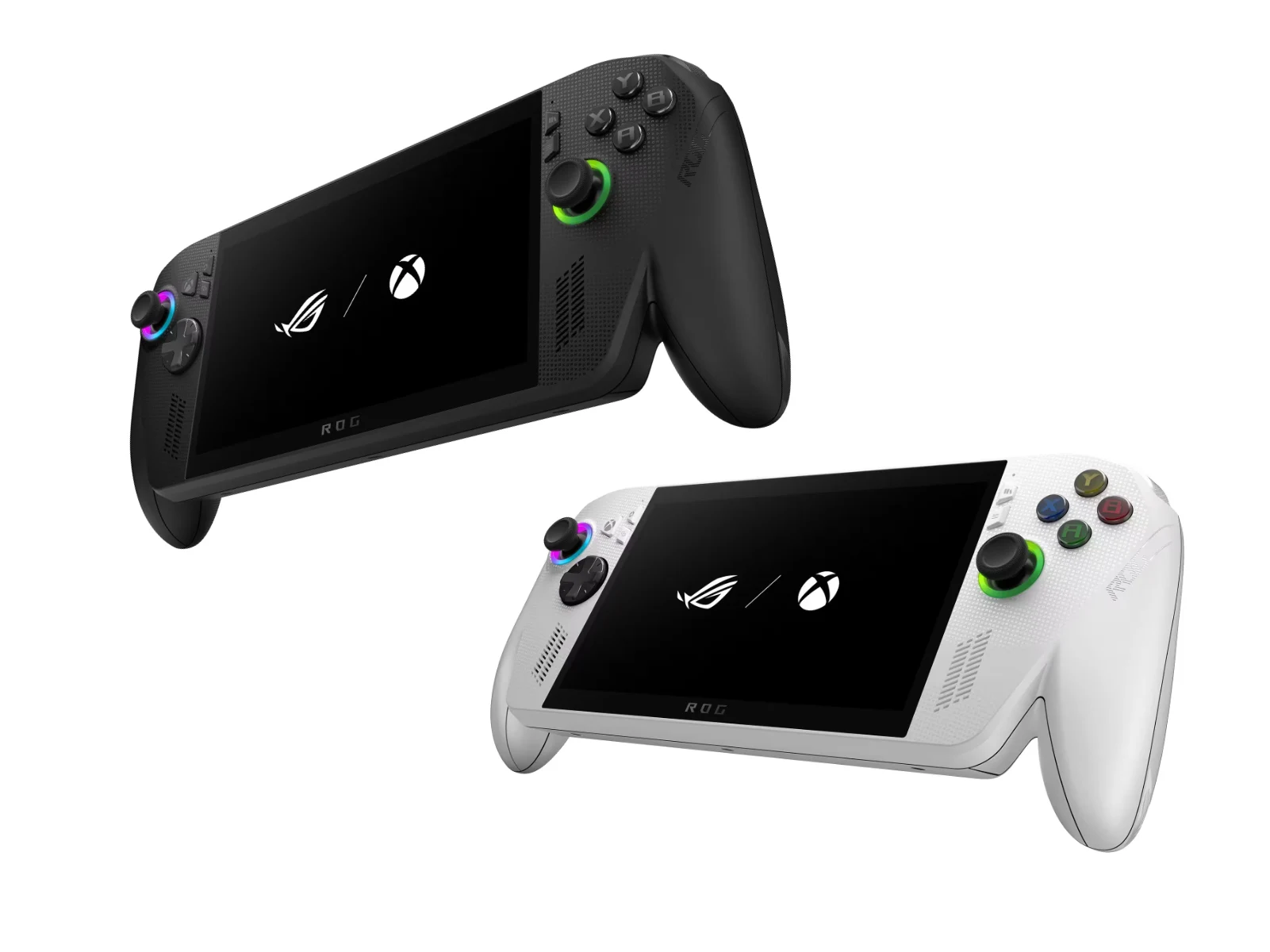
  • ROG Xbox Ally Release Date, Specs, and $899 Launch Price Revealed

    ROG Xbox Ally Release Date, Specs, and $899 Launch Price Revealed

    Key Takeaways

    1. Leaked Pricing: The ROG Xbox Ally is expected to retail for $549.99, while the ROG Xbox Ally X will be priced at $899.99, according to leaks from Wario64 and bilbil-kun.

    2. Official Statements: Microsoft’s VP of Xbox Gaming Devices emphasized the challenges of setting prices for mobile devices, considering factors like affordability and economic conditions.

    3. Launch Date: Both the ROG Xbox Ally and ROG Xbox Ally X are set to launch on October 16, 2023.

    4. Staggered Availability: The ROG Xbox Ally will not be available in China until early 2026, with staggered releases planned for countries like Brazil, India, Indonesia, and Thailand.

    5. Hardware Specifications: Detailed hardware specifications for both models can be found on Asus’ official website.


    Earlier today, some leaked pricing details about the Asus and Microsoft’s new ROG Xbox Ally gaming handhelds surfaced. The source of this information comes from a leaker known as bilbil-kun, but they did not specify where they got their data. Officially, neither Asus nor Microsoft have disclosed the launch prices for the ROG Xbox Ally or the ROG Xbox Ally X. However, Microsoft’s VP of Xbox Gaming Devices & Ecosystem provided a statement to IGN, saying:

    Balancing Act

    “It’s always a tricky situation… you are constantly trying to find that sweet spot between what is affordable and what the price point should be. This is particularly true for mobile devices, where factors like battery life also come into play. Plus, as you mentioned, the broader economic environment poses its own challenges. We need more time to assess how these economic factors will influence pricing, which is why we will release more information in September and October.”

    Pricing Information

    Despite the official silence, popular X account Wario64 pointed out that Best Buy accidentally listed the launch prices for both handhelds earlier than intended. Although those listings have since been taken down, they corroborated bilbil-kun’s findings, indicating that the ROG Xbox Ally would retail for $549.99 and the ROG Xbox Ally X would be priced at $899.99, featuring the Ryzen Z2 A and Ryzen AI Z2 Extreme, respectively. This means that the base model ROG Xbox Ally is going to be much less powerful than the Lenovo Legion Go S, which is currently priced at $649.99 on Amazon and powered by the Ryzen Z2 Go.

    Availability Details

    Both Best Buy and Microsoft have confirmed that the ROG Xbox Ally and ROG Xbox Ally X are set to launch on October 16. Additionally, it has been announced that the ROG Xbox Ally will not be released in China until early 2026. Other countries like Brazil, India, Indonesia, and Thailand will see staggered releases for these gaming devices. For complete hardware specifications of the ROG Xbox Ally and ROG Xbox Ally X, you can check out Asus’ official website. According to Microsoft, both models will be available on October 16.

    Source:
    Link


  • Free Windows 10 LTSC Downgrade with Updates Until 2032

    Free Windows 10 LTSC Downgrade with Updates Until 2032

    Key Takeaways

    1. Windows 10 support ends on October 14, 2025, with no more security or feature updates after that date.
    2. Users can transition to Windows 10 IoT Enterprise LTSC 2021 using UpDownTool, which ensures no data loss during the switch.
    3. Windows 10 IoT Enterprise LTSC 2021 has mainstream support until January 2027 and extended support until January 2032, but lacks features like the Microsoft Store and Cortana.
    4. Microsoft licenses Windows 10 LTSC only to organizations through volume licensing agreements; private use without a license may violate terms.
    5. Users have the option to upgrade to Windows 11 or join the Extended Security Updates program, though the latter is a temporary and costly solution.


    The deadline for Windows 10 support is coming up quickly on October 14, 2025. After this date, Microsoft will stop giving any security or feature updates.

    Transition to Windows 10 IoT Enterprise LTSC 2021

    As reported by PCWorld, you can still get support until 2032 by using UpDownTool, which is available for free on Technixstuff. This tool lets users easily move from Windows 11 or older versions of Windows to Windows 10 IoT Enterprise LTSC 2021 in just a few clicks. Best of all, it promises that no data, programs, or drivers will be lost during the switch.

    Mainstream Support Details

    Microsoft has stated that this LTSC edition, which was initially made for industrial and embedded systems, will still have mainstream support until January 2027 and extended support until January 2032. IT Magazine notes that this version is missing the Microsoft Store, Cortana, and many background services since it is designed to be a more compact and stable option.

    Licensing Restrictions

    Even though the setup and use of this edition is simple, IT Magazine highlights that Microsoft only grants Windows 10 LTSC licenses to organizations through volume licensing agreements. Attempting to use it privately or without a proper license can lead to violations of terms and conditions, which is at your own risk.

    UpDownTool offers a solution for users looking to fill the gap after Windows 10 support ends, particularly for those who value stability over new features. However, many users still have the official choice of upgrading to Windows 11 or participating in the Extended Security Updates program, though the latter is just a temporary fix that incurs costs.

    Source:
    Link


  • Microsoft XP Crocs: Comfort for Your Feet with Clippy Design $80

    Microsoft XP Crocs: Comfort for Your Feet with Clippy Design $80

    Key Takeaways

    1. Microsoft is celebrating its 50th anniversary with a unique collaboration: special edition Crocs inspired by Windows XP.
    2. The Crocs are priced at $80 and come with six Microsoft-themed Jibbitz charms featuring classic Microsoft icons.
    3. The design is based on the iconic “Bliss” wallpaper from Windows XP, featuring a green sole and blue upper to represent the landscape.
    4. Each order includes a drawstring backpack with the Bliss design, aimed at collectors and fans of the Windows XP theme.
    5. This is not Microsoft’s first shoe collaboration; they previously partnered with Crocs for a Minecraft-themed collection in 2023.


    Microsoft is hitting a big milestone, turning 50 years old, and instead of just having a normal celebration, it’s surprising us with something really unique: Crocs. The company has been working behind the scenes to create a special edition of Crocs inspired by Windows XP, and insiders have told The Verge these are available for pre-order, but only for Microsoft employees.

    Pricing and Features

    These exclusive Crocs cost $80 per pair and come with six Microsoft-themed Jibbitz charms, which are little decorations that you can attach to the shoe. The charms showcase classic Microsoft symbols like the Internet Explorer logo, the original MSN butterfly, a mouse pointer, and the famous Clippy assistant.

    Design Inspiration

    The design takes its cues from the “Bliss” wallpaper of Windows XP, featuring a green sole representing the grassy hill and a blue upper that stands for the sky. The photo of Bliss was taken by Charles O’Rear in Sonoma County, California, back in 1998. Microsoft later used this image as the default wallpaper for Windows XP when it launched in 2001. It’s now known as one of the most seen photographs ever.

    Along with the Crocs, every order also comes with a drawstring backpack that showcases the same Bliss design. This bag is intended to enhance the Windows XP theme for both collectors and anyone who sees it.

    Previous Collaborations

    This isn’t the first time Microsoft has ventured into branded shoes. In 2023, they partnered with Crocs to create a Minecraft-themed collection that included clogs, slides, and various blocky Jibbitz. This collaboration even made its way into the game, allowing players to get a free pair of digital Crocs for their avatars.

    So far, Microsoft hasn’t made an official statement regarding these Crocs or whether they will be sold through their consumer stores or other retailers.

    Source:
    Link


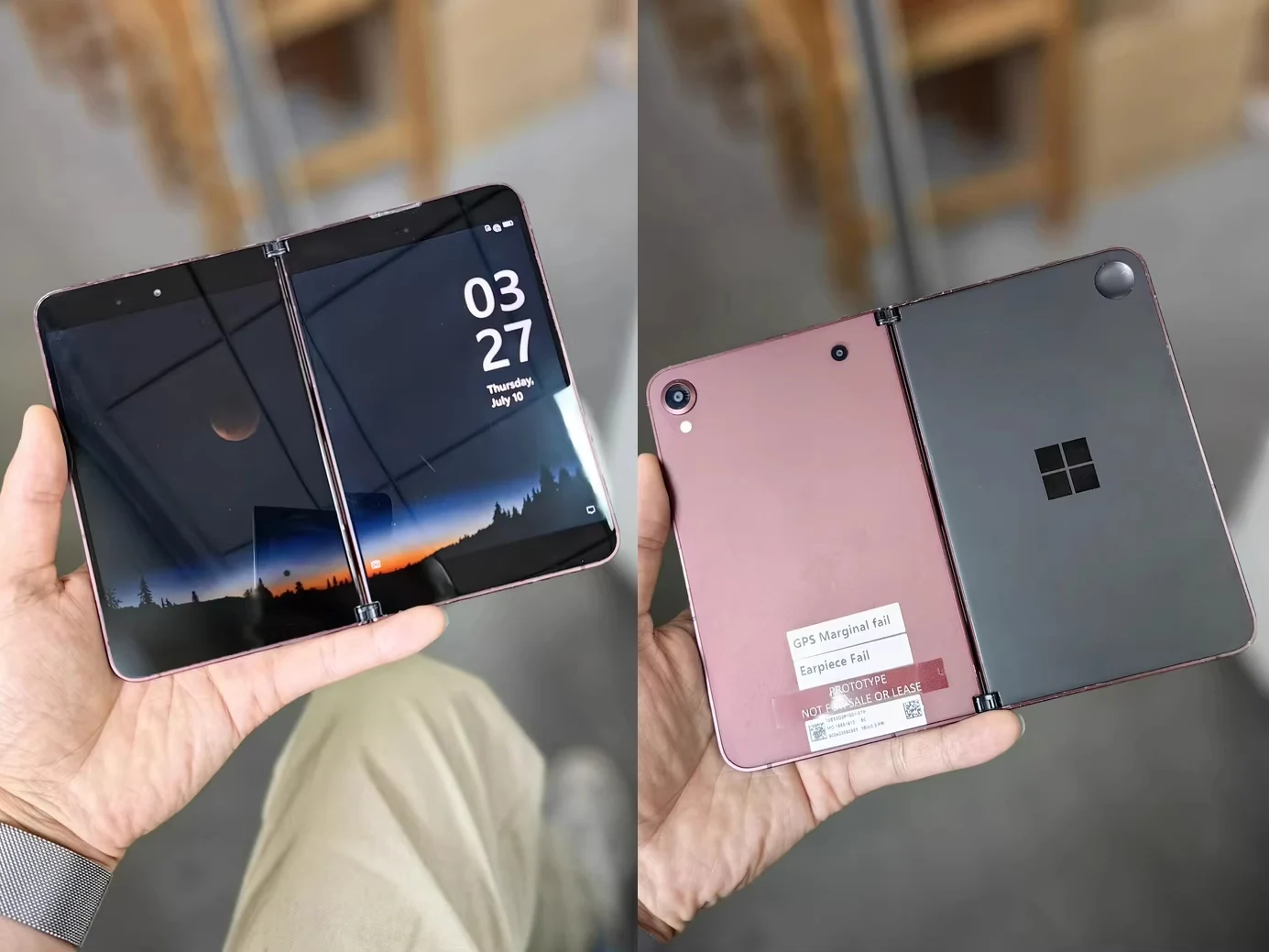
  • Rare Surface Duo Prototypes Found Running Windows in Marketplace

    Rare Surface Duo Prototypes Found Running Windows in Marketplace

    Key Takeaways

    1. Newly revealed images of Microsoft’s canceled Andromeda project show various prototype designs not used in the final Surface Duo models.
    2. Prototypes were developed between 2017 and 2018, using Windows Core OS, which was also discontinued.
    3. Andromeda featured a rear camera and a design that addressed foldable device issues, later incorporated into the Surface Duo 2.
    4. The device was designed as a pen-first experience, supporting the Surface Slim Pen with wireless charging and intended for 3D object scanning.
    5. The prototypes included a metal frame and additional features that were ultimately removed when Microsoft shifted focus to the original Surface Duo.


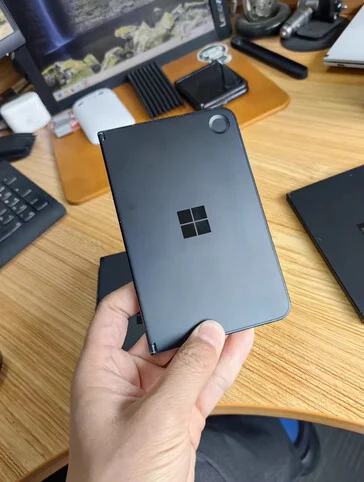
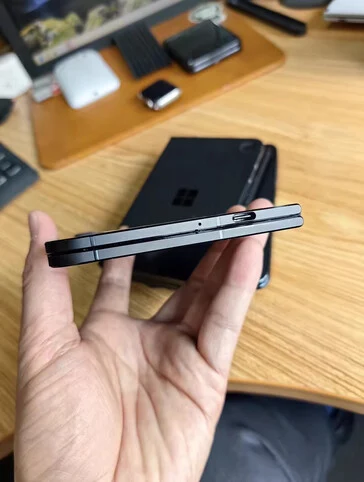
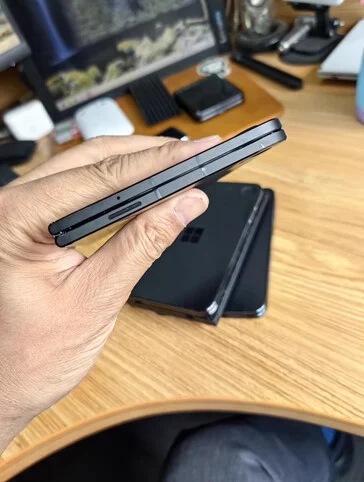
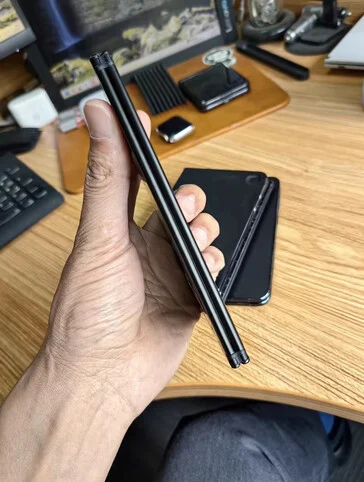
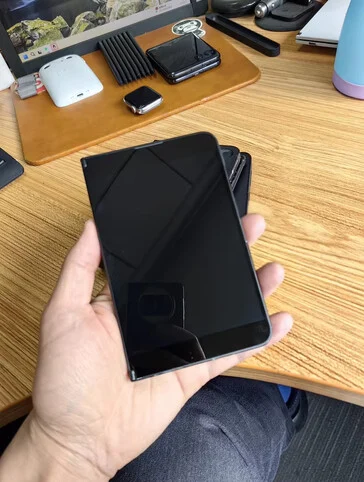
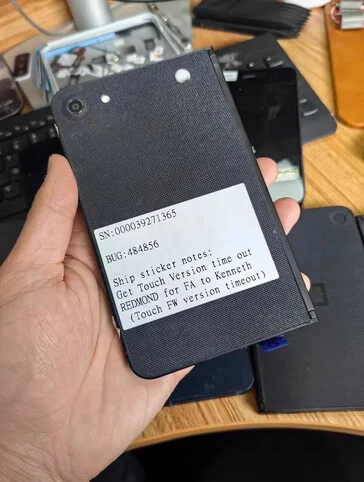
    Newly revealed images of prototypes have given us a glimpse into Microsoft’s Andromeda project, years after it was canceled. These photos were found on the Chinese site GooFish and showcase various color options, including a two-tone design that didn’t make it to the final Surface Duo or Surface Duo 2 models.

    Prototype Development Timeline

    It appears that all these prototypes were created between 2017 and 2018. Windows Central reports that Microsoft was working on Andromeda using Windows Core OS, which they also ended up discontinuing. At a glance, Andromeda resembles the Surface Duo, featuring two screens connected by hinges, although there is a noticeable gap between them.

    Unique Features of Andromeda

    Interestingly, the prototype includes a rear camera that was only added to the Surface Duo 2 later on. Additionally, Andromeda had a space for the camera when the device was folded, showing that Microsoft had addressed one of the design issues seen in the Surface Duo years before it was released.

    Pen-First Experience

    Andromeda was designed as a pen-first device, which is different from the final Surface Duo lineup. It was intended to support Surface Slim Pen (currently priced at $106 on Amazon) with wireless charging capabilities, along with a rear monochrome sensor for 3D object scanning. Moreover, these prototypes had a metal frame, which was ultimately scrapped along with the wireless charging and monochrome sensor features when Microsoft shifted focus to the original Surface Duo. For more details on these long-lost dual-screen prototypes, check out the images and listings on GooFish linked below.

    Source:
    Link


  • Helion Starts World’s First Fusion Power Plant with Microsoft Support

    Helion Starts World’s First Fusion Power Plant with Microsoft Support

    Key Takeaways

    1. Helion Energy is building the world’s first commercial fusion power plant in Malaga, Washington, expected to provide electricity to Microsoft data centers by 2028.

    2. Fusion energy merges atoms to generate power, offering a cleaner alternative to traditional nuclear energy with no carbon emissions and minimal long-term waste.

    3. Sam Altman, CEO of OpenAI, has supported Helion since 2014, highlighting a trend among tech leaders to address sustainability and infrastructure alongside software development.

    4. Helion aims to achieve net energy gain by 2028, which would be a significant milestone for commercial fusion energy, supported by Microsoft’s commitment to using this power in its operations.

    5. The success of Helion’s fusion project could provide a scalable and reliable energy source for AI systems, aligning with the growing demand for high-density computing resources and contributing to a sustainable future.


    Fusion startup Helion Energy, which has the support of OpenAI’s CEO Sam Altman, has kicked off construction on a project that might turn into the first commercial fusion power plant in the world. This facility, situated in Malaga, Washington, is anticipated to start delivering electricity to Microsoft data centers by 2028.

    A New Era for Fusion Power

    This partnership, along with a power purchase agreement with Microsoft, serves as a clear indicator that nuclear fusion could transition from theoretical concepts in physics books to actual, functioning infrastructure within this decade.

    In contrast to conventional nuclear energy, which relies on splitting atoms, fusion merges them together, generating energy without carbon emissions, risks of meltdowns, and only minimal long-term waste. This technology has often been seen as something from the future, however, Helion’s Polaris reactor aims for a practical objective: to produce electricity at grid scale, without the need for steam or turbines.

    Cleaner Power for AI

    Should this endeavor prove successful, it could provide cleaner energy for the AI systems that increasingly demand high-density computing resources. Altman has been backing Helion since 2014, long before ChatGPT’s OpenAI became the center of attention. This financial support highlights a growing trend among technology leaders to address infrastructure and sustainability issues, rather than solely focusing on software development.

    As AI workloads require more and more power, innovative solutions like fusion present a means to ensure the longevity of the data economy while also reducing the carbon footprint of activities ranging from training large language models (LLMs) to executing search queries.

    Ambitious Goals Ahead

    Helion’s objective is bold: to achieve net energy gain—where energy output exceeds energy input—by 2028. This would be a historic milestone in a commercial context. Although doubts persist, Microsoft’s engagement indicates a strong level of confidence. The tech giant intends to incorporate the generated power into its data center operations, consistent with its goal of being carbon-negative by 2030.

    If Helion succeeds, it could unveil a new energy source that is scalable, reliable, and specifically designed for the computationally intensive future we are moving towards.

    Sam Altman is not only focusing on AI development. Through Helion, he is making a significant wager on an energy system that could support it.

    In a field characterized by rapid growth and substantial energy consumption, fusion energy presents a unique opportunity: a sustainable long-term solution. Regardless of whether Helion meets its timeline, this development signals a shift toward concrete, physical investments that correspond with the scale of the ongoing digital transformation.

    Source:
    Link

  • Microsoft Edge’s Copilot Mode: AI that Researches and Shops

    Microsoft Edge’s Copilot Mode: AI that Researches and Shops

    Key Takeaways

    1. Microsoft has launched Copilot Mode in the Edge browser for Windows and Mac, integrating AI assistance directly into the browsing experience.

    2. The AI operates in five modes: Search and Chat, Ask Copilot, Think Deeper, Research, and Action, with quick response times varying by mode.

    3. In Search and Chat mode, the AI can analyze open tabs and provide tailored suggestions based on user activity.

    4. The Action mode allows the AI to perform tasks independently, while capturing screenshots and user data during the process.

    5. Initial tests revealed limitations, such as slow performance and difficulty with certain tasks, raising concerns about data privacy and responsibility for the AI’s actions.


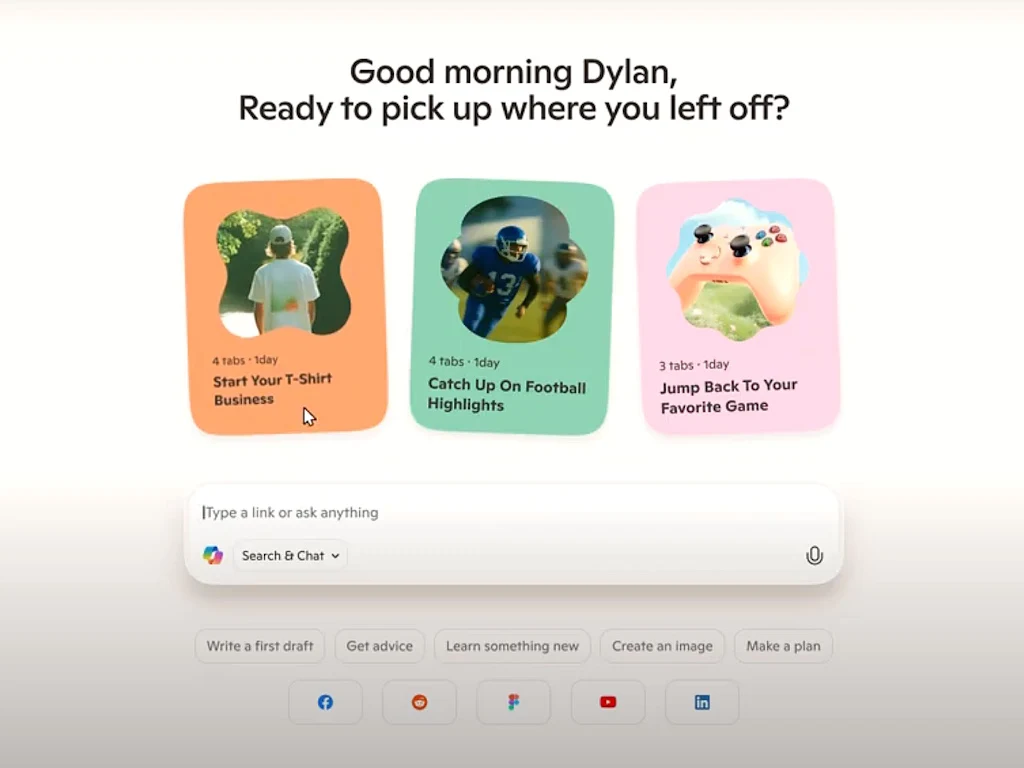
    Microsoft has introduced a new feature called Copilot Mode in its Edge web browser for both Windows and Mac users. This experimental setting includes an AI that is built right into the browsing experience. Every time a user opens a new tab, a prompt window appears, giving them the chance to ask the AI for assistance. The AI can search the internet for information, observe user activity, and handle tasks independently to help with various online activities.

    AI Modes Available

    The AI operates in five distinct modes: Search and Chat, Ask Copilot (which gives quick answers in 2-3 seconds), Think Deeper (around 30 seconds), Research (approximately 10 minutes), and Action. Currently, these features are available for free when users log in with a Microsoft account, but this could change down the line.

    The Ask, Think, and Research modes function in a way similar to other well-known AI chatbots like ChatGPT. Users can either type or voice their queries, and the AI will search the web to provide answers.

    Understanding Search and Chat

    With the Search and Chat mode, the AI can view the content in all open tabs within Edge. This capability allows the AI to offer insights and suggestions based on the user’s tabs. For instance, if users are looking at various swimsuits, they can inquire what the AI thinks about their selections.

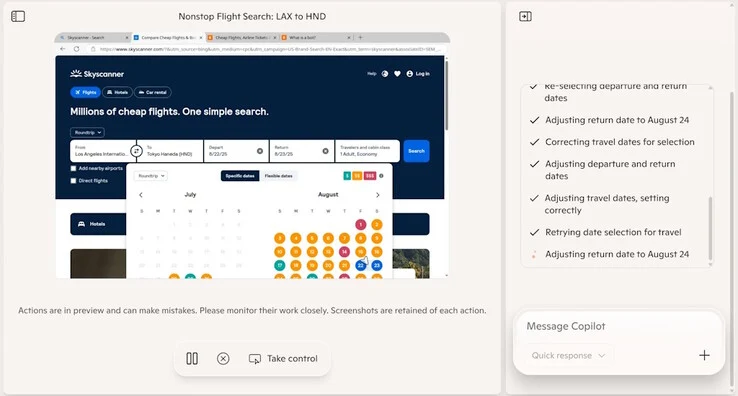
    In Action mode, Copilot acts like a personal assistant — it goes online, searches, engages with websites, and gathers information. Users will see the AI performing tasks in a virtualized browser environment, and they have the option to interrupt or take control at any time. It’s important for users to note that Copilot Mode captures screenshots of every step in Action mode and collects typed or spoken data during these interactive sessions. When personal history and credentials features are implemented in the future, the AI will also acquire this sensitive information as it works on tasks by itself.

    Limitations of the AI

    During initial tests, the AI struggled with some straightforward tasks, such as selecting a date range for flights, and its performance was quite slow in this experimental mode. There’s uncertainty about who would be held responsible for any unintended actions taken by the AI, like unauthorized credit card purchases.

    While Microsoft claims it adheres to data privacy protocols, there remains a risk that personal information could be exposed or compromised. Users who are concerned about potential AI risks might consider using sandboxed browsers without AI (like the one available on PortableApps.com) or even switching to Linux instead of Windows (which can be downloaded from Ubuntu, and there are guides to help with its usage).

    Source:
    Link


  • Mandatory Age Verification Required for Xbox Accounts in the UK

    Mandatory Age Verification Required for Xbox Accounts in the UK

    Key Takeaways

    1. Microsoft will begin age verification for Xbox accounts in the UK to comply with the Online Safety Act effective July 25, 2025.
    2. Users aged 18 and older will receive prompts to verify their age using methods like government ID or credit card checks.
    3. Microsoft partnered with Yoti for identity verification, but players can still access games without verification until early 2026, when social features will require it.
    4. There are concerns about privacy risks and sensitive information sharing related to the new regulations, with opposition from groups like the Electronic Frontier Foundation.
    5. Some users are finding workarounds to bypass the verification process, leading to increased VPN usage.


    Microsoft has revealed that it will start the age verification process for Xbox accounts in the UK to follow the Online Safety Act, which became effective on July 25, 2025.

    New Regulations for Online Platforms

    This law mandates that social media and entertainment companies must set up a user verification system that stops children from accessing harmful or inappropriate content meant for older audiences. Numerous adult websites and platforms like Reddit are already implementing these verification methods to adhere to the new regulations.

    Notification for Players

    As of today, players who state their account age as 18 or older, are located in the UK, and log into an Xbox experience using a Microsoft account will start receiving messages prompting them to verify their age. Microsoft claims that this will be a “one-time process.” Players can confirm their identity through a government-issued ID, credit card checks, age estimation, or checks from their mobile providers.

    Partnership with Yoti

    According to The Verge, Microsoft has teamed up with Yoti, a UK company that specializes in identity verification. Players who opt not to verify their age can still enjoy games on their Xbox accounts. However, starting in early 2026, age verification will be required to access social features on their accounts, such as voice or text chat and game invites.

    Microsoft strongly urges players in the UK to “verify their age via this one-time process now to avoid interruptions in their use of social features on Xbox.”

    Alternative Solutions and Concerns

    Interestingly, there are already some smart ways to get around this process, like using the photo mode in Death Stranding 2 to skip the verification. The new law has also led to a rise in VPN usage across the country.

    This legislation has ignited a huge discussion about the potential risks to privacy and the need to share sensitive information. Various non-profit groups, including the Electronic Frontier Foundation, have voiced their opposition to the bill.

    Source:
    Link

  • Satya Nadella Justifies Microsoft Layoffs as AI Surpasses Gaming

    Satya Nadella Justifies Microsoft Layoffs as AI Surpasses Gaming

    Key Takeaways

    1. Microsoft laid off over 15,000 workers in 2025, marking it as a challenging decision for CEO Satya Nadella.
    2. Despite layoffs, Microsoft reported strong financial performance with a record revenue of $245 billion and a profit of $109 billion.
    3. The company’s gaming division saw a 5% growth in Q3 2025, driven by Xbox Game Pass and new game launches like Call of Duty Black Ops 6.
    4. Significant project cancellations in the gaming division include the Perfect Dark Reboot and other high-profile titles, as Microsoft shifts focus to AI.
    5. Internal tensions arise as laid-off employees are reportedly replaced by AI tools, raising concerns about the future of innovation in the gaming sector.


    Microsoft’s CEO, Satya Nadella, recently spoke about the company’s major layoffs that impacted over 15,000 workers in 2025, referring to them as “the most difficult decisions we have to make” in a post on Microsoft’s official blog.

    Financial Performance

    Even after the cuts made in June 2025, which saw 9,100 employees let go, Nadella claimed that the company is “thriving.” He pointed out a record revenue of $245 billion, which marks a modest 16% increase from last year, and a profit of $109 billion, representing a 24% rise compared to the previous year.

    Gaming Division Insights

    In addition, Microsoft’s gaming sector, Xbox Game Studios, reported a growth of 5% in Q3 2025. This growth is attributed to Xbox Game Pass and popular first-party games like Call of Duty Black Ops 6, which recorded 3.8 million players on its launch day.

    Project Cancellations

    Nonetheless, the Xbox division has faced significant downsizing, including the scrapping of projects like the Perfect Dark Reboot and Everwild, which had been under development for almost ten years. Other cancellations include the well-received MMORPG Blackbird from ZeniMax Online Studio, an unannounced FPS from Romero Games, and the shutdown of The Initiative Studio.

    Satya Nadella explained that these layoffs are part of Microsoft’s strategic pivot towards AI, with 30% of the company’s code now being generated by AI, leading to a saving of $500 million in support centers alone. Microsoft has invested billions into AI, which has become the company’s main focus. Nadella further remarked:

    “Just imagine if all 8 billion people could summon a researcher, an analyst, or a coding agent at their fingertips, not just to get information, but to use their expertise to get things done that benefit them.”

    Internal Tensions and Market Reactions

    This change in strategy has caused some internal conflict, as employees laid off from King are allegedly being replaced by AI tools they helped create. Microsoft’s recent actions have sparked concerns among industry experts and gamers, who feel that the company is putting profits ahead of innovation.

    Despite the cancellations and closures, Microsoft maintains that it has over forty active projects in development. The company’s stock reached a historic peak of $514.15 on July 25, 2025, which seems to have kept investors calm amidst current gaming controversies.

    Industry Concerns

    However, observers in the video game sector are doubtful about Microsoft’s choices and their potential long-term effects, particularly in light of the cancellation of eagerly awaited titles and the departure of prominent talent.

    Source:
    Link

  • Microsoft Unveils Surface Laptop 5G with eSIM and Nano SIM from $1799

    Microsoft Unveils Surface Laptop 5G with eSIM and Nano SIM from $1799

    Key Takeaways

    1. Microsoft has launched the Surface Laptop 5G, a 5G-enabled version of the 7th Edition, aimed at business users.
    2. The laptop features a built-in 5G modem, eSIM module, nano SIM card slot, and a powerful Neural Processing Unit (NPU).
    3. It includes a dynamic antenna system with six antennas that optimize signal strength based on usage and can switch between Wi-Fi and 5G.
    4. Pricing starts at $1799.99 for the base model with Intel Core Ultra 5, 16GB RAM, and 256GB storage, while the high-end model is priced at $2,699.99.
    5. The Surface Laptop 5G will initially be available only in Platinum Silver, with shipping starting on August 26.


    Microsoft has introduced a new model of the Surface Laptop, named the Surface Laptop 5G, which is a 5G variant of the 7th Edition. This latest laptop is essentially a 5G-enabled version of the 13.8-inch Surface Laptop tailored for business users and runs on Intel’s Ultra Processor (Series 2).

    Features and Specifications

    The Surface Laptop 5G comes with a built-in 5G modem, an eSIM module, and a nano SIM card slot located on the right side. As stated in Microsoft’s press release, this laptop is equipped with a Neural Processing Unit (NPU) that can perform over 40 trillion operations per second (TOPS), enabling quick, on-device intelligence.

    Connectivity and Performance

    Additionally, the Surface Laptop 5G includes a dynamic antenna system featuring six antennas placed in key positions. These antennas adjust their signal paths and power automatically based on how the laptop is held or used, ensuring reliable connectivity. Moreover, the laptop can switch effortlessly between Wi-Fi and 5G networks and can also function as a mobile hotspot for other devices.

    Pricing Options

    The starting price for the Surface Laptop 5G is $1799.99, which is $300 more than the non-5G model that launched in February. For this price, you get an Intel Core Ultra 5, 16GB of RAM, and 256GB of storage. There’s also a higher-end model priced at $2,699.99, featuring an Intel Core Ultra 7, 32GB of RAM, and a 1TB SSD. Initially, Microsoft will offer the laptop only in Platinum Silver, with shipping beginning on August 26.

    Microsoft has not yet announced any plans for a 5G version of the Surface Laptop 7 that would utilize Snapdragon processors (Snapdragon X Plus 16GB + 256GB is available on Amazon for $840).

    Source:
    Link