Tag: nuclear fusion

  • Failed Stars Could Merge to Create a New Star

    Failed Stars Could Merge to Create a New Star

    Key Takeaways

    1. Brown dwarfs are “failed stars” with masses between 13 to 80 times that of Jupiter.
    2. Astronomers found two brown dwarfs, ZTF J1239 and ZTF J1239+8347, located about 1,000 light-years from Earth.
    3. The more massive brown dwarf may draw matter from its partner, potentially igniting nuclear fusion.
    4. There is a possibility that the two brown dwarfs could merge to form a new star.
    5. The origins of these brown dwarfs are unclear, with theories suggesting they may have come closer due to the gravitational influence of a larger star.


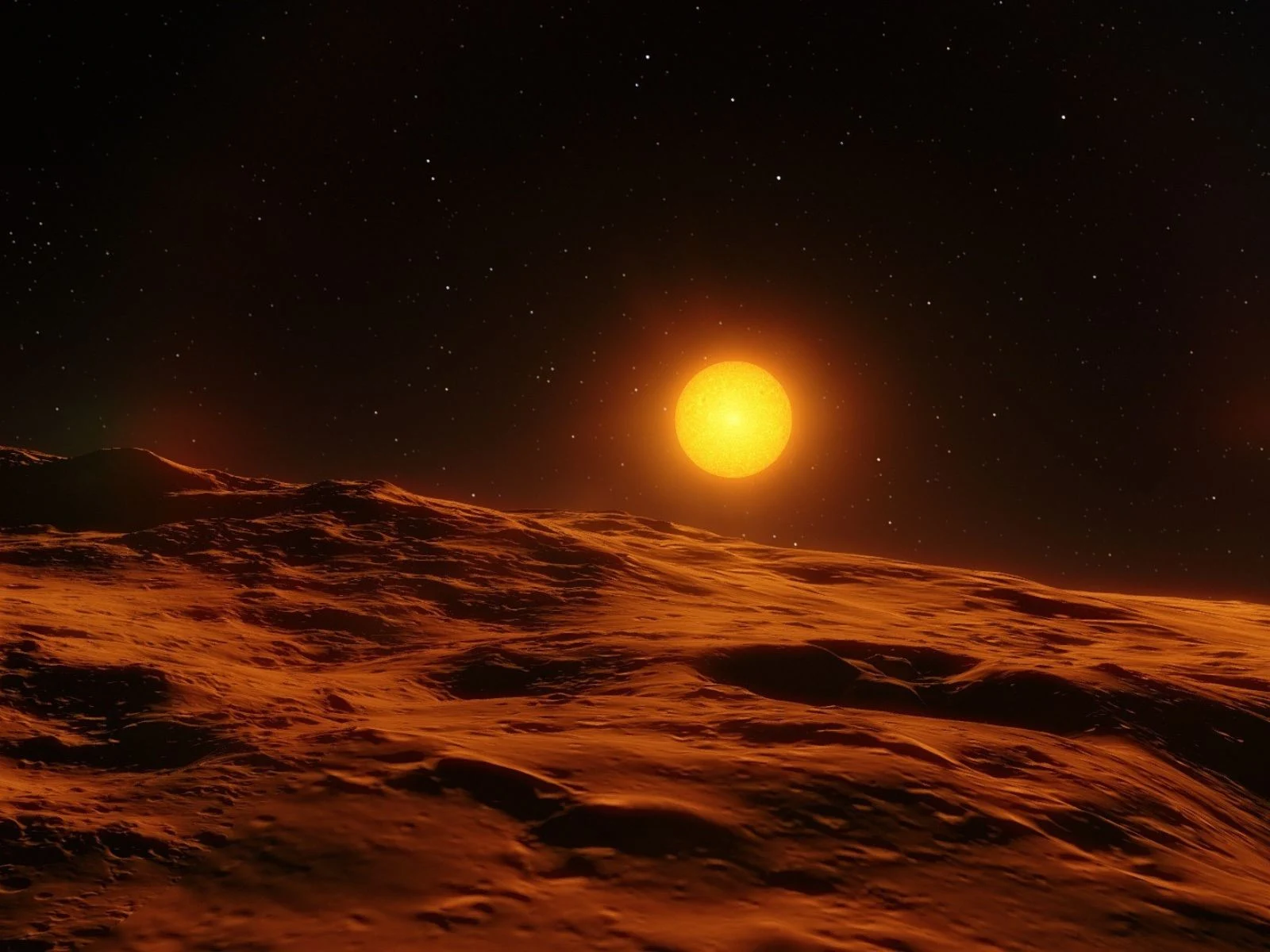
    There are countless stars scattered throughout the universe, and they come in various types. Some examples include white dwarfs, yellow dwarfs like our Sun, and red dwarfs. Among them are brown dwarfs, often referred to as failed stars. These objects have masses ranging from 13 to 80 times that of Jupiter, which prevents them from becoming full-fledged stars. Recently, astronomers made a remarkable discovery: two brown dwarfs might actually merge to form a new star.

    Observations from ZTF

    Using data from the Zwicky Transient Facility (ZTF) at the Palomar Observatory in California, researchers found that the two brown dwarfs were in close proximity. Located approximately 1,000 light-years away from Earth, they are identified as ZTF J1239+8347 (or ZTF J1239) and possess masses between 60 and 80 times that of Jupiter. Intriguingly, they could fit within the orbit of the Moon around our planet.

    The closeness of these brown dwarfs allows the more massive one to draw matter from its partner. This process could enable it to gain enough mass to ignite nuclear fusion. However, astronomers also consider the possibility that these two objects might merge, leading to the creation of a new star.

    Unraveling the Mystery

    Despite this exciting discovery, the exact origin of these brown dwarfs is still uncertain. Some theories suggest they may have drifted closer together due to the gravitational pull of a larger star during their long journey through space. More observations will be crucial to uncover their origins and to learn about their future.

    The findings are published in The Astrophysical Journal Letters.

    Source:
    Link


  • Chinese Scientists Generate Magnetic Field 700,000 Times Stronger than Earth’s

    Chinese Scientists Generate Magnetic Field 700,000 Times Stronger than Earth’s

    Key Takeaways

    1. A team from China set a world record by creating a stable magnetic field of 35.5 tesla, significantly stronger than the Earth’s magnetic field.
    2. The record-breaking magnet was developed by researchers at ASIPP in Hefei, collaborating with Tsinghua University and others.
    3. The new design combines high-temperature and low-temperature superconducting magnets to overcome technical challenges.
    4. This achievement has important implications for nuclear fusion and could advance technologies like magnetic levitation and electromagnetic propulsion.
    5. The research team successfully sourced all necessary superconducting materials domestically, ensuring a reliable supply chain.


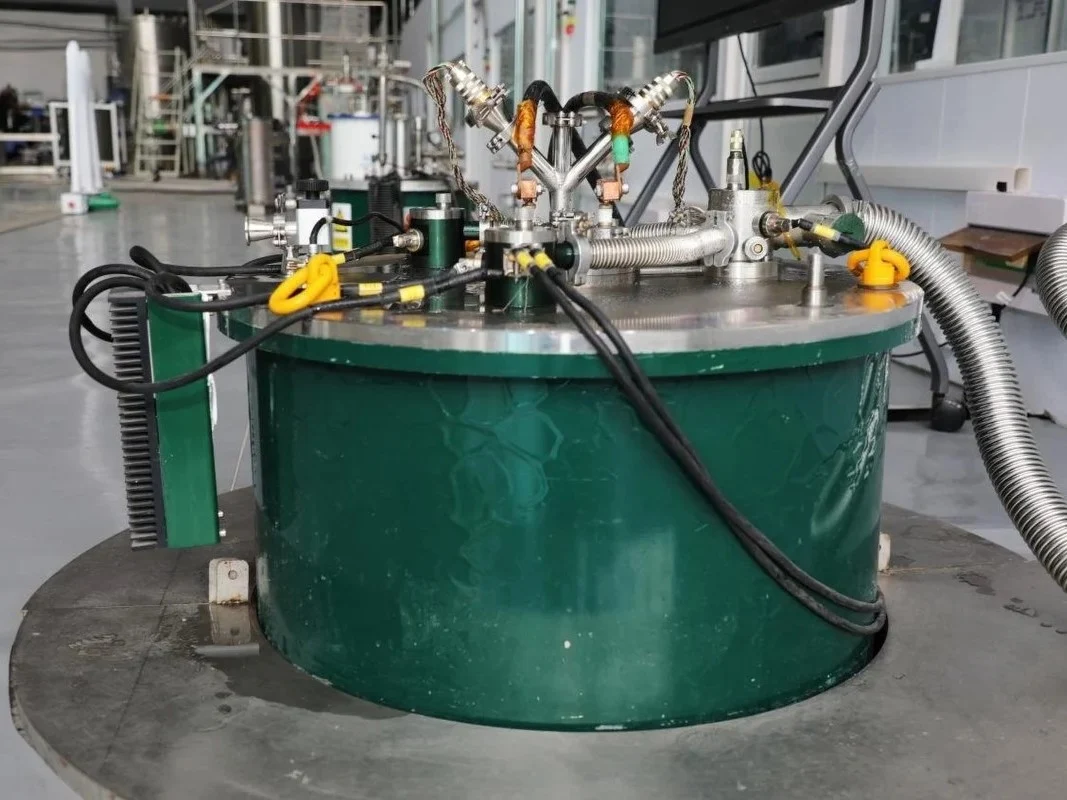
    A group of scientists from China has broken a world record by producing a stable magnetic field measuring 35.5 tesla (351,000 gauss) with the help of a fully superconducting magnet. This significant achievement was shared by the Institute of Plasma Physics under the Chinese Academy of Sciences and marks a vital step forward in advanced magnet technology. For context, this magnetic field is an astounding 700,000 times stronger than the Earth’s magnetic field, which is about 0.5 gauss.

    New Magnet Development

    The record-setting magnet was created by researchers at ASIPP in Hefei, working together with Tsinghua University and other organizations. This new record surpasses the earlier one of 32.35 tesla, which was established back in 2019. The magnet successfully operated at its maximum capacity for 30 minutes before it had to be demagnetized, showing remarkable stability throughout the process.

    Innovative Design

    To reach this goal, the research team employed a hybrid design that integrates a high-temperature superconducting coil within a traditional low-temperature superconducting magnet. Liu Fang, one of the researchers, mentioned that this method helped them tackle significant technical obstacles related to extreme stress and various magnetic fields.

    The implications of this discovery are especially relevant for nuclear fusion, where such powerful magnets are essential for creating a “magnetic cage” that can contain the extremely hot plasma necessary for maintaining a fusion reaction. Additionally, this technology could lead to advancements in magnetic levitation (maglev), improved electromagnetic propulsion systems, and much more.

    Domestic Material Sourcing

    Moreover, the institute revealed it has successfully localized all the superconducting materials and systems required, ensuring a domestic supply chain for all essential components.

    Source:
    Link


  • Helion Starts World’s First Fusion Power Plant with Microsoft Support

    Helion Starts World’s First Fusion Power Plant with Microsoft Support

    Key Takeaways

    1. Helion Energy is building the world’s first commercial fusion power plant in Malaga, Washington, expected to provide electricity to Microsoft data centers by 2028.

    2. Fusion energy merges atoms to generate power, offering a cleaner alternative to traditional nuclear energy with no carbon emissions and minimal long-term waste.

    3. Sam Altman, CEO of OpenAI, has supported Helion since 2014, highlighting a trend among tech leaders to address sustainability and infrastructure alongside software development.

    4. Helion aims to achieve net energy gain by 2028, which would be a significant milestone for commercial fusion energy, supported by Microsoft’s commitment to using this power in its operations.

    5. The success of Helion’s fusion project could provide a scalable and reliable energy source for AI systems, aligning with the growing demand for high-density computing resources and contributing to a sustainable future.


    Fusion startup Helion Energy, which has the support of OpenAI’s CEO Sam Altman, has kicked off construction on a project that might turn into the first commercial fusion power plant in the world. This facility, situated in Malaga, Washington, is anticipated to start delivering electricity to Microsoft data centers by 2028.

    A New Era for Fusion Power

    This partnership, along with a power purchase agreement with Microsoft, serves as a clear indicator that nuclear fusion could transition from theoretical concepts in physics books to actual, functioning infrastructure within this decade.

    In contrast to conventional nuclear energy, which relies on splitting atoms, fusion merges them together, generating energy without carbon emissions, risks of meltdowns, and only minimal long-term waste. This technology has often been seen as something from the future, however, Helion’s Polaris reactor aims for a practical objective: to produce electricity at grid scale, without the need for steam or turbines.

    Cleaner Power for AI

    Should this endeavor prove successful, it could provide cleaner energy for the AI systems that increasingly demand high-density computing resources. Altman has been backing Helion since 2014, long before ChatGPT’s OpenAI became the center of attention. This financial support highlights a growing trend among technology leaders to address infrastructure and sustainability issues, rather than solely focusing on software development.

    As AI workloads require more and more power, innovative solutions like fusion present a means to ensure the longevity of the data economy while also reducing the carbon footprint of activities ranging from training large language models (LLMs) to executing search queries.

    Ambitious Goals Ahead

    Helion’s objective is bold: to achieve net energy gain—where energy output exceeds energy input—by 2028. This would be a historic milestone in a commercial context. Although doubts persist, Microsoft’s engagement indicates a strong level of confidence. The tech giant intends to incorporate the generated power into its data center operations, consistent with its goal of being carbon-negative by 2030.

    If Helion succeeds, it could unveil a new energy source that is scalable, reliable, and specifically designed for the computationally intensive future we are moving towards.

    Sam Altman is not only focusing on AI development. Through Helion, he is making a significant wager on an energy system that could support it.

    In a field characterized by rapid growth and substantial energy consumption, fusion energy presents a unique opportunity: a sustainable long-term solution. Regardless of whether Helion meets its timeline, this development signals a shift toward concrete, physical investments that correspond with the scale of the ongoing digital transformation.

    Source:
    Link

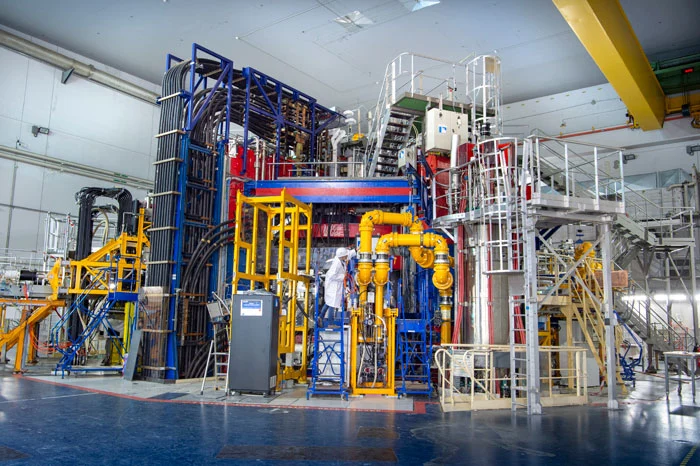
  • Nuclear Fusion Breakthrough: Reactor Sets New Plasma Duration Record

    Nuclear Fusion Breakthrough: Reactor Sets New Plasma Duration Record

    Key Takeaways

    1. The CEA achieved a plasma duration of 1,337 seconds (22 minutes), surpassing the previous record by 25%.
    2. The new technology is expected to use less fuel and produce less radioactive waste compared to traditional fission reactors.
    3. Plasma reached a temperature of 50 million degrees, marking significant progress in controlled nuclear fusion.
    4. Future goals include extending plasma durations to hours and increasing temperatures for optimal fusion conditions.
    5. Challenges remain in stabilizing plasma and ensuring the durability of components facing extreme conditions.


    The French Alternative Energies and Atomic Energy Commission (CEA) has revealed a significant achievement in the realm of plasma duration within a nuclear reactor, successfully sustaining plasma for 1,337 seconds. This new benchmark signifies a 25% enhancement over the earlier record established by East in China just weeks ago.

    Plasma Duration Achievement

    This translates to 22 minutes of plasma held within the fusion reactor before it either dissipated or turned unstable. This innovative technology is expected to utilize less fuel compared to a fission nuclear reactor and generate a reduced amount of radioactive waste, positioning it as a vital component for future energy production.

    According to the CEA, the plasma attained a temperature of 50 million degrees, marking significant advancements in the quest for controlled nuclear fusion. This outcome was achieved in a tokamak device, which is commonly utilized in magnetic fusion reactors, and could represent a pivotal advancement for systems like the International Thermonuclear Experimental Reactor (Iter), currently being built in France.

    Future Goals in Fusion Research

    The Commission aims to reach even longer plasma durations—up to hours—and higher temperatures to meet the conditions essential for fusion plasmas.

    “West has achieved a new key technological milestone by holding hydrogen plasma for over twenty minutes while injecting 2 megawatts (MW) of heating power. Experiments will continue with increased power,” stated Anne-Isabelle Etienvre, Director of Fundamental Research at the CEA.

    One of the primary obstacles in fusion research is managing the inherently unstable plasma and ensuring the durability of plasma-facing components, which need to endure extreme temperatures and radiation. Researchers at West employ superconducting coils and actively cooled components to foster a stable environment for these long-duration experiments, which will ultimately have to extend to several hours.

    CEA’s Progress

    On February 12, the CEA’s West machine successfully maintained plasma for more than 22 minutes. This accomplishment broke the previous record for plasma duration achieved with a tokamak. This significant progress illustrates how our understanding of plasmas and the technological control over them is evolving, giving hope that fusion plasmas can be stabilized for longer durations in machines like Iter.

    Source:
    Link