Tag: MacBook Pro

  • MacBook Pro with M5 Launch Delayed; New iPad and More Leaked

    MacBook Pro with M5 Launch Delayed; New iPad and More Leaked

    Key Takeaways

    1. Apple is expected to launch new iPhones and Apple Watches in September 2025, along with an iPad Pro featuring the M5 chip in October.
    2. A successor to the Apple Vision Pro with an upgraded M4 chipset and improved head strap is anticipated by the end of 2025.
    3. New products like Apple TV 4K and HomePod mini are expected to include Apple’s own WiFi chip; however, the new MacBook Pro has been delayed to early 2026.
    4. The MacBook Air M5 is set to launch in early 2026, alongside refreshed budget-friendly iPads and the iPad Air with the M4 chip.
    5. A new Apple Studio Display and a smart home hub are likely to debut in the first half of 2026, while a more affordable MacBook with an iPhone processor is also rumored.


    Based on leaked identification numbers and code from an internal version of iOS 18, a new report from Bloomberg provides further details on the products Apple is expected to launch within the next twelve months.

    Expected Launches in Late 2025

    The product lineup for the second half of 2025 doesn’t hold many surprises, as it’s likely that Apple will unveil new iPhones and Apple Watches in September, as is the custom. Following this, there is an expectation of the iPad Pro powered by the Apple M5 chip in October, which will likely see minimal upgrades apart from the system-on-chip. Additionally, the Apple Vision Pro is anticipated to have a successor, which will feature an upgraded Apple M4 chipset and a more comfortable head strap. The following Apple products are expected to launch by the end of the year:

    Apple roadmap for H2 2025

    Earlier speculations have also suggested a new Apple TV 4K and a HomePod mini, both of which are anticipated to incorporate Apple’s own WiFi chip for the first time. Notably, a new MacBook Pro, which should have been based on the Apple M5 Pro and M5 Max, is missing from this list. Bloomberg reports that the launch of this product has been delayed until early 2026. This iteration is said to be the last with the current design before the MacBook Pro transitions to a thinner and lighter chassis with an OLED screen.

    Looking Ahead to Early 2026

    The MacBook Air M5 is also expected to be introduced early next year. In March or April 2026, Apple may refresh its most budget-friendly iPad along with the iPad Air, equipping them with newer processors. However, the iPad Air is expected to lag a generation behind the iPad Pro, featuring the Apple M4 chip. Aside from the new processor, there are no significant changes or updates planned. Particularly exciting is the possibility of a new Apple Studio Display, since the current model is now over three years old. Additionally, the long-anticipated smart home hub could debut in the first half of 2026. Notably absent from Bloomberg’s list is a more affordable MacBook utilizing an iPhone processor, which is also rumored to launch early in 2026.

    Source:
    Link

  • Apple Roadmap Leak Reveals Hardware Upgrades for Mac Devices

    Apple Roadmap Leak Reveals Hardware Upgrades for Mac Devices

    Key Takeaways

    1. Apple is set to release the M5 chip this year, primarily for MacBook devices, with the M5 Pro and M5 Max also in development.
    2. Upcoming devices such as the MacBook Pro, iMac, and Mac Mini will be powered by the M5 series, while the new iPad Pro is not included in this release cycle.
    3. The M5 Pro and M5 Max will feature advanced packaging technology to enhance performance and heat management by separating the CPU from the GPU.
    4. The MacBook Air will not receive an M5 upgrade until 2026, but an A18 Pro-powered MacBook Air is confirmed to be in development.
    5. The next generation, M6 series chips, are anticipated for late 2026 and may include an integrated 5G modem, produced using TSMC’s advanced N2 process.


    A previous roadmap has confirmed that Apple is actively developing its next generation of M-series chips. These chips will be released each year, with the Apple M5 expected to make its debut this year alongside a MacBook, rather than an iPad Pro. Apple Insider has provided new insights into what Cupertino plans for the upcoming months. The Apple M5 is anticipated to power several devices during the latter half of 2025.

    Upcoming Devices

    To begin with, there will be a MacBook Pro featuring the M5, M5 Pro, and M5 Max. In addition, an iMac powered by the M5 is set to launch alongside a Mac Mini equipped with both the M5 Pro and M5. In short, any device released in 2024 will receive an M5 upgrade. The M5, along with the M5 Pro and M5 Max, is likely to be produced using TSMC’s N3P technology. Curiously, the new iPad Pro is missing from this list, even though it has begun mass production.

    Performance Enhancements

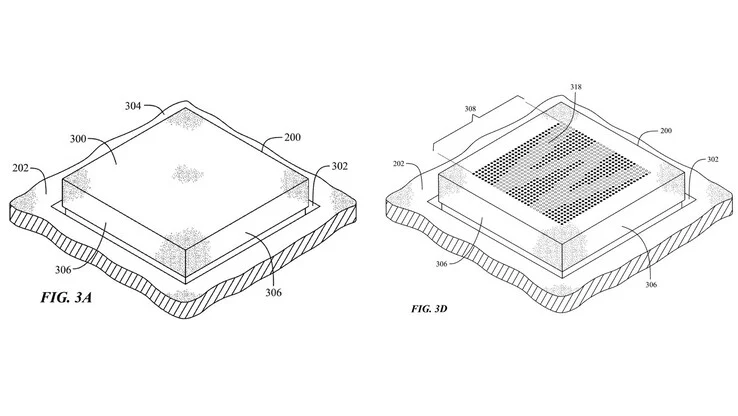
    Moreover, the M5 Pro and M5 Max will utilize TSMC’s System-in-Integrated-Chips-Moulding-Horizontal (SoIC-mH) packaging. This innovative design will enable Apple to separate the CPU from the GPU, leading to improved performance and heat management. Furthermore, the Mac Pro is anticipated to get a significant upgrade, but it remains uncertain which chip will be included in it.

    If the latest Mac Studio serves as any indication, it could use the Apple M3 Ultra or the yet-to-be-revealed M4 Ultra (with the code name Hidra) mentioned in a previous roadmap. Meanwhile, the MacBook Air, much like its predecessor, will not see an M5 upgrade until 2026. In addition, Apple Insider has confirmed that the previously rumored A18 Pro-powered MacBook Air is indeed real.

    Future Developments

    The excitement continues with the upcoming Apple M6 series. For one thing, it may be the first of Apple’s M-series chips to incorporate an integrated 5G modem, although it is unclear if this will be Apple’s own C1. Another significant enhancement for the MacBook Pro lineup could be a tandem OLED screen, similar to what is currently featured on the iPad Pro, although some reports suggest otherwise.

    The Apple M6, M6 Pro, and M6 Max are expected to be released in the latter half of 2026. These chips are projected to be manufactured using TSMC’s N2 (2 nm) process. TSMC N2 marks the introduction of Nanosheet (also known as GAAFET) transistors, which promise to deliver a substantial improvement in both performance and thermal efficiency.

    Source:
    Link

  • Apple Mini-LED Keyboard with Dynamic Legends: MacBook Upgrade Patent

    Apple Mini-LED Keyboard with Dynamic Legends: MacBook Upgrade Patent

    Key Takeaways

    1. Apple has faced challenges with keyboard technologies, particularly the unreliable butterfly keyboard that cannot have keys replaced individually.
    2. The company is exploring innovative designs, including a touchscreen keyboard and a new patent for dynamic keyboards featuring LEDs for each key.
    3. The new keyboard design aims to improve functionality without significantly increasing power consumption by eliminating the need for traditional LED backlights.
    4. The keys are made from aluminum and use a traditional scissor switch mechanism, with mini-LEDs for high-resolution symbols.
    5. Users may gain more customization options, such as switching between regional layouts, but the visibility of the key legends in bright sunlight remains uncertain.


    From the not-so-popular Touch Bar to the finicky butterfly keyboard, Apple has had a tough time creating successful new keyboard technologies over the last ten years. The butterfly keyboard, for example, is not only unreliable but also has keys and switches that can’t be replaced on their own. Still, this hasn’t held back the tech giant from pursuing new ideas to enhance the keyboards in their MacBook Pro or MacBook Air models (around $912 on Amazon).

    New Innovations in Keyboard Design

    Apple has previously looked into a touchscreen keyboard, which could greatly affect battery life, whether each key has a small display or if the entire keyboard is one large touch panel. Recently, AppleInsider discovered a new patent from Apple that outlines another intriguing solution for dynamic keyboards. Instead of utilizing a display, this new design incorporates several LEDs for each key to show the needed symbols.

    Improved Functionality Without Extra Power

    Since this innovative design would make the LED backlights, used in all current MacBook keyboards, unnecessary, it shouldn’t lead to a major increase in power consumption. The keys themselves are crafted from aluminum, featuring traditional switches with a scissor mechanism. To light up the keys, mini-LEDs are employed to provide a high resolution, ensuring that the symbols are easily readable.

    This approach could give users far more freedom to customize their keyboard layouts. For example, they might be able to switch between different regional layouts simply by hitting a button. However, it remains unclear if these LEDs would be bright enough to keep the key legends visible in bright sunlight. Like many patents, this idea doesn’t guarantee that Apple is planning to launch a laptop with this specific keyboard design.

    Source:
    Link


  • Apple M5 Starts Mass Production at TSMC’s N3P Node

    Apple M5 Starts Mass Production at TSMC’s N3P Node

    Apple’s new chip for laptops and tablets, called the M5, has begun mass production. This means we can expect it to be available around mid to late 2025, probably with either an iPad Pro or a MacBook Pro. Unlike earlier reports suggested, it won’t utilize TSMC’s N2 node but will rely on the N3-based N3P instead. This choice should provide a 5% boost in performance and enhance power efficiency by up to 10%.

    Improvements in Design

    Even though it won’t feature TSMC’s cutting-edge N2 gate-all-around technology (Nanosheets), the Apple M5 will include several significant upgrades. Among these is the SoIC-mH (System-on-Integrated-Chips-holding-Horizontal) packaging, enabling a more compact design. Additionally, the new substrate design will permit more chips to be stacked vertically, making the architecture more efficient. The report also hints at the introduction of an Apple M5 Ultra chip.

    Future Production Plans

    Industry analyst Ming-Chi Kuo hinted at the M5 Ultra’s production starting in 2026, signaling a comeback of the Ultra-branded chips from Apple after a two-generation gap. Kuo also mentioned that the Apple M5 will uniquely separate the unified CPU and GPU, which could be a strategic move to enhance AI performance—an area that has gained significant attention recently.

    Source:
    Link

  • M4 MacBook Air in Mass Production; M4 and M5 Macs Coming 2025

    M4 MacBook Air in Mass Production; M4 and M5 Macs Coming 2025

    After the Apple M4 was introduced in the iPad Pro earlier this year, it is now being used in the Mac mini, iMac, and MacBook Pro. Based on recent updates from Bloomberg, the forthcoming MacBook Air will likely be available soon, with both the 13-inch and 15-inch models featuring the Apple M4 reportedly “deep in mass production.”

    Sales Timeline

    This indicates that sales should kick off in the first quarter, likely by the end of March. Additionally, a Mac Studio equipped with a more powerful Apple M4 is set to launch in the middle of next year, followed by an updated Mac Pro. Our tests of the Apple M4 in the iPad Pro reveal that the chip delivers up to 22% better CPU performance compared to the Apple M3 in the MacBook Air, all without requiring a fan. However, the upgrade is mostly beneficial for those using older Intel Macs or M1 MacBook Airs, since the new ARM chip is as much as 70% quicker.

    Future Upgrades

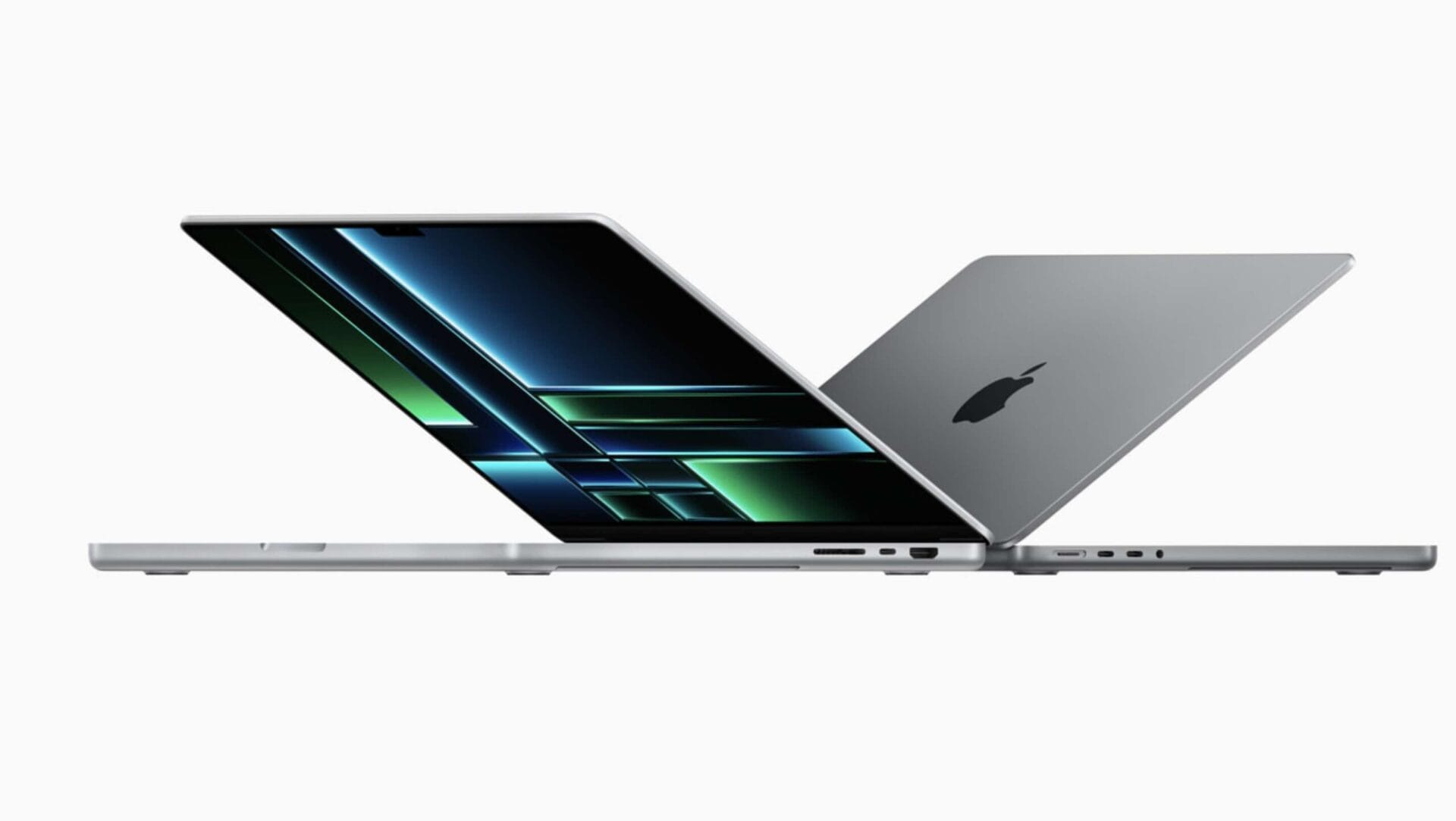
    According to Bloomberg’s Mark Gurman, the MacBook Pro is anticipated to receive an upgrade to the Apple M5, M5 Pro, and M5 Max by late 2025, but this will not include the much-awaited redesign. The new aesthetic, which will feature a dual OLED display and a 2 nm ARM chip, is now pushed back to 2026, meaning that next year’s version will be focused solely on performance enhancements. It’s still unclear whether other models, like the iMac or Mac mini, will also see an upgrade to the Apple M5 in 2025.

    Source: Link

  • MacBook Pro 2026: OLED Display, Hole-Punch Camera, No Notch

    MacBook Pro 2026: OLED Display, Hole-Punch Camera, No Notch

    Apple is gearing up to introduce new MacBook Pro models equipped with OLED displays and an upgraded camera system in 2026, as revealed by a recent roadmap from Omdia. The upcoming models are likely to replace the current notch with a hole-punch camera design, and they might even feature the Dynamic Island that iPhone users have come to know.

    New Display Features

    These refreshed MacBook Pros will come with 14.3-inch and 16.3-inch Hybrid OLED screens that utilize RGB Tandem and Oxide TFT technology, along with support for Dynamic Frame Rate. The new dimensions are slightly larger than the existing 14.2-inch and 16.2-inch Mini LED displays.

    Benefits of OLED

    Transitioning to OLED is expected to provide several significant improvements, including brighter screens, enhanced contrast with richer blacks, and better battery life for extended usage. Such advancements might also allow future MacBooks to be slimmer overall.

    Design and Chip Updates

    However, before we see these changes, the MacBook Pro will maintain its current design, with models in 2025 getting an upgrade to the new M5, M5 Pro, and M5 Max chips. Omdia indicates that OLED screens will remain exclusive to the MacBook Pro for a period of two years, with the MacBook Air receiving them only in 2028.

    The elimination of the notch could create more space for the macOS menu bar, resulting in a more integrated display experience. Yet, specifics regarding the functionality of the hole-punch camera and Dynamic Island remain uncertain.

    Source: Link

  • Apple’s Future MacBook Pros May Feature OLED Screens Again

    Apple’s Future MacBook Pros May Feature OLED Screens Again

    Apple’s move to upgrade its MacBook Pro lineup to OLED has been a topic of speculation among many analysts for quite some time. A latest report from TrendForce suggests that Apple is pushing its suppliers to increase investments in larger OLED panels suitable for laptops. As mentioned in earlier reports, the transition to OLED is anticipated to happen by 2026 at the earliest.

    Benefits of OLED Displays

    There’s no denying that OLED screens come with numerous advantages compared to traditional LED displays. With their per-pixel dimming feature, OLED panels deliver outstanding black levels, resulting in almost infinite contrast ratios and a fantastic HDR experience. Additionally, they offer rapid response times, which is especially appealing for gaming enthusiasts.

    Drawbacks of OLED Technology

    Nonetheless, there are some downsides to OLED technology. The ongoing risk of burn-in could be a worry for professionals who often deal with static images on their screens for long durations. Moreover, OLEDs generally have lower brightness levels compared to the current Mini LED panels that Apple uses. However, it seems that the company’s innovative tandem OLED technology might adequately address this issue.

    TrendForce’s report indicates that Apple is indeed serious about integrating OLED technology into its products.

    Source: Link

  • Nearly Invisible Edge Hardshell Case for MacBook Pro by Incase

    Nearly Invisible Edge Hardshell Case for MacBook Pro by Incase

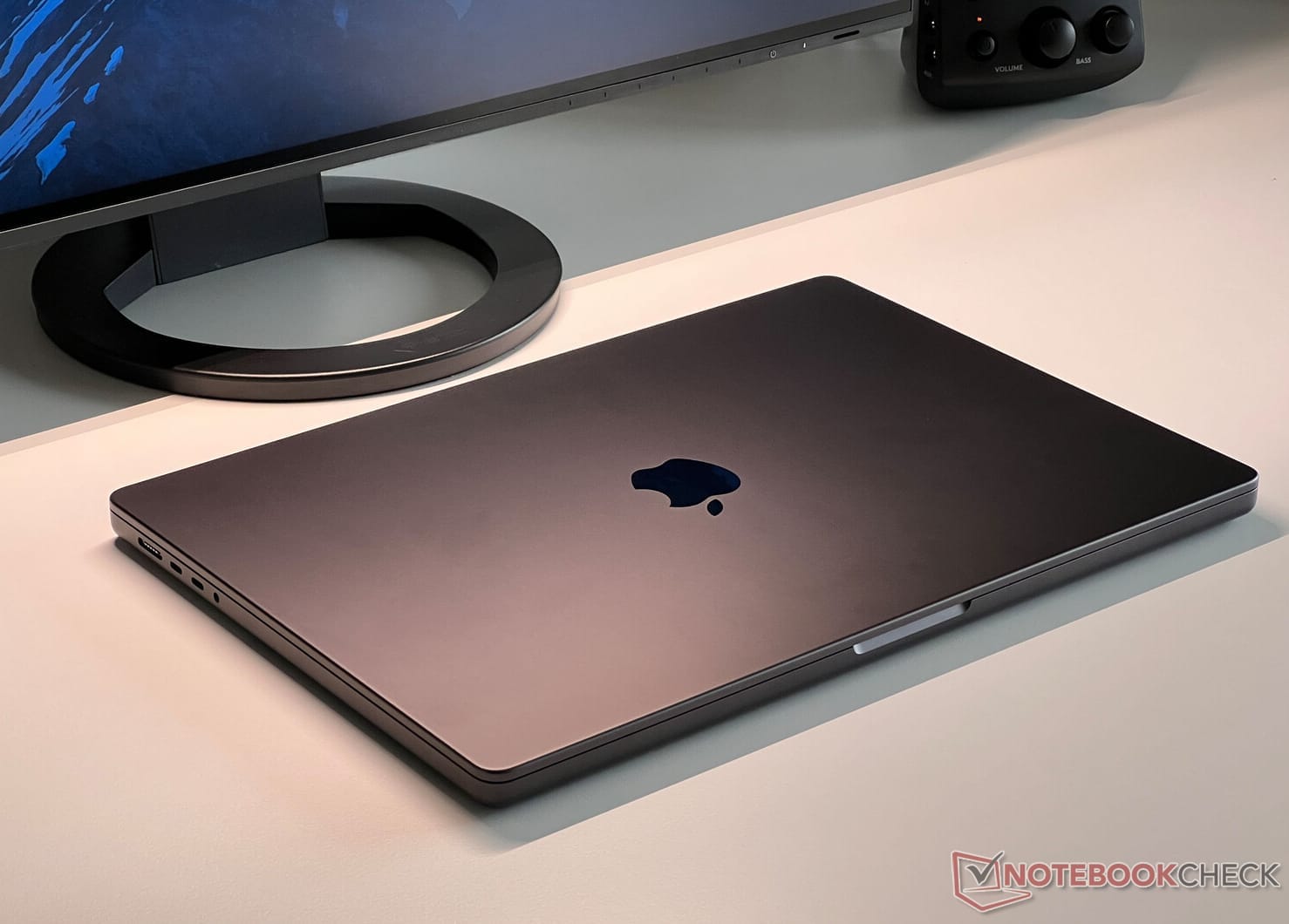
    Incase has introduced a new case designed to enhance protection for the MacBook Pro while maintaining its sleek design and preserving the visibility of the Apple logo.

    Protective Design

    The upper portion of the case acts more like a bumper for the laptop’s lid, featuring a prominent raised lip that protects the corners, which are often susceptible to damage such as dents and scratches. This durability comes from the use of Incase’s Makrolon polycarbonate material.

    Functionality and Fit

    On the lower part, rubber feet are included to ensure that the MacBook remains stable on smooth surfaces. The case is designed to fit perfectly around the laptop’s buttons, ports, and status LED. Additionally, Incase assures that it will not obstruct the device’s ventilation or affect its lightweight design.

    Aesthetic and Availability

    Both sections of the case feature a matte finish, enhancing grip and scratch resistance. True to its minimalist approach, the only other option besides the clear design is a sleek black version.

    The Edge Hardshell Case is offered in sizes for 14-inch and 16-inch models, and it’s compatible with M1, M2, and M3 MacBook Pro versions, as well as the latest M4 models.

    Starting at a price of $49.99, the case is available for purchase through Incase or Best Buy, effective immediately.

  • Apple Analyst Reveals Timeline for 2nm Processors and MacBook Pro Updates

    Apple Analyst Reveals Timeline for 2nm Processors and MacBook Pro Updates

    Apple has yet to begin shipping the new Mac products that were announced last week. However, Mark Gurman is already looking ahead to what the company might reveal for future MacBook Pro devices as far ahead as 2026. Just to give some background, Apple updated the 24-inch iMac, Mac mini, MacBook Pro 14, and MacBook Pro 16 at the end of October, introducing the new M4 Pro and M4 Max chipsets.

    Only One Redesigned Product

    Out of these updates, only the Mac mini (currently $799 – 512 GB on Amazon) received a complete redesign. Historically, Apple has refreshed the design of the MacBook Pro every four years. However, the last update was delayed by an additional year, which aligned with the launch of the Apple M1 chipsets.

    Future Designs and Delays

    Gurman indicates that Apple is likely to take a similar amount of time again before introducing new designs for the MacBook Pro lineup. This delay appears to be linked to production issues with the expected tandem OLED panels, which Apple aimed to have ready by next year. Consequently, the MacBook Pro models expected next year will primarily feature the M5, M5 Pro, and M5 Max chipsets.

    What’s Coming in 2026

    In contrast, the next generation of MacBook Pros is anticipated to integrate a new design alongside tandem OLED displays for the very first time. Additionally, Gurman mentions that the Apple M6 chipsets will transition to a 2 nm manufacturing process, down from the 3 nm process used for the M4 and M5 series. Therefore, the MacBook Pros released in 2026 are expected to be much more efficient compared to the current models, while also providing a significant improvement in performance and maximum display brightness.

    Mark Gurman & Bloomberg via 9to5Mac

  • Apple M4 Max Launches on Geekbench with 31% Performance Boost

    Apple M4 Max Launches on Geekbench with 31% Performance Boost

    Earlier today, we witnessed the impressive performance of the Apple M4 Pro, showcased on a premium 16-inch MacBook Pro. In terms of CPU capabilities, it significantly outperformed last year’s Apple M3 Pro and even the M3 Max. Now, we are eager to see the Apple M4 Max, which is touted as Apple’s most powerful laptop CPU, in action.

    Performance Comparison

    When looking at the Apple M4 Max compared to the Apple M3 Max, it shows a remarkable increase in speed—31% faster in single-core tasks and 25% faster in multi-core operations. This is an incredible boost in performance, which can be largely credited to an updated architecture and probably a greater power allowance.

    Graphics Performance

    On the graphics front, the Apple M4 Max achieved an impressive score of 192,532 points in Geekbench’s Metal benchmark, outperforming the Apple M3 Max’s score of 155,214 by 24%. While the benchmark doesn’t clearly state that the GPU consists of 40 cores, the other specifications, including a 16-core CPU and 128 GB of RAM, strongly suggest that it does.

    Future Competitiveness

    The Apple M4 Max is quickly becoming one of the most formidable laptop CPUs released this generation. Currently, there’s nothing from Intel, AMD, or Qualcomm that can compete with it, though this may change once AMD’s Strix Halo CPUs are released next year.

    If Apple chooses to pair two M4 Max chips together and introduce an M4 Ultra, it could really spell doom for competitors. However, the M3 Ultra never materialized, and up until now, there haven’t been many rumors suggesting such a chip is in the works.


    Image 1
    Image 1