Tag: Huawei

  • Huawei’s Solid-State Battery Promises 1,800-Mile Range in 5 Minutes

    Huawei’s Solid-State Battery Promises 1,800-Mile Range in 5 Minutes

    Key Takeaways

    1. Huawei’s new patent features a solid-state battery with an energy density of up to 500 Wh/kg, enabling electric vehicles to travel 3,000 kilometers on a single charge.
    2. The proposed charging time for this battery is just five minutes, contingent on the availability of high-performance charging infrastructure.
    3. Experts caution that while solid-state batteries have great potential, significant breakthroughs and market readiness may take several years, similar to the development timeline of lithium-ion batteries.
    4. The patent reveals challenges, including a low cell voltage of about two volts, requiring multiple cells for higher voltages, which could increase battery weight.
    5. The economic feasibility of the solid-state battery is uncertain, with production costs estimated to be significantly higher than current lithium iron phosphate batteries, and no market-ready product is available yet.


    Chinese tech company Huawei is making headlines with its latest patent filing. The patent describes a solid-state battery that claims to achieve an energy density of up to 500 Wh/kg, allowing an electric vehicle to cover 3,000 kilometers on a single charge. Additionally, it is said that a full charge could be completed in just five minutes. These details were reported by Battery Tech Network, mentioning that the patent was submitted to the Chinese Patent Office around mid-2023. The timing of this release is stirring up media buzz, especially with the rising global need for more efficient EV batteries.

    Innovative Design

    The patent highlights a unique sulfide-based solid-state electrolyte that aims to greatly enhance stability and conductivity through nitrogen doping. The specified energy density ranges from 400 to 500 Wh/kg, which is a remarkable leap over current lithium-ion batteries that hover around 265 Wh/kg. Moreover, the charging time proposed is quite ambitious: the patent suggests that a complete charge could occur in five minutes, provided that the necessary high-performance charging infrastructure is in place.

    Expert Opinions

    However, experts caution that we should be careful. Bob Galyen, who once served as chief technology officer at the battery maker CATL and is now leading Galyen Energy, told IEEE Spectrum that while solid-state batteries have enormous potential, a breakthrough in industry is probably several years away.

    “Solid-state is a great technology … but it’s going to be just like lithium‑ion was in terms of the length of time it will take to hit the market. And lithium‑ion took a long time to get there,” he said.

    Challenges Ahead

    Besides the impressive energy density, the patent notes a cell voltage of only about two volts. To reach vehicle voltages between 400 and 800 volts would necessitate multiple individual cells, which could add significant weight to the battery. Moreover, sulfide-based solid-state electrolytes are highly sensitive to moisture, which complicates and raises production costs. As per PatentPC, the current production costs lie between $400 and $800 per kilowatt-hour.

    The economic feasibility of this technology is also uncertain. Unofficial estimates suggest that the price of the solid-state battery could be ten to twenty times higher than today’s lithium iron phosphate batteries. While scaling production may lower costs over time, there isn’t a market-ready product available for mass production just yet.

    With this patent, Huawei is showcasing an ambitious path for research, but transitioning from a patent to a product ready for the market remains a daunting challenge. Experts believe that the indicated range and charging capabilities should be seen as a long-term aspiration rather than something that will materialize soon.

    Source:
    Link

     

  • Shanghai AI Conference Begins with 800 Exhibitors Amid US Restrictions

    Shanghai AI Conference Begins with 800 Exhibitors Amid US Restrictions

    Key Takeaways

    1. The World Artificial Intelligence Conference (WAIC) will feature over 800 companies showcasing more than 3,000 AI products, including 40 large language models and 60 intelligent robots.

    2. Premier Li Qiang will emphasize the need for a global governance framework for AI to prevent fragmented regulations that could favor a few powerful states or corporations.

    3. The conference occurs amidst US restrictions on advanced chips, yet local companies like DeepSeek are achieving significant innovations that rival top US systems.

    4. Major Chinese firms like Huawei and Alibaba will dominate the exhibition, alongside Western companies such as Tesla and Amazon, highlighting a mix of established and start-up players.

    5. The WAIC serves as both a technology exhibition and a diplomatic forum, with potential implications for future global AI regulations and competition.


    Shanghai’s World Artificial Intelligence Conference (WAIC) kicks off this weekend, boasting the largest exhibitor lineup in its history. The organizers are anticipating participation from over 800 companies, presenting more than 3,000 AI products. This includes 40 large language models, 50 AI devices, and 60 intelligent robots.

    Keynote Address

    Premier Li Qiang is set to give the keynote speech, where he will advocate for a global governance framework that balances technological advancement with security concerns. He points out that fragmented regulations could make AI an “exclusive game” for a small number of states or corporations. To address this, he has suggested the creation of a new organization to coordinate standards, especially for countries that are still developing.

    Event Context

    The conference takes place amid ongoing US restrictions on advanced chips and manufacturing tools, which began during the Trump era and have since become stricter. Despite these supply issues, local innovations have emerged: DeepSeek, based in Hangzhou, revealed a cost-effective model this year that competes with top US systems. Nvidia’s CEO Jensen Huang has recently commended AI models from DeepSeek, Alibaba, and Tencent, labeling them as “world-class.”

    Show Highlights

    The show floor will be dominated by major Chinese players like Huawei and Alibaba, while Western companies such as Tesla, Alphabet, and Amazon also have a presence. Start-ups add diversity to the event; for example, Unitree, a humanoid-robot company, will showcase its newest bipedal designs.

    As national AI strategies continue to diverge, the three-day WAIC serves as both a technology exhibition and a diplomatic meeting point. The impact of Li’s appeal for unified regulations could significantly influence the future of the global AI competition.

    Source:
    Link

  • Huawei Launches HarmonyOS 5.1 Update for Smartwatches with HRV Feature

    Huawei Launches HarmonyOS 5.1 Update for Smartwatches with HRV Feature

    Key Takeaways

    1. The Huawei Watch D2 is receiving a global update to HarmonyOS 5.1, initially released in China in July 2025.
    2. The European version of the update is identified as software version 5.1.0.18 and includes a new Hex Grid layout called Star Ring.
    3. Three new watch faces have been added: Tranquil Landscape, Maximum Modules, and Speedway Chronograph.
    4. A new feature for average sleep HRV monitoring helps users track sleep quality and recovery from stress.
    5. The update is being rolled out in phases, and users can initiate it through the Huawei Health app.


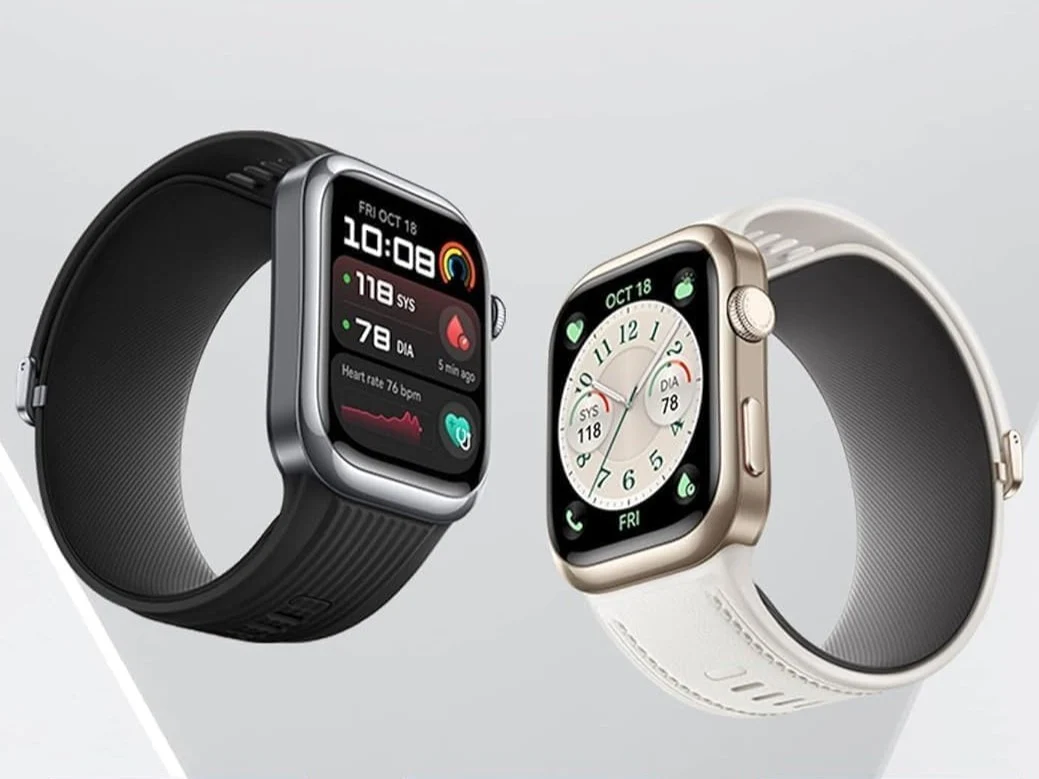
    The Huawei Watch D2 is now getting an update to HarmonyOS 5.1 for users all over the world. This update was first seen in China back in July 2025, where it was labeled as software version 5.1.0.16 (C00M05).

    Update in Europe

    Recently, folks in Europe have started to see a similar update, which is identified as software version 5.1.0.18 (SP2C00M05). Just like the earlier version, the change log mentions a new Hex Grid layout, called Star Ring in China. This new option adds to the already available Grid and List layouts. Additionally, there are three fresh watch faces added to the device: Tranquil Landscape, Maximum Modules, Color cut-out, Speedway Chronograph, and Galactic.

    New Features for Users

    Moreover, a new feature for average sleep HRV monitoring is now available. This tool helps you monitor how well you sleep and recover from stress and fatigue. When combined with heart rate, respiratory rate, and SpO2 readings, users will be alerted about their sleep when the watch sees a significant change from their usual metrics.

    As for the software version 5.1.0.16 (C00M05), European users of the Huawei Watch D2 (currently priced at €364.85 on Amazon Germany) have reported seeing it. This update is being rolled out globally in phases, but the company hasn’t shared when everyone can expect to get HarmonyOS 5.1. Users can begin the update process by using the Huawei Health app.

    Source:
    Link


  • FCC to Block Chinese Telecom Gear in Submarine Cables

    FCC to Block Chinese Telecom Gear in Submarine Cables

    Key Takeaways

    1. The FCC is voting on new regulations to protect undersea communication cables from foreign threats, especially from China.
    2. The proposal includes incentives for secure suppliers and penalties for high-risk technology, with stricter security standards for license applications.
    3. Recent incidents of cable sabotage highlight the vulnerabilities of undersea cables, which are crucial for global internet traffic.
    4. There is growing distrust in Chinese telecom equipment, with previous bans affecting U.S. terrestrial networks and challenges in avoiding Chinese suppliers.
    5. The regulations aim to reform the licensing process and may include mandatory cybersecurity standards and limits on equipment from banned vendors.


    The Federal Communications Commission is gearing up to cast a vote on new regulations aimed at protecting the United States’ undersea communication cables from foreign meddling while speeding up local repair efforts and expanding AI-related infrastructure. Chair Brendan Carr described the initiative as a necessary reaction to “foreign adversary ownership, access, and cyber and physical threats,” with China being mentioned as the main worry.

    Proposal Details

    The plan merges incentives for reliable suppliers with penalties for high-risk technology. License applications that fulfill strict security standards would be exempt from the lengthy Team Telecom review process. On the contrary, cables utilizing equipment from companies already labeled as national-security risks—like Huawei, ZTE, China Telecom, and China Mobile—would have a presumption of denial, alongside new cybersecurity and physical-security mandates, and restrictions on capacity-leasing deals.

    Recent Incidents

    In late 2024, two fiber-optic cables in the Baltic Sea were cut, an act that investigators suspect was intentional sabotage by a cargo ship. In 2023, Taiwan reported that two Chinese vessels severed the sole cables serving the Matsu Islands, while suspected Houthi attacks interrupted three lines in the Red Sea early last year. These events underscore what Carr referred to as the “unsung heroes of global communications”: over 400 undersea cables that facilitate nearly 99 percent of international internet traffic.

    Growing Distrust

    Washington has been increasingly wary of Chinese telecom equipment for several years. In 2019, Huawei and ZTE devices were prohibited from US terrestrial networks, but the Pentagon observed in 2024 that completely avoiding the world’s largest telecom supplier continues to be a challenge. Similar issues are expected for subsea systems, where Chinese firms have already established a presence, and the supply chain is global.

    If the FCC’s regulations are put into place, they would revamp a licensing framework that has already halted four proposed links to Hong Kong since 2020. The agency is also planning to gather public feedback on additional measures, such as mandatory cybersecurity standards and stricter limits on equipment from banned vendors. The vote is anticipated during the commission’s upcoming open meeting.

    Source:
    Link

  • Huawei Set to Launch New 8.8-Inch OLED Compact Flagship Tablet

    Huawei Set to Launch New 8.8-Inch OLED Compact Flagship Tablet

    Key Takeaways

    1. The compact tablet market is becoming more competitive with new entrants like RedMagic and Xiaomi, challenging Apple and Lenovo’s dominance.
    2. Huawei is developing an 8.8-inch OLED tablet, expected to be a flagship model with a slim and light design.
    3. The tablet may use Huawei’s Kirin 9 series chipset, potentially the Kirin 9020.
    4. The focus of Huawei’s tablet is on portability rather than gaming performance.
    5. Specific launch details for Huawei’s tablet are currently unclear.


    An increasing number of OEMs have entered the compact tablet market recently. Once dominated by Apple and Lenovo, brands like RedMagic and Xiaomi are now providing options with screens under 9 inches. Reports from Digital Chat Station suggest that Huawei may soon join this trend.

    Huawei’s New Tablet

    According to a post on Weibo by a leaker, Huawei is working on a tablet featuring an 8.8-inch OLED screen housed in a slim and light design. This device is said to be a flagship model, and it might utilize Huawei’s Kirin 9 series chipset, similar to the newly launched Pura 80 Ultra that uses the Kirin 9020.

    Performance Expectations

    This implies that Huawei’s upcoming compact flagship tablet may lag behind its competitors in terms of performance. However, it seems that Huawei does not intend to market its 8.8-inch tablet for gaming purposes. Instead, Digital Chat Station suggests the focus will be on consumers looking for a lightweight and portable option. Unfortunately, details like the launch date are still unclear at this time.

    Source:
    link

  • Huawei MatePad 11.5 (2025): 120Hz Display, Bigger Battery for €289

    Huawei MatePad 11.5 (2025): 120Hz Display, Bigger Battery for €289

    Key Takeaways

    1. The Huawei MatePad 11.5 features a slimmer design at 6.1 mm and a heavier weight of 515 grams due to a larger 10,100 mAh battery.
    2. Users can expect 10 to 14 hours of video playback, with charging via a USB-C port supporting up to 40 watts.
    3. It has an 11.5-inch IPS display with a resolution of 2,456 x 1,600, a 120 Hz refresh rate, and brightness of 600 nits; an optional “PaperMatte” finish is available.
    4. The tablet includes quad speakers, a keyboard case, multitasking features, and cameras of 8 MP (front) and 13 MP (rear), with improved Wi-Fi 6 and Bluetooth 5.2 connectivity.
    5. The MatePad 11.5 will launch in Europe in July, with two configurations priced at €289 for 128 GB and €429 for 256 GB with the PaperMatte display.


    Huawei has unveiled the latest version of the MatePad 11.5. At first look, the design appears almost the same, but this new tablet is a touch slimmer at 6.1 millimeters and a bit heavier at 515 grams. The extra weight is probably due to its larger battery, which boasts a capacity of 10,100 mAh, marking a significant 31% increase over the earlier model.

    Enhanced Battery Life

    With this new battery, users can expect video playback to last from 10 to 14 hours. Charging is done through a USB-C port with a power output of up to 40 watts. The device features a new 11.5-inch IPS display, offering a resolution of 2,456 x 1,600, a refresh rate of 120 Hz, and a brightness level of 600 nits. For an extra fee, customers can opt for a “PaperMatte” finish on the screen, which is claimed to minimize glare and enhance visibility while wearing sunglasses.

    Multimedia and Productivity Features

    The tablet is designed with quad speakers, making it ideal for multimedia use. Additionally, Huawei provides a keyboard case and multitasking capabilities to enhance the experience of using productivity applications. The MatePad 11.5 (2025) is equipped with an 8-MP f/2.0 front camera and a main camera of 13-MP with an aperture of f/1.8. Connectivity options include Wi-Fi 6 and Bluetooth 5.2, which supports Sony LDAC. Reportedly, the Wi-Fi module achieves speeds that are 30% faster than its predecessor.

    Pricing and Availability

    The Huawei MatePad 11.5 (2025) is set to launch in Europe this July. It will be offered in two configurations: one with 8 GB of RAM and 128 GB of flash storage for €289, and another with 8 GB of RAM, 256 GB of storage, along with an anti-glare PaperMatte display priced at €429.

    Source:
    Link


  • Huawei Mate 80 RS Set to Feature New Smartsens Rear Camera

    Huawei Mate 80 RS Set to Feature New Smartsens Rear Camera

    Key Takeaways

    1. The upcoming Mate 80 series may feature a new flagship design called Ultimate Design (or RS) with upgraded camera features.
    2. The new camera hardware, rumored to be called “590,” includes a 50MP sensor that is 1/1.28 inches in size.
    3. The “590” sensor is expected to utilize a 22 nanometer manufacturing process and support 4K video recording at 120fps with advanced QPD autofocus.
    4. High dynamic range (HDR) capabilities and improved light sensitivity are anticipated, especially with a large-aperture lens.
    5. The SC590XS sensor is being developed by Smartsens and may also be used in Xiaomi’s upcoming models, including the 16 series.


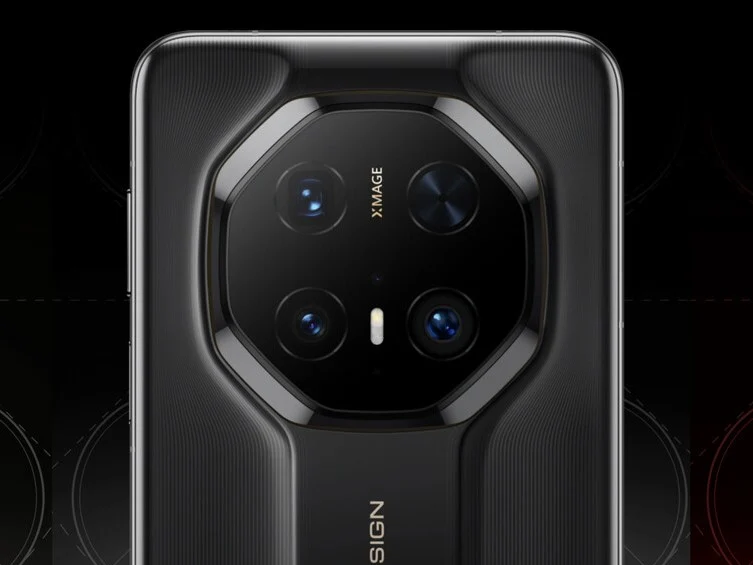
    Some recent and intriguing insights from the usually reliable leaker Digital Chat Station could relate to the upcoming Mate 80 series, which may include a new flagship design known as Ultimate Design (or RS) along with upgraded camera features.

    New Camera Hardware

    This new camera hardware is rumored to be called “590,” which might have been previously mentioned as the SC590XS. It is said to feature a 50MP sensor that is 1/1.28 inches, a smaller counterpart to the 1-inch sensor in the recently released Pura 80 Ultra.

    Advanced Technology

    While the sensor may not have the largest size available, it is expected to utilize a relatively sophisticated 22 nanometer (nm) manufacturing process, with pixel dimensions measuring a decent 1.2 micron (μm).

    Additionally, it is anticipated to support 4K video recording at 120fps, along with an advanced quad phase-detect (QPD) autofocus system similar to the latest imaging CMOS sensors from brands like Samsung or OmniVision.

    High Performance

    The “590” is also likely to offer high dynamic range (HDR) capabilities and improved light sensitivity, especially if Huawei manages to include a large-aperture lens as speculated.

    The 50MP primary rear camera may be part of the next Mate 70 Pro and Pro+ models, as well as the 70 RS, given that all three smartphones are expected to share the same rear camera setup.

    Reports suggest that the SC590XS is being developed by Smartsens, an up-and-coming imaging technology firm that is also believed to be supplying new sensors of similar quality for the Xiaomi 16, 16 Pro, and possibly the 16 Ultra.

    Source:
    Link

  • Huawei Smartwatch Update Introduces New HRV Feature for Users

    Huawei Smartwatch Update Introduces New HRV Feature for Users

    Key Takeaways

    1. The software update version 4.1.0.16 (C00M05) introduces HarmonyOS 5.1 for the Huawei Watch D2 smartwatch.
    2. New features include a star ring app display and customizable preset watch faces like ‘Fashion Profile’ and ‘Universal Module’.
    3. Users can receive live updates on their watch for flight information and food delivery if they have a compatible Huawei smartphone.
    4. Health tracking improvements include a new health summary app and a sleep average HRV metric for monitoring fatigue and stress.
    5. The update is currently rolling out in China, with no confirmed timeline for availability in other regions.


    Huawei has revealed the software update version 4.1.0.16 (C00M05) for its Watch D2 smartwatch. This marks the initial HarmonyOS 5.1 upgrade for this device.

    New Features Added

    According to the release notes for version 4.1.0.16, a fresh star ring app display has been introduced, complementing the already available Grid and Lists modes. Users can also enjoy new customizable preset watch faces, including options like ‘Fashion Profile’ and ‘Universal Module’. If you own a Watch D2 and have a Huawei smartphone that runs HarmonyOS 4 or higher, you’ll now be able to see live updates such as flight information or food delivery status directly on your watch.

    Health Tracking Enhancements

    On the health front, the new health summary app offers the ability to monitor trends in health metrics like heart rate and stress levels, along with insightful analysis. Additionally, the Watch D2 now features a sleep average HRV metric, which is designed to help users gauge their fatigue and stress levels. For those interested in the specifics, the complete release notes can be found on the Huawei Forum.

    Rollout Plans

    It seems that the Huawei software version 4.1.0.16 (C00M05) will initially be available in China for Watch D2 users. However, it remains unclear when this update will be accessible to users in other regions around the world.

    Source:
    Link

  • Huawei’s Solid-State Battery Patent: 5-Min Charge & Longest EV Range

    Huawei’s Solid-State Battery Patent: 5-Min Charge & Longest EV Range

    Key Takeaways

    1. Huawei has applied for a patent for solid-state batteries that could offer a range of up to 3,000 km (1,864 miles) with rapid charging under ten minutes.
    2. The battery technology relies on a unique solid sulfide electrolyte and nitrogen treatment to enhance electrochemical reactions.
    3. The energy density of Huawei’s solid-state battery is estimated to be between 400-500 Wh/kg, which aligns with industry standards but faces challenges for large-scale production.
    4. The impressive range claims may be based on optimistic testing cycles and could realistically deliver about 1,200 miles under ideal conditions, with potential real-world performance closer to 800 miles.
    5. Huawei faces significant challenges in mass production and cost management of solid-state batteries, especially compared to established manufacturers like Toyota, CATL, and Samsung.


    Huawei, a relatively new player in the electric vehicle market, has recently applied for a patent related to solid-state batteries. This innovative technology could potentially offer a range of up to 3,000 km (1,864 miles) on a rapid charge that takes less than ten minutes.

    Huawei’s Innovations in EV Technology

    The Chinese tech giant, known primarily for its smartphones and long-lasting smartwatches like the GT 5 Pro, has formed partnerships with various electric vehicle manufacturers. Additionally, Huawei provides a widely-used suite of connectivity, infotainment, and autonomous driving solutions as a complete package.

    According to Huawei, the impressive range claimed for its electric vehicles will be achieved through a unique solid sulfide electrolyte technology. This process involves treating the reactive material with nitrogen to control the electrochemical reactions effectively.

    Energy Density and Charging Times

    Huawei’s patent suggests that the energy density of its solid-state battery will fall between 400-500 Wh/kg, which aligns with the current industry standards and the theoretical potential of this emerging technology. The rapid charging time is also typical for solid-state battery tech and not an extraordinary breakthrough.

    A scientist from Korea has pointed out that Huawei might be referring to laboratory results instead of what can be manufactured on a large scale. While nitrogen doping can enhance interface stability, it typically requires precise conditions and vacuum environments, making it challenging to scale for commercial production without incurring significant costs and delays. It’s akin to attempting to add pepper to a sandwich using fine tweezers.

    Real-World Range Considerations

    Moreover, the impressive range mentioned may be based on the optimistic Chinese CLTC testing cycle, which often exceeds real-world mileage by about a third compared to the EPA’s estimates in the United States. This suggests that the solid-state battery developed from Huawei’s patent may realistically deliver around 1,200 miles.

    However, this estimation is under ideal conditions and does not factor in the weight of the active materials in the prototype. When considering “real-world elements such as energy loss and thermal management,” as the Korean researchers noted, the actual range could be significantly less—possibly approaching the 800 miles that Toyota has hinted at for its own solid-state battery technology.

    While this range still surpasses that of current batteries, which typically provide half the energy density of solid-state batteries in a similar size, challenges remain regarding mass production and associated costs. These issues are difficult to tackle, even for established companies like CATL or Samsung, let alone for Huawei, which lacks experience in battery manufacturing.

    Toyota has already indicated that its solid-state batteries will initially be utilized in small quantities for its high-end electric vehicles under the Lexus brand, meaning that price will be the main barrier to widespread adoption of solid-state batteries in the near future.

    Source:
    Link

  • OnePlus Faces Backlash for Allegedly Sending Data to China

    OnePlus Faces Backlash for Allegedly Sending Data to China

    Key Takeaways

    1. OnePlus is facing allegations from US lawmakers about sending user data to servers in China without permission.
    2. The claims involve newer OnePlus models, including the OnePlus Pad 3 and OnePlus 13, priced at $999.99.
    3. The specific details of the allegations regarding data transmission remain unclear.
    4. Lawmakers have not provided evidence to support their claims against OnePlus.
    5. A call for investigation into OnePlus has been made to the US Commerce Department’s Office of Information Communications Technology and Services.


    In the past five years, several Chinese firms have found themselves in the middle of the growing tensions between the People’s Republic of China (PRC) and the United States (US). Among these, Huawei is the most notable name facing sanctions, but companies like DJI and Xiaomi have also faced scrutiny, among others.

    Allegations Against OnePlus

    Recently, the Chair of the Select Committee on the Chinese Communist Party (CCP) has targeted OnePlus. In a bipartisan effort led by John Moolenaar and Raja Krishnamoorthi, they claim that OnePlus devices send user information to servers in China. This includes newer models such as the OnePlus Pad 3 and the OnePlus 13, which is currently priced at $999.99 on Amazon. The main issue raised is that OnePlus is allegedly doing this without obtaining permission from users beforehand.

    Lack of Clarity on the Issues

    At this point, neither Moolenaar nor Krishnamoorthi has elaborated on the specifics of their concerns. They mention the potential transfer of ‘sensitive personal information and screenshots’ by OnePlus. As a result, it remains uncertain what steps users of OnePlus devices can take to prevent any data transmission, assuming the claims made by Moolenaar and Krishnamoorthi are accurate.

    Call for Investigation

    So far, Moolenaar and Krishnamoorthi have not provided any proof to back up their allegations. However, they are urging the Office of Information Communications Technology and Services (OICTS) within the US Commerce Department to look into OnePlus based on these claims.

    Source:
    Link