Tag: Huawei

  • Huawei set to launch world’s first HBM DRAM smartphone before Apple

    Huawei set to launch world’s first HBM DRAM smartphone before Apple

    Key Takeaways

    1. High-bandwidth memory (HBM) may soon be available in smartphones, moving beyond its current use in AI-centric hardware.
    2. Advanced smartphones currently use low-power DDR5X (LPDDR5X) RAM, which offers ~68 GB/s performance but may need an upgrade for future demands.
    3. The next generation of mobile RAM could include low-latency wide I/O DRAM (LLW DRAM), enhancing AI capabilities but not reaching ~2TB/s bandwidth.
    4. New mobile RAM technology is expected to achieve speeds of up to 128 GB/s.
    5. Apple is a strong contender to introduce HBM smartphones, but Huawei and Samsung may also lead the market with their developments.


    High-bandwidth memory (HBM) is typically found in the top-tier AI-centric hardware from companies like AMD and NVIDIA. However, new whispers suggest that this technology could soon be appearing in pocket-sized devices.

    Current Smartphone RAM Trends

    At present, the most advanced smartphones utilize RAM that relies on low-power DDR5X (or LPDDR5X), favored for its efficiency and speed. Even though it can reach around ~68 gigabytes per second (GB/s) performance, this may soon not be enough, encouraging manufacturers to consider a major upgrade.

    Future Needs in Mobile RAM

    The next evolution in mobile RAM could be crucial to keep pace with the growing requirements of powerful artificial intelligence (AI) in the near future.

    However, a reliable leaker, Fixed Focus Digital, claims that the so-called smartphone HBM (or ‘mobile HBM’) won’t actually hit the nearly ~2TB/s bandwidth. Instead, it will resemble a newly developed type of low-latency wide I/O DRAM (or LLW DRAM), designed to enhance AI capabilities.

    Next-Gen Speed Capabilities

    In its current state, this new technology is expected to reach impressive processing speeds of up to 128GB/s.

    When it comes to being the first to introduce ‘HBM smartphones,’ Apple and its iPhones are seen as strong contenders. Yet, another company may actually beat them to the market.

    This other potential frontrunner could be Huawei; however, with Samsung also producing HBM and LLW RAM, they are in an excellent position to lead this anticipated upgrade.

    Source:
    Link
  • Huawei Pura 80 Ultra Launches Sooner Than Expected

    Huawei Pura 80 Ultra Launches Sooner Than Expected

    Key Takeaways

    1. Huawei has introduced the Pura 80 series, featuring innovative camera technology, including a 1-inch main sensor and interchangeable optics in the Pura 80 Ultra.
    2. The global launch of the Pura 80 series is scheduled for July 10, 2025, in Dubai, following its debut in China.
    3. There is uncertainty about the operating system for global markets, with potential use of EMUI instead of HarmonyOS 5.
    4. The Pura 80 series includes multiple models: Pura 80 Ultra, Pura 80 Pro, Pura 80 Pro+, and standard Pura 80, all powered by the Kirin 9020 chip.
    5. The Kirin 9020 chip may not compete well with Snapdragon 8 Elite, raising questions about the cost-to-performance ratio for potential buyers.


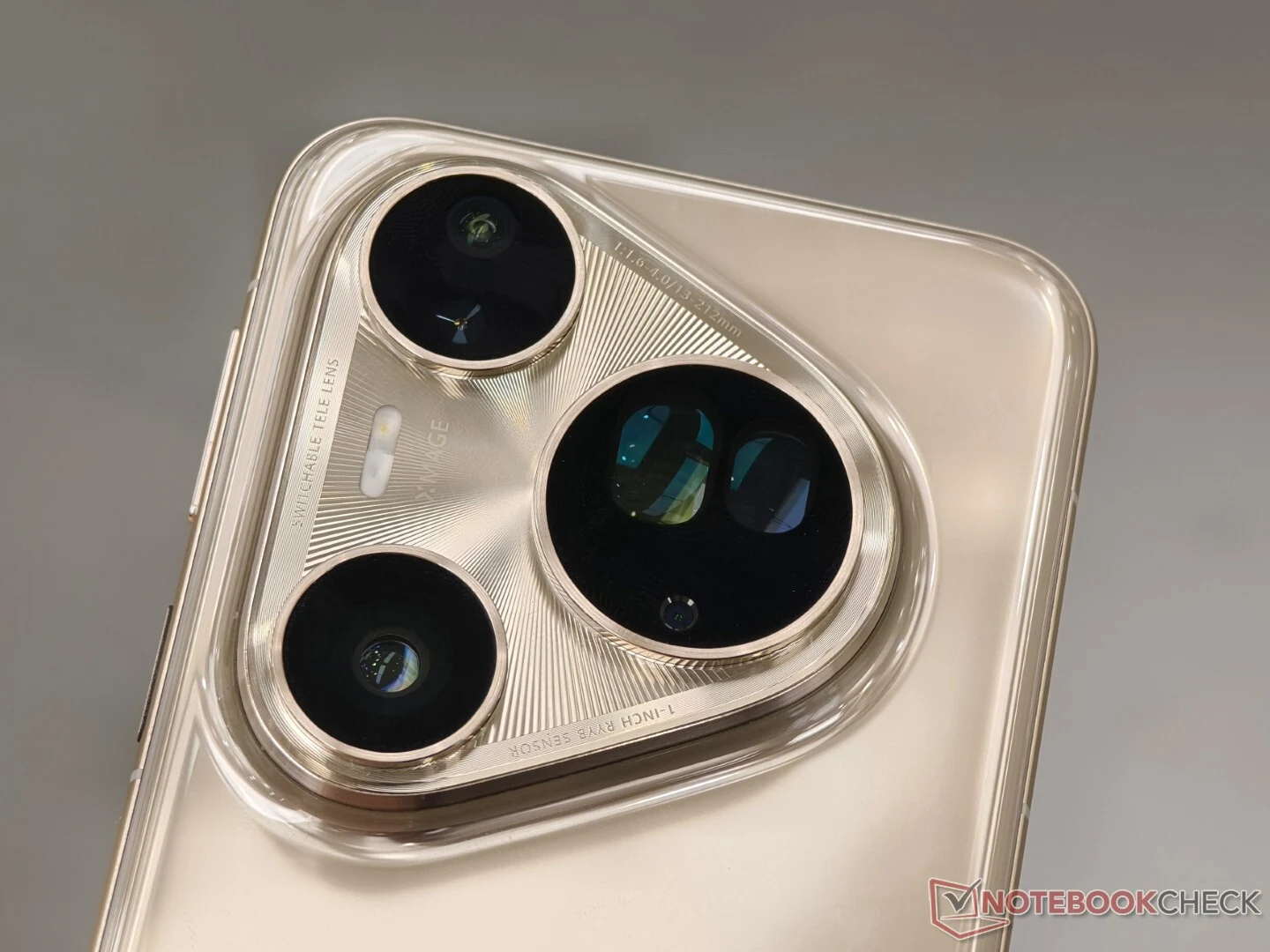
    No matter your thoughts on Huawei, their drive for innovation is still strong. After introducing the world’s first tri-foldable phone last autumn, they recently launched the Pura 80 series, which includes their first camera sensors. The Pura 80 Ultra has particularly grabbed attention with its unique 1-inch main sensor and an unusual telephoto lens featuring interchangeable optics. This exciting technology will soon be available to customers around the globe.

    Launch Details

    The Pura 80 series is set to be revealed for international markets in Dubai on July 10, 2025, which is just a month after its debut in China. Huawei seems eager to bring the Pura 80 Ultra to affluent and adventurous buyers outside of China quickly, as using a Huawei smartphone abroad has become a bit more complicated.

    Software Concerns

    There is some uncertainty about whether EMUI will be adopted for the global market instead of the Android-free HarmonyOS 5, but there are alternatives for the absent Google services. Alongside the Pura 80 Ultra, there are the Pura 80 Pro, Pura 80 Pro+, and the standard Pura 80 in China, all powered by the Kirin 9020. This chip doesn’t compete well with the Snapdragon 8 Elite. True fans of Huawei might overlook this shortcoming, but with the high prices in China, potential buyers should consider whether the cost-to-performance ratio is justifiable.

    Source:
    Link

  • HarmonyOS 6 Launches with Star Shield Security and AI Features

    HarmonyOS 6 Launches with Star Shield Security and AI Features

    Key Takeaways

    1. Huawei introduced HarmonyOS NEXT, a new version of its operating system built from scratch, without any Android code.
    2. The Harmony Intelligent Agent Framework was unveiled to enhance the AI assistant, Xiaoyi.
    3. HarmonyOS 6 features a new security system called Star Shield, aimed at improving biometric authentication.
    4. Star Shield has already blocked over 8.6 billion unauthorized app permission requests and may enhance online banking security for users in China.
    5. The first public beta of HarmonyOS 6.0 is being launched during HDC 2025, which runs until June 22, 2025.


    Huawei’s 2025 Developer Conference (HDC 2025) kicked off today, June 20, 2025, with a significant reveal: a new version of HarmonyOS NEXT. This software has been designed from scratch to work specifically with Huawei devices, eliminating the need for any Android code.

    New AI Features

    Alongside this, Huawei unveiled its Harmony Intelligent Agent Framework. This is a collection of tools aimed at enhancing the efficiency and functionality of the AI assistant, Xiaoyi. This move is similar to what Apple has been pursuing at its recent WWDC events.

    Enhanced Security

    The latest iteration, HarmonyOS 6, brings a new security system called Star Shield. This architecture is designed to improve biometric authentication by coordinating various on-device hardware, like GPS and cameras. This approach mirrors Apple’s security methods used in iOS.

    Star Shield is a notable addition to the HarmonyOS system, which claims to have prevented more than 8.6 billion unauthorized app permission requests to date. It may also strengthen online banking security for Huawei users, although this might be limited to users in China.

    Beta Release Information

    Additionally, Huawei is launching the first public beta of HarmonyOS 6.0 during HDC 2025, which runs until June 22, 2025, at Songshan Lake in China.

    Source:
    Link


  • Capsule Prototype Boosts Cloud Gaming Sessions by 2.25x per GPU

    Capsule Prototype Boosts Cloud Gaming Sessions by 2.25x per GPU

    Key Takeaways

    1. Huawei’s Capsule system allows multiple cloud gaming sessions to use a single GPU through engine-level isolation.
    2. Capsule can support 2.25 times more players simultaneously compared to traditional isolation techniques while maintaining 30 frames per second.
    3. Resource consumption (CPU, GPU, RAM, VRAM) increases at a sublinear pace as more players join.
    4. The system uses both global and per-player storage, allowing efficient sharing of game assets.
    5. Capsule is still in prototype testing within the Open 3D Engine (O3DE) amid rising interest in cloud gaming due to high GPU prices.


    A team at Huawei Technologies has introduced a new system called Capsule, which aims to let multiple cloud gaming sessions use just one GPU through engine-level isolation. This system is built within the Open 3D Engine (O3DE) and can separate each player’s inputs, rendering tasks, and game events in real-time without needing to alter the original application code.

    Testing Results

    The team put Capsule to the test with four applications based on O3DE and found that it could handle up to 2.25 times more players at the same time compared to traditional isolation techniques while keeping a steady rate of 30 frames per second. As more players joined, the resource consumption of CPU, GPU, RAM, and VRAM increased at a sublinear pace. The system cleverly incorporates both global and per-player storage, thus enabling shared assets to be utilized where applicable.

    Market Context

    This announcement comes at a time when cloud gaming is gaining more attention, partly due to the rising prices of GPUs. According to PCWorld, a survey by Liquid Web revealed that 42 percent of gamers might opt to delay a GPU upgrade if cloud or AI upscaling options could satisfy their performance requirements.

    Capsule is still in the prototype phase and is currently undergoing testing at the engine level within O3DE.

    Source:
    Link

  • China PC Market Q1 2025: Lenovo Ranks First in Sales

    China PC Market Q1 2025: Lenovo Ranks First in Sales

    Key Takeaways

    1. PC Shipments Growth: PC shipments in mainland China reached 8.9 million units, marking a 12% year-over-year increase.

    2. Surge in Tablet Shipments: Tablet shipments rose to 8.7 million units, showing a 19% increase, driven by government subsidies encouraging device upgrades.

    3. Mixed Commercial Sector Trends: The commercial PC market remains stagnant, with large enterprises’ purchases unchanged and SMBs showing a slight 2% recovery.

    4. Lenovo’s Market Leadership: Lenovo maintained its top position with 2.63 million units shipped, holding a 30% market share despite a 3% decline from the previous year.

    5. Future Market Predictions: Canalys forecasts a flat PC market for the rest of 2025, with a slight growth of 6% expected in 2026, while tablet growth is anticipated to be 5% this year, followed by an 8% decline next year.


    PC and tablet shipments in mainland China experienced moderate growth in the first quarter of 2025, as per fresh insights from Canalys. The data indicates that PC shipments, excluding tablets, hit 8.9 million units in the region, marking a 12% increase year-over-year.

    Tablet Growth Surges

    On the other hand, tablet shipments rose to 8.7 million units, showcasing a 19% increase compared to the same timeframe last year. The report highlights that the Chinese government’s subsidy program is significantly contributing to this growth. These incentives are encouraging consumers to replace older devices, notably notebooks, which observed a notable rise of 20% versus Q1 2024.

    Mixed Signals in the Commercial Sector

    Despite positive trends in some areas, not all sectors are experiencing growth. The commercial PC market has been somewhat stagnant. According to Canalys, purchases by large enterprises remained unchanged, while the small and medium-sized business (SMB) sector exhibited a slight recovery after nearly three years of decline, growing by 2% over the past year.

    Lenovo Remains Dominant

    In terms of PC vendors, Lenovo held the top position with 2.63 million units shipped, capturing a 30% market share. Nonetheless, this was a 3% drop compared to Q1 2024. Huawei followed closely with 1.04 million units shipped, securing a 12% market share and an 8% growth. iSoftStone, another Chinese PC manufacturer, shipped 890,000 units in the first quarter of 2025, reflecting a remarkable 111% year-over-year growth, thus reaching a 10% market share.

    Apple and HP’s Performance

    Apple and HP completed the top five, with Apple experiencing a 43% increase to 680,000 units, equating to an 8% market share, while HP saw a 7% decline, shipping 640,000 units for a 7% market share.

    Tablet Market Leaders

    In the tablet sector, Huawei led with 2.3 million units shipped, achieving a 26% market share, closely trailed by Apple at 2.1 million units, which is a 24% share. Xiaomi recorded the highest year-over-year growth at 57%, with 1.4 million units shipped. Honor and Lenovo followed, with Honor increasing by 41% to 900,000 units, and Lenovo experiencing a 23% decline to 500,000 units.

    Future Outlook

    Looking forward, Canalys predicts a flat PC market for the remainder of 2025, with a slight 6% growth anticipated for 2026. The tablet market is expected to grow by 5% this year, but it will face an 8% decline in the following year.

    Source:
    Link


  • Huawei Watch Fit 4 Pro Update Adds HRV Feature to Smartwatch

    Huawei Watch Fit 4 Pro Update Adds HRV Feature to Smartwatch

    Key Takeaways

    1. Huawei is launching a global software update (version 5.1.0.118) for the Watch Fit 4 Pro smartwatch, which is 49.20MB in size.
    2. The update enables real-time heart rate variation (HRV) measurements in the Heart Rate app, along with measurement animations and a detailed log for tracking heart rate and recovery.
    3. The user interface (UI) for the Heart Rate app has been improved, providing more detailed information.
    4. The update includes system stability optimizations, though specific details were not provided.
    5. The software update is rolling out in phases, with users in some Asian and European regions already receiving it; it can be downloaded through the Huawei Health app.


    Huawei is said to be launching a new global update for the Watch Fit 4 Pro smartwatch. This device was unveiled in May 2025 as a competitor to the Apple Watch Ultra 2. The smartwatch is now getting software version 5.1.0.118(SP5C00M01), which is a 49.20MB update.

    New Features Added

    The release notes for the Huawei Watch Fit 4 Pro mention that the Heart Rate (HR) app can now measure heart rate variation (HRV). Although the smartwatch was advertised with HRV as a feature, users quickly discovered that the tool wasn’t functioning as expected. Following this update, HRV measurements can be seen in real-time within the HR app on your watch. Additionally, there are now measurement animations and a detailed log to track your heart rate and recovery heart rate after workouts, which can be viewed in the Huawei Health app.

    User Experience Improvements

    Huawei also states that the version 5.1.0.118 brings an improved user interface (UI) for the Heart Rate app, providing more detailed information. Furthermore, the update is claimed to include system stability optimizations “in certain situations,” but no more information has been shared.

    Software version 5.1.0.118 seems to be rolling out in phases to users of the Huawei Watch Fit 4 Pro (currently priced at €279 on Amazon.de). Users in some Asian and European regions have already reported receiving it. Once it’s available in your area, you can download the update through the Huawei Health app.

    Source:
    Link

  • Huawei MatePad Pro 13.2 Launches in Light Blue with AI Features

    Huawei MatePad Pro 13.2 Launches in Light Blue with AI Features

    Key Takeaways

    1. Huawei launched a new Light Blue color option for the MatePad Pro 13.2 2025 tablet, featuring a silk-textured design from the PaperMatte series.
    2. The Light Blue model, called Feitianqing, is made from durable 0.5mm aviation-grade ultra-thin glass fiber and has a silk-like appearance.
    3. It is the first MatePad to come with HarmonyOS 5.0, offering multi-window capabilities and improved Celia AI for better task management.
    4. Technical specs include a 13.2-inch PaperMatte display with a resolution of 2880 x 1920 pixels, 12GB of RAM, 512GB storage, and a 10,100mAh battery.
    5. The tablet is priced at 6299 yuan and will be available from June 18 on Huawei’s VMall online store.


    Huawei has launched a fresh Light Blue color option for its MatePad Pro 13.2 2025 tablet. This new variant, which is part of the PaperMatte series, showcases a silk-textured design that provides a gentler and smoother touch.

    Design and Build Quality

    This Light Blue model, known as Feitianqing, is made using 0.5mm aviation-grade ultra-thin glass fiber, which ensures greater durability. The back panel features a blend of natural textures along with several optical coatings, giving it a look that closely resembles real silk.

    Software and Features

    The device stands out as the first in the MatePad lineup to come with the stable HarmonyOS 5.0 operating system right out of the box. HarmonyOS 5.0 offers a desktop-like experience, complete with features such as multi-window capabilities, panoramic multi-window, and air-gesture file sharing, making media transfers between devices quicker and easier.

    Furthermore, Huawei has made improvements to the Celia AI virtual assistant, which now provides more intelligent and effective assistance with tasks like managing meetings, handling calls, and performing office-related activities.

    Technical Specifications

    Most of the specifications are similar to the regular model. The tablet is equipped with a 13.2-inch PaperMatte display that reduces light interference, enhancing both readability and touch responsiveness. The display boasts a resolution of 2880 x 1920 pixels and a refresh rate of 144Hz.

    The MatePad Pro 13.2 Light Blue edition includes 12GB of RAM and 512GB of internal storage. It runs on a robust 10,100mAh battery. Additionally, the tablet features a dual rear camera setup, comprising a 50MP primary camera and an 8MP ultrawide lens, along with a 16MP front camera for selfies.

    Pricing and Availability

    The Light Blue version of the Huawei MatePad Pro 13.2 is set at a price of 6299 yuan. It will be available for purchase starting June 18 through Huawei’s VMall online store. In conjunction with this new color option, Huawei has also unveiled the Huawei Pura 80 Pro series and the Pura 80 Ultra smartphones, both featuring Kirin 9020 processors and advanced camera systems.

    Source:
    Link


  • Huawei FreeBuds 6 Launches Rose Gold Variant with Quick Charge

    Huawei FreeBuds 6 Launches Rose Gold Variant with Quick Charge

    Key Takeaways

    1. Huawei has launched the FreeBuds 6 Rose Gold Edition, available for direct purchase on VMall after pre-orders.
    2. The earbuds feature 95dB noise cancellation, AI capabilities, and are now offered in a new shiny Rose Gold color.
    3. They support high-resolution audio with a lightweight design and include a two-way silent calling feature for clear conversations.
    4. The battery life lasts up to 36 hours, with a quick charge option that provides 2.5 hours of listening time in just 5 minutes.
    5. The FreeBuds 6 Rose Gold Edition is priced at 999 yuan, with an option for Huawei Care+ service at a reduced price.


    Huawei has released the FreeBuds 6 Rose Gold Edition in China. These earbuds were previously available for pre-order, but now they can be bought directly from Huawei’s VMall online store.

    Features and Design

    The FreeBuds 6 were first made available in March, featuring 95dB noise cancellation, Nearfield Link Search technology, and AI capabilities that aim to boost productivity. Originally, Huawei offered these earbuds in Starry Sky Black, Sky White, and Aurora Purple. Now, they’ve introduced a new Rose Gold color. The earbuds have a shiny finish, while the charging case exhibits a matte surface.

    Audio Quality and Functionality

    These earbuds support high-resolution audio with a 2.3 Mbps lossless transmission. They have a semi-open design that is lightweight and minimizes outside noise. An 11mm four-magnet dynamic driver paired with a micro flat tweeter provides a rich sound experience.

    The FreeBuds 6 includes features for two-way silent calling, ensuring clear conversations even in loud environments. The integrated Celia ear assistant offers real-time translation and can announce notifications from your device. Additionally, it provides scheduled reminders. Users can answer calls with simple head gestures, and AI technology adjusts the volume automatically based on the ambient noise level.

    Battery and Pricing

    With a battery life of up to 36 hours, these earbuds are quite durable. A quick 5-minute charge can give you 2.5 hours of listening time. They also feature smart charging, which adapts to the user’s charging habits and can enhance battery longevity by as much as 37 percent.

    The pricing for the FreeBuds 6 Rose Gold Edition is set at 999 yuan. Customers can also opt for the Huawei Care+ service at a reduced price through VMall.


  • Huawei Pura 80 Ultra and Pro Launch with Major Camera Upgrades

    Huawei Pura 80 Ultra and Pro Launch with Major Camera Upgrades

    Key Takeaways

    1. Huawei launched two premium smartphones: the Pura 80 Pro+ and Pura 80 Ultra, featuring advanced camera technology and high-end specifications.
    2. Both models have a 6.8-inch LTPO 2.0 Tandem OLED display, 16 GB RAM, 1 TB storage, and a 5,700 mAh battery with fast charging capabilities.
    3. The Pura 80 Ultra includes a unique camera setup with a 50 MP wide-angle lens, a 50 MP telephoto lens, and a 40 MP ultra-wide lens, while the Pro+ has a 48 MP telephoto lens.
    4. Connectivity options include Bluetooth 5.2, Wi-Fi, USB Type-C, NFC, and satellite support, running on HarmonyOS 5.0 with IP68/IP69 water and dust resistance.
    5. Pricing for the Pura 80 Pro+ ranges from RMB 7,999 to RMB 8,999, while the Pura 80 Ultra is priced between RMB 9,999 and RMB 10,999 in China.


    Huawei has unveiled two premium smartphones: the Pura 80 Pro+ and Pura 80 Ultra. Both devices boast high-end features and unique camera advancements that are uncommon in other phones. Currently, they are available only in China, but an international launch is expected soon.

    Display and Performance

    The Pura 80 Pro+ and Pura 80 Ultra feature a 6.8-inch FHD+ (2,848 × 1,276) LTPO 2.0 Tandem OLED display with a refresh rate ranging from 1 to 120 Hz and a pixel density of 461 PPI. Both smartphones are equipped with up to 16 GB of RAM and 1 TB of internal storage. They are powered by a robust 5,700 mAh battery that supports fast charging at 100 Watts via wired connection and 80 Watts wirelessly.

    Camera Features

    As with its earlier models, the Pura 80 Ultra stands out with its impressive camera setup. It features a 50 MP wide-angle lens (with a 1-inch sensor), a 50 MP ‘super’ telephoto lens capable of switching between 3.7x and 9.4x optical zoom using a motorized system, a 40 MP ultra-wide lens, and a 12.5 MP temperature sensor. It’s important to note that the resolution drops to 12.5 MP when using the 9.4x optical zoom.

    Internal Specifications

    Huawei has kept details about the SoC (System on Chip) for its smartphones under wraps, as there is no mention of it on the official specifications. However, hands-on photos of the devices (thanks to @faridofanani96 on X) reveal they are powered by the Kirin 9020, which is also used in the Huawei Mate X6.

    The Huawei Pura 80 Pro+ shares the same 50 MP wide-angle lens but comes with a different telephoto sensor: a 48 MP module with a 4.0x optical zoom. The 40 MP ultra-wide-angle lens and the 13 MP front camera are the same on both models, while the Pura 80 Pro+ lacks a temperature sensor.

    Connectivity and Software

    Both the Huawei Pura 80 Pro+ and Huawei Pura 80 Ultra provide several connectivity options, including Bluetooth 5.2, 802.11 b/g/n/ac Wi-Fi, a USB 3.1 Type-C port, and NFC. Satellite connectivity is supported on both devices as well. They operate on Huawei’s own HarmonyOS 5.0 and have IP68 and IP69 water and dust resistance ratings.

    Pricing

    The Pura 80 Pro+ is priced at RMB 7,999 ($1,112) and RMB 8,999 ($1,253) in China. Meanwhile, the Pura 80 Ultra is available for RMB 9,999 ($1,391) and RMB 10,999 ($1,530) for the models with 512 GB and 1 TB of storage, respectively.

    Source:
    Link


  • Huawei Pura 80 Pro Display and Camera Specs Leak Before Launch

    Huawei Pura 80 Pro Display and Camera Specs Leak Before Launch

    Key Takeaways

    1. Huawei will launch the Pura 80-series on June 11, 2025, following the WWDC 2025 event.
    2. The new series will replace the 70 Pro+ and include a 70 Ultra model, featuring a single punch-hole selfie camera.
    3. The Pura 80-series is expected to have a slightly curved display design with metallic edges, differing from the flat designs of competitors.
    4. Both the 80 Pro+ and Pro models will likely feature a new 1-inch 50MP main rear camera sensor with a variable aperture lens.
    5. The Pro series may include an upgraded periscope zoom lens, improving optical zoom from 3.5x to 3.7x.


    Huawei is set to unveil its highly anticipated Pura 80-series on June 11, 2025, right after the WWDC 2025 event that will be streamed live from China.

    New Successors in the Lineup

    The tech giant has revealed plans to introduce a direct replacement for the 70 Pro+ along with the existing 70 Ultra flagship model. The upcoming device is rumored to feature a display with a single punch-hole selfie camera placed in the center, suggesting that the Pura series may have moved away from Huawei’s previously distinctive 3D facial recognition technology for this generation.

    Display and Design Features

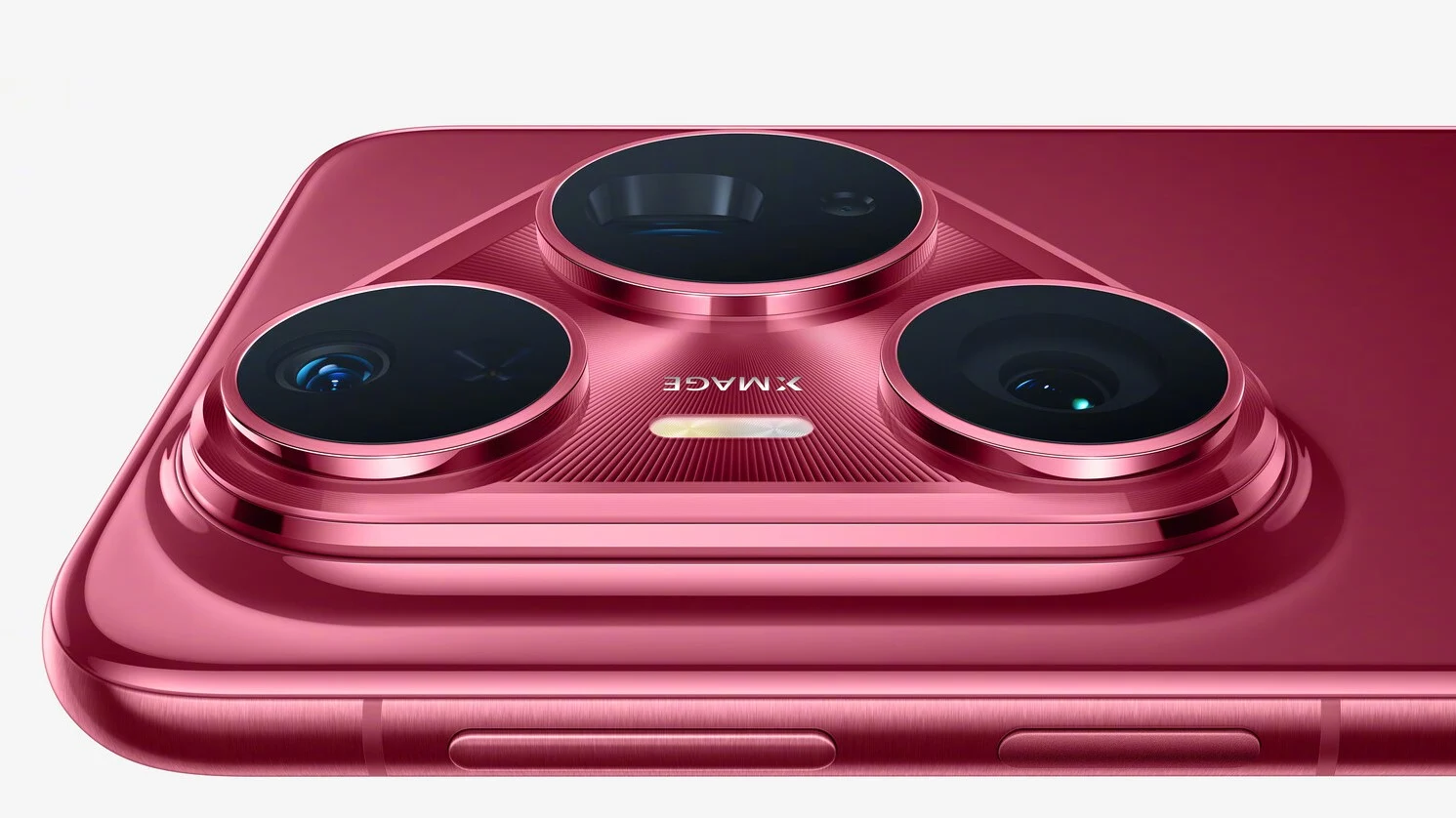
    Recent leaks point to the possibility that the new screen could have a slight curve along all four edges rather than the completely flat design typical of the iPhone, as seen in the Oppo Find X8 Ultra. This design appears to be enhanced by curved metallic edges, which were also showcased in a recent teaser for the Pura 80 Pro+, presented in the same bright red hue.

    While it’s likely that this design will be mirrored in the 80 Pro, it is uncertain whether these models will also receive the new tandem OLED display that is rumored for their Ultra counterpart.

    Camera Capabilities

    The well-known leaker Digital Chat Station has claimed that both the 80 Pro+ and potentially the Pro will feature Huawei’s new custom 1-inch 50MP main rear camera sensor, which is positioned behind a variable aperture lens system at 24 millimeters (mm), changing from the 25mm of the Pura 70 Pro+. Additionally, it is expected that the Pro series will include a periscope zoom lens, now thought to be 89mm in length, contrasting with the 70 Pro+’s 93mm. However, the optical zoom may receive an upgrade to 3.7x, compared to the previous 3.5x.

    Source:
    Link