Tag: GeForce RTX 5090

  • GeForce RTX 5090 Laptops 50% Slower Than Desktop Version

    GeForce RTX 5090 Laptops 50% Slower Than Desktop Version

    Key Takeaways

    1. The first laptops with GeForce RTX 5090 graphics are expected by the end of March, including models like the Razer Blade 16 and Asus Strix Scar 18 G835LX.
    2. The mobile RTX 5090 shows a 15 to 30 percent performance increase over the mobile RTX 4080 without DLSS; this gap widens with DLSS features.
    3. The relatively small performance boost raises concerns, suggesting Nvidia relies heavily on DLSS and new technologies to differentiate the RTX 50 series.
    4. The mobile RTX 5090 can be up to 50 percent slower than its desktop counterpart, indicating a significant performance disparity.
    5. Power limitations in laptops, capped around 150 W, hinder the performance of mobile GPUs compared to their desktop versions.


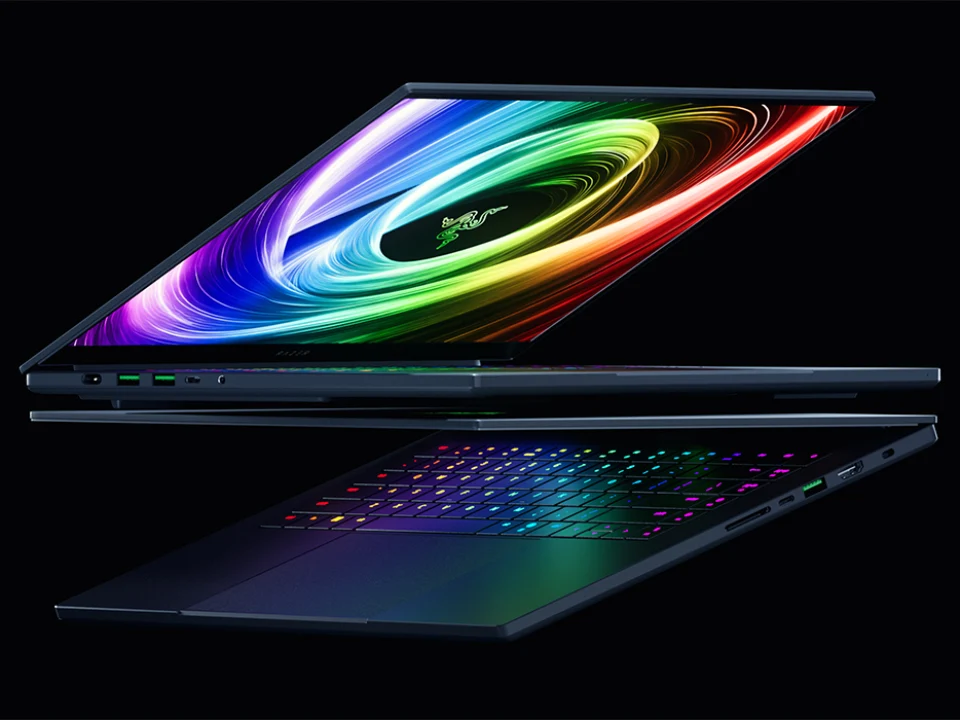
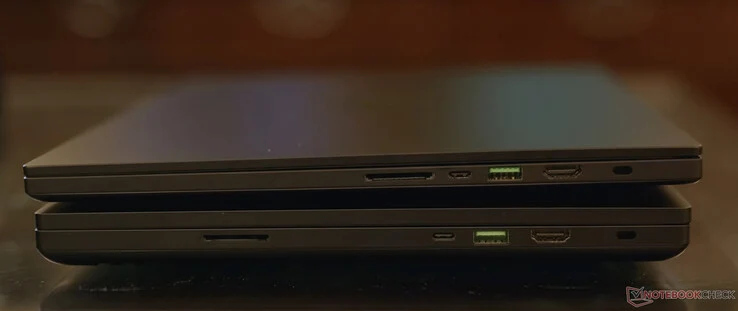
    The first laptops featuring GeForce RTX 5090 graphics are expected to be delivered by the end of March, and as of now, we have tested two models: the 2025 Razer Blade 16 and the Asus Strix Scar 18 G835LX, both boasting graphics with a TGP greater than 150 W. The performance results can vary widely based on what you might expect.

    Positive Outlook

    Looking at the bright side, the mobile RTX 5090 shows a performance increase of about 15 to 30 percent over the mobile RTX 4080 when DLSS features are not considered. Once DLSS is in play, the performance gap widens even more, as multi-frame generation is only officially available on the RTX 50 series.

    Cautious Considerations

    On the flip side, this 15 to 30 percent performance boost might seem quite small for a GPU generation that has taken three years to develop. This indicates that Nvidia is strongly depending on DLSS features and the new transformer model to distinguish the new mobile RTX 50 series from the previous mobile RTX 40 series. Additionally, gamers using laptops should adjust their expectations, as our benchmarks reveal that the mobile RTX 5090 can be up to 50 percent slower than its desktop version.

    The Power Limitation

    The significant difference in performance between the mobile RTX 5090 and the desktop RTX 5090, along with the somewhat underwhelming improvement over the outgoing mobile RTX 4080, can mainly be linked to TGP. While desktop GPUs have been increasingly demanding more power, laptop GPUs have remained relatively stable at around 150 W maximum, even after all these years. The restrictive power limits in laptops are arguably becoming a notable barrier for gaming enthusiasts.
  • Nvidia DLSS 4 on Razer Blade 16: 2x FPS Boost Over DLSS 3

    Nvidia DLSS 4 on Razer Blade 16: 2x FPS Boost Over DLSS 3

    Key Takeaways

    1. Nvidia is focusing on mobile versions of the GeForce RTX 5090, set to launch soon, with the Razer Blade 16 as a key device.
    2. The 2025 Blade 16 shows over 100% performance improvement in FPS compared to the 2024 model, with significant reductions in CPU usage and latency.
    3. The newer Blade 16 exclusively uses AMD processors, contributing to improved performance metrics over the previous Intel-equipped model.
    4. DLSS 4 enables up to 37% greater GPU utilization due to its advanced multi-frame generation model.
    5. The new Blackwell GPUs are designed to reduce CPU limitations, allowing for potentially slimmer laptop designs.


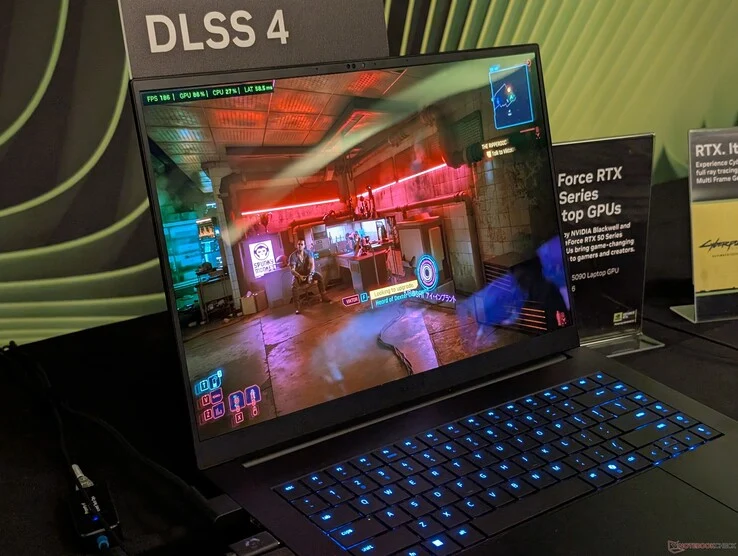
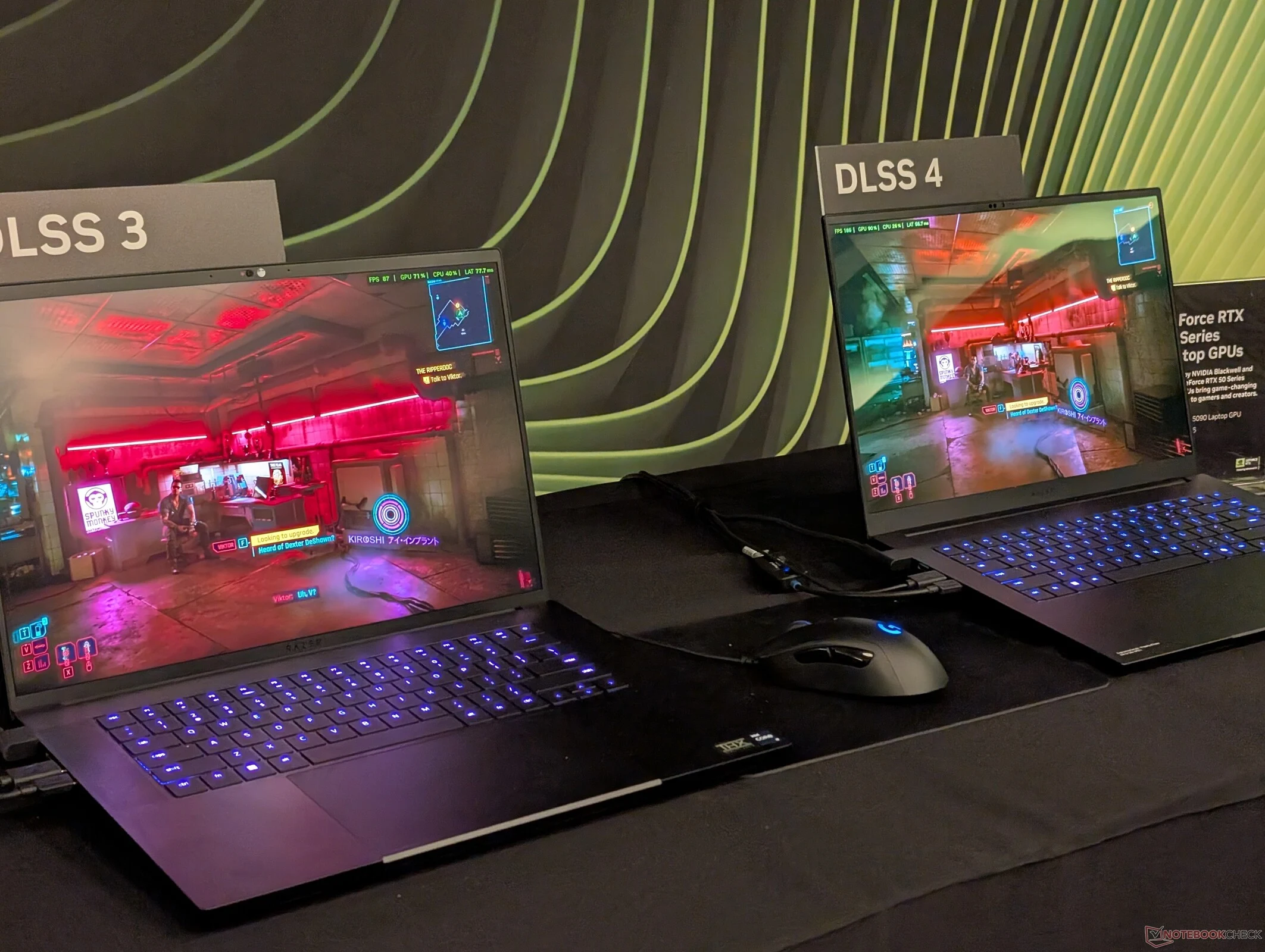
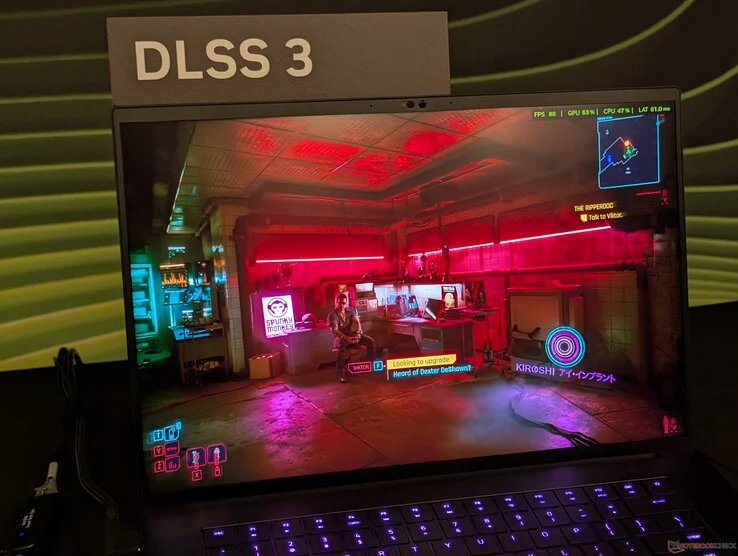
    With the release of the desktop GeForce RTX 5090 now complete, Nvidia is shifting gears to focus on the upcoming mobile versions set to debut by the end of this month. The Razer Blade 16 is rapidly becoming the standout device for the mobile RTX lineup, followed closely by the Lenovo Legion Pro 7i Gen 10 and the Asus Zephyrus G16. During GDC 2025, the chip manufacturer showcased a comparison between a 2024 Blade 16 running Cyberpunk 2077 on an RTX 4090 and a 2025 Blade 16 using the RTX 5090. Both models were displayed side-by-side at the same native resolutions to highlight their performance differences.

    Performance Comparison

    The demo revealed that the 2025 Blade 16 can deliver a performance boost of over 100% in FPS (186 vs. 88), alongside a 43 percent reduction in CPU usage and a 27 percent improvement in latency (81 ms to 59 ms) with DLSS 4 Performance enabled, as compared to DLSS 3. The improved CPU usage can be attributed in part to the newer AMD processors, as the 2025 Blade 16 is exclusively equipped with AMD chips, while the 2024 version utilized Intel CPUs. Nvidia credits the latency enhancements to the higher “native” frame rates provided by the RTX 5090 GPU in contrast to the RTX 4090, along with the new transformer model that powers DLSS 4.

    Enhanced GPU Utilization

    With DLSS 4, GPU utilization is approximately 37 percent greater than with DLSS 3, a change that Nvidia attributes to the more intensive multi-frame generation (MFG) model. The company claims that laptops featuring the GeForce RTX 50 series will experience reduced CPU limitations during gaming, suggesting that the new Blackwell GPUs might work better with slower CPUs this generation, allowing for potentially slimmer designs. Furthermore, even the AMD CPU in the latest Blade 16 operates at lower TDP targets compared to the Intel-powered 2024 version.

    While the demo did not clarify which frame generation level (2x, 3x, or 4x) was utilized to achieve the significant FPS increase, the results are expected to be striking for games that support DLSS 4.


  • Liquid-Cooled Laptop Chassis for Desktop Components on Kickstarter

    Key Takeaways

    1. UHPILCL is developing a liquid-cooled laptop similar to Acer’s Predator 21X, featuring advanced technology and a sleek design.
    2. The laptop can house high-performance desktop components, including a full ITX motherboard and powerful CPUs like the Ryzen 7 9800X3D and Intel Core Ultra 9 285K.
    3. It includes a unique cooling system using distilled water, allowing for easy maintenance and alternative power source compatibility.
    4. The laptop can support a dual-computer setup with a battery-powered laptop for backup, sharing peripherals, but can’t operate both systems simultaneously.
    5. Pricing and funding details for the UHPILCL laptop are not yet disclosed, raising some skepticism about its feasibility despite its innovative design.


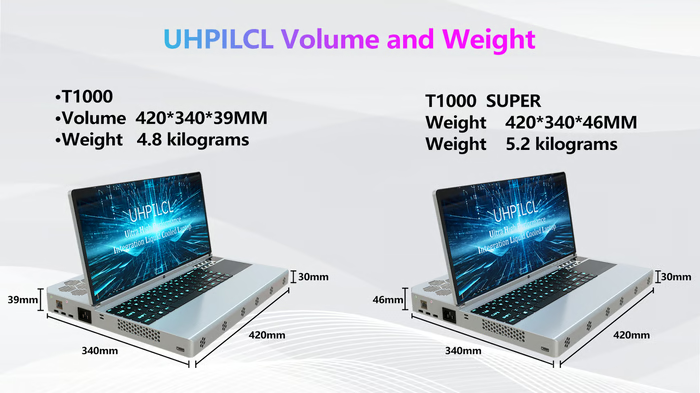
    Back in 2016, Acer introduced the Predator 21X, which featured a 21-inch display, a mechanical keyboard, a 7th-generation Intel desktop CPU, and dual GTX 1080 GPUs in SLI. With a hefty price of $9,000 and a weight of 9 kg, it didn’t really take off in the market, but that may have been Acer’s plan all along. Now, a company from Hong Kong called UHPILCL (Ultra High Performance Integration Liquid Cooled Laptop) is trying to create something similar using today’s tech. As the name suggests, this device packs a complete liquid cooling system into a chassis that is about 1.5 inches thick. There are two models available: the T1000, which weighs 4.8 kg, and the T1000 Super at 5.2 kg.

    Powerful Hardware Options

    Inside, you can install a full ITX motherboard with high-performance CPUs from Intel or AMD, like the Ryzen 7 9800X3D and the Core Ultra 9 285K. You can also integrate a full GeForce RTX 5090 dGPU that comes with 32 GB of VRAM, but this requires the T1000 Super version. Since the UHPILCL employs desktop components, it provides all the input/output and expansion capabilities that come with them.

    Portability and Features

    Naturally, the hardware and the cooling system do make it less portable, but the brand claims it is “easy to carry” in a bag designed for 17-inch laptops. The cooling system utilizes distilled water, meaning you can drain and refill it whenever needed. Moreover, if you ever forget the power cable, the manufacturer says you can use one from an electric kettle or microwave without any issues.

    Unique Dual-Computer Setup

    The UHPILCL has another interesting feature. It allows the inclusion of a battery-powered laptop for backup. Both machines can use the same keyboard, USB ports, storage, screen, and other peripherals. However, the exact method for this implementation is still unclear. This is an optional feature that must be added manually, and it’s important to note that both systems can’t operate at the same time due to compatibility reasons.

    At this stage, the company hasn’t disclosed any pricing details or funding targets on its Kickstarter page. It’s reasonable to be doubtful since this concept does seem a bit too good to be true. However, if it succeeds, it will likely be one of the most innovative laptop designs we’ve seen in recent times, especially as manufacturers are trying hard to reduce the thickness of their devices by a couple of millimeters.

    Source:
    Link


  • GeForce RTX 5090 Laptop Tops PassMark as Best Mobile GPU

    GeForce RTX 5090 Laptop Tops PassMark as Best Mobile GPU

    Key Takeaways

    1. The GeForce RTX 5090 Laptop GPU has achieved a score of 28,280 in PassMark’s G3D Mark, making it the highest-performing mobile GPU currently available, surpassing the RTX 4090 Laptop GPU by a small margin of +2.79%.

    2. The RTX 5090 Laptop GPU features enhanced specifications, including 24 GB of GDDR7 memory and 10,496 CUDA cores, compared to the 16 GB GDDR6 and 9,728 cores of the RTX 4090 Laptop GPU.

    3. The GPU has a thermal design power (TDP) ranging from 95-150 W, positioning it between the AMD Radeon RX 6950 XT and the Radeon PRO W7800 in performance rankings.

    4. Reactions to the RTX 5090’s performance are mixed; Nvidia supporters celebrate its top spot, while critics note its minimal advantage over the RTX 4090 and the age of the desktop cards it outperforms.

    5. Compatibility issues may affect the performance readings of the RTX 5090 Laptop GPU in benchmarks, as Nvidia has discontinued support for 32-bit frameworks, prompting PassMark to develop a patch for more accurate representation.


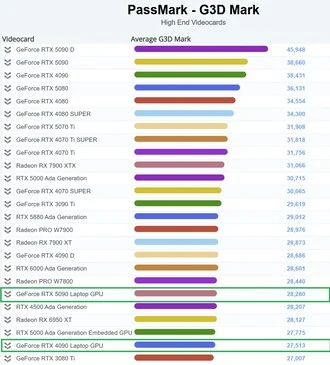
    A GeForce RTX 5090 Laptop GPU has surfaced in PassMark’s G3D Mark performance chart for top-tier video cards, currently boasting a score of 28,280 that places it above the RTX 4090 Laptop GPU. This indicates that the Blackwell chip has taken the title of the highest-performing mobile GPU on the platform, although only one sample has been logged as of now. The RTX 5090 Laptop GPU, with a thermal design power (TDP) ranging from 95-150 W, is positioned slightly above the AMD Radeon RX 6950 XT desktop graphics card (which came out in 2022) and just below the Radeon PRO W7800 desktop graphics card (released in 2023) in the latest rankings.

    Varied Reactions

    Depending on your preference for GPU brands, this might be seen as either an impressive outcome or a disappointing one. Those in favor of Nvidia will likely be thrilled that the GeForce RTX 5090 Laptop GPU has secured the top spot among mobile GPUs on the benchmark, achieving this with significantly lower TDPs compared to desktop models. However, critics may highlight the age of the desktop cards it surpasses and the minimal margin separating the RTX 5090 Laptop from the RTX 4090 Laptop (just +2.79%). In this instance, transitioning from an Ada Lovelace GPU to a Blackwell one appears to have its advantages.

    Enhanced Specifications

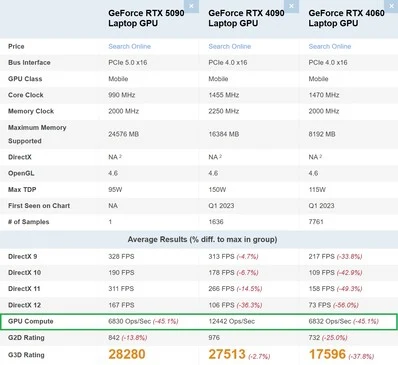
    To begin with, the RTX 5090 Laptop GPU is equipped with 24 GB of GDDR7 memory (while the 4090 Laptop has 16 GB GDDR6) and features 10,496 CUDA cores in contrast to its predecessor’s 9,728 cores. The new RTX 50-series mobile GPUs are expected to offer improved processing efficiency, aided by the latest Max-Q technologies which introduce many optimizations. Yet, amidst all these advancements, one might wonder why the RTX 5090 Laptop GPU is only +2.79% ahead of the RTX 4090 Laptop GPU (as found in the Alienware M18 R2, available on Amazon) in the primary performance chart and even seems to be on par with RTX 4060 Laptop GPU levels in PassMark’s GPU Compute evaluation.

    Potential Issues

    This could likely stem from compatibility challenges. As previously mentioned, PassMark has revealed that the underwhelming performances of RTX 50-series cards in this specific benchmark may be attributed to Nvidia discontinuing support for 32-bit frameworks. The platform is currently working on a patch to ensure that Team Green’s products receive a more accurate representation in the benchmarks offered. As illustrated in the comparison below, the RTX 5090 Laptop GPU clearly outperforms the RTX 4060 Laptop GPU in DirectX 9-12 tests, yet it appears to perform comparably in GPU Compute. Regardless, this marks a promising beginning for Nvidia’s premier mobile chip, demonstrating its ability to achieve a high benchmark result even under less-than-ideal conditions.

    Source:
    Link


  • Razer Blade 16 2025 Pre-Orders Start at $2,799 with Ryzen 9, RTX 5090

    Razer Blade 16 2025 Pre-Orders Start at $2,799 with Ryzen 9, RTX 5090

    Key Takeaways

    1. The Razer Blade 16 2025 is 30% smaller than the previous model, making it nearly as thin and light as the MacBook Pro 16.
    2. It offers options for AMD Ryzen AI 9 365 or Ryzen AI 9 HX 370 APUs and Nvidia GeForce RTX 5070 Ti, RTX 5080, or RTX 5090 GPUs.
    3. The default configuration includes 32 GB of RAM, upgradeable to 64 GB, and storage options of 1 TB, 2 TB, or 4 TB.
    4. All configurations feature a QHD+ OLED display with a 240 Hz refresh rate and a 90 Wh battery that charges to 80% in 48 minutes.
    5. The starting price is $2,799.99, with high configurations reaching up to $4,599.99.


    Almost two months ago, Razer launched a new Blade 16 to take the place of the 2024 version we reviewed just a little over a year back. As we mentioned at CES 2025, the Blade 16 2025 is now 30% smaller than the previous model. Because of this, the Blade 16 is now nearly as thin and light as the latest MacBook Pro 16, which is currently priced at $2,239 on Amazon.

    Upgraded Components

    Razer has paired this reduction in size with a selection between AMD’s Ryzen AI 9 365 and Ryzen AI 9 HX 370 APUs. In addition, the Blade 16 2025 can be set up with one of Nvidia’s GeForce RTX 5070 Ti, RTX 5080, or RTX 5090 GPUs, which come with 12 GB GDDR7, 16 GB GDDR7, and 24 GB GDDR7 VRAM, respectively. The new 16-inch laptop includes 32 GB of LPDDR5X-8000 RAM by default, but users can upgrade it to 64 GB during the configuration.

    Storage and Display

    Moreover, Razer provides options for the Blade 16 2025 with 1 TB, 2 TB, or 4 TB of storage, with the maximum split across both M.2 slots using two 2 TB drives. A QHD+ (2,560 x 1,600) OLED display with a 240 Hz refresh rate is included in all configurations. To top it off, this hardware is complemented by a 90 Wh battery that can be charged up to 80% in just 48 minutes, thanks to a 200 W power adapter.

    The starting price for the Razer Blade 16 2025 is $2,799.99, which includes a Ryzen AI 9 365, 32 GB of RAM, a 1 TB SSD, and an RTX 5070 Ti GPU. However, as you move to more powerful models, prices can quickly exceed $3,000; for instance, switching to an RTX 5080 adds an additional $400. In its highest configuration, the Blade 16 2025 can reach a price of $4,599.99, which includes a Ryzen AI 9 HX 370, 64 GB of RAM, 4 TB of storage, and an RTX 5090 GPU. For further information, check Razer’s website.

    Source:
    Link


  • Nvidia Alerts Users: Performance Issues in RTX 5070 Ti and 5090 Series

    Nvidia Alerts Users: Performance Issues in RTX 5070 Ti and 5090 Series

    Key Takeaways

    1. Some GeForce RTX 5090 graphics cards were shipped with 168 ROPs instead of the expected 178 ROPs, leading to a performance drop of over 5%.
    2. The issue affects not only the GeForce RTX 5090 but also the GeForce RTX 5070 Ti and RTX 5090D, with Nvidia confirming it is not limited to one manufacturer.
    3. Only about 0.5% of the affected GPU units were shipped with fewer ROPs, and Nvidia has fixed the production issue.
    4. Nvidia advises customers who receive a card with fewer ROPs to contact their board manufacturer for a replacement.
    5. The problem has no impact on AI and Compute workloads, only affecting average graphical performance.


    Earlier this week, multiple sources discovered that some GeForce RTX 5090 graphics cards were being shipped with fewer Raster Output Pipelines (ROPs) than what was originally advertised. ROPs play a vital role in the performance of the GeForce RTX 5090 and other Nvidia graphics cards, especially for tasks like anti-aliasing and other critical GPU operations.

    Performance Impact

    According to GPU-Z, the affected GeForce RTX 5090 models showed 168 ROPs, which is 8 ROPs less than the expected reference specification. This decrease represents a 4.5% drop, but TechPowerUp found that the actual performance loss during testing was over 5% when comparing an impacted card to those that had the full 178 ROPs.

    Broader Implications

    Initially, it appeared that only a specific Zotac model was impacted. However, Nvidia has since stated that the issue isn’t limited to one board partner. Additionally, this problem also affects the GeForce RTX 5070 Ti and the GeForce RTX 5090D, which is only available in China. Notably, the GeForce RTX 5080, currently priced at $2,299.99 on Amazon, is not affected by this issue.

    Resolution and Advice

    It has been reported that only about 0.5% of the GeForce RTX 5070 Ti, GeForce RTX 5090D, and GeForce RTX 5090 units shipped with fewer ROPs than they were supposed to have. Although Nvidia claims to have fixed the “production anomaly,” there is still a possibility that affected cards may remain in circulation at retailers for a while. Currently, Nvidia advises customers who have received a card with fewer ROPs to “get in touch with the board manufacturer for a replacement.” Here’s Nvidia’s complete statement:

    “We have identified a rare issue affecting less than 0.5% (half a percent) of GeForce RTX 5090 / 5090D and 5070 Ti GPUs which have one fewer ROP than specified. The average graphical performance impact is 4%, with no effect on AI and Compute workloads. Affected consumers can contact the board manufacturer for a replacement. The production anomaly has been corrected.”

    Source:
    Link

  • Asus ROG XG Mobile 2025: Thunderbolt 5 eGPU Starts at $1,199

    Asus ROG XG Mobile 2025: Thunderbolt 5 eGPU Starts at $1,199

    Key Takeaways

    1. Improved Compatibility: The new ROG XG Mobile (2025) uses Thunderbolt 5, allowing compatibility with more devices beyond the previous XG Mobile connector.

    2. High Transfer Speeds: Thunderbolt 5 provides transfer speeds of up to 80 Gbit/s, enhancing performance for connected devices.

    3. Powerful Graphics Options: The eGPU supports GeForce RTX 5070 Ti and RTX 5090 models, offering high performance with a significant number of CUDA cores and VRAM.

    4. Launch Date and Pricing: The ROG XG Mobile (2025) will launch on February 25, with prices starting at $1,199.99 for the RTX 5070 Ti and $2,199.99 for the RTX 5090.

    5. Advancements in eGPU Technology: Asus is advancing eGPU technology significantly with the introduction of the ROG XG Mobile (2025).


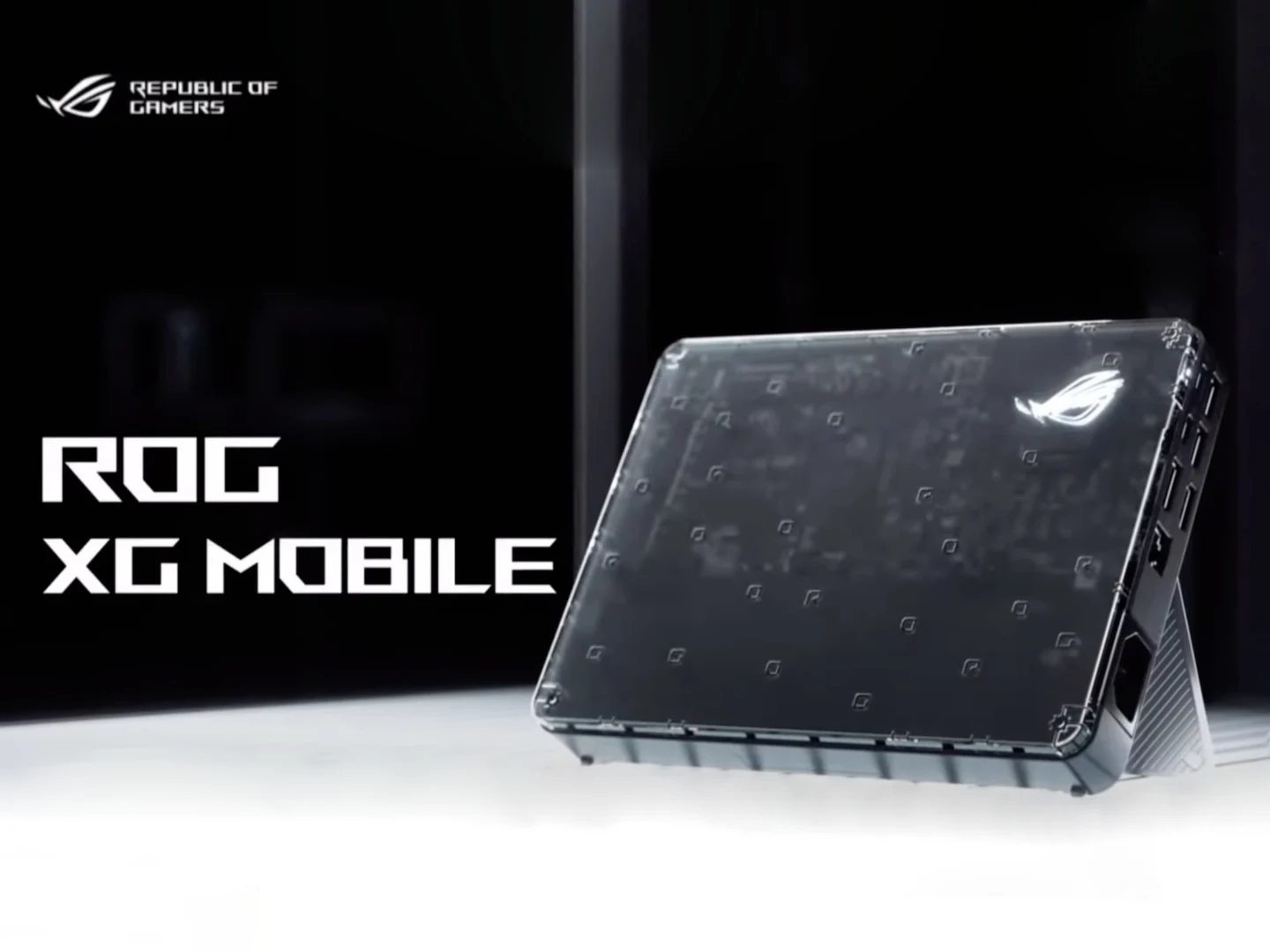
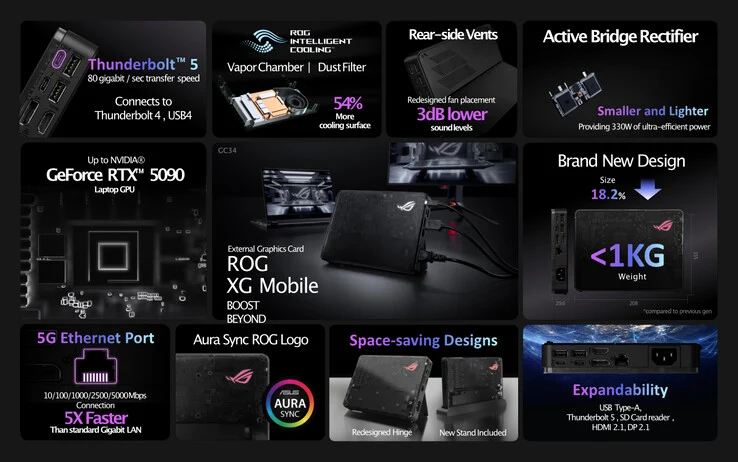
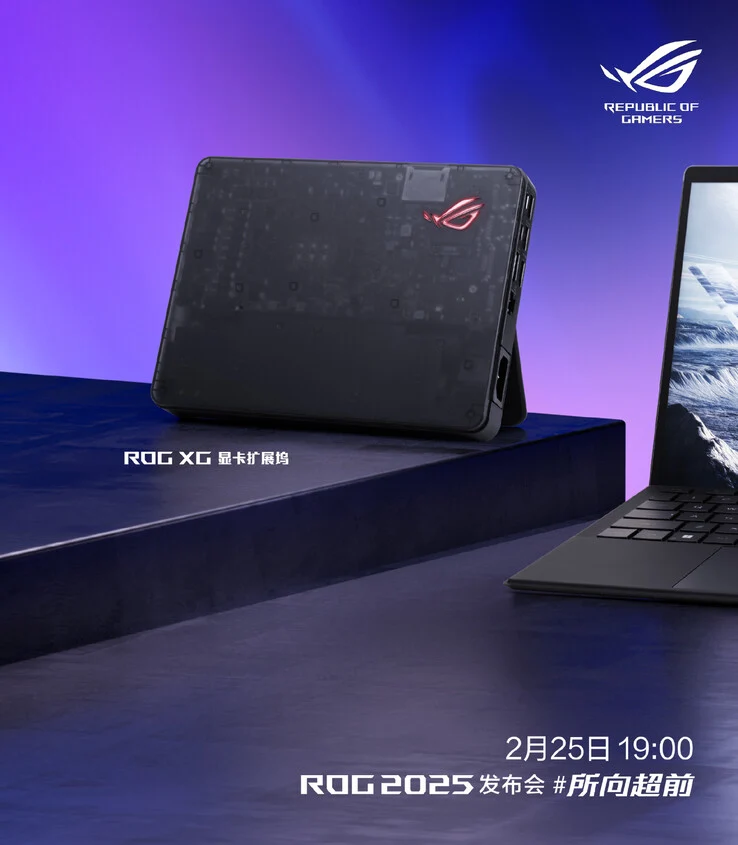
    The latest version of the ROG XG Mobile series is nearly available, having been showcased last month at CES 2025 in Las Vegas. As we pointed out back then, the new ROG XG Mobile marks a significant change in Asus’ approach to eGPUs, which previously depended on their unique XG Mobile connector.

    Improved Compatibility

    This dependence on the XG Mobile meant that Asus’ earlier eGPUs were compatible with only a few devices, one of which was the ROG Ally (currently priced at $399.99 for refurbished units on Amazon). To improve this situation, Asus has introduced Thunderbolt 5 with the new ROG XG Mobile, now named the ROG XG Mobile (2025). Essentially, this means the ROG XG Mobile (2025) can achieve transfer speeds of up to 80 Gbit/s over Thunderbolt 5, while also being compatible with devices that have Thunderbolt 4 or USB4 ports.

    Powerful Graphics Options

    Asus pairs Thunderbolt 5 connectivity with laptop models of the GeForce RTX 5070 Ti and GeForce RTX 5090. For context, the GeForce RTX 5070 Ti features 5,888 CUDA cores along with 12 GB of GDDR7 VRAM and a 192-bit memory bus. On the other hand, the GeForce RTX 5090 boasts 24 GB of GDDR7 VRAM (256-bit) and is equipped with the leading GB203 GPU containing 10,496 CUDA cores.

    Launch and Pricing Details

    The ROG XG Mobile (2025) is set to officially release on February 25, starting at a price of $1,199.99 for the GeForce RTX 5070 Ti version. In contrast, the edition with the GeForce RTX 5090 will be available for $2,199.99. Pricing for other regions is still not disclosed at this moment, however.

    Asus, via ITHome, continues to push the boundaries in eGPU technology with these advancements.

    Source:
    Link


  • Dream Machines to Launch AMD Ryzen 9 9955HX3D Laptop Soon

    Dream Machines to Launch AMD Ryzen 9 9955HX3D Laptop Soon

    We recently shared that Dream Machines, a laptop system integrator, will be the first to provide AMD’s Ryzen 9 9955HX3D gaming CPUs in their upcoming laptops. There was some initial confusion about the shipping dates for these next-gen laptops, even though they were already up for pre-order.

    Shipping Timeline Confirmed

    Recently, Videocardz has reported that Dream Machines has confirmed the first Ryzen 9 9955HX3D laptops will begin shipping to customers either at the end of March or the start of April.

    Specs and Pricing

    Moreover, the company has stated that the RAM in these gaming machines will be DDR5-5200 or DDR5-5600, which could lead to notable performance improvements for the Zen 5 CPUs. The new CPUs are expected to be more readily available than the previous models, but the pricing still indicates their premium status, with one laptop configuration featuring Nvidia’s GeForce RTX 5090 Laptop GPU priced at a staggering $3,289. An optional 2 TB SSD upgrade will also be an option, increasing the cost even more.

    Variants and Features

    Dream Machines will also provide versions of the laptops with a more affordable RTX 5070 Ti paired with the Ryzen 9 9955HX3D, which will help to lower the overall price. Both high-end and mid-range models are expected to come with liquid cooling, allowing Dream Machines to push the GPU’s TGP up to 175 W. The other specs are quite impressive too, featuring a 2,560 × 1,600 p display with a 300 Hz refresh rate and brightness of 500 nits, along with a solid selection of ports that includes dual USB Type-C ports, DisplayPort 2.1a, HDMI 2.1, and three USB Type-A ports.

    Currently, these laptops are only available through the Polish Dream Machines online store, but since they are based on generic Tongfang or Clevo models, they should soon be offered by other system integrators.

    In case you’re looking for a more budget-friendly AMD X3D CPU, consider the $449 AMD Ryzen 7 7800X3D available at Best Buy.

  • RTX 5090 vs RTX 5080: Performance Gains vs GeForce 40 Series

    RTX 5090 vs RTX 5080: Performance Gains vs GeForce 40 Series

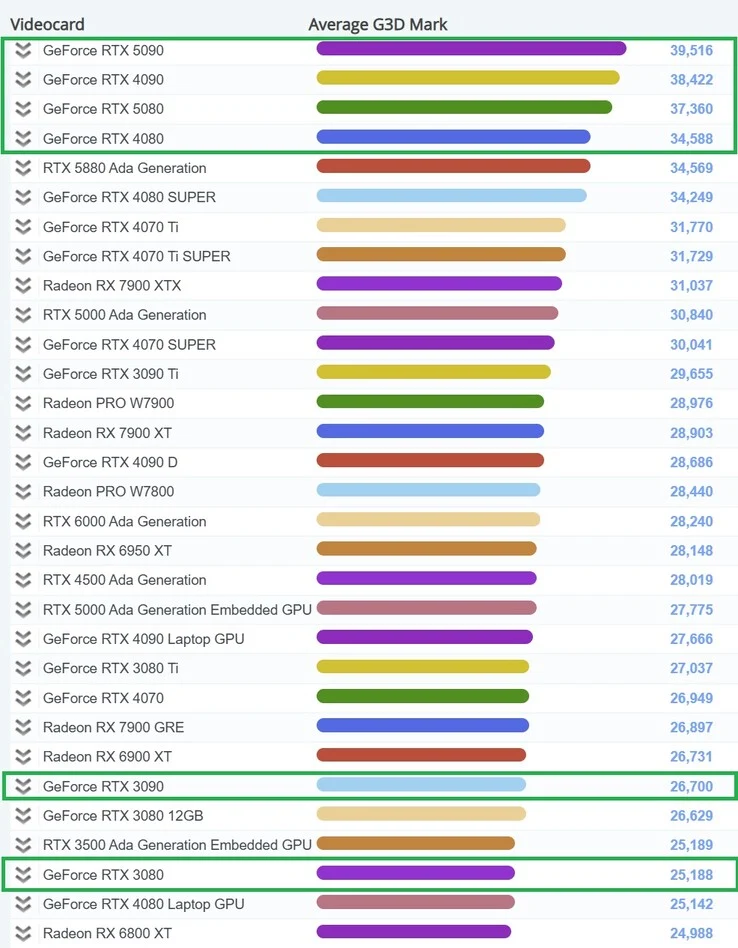
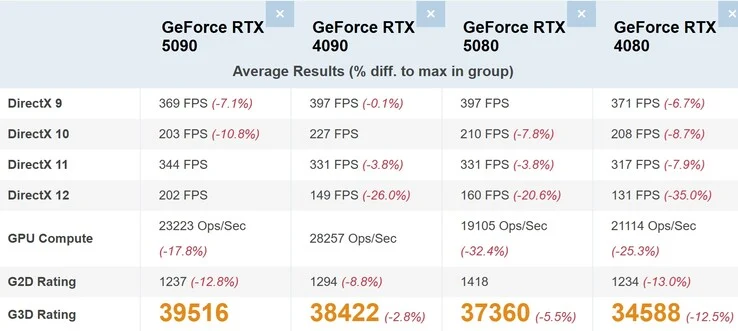
    It’s important to note from the beginning that the results presented come from only one benchmark and may not reflect the full performance capabilities of the GeForce RTX 5090 and RTX 5080. As anticipated, the Nvidia GeForce RTX 5090 has taken the lead in PassMark’s video card benchmark ranking (G3D Mark).

    Benchmarking Details

    The hardware underwent comprehensive testing, tracking FPS performance across DirectX 9, DirectX 10, DirectX 11, and DirectX 12, including a GPU Compute benchmark in the evaluation process. The RTX 5090 achieved a G3D score of 39,516, placing it at the top of the leaderboard, followed by the RTX 4090, RTX 5080, and RTX 4080. At first glance, this data seems promising.

    Performance Comparison

    However, a deeper look indicates that the performance improvements across generations aren’t as consistent when examining the G3D ratings:

    – RTX 4090 (38,422) – RTX 5090 (39,516): +2.85%
    – RTX 3090 (26,700) – RTX 4090 (38,422): +43.9%
    – RTX 4080 (34,588) – RTX 5080 (37,360): +8.01%
    – RTX 3080 (25,188) – RTX 4080 (34,588): +37.3%

    One could argue that this information is taken out of context, as it relies on a single benchmark, and that the Blackwell cards are equipped with new and enhanced technologies, like fourth-generation RT cores, fifth-generation Tensor cores, DLSS 4.0 Multi Frame Generation, and GDDR7 memory. Yet, this argument can also be made for the differences between the Ada Lovelace cards (GeForce 40 series) and the Ampere series (GeForce 30 series). For example, the former also came with next-gen RT cores and Tensor cores.

    Manufacturing Process Insights

    Crucially, the RTX 4080 and RTX 4090 utilize chips from TSMC’s 4N manufacturing process (within the 5 nm node family), while the RTX 3080 and RTX 3090 were made using an 8 nm process from Samsung (which was developed from 10 nm technology). The newly released RTX 5090 and RTX 5080 leverage GPUs based on an optimized variant of the 4N process, called 4NP, custom-designed for Nvidia by TSMC. It seems that a focus on refinement rather than sheer performance is the current trend.

    Source:
    Link


  • Dream Machines Gaming Laptop: AMD Ryzen 9 9955HX3D & RTX 5090

    Dream Machines Gaming Laptop: AMD Ryzen 9 9955HX3D & RTX 5090

    Dream Machines is not a well-known brand, but it produces laptops using Clevo and Tongfang barebones, similar to Schenker and XMG. Their latest model boasts impressive gaming capabilities, powered by the AMD Ryzen 9 9955HX3D processor.

    Processor Performance

    AMD’s newest flagship gaming processor is still somewhat uncommon in laptops, yet it’s expected to be incredibly fast. It has 16 Zen 5 performance cores that can reach boost clock speeds of up to 5.4 GHz and features a 128MB L3 cache. The top configuration combines this robust AMD chip with the Nvidia GeForce RTX 5090 laptop GPU, which comes with 24GB of GDDR7 VRAM and a total graphics power (TGP) of 175 watts. If this laptop can manage to keep its components cool during intensive tasks, it could rank among the fastest gaming laptops available.

    Display and Memory

    The gaming laptop from Dream Machines also showcases a 16-inch 16:10 IPS display, offering a resolution of 2,560 x 1,600 pixels, a swift 300Hz refresh rate, and a bright 500 nits. It fully covers the sRGB color space, ensuring vibrant visuals. Users can also choose to configure the laptop with up to 32GB of DDR5 RAM and a 1TB PCIe 4.0 M.2 SSD, plus there is an extra M.2 slot available for future storage upgrades.

    Connectivity Options

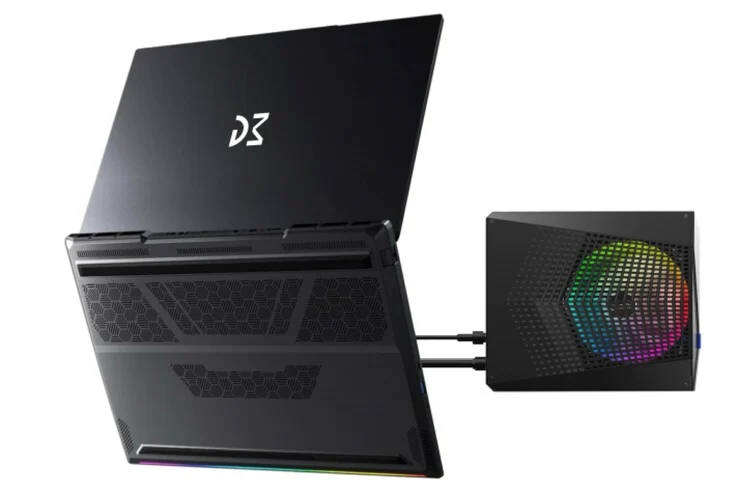
    Like many laptops powered by AMD, this 5.4-pound machine does not feature Thunderbolt 4, but it includes two standard USB-C ports that support data transfer speeds of up to 10 Gbit/s. For further connectivity, it offers DisplayPort 2.1a, HDMI 2.1, three USB-A ports, and a 2.5 Gbit/s Ethernet port. The specifications also include stereo speakers rated at 2 x 2 watts and a 1080p webcam. Additionally, the RTX 5090 laptop can be fitted with an external water cooling system, dubbed “Dream Waterfall” by the company.

    Dream Machines is currently taking pre-orders for the RT5090-16NA25 through their official online store, but they haven’t revealed a specific shipping date yet. Nvidia anticipates that the mobile GeForce RTX 5090 will start shipping in March, while AMD expects that the Ryzen 9 CPU will be available in the first half of 2025.

    Regardless, the configuration featuring the Ryzen 9 9955HX3D, GeForce RTX 5090 Laptop GPU, 16GB RAM, and 1TB SSD is priced at $3,289.

    Source:
    Link