Tag: Galaxy Z Fold7

  • Samsung One UI 8.5 Enhancements for Galaxy Z Fold7 Revealed Early

    Samsung One UI 8.5 Enhancements for Galaxy Z Fold7 Revealed Early

    Key Takeaways

    1. One UI 8.5 will introduce advanced AI features and improvements for Samsung’s foldable devices.
    2. The Phone app will feature a pop-up dialer instead of a full-screen interface.
    3. Notification and quick panel shades will be adjusted to smaller pop-ups, improving visibility of content behind them.
    4. Enhanced customization options for the quick panel will be included, along with refinements for one-handed usability.
    5. An official release date for One UI 8.5 has not yet been announced.


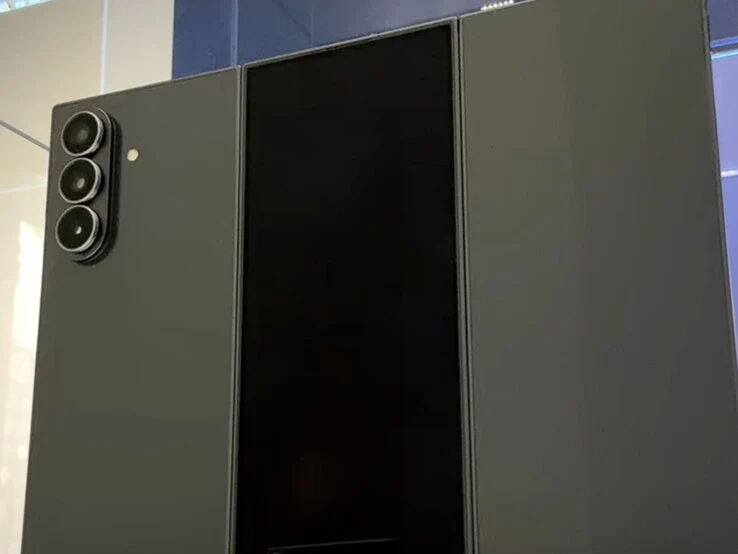
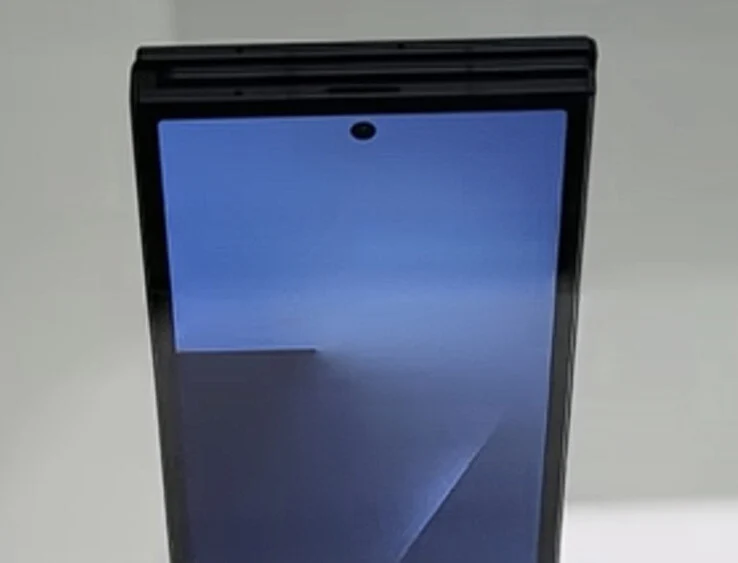
    Samsung has yet to officially announce the full range of updates it intends to implement with its One UI 8.5 version. However, some advanced AI features appeared a few months ago in a leaked version. Recently, SamMobile acquired an early build of this update specifically for the Galaxy Z Fold7, which is currently priced at $1,599 on Amazon.

    Changes Expected in One UI 8.5

    It seems that One UI 8.5 could introduce numerous modifications for Samsung’s foldable devices, even though it is just a temporary update before One UI 9 launches early next year. Based on Samsung’s typical release patterns, One UI 9 is likely to debut with the Galaxy S26 series in late February, followed by updates for existing flagship models shortly after. Meanwhile, this early glimpse gives us an idea of what One UI 8.5 will offer for foldable devices.

    New Features for the Phone App

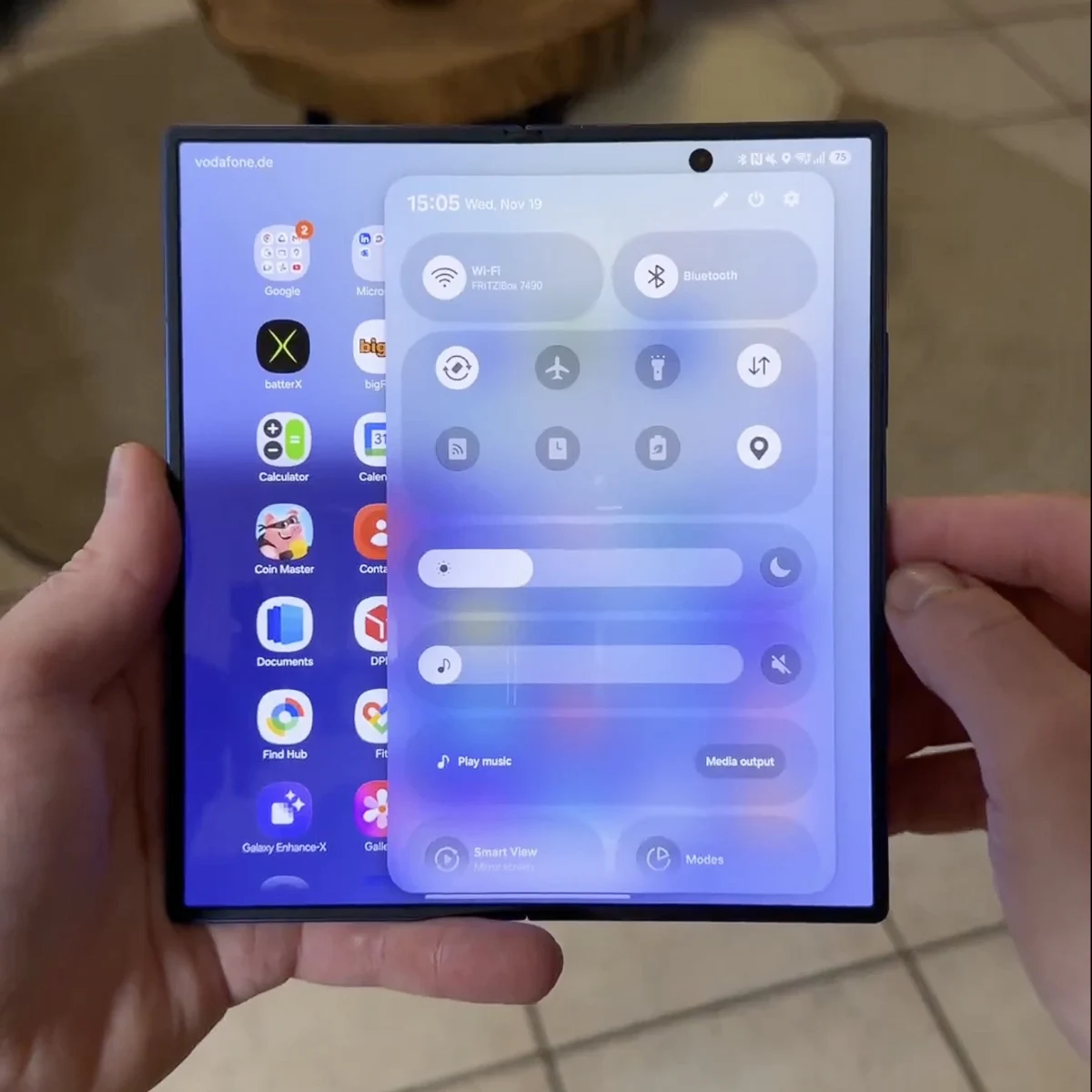
    For example, the Phone application now utilizes a pop-up dialer instead of switching to a full-screen interface, which is common in other One UI versions. Additionally, the notification and quick panel shades no longer cover the entire screen and blur the content behind them. They have been adjusted to smaller pop-ups that appear below the point of activation.

    Enhancements in Customization and Usability

    Furthermore, One UI 8.5 will enhance the customization options for the quick panel and refine system applications to improve usability for one-handed operation. Sadly, a specific release date for One UI 8.5 is still not known at this point. For more information, check out the video above and the tweet linked below.

    Source:
    Link


  • Samsung Galaxy Z TriFold Set for Limited Launch After Unveiling

    Samsung Galaxy Z TriFold Set for Limited Launch After Unveiling

    Key Takeaways

    1. Samsung has not provided updates on its first tri-fold smartphone, the Galaxy Z TriFold, since its reveal at APEC South Korea 2025.
    2. Videos of the Galaxy Z TriFold show its differences from the Galaxy Z Fold7, which is currently priced at $1,699.
    3. Initial production plans suggested 200,000 to 300,000 units, but recent reports indicate a more modest production of tens of thousands of units.
    4. A Bluetooth SIG listing suggests plans for a global launch, although official sales have only been confirmed in the UAE.
    5. As of early November, Samsung has produced 20,000 to 30,000 components for the Galaxy Z TriFold, but the total number of complete units remains unclear.


    Samsung has yet to provide any updates on its inaugural tri-fold smartphone since its reveal at APEC South Korea 2025 last month. However, videos have surfaced showcasing the Galaxy Z TriFold from various perspectives, illustrating its differences compared to the existing Galaxy Z Fold7 (currently priced at $1,699 on Amazon).

    Production Plans

    Earlier this year, rumors suggested that Samsung was gearing up to produce between 200,000 and 300,000 units in anticipation of a launch in China and South Korea. A recent listing from Bluetooth SIG, however, hinted that the company aims to release the Galaxy Z TriFold on a global scale, as indicated by six model numbers associated with the ‘Q7M’ product name. This suggests that Samsung might have larger launch plans in mind, even though they have only officially confirmed sales in the United Arab Emirates thus far.

    Revised Estimates

    The Elec has reported that previous estimates were not accurate. Instead of hundreds of thousands, the actual number of Galaxy Z TriFold units could be in the tens of thousands. Reports indicate that Samsung notified suppliers during the summer that 10,000 units were to be manufactured in September, but there appears to have been no progress since then.

    Component Production

    As of early November, The Elec claims that Samsung has manufactured 20,000 to 30,000 components for its first tri-fold smartphone, though they did not clarify how many complete units this number corresponds to. Regardless, it appears that the Galaxy Z TriFold will be difficult to acquire, no matter how many markets Samsung decides to enter with the device.

    Source:
    Link


  • New Samsung Foldable Launches Worldwide with Premium Design

    New Samsung Foldable Launches Worldwide with Premium Design

    Key Takeaways

    1. Samsung has introduced the high-end Samsung W26 foldable phone, which shares its foundation with the Galaxy Z Fold7 but features unique design elements.
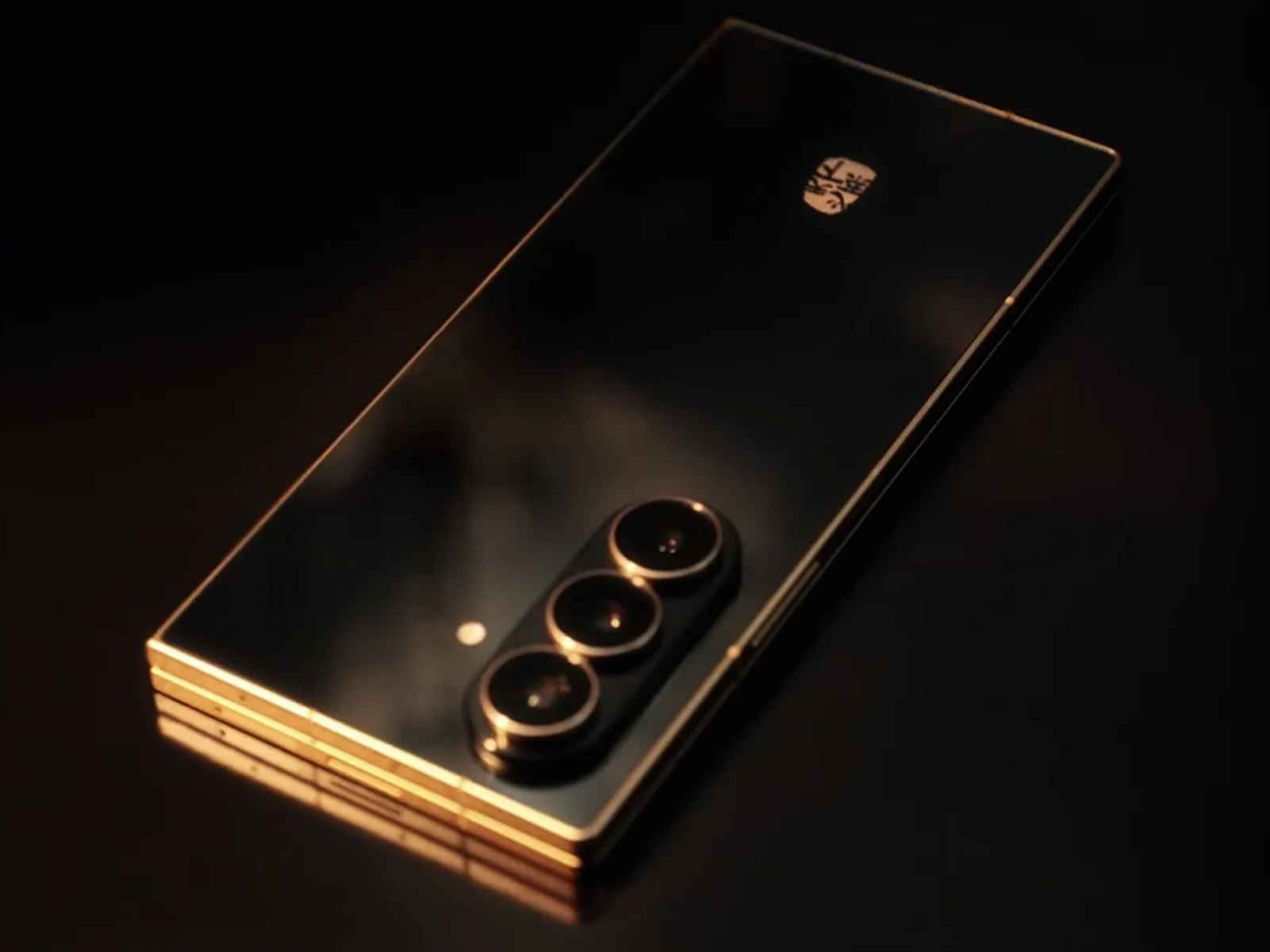
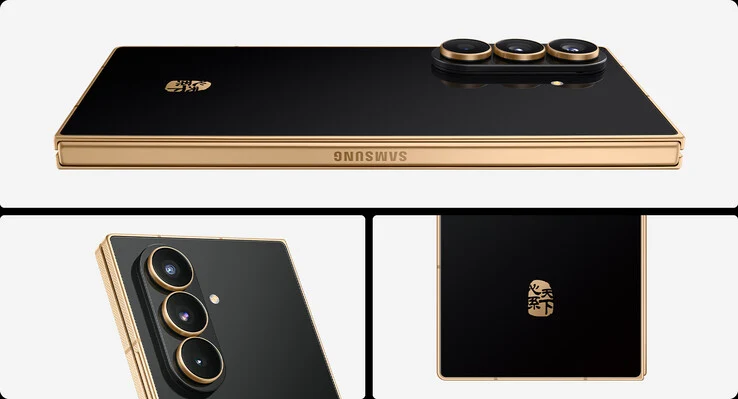
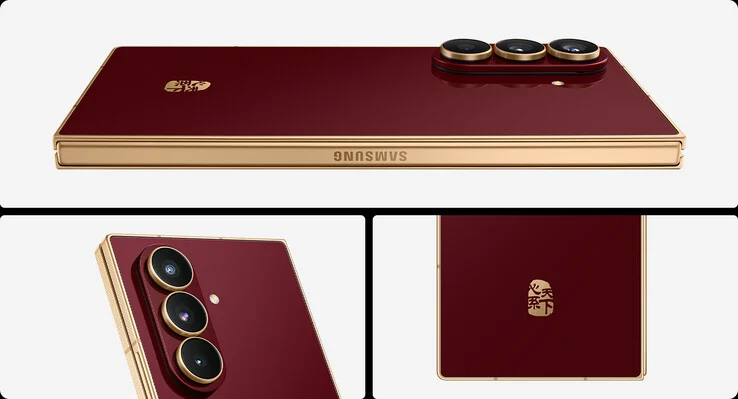
    2. The Samsung W26 has a gold frame with a textured finish and shiny glass back panels, differing from previous models that used ceramic backs.
    3. The device comes with several exclusive accessories and packaging that continue from the previous year’s Samsung W25.
    4. The Samsung W26 is not expected to be available worldwide, but it is being sold globally as an imported item by the Average Dad Tech store.
    5. Pricing for the Samsung W26 starts at $3,061 for the 512 GB version and goes up to $3,537 for the 1 TB storage option.


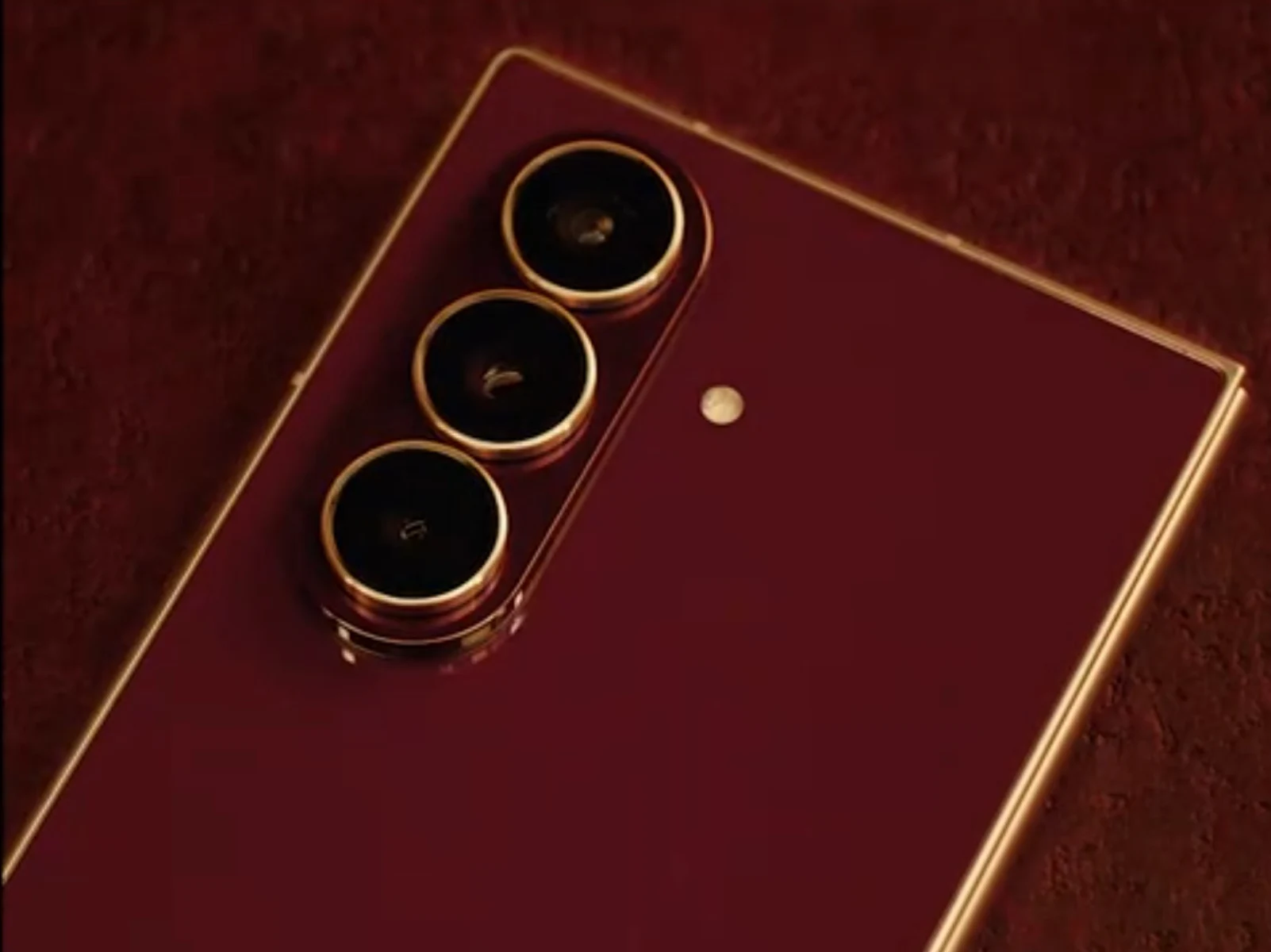
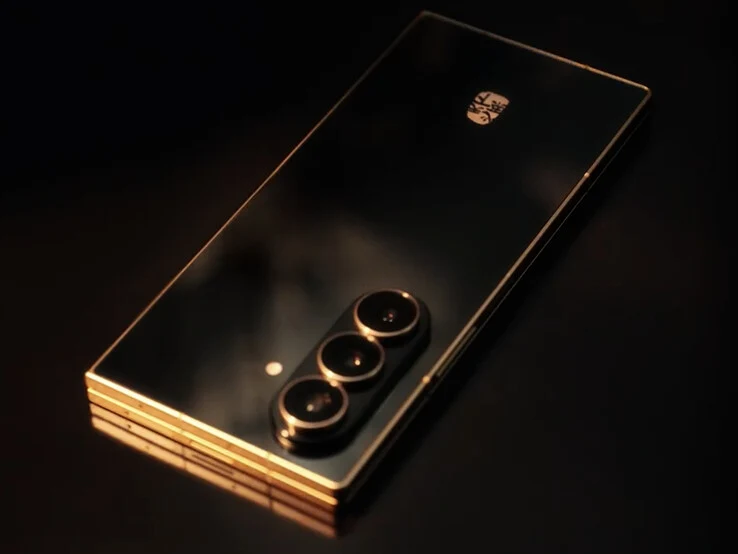
    A few days ago, Samsung has made an update to its foldable phone range by introducing a new high-end model. While it shares the same foundation as the Galaxy Z Fold7, the Samsung W26 stands out in a few key ways. As we previously mentioned, the Samsung W26 features a more extravagant design compared to the Galaxy Z Fold7.

    Unique Design Features

    For example, the Samsung W26 sports a gold frame with a textured finish. Additionally, the phone uses shiny back panels. Unlike some of the recent Samsung W models that came with ceramic backs, the Samsung W26 opts for glass, similar to the standard Galaxy Z Fold7, which is currently priced at $1,599 for a refurbished version on Amazon.

    Exclusive Accessories

    Moreover, Samsung has included several exclusive accessories that come with the phone. The accessories and packaging can be seen in the image below, and they carry on from the previous year’s Samsung W25. Officially, Samsung is not expected to make the Samsung W26 available worldwide, even though it supports full Google Play functionality.

    However, the Average Dad Tech store has begun to sell the Samsung W26 globally as an imported item. The pricing starts at $3,061 for the version with 512 GB of storage and goes up to $3,537 for the 1 TB storage option. For additional information, please visit the Average Dad Tech store’s website.

    Source:
    Link


  • Samsung Unveils New Ultra-Premium Foldable with Unique Design

    Samsung Unveils New Ultra-Premium Foldable with Unique Design

    Key Takeaways

    1. Samsung has launched the Galaxy Z Flip7 FE, Galaxy Z Flip7, and Galaxy Z Fold7, with a tri-fold smartphone expected by year-end.
    2. The Samsung W26 has been released in China, featuring design changes from the Galaxy Z Fold7.
    3. The W26 and Galaxy Z Fold7 share the same internal components, including a Snapdragon 8 Elite for Galaxy chipset and a 200 MP main camera.
    4. The W26 is customizable with 16 GB of RAM and storage options of 512 GB or 1 TB, priced at CNY 16,999 and CNY 18,999, respectively.
    5. The W26 includes premium features like a Kevlar case, telecom discount code, and distinct color options, but is unlikely to be available outside China.


    Samsung has recently launched a new foldable device that it began teasing at the start of this month. To summarize, the company released the Galaxy Z Flip7 FE, Galaxy Z Flip7, and Galaxy Z Fold7 during the summer. This trio will likely be accompanied by Samsung’s first tri-fold smartphone by year’s end.

    New Release in China

    In the meantime, Samsung has introduced the Samsung W26 in China, which features slight design changes from the Galaxy Z Fold7 (current price: $1,869 on Amazon). For some background, the Samsung W25 was released last year as a more premium version of the Galaxy Z Fold Special Edition that was available in South Korea. Additionally, Samsung also had the W25 Flip, which was based on the Galaxy Z Flip6.

    Similarities in Hardware

    At its core, the Samsung W26 and Galaxy Z Fold7 share the same internal components. These include a Qualcomm Snapdragon 8 Elite for Galaxy chipset, a 4,400 mAh battery supporting 25W charging, a 200 MP main camera, and displays measuring 6.5 inches for the cover and 8 inches for the foldable screen. Furthermore, the Samsung W26 boasts the same dimensions as the Galaxy Z Fold7, with a thickness of 8.9 mm and a weight of 215 g.

    Pricing and Features

    Interestingly, Samsung has chosen not to launch a W26 Flip to replace the W25 Flip. Instead, only the Samsung W26 has been released, which can be customized with 16 GB of RAM and either 512 GB or 1 TB of storage priced at CNY 16,999 (around $2,383) and CNY 18,999 (approximately $2,664), respectively. In comparison, the Galaxy Z Fold7 is priced lower in China by CNY 2,000 (about $280) to CNY 2,500 (around $350).

    For that extra cost, Samsung includes a special Kevlar case and a telecom discount code worth CNY 1,000 (about $140), along with more luxurious packaging. Additionally, both color options for the Samsung W26 feature gold frames with a textured finish, setting them apart from their Galaxy Z Fold7 counterparts. The Samsung W26 also has a glass back, unlike the ceramic back of the Samsung W25. While it is doubtful that the Samsung W26 will be available officially outside of China, it is expected to be found through importers later on.

    Source:
    Link


  • Samsung Announces Release Date for Next Ultra-Premium Foldable

    Samsung Announces Release Date for Next Ultra-Premium Foldable

    Key Takeaways

    1. Samsung hints at a new foldable device following the launch of the Galaxy Z Flip7 FE, Galaxy Z Flip7, and Galaxy Z Fold7.
    2. The new device will likely be released exclusively in China, featuring a golden frame design.
    3. It is expected to follow a traditional book-style foldable design, not the rumored tri-fold design.
    4. The upcoming W26 series will offer customized versions of the Galaxy Z Flip7 and Galaxy Z Fold7 for the Chinese market.
    5. Samsung’s launch event for the new device is scheduled for October 11 at 08:00 UTC.


    Samsung has begun hinting at a new foldable device following the launch of the Galaxy Z Flip7 FE, Galaxy Z Flip7, and Galaxy Z Fold7 this past summer, which is currently priced at $1,899.99 on Amazon. While these three foldables are available worldwide, it seems that the next one will be exclusively released in China.

    Teasing the New Device

    So far, Samsung has revealed a silhouette image, which we have included above and below. From what we can see in the picture, it appears that this upcoming foldable will have a golden frame, which is different from the Galaxy Z Fold7. This new device seems to carry on the design style of previous foldables that were exclusive to China, which are part of the W24 and W25 series.

    Design and Features

    The device that hasn’t been released yet looks like it will follow a traditional book-style foldable design, rather than the anticipated tri-fold design that Samsung has been rumored to be working on. Interestingly, the Galaxy Z TriFold is expected to be revealed to the public by the end of the year. Currently, it looks like Samsung is planning to release the W26 series as customized versions of the Galaxy Z Flip7 and Galaxy Z Fold7, which are already available in China. Additionally, Samsung’s launch event, titled ‘Heart for the World’ or ‘Heart of the World,’ is set for October 11 at 08:00 UTC.

    Samsung via ITHome.

    Source:
    Link


  • Foldable iPhone Design: Two iPhone Airs Stuck Together?

    Foldable iPhone Design: Two iPhone Airs Stuck Together?

    Key Takeaways

    1. The foldable iPhone design is expected to resemble two iPhone Airs connected, focusing on a slim profile with flat edges and a titanium frame for durability.

    2. The device’s thickness will be around 9 to 9.5mm when closed and 4.5mm when opened, placing it between competitors like Samsung and Google in terms of thickness.

    3. The inner display is projected to be 7.8 inches with a nearly square aspect ratio, while the outer screen may be about 5.5 inches; Apple is working on reducing the crease with innovative hinge materials.

    4. Features will include four cameras, with a potential shift from Face ID to Touch ID, and the price is expected to start at around $2,000, reaching up to $2,300.

    5. Pilot production is set to begin in Taiwan, with plans to expand to India, targeting a release around September 2026, though slight delays may occur.


    Apple’s first foldable iPhone has been a topic of much discussion for a few months, and new reports are giving us a better idea of its potential design. According to Bloomberg’s Mark Gurman, the device is expected to look like two iPhone Airs connected together. While this might seem like a simple description, it indicates a design focus on being thin, having flat edges, and utilizing a recognizable titanium frame.

    Durability and Design

    Recently, Apple has made extensive use of titanium in its newer iPhone Air models, and durability tests from iFixit and JerryRigEverything have shown that this material performs well when under pressure. Incorporating this same strength into a foldable phone could help alleviate long-standing worries about the fragility of foldable devices. The thickness being mentioned suggests that Apple aims to create a device that is quite slim by foldable standards. When closed, the phone might be around 9 to 9.5mm thick, while when opened, it could have a thickness of only 4.5mm. For comparison, Samsung’s Galaxy Z Fold7 measures 8.9mm and Google’s Pixel Fold at 10.8mm, positioning Apple somewhere in the middle of these two.

    Screen and Hinge Innovations

    The inner display is rumored to be about 7.8 inches with a nearly square aspect ratio, while the outer screen may come in at around 5.5 inches. Additionally, Apple is reportedly exploring methods to reduce the crease in the center of the screen, possibly by using a metal support plate in the hinge that would help distribute stress evenly. Sources suggest that the hinge may involve a mix of titanium and stainless steel, with liquid metal components potentially included in the design.

    If these claims hold true, it could provide the device with a level of structural strength that sets it apart from its competitors. There’s even talk that Apple might aim to retain some of the iPhone Air’s repairability, which scored a seven out of ten on iFixit. That would be quite rare for a foldable phone, as the Pixel Fold and Galaxy Z Fold7 only received scores of three, so achieving something close to that benchmark would be notable.

    Features and Pricing

    On the features front, Apple appears to be opting for a setup that is both practical and luxurious. Users can expect four cameras: two on the back, one on the outer display, and another on the inside. Face ID might be omitted to simplify the design, potentially replaced by a side button featuring Touch ID. While this would represent a departure from Apple’s recent approach, it would help minimize the space needed within the device’s frame. That said, the price is anticipated to be quite high.

    Current projections estimate the cost at not less than 2,000 US dollars, potentially reaching as much as $2,300. This would place it well above the already high-priced foldables from Samsung and Google, raising the challenge for Apple to justify the premium. Production plans appear to be coming together as supply chain reports indicate that pilot production runs will commence in Taiwan before expanding to India and other locations. The anticipated release timeframe is late 2026, with September being the most frequently mentioned target, though there is a chance of a slight delay into the last quarter of the year.

    Source:
    Link


  • Huawei Mate XTs: Second Tri-Foldable Smartphone Transforms to 10.2″ Tablet

    Huawei Mate XTs: Second Tri-Foldable Smartphone Transforms to 10.2″ Tablet

    Key Takeaways

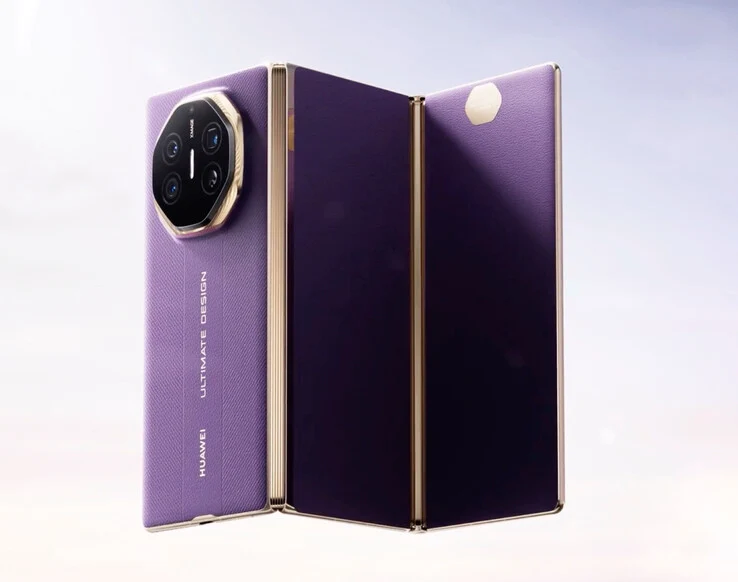
    1. Huawei has introduced the Mate XTs Ultimate Design, maintaining a similar look to the Mate XT with new color options and finishes.
    2. The device features a large 10.2-inch tri-fold display with a resolution of 3,183 x 2,232 pixels, while retaining a thin profile when folded.
    3. The Mate XTs is powered by the new Kirin 9020 chip, offering a 10% CPU speed increase and potential performance boosts of up to 36% with HarmonyOS 5.
    4. Camera upgrades include a 40 MP ultra-wide sensor and a 50 MP main camera, along with an 8 MP front camera, while the battery capacity remains at 5,600 mAh.
    5. The Mate XTs is priced starting at CNY 17,999 (~$2,522) in China, which is a decrease from the previous model, but details on international availability are still unknown.


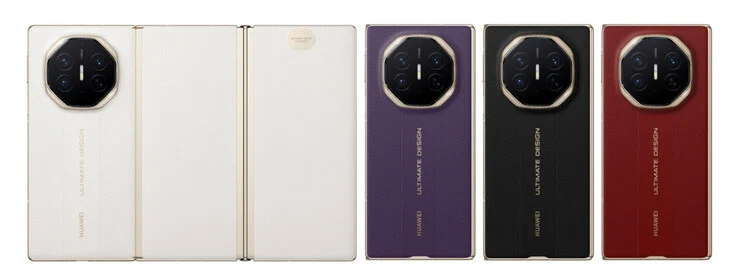
    While we wait for Samsung to move beyond its current book-style design, which has been slimmed down to under 9 mm with the Galaxy Z Fold7 (currently priced at $1,899 on Amazon), Huawei has refreshed its Mate XT series by introducing the Mate XTs Ultimate Design. This new device, often referred to as the Mate XTs, closely resembles the Mate XT we recently evaluated. Besides some new color options and updated finishes, Huawei has maintained the overall design, with a weight of 298 g and a thickness of 12.8 mm when folded.

    Display Features

    The Mate XTs also retains a thickness of 3.6~4.8 mm when it is unfolded. This innovative tri-fold offers a tablet experience with its 10.2-inch display, boasting a resolution of 3,183 x 2,232 pixels. Although Huawei mentions a PWM rate of 1,440 Hz, it has not disclosed peak brightness or refresh rate metrics. For comparison, both screens on the original Mate XT achieved refresh rates of 90 Hz and over 2,000 nits (APL 18%) in our testing.

    Enhanced Performance

    Additionally, the Mate XTs presents display modes of 7.9 inches and 6.4 inches when folded once or twice. To enhance its tri-fold capabilities, Huawei has replaced the Kirin 9010 with the Kirin 9020, which is said to deliver a CPU that is 10% faster. Reportedly, optimizations tied to HarmonyOS 5 could result in performance boosts of up to 36% when compared to a Mate XT running on HarmonyOS 4.

    Camera and Battery Specs

    Huawei has upgraded last year’s 12 MP ultra-wide camera to a new 40 MP sensor with an f/2.2 aperture. The 50 MP main camera returns with a variable aperture of f/1.4-f/4.0, along with a 12 MP and 5.5x optical periscope module and an 8 MP front camera. Additionally, Huawei has kept the same 5,600 mAh silicon-carbon battery as the previous model, featuring 66 W wired and 50 W wireless charging capabilities.

    The Mate XTs is launching in China with a starting price of CNY 17,999 (approximately $2,522) for the version that includes 16 GB of RAM and 256 GB of storage, which is a CNY 2,000 (~$280) decrease from last year’s model. Similarly, the priciest version of the Mate XTs is 6% less than its predecessor, priced at CNY 22,499 (~$3,152), while still offering 16 GB of RAM and 1 TB of storage. As of now, Huawei has not provided any information regarding its international release.

    Source:
    Link


  • How Thin Are Foldable Phones? Comparing Four Models

    How Thin Are Foldable Phones? Comparing Four Models

    Key Takeaways

    1. Honor’s Magic V3 was the sleekest foldable smartphone last year, but Oppo’s Find N5 has claimed the title of thinnest foldable this year.
    2. Samsung’s Galaxy Z Fold7 is also competing for the slimmest design and is even sleeker than its Chinese rivals.
    3. Measurements for foldables were taken in the unfolded position, focusing on specific points without camera interference for accuracy.
    4. Measurement standards may vary among Chinese manufacturers, leading to discrepancies between stated and actual thicknesses.
    5. Samsung’s specifications are generally more accurate compared to those of some Chinese brands, which may lack transparency.


    The contest for the sleekest foldable smartphone was already claimed last year by Honor’s Magic V3. This year, Oppo introduced the Find N5 as the thinnest option, surpassing the V3, which Honor then countered with the Magic V5. Samsung is also entering the race with the Galaxy Z Fold7, which prioritizes a slim profile, making it even sleeker than its Chinese rivals.

    Measurement Process

    We aim to dig deeper into this by measuring at specific points, as illustrated in the graphic below.

    The measuring locations (MP) were established using a standard caliper gauge. Along with the three foldables previously mentioned, we’re also including the Huawei Mate X6 in our assessment. For the Magic V5, we have the white variant, which is the only one with a lower height.

    Measurement Details

    Measurements are taken in the unfolded position on the side without a camera, centered along the long edge. The highest point (noted as ‘Camera’) in the closed position is recorded from the front glass to the camera. Any protective films that were on the front displays have been removed for accuracy.

    Measurement point 3 (MP 3) can be tricky for most foldables, as the cameras are situated very near to the edge.

    In our evaluations, the Galaxy Z Fold7 stands out as the slimmest foldable, with the Find N5 being just a tad flatter at its maximum height. The reigning champion, the Magic V5, takes second place here, but its camera module is among the most noticeable. Although the camera on the Mate X6 is the highest overall, its slightly bulkier design makes it less conspicuous than that of the Honor.

    Conclusions and Insights

    Ultimately, our findings revealed that the point of measurement is crucial. For instance, we discovered that in some areas, the Magic V5 is thinner than the manufacturer’s stated thickness (8.75 mm), while we measured the Samsung at just 8.50 mm in certain spots.

    It appears that Chinese manufacturers may have different measurement standards and sometimes forgo the protective film on the foldable screens. We hope to see greater transparency and more accurate specifications from these manufacturers. On the contrary, Samsung seems to align closely with its stated specifications.


  • Vlogger Burns Samsung Galaxy Z Fold7 to Prove a Point

    Vlogger Burns Samsung Galaxy Z Fold7 to Prove a Point

    Key Takeaways

    1. The Galaxy Z Fold7 is priced at $1,899 and was featured in a YouTube video where it was taken apart and burned to test materials.
    2. The primary goal of the video was to verify the presence of titanium in the device using a $20,000 XRF spectrometer.
    3. The internal backplate exhibited oxidation patterns when exposed to flame, while the mesh produced sparks.
    4. The Z Fold7 has limited cooling solutions, with concerns about an air gap between the mid-frame and processor covering.
    5. The video raised questions about the repairability of the Z Fold7 and speculated on future Samsung devices, like the tri-fold.


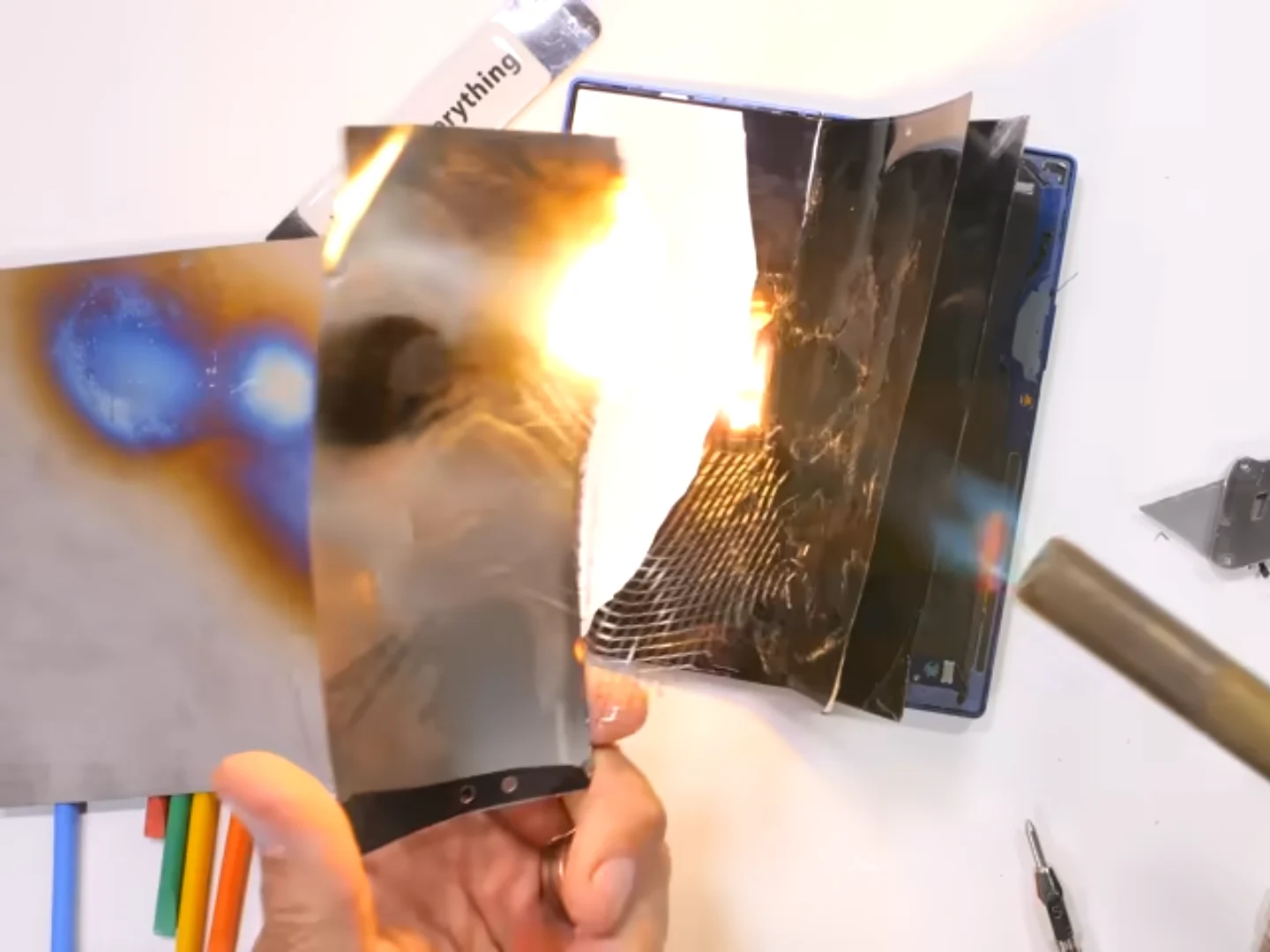
    The Galaxy Z Fold7 is priced at $1,899 on Amazon as of September 2, 2025. However, that didn’t stop Zach Nelson from kicking off his newest YouTube video with the innovative foldable Samsung flagship taken apart and set ablaze.

    Exploring the Interior

    To be fair to the host of JerryRigEverything, his primary aim involved using a ~$20,000 XRF spectrometer to verify that the Z Fold7 indeed features titanium inside. Samsung claims this material is used in an internal backplate to enhance structural strength, along with a mesh that adds flexibility.

    During his investigation, Nelson discovered that the backplate showed a distinct, almost rainbow-like pattern from oxidation when exposed to a flame, while the mesh burst into a small cloud of white sparks.

    Critiques on Cooling

    In his review, Nelson pointed out some shortcomings within the Z Fold7, especially the limited cooling solutions. Although the new flagship had sufficient thermal paste to create a little smiley face, he still expressed concerns about an air gap found between the anodized aluminum mid-frame and the graphite covering the processor.

    Additionally, the vlogger demonstrated the ability to remove the main 8-inch Dynamic LTPO AMOLED 2X display in one piece while it was still powered on; however, attempting to separate some layers might result in failure.

    Future of Repairability

    It will be fascinating to see if the first Samsung tri-fold will offer similar possibilities for repair in its anticipated launch.

    Source:
    Link


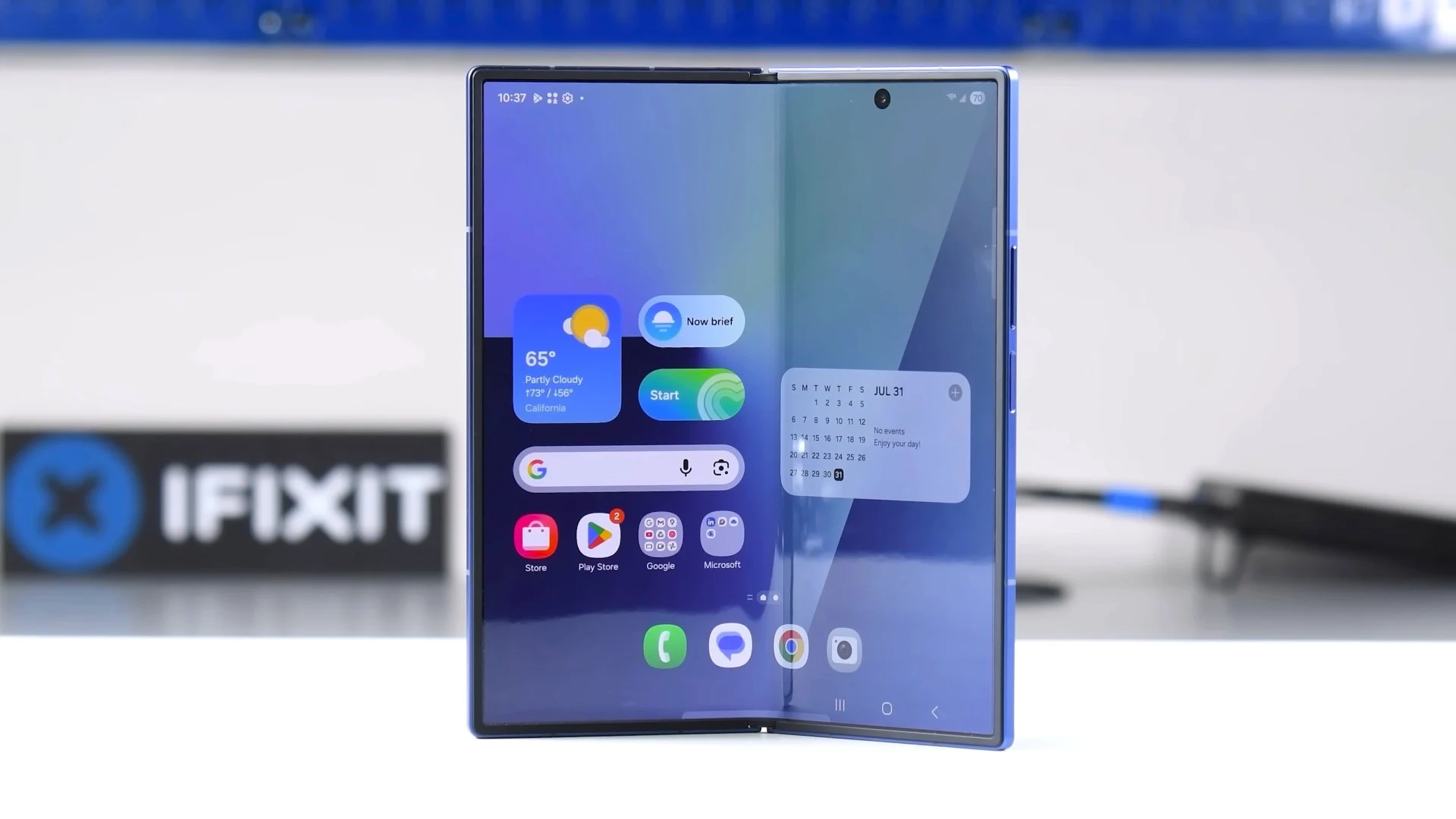
  • Samsung Galaxy Z Fold 7 Repairability Rating by iFixit Teardown

    Samsung Galaxy Z Fold 7 Repairability Rating by iFixit Teardown

    Key Takeaways

    1. Samsung’s Galaxy Z Fold7 has tougher battery removal compared to previous models like the Galaxy S25 Ultra.
    2. Repairing the foldable device presents multiple challenges, including difficult cover display removal due to strong glue.
    3. Changing the flexible AMOLED screen is complicated and risky, with a high chance of damaging the display.
    4. The Galaxy Z Fold7 received a low repairability score of 3 out of 10, indicating poor design for repairs.
    5. The device lacks repair manuals and replacement parts, contributing to high official repair costs.


    Samsung’s past performance has been better than what we see now. According to iFixit’s teardown, taking out the batteries from the Galaxy Z Fold7 is a lot tougher than what we usually expect from this South Korean brand. It was pretty simple with the Galaxy S25 Ultra, but with the new foldable, repair experts had to use solvents since the pull tabs just don’t work as they should.

    Difficult Repairs Ahead

    This issue is just one of many complaints about Samsung’s much thinner and nearly record-setting Galaxy foldable. Taking off the cover display is also very hard because the glue used is tough to loosen, even when applying heat. An even bigger challenge comes with changing the flexible AMOLED screen inside. The plastic edge has to be removed painstakingly, which is nearly impossible to do without damaging the delicate flex display, as noted by iFixit.

    Poor Repairability Score

    Additionally, the device comes with no repair manuals or replacement parts, leading to a repairability score of only 3 points out of a possible 10. This is a terrible score, especially considering Samsung’s extremely high official repair costs.

    Source:
    Link