Tag: DLSS 4

  • Nvidia RTX Remix Now Available for Remastering Classic Games

    Nvidia RTX Remix Now Available for Remastering Classic Games

    Key Takeaways

    1. RTX Remix has officially launched, offering modders advanced tools for remastering older games with generative AI features and technologies like ray tracing.

    2. Over 30,000 modders have utilized RTX Remix since its beta, showcasing its popularity and potential within the gaming community.

    3. The platform provides access to advanced features like DLSS 4, RTX Neural Radiance Cache, and PBRFusion 3, enabling significant visual upgrades to classic games.

    4. Modders can create their own 4K assets or use generative AI to enhance textures, simplifying the remastering process.

    5. The Half-Life 2 RTX Demo, created with RTX Remix, will be available for free on March 18, highlighting the platform’s capabilities and the exciting future of game remasters.


    RTX Remix, Nvidia’s platform for modding that allows for the remastering and improvement of older games, has officially launched and is no longer in beta. The company announced that this tool provides modders with generative AI features integrated within the platform, enabling them to capture game assets, upgrade materials, and create remastered versions of games that incorporate the latest technologies, such as ray tracing. Since its beta release, over 30,000 modders from the community have utilized the platform. Notably, the Half-Life 2 RTX Demo has been created using RTX Remix and will be available for free next week, with the complete game set to release at a later time.

    Access to Advanced Features

    With RTX Remix, modders can take advantage of DLSS 4, RTX Neural Radiance Cache, PBRFusion 3, and other AI-powered tools. This platform simplifies the process of enabling DLSS 4 with Multi Frame Generation, a feature currently available only for the RTX 50 series GPUs. Thanks to neural rendering, traditional games can be upgraded to have visuals and gameplay that rival modern AAA titles.

    Generative AI for Asset Creation

    Modders have the option to either create their own 4K assets or utilize generative AI to assist them. These AI tools examine textures found in classic games and enhance them by 4x. One notable model, PBRFusion 3, was created by the modder NightRaven and significantly simplifies the remastering process for modders.

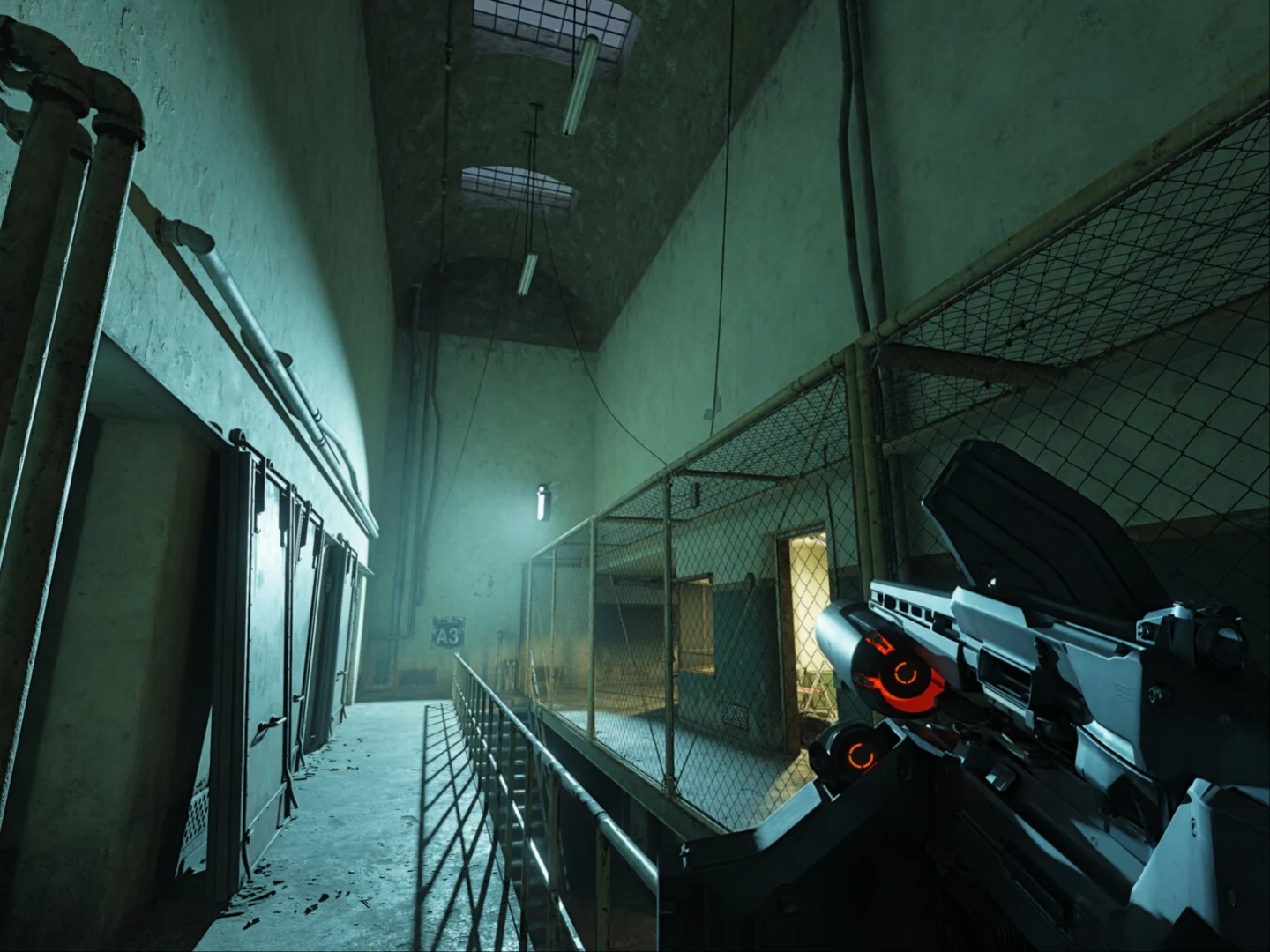
    The Half-Life 2 RTX Demo, which is the newest example of a game remaster, will be accessible for free to those who own Half-Life 2 starting March 18. This demo, constructed using RTX Remix, features DLSS 4 with Multi Frame Generation, Neural Radiance Cache for improved ray tracing, RTX Skin enhancements, and upgraded RTX Volumetrics. The complete game will be launched at a later date.

    Conclusion

    Nvidia, Steam, and the modding community have come together to enhance the gaming experience through this innovative platform. With tools like RTX Remix, modders can bring new life to beloved classic games, providing players with modern graphics and gameplay improvements. The future of gaming remasters looks very promising!

    Source:
    Link
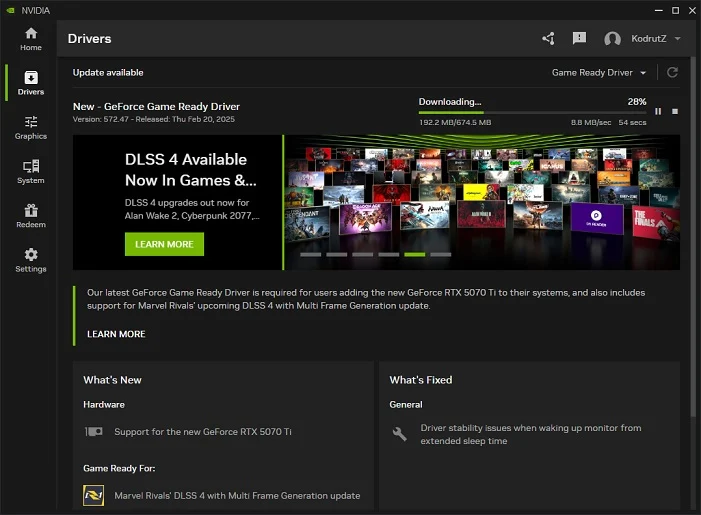
  • RTX 5070 Ti Receives Full Support with New Driver Update

    RTX 5070 Ti Receives Full Support with New Driver Update

    Key Takeaways

    1. The Nvidia GeForce RTX 5070 Ti aims to match RTX 4080 performance for under $800, but availability is limited and prices are high.
    2. The latest driver update enables RTX 5070 Ti users to run games like Alan Wake 2 and Cyberpunk 2077 at 1440p with up to 191 fps.
    3. The new graphics cards provide double the AI computing power and a 60% boost in video encoding speeds.
    4. DLSS 4 Multi Frame Generation significantly increases frame rates, with an average increase of 4.4X across all GeForce RTX 50 Series GPUs.
    5. At 3840×2160 resolution, the RTX 5070 Ti achieves a frame rate of 293.3 with DLSS 4, compared to 63.1 fps without it.


    In theory, the Nvidia GeForce RTX 5070 Ti is meant to perform similarly to the RTX 4080 but for under $800. However, actually finding one is very tough, no matter the price. Currently, only a handful are available on Amazon, and their prices are high. For instance, the Gigabyte GeForce RTX 5070 Ti Eagle OC SFF 16G is priced at a staggering $1,599.99. On a positive note, the latest driver package also brings DLSS 4 support to Marvel Rivals on other, more accessible GPUs.

    Performance Boost with New Update

    Nvidia mentions that this update allows RTX 5070 Ti users to play games like Alan Wake 2, Cyberpunk 2077, and Black Myth: Wukong at 1440p with maxed out settings, reaching up to 191 fps. Moreover, the new graphics cards are said to double AI computing power and offer a 60% increase in video encoding speeds. Marvel Rivals, which is among Steam’s top 5 most played games, has recently been updated to deliver significant performance improvements in various scenarios. The updated driver includes DLSS 4 Multi Frame Generation, resulting in an average frame rate increase of 4.4X across all the GeForce RTX 50 Series GPUs.

    High Resolution Gaming Experience

    When it comes to the GeForce RTX 5070 Ti, players can experience Marvel Rivals at a resolution of 3840X2160 pixels and a frame rate of 293.3 (thanks to DLSS 4 Multi Frame Generation). In contrast, the frame rate drops to just 63.1 when DLSS is turned off. If you reduce the resolution to 1080p, the RTX 5070 Ti averages a frame rate of 495.4, while the RTX 5090 can exceed 630 fps.

    As always, users can download the driver through the Nvidia app or from the official GeForce drivers website.

    Nvidias

    Source:
    Link


  • RTX 5070 Ti Release Date and Launch Time Announced by Retailer

    RTX 5070 Ti Release Date and Launch Time Announced by Retailer

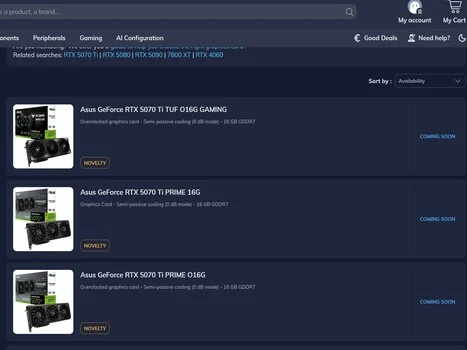
    While the RTX 5080 and RTX 5090 have been making headlines, there’s now more news about the RTX 5070 Ti release date. The French store TopAchat has put up several listings for these GPUs, which are set to launch on February 20th. When users click on each link, they are informed that the graphics cards will be available at 3 p.m. Although TopAchat currently lacks any product pages for the RTX 5070, it is anticipated that the RTX 50 series cards will be in stock before the month’s end.

    Pricing Details

    In the U.S. market, the cheapest RTX 5070 Ti models are expected to retail for $750. However, due to the limited supply of other RTX 50 series graphics cards, the chances of widespread availability appear slim. This situation could lead to prices for the RTX 5070 Ti exceeding the manufacturer’s suggested retail price (MSRP). Nvidia has also made some ambitious claims regarding the capabilities of both the RTX 5070 Ti and RTX 5070.

    Performance Claims

    One of Jensen Huang’s most daring assertions during CES 2025 was that the $549 RTX 5070 would deliver performance on par with the RTX 4090. Given that the RTX 5070 is priced $1050 lower, many buyers were doubtful. A lot of the attraction of the lower-end RTX 50 series GPUs hinges on DLSS 4, which features Multi Frame Generation. This technology, exclusive to Nvidia Blackwell graphics cards, utilizes AI to enhance frame rates more effectively.

    Mixed Opinions

    Despite how appealing the RTX 5070 Ti and RTX 5070 seem, their raw performance isn’t a monumental upgrade over older-generation GPUs. The RTX 5070 Ti boasts 8,960 CUDA cores and 16GB of GDDR7 VRAM, in contrast to the 4070 Ti’s 7,680 CUDA cores and 12GB of GDDR6X memory. On the other hand, the RTX 5070’s 6,144 CUDA cores offer only a slight improvement over the RTX 4070, maintaining the same 12GB of VRAM but upgrading to GDDR7. Both graphics cards depend on Multi Frame Generation to compete with higher-end models.

    At this point, views are split on whether Nvidia’s recent advancements justify a purchase of the RTX 50 series. Games must be compatible with the more robust AI upscaling, which can introduce latency and visual issues. Nonetheless, until the potential arrival of the RTX 5060/5060 Ti in March, the RTX 5070 and RTX 5070 Ti represent the most budget-friendly options for experiencing full DLSS 4 features.

    Source:
    Link


  • Marvel’s Spider-Man 2 PC: 90 FPS at 1080p with RTX 4060 DLSS 4

    Marvel’s Spider-Man 2 PC: 90 FPS at 1080p with RTX 4060 DLSS 4

    After a lengthy wait, Marvel’s Spider-Man 2 has finally launched on PC. However, this release has been met with a lot of complaints regarding frame rate drops, crashes, and other glitches. On the bright side, the game has relatively low system requirements and performs reasonably well on older systems at lower settings. RandomGamingHD looked into how much DLSS 4 could improve the gameplay experience, and their findings are mostly encouraging.

    Performance with DLSS 4

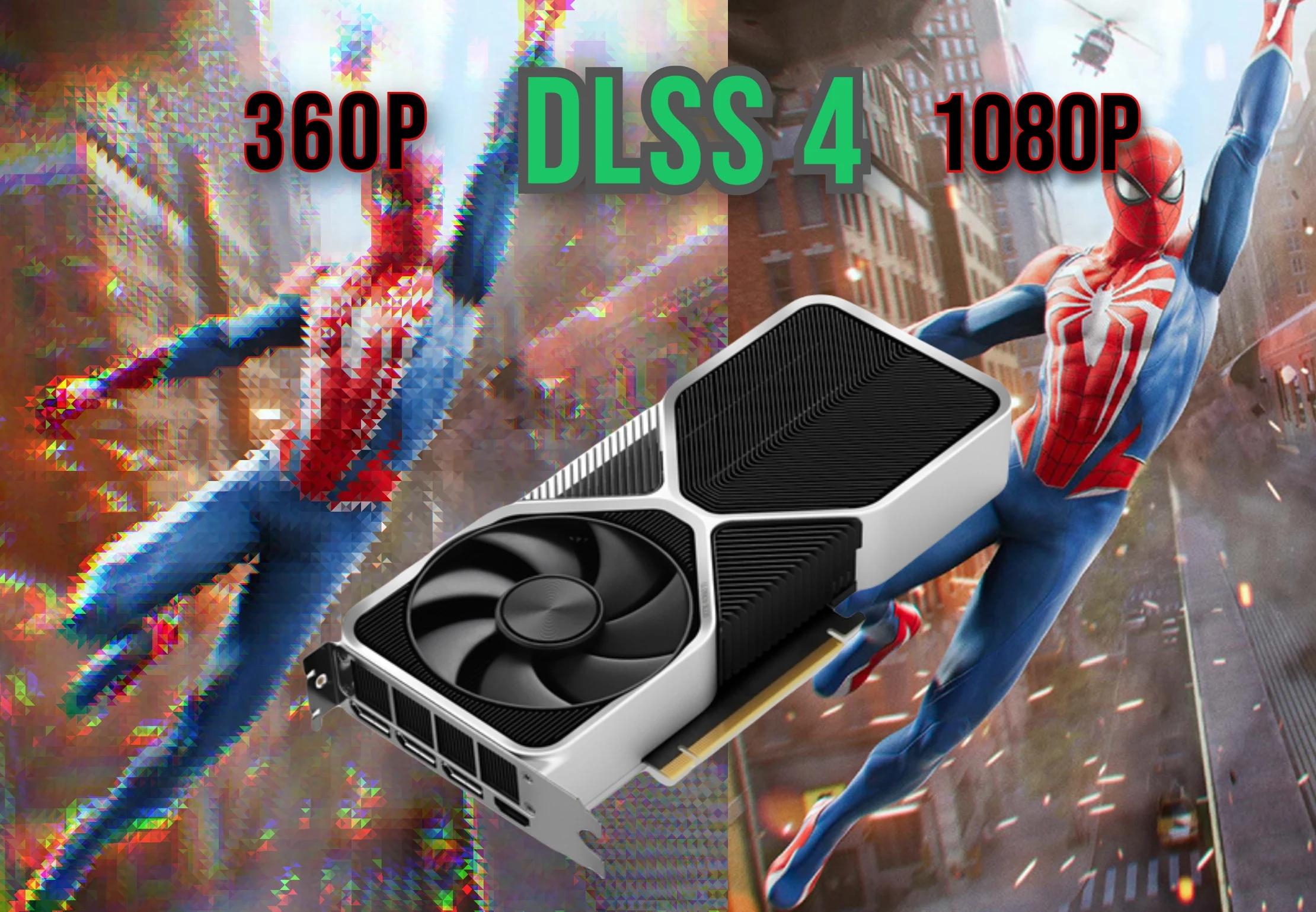
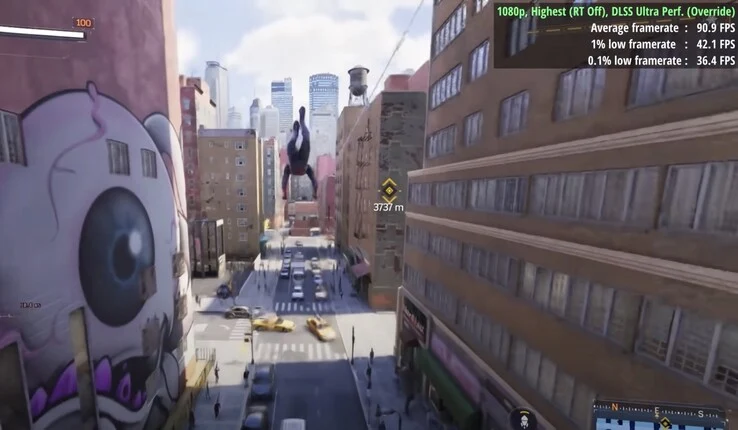
    When DLSS 4 was set to “maximum performance” and the base resolution set to 360p, upscaled to 1080p, the Nvidia RTX 4060 GPU (currently priced at $305 on Amazon) paired with an Intel i7 12700F achieved impressive results, hitting over 90 FPS at maximum settings, excluding ray tracing, of course. However, enabling ray tracing caused the average FPS to drop into the low 50s, which is not ideal, yet not unplayable either. Nevertheless, the 1% low of 27 FPS raised some eyebrows and was a bit concerning.

    Visual Quality Concerns

    Now, let’s talk about the critical aspect—image quality. Generally, the visuals were mostly acceptable, but there were some minor artifacts and occasional graphical glitches that popped up now and then. Overall, the gaming experience with DLSS 4 was quite enjoyable given the 360p base resolution, or at least that’s what RandomGamingHD suggested. It’s worth mentioning that the RTX 4060 comes with just 8 GB of VRAM, and users with AMD GPUs that have similar VRAM may face a significantly worse experience due to the different ways AMD and Nvidia handle VRAM.

    Implications for Future Consoles

    Interestingly, as highlighted by Wccftech, this information paints a hopeful future for the upcoming Nintendo Switch 2. This console is expected to be far from a powerhouse, but DLSS could significantly enhance the overall experience. Additionally, concerns about image quality should mostly vanish given the Switch 2’s smaller screen, although the experience when docked might be up for debate. The anticipated Tegra T239, which is set to power the Switch 2, features an Ampere GPU with a modest 3.1 TFLOPS of performance, so any assistance in upscaling will certainly be beneficial.

    Source:
    Link


  • Nvidia Driver Update Adds Support for GeForce RTX 5090, 5080

    Nvidia Driver Update Adds Support for GeForce RTX 5090, 5080

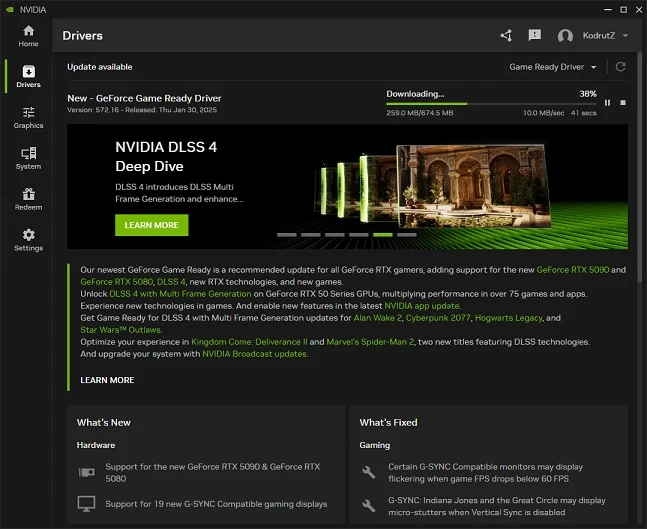
    The latest GeForce Game Ready Driver, identified by the version number 572.16, has been released, providing support for the newly launched GeForce RTX 5090 graphics card. This software update enhances the gaming experience by incorporating DLSS 4 optimizations across more than 75 games and applications. By leveraging AI enhancements, DLSS 4 boosts image quality while also lowering video memory usage. Generally, this leads to a noticeable improvement in performance.

    Games Taking Advantage

    Among the games that gain from this updated driver are Cyberpunk 2077 and Star Wars Outlaws, along with other popular titles such as Indiana Jones and the Great Circle, Hogwarts Legacy, and Alan Wake 2. A standout feature is DLSS Multi Frame Generation, paired with RTX Video Super Resolution (VSR), which now requires less GPU power and can upscale HDR movies, making it more suitable for RTX GPUs.

    New Display Support

    Beyond DLSS 4, the Game Ready Driver package 572.16 supports 19 new G-Sync Compatible monitors from manufacturers like AOC, MSI, Alienware, and LG. Six games that now benefit from one-click optimal settings presets include Marvel Rivals, Marvel’s Spider-Man 2, Dynasty Warriors: Origins, Indiana Jones and the Great Circle, Path of Exile 2, and Supervive.

    Along with the recent Nvidia app update, this driver introduces new AI features for Nvidia Broadcast and various behind-the-scenes adjustments and fixes. The SFF-ready Asus Prime GeForce RTX 5080 is currently still listed on Amazon, priced at a whopping $2,599.99, which is almost three times the initial launch price of $999 for the standard version.

    Source:
    Link

  • 3DMark Adds DLSS 4 Benchmarks for Nvidia RTX 50 Series

    3DMark Adds DLSS 4 Benchmarks for Nvidia RTX 50 Series

    Most people looking to buy a Nvidia RTX 5080 or RTX 5090 are having a tough time finding them available. For those who are lucky enough to get their hands on one of these graphics cards, 3DMark is here to help you see if the struggle was worth it. UL Benchmarks has recently shared that its well-known GPU testing tool now includes support for Nvidia DLSS 4. This new multi-frame generation feature is exclusive to the RTX 50 series, but it also offers advantages for older Nvidia graphics cards.

    Evaluating Gaming Performance

    3DMark is frequently used by gamers to assess their gaming setups and compare their scores with others who have similar hardware. UL Benchmarks collaborated closely with Nvidia to create a fresh version of the Port Royal test. The benchmark runs through two passes: first, it tests without any DLSS features. Next, it turns on DLSS, which allows for graphics to be processed at lower resolutions, then uses AI technology to enhance them to higher resolutions. After the test, a comprehensive report is generated, detailing the results, including framerates.

    Benefits of DLSS 4

    The main reason for the expected performance improvements in the RTX 50 series is DLSS 4’s multi-frame generation. However, if games do not support Nvidia’s technology, those with RTX 5080 and RTX 5090 cards might find that the upgrade isn’t as significant as they hoped. Nevertheless, many of the advanced DLSS 4 functions are compatible with the RTX 30 and RTX 40 series, featuring enhancements like Ray Reconstruction for better Ray Tracing and Super Resolution options. With the revamped 3DMark Port Royal test, gamers have the choice to enable DLSS 4, DLSS 3, or DLSS 2 based on their GPU.

    Exploring DLSS 4’s Full Potential

    To explore DLSS 4’s capabilities, users of 3DMark can switch between different frame generation settings such as 2x, 3x, and 4x. This GPU benchmarking tool is designed to be future-ready, supporting resolutions from Full HD all the way up to 8K.

    While gamers can access a free demo of 3DMark, the paid version is required to achieve more detailed benchmarks. If you bought the software on or after January 8th, 2019, you will be able to use the DLSS 4 update.

    Source:
    Link


  • RTX 5090 vs RTX 4090: Efficiency Comparison at Same Power Level

    RTX 5090 vs RTX 4090: Efficiency Comparison at Same Power Level

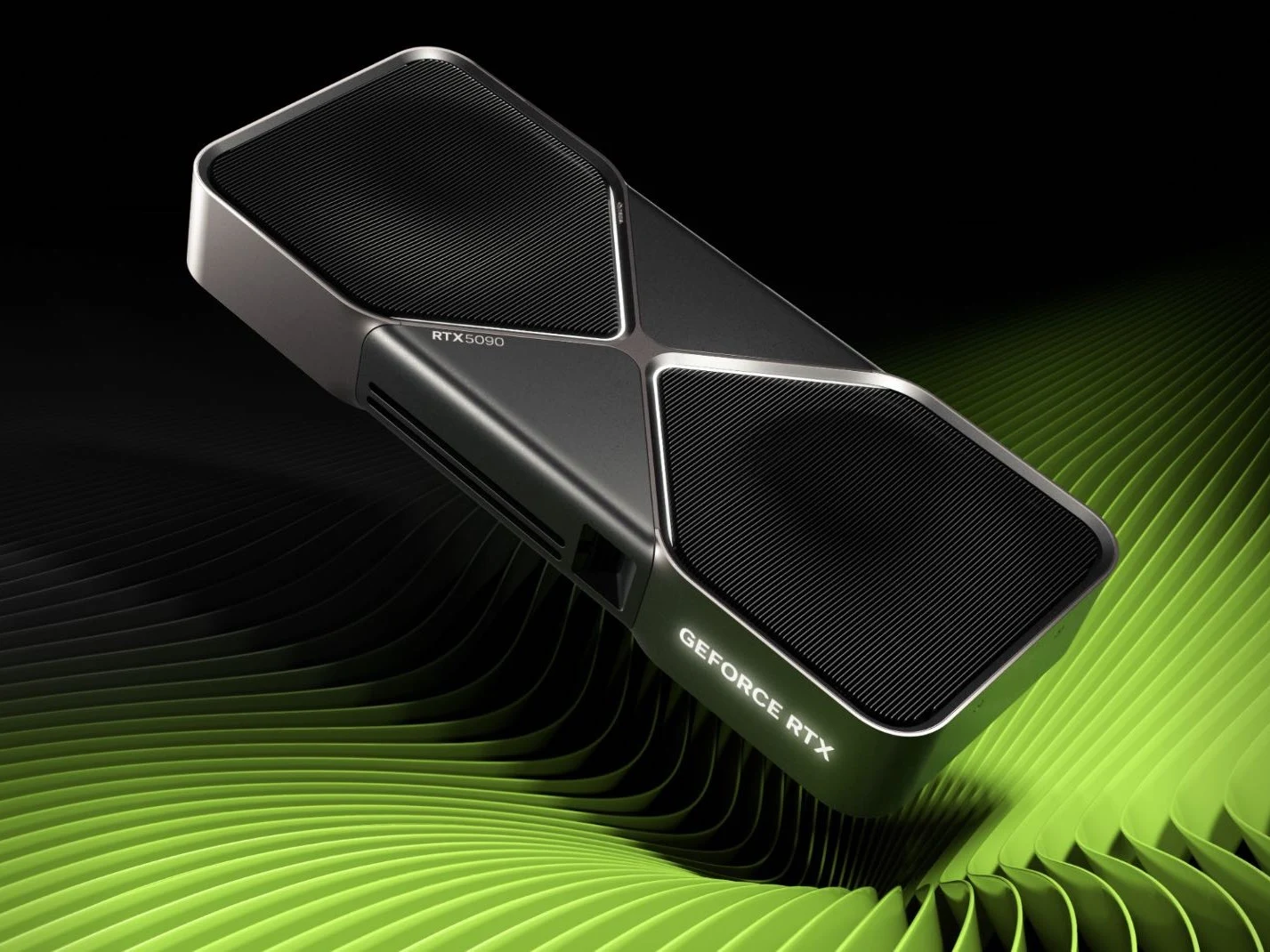
    Reviews of the RTX 5090 have been released, and for those who seek top-tier performance without worrying about price or energy use, Nvidia has truly outdone itself with the RTX 5090. This graphics card excels in both rasterization and ray tracing, offering unmatched capabilities at 4K resolution. With the addition of DLSS 4, this GPU can achieve over 200 FPS in 4K gaming for titles that utilize Nvidia’s Multi-Frame Generation technology.

    Performance Comparison

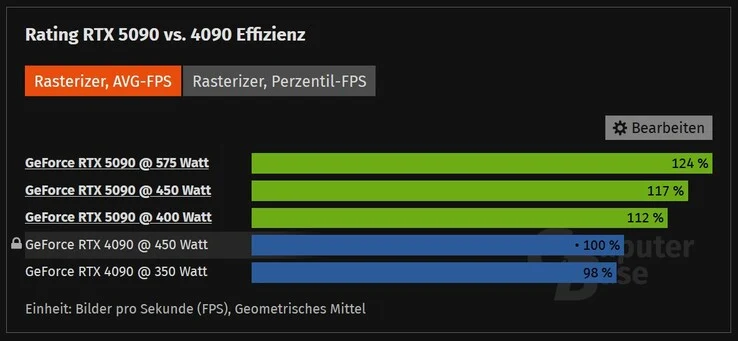
    However, the RTX 5090 does not represent as significant an improvement over the RTX 4090 as the RTX 4090 did compared to the RTX 3090. In our evaluations, the new GPU shows an average performance increase of 27% over the RTX 4090. It’s important to note that this performance boost comes with a hefty rise in power usage; the RTX 5090 has a power rating of 575 W, compared to the RTX 4090’s 450 W.

    Power Normalization Insights

    This raises an intriguing question: How does the performance of the RTX 5090 stack up against the RTX 4090 when both cards are adjusted for power consumption? Luckily, ComputerBase has conducted tests, and the findings are quite enlightening.

    Their research indicates that the RTX 5090 achieves an average of 17% more FPS compared to the RTX 4090 in rasterization tasks when both GPUs are limited to 450 W. This means that when the RTX 5090 is restricted to using 125 W less power, it experiences an 8% decline in performance.

    CUDA Cores and Performance

    The 17% increase in performance at 450 W is particularly noteworthy, especially since the RTX 5090 contains 33% more CUDA cores than the RTX 4090. One might expect a more significant performance disparity than the observed 17% when the power advantage of the RTX 5090 is negated. That said, the slightly lower clock speeds of the RTX 5090 (113 MHz less) likely play a role in limiting its overall performance.

    In conclusion, it appears that Nvidia is relying on sheer power to maintain a competitive edge for the RTX 5090 over the RTX 4090. However, this approach may not bode well for the efficiency of the GPU, as the RTX 5090’s performance scales linearly with thermal design power (TDP)—showing a 27% performance increase for a 28% increase in energy consumption. For context, the RTX 4090 boasts over a 50% performance lead compared to the RTX 3090, with only a 29% higher TDP.

    Source:
    Link


  • Nvidia DLSS 4 Multi-Frame Generation Might Reach Beyond RTX 50

    Nvidia DLSS 4 Multi-Frame Generation Might Reach Beyond RTX 50

    Nvidia is banking on the allure of DLSS 4 multi frame generation to persuade customers to move up to the RTX 50 series. This technology is unique to the new graphics cards, with the RTX 5080 and RTX 5090 scheduled for release on January 30th. In a recent chat with Digital Foundry, Nvidia’s Bryan Catanzaro offered a glimmer of hope to gamers, suggesting that the standout feature of DLSS 4 might eventually be available for the RTX 30 or RTX 40 series.

    Advantages Beyond Multi Frame Generation

    While multi frame generation is the star of the show, it’s not the only benefit of Nvidia’s DLSS 4. Other features, such as Super Resolution and Ray Reconstruction, will be improved for the RTX 30 and 40 series as well. However, the enhanced frame generation is expected to deliver significant performance boosts in the upcoming graphics cards. These improvements mainly come from smarter AI, which enhances speed and efficiency. Since multi frame generation relies less on the hardware, it faces fewer obstacles regarding backward compatibility.

    Optimistic Outlook for Older Cards

    During the discussion with Digital Foundry, Bryan Catanzaro acknowledged that multi frame generation might make its way to older Nvidia graphics cards. Although the company is concentrating on the RTX 50 series, this focus might shift with proper optimization. Nevertheless, gamers should temper their expectations. Early performance tests indicate that the RTX 5080 and RTX 5090 significantly depend on the new DLSS 4 feature to achieve the claimed performance improvements. If multi frame generation becomes available for older GPUs, the incentive to upgrade could diminish.

    Currently, owners of the RTX 30 series are limited to using FSR 3, AMD’s version of frame generation. The actual performance of DLSS 4 multi frame generation in practical situations will be more evident soon. Review embargoes lift on January 24th for the RTX 5090 and on January 30th for the RTX 5080.

    Source:
    Link


  • Nvidia RTX 5090D vs RTX 4090: 20% Gaming Performance Boost

    Nvidia RTX 5090D vs RTX 4090: 20% Gaming Performance Boost

    It seems that Nvidia has not pleased the gaming community with its reliance on AI-powered frame generation to boost the performance of its new RTX 5090, RTX 5080, and RTX 5070 GPUs. The question of whether DLSS 4 can win over gamers is still open, but it’s evident that the actual performance gains from the Blackwell architecture are not as impressive as first expected.

    Performance Insights

    We have some preliminary insights into how the GeForce RTX 5090 performs in Cyberpunk 2077, both with and without DLSS 4 and MFG. However, analyzing just one game does not provide a complete picture. Thanks to discussions on Chiphell’s forums, a reviewer has managed to test the RTX 5090D, which is a variant tailored for the Chinese market, and has shared key details from their review. For those unfamiliar, the RTX 5090D is like the standard RTX 5090, but has lower AI TOPS and a 3-second limit for AI and crypto workloads.

    Modest Gains

    The reviewer found that the performance boost with this generation is, as expected, quite modest. With DLSS and ray tracing disabled, the Nvidia GeForce RTX 5090D outperformed the previous model by about 20%. While this isn’t terrible for a new generation, many in the gaming community anticipated a more significant improvement. However, when DLSS 4 and MFG were set to their highest settings, the reviewer reported that the RTX 5090D performed nearly as well as Nvidia had claimed.

    Overclocking Details

    Additionally, the Nvidia GeForce RTX 5090D appears to lack adjustable power limits. While there could be possibilities for such adjustments in the future, they seem slim. The reviewer also managed to overclock the card to 2600 MHz, while reducing the memory speed, leading to a memory bandwidth of 896 GB/s that effectively negated the advantages of GDDR7. In comparison, the RTX 4090 was overclocked to about 2610 MHz with a memory bandwidth of 912 GB/s. The testing setup featured a Ryzen 7 9800X3D CPU with memory running at 6000 MHz. Although the exact FPS numbers in-game were not disclosed, this omission is disappointing yet understandable.

    Source:
    Link


  • Nvidia DLSS 4: 8x Gaming Performance Boost for GeForce RTX GPUs

    Nvidia DLSS 4: 8x Gaming Performance Boost for GeForce RTX GPUs

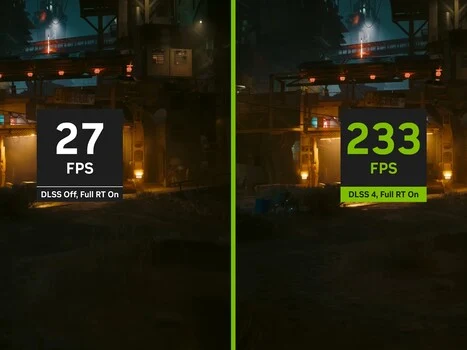
    Nvidia has unveiled the fourth version of its Deep Learning Super Sampling (DLSS) technology. This new update claims to offer a frame rate that is over eight times higher along with latency that is about half of what native rendering provides. A comparison video from Nvidia demonstrates that the frame rate achieved by the new DLSS is set to double compared to DLSS 3.

    Enhanced Frame Generation

    To achieve these impressive results, Nvidia has included “Multi Frame Generation” within DLSS Frame Generation. Unlike previous versions, DLSS 4 now generates three-quarters of all displayed frames using AI, instead of just every second one. Nvidia notes that this was not feasible before due to the strain it would place on GPUs, which would reduce output frame rates. However, with new advancements in the GeForce RTX 5000, Multi Frame Generation has become achievable.

    Improved Performance

    The new AI model for Frame Generation operates 40% faster while consuming 30% less graphics memory. For instance, in the game Warhammer 40K: Darktide, Nvidia asserts that DLSS 4 can deliver a frame rate increase of 10%, even when using conventional Frame Generation, saving 400 MB of graphics memory in the process. When paired with the GeForce RTX 5000, DLSS 4 can compute nearly 94% of all pixels using AI instead of relying on native rendering.

    Significant Frame Rate Boosts

    The impact on performance is substantial. Benchmarks indicate that, depending on the title, DLSS 4 can boost frame rates by anywhere from just under 370% to as much as 720%, translating to nearly four times to over eight times the original rate.

    Even though Multi Frame Generation is exclusive to the GeForce RTX 5000, users with older graphics cards, even those as far back as the GeForce RTX 2000, will still find advantages with DLSS 4. This is because the AI models for standard Frame Generation, DLSS Ray Reconstruction, DLSS Super Resolution, and DLSS Edge Smoothing (DLAA) have all seen enhancements.

    Broad Game Support

    Nvidia reports that more than 75 games now embrace DLSS, featuring major titles like Alan Wake 2, Black Myth: Wukong, and Cyberpunk 2077.

    Source: Link


    Image 1
    Image 1
    Image 1
    Image 1