Tag: Apple

  • US Senators Demand Removal of X and Grok from App Stores

    US Senators Demand Removal of X and Grok from App Stores

    Key Takeaways

    1. Three US senators are urging Apple and Google to remove X (formerly Twitter) and Grok from their app stores due to concerns about non-consensual sexualized images of women and children created by Grok.
    2. The senators claim that Grok violates app store policies by producing illegal content, including images of child abuse, and that X CEO Elon Musk seems to support this issue.
    3. Apple’s and Google’s guidelines explicitly ban content that could lead to child exploitation or abuse, and ignoring these violations could harm the integrity of their app store moderation.
    4. The senators reference previous app removals, arguing that similar action against X and Grok is warranted due to the serious allegations.
    5. They have requested a written evaluation from Apple and Google regarding the situation by January 23, 2026, and suggest suspending the app during an investigation.


    In a strong message from Washington, three US senators are urging Apple and Google to take down X (previously known as Twitter) and Grok from their app stores. In a letter dated January 9, 2026, addressed to Tim Cook (the CEO of Apple) and Sundar Pichai (CEO of Google and Alphabet), they express deep concerns regarding the use of Grok, an AI feature within the X app, in the creation of non-consensual, sexualized images involving women and children.

    Senators’ Concerns

    Senators Ron Wyden from Oregon, Ben Ray Luján from New Mexico, and Edward J. Markey from Massachusetts claim that the content produced by Grok violates the terms of both app stores and clearly breaks their policies. Reports indicate that Grok not just alters images of private individuals but also shows sexualized scenarios while keeping a database of potentially illegal material, which includes images of child abuse. Furthermore, the senators highlight that X CEO Elon Musk seems to endorse this situation through his social media responses.

    Demand for Action

    The request from the senators relies on the current guidelines from Apple and Google that explicitly ban content which could lead to child exploitation or abuse. Apple’s terms specifically forbid any kid-related content that might be deemed “offensive” or “just plain creepy.” The senators stress that ignoring these breaches would jeopardize the integrity of App Store moderation practices, weakening both Apple’s and Google’s arguments against regulatory actions in their app stores.

    Historical Context

    To illustrate their point, they reference past actions taken by both companies, such as removing apps like ICEBlock and Red Dot. Those apps did not include illegal content but merely shared information about the activities of US authorities related to immigration. The senators argue that a similar response is justified considering the serious accusations made against X and Grok. They suggest at the very least, the app should be suspended while a thorough investigation takes place. Apple and Google have been requested to provide their evaluation of the situation in writing by January 23, 2026.

    Source:
    Link


  • Apple’s Daily Visits to South Korean Factories Spark Hotel Boom

    Apple’s Daily Visits to South Korean Factories Spark Hotel Boom

    Key Takeaways

    1. Companies are facing a memory shortage, prompting drastic measures to secure supplies, including daily factory visits by manufacturers like Apple.
    2. Memory prices have surged by up to 300% since mid-2025, leading to potential increases in smartphone costs or reduced memory options.
    3. Apple is staying in South Korea to negotiate long-term contracts with suppliers Samsung and SK Hynix, despite their hesitance to commit.
    4. Other companies, like Dell and cloud providers such as Google and Amazon, are also seeking memory supplies but lack the same negotiating power as larger firms.
    5. Apple’s efficient design allows for satisfactory performance with less RAM, but memory still represents 15-20% of smartphone production costs.


    Companies are struggling with a long-lasting memory shortage, leading them to take drastic steps to secure their supplies. According to Wccftech, The Korea Economic Daily has reported that smartphone and laptop manufacturers are visiting factories on a daily basis. Apple is one such company that is racking up huge travel expenses, which is helping the South Korean hospitality sector.

    Rising Memory Prices

    PC manufacturers are facing memory costs that have surged by as much as 300% since the middle of 2025. Apple is actively looking for a cheaper source of LPDDR5X RAM for its iPhone models. As a result, it’s likely that pricier phones or versions with reduced memory may become a reality.

    Apple’s Strategy

    To lessen the effects of this crisis, Apple has reportedly made a long-term stay at a South Korean hotel. This hotel is conveniently located close to the Samsung and SK Hynix factories that produce these sought-after components. By taking a direct approach, Apple aims to secure contracts lasting two to three years.

    However, the two suppliers have been hesitant to commit to long-term agreements. There’s a possibility that the demand from AI data centers could decline sooner than anticipated, which might lead to a drop in memory prices. Despite this, many experts believe that consumers and businesses won’t see relief until 2027 or 2028.

    Other Companies in the Race

    The Korean Economic Daily also notes that Dell, a major player in desktop and notebook sales, is also residing in hotels nearby. Similarly, cloud providers like Google and Amazon are frequently contacting factories. Unfortunately, customers lacking the same level of influence or travel budgets have to negotiate from a distance.

    In Apple’s situation, it might be better equipped to endure the memory shortage. Efficient iPhones are capable of providing satisfactory performance with less RAM. The company also benefits from higher profit margins compared to its competitors, allowing it to handle increased component costs. Yet, memory still constitutes around 15-20% of the smartphone production costs.

    Although following factory executives might seem like a desperate measure, it’s considered a more ethical strategy than bribery. There have been whispers about cash incentives being offered to Samsung workers to gain a competitive advantage.

    Source:
    Link


  • Affordable MacBook with iPhone Processor Launching This Spring

    Affordable MacBook with iPhone Processor Launching This Spring

    Key Takeaways

    1. Apple plans to launch a compact and budget-friendly laptop in spring 2026, alongside the MacBook Air priced at $799.
    2. The new model will feature a 12.9-inch display with thinner bezels, making it slightly smaller than the current MacBook Air.
    3. It aims to improve performance with the Apple A18 Pro chip, significantly outperforming the older Intel Core processors.
    4. The new MacBook is expected to capture more market share as laptop prices are projected to rise over 20% due to a DRAM shortage.
    5. The lightweight design, reminiscent of the 2015 12-inch MacBook, will appeal to travelers, weighing only 2 lbs.


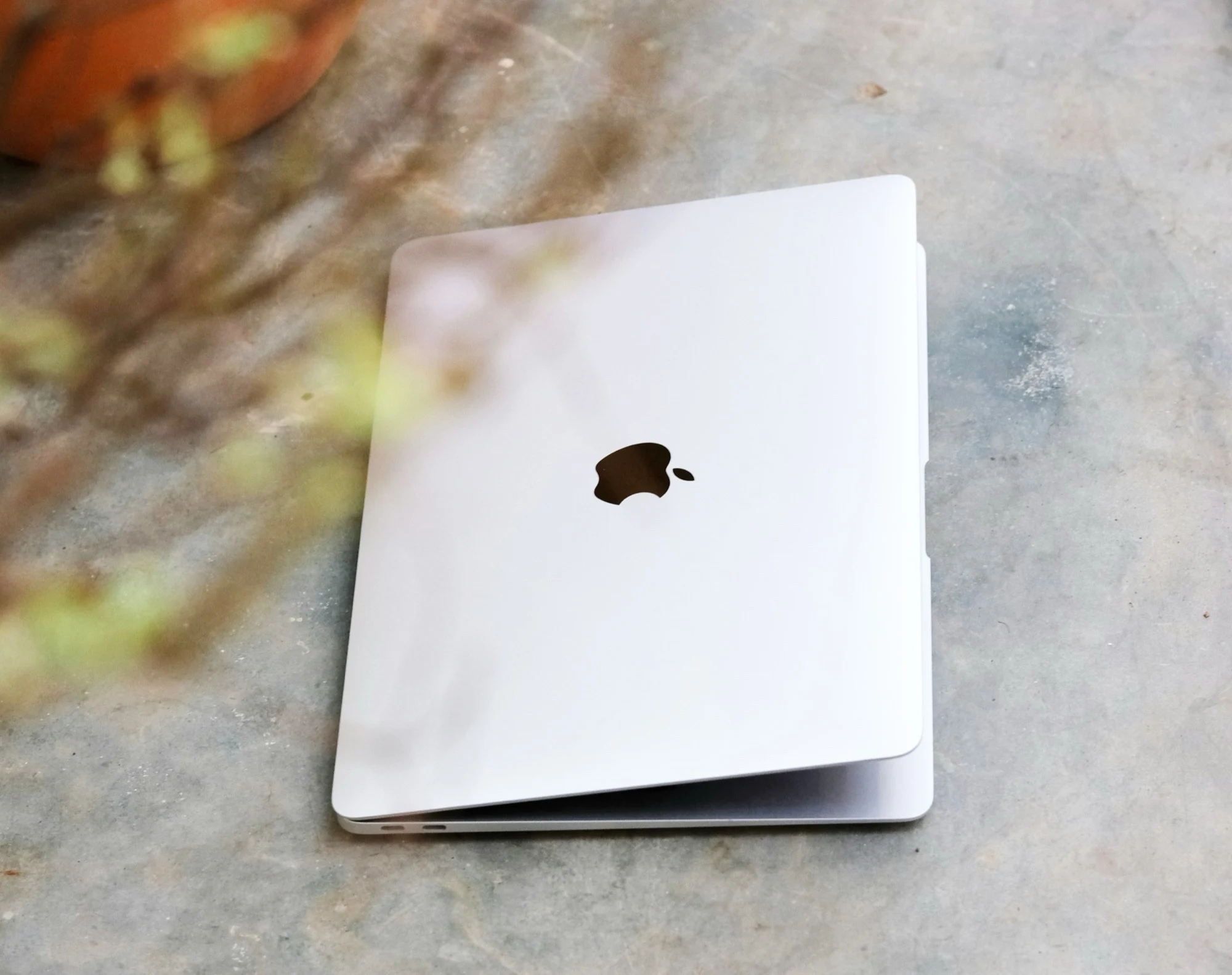
    Previous speculation has hinted that Apple is planning to unveil a more compact and, notably, a more budget-friendly laptop alongside the MacBook Air (starting at $799 on Amazon). Analysts from TrendForce have now validated these speculations, suggesting that this cost-effective MacBook is set to be released in the spring of 2026.

    Specifications and Display

    The analysts shared additional insights regarding the technical features, highlighting a 12.9-inch display. This would make the upcoming MacBook a bit smaller than the 13.6-inch MacBook Air. With thinner bezels, the laptop is expected to be about the width of a standard laptop keyboard. This dimension was previously established by the 12-inch MacBook from 2015, which was particularly attractive to travelers due to its lightweight design of only 2 lbs, and it included a 39.7Wh battery. However, its performance was notably limited owing to the slow dual-core Intel Core M processors.

    Performance Expectations

    The anticipated new model aims to rectify this limitation, as Apple is likely to equip it with the Apple A18 Pro, a chip that was earlier introduced in the iPhone 16 Pro. Geekbench 6 benchmarks suggest that the Apple A18 Pro outperforms the Intel Core i5-7Y54 by more than four times, the processor used in the last version of the 12-inch MacBook from 2017. Additionally, its multi-thread performance is nearly on par with the Apple M1. TrendForce believes that this 12.9-inch MacBook could assist Apple in capturing more market share, especially considering that laptop prices are predicted to rise by over 20% this year, largely due to a significant DRAM shortage.

    Source:
    Link


  • MacBook Air Saves Ukrainian Soldier from Shell Fragment Attack

    MacBook Air Saves Ukrainian Soldier from Shell Fragment Attack

    Key Takeaways

    1. A soldier from the AZOV brigade reported that his M1 MacBook Air survived a shell fragment hit, showcasing its unexpected resilience.
    2. Photos shared show a large hole in the MacBook, indicating the severity of the damage from the artillery fragment.
    3. Apple’s M1 MacBook Air is made from 100% recycled aluminum, which is claimed to provide better structural integrity than plastic.
    4. Although the screen was damaged, it remained partially functional, allowing the soldier to use it after the incident.
    5. Previous instances have shown that MacBooks can protect users in extreme situations, such as stopping bullets during violent events.


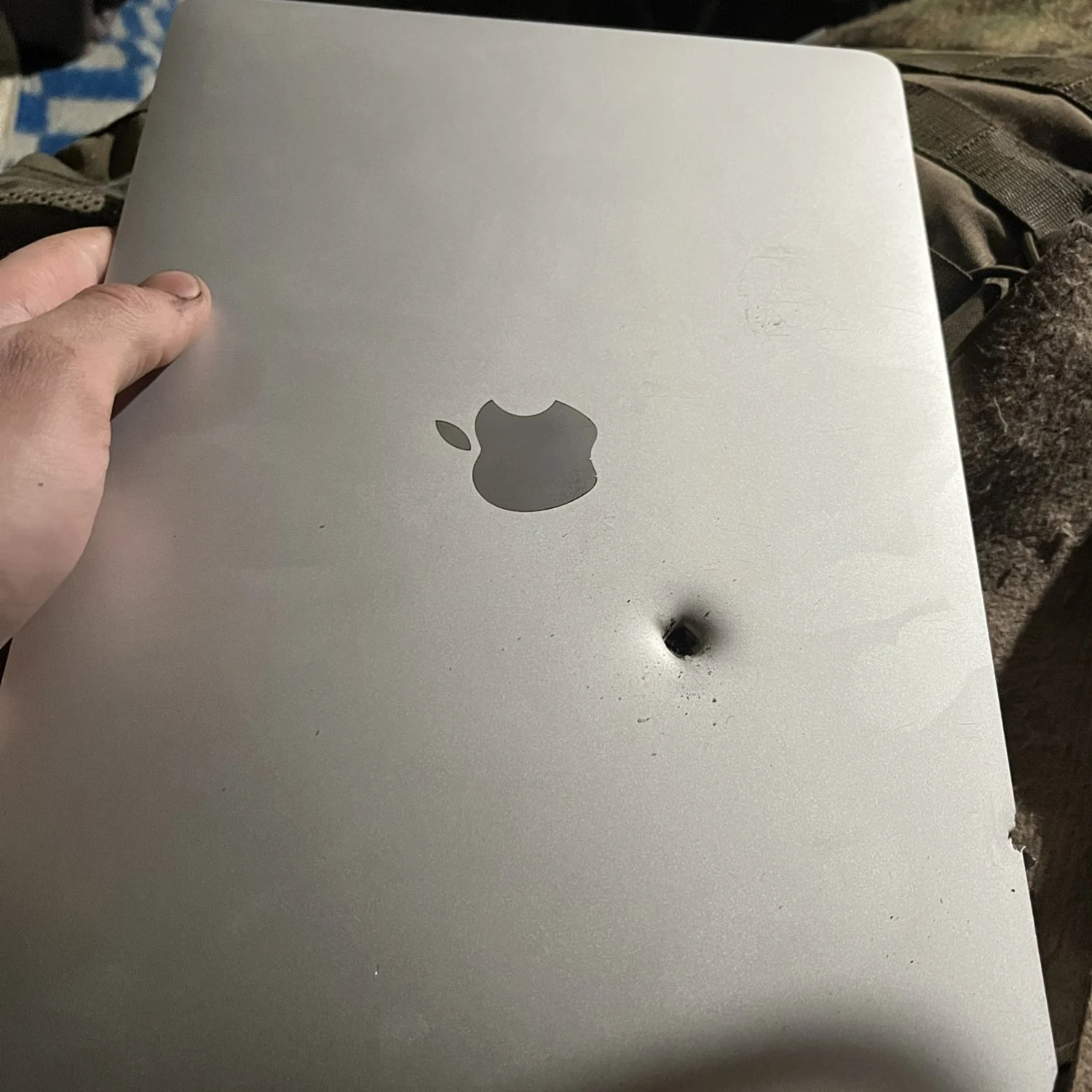
    A military member using the handle @lanevychs on X has shared a remarkable incident involving an Apple device that survived a shell fragment hit. This soldier, affiliated with the AZOV brigade of the National Guard of Ukraine, reported that his M1 MacBook Air managed to stop an artillery fragment.

    Evidence of Damage

    The post includes several photos, one of which clearly shows a large hole in the back of the MacBook where the fragment entered. However, the poster has not disclosed the details of how this incident occurred.

    Apple’s Material Choices

    Apple claims that the outer shell of this device is made from 100 percent recycled aluminium, covering the top and bottom cases as well as the structural frame. The use of aluminium alloys is said to provide better structural integrity than plastic materials, which lanevychs must be pretty pleased about.

    Screen and Functionality

    Unfortunately, the MacBook’s screen did not come through the incident without damage, as one of the photos indicates. Still, the display remained partially functional, and the video shows lanevychs scrolling through his posts on X, proving it still works.

    While Apple has never claimed its products can stop bullets, there have been instances where MacBooks have protected users. For instance, Steve Frappier, a survivor of the 2017 Fort Lauderdale shooting, attributed his survival to his university-issued MacBook Pro, which he says stopped a bullet.

    Our assessment of the Apple M1 MacBook Air 2020 highlighted its sturdy and high-quality unibody design, showcasing its durability.

    In the end, lanevychs on X has provided quite the story that highlights the unexpected resilience of tech in extreme situations.

    Source:
    Link


  • iPhone 18 Pro Leak Reveals No Major Changes Planned

    iPhone 18 Pro Leak Reveals No Major Changes Planned

    Key Takeaways

    1. Rumors suggest that the iPhone 18 lineup may not have significant upgrades compared to the iPhone 17 series.
    2. The design of the iPhone 18 Pro models is expected to remain similar to the previous version.
    3. There are discussions about potentially removing the Dynamic Island feature for a new under-display Face ID system.
    4. Mass production for the iPhone 18 series is anticipated to start before mid-February, leading to more reliable information soon.
    5. The claims from leaker Fixed Focus Digital are creating buzz among fans and tech enthusiasts as the release date approaches.


    Apple’s iPhone 17 series just came out a few months ago, yet rumors about the iPhone 18 lineup are already making the rounds, and the latest ones might be disappointing for some fans.

    Changes May Not Be as Big

    While earlier reports suggested that Apple would introduce significant upgrades in the iPhone 18 Pro and iPhone 18 Pro Max, a Chinese leaker named Fixed Focus Digital says those claims might be off. Allegedly, the modifications to the exterior of the devices are “not as big as many thought.”

    Design Details

    The iPhone 18 Pro models are likely to keep the same rear design as their predecessors. However, there have been talks that they might get rid of the Dynamic Island feature completely due to a new under-display Face ID system. If the leaker’s insights are correct, these speculations could be far from reality. Regardless, mass production for the new phones is expected to kick off before mid-February, which means more reliable information should emerge around that time.

    More on Fixed Focus Digital

    Fixed Focus Digital’s claims have sparked discussions among fans and tech enthusiasts alike. As the release date approaches, many are eager to see just what Apple will unveil.

    Source:
    Link


  • CEO criticizes Apple’s junk fees as Fortnite remains off iOS in Japan

    CEO criticizes Apple’s junk fees as Fortnite remains off iOS in Japan

    Key Takeaways

    1. Fortnite will not return to iOS in Japan due to Apple’s response to the Mobile Software Competition Act.
    2. Epic Games’ CEO, Tim Sweeney, criticized Apple for obstructing competition and disrespecting Japanese regulations.
    3. Despite legal victories allowing Fortnite’s return in some regions, Japan’s situation remains unchanged.
    4. Developers face high fees and mandatory reporting requirements when using competing app stores on iOS.
    5. Apple claims its policies are necessary for user safety and privacy, despite criticism from Epic Games.


    Epic Games has shared some disappointing updates regarding the iOS version of Fortnite in Japan. The well-known battle royale game will not be making a comeback on iOS devices or the App Store in Japan. This decision comes after Japan introduced a new regulation called the Mobile Software Competition Act, which mandates that Apple must permit third-party app stores on iPhones to enhance competition.

    Epic’s Criticism of Apple

    Epic’s CEO, Tim Sweeney, took to X to criticize Apple, stating that the company has engaged in “another travesty of obstruction and lawbreaking in gross disrespect to the government and people of Japan.” The relationship between Apple and Epic Games has been strained for several years, primarily due to Epic’s rejection of Apple’s 30% cut from in-app purchases. This dispute led to Apple removing Fortnite from the App Store back in 2020.

    Previous Comebacks

    Despite this ongoing conflict, Fortnite did make a return on iOS in the EU through third-party stores and the official App Store in the US after winning some legal battles. There was optimism that Fortnite would also return to iOS in Japan, but Apple’s response to the new regulations changed that outlook.

    Apple has technically opened iOS to competing app stores on iPhones, but not for iPads. Sweeney emphasized that they are imposing a “competition-crushing 21% junk fee on third-party in-app payments, and 15% for web purchases.”

    Legal Issues and Developer Concerns

    This situation has already been deemed illegal in a contempt of court case that Apple lost, which was affirmed by the 9th Circuit Court. From Epic’s viewpoint, the circumstances are worsening, as Apple is now taking a 5% cut from all apps sold through competing stores. Additionally, developers are required to use a “mandatory reporting API” that tracks every transaction and sends the data back to Apple.

    Moreover, users face warning messages when attempting to access alternative stores, which appears to be a tactic to create fear regarding privacy and security. Sweeney has pledged to escalate the issue to Japan’s Fair Trade Commission, asserting that “Obviously, real competition won’t happen, and consumers won’t benefit, when Apple abuses its position between users and competitors to obstruct honest dealing between them.”

    Apple’s Defense

    In contrast, Apple defends these actions as necessary to ensure user privacy and child safety, claiming that the fees are essential to cover the expenses associated with payment processing technology.

    Source:
    Link


  • Apple iPhone Fold CAD Renders Show Unique Wide Aspect Ratio

    Apple iPhone Fold CAD Renders Show Unique Wide Aspect Ratio

    Key Takeaways

    1. The iPhone Fold may feature a smaller 5.3-inch outer display compared to the 6.5-inch display on the Samsung Galaxy Z Fold7.
    2. The closed dimensions of the iPhone Fold are reported to be 120.6 x 83.8 x 9.6 mm, making it wider but shorter than the Galaxy Z Fold7.
    3. The main display of the iPhone Fold is expected to be 7.76 inches with a resolution of 2,713 x 1,920 pixels, potentially offering a wider aspect ratio similar to the iPad mini.
    4. When opened, the iPhone Fold is estimated to be 4.8 mm thick, which is thicker than the Galaxy Z Fold7 but thinner than the iPhone Air.
    5. The iPhone Fold is anticipated to be officially unveiled in September 2026, alongside the iPhone 18 series.


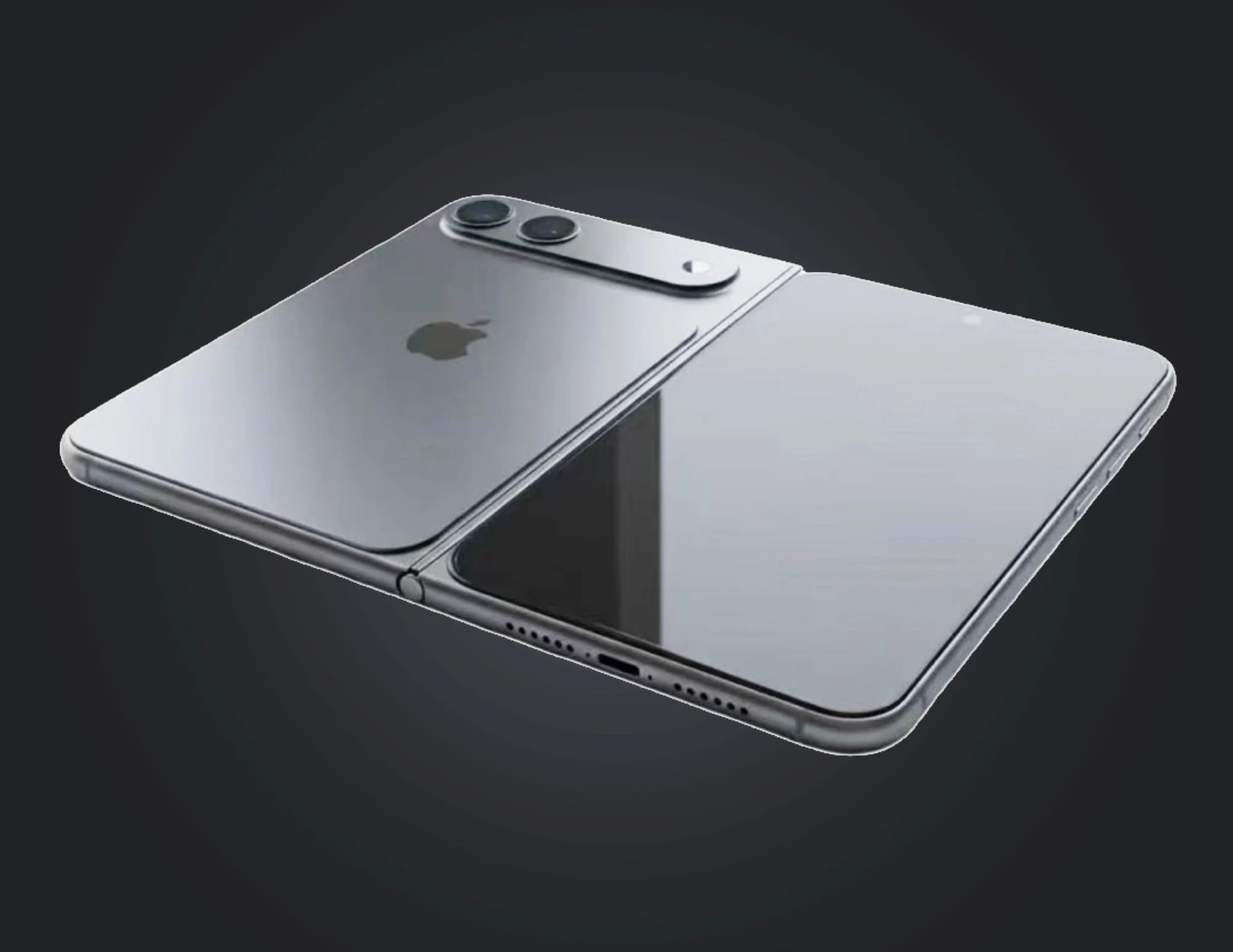
    Just a few days back, new rumors suggested once more that the iPhone Fold may have a much broader aspect ratio compared to many of its rivals. While the Samsung Galaxy Z Fold7 (costing around $1,599 on Amazon) comes with a 6.5-inch 21:9 outer display, which is similar in size to standard smartphones, Apple is said to be choosing a smaller 5.3-inch secondary screen that is about the same width but shorter than the display found on Samsung’s top foldable.

    Dimensions and Specs Revealed

    An accessory maker has reportedly shared CAD files that reveal the dimensions of the iPhone Fold, according to media outlet iPhone-Ticker. The documents suggest that the device measures 120.6 x 83.8 x 9.6 mm (4.75 x 3.30 x 0.38 in) when it’s closed. This makes it 11 mm (0.43 in) wider and 0.7 mm (0.03 in) thicker than the Galaxy Z Fold7, but 38 mm (1.50 in) shorter. The secondary display is rumored to have a resolution of 2,088 x 1,422 pixels. The CAD images also show a pill-shaped camera setup resembling that of the iPhone Air, along with a fingerprint sensor located on the right side.

    Main Display Features

    When opened, the iPhone Fold is believed to show a 7.76-inch main screen with a resolution of 2,713 x 1,920 pixels, covering an area of 167.6 x 120.6 mm (6.60 x 4.75 in). If these details are correct, this would make the device 24 mm (0.94 in) wider than the Samsung Galaxy Z Fold7 and provide an aspect ratio similar to the iPad mini, although the tablet remains slightly larger at 195.4 x 134.8 mm (7.69 x 5.31 in).

    Thickness Comparison and Future Speculation

    The visuals further suggest that the iPhone Fold is 4.8 mm thick when opened, which is 0.6 mm thicker than the Galaxy Z Fold7, yet 0.8 mm thinner than the iPhone Air. Despite the need for caution regarding early rumors about new Apple products, speculations surrounding the device’s unusually wide aspect ratio have continued for months. The iPhone Fold is anticipated to be officially unveiled in September 2026, alongside the iPhone 18 series.

    Source:
    Link


  • OLED iMac Launch After M5 Max iMac Pro with Brightness Boost

    OLED iMac Launch After M5 Max iMac Pro with Brightness Boost

    Key Takeaways

    1. Apple is transitioning its larger devices, including the iMac, to OLED display technology after using it in iPhones and iPads.
    2. The new OLED iMac is expected to maintain a pixel density of 218 ppi and a resolution of 4480 x 2520 pixels for software compatibility.
    3. Apple is requesting a peak brightness of 600 nits for the OLED iMac, which is 20% brighter than current models.
    4. Samsung and LG are developing new OLED technologies, including Samsung’s stacked QD-OLED, to meet Apple’s requirements.
    5. The first OLED iMac could launch as early as 2027, with proposals from LG and Samsung due next year.


    After making the switch to OLED displays for its iPhones and iPads, Apple is now gearing up to transition its larger devices, including the iMac all-in-one (AiO) computer, to this advanced display technology.

    Display Features

    Apple promotes its latest AiO with the catchy slogan “Briiiiiiliant,” where the six “i’s” emphasize the variety of colors available for the iMac, not the brightness of the display. The 24-inch iMac has a brightness of 500 nits, which is indeed brighter than many other all-in-one screens in the market. However, when it is updated with an OLED variant, its specifications are expected to improve significantly.

    OLED Development Requests

    Reports indicate that Apple has reached out to Samsung and LG with a request for proposals that specify the display requirements for the upcoming OLED iMac AiO. The memo outlines a minimum pixel density of 218 ppi, suggesting that Apple aims to maintain the existing resolution of 4480 x 2520 pixels to ensure compatibility with software scaling. Other specifications likely to be retained include the wide color P3 gamut coverage and the True Tone technology that adapts to variations in ambient light.

    Brightness Improvements

    In terms of peak brightness, Apple is requesting that Samsung and LG create an OLED panel for the iMac that achieves 600 nits of peak brightness, which is 20% more than the current models. This increase in brightness, combined with the high contrast ratios that OLED technology offers, will make the iMac much more comfortable to use in well-lit environments.

    Creating such bright OLED displays for the large sizes of iMac screens is quite a challenge. Samsung is expected to utilize its newly introduced stacked QD-OLED technology, which features five BBGBG layers. This technology is already implemented in Samsung’s 27-inch Odyssey G6 gaming monitor, which has a refresh rate of 500 Hz and is currently on sale at a 33% discount on Amazon.

    Future Releases

    The additional green layer in each pixel serves as a brightness enhancer. In response to Apple’s demand for larger OLED displays, LG is also working on different OLED technologies, which are anticipated to first appear in the 2026 MacBook Pro models. Apple has set a timeline for LG and Samsung to submit their OLED display proposals by next year, indicating that the first OLED iMac could launch as early as 2027. This timeline implies that the recent code string discovery referencing an Apple iMac desktop with the potent M5 Max processor is likely about a revived iMac Pro set for a 2026 debut, rather than the debut of the first OLED iMac, which will probably be powered by an M6 series processor.

    Source:
    Link


  • iPad Mini 8: Surprising Power Boost Expected

    iPad Mini 8: Surprising Power Boost Expected

    Key Takeaways

    1. The upcoming iPad mini will be the 8th generation, featuring significant performance improvements.
    2. It is expected to have the A20 Pro chip, offering a speed increase of up to 30% compared to the current A17 Pro chip.
    3. The A20 Pro chip will also power the next iPhone generation, built on a more efficient 2 nm process.
    4. The new iPad mini may include an 8.5-inch OLED display, although it will have a 60 Hz refresh rate.
    5. The expected release date for the iPad mini 8 is Q3 2026, pending confirmation from Apple.


    A recent leak of an internal iOS 26 build has revealed a wealth of details about Apple’s soon-to-be-released products. One highlight is the upcoming iPad mini, set to be the 8th generation after last year’s model. According to the leak, this next iPad mini is poised to be even more powerful than we initially thought, enhancing its appeal for fans of its smaller size.

    New Specifications

    Rumors from late last month indicated that the new iPad mini will be equipped with a much stronger SoC compared to the A17 Pro in the current model, specifically the A19 Pro used in the latest iPhone Pro models. This would have represented a significant improvement since the A19 Pro offers a speed increase of about 20% to 30% over the A17 Pro. However, the iOS 26 leak suggests that the iPad mini 8 will actually feature the A20 Pro chip, based on a summary by ‘Kang’ on Weibo.

    Performance Expectations

    The A20 Pro chip is anticipated to also drive the next iPhone generation, including the iPhone 18 series and the speculated iPhone Fold. These A20 chips are built using a newer and more efficient 2 nm manufacturing process, which is a first for Apple. This advancement is expected to deliver up to 15% more power and 30% greater efficiency compared to the A19 series, which is based on a 3 nm process. On paper, the iPad mini 8 is gearing up to be a true performance beast.

    Display and Release Timeline

    In addition to the SoC enhancement, the new iPad mini is rumored to come with an 8.5-inch OLED display, although it will be limited to 60 Hz. As for the launch date, the tablet is expected to hit the market in Q3 2026, so these details may not be final. Naturally, Apple has yet to confirm any information regarding its forthcoming products, so it’s wise to stay cautious about these claims.

    Kang on Weibo, CPU-Monkey.

    Source:
    Link


  • Apple iPhone 18 Pro Rumored to Feature Compact Foldable Design

    Apple iPhone 18 Pro Rumored to Feature Compact Foldable Design

    Key Takeaways

    1. The iPhone 17 Pro’s pill-shaped punch hole may remain the same or get smaller in the iPhone 18 Pro, with some sensors potentially hidden under the screen.
    2. A new design might move the punch hole to the upper left corner, creating an asymmetrical look.
    3. One of the rear cameras on the iPhone 18 Pro may feature a variable aperture for better depth of field in photos and videos.
    4. The Apple iPhone Fold is rumored to have a 5.3-inch display when folded and a 7.7-inch display when opened, with different aspect ratios for each state.
    5. The iPhone Fold is expected to be officially revealed alongside the iPhone 18 series in September 2026, but these details should be taken as early rumors.


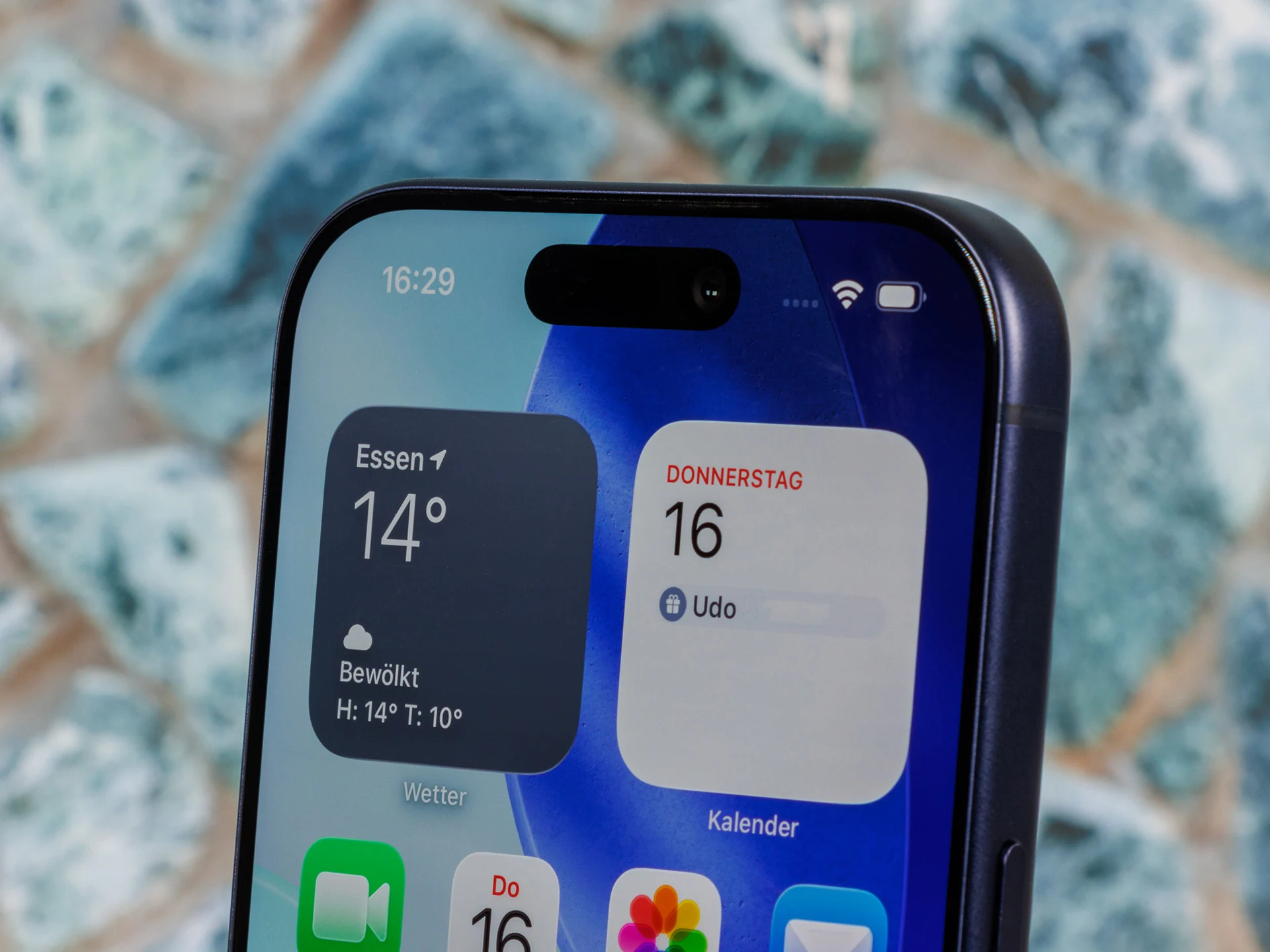
    Over the last few months, there have been some mixed reports regarding the Apple iPhone 17 Pro’s pill-shaped punch hole. While some say it will stay the same for the iPhone 18 Pro, others believe it might get a bit smaller. There are also suggestions that Apple could hide most sensors, except for the front-facing camera, beneath the AMOLED screen. This would greatly shrink the size of the punch hole.

    New Design Insights

    A recent article from The Information supports the idea of hiding sensors under the screen. However, it indicates that the punch hole could move from the center to the upper left corner, creating an asymmetrical look. Additionally, the report mentions that one of the three rear cameras on this flagship device may have a variable aperture, likely the 48MP primary camera. This feature would enable users to adjust the aperture manually, allowing for improved depth of field in photos and videos when necessary.

    Details on the iPhone Fold

    Moreover, The Information backs up several previous rumors about the Apple iPhone Fold. The foldable device reportedly has a 5.3-inch display when it’s folded and extends to 7.7 inches when opened. When folded, the display is said to have an aspect ratio of around 2:3 or 10:15, switching to 4:3 once unfolded.

    This design would make the iPhone Fold considerably shorter when closed compared to the Samsung Galaxy Z Fold 7, which starts at $1599 on Amazon and has a secondary display measuring 6.5 inches with a 9:21 aspect ratio. As always, it’s wise to take these early rumors with a grain of salt. The iPhone Fold is anticipated to be officially revealed alongside the iPhone 18 series in September 2026.

    Source:
    Link