
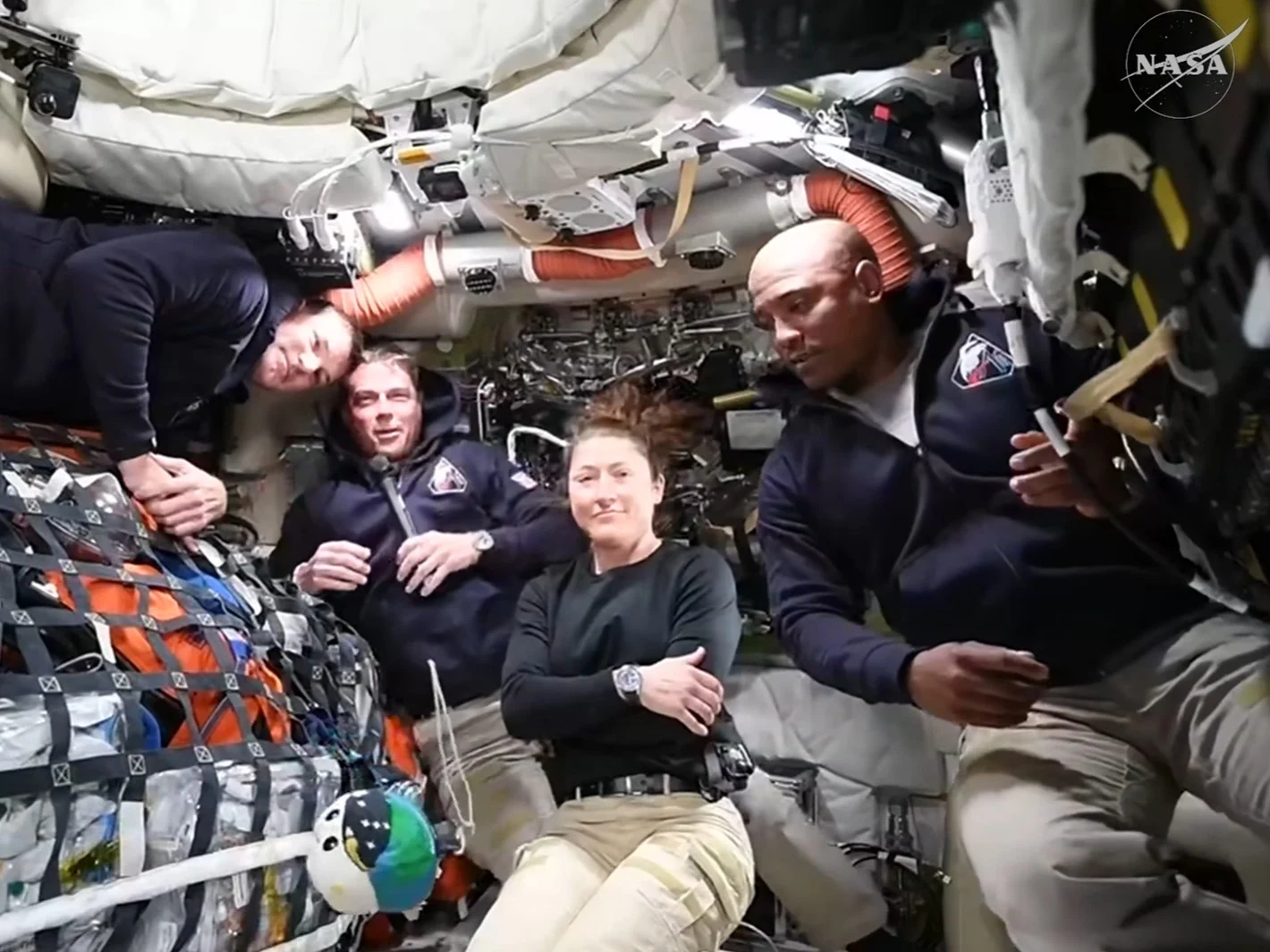
1. Minor technical issues, including sanitation system water levels and false leak alarms, were quickly resolved without impacting the mission.
2. A remote troubleshooting of a Microsoft Surface Pro glitch demonstrated the feasibility of long-distance IT support during deep-space missions.
3. NASA’s reliance on commercial off-the-shelf devices, like Microsoft Surfaces, provides practical and psychological benefits for astronauts during lunar missions.
Recent Updates from Artemis II
As the Artemis II mission is ongoing, there are some minor issues that came up during the mission. During the latest press conference, they mentiond that som small technical problems popped up but were fixed in no time. These issues seem to be nothing serious or to worry about, and they could very well happen on Earth as well.
Technical Problems With the Spacecraft
The first problem had to deal with the sanitation system onboard. It was found out that the water level was not enough, which caused the pumps to stop working. Just before the ship was about to make a crucial engine burn to get into lunar orbit, a leak alarm went off. But it was just a false alarm—a false reading caused by a fan that was slightly out of position messing with a pressure sensor. Nothing major, but it sure got some attention.
Software Glitches Onboard
Now, here’s a problem that anyone who uses computers might understand. Commander Reid Wiseman’s Microsoft Surface Pro was acting up. Two Outlook apps were running at the same time, and both weren’t working properly. This, however, had nothing to do with the rockets systems, just a pesky tech hiccup. The mission control back on Earth had to troubleshoot remotely, which was pretty impressive considering they were much farther away from the spacecraft than usual—probably the longest remote connection ever for support like that. It took about an hour but finally, they managed to fix the Outlook issues by reloading some files. Even though Outlook was showing offline, it did not cause any real problems for the mission.
Why They Use Common Hardware
The hardware used is mostly off-the-shelf stuff, which is really practical. NASA has a habit of using tablets that have styluses because they are easier for astronauts to use with bulky gloves. The Microsoft Surface has become a common choice, although they have looked into other options like iPads too. This equipment is mainly used for routine things, such as planning and communication, not for the critical flight systems. The important systems run on special hardware that is designed to withstand cosmic radiation and other space hazards.
Psychological and Practical Reasons for Using Familiar Tech
Using familiar devices also help reduce stress for astronauts since it makes their work simpler and more predictable. Space missions can be pretty stressful and complicated, so having reliable and easy-to-use gadgets can make a big difference. The software glitches, although annoying, did not affect the overall communication with mission control. Everything outside went smoothly, confirming that such minor technical issues are manageable and not a threat to the mission’s success.
Leave a Reply