
Key Takeaways
1. The Lenovo Yoga Slim 7 Aura Edition touchscreen can effectively replace a mouse for everyday tasks like email, web browsing, and document editing, offering a more engaging interaction with content.
2. Windows 11 enhances the touchscreen experience with intuitive touch gestures, making actions like window arrangement and scrolling smooth and natural.
3. While the touchscreen is great for casual gaming and touch-friendly genres, it struggles with precision-heavy games, where a mouse is still preferred.
4. User habits play a significant role; many Lenovo users forget about the touchscreen feature and stick to traditional input methods, but those who adapt find it more direct and natural.
5. Overall, using the touchscreen as a sole input method is enjoyable for casual tasks, but it doesn’t entirely replace the need for a mouse in precision-demanding scenarios.
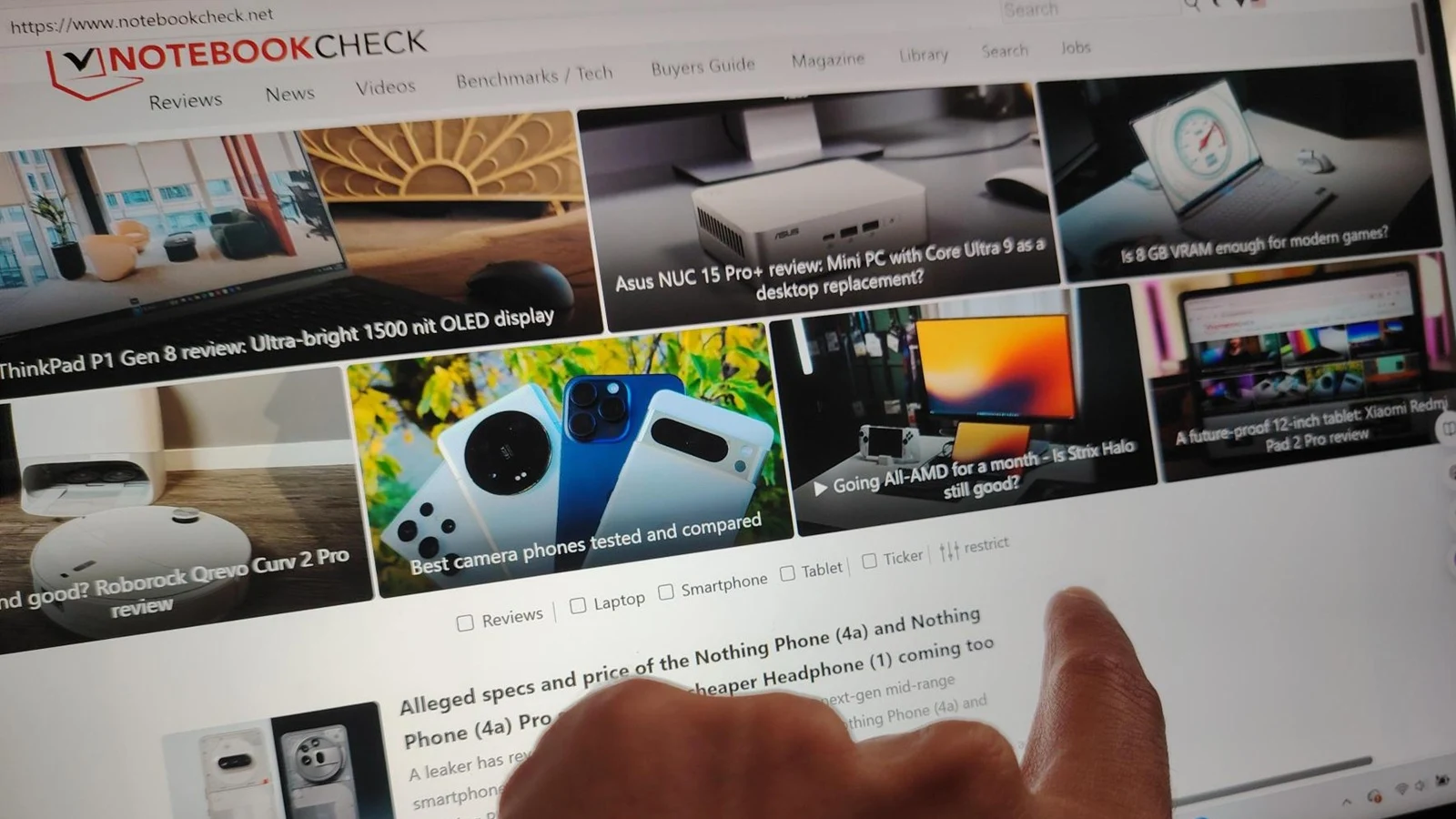
I decided to try something a bit unusual: no mouse at all. No trackpad gestures, no external pointing tools. Just my fingers and the Lenovo Yoga Slim 7 Aura Edition touchscreen: Model 15ILL9.
Exploring Touchscreen Productivity
This experiment wasn’t just for casual scrolling while lounging. I aimed to discover if a laptop built with touch features could truly replace the classic mouse-driven method for daily tasks… and maybe even some gaming. Essentially, I wanted to find out if the Lenovo Yoga Slim 7 Aura Edition and its touchscreen could genuinely act as a substitute for a mouse in both work and play situations.
For regular activities like checking email, browsing the web, and editing documents, the touchscreen performed better than I had anticipated.
Navigating an inbox, moving windows, selecting text in Word, and switching tabs in Chrome felt direct and engaging. Instead of just nudging a pointer, you’re actually interacting with the content. This sense of immediacy is something a mouse struggles to replicate.
Windows 11 Enhancements
Windows 11 is a big help. The standard touch gestures from Lenovo, paired with Microsoft’s interface, make actions like pinch-to-zoom, smooth scrolling, and arranging windows into layouts feel intuitive. Once you stop instinctively reaching for a mouse, dragging a window to dock it becomes second nature.
However, there’s a downside, which is tiredness and lack of precision. Keeping your arm up to tap the screen for extended periods can be exhausting, and making small, precise movements—like clicking tiny icons or adjusting sliders—can be quite fiddly.
Most of the time, though, the combination of a clear 2.8K display and responsive Intel Arc graphics means that touches are registered quickly and accurately. For general productivity, the touchscreen is not only usable… it’s genuinely comfortable… until fatigue kicks in.
Gaming Experience
Now, gaming is where it gets interesting. The Yoga Slim 7 isn’t a high-end gaming laptop, but with the touchscreen as the only input, some game genres really shine.
Turn-based games like Civilization VI, simple card games such as Microsoft Solitaire, and touch-friendly puzzle or rhythm games work well with taps and swipes. It feels satisfying to directly poke and drag units, cards, or tiles using your fingertips. In some cases, it’s even faster than moving a mouse cursor around.
However, this setup has its limits when it comes to precision-heavy gaming. First-person shooters, MOBAs, and real-time strategy games with small click targets are still much better with a mouse. Fast aiming, quick camera control, and precise unit selection are simply not strengths of a touchscreen.
For casual or touch-optimized games, though, relying on the touchscreen can add a playful, hands-on feel, making the laptop behave more like a large, powerful tablet.
User Perspectives
If you browse through Reddit threads, a common theme emerges: many Lenovo users hardly utilize their touchscreens. Many admit that they often forget the feature exists, sticking to the trackpad or mouse out of habit.
Frequent complaints include fingerprints, occasional mis-taps, and the fact that many individuals have spent years training themselves to reach for a mouse. However, there’s another group—those who fully embrace touch—and they often describe it as more “direct” and “natural” once you adapt.
On the Lenovo Yoga Slim 7 Aura Edition, AI-assisted features and smooth gesture handling help mitigate some of the challenges. The way the screen tracks fingers and translates motion across the display makes a touchscreen-only workflow feel more realistic than it would on older or less responsive devices.
Final Thoughts
After using the Lenovo Yoga Slim 7 Aura Edition touchscreen as my sole pointing device, here’s what I discovered:
For everyday tasks and casual gaming, fully embracing touch is not only feasible; it’s surprisingly enjoyable. It compels you to reconsider your habits, making the laptop feel more immediate and tactile.
Yet, it doesn’t entirely replace traditional input methods. Precision tasks still benefit from a mouse, and long periods of tapping the screen will give your arm a workout you didn’t ask for.
Still, this experiment shifted my perspective on the laptop. The Lenovo Yoga Slim 7 Aura Edition touchscreen isn’t merely a nice feature for the occasional scroll; it’s a valid approach for navigating work and play, particularly if you’re prepared to change how you interact with your device.
Mouse enthusiasts don’t have to ditch their peripherals. But if you’re curious, consider spending a few days using just your fingers. On a modern touchscreen laptop like the Lenovo Yoga Slim 7 Aura Edition, you might find that touch-first computing feels more freeing—and a lot less crazy—than it seems.
Source:
Link
Leave a Reply