

Key Takeaways
1. The iPhone Air has a single 48 MP rear camera with a f/1.6 lens, sacrificing ultra-wide and telephoto options for a thinner design.
2. The Motorola Edge 70 features three rear cameras in a slightly thicker body, providing more versatile photography options.
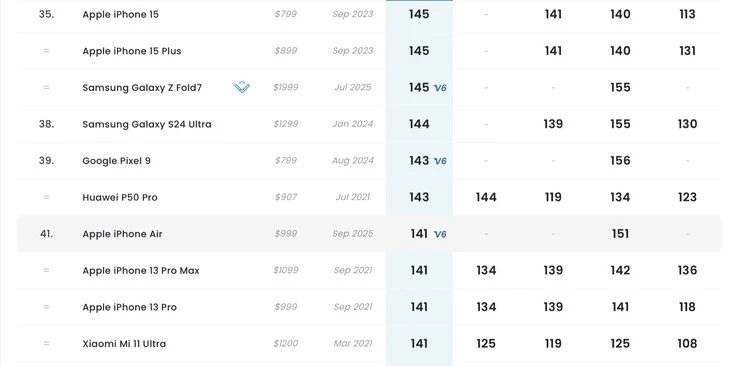
3. The iPhone Air scores 141 points in DxOMark’s camera evaluation, ranking 41st and falling behind competitors like Google Pixel 8 and iPhone 15.
4. The iPhone Air’s autofocus can be slow, and it struggles with white balance and exposure in video recordings, though it has strong video stabilization.
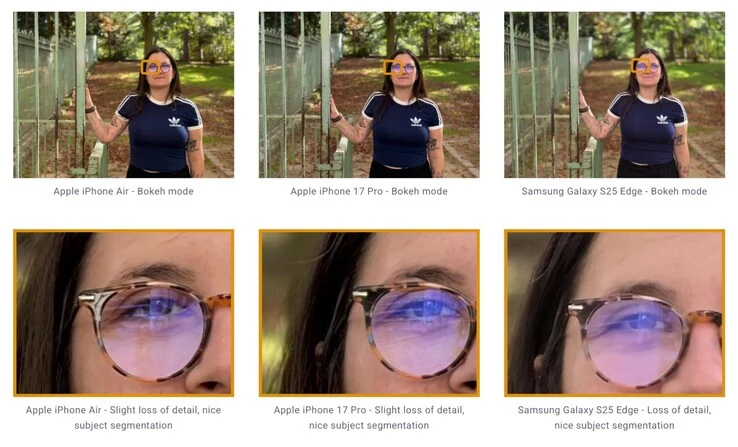
5. While the primary camera performs well in general, the portrait mode can struggle with complex scenes, affecting clarity.
The Apple iPhone Air is equipped with a single rear camera that features a 48 MP sensor housed in a 1/1.56-inch format, paired with a speedy f/1.6 lens. To achieve its sleek 5.6-millimeter-thin design, Apple has chosen to forgo an ultra-wide-angle or telephoto camera, which is a notable decision given its premium price.
Comparison with Motorola Edge 70
On the other hand, the Motorola Edge 70 proves that having more than one rear camera is possible, fitting three cameras into a slim 5.99-millimeter body. According to DxOMark’s thorough camera evaluation, the absence of specialized cameras leads to a significant reduction in points, as features like digital zoom and panorama modes can’t truly substitute for dedicated ultra-wide-angle and telephoto lenses. With a score of 141 points, the iPhone Air finds itself in the 41st position on the ranking list, trailing behind competitors such as the Google Pixel 8, iPhone 15, and Xiaomi 15.
Other Limitations of the iPhone Air
The iPhone Air also faces other challenges apart from its camera limitations. The autofocus sometimes tends to be sluggish, causing high-contrast scenes to appear too dark, and details can be lost when using portrait mode. Moreover, issues with white balance and exposure can be observed during video recordings. Nevertheless, the iPhone Air does excel in terms of its impressive video stabilization capabilities.
In many scenarios, the primary camera performs well, offering accurate exposure and color fidelity along with a broad dynamic range and an efficient night mode. While the portrait mode frequently does a good job of distinguishing the background, it can falter in more complex scenes, leading to some parts of the subject becoming unclear.
Source:
Link
Leave a Reply