
Key Takeaways
1. 3I/ATLAS was first spotted on July 1, 2025, using the NASA-funded ATLAS system and the Gemini North Telescope, located 420 million miles from the Sun.
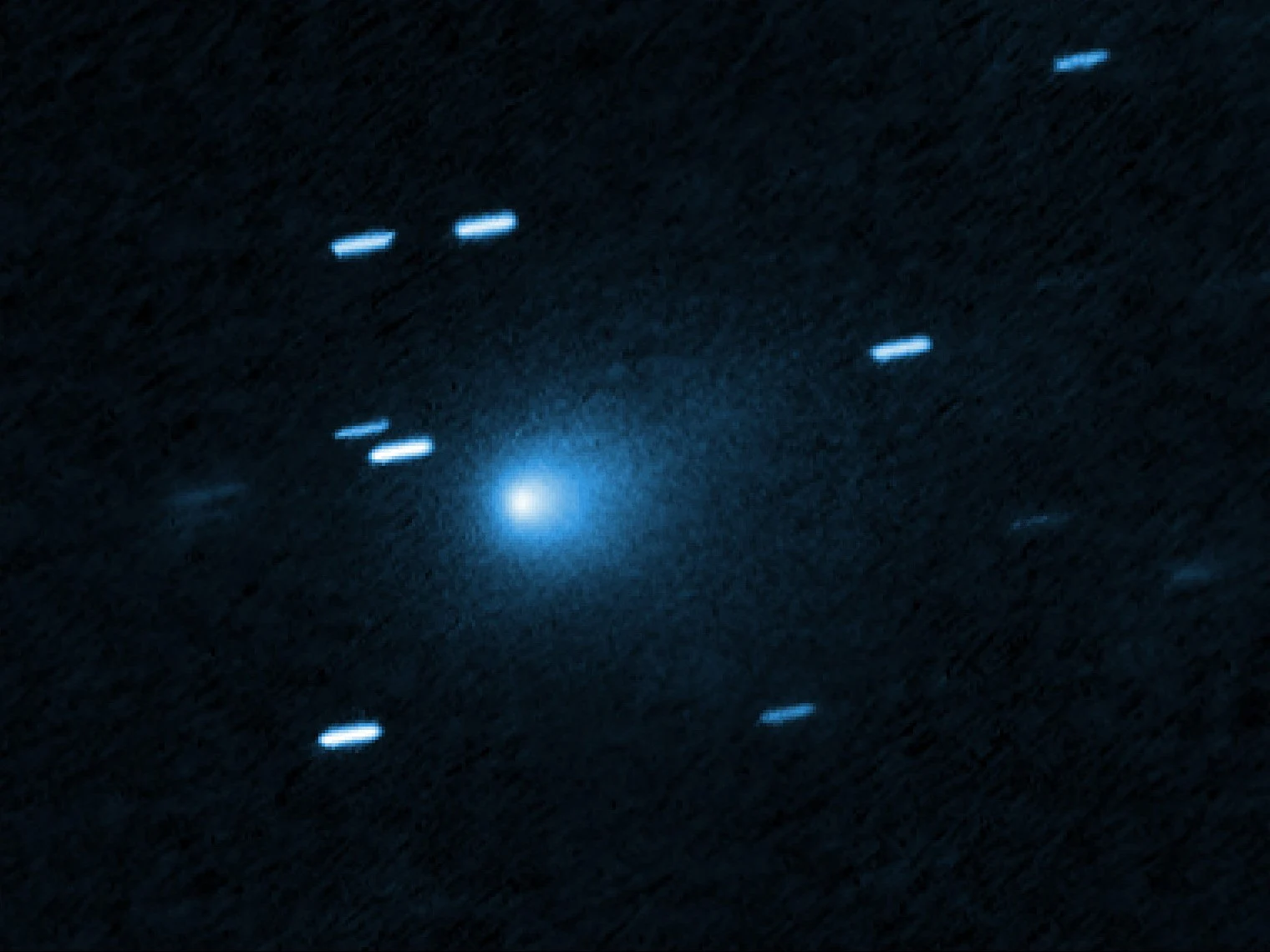
2. Hubble Space Telescope observations suggest the comet’s nucleus could range from 1,000 feet to 3.5 miles in diameter, with visible dust plumes indicating activity.
3. The dust loss rate observed aligns with typical patterns for comets discovered around 300 million miles from the Sun, as they heat up and release gas and dust.
4. 3I/ATLAS travels at an extraordinary speed of 130,000 miles per hour, indicating it has been in space for billions of years, influenced by gravitational forces from nearby stars and nebulae.
5. NASA plans further missions to study 3I/ATLAS, including its chemical composition, while some theorize it could be an alien probe, as suggested by Harvard University professor Avi Loeb.
3I/ATLAS was initially spotted on July 1, 2025, thanks to the NASA-funded Asteroid Terrestrial-impact Last Alert System (ATLAS), which was created by the University of Hawai’i. The comet was first seen 420 million miles away from the Sun with the help of the Gemini North Telescope. However, a follow-up observation by the NASA/ESA Hubble Space Telescope on July 21 has enabled scientists to better estimate the size of the comet’s nucleus.
Size Estimations
Data from Hubble indicates the nucleus could be as large as 3.5 miles (5.63 km) in diameter, though it might also be as tiny as 1,000 feet (304.8 m) wide. The images captured by Hubble show a dust plume coming from the side of the comet facing the Sun. Additionally, the pictures suggest that a dust tail is trailing away from the comet’s nucleus.
Dust Loss Rate Insights
The rate of dust loss revealed by Hubble’s observations isn’t unusual for 3I/ATLAS. It aligns with what is typically seen in comets first discovered around 300 million miles from the Sun. These comets, made of ice and dust, begin to heat up as they approach the Sun. The frozen materials transform into gas, leading to the dust being ejected away from the comet.
Record-Breaking Speed
Unlike other comets that have been observed, 3I/ATLAS is zooming through space at a staggering speed of 130,000 miles per hour (209,215 km/h). This rapid pace hints that the comet has been navigating through interstellar space for billions of years. It is thought that gravitational forces from stars and nebulae have gradually increased its speed over time.
Despite the current information, one thing remains unseen—the nucleus itself. NASA has planned additional missions to gather more information about the comet, including what it’s made of chemically. In the meantime, Harvard University professor Avi Loeb has proposed a theory that it could be an alien probe.
Source:
Link
Leave a Reply