
Key Takeaways
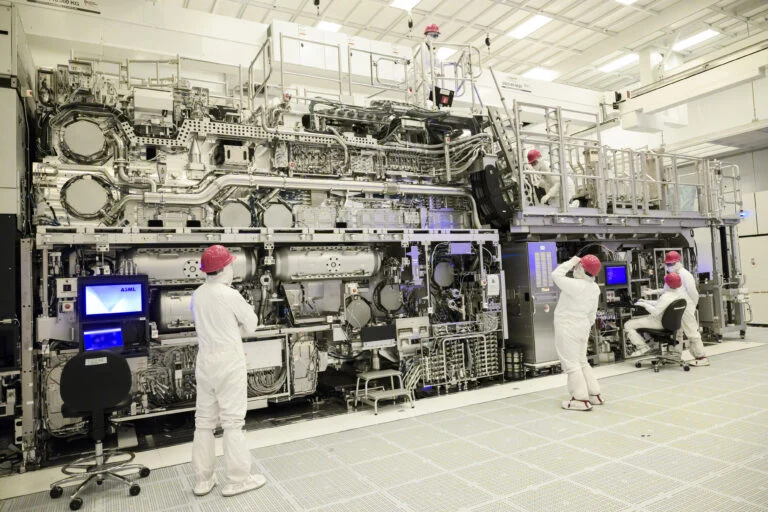
1. China has developed an EUV lithography machine in Shenzhen with help from ex-ASML engineers, marking a significant advancement in its chipmaking capabilities.
2. The EUV machine is not yet ready for chip production, with full functionality expected by 2028 or 2030, while competitors may advance to high-NA EUV technology.
3. China will need to produce the EUV machine’s components domestically and acquire used parts from other vendors due to the lack of official support from ASML.
4. China has previously relied on older DUV machines to create advanced chips, pushing their limits to produce 5-nm-class chips.
5. Despite this achievement, China faces major challenges in scaling production and navigating the complexities of new technology.
A recent report from Reuters reveals that China has achieved a major milestone by developing an EUV (Extreme Ultraviolet) lithography machine at a lab in Shenzhen, with help from several ex-ASML engineers. This advancement validates earlier speculations and represents a crucial step forward in China’s chipmaking capabilities. It could enable Chinese firms like SMIC to create advanced chips that could rival those produced by TSMC, Intel, and Samsung. The project was reportedly kept under wraps, with the engineers working using pseudonyms.
Future Challenges Ahead
Despite this progress, the EUV machine still doesn’t have the ability to manufacture chips just yet. It is anticipated to reach full functionality by 2028 or potentially as late as 2030. By that time, industry rivals are expected to have moved on to high-NA EUV, the next-gen lithography technology created by ASML. Furthermore, scaling up production will be a tough task, as China will need to produce everything domestically due to ASML’s absence of official backing. To make matters more complicated, it must also acquire used components from different vendors, including Nikon and Canon.
Relying on Older Technology
Up until this point, China has depended on older DUV (Deep Ultraviolet) machines, which are the only models it can legally obtain from ASML. SMIC’s N+3 node has pushed DUV beyond its traditional limits by creating 5-nm-class chips like the Kirin 9030. There was even a recent patent that explored pushing the technology down to 2 nm. However, with the new EUV development, this may not be necessary due to the technology’s complexity and low yield rates.
In conclusion, this report signifies a notable achievement for China, but significant hurdles remain in the way of fully realizing its chipmaking ambitions.
Source:
Link
Leave a Reply