Category: Wearables

  • Amazfit Unveils New Smartwatch Under $100 with Longer Battery Life

    Amazfit Unveils New Smartwatch Under $100 with Longer Battery Life

    Key Takeaway

    – Bigger, brighter display and longer battery life: 2.07″ AMOLED at up to 3,000 nits with a 550 mAh battery delivering up to ~20 days typical use.
    – Storage and OS upgrade: from 512MB NAND to 4GB eMMC and ZeppOS 5.0 with Flow 2.0 and screenshot capability.
    – Expanded health, fitness, and navigation features: expanded workout modes (Hybrid Training), HRV, enhanced sleep tracking, online/offline maps with path planning, race predictor, and app integrations (TrainingPeaks, Runna, Intervals.icu).


    Amazfit has released the Bip Max smartwatch. Rumors about this wearable started in April 2026, and it arrives around 14 months after the Bip 6 was released.

    Display and OS

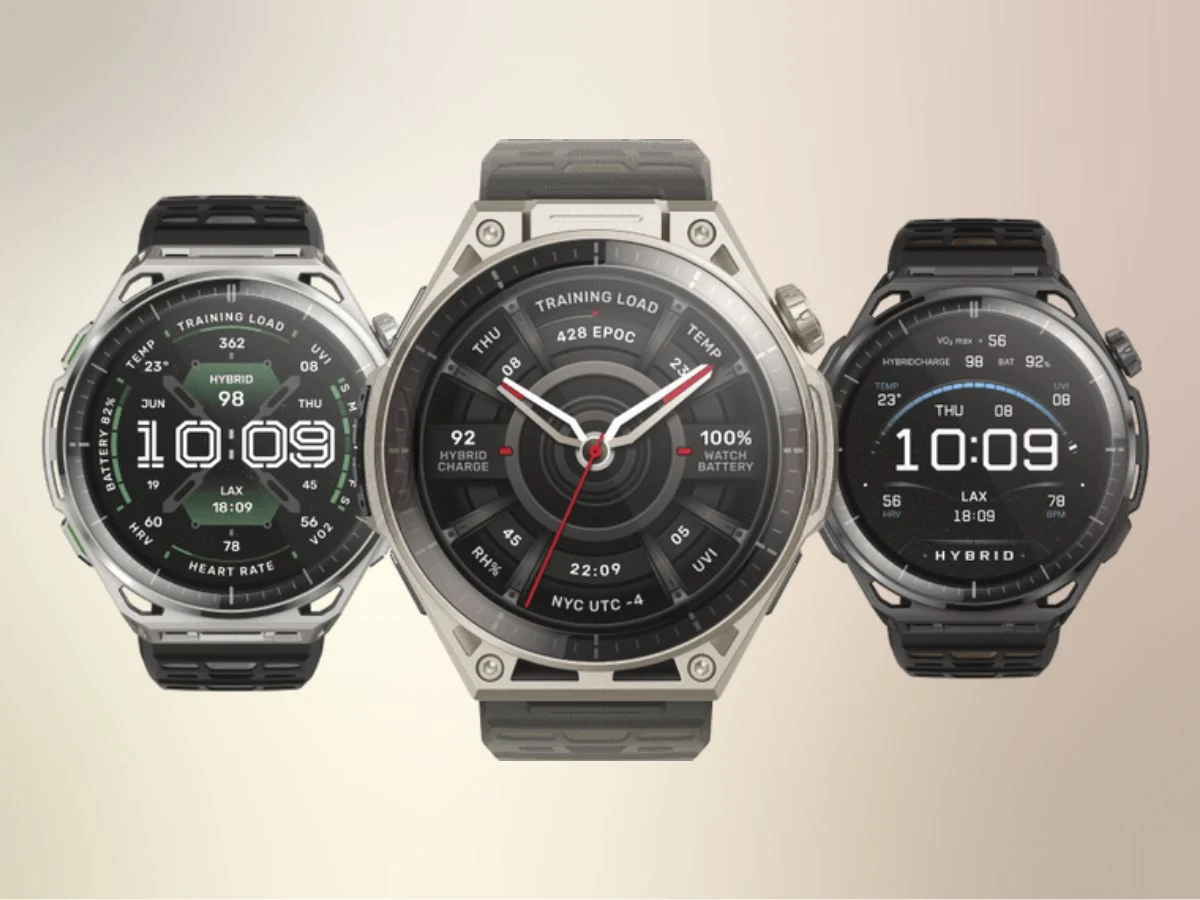
    The Amazfit Bip Max has a 2.07 inch AMOLED display, larger than the 1.97 inch equivalent used on the Bip 6. The screen is also 50% brighter, said to deliver up to 3,000 nits brightness. Like its predecessor, the Bip Max uses ZeppOS 5.0, with features such as the Flow 2.0 assistant and the ability to take screenshots.

    Health and Fitness Features

    As is typical for Amazfit’s smartwatches, there is a wide range of health and fitness tracking tools. These include many workout modes, with a Hybrid Training option, an HRV app and the brand’s latest sleep tracking algorithm. Users can access maps both online and offline, with path planning in the accompanying app. For runners, there is a race predictor tool, and the model supports integrations with TrainingPeaks, Runna and Intervals.icu.

    Storage and Battery

    Another significant upgrade compared to the Bip 6 is the smartwatch’s storage, with the 512MB NAND Flash replaced with 4GB eMMC. Plus, thanks to a larger 550 mAh battery, the runtime with typical use is increased from 14 to 20 days.

    Pricing

    You can now buy the Amazfit Bip Max smartwatch in the US for $99.99 at the brand’s online store and at its storefront. In European countries like the UK and France, it retails for £99.90/€99.90.

  • Google Android XR Smart Glasses Launching This Fall with Gemini AI

    Google Android XR Smart Glasses Launching This Fall with Gemini AI

    Key Takeaway

    – Two glasses types: audio-only with speakers and an augmented-reality model with integrated displays, both built around Android XR and Gemini AI.
    – Gemini-powered hands-free assistance for real-time tasks, navigation, translations, and multi-step workflows (e.g., placing orders while phone stays pocketed).
    – Voice and gesture control via “Hey Google” or side tap, plus context-aware suggestions for nearby places and route-aware guidance.


    In December 2025, Google announced developing Android XR smart glasses, and now in Google I/O 2026, officially confirmed the first consumer models scheduled to launch soon this fall. The platform was developed together with Samsung and Qualcomm and designed in partnership with fashion eyewear brands Gentle Monster and Warby Parker.

    Overview of the Google XR Glasses

    The new devices are part of Google’s broader Android XR ecosystem and heavily integrate the company’s Gemini AI assistant. Google says the smart glasses are designed to provide contextual assistance while allowing users to stay focused on the world around them instead of constantly looking at their smartphones.

    Two Types of Glasses

    There will be two types of smart glasses. The first consists of audio-only glasses featuring built-in speakers and voice assistance, while the second category will add integrated displays that show contextual information directly in the user’s field of view.

    Voice Activation and Gemini

    Users can activate Gemini by saying “Hey Google” or tapping the side of the frame. The AI can answer questions about what users see, interact with smartphone apps, and help with everyday tasks in real time.

    Navigation and Assistance

    The glasses also focus heavily on navigation, offering turn-by-turn directions based on where the user is looking. Gemini can suggest nearby places, add stops to routes, and handle everything through voice commands.

    Google also confirmed support for hands-free messaging, photo and video capture, and live translation. Users can take photos with voice commands and use AI tools like Nano Banana to remove objects or edit images. Real-time translation can also preserve the speaker’s tone and voice characteristics.

    Background Tasks

    In addition, Gemini will be able to handle multi-step tasks in the background, such as placing a coffee order through DoorDash while the user’s phone stays in their pocket, leaving only the final confirmation step.

    Technical Specs and Battery

    The press release is extremely light on technical specifications. From what the promo renders reveal, it appears both models will feature a battery capacity of at least 0.37 Wh, and are likely to feature some light liquid and dust protection (definitely not IP67-grade).

    Sources
  • Casio Ring Watch: Gold Design Coming Soon

    Casio Ring Watch: Gold Design Coming Soon

    Key Takeaway

    – Limited-edition Casio Ring Watch CRW001JB-9 designed with artist J Balvin, featuring a gold-toned design and custom packaging.
    – Dual time (12/24-hour formats), automatic calendar, LED backlight, 1/100th second stopwatch, and daily/hourly alerts for practical 기능.
    – Estimated 2-year battery life and everyday water resistance; gold stainless steel case with eight rhinestones and a Balvin flower engraving on the back.
    – US pricing at $200 with pre-orders starting May 28 and release on June 4; exact production quantity and European availability undisclosed.


    Casio Ring Watch CRW001JB-9 Debuts in the US

    The Casio Ring Watch CRW001JB-9 has been revealed in the US, and it is a collaboration with artist J Balvin. This limited edition accessory sports a distinctive gold-toned aesthetic, aiming to blend style with compact wearable tech. The design choices include a golden digital display encircled by a gold dial that features a brick pattern, and a stainless steel body finished in gold tones. Additionally, eight rhinestones adorn the bezel, and the back of the ring showcases Balvin’s signature flower motif. The package also comes with special packaging that includes a ring box and a cloth bag.

    Design and Build Details

    In terms of construction, the CRW001 embraces a luxurious golden theme. The display is digital and has a warm gold hue, while the surrounding dial presents a brick pattern for texture. The casing is stainless steel with a matching gold-tone finish, and the bezel hosts eight shimmering rhinestones. A signature Balvin flower is engraved on the ring’s backside, reflecting the collaborative spirit. The included packaging is tailored to feel premium, featuring a ring box and a protective cloth bag for presentation and storage.

    Features and Performance

    Functionally, the Casio CRW001 supports dual time, allowing users to switch between 12- and 24-hour formats. Timekeeping is promised to stay accurate to within 30 seconds per month, and the calendar is fully automatic to reduce manual adjustments. For visibility in low light, an LED backlight illuminates the display. Utility tools on the ring watch include a 1/100th second stopwatch and daily plus hourly alerts. The device is rated for about two years of battery life and is water resistant for everyday use, aligning with casual wear scenarios.

    Launch Details and Availability

    In the United States, the Casio Ring Watch CRW001JB-9 is priced at $200. Pre-orders are slated to begin at the Casio US store on May 28, with an official release set for June 4. Although described as a limited edition item, Casio has not shared specifics about the total quantity. It remains unclear when or if the model will expand to other markets such as Europe, leaving international availability uncertain for now.

    Sources
  • Wear OS 7 Boosts Battery Life and Features for Pixel Watch and More

    Wear OS 7 Boosts Battery Life and Features for Pixel Watch and More

    Key Takeaway

    – Wear OS 7 delivers up to 10% longer battery life and introduces two widget formats that are interactive, replacing full-screen tiles.
    – Standardization across apps for workouts (heart rate, music, etc.) using Google system UI/ tech for consistent experiences.
    – Gemini API enables third-party apps to be integrated into the AI assistant and controllable by voice commands.
    – Enhanced media and developer features: multi-device audio casting, easier watch-face development, and various performance/UI improvements.


    Wear OS 7 Debuts With AI Enhancements and Gemini Integration

    On Google I/O, the company mainly announced AI and Gemini products, but Google also took the opportunity to unveil Wear OS 7. The operating system, which is to be released later this year for smartwatches such as the Google Pixel Watch 4 ($399 on Amazon), brings with it a range of technical improvements. The article keeps the pricing and specs as originally stated, including the Pixel Watch 4’s price reference, and notes the overall upgrade trajectory for wearables.

    Battery Life and Widget Overhaul

    These should enable up to 10 percent longer battery life. Google is replacing the previous full-screen tiles with widgets that are available in two different formats and are suspiciously reminiscent of Android widgets. These widgets can not only display information, but are also interactive so that, for example, a call can be made directly to a specific contact or music playback can be controlled. The writing style shifts here to describe features in a more casual tone, while still presenting the essential details.

    Standardization and Gemini API

    Wear OS 7 also extends the standardization of the system. Workout apps can optionally use the user interface and technology of Google’s system apps so that, for example, heart rate measurement or music playback during a workout works the same, regardless of which app is used. A Gemini API allows third-party apps to be integrated into the AI assistant and the apps to be controlled by voice command. This paragraph conveys the cross-app consistency and the new API access in a straightforward, somewhat technical manner.

    Music, Faces, and Performance Tweaks

    The music player has new options for streaming audio to multiple devices via Google Cast or Bluetooth. Wear OS 7 should also make it easier to develop watch faces, meaning that the selection could potentially grow. Finally, the operating system receives numerous minor improvements to performance and the user interface. The tone here remains descriptive while highlighting the expansion in music streaming capabilities and developer friendliness, alongside performance polish.


    Sources

  • Garmin Update Restores Solar Charging for Smartwatches Battery Life

    Garmin Update Restores Solar Charging for Smartwatches Battery Life

    Key Takeaway

    – Garmin releases a manual beta update (no OTA) for multiple Instinct 2 family watches, requiring a PC to install via a ZIP file.
    – The update addresses a single bug: an issue that could prevent solar charging (software version 17.11).
    – Solar charging together with low power consumption remains a key advantage, potentially enabling very long battery life depending on GNSS usage.


    Long-time readers may recall this: While Garmin has been offering beta software versions for its smartwatches for quite some time, they haven’t delivered via convenient over-the-air (OTA) updates even before the beta program existed. Instead, users had to connect their Garmin smartwatch to a computer as a mass storage device and then transfer a ZIP file to the watch, after which the installation would run automatically. Though not particularly complicated, this semi-manual update method does require access to a PC.

    Garmin has now rolled out a new beta software version as a manual update for the following Instinct models: the Garmin Instinct 2, Instinct 2 Solar, (available on Amazon) Instinct 2S, Instinct 2S Solar, Instinct 2X, and Instinct Crossover. A separate file is available for each watch. The changelog is extremely short, covering just a single bug fix for an issue that could prevent solar charging.

    Despite including only one change, this update to software version 17.11 may be significant. The solar-charging capability, coupled with low power consumption, is likely a key selling point of the solar-enabled Instinct 2 models, allowing them to achieve virtually unlimited battery life depending on usage – provided users aren’t constantly tracking activities while using GNSS mode at full capacity.

    Sources
  • Garmin Smartwatches: Improved Volume in New Beta Updates

    Garmin Smartwatches: Improved Volume in New Beta Updates

    Key Takeaway

    – Improved responsiveness of the touchscreen volume slider in beta 17.30/17.31.
    – Nutrition Glance now logs both minute and hour of meal times; translations updated.
    – Bug fixes: prevents unexpected resets for FR570, FR970, Venu X1, Venu 4, and vivoactive 6; separate fix for multisport workouts causing freezes/resets on FR570, FR970, Venu X1, Venu 4.

    Garmin has released updates that bring new beta versions to several watches, including the Forerunner 970, Venu 4, Forerunner 570, Venu X1, and vivoactive 6. These beta releases aim to improve how the devices respond when you move the volume slider on the touchscreen. The changes also touch the Nutrition Glance, now letting you log both the hour and the minute of your meal time, and Garmin mentions updated translations across these wearables, though they do not specify which languages were amended.

    Varied stylistic note

    With the beta versions 17.30 and 17.31, users can expect better responsiveness as you adjust the volume via the touchscreen slider. The update also expands the Nutrition Glance’s functionality by recording minute-level precision for meal times, a small but handy tweak for daily tracking. Translation updates are acknowledged, yet the exact languages updated remain unspecified, leaving some curiosity about global support. These tweaks show Garmin’s ongoing attention to user experience for diverse markets.

    Technical specifics

    The beta notes indicate a bug fix intended to prevent unexpected resets on several models under 17.30/17.31. In addition, a separate fix targets multisport workouts on Forerunner 570, Forerunner 970, Venu 4, and Venu X1, addressing a potential freeze or reset during use. The current distribution status claims around half of eligible devices have received the beta, with installation possible via Settings > Check for Updates. Prices cited in context include curr. $649.99 for the Forerunner 970 at retailers, though this is not a guaranteed price in the update itself.

    How to get it

    User guidance notes that the beta software can be manually downloaded through the system’s update pathway when you select the “Check for Updates” option. As this is a beta, some users might experience fluctuations in performance, so caution is advised for those who rely on the watches during critical activities. The process is designed to be straightforward, yet it’s best to ensure data backups and familiarity with the update flow before proceeding. Garmin’s engineering teams continue to test these builds prior to wider rollout.

  • Garmin Cirqa: Is It Worth the Price and Value?

    Garmin Cirqa: Is It Worth the Price and Value?

    Key Takeaway

    – Wearables without screens but with optical sensors are emerging, including offerings from Zepp Health and Fitbit, with Garmin entering the space later.
    – The Garmin Cirqa is likely not a smartwatch replacement limited to workouts; it may resemble an advanced sleep tracker like an upgraded Index Sleep Monitor, focused on passive data collection.
    – Indications about Cirqa’s price and capabilities are uncertain or unreliable, with rumors suggesting a high cost and potential gray-market listings.

    Wearables without a screen but with optical sensors are now available from various manufacturers, including Zepp Health with the Helio Strap and, more recently, Fitbit with the Fitbit Air. That means Garmin is entering the market for this type of wearable relatively late, at least at first glance or under a narrow definition of the device category. In reality, Garmin already offers a smart wristband without a display in the form of the Index Sleep Monitor, though that device is specifically intended for advanced sleep tracking rather than tracking workouts.

    Pricing and speculation

    The features the Garmin Cirqa could or could not offer cannot necessarily be inferred from the leaked price. According to consistent but, of course, not necessarily verifiable statements from Ukrainian users, the leaked price of around $500 is not particularly reliable. The retailer apparently also sells gray-market goods, and products sold in Ukraine are more expensive. It is also unclear whether this is simply some kind of placeholder listing. In fact, even by Garmin standards, the tracker would be exorbitantly expensive.

    Assessment of use and design

    In our view, the Garmin Cirqa is unlikely to be an accessory for a smartwatch and is more likely to be a replacement for one. Since this screenless tracker is worn just like a smartwatch, its positioning does not offer any advantages when recording workout data. Such benefits would be more conceivable if the device were worn on the legs, for example to record running efficiency metrics at a higher quality. We strongly assume that it is essentially an everyday version of the Garmin Index Sleep Monitor, meaning a device with optical sensors as well as a motion sensor. This would allow workouts to be recorded without using a display. That could make sense if a smartwatch is banned in a particular sport or if a larger wearable gets in the way. This can be the case with kettlebell training, for example, since a display may not necessarily survive contact with a kettlebell without damage.


    Sources
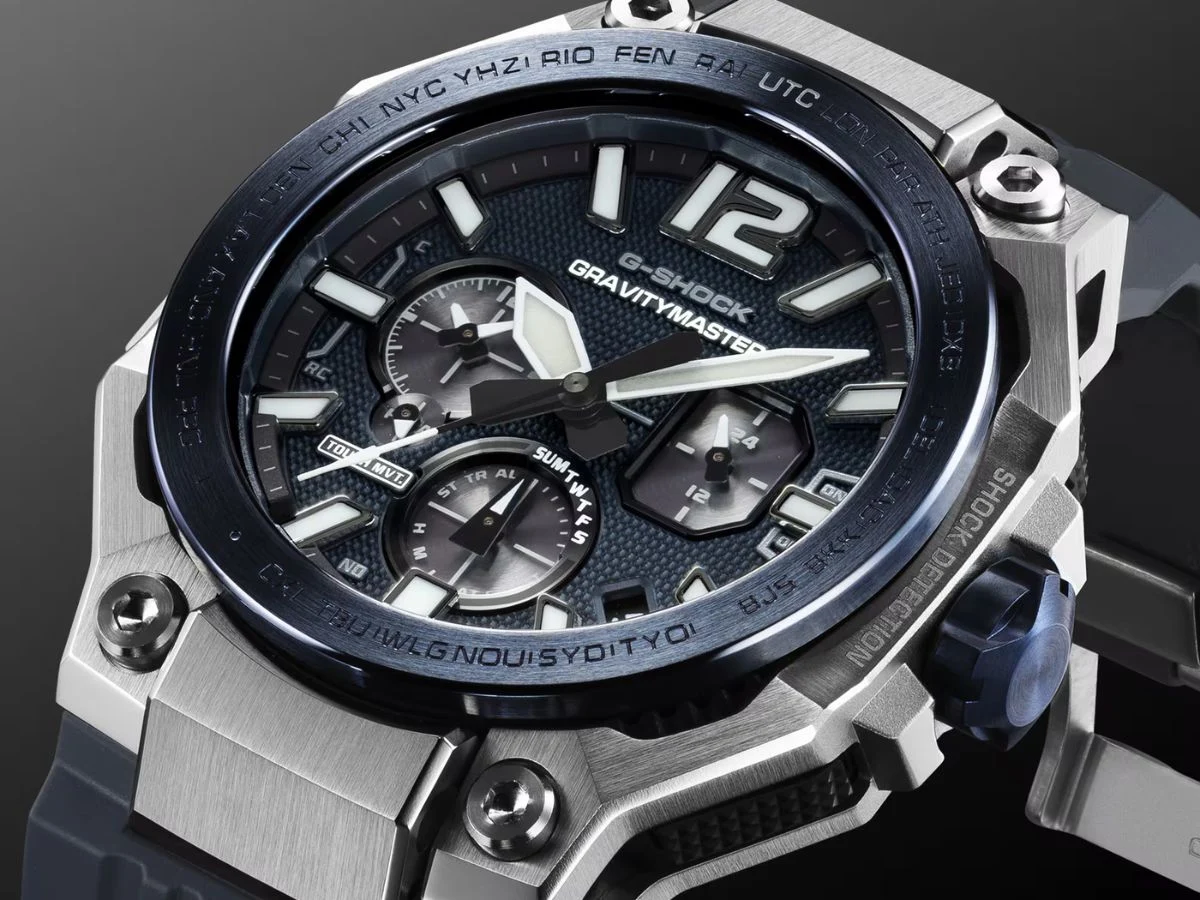
  • Casio G-Shock Gravitymaster GR-B300-1A Drops to Lowest Amazon Price

    Casio G-Shock Gravitymaster GR-B300-1A Drops to Lowest Amazon Price

    Key Takeaway

    – The Casio G-Shock Gravitymaster GR-B300-1A (Amazon US) is discounted to $199, a 30% cut and all-time low price matching Camelcamelcamel’s tracking.
    – Features include carbon fiber-reinforced construction, carbon core guard, aviation-inspired design, 200 m water resistance, Tough Solar, and Bluetooth Casio app integration.
    – Analog-plus-digital capabilities: dual time, world time (300 cities), 1-second stopwatch, hourly signal, phone finder, and a flight log for recording transit data.
    – Battery life up to 18 months per charge with Tough Solar.
    – Limited-time deal; price and availability subject to retailer changes.

    Casio’s G-Shock Gravitymaster GR-B300-1A Pilot watch is currently discounted on Amazon in the US, reaching its lowest-ever price.

    Casio’s G-Shock Gravitymaster GR-B300-1A Pilot watch is currently discounted on Amazon in the US, reaching its lowest-ever price. To be more precise, the Casio Amazon storefront has slashed the price of its G-Shock Gravitymaster GR-B300-1A watch by 30%, bringing it down to just $199 from its $330 original list price. This matches its all-time low price, according to the Amazon price tracking website Camelcamelcamel.

    Design and build

    The GR-B300-A watch features an aviation-inspired design while combining G-Shock’s signature ruggedness. You get carbon fiber-reinforced resin and a seamless bezel design with the G-Shock Gravitymaster GR-B300-1A watch. On top of this, it utilizes the carbon core guard structure, which Casio claims is made of the same carbon material used in aircraft fuselages.

    Features and performance

    What’s interesting is that the analog watch offers all the features of the digital watches, namely, dual time, world time for 300 cities, a 1-second stopwatch, an hourly time signal, a phone finder, and Bluetooth connectivity with Casio app integration. Another nice-to-have is Casio’s Tough Solar charging, meaning you won’t have to worry about frequently replacing the battery. Speaking of battery life, it is said to last up to 18 months on a single charge.

    Flight log and water resistance

    Additionally, it also ships with a flight log feature that allows users to record data like transit points, home destinations, points of departure, and so on. The pilot watch is rated for 200 m (20 bar) water resistance.

    Conclusion

    All told, if you are an aviation buff and have your eye on this watch, then this is the best opportunity to snag the G-Shock Gravitymaster GR-B300-1A pilot watch, especially at this discounted price point.

  • Apple Watch Ultra 4: New Design and Sensor Upgrades

    Apple Watch Ultra 4: New Design and Sensor Upgrades

    Key Takeaway

    – Apple Watch Ultra 4 is expected to receive a complete redesign and major sensor upgrades.
    – Design changes are anticipated to be so drastic that Ultra sales could rise 20–30%.
    – Sensor count is expected to double with improved energy efficiency; possible longer battery life.


    Apple Watch Ultra 4 Rumors

    Bloomberg reported in March that the Apple Watch Series 12 would receive hardly any new features, but a fresh DigiTimes tale suggests that Apple’s flagship smartwatch will indeed get two major upgrades. The report claims the successor to the Apple Watch Ultra 3 ($776 on Amazon) will sport a full redesign, which would mark a notable shift for the high-end line. The source adds nothing concrete about the Ultra 4’s appearance, yet says the drastic changes could spark a 20 to 30 percent bump in sales.

    Design overhaul and sensor ambitions

    For the first time since the original Apple Watch Ultra landed in September 2022, Apple might overhaul the top model’s physique. DigiTimes stays mum on precise visuals for the Ultra 4, but insists the changes are so substantial that demand could surge. On top of the new look, Apple is rumored to push big sensor upgrades, with a plan to double the sensor count and push energy efficiency higher, potentially extending battery life. It remains unclear if Apple will simply add more photodiodes to sharpen data like heart rate and blood oxygen monitoring while burning less power, or if entirely new features are in the cards.

    Health data, efficiency, and expectations

    The chatter hints that higher accuracy for high blood pressure alerts—an improvement tied to watchOS 26 on Series 9 and newer—could arrive, yet a real blood pressure measurement feature similar to Huawei’s Watch D2 seems unlikely this year. Likewise, blood glucose monitoring is not clearly planned, even as Apple is said to be exploring both capabilities. In short, the Ultra 4 could blend improved health sensing with better efficiency, without guaranteeing a full suite of new medical readings in 2024.


  • ROG Xreal R1 AR Glasses Pre-Order Price Tag Update

    ROG Xreal R1 AR Glasses Pre-Order Price Tag Update

    Key Takeaway

    – 240Hz micro OLED displays with 0.01ms response time and a 57° wide field of view, touted for ultra-fluid gaming visuals on AR glasses.
    – Priced at $849—significantly higher than Xreal’s One Pro ($599–$649) due to gaming-focused enhancements and co-branding with Asus ROG.
    – Electrochromic lenses with three tint levels and peak brightness of 700 nits (lower than some competitors, e.g., 1,200 nits on RayNeo Air 3S Pro).
    – Integrated ROG dock with a signal switch for easy display-source swapping, plus comfort-forward design, anchor mode with native 3 DoF, and Bose-built audio.

    Asus has just rolled out the ROG Xreal R1 in China after showcasing the gaming AR glasses at CES 2026, and they’re now open for purchase. The pre-order price sits higher than typical non-gaming AR glasses, signaling a premium for the gaming features and branding involved.

    Pricing snapshot

    The ROG Xreal R1 glasses are listed on the Xreal shop for 849, while Xreal’s top-end One Pro normally retails at 649 and can drop to 599 with occasional discounts. These co-branded AR glasses carry a handful of gaming-centric enhancements that set them apart from standard models in the market.

    Display and performance

    First off, they claim to be the first commercially available AR glasses with 240Hz refresh rate micro OLED displays. In contrast, non-gaming AR options typically max out at 120Hz. Xreal asserts a 0.01ms response time for the ROG glasses, which should translate into smoother motion and more fluid picture output for fast-paced gaming.

    Visual specs and field of view

    The micro OLED displays reportedly offer up to a 171-inch virtual screen size, though this isn’t groundbreaking since some AR glasses like the Rayneo Air 4 Pro reach around 201 inches. The R1 counters with a relatively wide field of view of 57°, which could contribute to a more immersive viewing experience during gameplay and AR tasks alike.

    Lenses and brightness

    The R1 includes electrochromic lens technology with three tint levels to help isolate the display from surrounding light. However, peak brightness sits at 700 nits, which is notably lower than last-gen devices like the RayNeo Air 3S Pro with 1,200 nits, suggesting usage conditions will influence perceived clarity in bright environments.

    Gaming-centric features

    Asus and Xreal have teamed up on several gaming-focused features for the R1. The bundled ROG dock includes a built-in signal switch for easy swaps of display source. Other highlights include a comfort-forward adjustable design, anchor mode with native 3 DoF, and an audio system described as being tuned with Bose technology. A promotional video is available to showcase these capabilities.

    Sources