Category: Phones

Stay updated with the latest phone news, reviews, and trends. Discover cutting-edge smartphones, features, and innovations in our Phones category at GizNewsDaily

  • Circle to Search Expands Pixel 7 Series for Google SEO

    Circle to Search Expands Pixel 7 Series for Google SEO

    Google has recently introduced the Pixel Feature Drop for March, unveiling a range of new features. Notably, a feature previously announced two months ago is now being extended to older Pixel models, specifically the Pixel 7 and 7 Pro. This feature, known as Circle to Search, is already present in the Pixel 8 series.

    Circle to Search Widens its Reach to Pixel 7 Series

    In an official blog post, Google confirmed that the March Pixel Drop will bring Circle to Search functionality to the Pixel 7 and 7 Pro. However, as is common with software updates, it may take some time for all devices to receive it. Similar to the process with the Pixel 8 series last month, it appears that Circle to Search activation on the Pixel 7 lineup is a server-side switch.

    The presence of this feature was first noticed by a Reddit user on their Pixel 7 Pro, which was running an Android beta build. Android Police also investigated and found Circle to Search operational on their Pixel 7 device. Their unit was operating on a stable Android 14 version with a February security patch and a January 2024 Play System update. According to reports, the feature became accessible after updating the Google app to the latest beta build, mirroring the experience of the Reddit user. Users could also activate Circle to Search by reverting to the stable version of the Google app, suggesting that the beta version may have triggered its availability.

    Therefore, for those who have not yet received the Circle to Search feature, it is advisable to ensure that the Google app is regularly updated to the most recent version. Users can check for its availability by long-pressing on the home button or navigation bar on their devices.

  • Google Pixel 8 Series Adds USB-C Support for Display Output

    Google Pixel 8 Series Adds USB-C Support for Display Output

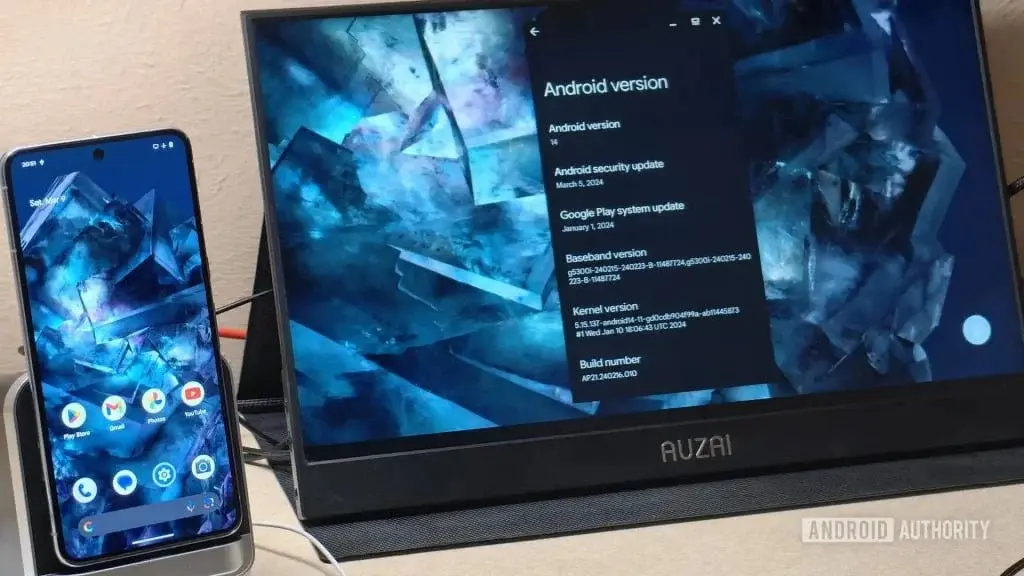
    Pixel devices have long been missing the ability to output display via USB-C. However, with the recent Android 14 QPR3 Beta 2 update, Google has introduced DisplayPort Alternate Mode support for the Pixel 8 and Pixel 8 Pro, allowing users to project their phone's screen onto a larger display.

    Android 14 QPR3 Beta 2 Update Unlocks DP Alt. Mode for Pixel 8 Series

    While previous Pixel models met the hardware requirements for video transmission through USB-C 3.1 or higher, Google had disabled this feature until now. Last October, experimental methods like GrapheneOS allowed Pixel 8 users to access this functionality, but it now comes integrated into the system without requiring any modifications.

    Easy Screen Casting with Pixel 8 and Pixel 8 Pro

    Upon connecting your Pixel 8 or Pixel 8 Pro to an external monitor, a prompt will appear, giving you the option to mirror your screen. By selecting this option, your phone's display will be mirrored on the monitor, with the wallpaper filling the surrounding space. Google is reportedly working on an improved "Desktop Mode" interface, although it is currently hidden behind certain settings. Users of older Pixel devices can still utilize this feature by installing the DisplayPort Magisk Module through Magisk Manager.

    Evolution of Display Features in Mobile Devices

    Samsung devices have supported a similar feature called Samsung DeX since 2017, providing users with a desktop-like interface. Samsung has even enabled wireless data transmission in addition to the standard USB-C connection, enhancing the user experience. Android's native desktop mode has been in development since Android 10, raising questions about whether Google will introduce a comparable feature in the future.

  • Xiaomi Mix Fold 4 Leak: Storage, Battery, Fast Charging Details

    Xiaomi Mix Fold 4 Leak: Storage, Battery, Fast Charging Details

    Xiaomi is currently in the process of developing the Mix Fold 3 smartphone, following the introduction of the Mix Fold 3 foldable smartphone in August 2023. Recent reports have unveiled essential information about the device, including details regarding the chipset and camera setup. Now, tipster DCS has shared additional insights about the upcoming foldable device.


    According to a Weibo post (via @ZionsAnvin), the Xiaomi Mix Fold 4 is expected to boast a sturdier body and hinge, enhancing its durability. This new hinge design aims to minimize creases on the folding screen. Internally, the device is set to offer 16GB of RAM and 1TB of storage, with a Snapdragon 8 Gen 3 chipset as confirmed by previous reports.

    The battery capacity of the Mix Fold 4 will exceed 5000mAh and support 100W fast charging, a noticeable upgrade from the Mix Fold 3’s 4800mAh battery with 67W fast charging. Additionally, the device is anticipated to sport a 50MP main camera, a new periscope lens, alongside other camera enhancements. The previously mentioned satellite connectivity will facilitate two-way communication.


    Furthermore, the Mix Fold 4 is rumored to include an IP rating, a feature absent in the Mix Fold 3. It will also incorporate a custom x-axis linear motor to enhance haptic feedback, with an expected weight ranging between 220g – 240g, possibly varying based on the back panel material used.

    The last two iterations of the Mix Fold series by Xiaomi were unveiled in August, suggesting that the Mix Fold 4 might follow suit with a similar launch timeframe. As more detailed specifications are anticipated to surface in the coming days, stay tuned for further updates.

  • Apple reveals 2 new R&D labs in Shanghai and Shenzhen, China

    Apple reveals 2 new R&D labs in Shanghai and Shenzhen, China

    Tech giant Apple is strategically expanding its research and development (R&D) presence in China as part of its efforts to address challenges and leverage opportunities in the Chinese market.

    Boosting R&D Presence in China

    Apple is directing its focus towards enhancing its existing applied research lab in Shanghai. This facility concentrates on refining the materials and construction of Apple products to elevate their quality and performance. Simultaneously, the company is constructing a new applied research lab in Shenzhen, slated to commence operations by the latter part of 2024. This new lab aims to support employees, foster closer collaborations with local suppliers, and bolster the connection between Apple and Chinese manufacturers. It will provide advanced research facilities for regional staff and enhance testing capabilities for flagship products like the iPhone, iPad, and Apple Vision Pro.

    Investment in R&D

    Isabel Ge Mahe, Apple Greater China, highlighted the company's increased commitment to R&D in the region, with investments exceeding $139 million in applied research labs in China. Moreover, Apple has doubled its R&D staff in China over the past five years, indicating a significant dedication to innovation and development in the country.

    Despite facing stiff competition from local smartphone brands such as Huawei, Apple's expansion efforts underscore its determination to maintain a strong foothold in the Chinese market, which offers substantial long-term potential. The imminent opening of Apple's eighth store in Shanghai, Apple Jing’an, underscores the company's commitment to expanding its retail presence in China. Local retailers have been offering notable discounts on Apple products to sustain sales momentum, reflecting a successful strategy thus far. As Apple continues to navigate the dynamic Chinese tech landscape, its ability to sustain consumer interest and engagement remains a key factor for future success.

  • Oppo Find X7 Ultra Tops DxOMark Smartphone Camera Rankings

    Oppo Find X7 Ultra Tops DxOMark Smartphone Camera Rankings

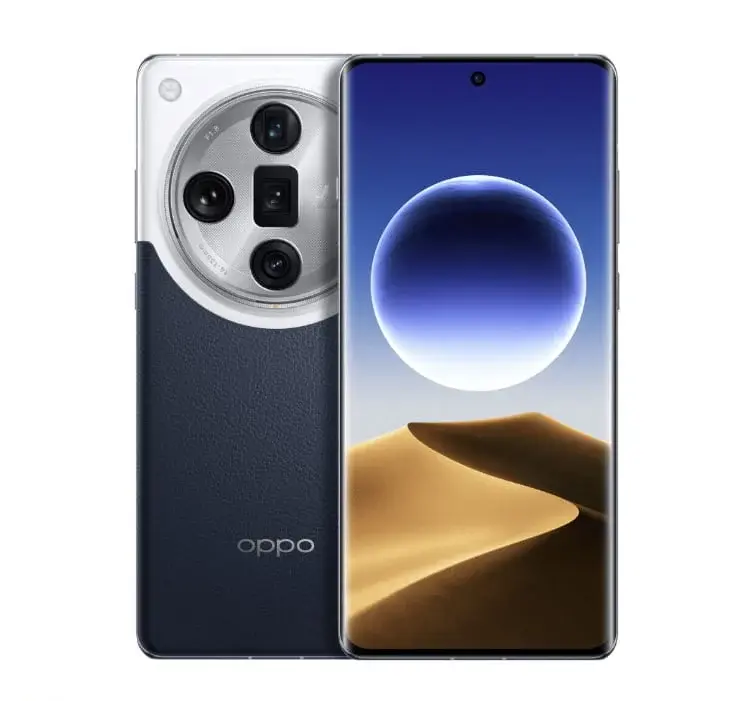
    Earlier this year, Oppo launched its flagship Find X7 Ultra smartphone exclusively in the Chinese market. Despite not being globally available yet, the device underwent camera system tests by DxOMark, a reputable benchmarking company from France, and emerged as the top performer in the ultra-premium segment.

    The Oppo Find X7 Ultra achieved a remarkable score of 157 on DxOMark’s camera evaluation, putting it on par with the Huawei Mate 60 Pro+ at the top spot. It surpassed its competitors in key areas such as Bokeh photography (85 points), telephoto zoom (118 points), and visual noise in video mode (119 points).

    Camera Performance Excellence

    Reviewers praised the Oppo Find X7 Ultra for its exceptional portrait capture capabilities, delivering natural colors and intricate details across various scenarios. Featuring a 50MP main camera with a sizable 1" sensor, the device produces images with authentic tones and minimal noise. Its dual periscope tele zoom cameras excel in capturing detailed shots between 3x to 6x zoom levels and beyond. Bokeh images in portrait mode exhibit precise subject separation and vibrant color rendition.

    Impressive Low-Light Performance

    Despite lacking HDR in video mode, the Oppo Find X7 Ultra delivers outstanding results with accurate exposure and a broad dynamic range. Testers noted its proficiency in capturing vivid colors, natural skin tones, and effectively freezing motion. In low-light conditions, the device shines by revealing shadow details with minimal noise, matching the impressive noise levels of the iPhone 15 Pro Max in both photos and videos.

    For a detailed analysis of the camera system performance, interested individuals can refer to DxOMark’s comprehensive review. 


    Oppo Find X7 Ultra Tops DxOMark Smartphone Camera Rankings
  • Snapdragon 8 Gen 4 & Dimensity 9400 Outperform Apple A18 Pro in Geekbench Test

    Snapdragon 8 Gen 4 & Dimensity 9400 Outperform Apple A18 Pro in Geekbench Test

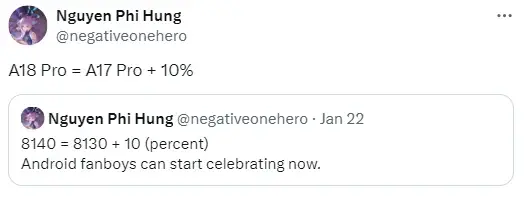
    As the iPhone 16 series launch approaches, discussions are intensifying around Apple’s A18 Pro chip set to power the new devices. Initial reports highlighted the significant enhancement in single-core performance offered by the A18 Pro. However, recent insights shared by tipster @negativeonehero on X suggest that the multi-core performance of Apple’s upcoming A18 Pro shows only a modest 10% improvement. This advancement appears to lag behind two competing next-generation Android flagships – the Snapdragon 8 Gen 4 and Dimensity 9400.

    Performance Discrepancy in Multi-Core Scores

    The A18 Pro achieved a score of approximately 8200 in the Geekbench multi-core test, falling notably short when compared to the Snapdragon 8 Gen 4 and Dimensity 9400, which scored 10628 and 11739 points respectively. These substantial performance differentials, exceeding 2000 points, indicate a potential edge for the next wave of Android flagships over the iPhone 16 Pro models.

    Single-Core Performance Insights

    Conversely, the Snapdragon 8 Gen 4 excelled in single-core performance, reaching an impressive 3500 points, slightly surpassing the A18 Pro’s 3300 points. This jump, compared to the Snapdragon 8 Gen 3’s 2200 points in Geekbench single-core, signifies a substantial enhancement in performance. Moreover, the Dimensity 9400 promises nearly a 20% boost in both single-core and multi-core scores in contrast to its predecessor, the Dimensity 9300.

    Future Developments and Speculation

    While these chips are still in the developmental phase and slated for release towards the end of 2024, there remains ample opportunity for Apple, Qualcomm, and MediaTek to refine and optimize their offerings. Industry experts speculate that Apple may have deliberately limited multi-core performance to prioritize battery efficiency, a crucial consideration in modern smartphones.


  • Honor Magic 6 Ultimate: First to Debut OmniVision OV50K Camera

    Honor Magic 6 Ultimate: First to Debut OmniVision OV50K Camera

    Honor is preparing to introduce the Magic 6 Ultimate and the Magic 6 RSR in China soon. Before the official launch, details have emerged about the camera technology in the Magic 6 Ultimate. This upcoming flagship might be the first to showcase OmniVision’s newest camera sensor. Here’s what we know so far.

    Honor Magic 6 Ultimate Camera Details

    The Magic 6 RSR and Magic 6 Ultimate are scheduled for unveiling in the Chinese market on March 18, 2024. Digital Chat Station, a reliable tipster, has disclosed more information about the primary camera featured in the Magic 6 Ultimate. Reports suggest that the Magic 6 series will pioneer the integration of a one-inch primary camera sensor from OmniVision.

    Earlier today, on March 12, 2024, Honor released a teaser highlighting the primary camera of the upcoming smartphone. The teaser suggested that the Magic 6 Ultimate would boast an SLR level super dynamic Eagle Eye camera. This innovative camera is expected to introduce the world’s first car-level LOFIC technology, promising exceptional photo quality in diverse lighting conditions. According to the tipster, the Honor Magic 6 Ultimate may debut with the OmniVision OV50K sensor.

    For those unfamiliar, the OmniVision OV50K is a 50-megapixel camera known for delivering top-tier photography performance. It features a variable aperture ranging from f/1.4 to f/2.0 and offers a remarkable dynamic range of 15EV. It’s essential to note that these details are based on unofficial reports, so it’s advisable to await further updates on this smartphone.


    Honor Magic 6 Ultimate: First to Debut OmniVision OV50K Camera
  • Nothing Phone (2a) Sale in India: Over 60,000 Units Sold in 1 Hour

    Nothing Phone (2a) Sale in India: Over 60,000 Units Sold in 1 Hour

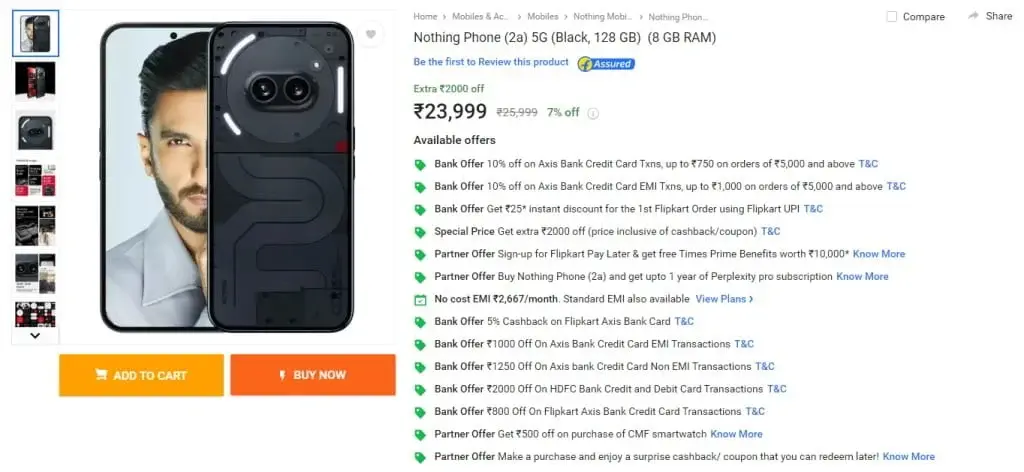
    Nothing recently introduced the Nothing Phone (2a) in the global market, with its launch in India following shortly after. Indian customers can now purchase this phone through various outlets including Flipkart, Croma, and Vijay Sales. The brand has seen a strong response in India, with sales exceeding 60,000 units within the first hour.

    Availability and Sales

    The Nothing Phone (2a) is now available in India through Flipkart, Croma, Vijay Sales, and other leading retail outlets. The brand expressed gratitude for the positive reception and encourages customers to continue showing their support.

    Pricing and Promotions

    The Nothing Phone (2a) is offered in three configurations:

    • 8 GB + 128 GB – Rs. 23,999
    • 8 GB + 256 GB – Rs. 25,999
    • 12 GB + 256 GB – Rs. 27,999

    HDFC cardholders can enjoy an immediate discount of Rs. 2,000, and an additional Rs. 2,000 discount is available through a Flipkart exclusive promotion. This brings the starting price of the phone down to just Rs. 19,999. Customers can also purchase the CMF Buds for Rs. 1,999 and the CMF Power 65W GaN charger at a special rate of Rs. 1,999.

    Specifications

    The Nothing Phone (2a) features a 6.7-inch flat display with FHS+ resolution, 120Hz refresh rate, and 1,300 nits peak brightness. The display supports HDR10, features 2160Hz PWM dimming, and is safeguarded by Corning Gorilla Glass 5. To ensure security, it includes an in-display fingerprint scanner and a 32MP Sony IMX615 sensor for selfies and face unlocking.

    At the rear, the phone showcases a circular island housing a 50MP primary camera (Samsung ISOCELL S5KG9 sensor) with optical image stabilization, and a 50MP ultra-wide camera (Samsung JN1 sensor). Surrounding the camera island are three Glyph LED strips.

    Powered by a MediaTek Dimensity 7200 Pro processor, the phone offers up to 12GB of RAM and 256GB of storage. It is equipped with a 5,000mAh battery supporting 45W fast charging and runs on Nothing OS 2.5 based on Android 14. The company has also initiated the rollout of a day one patch, named Nothing OS 2.5.3, to enhance the device’s software.

    In terms of connectivity, the device supports Bluetooth 5.3, WiFi 6, dual 5G, and NFC. It boasts an IP54 certification, providing protection against dust and water splashes.


    Nothing Phone (2a) Sale in India: Over 60,000 Units Sold in 1 Hour
  • Upcoming Launch: POCO F6 on the Horizon

    Upcoming Launch: POCO F6 on the Horizon

    In recent times, there has been a surge of speculation surrounding the highly awaited POCO F6, with leaked details shedding light on potential enhancements over its predecessor, the POCO F5. The GSMChina team has unearthed crucial information about the device, revealing the utilization of Qualcomm’s formidable SM8635 SOC.

    POCO F6 Unveiling Insights

    The POCO F5 featured a Snapdragon 7+ Gen 2 SOC, essentially a revamped SM8475, a Qualcomm Snapdragon 8+ Gen 1 variant. Known for providing an outstanding gaming experience and improved imaging features, the SM8475 garnered praise from users. Now, the upcoming POCO F6 is poised to elevate this performance by integrating the yet-to-be-officially-announced SM8635 SOC. The official introduction of the SM8635 is slated for March 18, with the POCO F6 series expected to debut in April.

    POCO F6 Details

    Leaked data indicates that the POCO F6 has appeared in the IMEI Database, revealing model numbers "24069PC21G" for the global edition and "24069PC21I" for the Indian variant. Interestingly, the POCO F6 is anticipated to be accessible in various regions, with the exception of Japan. A noteworthy development suggests that the Redmi Note 13 Turbo might precede the launch of POCO F6, with plans for its introduction in the Chinese market under the model number "24069RA21C." Speculations suggest that the POCO F6 could be a rebranded version of the Redmi Note 13 Turbo.

    Redmi Note 13 Turbo

    Moreover, the codename assigned to the POCO F6 is "Peridot." Taking inspiration from the yellow ruby, also referred to as Zebercet, Peridot is a type of olivine mineral with the intriguing alias "snake stone." This naming convention aligns with the tradition of Redmi Note series devices, typically named after gemstones.

    As anticipation builds for the official unveiling of the POCO F6 in April, it's important to note that these launch timelines are not officially confirmed but are estimates provided by industry insiders. With March progressing, the debut of the Redmi Note 13 Turbo is expected to pave the way for the introduction of the POCO F6.

  • iQOO Z9 India Launch: Dimensity 7200 Chip, 120Hz AMOLED, 44W Charging & More

    iQOO Z9 India Launch: Dimensity 7200 Chip, 120Hz AMOLED, 44W Charging & More

    The iQOO Z9 has officially launched in India as planned, marking the brand's second smartphone release in the country for 2024 following the iQOO Neo 9 Pro.

    Upgraded Features and Design

    This new device is a successor to the iQOO Z7 and iQOO Z7s from 2023, boasting not only enhanced specifications but also a fresh design.

    iQOO Z9 Specifications

    The iQOO Z9, much like many budget smartphones, features a sleek body design with cameras housed within a compact square module. It is IP54-rated for splash resistance, measuring 7.83mm in thickness and weighing 188g.

    The phone showcases a 6.67-inch AMOLED display with a resolution of 2400 x 1080 pixels (FHD+), 394 PPI, and a 120Hz refresh rate. The screen supports up to a 1200Hz instant touch sampling rate and a peak brightness level of 1800 nits.

    Powered by a MediaTek Dimensity 7200 chipset, the device is coupled with LPDDR4x RAM and UFS 2.2 storage, running on Funtouch OS 14 based on Android 14.

    The rear camera setup includes a 50MP Sony IMX882 primary sensor with OIS and a 2MP depth sensor, while the front features a 16MP selfie camera. Additional features include an in-screen fingerprint sensor, dual stereo speakers, a MicroSD card slot, and a USB Type-C port. Connectivity options include dual SIM, 5G, WiFi 6, Bluetooth 5.3, and GNSS.

    Notably, the phone packs a 5,000mAh battery with 44W wired charging support.

    iQOO Z9 Price in India

    In India, the iQOO Z9 is available in two memory configurations:

    • 8GB + 128GB – ₹19,999 (~$240)
    • 8GB + 256GB – ₹21,999 (~$265)

    Customers can choose between Brushed Green or Graphene Blue color variants when purchasing from Amazon and iQOO.com.

    Amazon Prime members can make their purchase from 12 PM on March 13, with open sales starting 24 hours later. Buyers can also enjoy a ₹2,000 instant discount on transactions made using credit cards issued by ICICI Bank and HDFC Bank.