Category: Phones

Stay updated with the latest phone news, reviews, and trends. Discover cutting-edge smartphones, features, and innovations in our Phones category at GizNewsDaily

  • Samsung’s Future: Modular Phones with Replaceable Lenses

    Samsung’s Future: Modular Phones with Replaceable Lenses

    Key Takeaways

    1. Samsung has filed a patent for a modular smartphone design that supports interchangeable lens accessories.
    2. The patent outlines four main components: device housing, lens assembly, image sensor, and motor/actuator.
    3. The phone can recognize attached lenses using methods like magnets or RFID tags, allowing automatic camera setting adjustments.
    4. Additional accessories like flash units and batteries could also be accommodated in the phone’s design.
    5. While the patent reveals interesting concepts, it’s uncertain if these features will be available to consumers in the future.


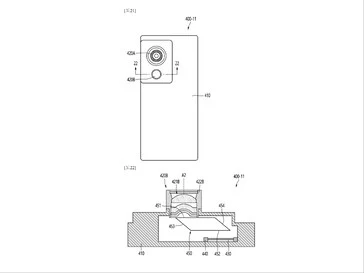
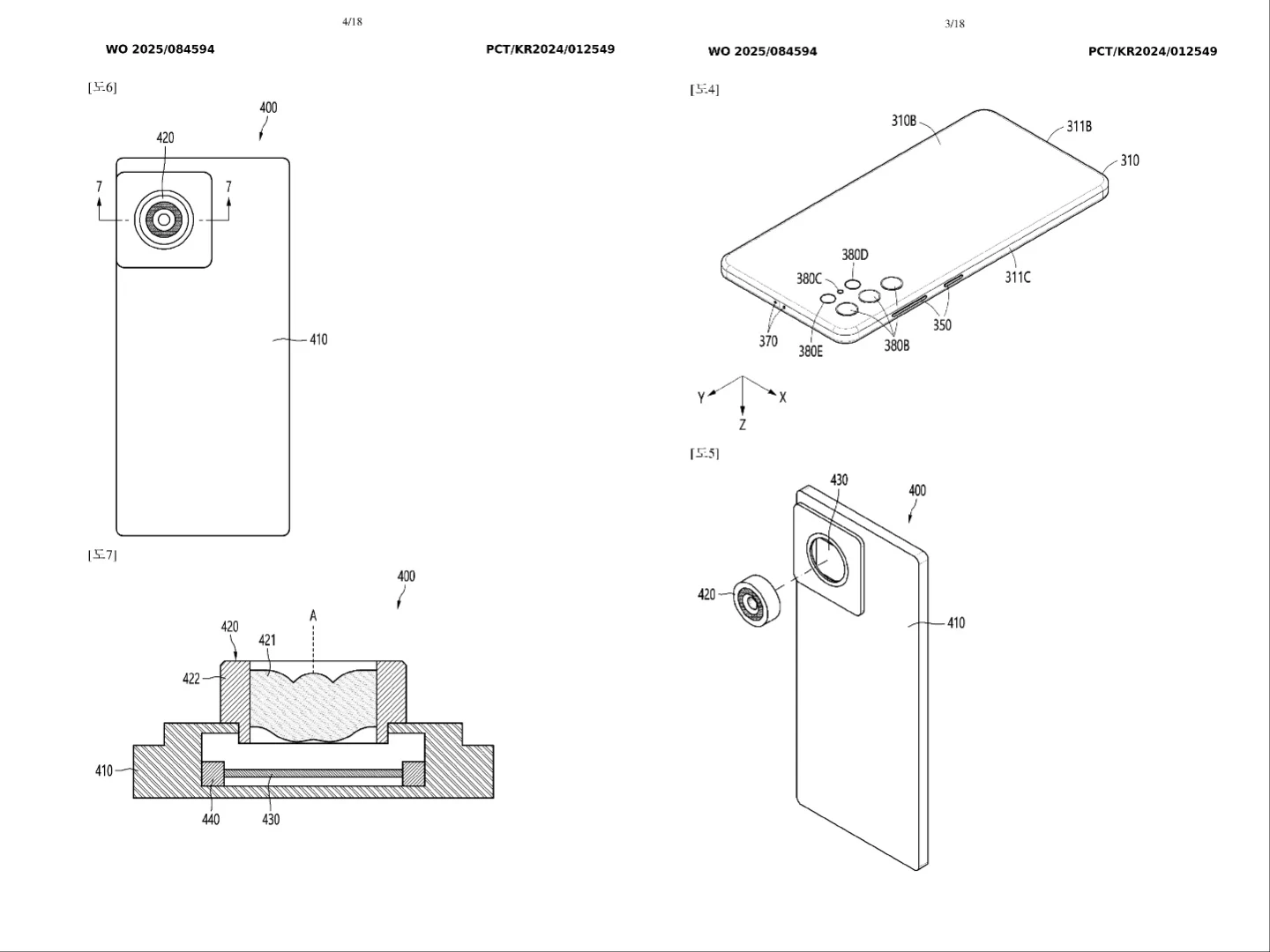
    With the recent launch of the CMF Phone 2 Pro, featuring external lens accessories, it appears that Samsung also has a similar idea in development. A newly discovered Samsung patent reveals a modular phone design that supports replaceable accessories, especially lenses. The patent outlines four key components that would, in theory, let users attach various lenses to their phone’s internal camera system.

    Patent Insights

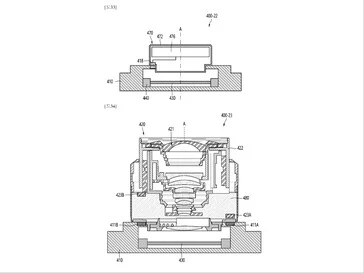
    According to a report by 91mobiles, this patent was submitted to WIPO by Samsung Electronics last year and became public on April 24 this year. The drawings illustrate a standard Samsung flagship smartphone that includes a square external housing positioned above the camera lenses. The patent identifies four main components: a device housing, lens assembly, image sensor, and a motor or actuator.

    Functionality of Components

    The device housing is the square part that holds all the other components together. The lens assembly includes the interchangeable lenses that connect to the housing, while the image sensor gathers data from these lenses. The motor or actuator is likely responsible for enabling zoom and focus features by adjusting either the lens assembly or the sensor.

    The report states that the device must recognize which lens is connected, potentially using magnets, RFID tags, or resistors for this purpose. This capability would enable the device to automatically change various settings in the camera application. It also mentions that this housing could accommodate additional accessories like flash units, batteries, and extra displays.

    Market Viability

    It’s important to understand that these are just concepts at this stage, and it’s uncertain if they will ever reach consumers. However, given the CMF Phone 2 Pro with its interchangeable lenses, it wouldn’t be surprising if other companies begin to explore similar modular designs. The Phone 2 Pro features a detachable back panel that allows users to easily swap in different lenses.

    Source:
    Link

  • Nothing Phone (3) US Launch Announced by Carl Pei

    Nothing Phone (3) US Launch Announced by Carl Pei

    Key Takeaways

    1. The Nothing Phone (3) will be available in the US, confirmed by CEO Carl Pei.
    2. Previous models, like the Nothing Phone 3a, indicate a trend of availability in major markets.
    3. The phone may be sold through various carriers, enhancing compatibility with US networks.
    4. The launch is set for the third quarter of 2025.
    5. Expected features include a flagship chipset, high-refresh-rate AMOLED screen, Essential Key, and triple rear cameras.


    The Nothing Phone (3) is one of the most awaited smartphones of 2025, but there’s a crucial question about where it will be sold. We’ve seen in the past that just because a phone is highly anticipated doesn’t mean it will be released in important markets. A good example of this is the OnePlus 13s, which won’t be available in Europe or North America. Luckily, the Nothing Phone (3) will not face the same fate.

    Confirmation of Availability

    Carl Pei, the CEO and co-founder of Nothing, has made it clear that the Nothing Phone (3) will be sold in the US. He shared this information on X after he was asked by a user if the phone would be available in the country.

    What This Means for Consumers

    While this news isn’t shocking given the availability of the company’s previous models like the Nothing Phone 3a (which can be found on Amazon for $398) and the CMF Phone 2 Pro, it is intriguing because the question specifically inquired about availability beyond the beta program. We can take Carl Pei’s confirmation as a strong indication that the phone will be accessible to a wider audience, possibly even through various carriers, ensuring that it is compatible with major US networks.

    Launch Details and Features

    The launch of the Nothing Phone (3) is planned for the third quarter of the year, which is just a few months away. The phone is expected to boast a flagship chipset, a high-refresh-rate AMOLED screen, an additional button called the Essential Key, and triple rear cameras.

    Source:
    Link

  • Honor 400 Pro Launch: 200MP Camera and 7000mAh Battery Expected

    Honor 400 Pro Launch: 200MP Camera and 7000mAh Battery Expected

    Key Takeaways

    1. The Honor 400 and 400 Pro aim to compete with Oppo Find X8 and X8 Pro at a better price point.
    2. The Honor 400 features a 6.55-inch screen, while the 400 Pro has a larger 6.72-inch display.
    3. Both models are expected to have a 200MP main rear camera, with potential differences in sensor usage compared to the flagship Honor smartphone.
    4. The 400 Pro may include a powerful 50MP zoom camera and will have a robust metal mid-frame and a large 7,000mAh battery.
    5. Both devices will reportedly use the Snapdragon 8 Gen 3 processor for high performance.


    The Honor 400 and 400 Pro seem to be aiming to compete with the Oppo Find X8 and X8 Pro, but at a better price. The Honor 400 is rumored to have a smaller screen of 6.55 inches, while the 400 Pro is expected to feature a larger 6.72-inch display.

    Camera Specifications

    According to the well-known leaker Digital Chat Station, both models might share similarities with the high-end Magic7 Pro, particularly regarding their camera capabilities. They are expected to include a 200MP image sensor for the main rear camera, somewhat different from the flagship Honor smartphone, which utilizes this high-resolution sensor in the telephoto lens.

    Additional Features

    There’s a possibility that the 400 series will also have a powerful zoom camera. This would likely be a 50MP option, but it may only be available on the Pro model.

    Furthermore, the devices are predicted to come with premium features, including a sturdy metal mid-frame and a substantial battery capacity of approximately 7,000mAh in the 400 Pro.

    Performance Expectations

    This is particularly important since it’s said that the devices will continue to use the same Snapdragon 8 Gen 3 processor as the previous 300 Pro model, keeping performance levels high.

    Digital Chat Station shared this information via Weibo, and it has caught the interest of many tech enthusiasts.

    Source:
    Link

  • Xperia 1 VII Leaks Show Ultra-Wide and Periscope Camera Upgrades

    Xperia 1 VII Leaks Show Ultra-Wide and Periscope Camera Upgrades

    Key Takeaways

    1. Sony plans to refresh the Xperia lineup next month, focusing on the Xperia 1 instead of the smaller Xperia 5.
    2. The Xperia 10 VI update may be delayed until fall, currently priced at $389.99 on Amazon.
    3. Leaked information suggests possible camera upgrades for the Xperia 1 VII, including enhanced telephoto capabilities and a larger periscope lens.
    4. The Xperia 1 VII will have a slightly larger size compared to the Xperia 1 VI, with increased width and thickness.
    5. Speculated improvements include a Qualcomm Snapdragon 8 Elite processor for better performance and energy efficiency.


    According to the latest news, Sony is planning to refresh the Xperia lineup next month with a new top model. It looks like the company is set to focus on the Xperia 1 again instead of the smaller Xperia 5. However, there are indications that Sony might wait until the fall to update the Xperia 10 VI, which is currently priced at $389.99 on Amazon.

    Possible Camera Enhancements

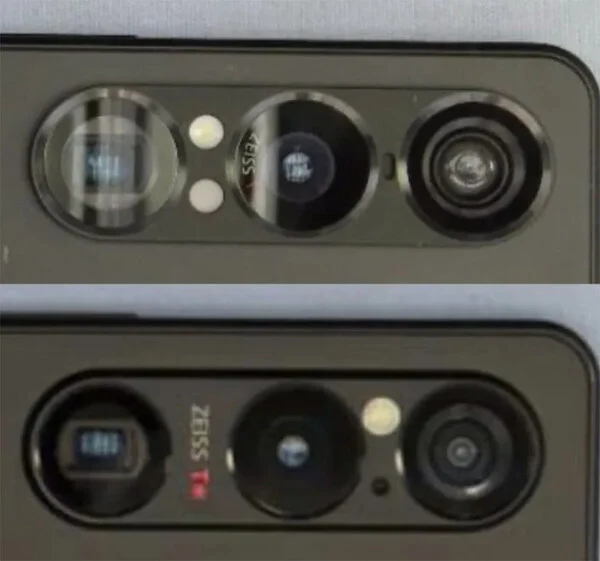
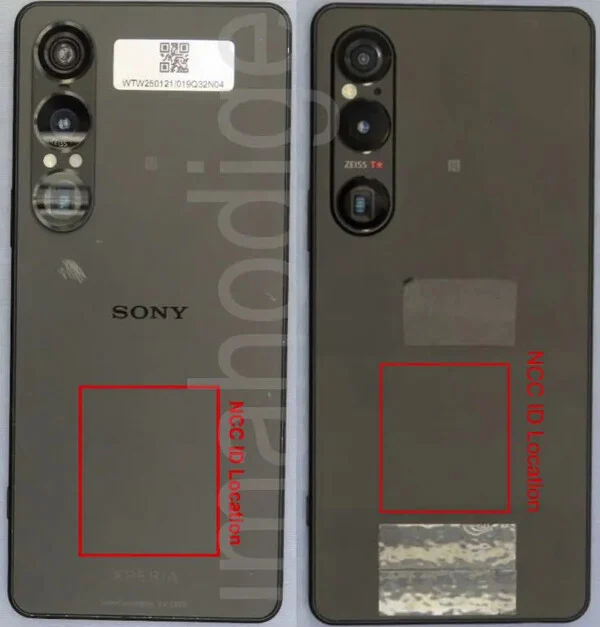
    Even though Sony hasn’t made any official announcements, Sumaho Digest has gathered some insights from leaked photos that suggest possible camera upgrades for the Xperia 1 VII compared to last year’s version. A recent listing from the FCC has shown that the Xperia 1 VII will have the same height as the Xperia 1 VI but with an additional 0.5 mm in width and 0.2 mm in thickness.

    Improved Design and Features

    This indicates that the Xperia 1 VII features a longer camera housing than its earlier model. A closer look at the housing indicates that the Xperia 1 VII might include better telephoto capabilities, as it appears to have a larger periscope lens compared to the Xperia 1 VI. Additionally, leaked visuals hint that Sony could have enhanced the ultra-wide-angle camera setup as well. Other speculated upgrades include a Qualcomm Snapdragon 8 Elite processor, which is expected to deliver significant improvements in performance and energy efficiency.

    Source:
    Link


  • Xiaomi 16 Rumored to Have Larger Battery Than OnePlus 13T

    Xiaomi 16 Rumored to Have Larger Battery Than OnePlus 13T

    Key Takeaways

    1. Xiaomi 16 and Xiaomi 16 Pro are expected to launch this autumn, but only in China.
    2. The standard version of the Xiaomi 16 may be delayed until MWC 2026 in March.
    3. The display size for the Xiaomi 16 is rumored to be around 6.3 inches, utilizing LIPO technology for thinner bezels.
    4. The Xiaomi 16 is expected to feature three 50 MP rear cameras and be powered by the Qualcomm Snapdragon 8 Elite 2 processor.
    5. The battery capacity of the Xiaomi 16 could be nearly 7,000 mAh, surpassing the OnePlus 13T’s 6,260 mAh battery.


    Rumors about Xiaomi’s upcoming compact flagship keep popping up online, even after the global launch of the Xiaomi 15. It’s reported that the Xiaomi 16 and Xiaomi 16 Pro are set to debut this autumn, but only in China. Meanwhile, the standard version might be delayed until the Mobile World Congress (MWC) 2026, which is scheduled for March 2 to March 5 in Barcelona.

    Display Size Changes

    Earlier predictions suggested that Xiaomi would move to a bigger display compared to the 6.36-inch screen of the Xiaomi 15 (currently priced at $1,199.99 on Amazon). Although this idea still holds some weight, fresh rumors indicate the new panel might be closer to 6.3 inches. No matter the exact dimensions, Xiaomi is expected to implement Low-Injection Pressure Overmolding (LIPO) technology to slim down the bezel from one generation to the next.

    Camera and Performance Enhancements

    In addition, the Xiaomi 16 is rumored to feature a set of three 50 MP rear cameras, powered by the Qualcomm Snapdragon 8 Elite 2 processor. Widsom Pikachu emphasizes that this compact flagship will offer the highest battery capacity among similar models with a display around 6.3 inches. This means it would exceed the OnePlus 13T’s battery, which is 6,260 mAh. There are whispers that the Xiaomi 16 might reach nearly 7,000 mAh in capacity, but no solid proof has come to light to back up this claim just yet.

    Source:
    Link

  • Google Pixel 10 Pro Display Upgrade to Reduce Eye Strain

    Google Pixel 10 Pro Display Upgrade to Reduce Eye Strain

    Key Takeaways

    1. Chinese smartphone brands like Xiaomi and OnePlus use high PWM frequencies over 2,000 Hz to eliminate visible flickering in AMOLED screens.
    2. The Google Pixel 9 has a noticeable PWM frequency of 120 Hz, causing discomfort for some users, while the Pixel 9 Pro’s display flickers at 240 Hz.
    3. The flicker amplitude on the Pixel 9 is 22.2%, which can lead to severe headaches for sensitive users.
    4. Google plans to address flickering issues in upcoming updates and potentially improve the PWM frequency in future models.
    5. The upcoming Pixel 10 series may feature displays with higher PWM frequencies or DC dimming to reduce flickering, though it could affect peak brightness.


    Chinese smartphone brands like Xiaomi and OnePlus are leaning towards very high PWM frequencies that go beyond 2,000 Hz. This helps to stop visible flickering in their AMOLED screens. On the other hand, users of the Google Pixel 9 (around $599 on Amazon) still have to deal with a more noticeable PWM frequency of 120 Hz. Our tests also showed that the Pixel 9 Pro’s display flickers at a slightly elevated 240 Hz.

    Flickering Issues

    This flickering can cause discomfort, particularly in the lower-priced Pixel 9 model, which has a flicker amplitude of 22.2%. Those who are sensitive to such issues may suffer from severe headaches after looking at screens with PWM flickers for long periods, while others might not even notice it. Google has recognized this problem and mentioned to AndroidCentral that users can look forward to updates later this year.

    Potential Solutions

    It remains uncertain if Google can enhance the PWM frequency on current Pixel phones via a software update. Nonetheless, the company’s announcement hints that the upcoming Pixel 10 series could come with displays that have less flickering. By using higher PWM frequencies or DC dimming, Google might be able to lessen or completely remove flickers. Another option could be a special display mode designed to minimize screen flickers, but this may result in lower peak brightness on some devices. All in all, these changes indicate that the Pixel 10 series may finally address the concerns of users who are sensitive to PWM flickering.

    Source:
    Link

  • Xiaomi Poco F7 Nears Global Release; Battery Capacity Rumors Rise

    Xiaomi Poco F7 Nears Global Release; Battery Capacity Rumors Rise

    Key Takeaways

    1. Xiaomi is developing the Poco F7 series, including the recently announced Poco F7 Ultra and Poco F7 Pro.
    2. The Poco F7 is expected to be launched internationally, in addition to its initial focus on India.
    3. The global variant of the Poco F7 has been confirmed by Singapore’s IMDA with model number 25053PC47G.
    4. The Poco F7 will feature a Snapdragon 8s Gen 4 chipset, a 6.83-inch AMOLED screen, and a 120 Hz refresh rate.
    5. The Poco F7 will have a reduced battery capacity of 6,500 mAh, support 90 W wired charging, and include a 50 MP main camera with OIS.


    It is clear that Xiaomi is still working on the Poco F7 series. Just a little over a month ago, they revealed the Poco F7 Ultra and the more affordable Poco F7 Pro (curr. $679 on Amazon). However, rumors quickly started to spread about an even less expensive Poco F7 being in the works.

    Release Speculation

    At first, it was thought that the Poco F7 would only be launched in India. Supporting this idea, the device was spotted getting approved by the Bureau of Indian Standards (BIS) earlier this month with the model number 25053PC47I. But more current gossip suggests that the Poco F7 will also be available internationally, although it might come with a 13.9% smaller battery compared to its Indian and Chinese versions.

    Confirmation of Global Variant

    Now, we have confirmation of the rumored global variant from Singapore’s Infocomm Media Development Authority (IMDA). The screenshot below indicates that Xiaomi has submitted model 25053PC47G to the regulatory board under the Poco brand. While the details in the listing are sparse, it is clear that 25053PC47G is the global version, corresponding to the Poco variant of model 25053RT47C, which is the Redmi Turbo 4 Pro.

    Availability and Specifications

    It remains uncertain in which countries the Poco F7 will be released. However, the phone is expected to feature a Snapdragon 8s Gen 4 chipset and a 6.83-inch AMOLED screen with a resolution of 2,772 x 1,280 pixels, a 120 Hz refresh rate, and a peak brightness of 3,200 nits. Although there will be a decrease in battery capacity from 7,550 mAh to 6,500 mAh, the Poco F7 is expected to support 90 W wired charging globally and come with a 50 MP main camera with OIS.

    Source:
    Link


  • OnePlus 13s/13T Not Launching in Europe and North America

    OnePlus 13s/13T Not Launching in Europe and North America

    Key Takeaways

    – The OnePlus 13T will be launched in India as the OnePlus 13s.
    – The phone will not be available in Europe or North America.
    – OnePlus leaders confirmed the lack of launch plans for the 13s in these regions.
    – Users interested in the OnePlus 13s can import it through third-party sellers.
    – The device’s launch date is not yet confirmed and is labeled as “coming soon” on the OnePlus India website.


    The OnePlus 13T is set to launch soon in India, but it will be known there as the OnePlus 13s. Unfortunately, an earlier report that suggested the phone would also be available in Europe and North America has been proven to be incorrect.

    Executive Statements

    According to The Verge, two OnePlus leaders have confirmed that the OnePlus 13s will not be released in Europe or North America. Celina Shi, who is the chief marketing officer for OnePlus Europe, stated in an email, “currently, we have no plans to launch the OnePlus 13s in Europe.”

    Another similar message came from Spencer Blank, the marketing head for OnePlus North America, which specified that the device would not be available in Canada and the United States. Shi’s remarks did acknowledge the interest from users in Europe, and she mentioned that the company will “keep it in mind” for future launches.

    Import Options

    Though it’s disappointing that the OnePlus 13s will have a limited release, those who are keen on the phone can import it through third-party sellers. However, it’s essential for buyers to verify that the device works with their local networks to avoid purchasing a phone that they cannot use.

    As of now, the OnePlus 13s does not have a confirmed launch date and remains listed as “coming soon” on the OnePlus India website.

    Source:
    Link

  • Sony Xperia 10 VII Release Date Rumors and Expected Changes

    Sony Xperia 10 VII Release Date Rumors and Expected Changes

    Key Takeaways

    1. The Sony Xperia 1 VII is set to be released on May 15, 2024.
    2. The release of the Xperia 10 VII may be delayed to October 2024, according to new rumors.
    3. The Xperia 10 VII is expected to target the upper mid-range segment, potentially raising its price above £500 (~$671).
    4. Improvements in chip and camera technology are anticipated for the Xperia 10 VII.
    5. Sony may be planning to merge the Xperia 10 and Xperia 5 series with future releases.


    The Sony Xperia 1 VII is almost here, expected to be released on May 15. There were some hopes that the Xperia 10 VII would also launch around the same time. This idea makes sense since the Xperia 10 V came out in June 2023 (after being announced in May) and the Xperia 10 VI (which you can find on Amazon) was available in June 2024. However, new rumors from two different sources suggest that the release for the Xperia 10 VII might actually be pushed back to October.

    New Rumors Emerge

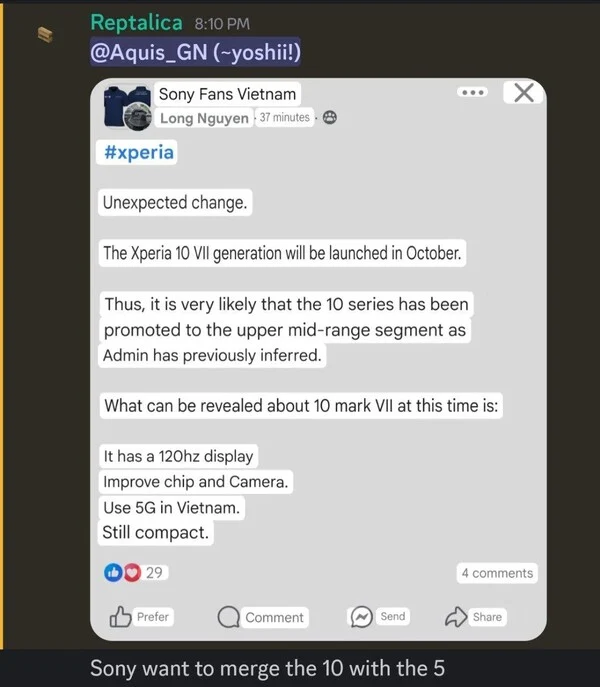
    Information from a trusted tipster on Esato known as Spektykles and a post by u/Aquis_GN on Reddit coincide on the October launch for the Xperia 10 Mark 7. The first source indicates that it “will be launched at 10 (Oct),” while the second source, reportedly from a Sony Fans Vietnam Facebook group, mentions that the October release will help position the Xperia 10 VII “in the upper mid-range segment.” To understand the current standing of the Xperia 10 series, it’s helpful to compare the UK price of the Xperia 10 VI, which is £349, against the Xperia 1 VI at £1,299 (~$468 and $1,742, respectively).

    Pricing Implications

    If the Xperia 10 VII is indeed going to fit into the upper mid-range category, its pricing will likely reflect this change. While classifying phones this way is quite subjective, it might give Sony a reason to raise the price beyond the £500 mark (~$671) and potentially dash any remaining hopes for an Xperia 5 comeback. Interestingly, the rumor from the Facebook group also mentions that this October launch will feature an “improve[d] chip and camera,” along with the note that “Sony wants to merge the 10 with the 5.” If this turns out to be true, there may be another new Xperia phone on the horizon later this year.

    Source:
    Link


  • xMEMS Unveils XMC-2400 Chip for Cooling Electronics with Sound

    xMEMS Unveils XMC-2400 Chip for Cooling Electronics with Sound

    Key Takeaways

    1. Compact Design: The XMC-2400 micro-cooling chip measures just 9.26 x 7.6 x 1.08 mm and operates efficiently with low power consumption (30 mW).

    2. Innovative Air Movement: It uses ultrasonic sound waves and a piezoelectric film to create airflow, unlike traditional fans with rotating blades.

    3. High Airflow Rate: The chip can move air at a rate of up to 39 cubic centimeters per second, aiding in effective heat management.

    4. Easy Integration: Designed for surface-mount technology (SMT), it can be easily installed on motherboards and offers customization for air vent placement.

    5. Durability: With an IP58 rating, it can resist dust and can be submerged in water up to 1 meter, while managing minor blockages effectively.


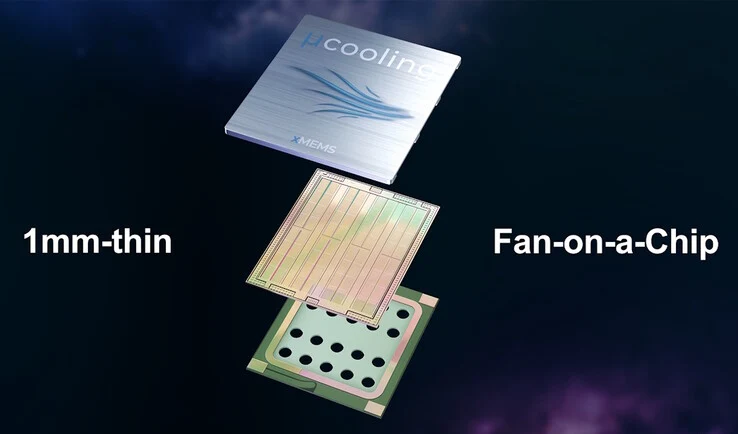
    xMEMS has introduced a new micro-cooling chip, the XMC-2400, designed to help manage heat in smartphones, tablets, and servers.

    Innovative Design

    The chip takes advantage of the company’s experience in creating MEMS speakers and microphones, enabling it to move air at a rate of up to 39 cubic centimeters per second while consuming only 30 mW of power. It is impressively compact, measuring just 9.26 x 7.6 x 1.08 mm (0.36 x 0.30 x 0.04 in.). The technology uses ultrasonic sound waves that are inaudible to the human ear.

    How It Works

    MEMS, or micro-electromechanical systems, are made using advanced techniques similar to those used in CPU fabrication. Unlike traditional fans that have rotating blades, the XMC-2400 operates by vibrating a thin piezoelectric film back and forth to create airflow. This method is akin to the way ocean waves can propel boats across the sea.

    Easy Integration

    The XMC-2400 can easily be mounted on motherboards using surface-mount technology (SMT), which is widely utilized in automated electronics production. It offers customization options, allowing for top or side air vents. With an IP58 rating, it can withstand minor dust intrusion and can be submerged in water up to 1 meter (3.3 feet). It provides bidirectional airflow and can handle minor blockages with up to 1,000 Pa of back pressure per activation.

    Gamers using smartphones will need to rely on magnetic phone fans (like one available on Amazon) until manufacturers incorporate these micro-cooling MEMS chips into their devices.

    Source:
    Link