Category: Phones

Stay updated with the latest phone news, reviews, and trends. Discover cutting-edge smartphones, features, and innovations in our Phones category at GizNewsDaily

  • BL7000 Rugged Smartphone: Night Vision & Reverse Charging Available

    BL7000 Rugged Smartphone: Night Vision & Reverse Charging Available

    Key Takeaways

    1. The Blackview BL7000 is a rugged smartphone with a MediaTek Dimensity 6300 processor and 5G capabilities.
    2. It features a dual SIM capability with one slot able to expand storage via microSD, and has 256GB of internal storage and 8GB of RAM.
    3. The phone measures 7.2 x 3.4 x 0.6 inches, weighs 12.6 ounces, and has IP68 and IP69 ratings for water and dust resistance.
    4. It has a 6.78-inch display with a resolution of 2460 x 1080 pixels and a 120Hz refresh rate.
    5. The camera setup includes a 50MP primary, a 20MP night vision camera, and a 32MP selfie camera, along with a 7,500mAh battery that supports 33W fast charging and reverse charging.


    The Blackview BL7000 has recently hit the market as a rugged smartphone and can be bought directly from the maker or several European sellers, like Amazon Germany. This device runs on a MediaTek Dimensity 6300 processor, which isn’t blazing fast but does have 5G capabilities. It also accommodates two SIM cards, with one slot working as a microSD slot to increase storage. Regarding storage, the phone features an internal capacity of 256GB, and it has a decent 8GB of RAM.

    Design and Durability

    The Blackview rugged phone is approximately 7.2 x 3.4 x 0.6 inches in size, weighs 12.6 ounces, and is built with strengthened edges and corners to help guard against drops. It boasts IP68 and IP69 ratings, indicating solid protection against both water and dust. Additionally, the device has a sizable 6.78-inch display that offers a resolution of 2460 x 1080 pixels and a smooth 120Hz refresh rate.

    Camera and Battery

    At the rear, the primary camera features a Samsung JN1 sensor with a resolution of 50 megapixels, paired with a 20MP night vision camera and a 32MP selfie camera. The battery capacity is impressive at 7,500mAh and it supports charging at a speed of up to 33 watts. Lastly, the phone has the capability to charge other devices with its reverse charging feature, offering up to 6W.

    Source:
    Link


  • Google Pixel 8 Endures 4 Days in Hot Water Tub: Surprising Resilience

    Google Pixel 8 Endures 4 Days in Hot Water Tub: Surprising Resilience

    Key Takeaways

    1. The Google Pixel 8 demonstrated strong durability by surviving several days submerged in hot water.
    2. The phone was lost during a holiday celebration in Poland after falling into a hot tub.
    3. It was found after five days, thanks to a video from the Airbnb host showing it being retrieved.
    4. The Pixel 8 was submerged for four days in water at a temperature of 45 degrees Celsius (113 degrees Fahrenheit).
    5. After recovery, the phone powered up without issues, impressing the owner with its resilience.


    A remarkable tale about the Pixel 8 highlights the strong durability of Google’s flagship smartphones. This old premium device survived several days submerged in hot water, and here’s the full story of this tough Pixel 8.

    The Toughness of Google Pixel 8

    The individual who owned this Google Pixel 8 was from Poland. During a May Holiday celebration at an Airbnb, the device accidentally fell into a hot water tub. The owner, in a state of intoxication, thought he had lost his phone on the very first day of the holiday. Despite searching everywhere, he could not locate his Pixel 8.

    A Surprising Discovery

    On the fifth day of his holiday, the owner received a short video from the Airbnb host. In this video, the host was cleaning the hot tub with a net, which had managed to catch the missing Pixel 8. It turned out that the smartphone had been submerged for four days in a hot tub with a temperature of 45 degrees Celsius (113 degrees Fahrenheit) and still lived to tell the tale.

    After retrieving his phone, the owner expected that his Pixel 8 was probably ruined. However, after connecting the device to a charger for a short time, it powered up without any problems. The owner was amazed by the resilience of his phone, declaring that he would never purchase a smartphone that wasn’t a Google Pixel.

  • Honor 400 Series Teaser Reveals Large Primary Camera Sensor

    Key Takeaways

    1. Honor will launch the mid-range 400 series smartphones globally on May 22, 2025, including the Honor 400 and Honor 400 Pro.
    2. Both models feature a significant camera upgrade with a 200MP AI camera, compared to the previous models’ 50MP camera.
    3. The Honor 400 will have a 6.55-inch 1.5K AMOLED display, Snapdragon 7 Gen 3 chipset, and a projected price of €499.
    4. The Honor 400 Pro is expected to have a larger 6.7-inch AMOLED display, Snapdragon 8 Gen 3 processor, and a price of around €799.
    5. The Pro model will include advanced features like IP68/IP69 water and dust resistance, a triple camera setup, and 100W fast charging.


    Honor has officially announced that its mid-range Honor 400 series smartphones will be launched globally on May 22, 2025. This series will consist of two devices: the standard Honor 400 and the Honor 400 Pro. To build excitement, the company has shared a teaser video that highlights an important feature of the Honor 400 Pro.

    Exciting Camera Upgrade

    According to the teaser, both models in the 400 Series will come equipped with a 200MP AI camera, representing a significant improvement compared to the 50MP primary camera found in their previous models. In an earlier teaser, the complete back design of the two models was showcased, showing two cameras on the standard version and a triple camera arrangement on the Pro version.

    Specifications and Features

    While the exact specifications are still pending confirmation, leaks suggest that the Honor 400 will sport a 6.55-inch 1.5K AMOLED display with a 120Hz refresh rate and reach peak brightness of up to 5,000 nits. The device is expected to be powered by the Snapdragon 7 Gen 3 chipset, with options for 8GB of RAM and either 256GB or 512GB of storage. Its camera configuration includes a 200MP primary sensor, a 12MP ultrawide lens, and a 50MP front-facing camera. Additionally, it will be supported by a 5,300mAh battery that offers 66W fast charging, with a projected price of €499.

    The Pro Model’s Enhanced Features

    The Honor 400 Pro is anticipated to have a larger 6.7-inch 1.5K AMOLED display and will be driven by the Snapdragon 8 Gen 3 processor. It might feature 12GB of RAM and 512GB of internal storage. The rear camera system consists of a 200MP primary sensor with OIS, a 50MP telephoto lens, and a 12MP ultrawide camera. Completing the camera setup is a 50MP selfie camera that includes a depth sensor. The Pro variant will also offer IP68/IP69 water and dust resistance, a 5,300mAh battery, and the capability for 100W fast charging. The expected price for the Pro model is around €799.

  • Samsung Galaxy S25 FE May Feature Dimensity 9400 Chip Instead

    Samsung Galaxy S25 FE May Feature Dimensity 9400 Chip Instead

    Key Takeaways

    1. Samsung plans to launch the Galaxy S25 FE in late 2025, initially using the Exynos 2400e chipset.
    2. Production challenges may lead Samsung to consider MediaTek’s Dimensity 9400 as an alternative, which offers better performance.
    3. The Dimensity 9400 outperforms the Exynos 2400e but may increase production costs for Samsung.
    4. The Dimensity 9400 features advanced architecture, improved performance, and is more power-efficient, potentially enhancing user appeal.
    5. Samsung has previously used MediaTek chips in premium devices, and the Galaxy S25 FE is expected to run One UI 8 based on Android 16.


    Samsung is set to unveil the Galaxy S25 FE, which is anticipated to arrive in late 2025. Initially, the company intended to use its own Exynos 2400e chipset for this device. However, a recent report from Notebookcheck indicates that production challenges might force Samsung to consider MediaTek’s Dimensity 9400 as an alternative option.

    Performance Comparison

    The Dimensity 9400, produced by TSMC, surpasses the Exynos 2400e in terms of performance. Nevertheless, adopting this chip could raise production costs for Samsung, making the Exynos solution a more budget-friendly choice. Additionally, sticking with Exynos allows Samsung to keep more profits in-house, which is another factor in their decision-making. However, the enhanced performance of the Dimensity 9400 could make the Galaxy S25 FE more attractive to users, particularly since the current Galaxy S24 FE is equipped with the Exynos 2400e.

    Specifications of Dimensity 9400

    Launched in October 2024, the Dimensity 9400 is MediaTek’s top-tier system on chip (SoC), featuring a second-generation All Big Core architecture. It includes one Arm Cortex-X925 core clocked at over 3.62GHz, three Cortex-X4 cores, and four Cortex-A720 cores. When compared to its predecessor, the Dimensity 9300, it boasts a 35% improvement in single-core performance and a 28% boost in multi-core capabilities. Built on TSMC’s second-generation 3nm process, it is also up to 40% more power-efficient, which helps extend battery life.

    Previous Use of MediaTek Chips

    This isn’t the first instance of Samsung incorporating MediaTek chips into its premium devices. Last September, the Galaxy Tab S10+ and Tab S10 Ultra were released with the Dimensity 9300+ processor. Firmware work for the Galaxy S25 FE has started, with the US variant marked as model number SM-S731U. It is expected to operate on One UI 8, which is based on Android 16. Historically, Samsung has launched its FE models during the fall, indicating a possible release timeframe between September and November 2025.

    As the launch date draws nearer, additional information regarding the specifications and features of the Galaxy S25 FE is likely to surface, offering a better understanding of Samsung’s approach for this forthcoming device.

    Source:
    Link

  • Sony Xperia 1 VII Full Feature Set Leaked in Marketing Materials

    Key Takeaways

    1. Audio Quality: The Xperia 1 VII features high-resolution audio support, enhanced by DSEE Ultimate AI technology and LDAC codec for better wireless streaming. Front stereo speakers produce 10% more sound pressure.

    2. Camera Innovations: It includes a new macro mode at 120mm, improved low-light photography with full-size sensors, and AI features like Auto Framing and Dual Video Mode for better video recording.

    3. Display and Battery: The phone has a 6.5-inch 4K OLED display with Sunlight Vision and BRAVIA technology for enhanced visibility and color accuracy. It boasts a 5000mAh battery for up to two days of use.

    4. Design and Updates: The Xperia 1 VII features a flat frame, metal camera bump, and textured grip. Sony promises four Android version updates and six years of security patches.

    5. Specifications: It includes a 48MP main camera, a 12MP ultra-wide camera, a 12MP periscope telephoto lens, a 12MP front-facing camera, retains the 3.5mm headphone jack, and includes a microSD slot and USB-C port.


    Sony is going to release the Xperia 1 VII on May 13. Before the launch, some leaked promotional materials and images have revealed many important features. The phone will be available in three colors: black, green, and purple.

    Audio Features

    The Xperia 1 VII really emphasizes audio quality. It can play high-resolution sound through both wired and wireless headphones. Thanks to Sony’s DSEE Ultimate AI technology, the audio quality is enhanced, especially for compressed files. It also supports the LDAC codec, which improves wireless streaming. The front stereo speakers have been upgraded to produce 10% more sound pressure in the low-to-mid frequency ranges. This audio system uses components from Sony’s Walkman series.

    Camera Innovations

    On the camera front, there’s a new macro mode that operates at 120mm (manual focus only) for detailed close-up shots. Sony claims that the phone utilizes full-size sensors to enhance low-light photography. The ultra-wide sensor is now 2.1 times bigger than its predecessor. Features like Auto Framing allow the camera to track subjects, taking both wide and close-up pictures simultaneously. AI Camera Work helps keep the subject centered while stabilizing video. Both functions work together in Dual Video Mode for smoother video recordings.

    Display and Battery

    The display features Sunlight Vision, which enhances visibility in bright outdoor conditions by adjusting contrast in various parts of the screen. The BRAVIA technology utilizes dual sensors to increase brightness and color accuracy while watching videos. With a 5000mAh battery, it can last for up to two days, and it includes Sony’s battery-saving options.

    In terms of design, it has a flat frame, a metal camera bump, a glass back, and a textured grip. Sony guarantees four Android version updates along with six years of security patches.

    Specifications

    The Xperia 1 VII is anticipated to have a 6.5-inch 4K OLED display, a 48MP main camera with optical image stabilization (OIS), a 12MP ultra-wide camera, a 12MP periscope telephoto lens (70–200mm), and a 12MP front-facing camera. It retains the 3.5mm headphone jack, a microSD slot, a USB-C port, and dual front speakers. The launch event will be streamed live at 11 AM JST (7:30 AM IST) on May 13.

    Source:
    Link

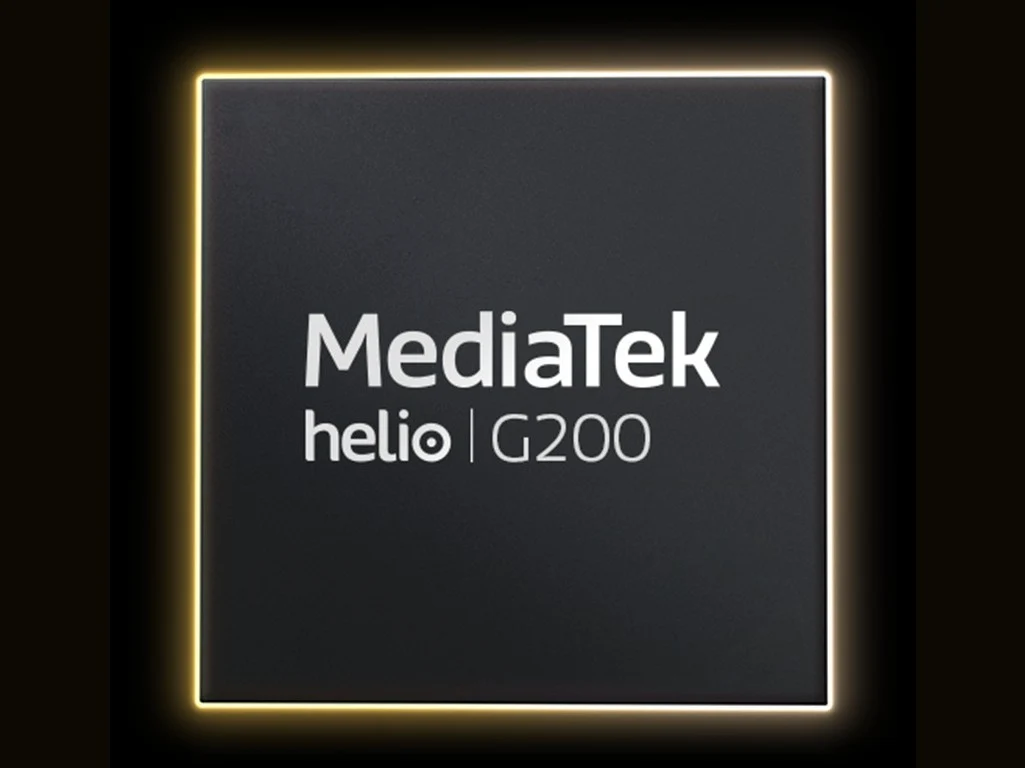
  • MediaTek Launches Helio G200: Enhanced Camera and Connectivity

    MediaTek Launches Helio G200: Enhanced Camera and Connectivity

    Key Takeaways

    1. MediaTek has launched the Helio G200 processor as the flagship model in its Helio G series for 4G smartphones and tablets.
    2. The Helio G200 features an octa-core design with two Cortex-A76 cores and six Cortex-A55 cores, similar to the Helio G100.
    3. Camera capabilities remain similar to the Helio G100, supporting a maximum of 200MP or dual 16MP sensors, with a new 12-bit DCG feature for improved HDR video quality.
    4. The Helio G200 introduces 4G DC SAR technology to enhance connectivity, reducing latency by up to 30% and increasing range by 83%.
    5. Other specifications, including memory and display support, are consistent with the Helio G100, and availability details for devices using the G200 are not yet disclosed.


    MediaTek has unveiled a fresh processor in its Helio G series, aimed at 4G smartphones and tablets. The latest Helio G200 stands as the flagship model, positioned above the Helio G100 that was revealed in August 2024. Nevertheless, there are only minor differences that distinguish the Helio G200 from its predecessor, the Helio G100.

    Specifications and Performance

    The Helio G200 is an octa-core chip manufactured using the TSMC 6nm process, just like the Helio G100. It features two Cortex-A76 cores running at 2.2GHz and six Cortex-A55 cores operating at 2.0GHz, accompanied by a Mali-G57 MC2 GPU clocked at 1.1GHz. Similar to the Helio G100, this new processor supports LPDDR4X memory with a max speed of 4266 Mbps and UFS 2.2 storage. Furthermore, it can handle displays with a maximum resolution of 2520 x 1080 and supports a 120Hz refresh rate.

    Camera Capabilities

    The maximum camera resolution supported by the Helio G200 is also unchanged from the Helio G100, allowing for a single 200MP camera or dual 16MP sensors. However, a fresh feature is the incorporation of 12-bit DCG (dual conversion gain), which enhances the quality of HDR video recording. MediaTek has also claimed to have worked closely with camera app developers to decrease power usage by as much as 20%.

    Connectivity Improvements

    Another innovative feature of the Helio G200 is the introduction of 4G DC SAR technology, which is designed to ‘improve the experience of popular social and messaging applications’ in areas with weak cellular signals. According to MediaTek, this new technology can cut latency by up to 30% and increase connectivity range by as much as 83%.

    Aside from these two enhancements, the rest of the specifications for the Helio G200 remain consistent with those of the Helio G100. MediaTek has not disclosed when devices featuring the new processor will be available for purchase.

    Source:
    Link

  • Samsung Foundry’s 2nm Yield Gains: Key Challenges Ahead

    Samsung Foundry’s 2nm Yield Gains: Key Challenges Ahead

    Key Takeaways

    1. Samsung Foundry is improving its 2 nm yields, now estimated at 40-50%, up from 30% in February.
    2. The Exynos 2600 is expected to power upcoming Galaxy S26 models, indicating positive growth for Samsung’s chipset lineup.
    3. Yield improvements at Samsung may involve performance trade-offs, leading to a gap between its chips and those produced by TSMC.
    4. Samsung’s previous advantage in 3 nm technology has diminished with the introduction of TSMC’s N2 node, which uses similar Nanosheet technology.
    5. Future improvements may come with the next generation, SF2P, which is expected to be marketed as Samsung’s ‘true’ 2 nm node.


    Unlike TSMC, which has already gone beyond 60% yields on its 2 nm class N2 node, Samsung Foundry is still trying to reach that important target. A new report from the South Korean news source Munhwa suggests that the young chipmaker is getting close, with yields now estimated to be in the 40-50% range. This is a significant improvement from the earlier reported 30% in February. While yields alone don’t mean much without knowing the chip’s die size, in this case, it is expected to be around the size of a smartphone SoC, approximately 150 mm².

    Positive Outlook for Exynos 2600

    This development is promising for the Exynos 2600, which is expected to power the Galaxy S26, Galaxy S26+, and possibly the Galaxy S26 Ultra next year. In addition, the Snapdragon 8 Elite 2 for Galaxy is also rumored to be produced on the same node, but its launch is not anticipated until the second half of 2026, likely coinciding with the Galaxy Z Fold 8 and Galaxy Z Flip 8.

    Trade-offs in Performance

    However, X leaker and semiconductor analyst Jukanlosreve points out that this yield improvement has come at a cost. Samsung apparently had to make performance compromises to produce workable chips. This indicates that SF2 will again lag behind TSMC’s N2 node in raw performance. Such a situation could create a notable performance gap between the standard Snapdragon 8 Elite 2 (TSMC N3P) and the Snapdragon 8 Elite 2 designed for Galaxy.

    Challenges with 2 nm Technology

    To complicate things, Samsung once had an edge with its 3 nm node, which was GAAFET-based, but that advantage is gone with the 2 nm node because N2 employs Nanosheets, a technology that is quite similar. It might be that things improve with the next generation, SF2P, which Jukanlosreve claims will be marketed as their ‘true’ 2 nm node.

    Source:
    Link

  • V Max S 5G Smartphone: 22,000mAh Battery, Night Vision Camera

    V Max S 5G Smartphone: 22,000mAh Battery, Night Vision Camera

    Key Takeaways

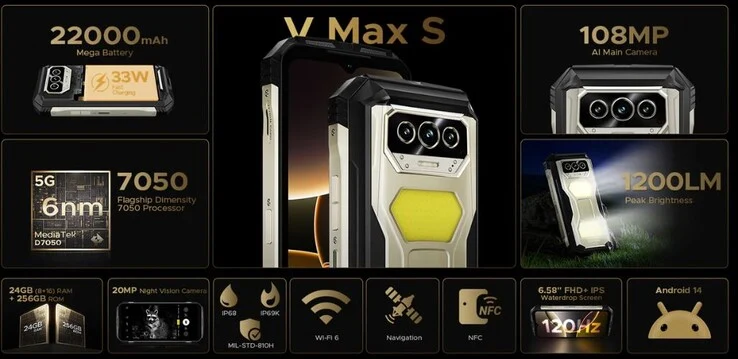
    1. The Doogee V Max S is a rugged smartphone with IP68, IP69K, and MIL-STD-810H certifications for durability.
    2. It features two powerful flashlights with a peak brightness of 1,200 lumens, ideal for outdoor activities.
    3. The device is powered by a massive 22,000mAh battery with 33W charging support.
    4. It includes 256GB of internal storage (expandable via microSD at the cost of the second SIM slot) and a 6.58-inch IPS display with a 120Hz refresh rate.
    5. The smartphone is currently priced at $479, with a $50 discount available using the coupon code “VMAXS50.”


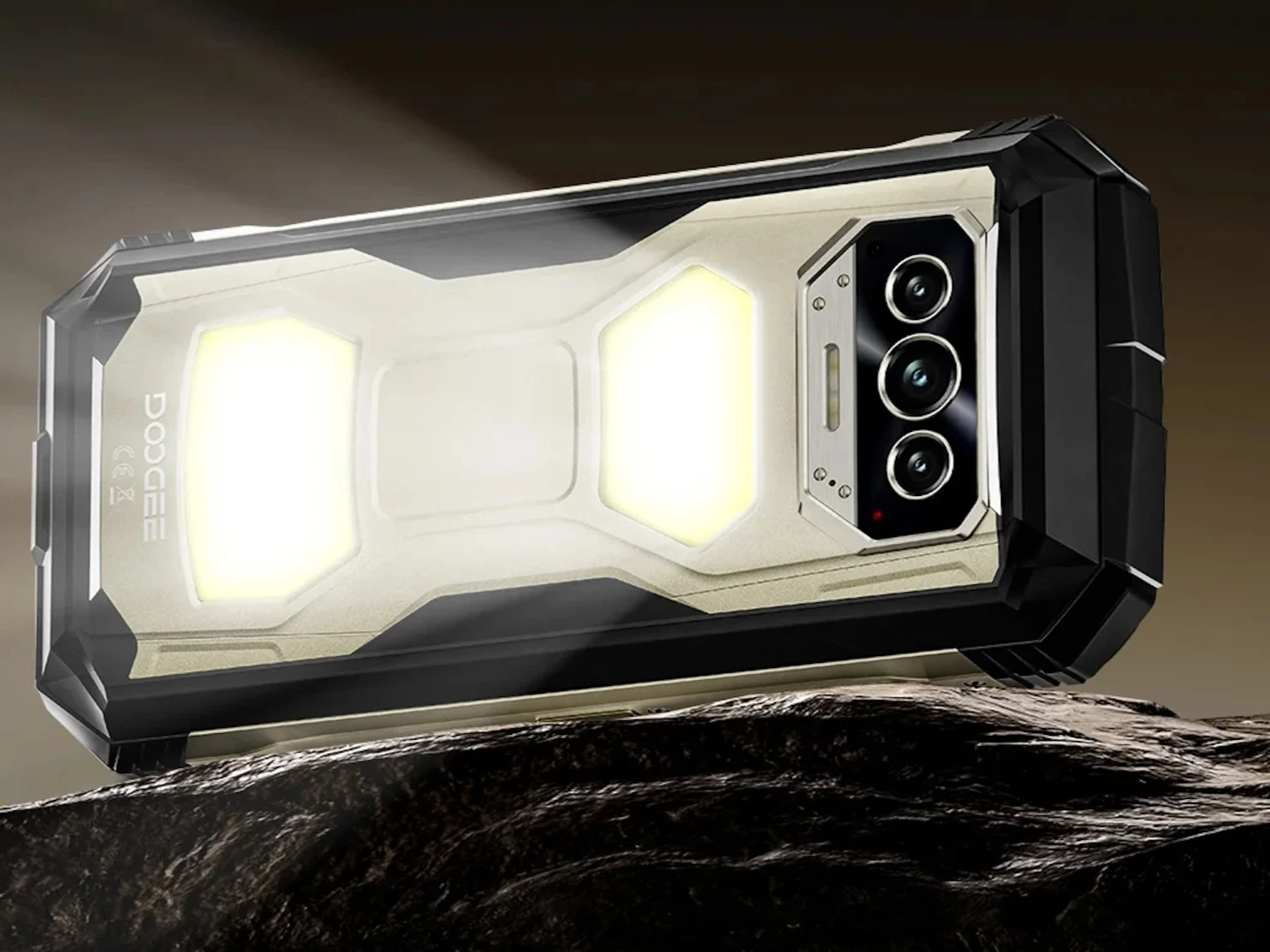
    Doogee has launched a new smartphone known as the V Max S. This Chinese brand is renowned for its rugged smartphones, many of which are priced below $200 on Amazon. The Doogee V Max S continues this tradition of durability, boasting IP68, IP69K, and MIL-STD-810H certifications. One of its standout features is the presence of two powerful flashlights on the rear, claimed to reach a peak brightness of 1,200 lumens. These flashlights are designed to effectively light up larger spaces, making them ideal for camping or various outdoor activities. Users can adjust the brightness and utilize features like strobe and SOS modes.

    Impressive Battery Life

    To ensure prolonged use of both the flashlight and the smartphone itself, the V Max S is powered by an enormous 22,000mAh battery that supports charging speeds of up to 33 watts. The dimensions of this smartphone are quite substantial, measuring 7 x 3.3 x 1 inches and tipping the scales at a hefty 1.2 lbs. While the remaining specifications may not be top-tier, the device is driven by a MediaTek Dimensity 7050 chipset that supports 5G connectivity, along with 8GB of RAM.

    Storage and Display Features

    The smartphone comes with 256GB of internal storage, which can be expanded via microSD, although this requires giving up the second SIM slot. The display is a 6.58-inch IPS panel with a resolution of 2408 x 1080 pixels, featuring a smooth refresh rate of 120Hz. Beyond its 108MP main camera, the rugged phone also includes a 20MP night vision camera and many other features tailored for outdoor use. The Doogee V Max S is currently available for $479 directly from the manufacturer, and using the coupon code “VMAXS50” will provide a $50 early bird discount.

    Source:
    Link


  • Xiaomi Poco F7 Global Launch This Summer with HyperOS 2.0

    Xiaomi Poco F7 Global Launch This Summer with HyperOS 2.0

    Key Takeaways

    1. The Poco F7 has appeared in listings, indicating a possible worldwide release despite no official announcement from Xiaomi.
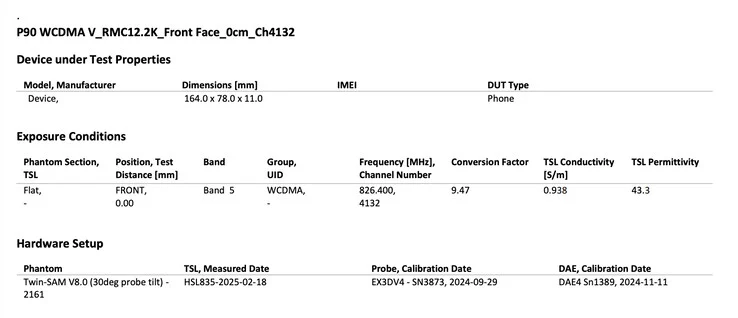
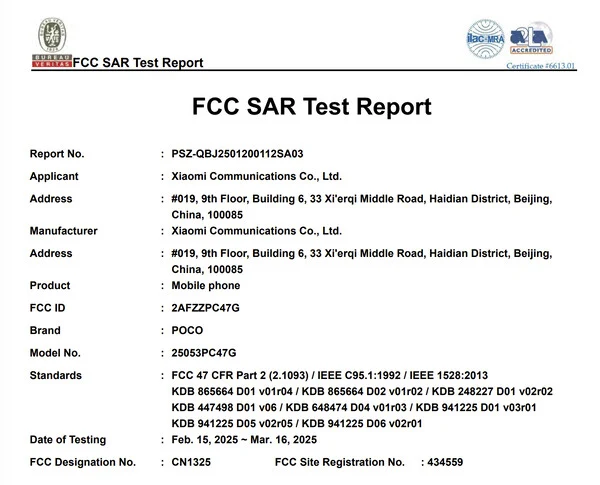
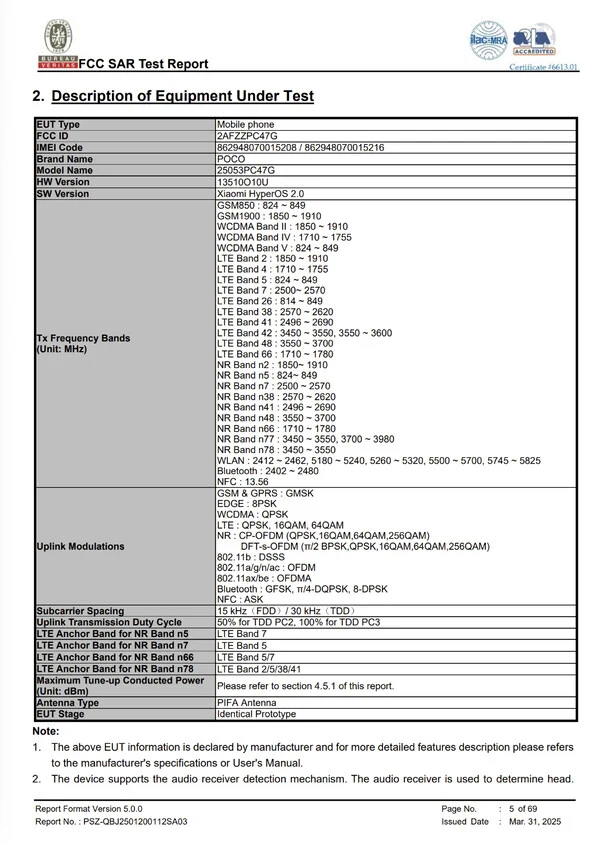
    2. FCC documents link the device to the model number ‘25053PC47G’ and reveal its dimensions as 164 x 78 x 11 mm.
    3. The Poco F7 is expected to be the largest model in its lineup, larger than the Poco F7 Ultra and Poco F7 Pro.
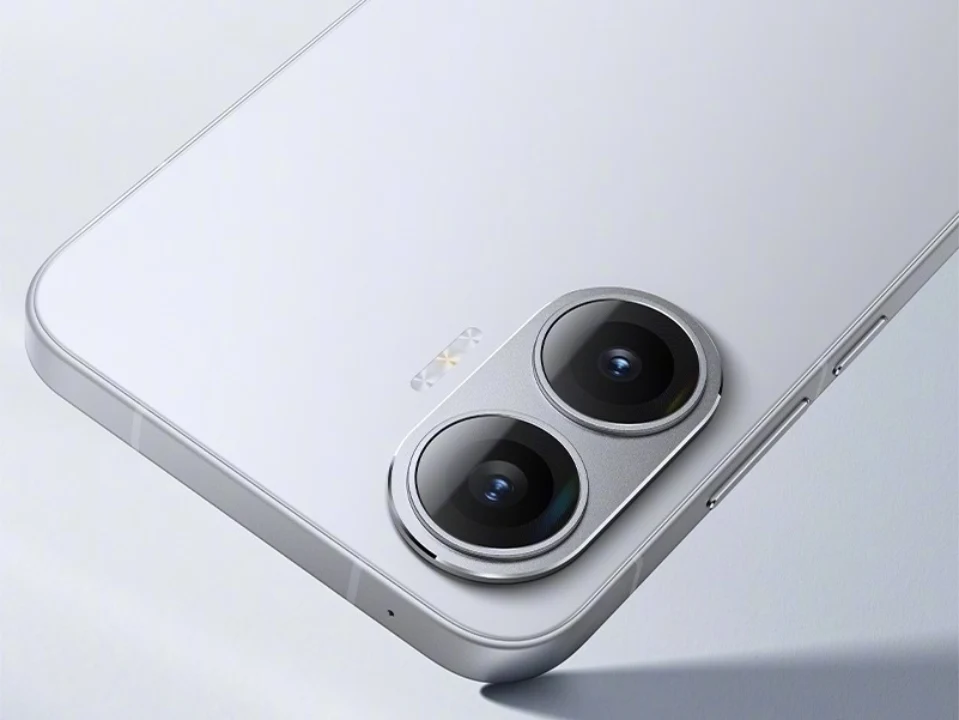
    4. Design features include a flat frame and a centered hole-punch camera, as shown in the FCC documents.
    5. Xiaomi is predicted to launch the Poco F7 in India later this month, with a potential global release by the end of summer.


    The rumored Poco F7 has made another appearance online following its recent listing at Singapore’s Infocomm Media Development Authority (IMDA) towards the end of last month. Although Xiaomi has yet to announce the official launch of the device, it seems to be heading for a worldwide release in some fashion.

    New Details from the FCC

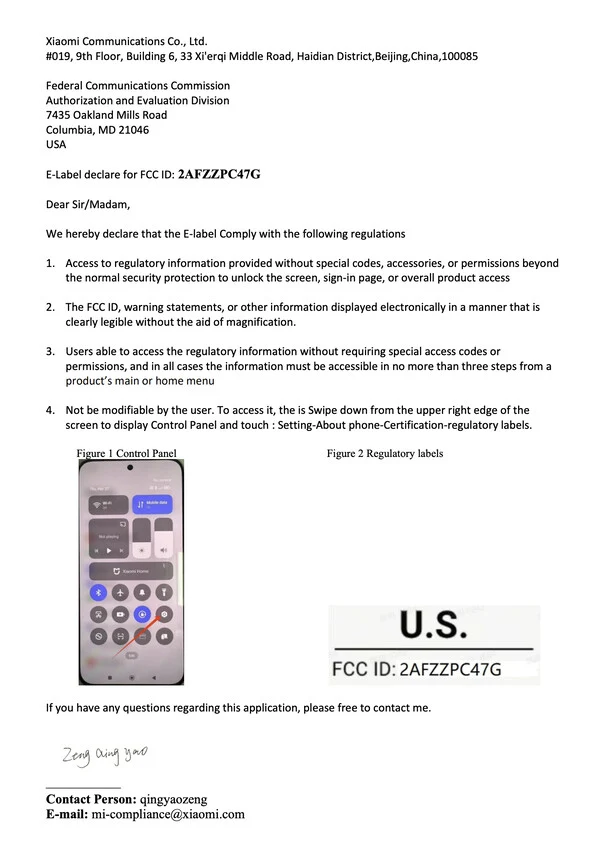
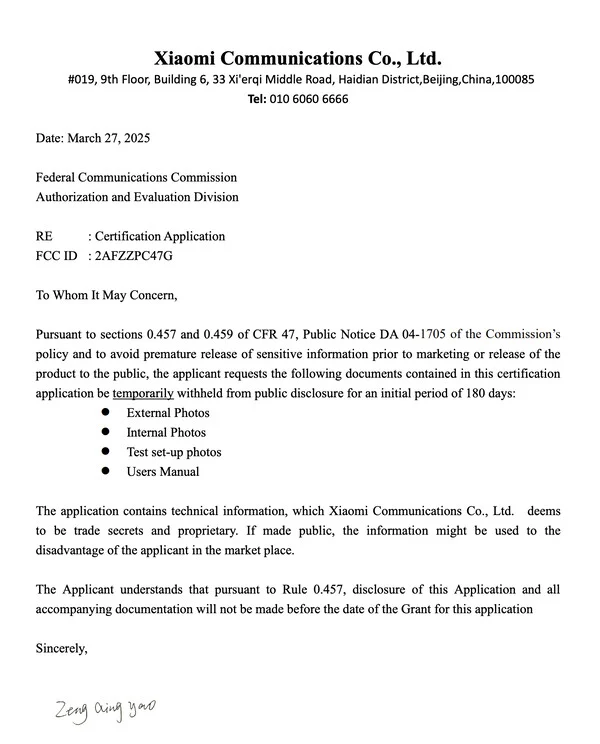
    Recently, the Federal Communications Commission (FCC) released documents for ‘25053PC47G’, which is linked to the Poco F7 in IMEI databases. As is common with the FCC, not much information about the device is disclosed. However, we have gathered some insights from the documents released by the regulatory agency.

    For instance, the FCC notes that the Poco F7 has dimensions of 164 x 78 x 11 mm. This size likely includes the camera housing, and these measurements appear to be similar to those of the Redmi Turbo 4 Pro, assuming the FCC rounded the numbers. Consequently, the Poco F7 is poised to be the largest model in its lineup, with the Poco F7 Ultra and Poco F7 Pro measuring 160.3 x 75 mm, respectively (currently priced at $679.99 on Amazon).

    Design Features Revealed

    In addition, another document reveals the front design of the Poco F7, showcasing a flat frame and a centered hole-punch camera. At this time, Xiaomi is predicted to launch the Poco F7 in India later this month. Although there hasn’t been any information regarding a global launch yet, the FCC suggests that the device should be available by the end of summer at the latest.

    Source:
    Link


  • Vivo Y300 GT: Mid-Range Smartphone with Dimensity 8400 & 7620mAh Battery

    Vivo Y300 GT: Mid-Range Smartphone with Dimensity 8400 & 7620mAh Battery

    Key Takeaways

    1. The Vivo Y300 GT is a mid-range smartphone that upgrades from the Vivo Y200 GT with better display, performance, and battery life.

    2. It features a 6.78-inch AMOLED display with 1.5K resolution, a 144 Hz refresh rate, peak brightness of 5,500 nits, and SGS certification for low blue light.

    3. The device is powered by a MediaTek Dimensity 8400 chipset, offers 5G connectivity, and comes with up to 12 GB RAM and 512 GB storage, running Origin OS 5 based on Android 15.

    4. The battery capacity has been increased to 7,620 mAh with 90 W wired charging support, while wireless charging is not available.

    5. The Vivo Y300 GT is priced starting at CNY 1,899 ($263) for the base model and CNY 2,399 ($332) for the high-end version, available in desert gold and black colors.


    Vivo has added a new device to its Y300 series by launching the Vivo Y300 GT in its home country. This mid-range smartphone is a direct upgrade from the Vivo Y200 GT, offering enhancements in display, processing power, and battery life. In terms of appearance, the phone maintains a design similar to the recently unveiled iQoo Z10 Turbo.

    Display Features

    The Vivo Y300 GT showcases a 6.78-inch AMOLED screen that provides a 1.5K resolution, featuring a refresh rate of 144 Hz and a peak brightness of up to 5,500 nits. Additionally, the display has received certification for low blue light and low flicker from SGS. The camera specifications remain largely unchanged from the previous model, with a 50 MP Sony LYT-600 main camera accompanied by a 2 MP depth sensor. For selfies and video calls, it includes a 16 MP front-facing camera.

    Performance and Software

    This time, Vivo has opted for a MediaTek processor. The smartphone supports 5G connectivity and is powered by a MediaTek Dimensity 8400 chipset, paired with up to 12 GB LPDDR5 RAM and 512 GB of UFS 3.1 storage, with no option for expansion. It ships with Origin OS 5 based on Android 15, though details about future software updates from Vivo are still unclear.

    Enhanced Battery Life

    Significant improvements have also been made to the battery. The device now includes a 7,620 mAh battery, an increase from the previous 6,000 mAh in the Y200 GT, and supports 90 W wired charging, up from 80 W in the older model. However, wireless charging is not available. Regarding dimensions, the smartphone is 8.09 mm (0.31 inches) thick and weighs approximately 212 grams (0.46 lbs).

    The Vivo Y300 GT is priced starting at CNY 1,899 ($263) for the base model with 8 GB of RAM and 256 GB of storage, while the high-end version with 12 GB of RAM and 512 GB of storage costs CNY 2,399 ($332). The device is available in desert gold and black colors and can be purchased from Vivo’s online store in China.

    Source:
    Link