Category: Phones

Stay updated with the latest phone news, reviews, and trends. Discover cutting-edge smartphones, features, and innovations in our Phones category at GizNewsDaily

  • Blade GT Pro: Sleek Rugged Smartphone with RGB Lighting

    Blade GT Pro: Sleek Rugged Smartphone with RGB Lighting

    Key Takeaways

    1. The Doogee Blade GT Pro is priced at around $469 with a launch discount for early buyers, but deliveries won’t start until late June.
    2. It features 12GB of RAM and 512GB of internal storage, but comes with preinstalled Android 14, which may not receive significant future updates.
    3. Powered by the MediaTek Dimensity 7025 chip, the phone supports 5G and has dual SIM/microSD card slots.
    4. The device has a 6.7-inch display with a resolution of 2400 x 1080 pixels and a 120Hz refresh rate, plus a triple camera setup on the back.
    5. It complies with IP68, IP69K, and MIL-STD-810 standards, but has a 5,800mAh battery that may be less robust compared to other rugged phones.


    The Doogee Blade GT Pro is now available for purchase. The price set by the manufacturer is around $469, and there’s a launch discount for early buyers. If you’re thinking about buying, it’s important to carefully check the shipping terms, as deliveries won’t start until late June. This phone comes in one storage option but has two color choices. The Blade GT Pro features 12GB of RAM and 512GB of internal storage, which should suffice for most users. However, the preinstalled Android 14 is already outdated, and it’s unlikely that there will be significant Android updates in the future.

    Performance and Design

    Moving on, the new Doogee phone is powered by the MediaTek Dimensity 7025 chip and includes a 5G modem. It has two card slots, allowing for either dual SIM usage or storage expansion through microSD cards. With the ample internal storage, this shouldn’t pose a problem for many users. The device complies with IP68, IP69K, and MIL-STD-810 standards, all while maintaining a relatively lightweight design. To be exact, its dimensions are 7.03 x 3.29 x 0.41 inches and it weighs 9.35 ounces. However, its battery is not as robust as those in other rugged phones, providing a 5,800mAh capacity and supporting fast charging of up to 18 watts.

    Display and Camera Features

    Additionally, the phone features a 6.7-inch display with a resolution of 2400 x 1080 pixels, utilizing an IPS panel with a 120Hz refresh rate. On the back, there are three cameras: a 100MP main camera, an 8MP ultra-wide camera, and a 2MP macro lens. For selfies, it boasts a 32-megapixel front camera. The Doogee Blade GT Pro also includes a fingerprint sensor and NFC support, but it does not come with a 3.5mm headphone jack.

    If you’re looking for a more feature-rich option, consider the Blade GT Ultra available on Amazon.

    Source:
    Link


  • Galaxy S26 Edge in Official Docs, No Galaxy S26 Plus Expected

    Galaxy S26 Edge in Official Docs, No Galaxy S26 Plus Expected

    Key Takeaways

    1. The Galaxy S26 Edge has been confirmed and spotted in the IMEI database, indicating its development.
    2. It has the model number ‘SM-S947U’ for the US market, while the Galaxy S26 Ultra has model numbers ‘SM-948U’ and ‘SM-948N’.
    3. There are speculations that the S26 Edge will replace the S26 Plus, but both models are expected to be introduced later.
    4. Concerns exist about the launch timing, as the S26 Edge may be released only eight months after the S25 Edge.
    5. The Galaxy S26 series is expected to feature OneUI 8.5, suggesting only minor updates to the user interface.


    Just when the Galaxy S25 Edge was launched last month, rumors began circulating about its successor, the Galaxy S26 Edge. Recently, there has been official confirmation regarding this new phone, and its initial sighting supports the rumors surrounding the Galaxy S series future.

    Evidence Found

    The successor to the Galaxy S25 Edge, which is currently available on Amazon for $999.99, has been located in the IMEI database managed by the GSMA. As reported by SammyPolice, the Galaxy S26 Edge was identified alongside the Galaxy S26 Ultra. The Galaxy S26 Edge has the model number ‘SM-S947U’, signifying that it is intended for the US market. Meanwhile, the Galaxy S26 Ultra carries the model numbers ‘SM-948U’ for the US and ‘SM948N’ for Korea.

    Speculations and Rumors

    There are theories suggesting that the early discovery of the Galaxy S26 Edge backs up a previous report indicating that there will not be a Galaxy S26 Plus, as the Edge model will fill that gap. Nevertheless, SammyPolice mentions that both the Galaxy S26 Plus and Galaxy S26 will be formally introduced later on.

    Launch Timing in Question

    Another point of concern is whether the Galaxy S26 Edge will be unveiled alongside the other models. Should it launch at the start of next year, the interval between the two Edge models would only be about eight months, which is relatively short for Samsung’s Galaxy S series smartphones.

    As per the source, the Galaxy S26 series will come equipped with OneUI 8.5. This might suggest that the upgrade could be minor since it represents a ‘0.5’ change. However, specific details about the new user interface are still not revealed.

    Source:
    Link

  • Vivo X Fold5: The Lightest Ultra-Thin Foldable Phone Yet

    Vivo X Fold5: The Lightest Ultra-Thin Foldable Phone Yet

    Key Takeaways

    1. Vivo X Fold5 replaces X Fold3 and X Fold3 Pro, featuring improved camera capabilities.
    2. It retains the Qualcomm Snapdragon 8 Gen 3 processor and has a large 6,000 mAh battery with fast charging support.
    3. The device keeps the same display sizes but adds an LTPO backplane for better energy efficiency and offers IP5X and IPX9 dust and water protection.
    4. It has a slimmer design with a capacitive side-mounted fingerprint scanner and is available in multiple configurations and prices.
    5. The starting price in China is CNY 6,999 (about $975), with higher prices for increased storage and RAM options; international availability is still pending.


    Vivo has introduced the X Fold5, taking the place of the X Fold3 and X Fold3 Pro after numerous teasers in recent weeks. The pricing for the X Fold5 is similar to its predecessor, but it boasts superior camera features compared to the X Fold3 Pro and other recent foldables, such as the Galaxy Z Fold6 (currently priced at $999 for refurbished units on Amazon).

    Performance and Battery

    To keep up with the competition, Vivo has chosen to stick with the Qualcomm Snapdragon 8 Gen 3 from the X Fold3 Pro, instead of upgrading to the Snapdragon 8 Elite. The X Fold5 is equipped with a substantial 6,000 mAh battery that supports fast charging at 80 W wired and 40 W wireless. It also includes LPDDR5X RAM and UFS 4.1 flash storage. Additionally, the camera setup includes several new features.

    Display and Features

    Vivo’s updated telephoto camera is capable of macro photography, and the device retains the 8.03-inch and 6.53-inch displays from last year. However, there’s now an LTPO backplane behind the cover display for enhanced energy efficiency. Other notable features are the IP5X and IPX9 ratings, which protect against dust and water, along with strong integration within the Apple ecosystem, allowing for Apple Watch pairing, macOS screen mirroring, and access to iCloud services.

    Design and Pricing

    Sadly, Vivo has opted for a capacitive side-mounted fingerprint scanner instead of the dual ultrasonic scanner from the X Fold3 Pro. Nonetheless, the X Fold5 is slimmer than previous models, measuring 4.3 mm when unfolded and 9.2 mm when folded. It weighs 217 g, but this is only for the Titanium variant. The Pine and White models are slightly heavier, measuring 4.55 mm and 9.7 mm and weighing in at 226 g.

    The starting price for the X Fold5 in China is CNY 6,999 (about $975) for the version with 12 GB of RAM and 256 GB of storage. The price increases to CNY 7,999 (around $1,115) for 512 GB, to CNY 8,499 (roughly $1,185) for a model with 16 GB of RAM, and finally to CNY 9,499 (approximately $1,324) for the highest configuration with 16 GB of RAM and 1 TB of storage. Although Vivo has not yet released any information regarding international availability, the X Fold5 is anticipated to launch in India by mid-July.

    Source:
    Link


  • T-Mobile Announces Starlink Data Service Launch for X and WhatsApp

    T-Mobile Announces Starlink Data Service Launch for X and WhatsApp

    Key Takeaways

    1. T-Mobile will launch its Starlink satellite voice and text messaging service on July 23, with Starlink Internet available in October.
    2. The T-Satellite feature requires no special gear and is compatible with T-Mobile and select devices from other carriers, including Verizon and AT&T.
    3. Initially, users can send texts, image messages, and short audio clips from areas lacking cellular service.
    4. Starting October 1, T-Mobile Starlink subscribers will have access to optimized apps for iOS and Android, including popular messaging and social media platforms.
    5. The service will cost $10 per month, with a free trial available in beta; T-Mobile will offer it for free to customers on the Experience Beyond unlimited 5G data plan.


    T-Mobile is set to launch its Starlink satellite voice and text messaging service on July 23, with Starlink Internet rolling out in October.

    T-Satellite Details

    This new T-Satellite feature doesn’t need any special gear and is available for T-Mobile phone models from 2021 onwards, like the iPhone 15 Pro Max. It’s also compatible with devices from other carriers, including Verizon and AT&T.

    Initially, the T-Satellite with Starlink will allow users to send texts and image messages. Additionally, customers can send short audio clips from over 500,000 square miles that currently lack Verizon, T-Mobile, or AT&T cellular service.

    Availability of Apps

    Beginning October 1, subscribers to T-Mobile Starlink will have access to optimized apps for iOS and Android. These apps will function even in areas without cell phone towers and will include popular messaging and social media platforms like WhatsApp and X.

    To provide the best user experience for satellite connectivity, T-Mobile is collaborating with a select group of widely-used app providers in areas most important for those traveling to remote locations. We expect to see satellite-enabled applications from AccuWeather, AllTrails, Apple, Google, WhatsApp, and X, among others, in the near future.

    Pricing and Free Trials

    On July 23, the T-Mobile Starlink data and messaging service for remote areas will be priced at $10 per month, even for users on Verizon and AT&T. The Starlink satellite connectivity is currently in a beta trial, allowing anyone to test it without any cost, with over 1.8 million users already participating.

    T-Mobile will continue to offer Starlink for free to customers on the Experience Beyond unlimited 5G data plan, while they also work on making it available for phones older than four years.

    Source:
    Link

  • Huawei Pura 80 Ultra Launches Sooner Than Expected

    Huawei Pura 80 Ultra Launches Sooner Than Expected

    Key Takeaways

    1. Huawei has introduced the Pura 80 series, featuring innovative camera technology, including a 1-inch main sensor and interchangeable optics in the Pura 80 Ultra.
    2. The global launch of the Pura 80 series is scheduled for July 10, 2025, in Dubai, following its debut in China.
    3. There is uncertainty about the operating system for global markets, with potential use of EMUI instead of HarmonyOS 5.
    4. The Pura 80 series includes multiple models: Pura 80 Ultra, Pura 80 Pro, Pura 80 Pro+, and standard Pura 80, all powered by the Kirin 9020 chip.
    5. The Kirin 9020 chip may not compete well with Snapdragon 8 Elite, raising questions about the cost-to-performance ratio for potential buyers.


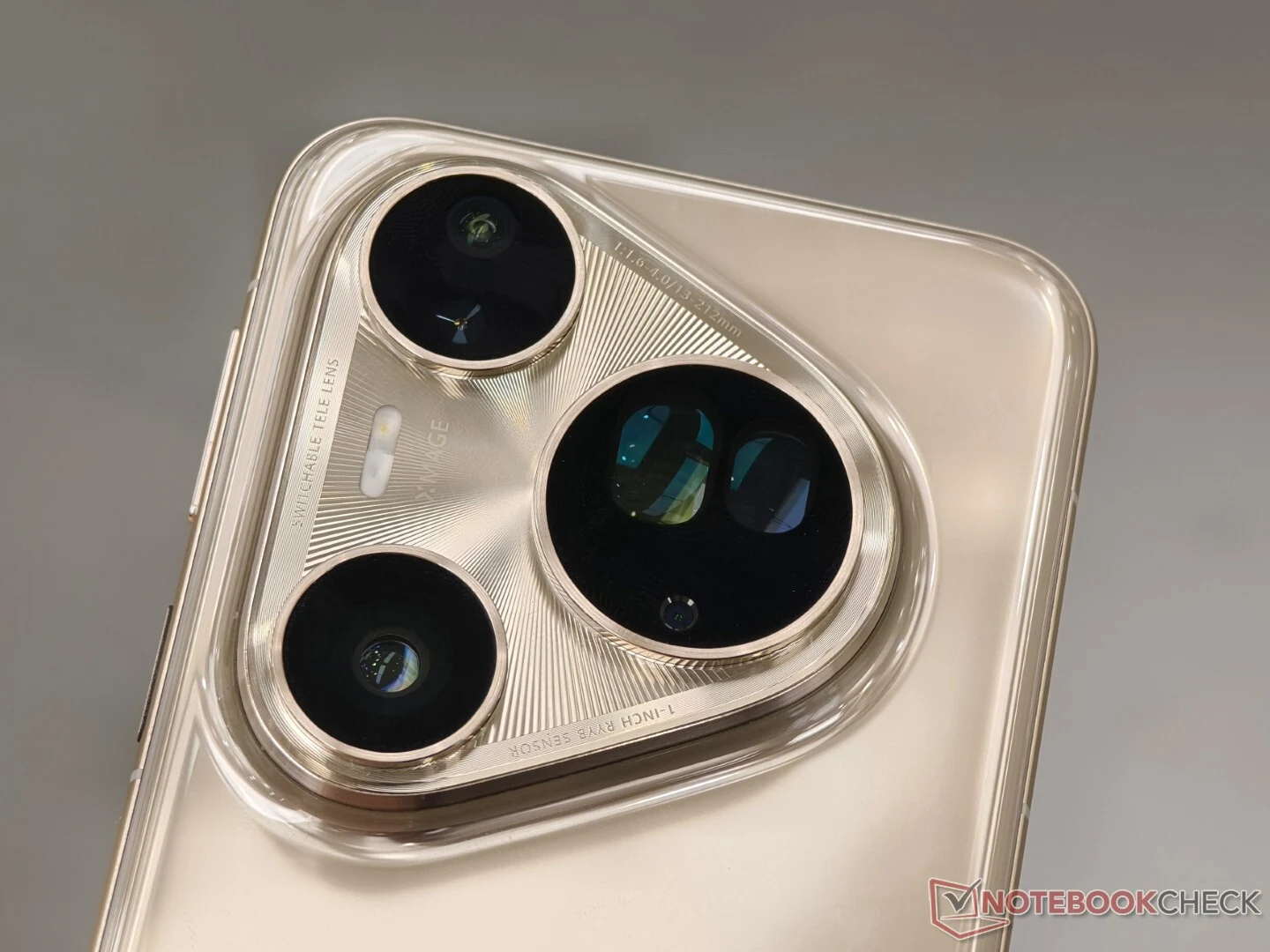
    No matter your thoughts on Huawei, their drive for innovation is still strong. After introducing the world’s first tri-foldable phone last autumn, they recently launched the Pura 80 series, which includes their first camera sensors. The Pura 80 Ultra has particularly grabbed attention with its unique 1-inch main sensor and an unusual telephoto lens featuring interchangeable optics. This exciting technology will soon be available to customers around the globe.

    Launch Details

    The Pura 80 series is set to be revealed for international markets in Dubai on July 10, 2025, which is just a month after its debut in China. Huawei seems eager to bring the Pura 80 Ultra to affluent and adventurous buyers outside of China quickly, as using a Huawei smartphone abroad has become a bit more complicated.

    Software Concerns

    There is some uncertainty about whether EMUI will be adopted for the global market instead of the Android-free HarmonyOS 5, but there are alternatives for the absent Google services. Alongside the Pura 80 Ultra, there are the Pura 80 Pro, Pura 80 Pro+, and the standard Pura 80 in China, all powered by the Kirin 9020. This chip doesn’t compete well with the Snapdragon 8 Elite. True fans of Huawei might overlook this shortcoming, but with the high prices in China, potential buyers should consider whether the cost-to-performance ratio is justifiable.

    Source:
    Link

  • Samsung Galaxy Z Flip7 Launches with Lower Price than Razr 60 Ultra

    Samsung Galaxy Z Flip7 Launches with Lower Price than Razr 60 Ultra

    Key Takeaways

    1. The Galaxy Z Flip7 will be revealed on July 9 during the Galaxy Unpacked event.
    2. The Galaxy Z Flip7 is expected to be priced around €1,099 in Europe, approximately $999 in the U.S.
    3. The price of the Galaxy Z Flip7 is anticipated to be €100 less than the Galaxy Z Flip6.
    4. The Z Flip7 will be $300 cheaper than the Razr 60 Ultra and $180 less than its 512 GB model.
    5. Samsung aims to be more competitive in the foldable smartphone market with these price cuts.


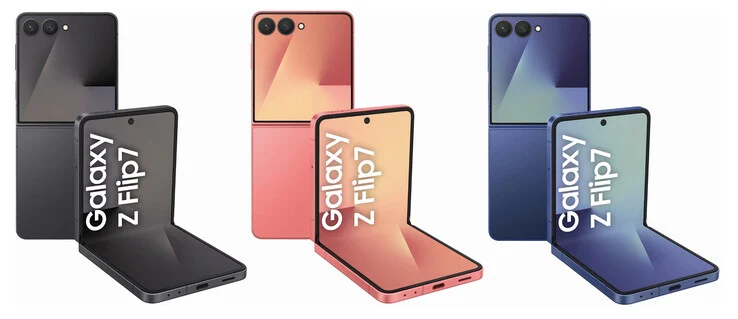
    The Galaxy Z Flip7 is set to be revealed very soon. It is scheduled for launch on July 9, alongside the Galaxy Z Flip FE during a busy Galaxy Unpacked event this summer. While we still don’t have confirmed pricing for the Galaxy Z Flip FE, Roland Quandt has shared some details about the Galaxy Z Flip7.

    Price Expectations

    To summarize, recent listings from LambdaTek suggested that Samsung would not increase the price for the seventh version of the Galaxy Z Flip. However, Quandt claims these listings do not truly reflect Samsung’s intentions. In fact, it seems that the company plans to actually reduce the price compared to last year’s Galaxy Z Flip6.

    According to Quandt’s report on WinFuture, the Galaxy Z Flip7 is expected to be priced around €100 less than its predecessor. He suggests that the new model will likely launch at €1,099 in Europe, which should translate to a starting price of $999 in the United States. If this turns out to be accurate, the Galaxy Z Flip7 would be $300 less than the Razr 60 Ultra (currently priced at $1,299.99 on Amazon) and $180 cheaper than the 512 GB model of that phone.

    Final Thoughts

    With these anticipated price cuts, Samsung may be positioning itself to be more competitive in the foldable smartphone market this summer. As the launch date approaches, consumers are eager to see what else the Galaxy Z Flip7 will offer alongside its price.

    Source:
    Link


  • Google Pixel 10 Specs Leak: Camera Upgrade Disappoints Users

    Google Pixel 10 Specs Leak: Camera Upgrade Disappoints Users

    Key Takeaways

    1. The Pixel 10 will feature a 48MP main camera, down from earlier reports of a 50MP camera.
    2. The ultrawide camera will now have a 12MP sensor instead of a previously expected 48MP sensor.
    3. The Pixel 10 will include the Tensor G5 chip, 12GB of RAM, and storage options of 128GB or 256GB.
    4. The display will be a 6.3-inch FHD+ with improved brightness capabilities, reaching up to 3,000 nits.
    5. Battery capacity will increase to 4,970 mAh, but some features like Wi-Fi 7 and vapor chamber cooling will be missing compared to the Pixel 10 Pro.


    What was Google thinking? Let’s dive into the details. A new leak from Android Headlines reveals the final specifications for the standard Pixel 10 model, and they seem quite different from earlier reports. The camera improvements, or rather the lack thereof, appear to be more pronounced than anticipated compared to the Pixel 9, which is priced at $799 on Amazon. Previous leaks hinted at a camera setup featuring a 1/1.95-inch 50MP main camera, along with a 1/3.1-inch 13MP ultrawide and a 1/3.1-inch 11MP telephoto camera.

    Camera Changes

    The most recent leak, however, indicates a shift to a 48MP main camera, likely borrowing the same tech as the Pixel 9a. This points to a 1/2.0-inch sensor. Instead of the 48MP ultrawide previously mentioned, a 12MP sensor for ultrawide shots has been deemed adequate. The 1/3.2-inch sensor for the 5x telephoto lens seems to come straight from the Pixel 9 Pro Fold, which will also be featured in the Pixel 10 Pro Fold. It remains uncertain if Google’s computational photography can make up for these hardware reductions, especially since some camera abilities will once more be exclusive to the Pixel 10 Pro.

    Other Upgrades

    Nonetheless, there are enhancements in other aspects, as we noted earlier today. The Pixel 10 is set to include the Tensor G5 chip, manufactured by TSMC using a 3nm process, alongside 12GB of RAM and storage options of 128 or 256GB. The display is a 6.3-inch FHD+ with Gorilla Glass Victus 2, expected to shine even brighter. High Brightness Mode (HBM) will increase from 1,800 nits to 2,000 nits, while peak brightness will rise from 2,700 nits to 3,000 nits. The battery capacity will see a bump from 4,700mAh to 4,970 mAh, and USB-C charging will max out at 29 watts, with Qi2 reaching up to 15 watts. Although features like Wi-Fi 7 and vapor chamber cooling might not be included, the Pixel 10 will show notable hardware differences when compared to the Pixel 10 Pro, even with the introduction of its new telephoto camera.

    Source:
    Link

  • Fairphone 6: Modular Design, Bright Display, Bigger Battery for €599

    Fairphone 6: Modular Design, Bright Display, Bigger Battery for €599

    Key Takeaways

    1. The Fairphone 6 focuses on fair working conditions and uses more recycled and ethically sourced materials than previous models.
    2. It features a modular design with twelve interchangeable parts for easy repairs and customization.
    3. Specifications include a smaller 6.31-inch display, Snapdragon 7s Gen 3 chip, 8GB RAM, and 256GB storage, with a microSD card slot for expansion.
    4. The camera system includes a 50MP rear sensor, a 13MP ultrawide lens, and a 32MP selfie camera, all with various advanced features and modes.
    5. The phone runs on Android 15 with 8 years of software support, offers a distraction-free mode, and is available in three colors starting at €599.


    The Fairphone 6, also known as Fairphone (Gen. 6), has been revealed as the newest smartphone from Fairphone, a company based in Amsterdam. Like its predecessors, the Fairphone 6 is produced in factories that prioritize fair working conditions and wages for employees. Fairphone emphasizes that this new smartphone incorporates a greater amount of recycled and ethically sourced materials compared to earlier versions.

    Modular Design and Accessibility

    Similar to the Fairphone 5, which is sold on Amazon.de for €499, the Fairphone 6 boasts a modular construction that makes it easy for users to replace damaged components. This latest model has twelve interchangeable parts, including the display, camera, battery, speaker, and back panels. Users can easily swap these parts with just a screwdriver. You can find pricing for the spare parts online. This modularity extends even further, as the Fairphone 6 now accommodates accessories that can attach to the back, much like the CMF Phone 2 Pro. Buyers will have the option to get a card holder, finger loop, or carrying strap that can be fastened to the phone.

    Specs Overview

    When looking at its specifications, the Fairphone 6 presents both upgrades and some downgrades when compared to the Fairphone 5. The display is now smaller at 6.31 inches, featuring an LTPO P-OLED with a resolution of 1116 x 2484, a 120Hz refresh rate, and Gorilla Glass 7i. It supports PWM and DC dimming, but the touch sample rate has decreased from 300Hz to 240Hz. On the bright side, peak brightness has significantly increased from 800 nits to an impressive 1400 nits.

    Underneath the surface, the smartphone is powered by a Snapdragon 7s Gen 3 chip combined with 8GB of LPDDR5 RAM and 256GB of UFS 3.1 storage. It includes a microSD card slot that allows for an additional 2TB of storage. The primary rear camera features a 50MP Sony Lytia 700C sensor with optical image stabilization (OIS) and can record in 4K.

    Camera Features and More

    Although the 50MP ultrawide camera from the Fairphone 5 has been swapped out for a 13MP f/2.2 lens, the new sensor also comes with OIS and can capture macro shots. The time of flight sensor makes its return as well. The selfie camera has changed from a 50MP Samsung JN1 sensor to a 32MP Samsung KD1 sensor that includes autofocus, OIS, and electronic image stabilization (EIS). Users will find various camera modes, including a pro mode for enhanced control.

    The Fairphone 6 is equipped with stereo speakers, but it doesn’t have a headphone jack. It supports several codecs, including SBC, AAC, aptX, aptX HD, and aptX adaptive. Connectivity features include Wi-Fi 6E, Bluetooth 5.4, NFC, dual SIM (nano-SIM + eSIM), a side-mounted fingerprint scanner, Face Unlock, a barometer, and it has an IP55 rating for dust and water resistance. Despite being smaller, the phone houses a 4,415mAh battery, which still charges at 30W.

    Software and Availability

    The Fairphone 6 comes pre-installed with Android 15, featuring Google Gemini AI integration, and promises 8 years of software support, including at least 7 Android OS upgrades. Like earlier models, an /e/OS version is also available. A distinctive lime switch on the right side activates a distraction-free feature called Fairphone Moments, which simplifies the user interface to display only the five apps that you’ve permitted. Users can also set up custom profiles for these moments.

    Starting today, the Fairphone 6 can be purchased in Cloud White, Forest Green, and Horizon Black for €599. The /e/OS version is priced slightly higher at €649.

    Source:
    Link

  • Google Pixel 10 Series Leak: Major Display Upgrades Before Launch

    Google Pixel 10 Series Leak: Major Display Upgrades Before Launch

    Key Takeaways

    1. Google acknowledges discomfort issues like headaches and eyestrain related to Pixel smartphones, particularly with the Pixel 9’s 120 Hz pulse-width modulation (PWM).
    2. The upcoming Pixel 10 series is expected to feature consistent 240 Hz PWM across all brightness settings, but it may still not be competitive.
    3. The Pixel 10 Pro and Pixel 10 Pro XL may reach 480 Hz PWM with brightness adjustments, improving their standing against competitors like the Galaxy S25 and iPhone 16.
    4. All Pixel 10 models will have at least a 200 nits increase in brightness compared to Pixel 9 models, enhancing display quality.
    5. The Pixel 10 Pro Fold is expected to achieve up to 1,850 nits on its main display and 2,050 nits on its foldable screen, with a release set for August.


    It’s well-known that Google knows its Pixel smartphones can lead to discomfort like headaches and eyestrain for some users. For instance, the basic Pixel 9 (currently priced at $589 for refurbished models on Amazon) shows pulse-width modulation at a mere 120 Hz. In contrast, the Pixel 9 Pro Fold, Pixel 9 Pro, and Pixel 9 Pro XL have improved this to 240 Hz, yet they still lag behind rivals like Apple, OnePlus, Xiaomi, and Samsung, among other Android manufacturers.

    Upcoming Improvements

    Earlier this year, we mentioned that Google promised enhancements for Pixel fans with the upcoming Pixel 10 series. Sadly, the company hasn’t provided any detailed information on this. As reported by Android Authority, it has been revealed that the Pixel 10 and Pixel 10 Pro Fold will feature a consistent 240 Hz across all brightness settings, which still isn’t very competitive and could lead to headaches.

    Comparing with Competitors

    On the other hand, the Pixel 10 Pro and Pixel 10 Pro XL are expected to reach 480 Hz when adjusting brightness, aligning them more closely with the Galaxy S25 and iPhone 16 series. To put things into perspective, recent high-end devices from Honor, such as the Magic7 Pro, have PWM dimming values of 4,320 Hz, which should significantly reduce any health concerns tied to flickering screens.

    Brightness Enhancements

    According to Android Authority, every Pixel 10 model will enjoy at least a 200 nits increase in brightness compared to their Pixel 9 counterparts. Specifically, the Pixel 10 Pro Fold is anticipated to achieve up to 1,850 nits on its main display and 2,050 nits when utilizing its foldable screen in bright conditions. Meanwhile, the Pixel 10 will reach 2,000 nits, while the Pixel 10 Pro and Pixel Pro XL will offer 2,250 nits. Presently, Google is set to release the Pixel 10 series in August.

    Source:
    Link


  • Oppo Reno14 F: Affordable Smartphone with Snapdragon 6 Gen 1

    Oppo Reno14 F: Affordable Smartphone with Snapdragon 6 Gen 1

    Key Takeaways

    1. The Oppo Reno14 F is the newest addition to the Reno14 series, joining the original Reno14 and Reno14 Pro models.
    2. It features a 6.57-inch AMOLED display with a resolution of 2372 x 1080 pixels, a 120 Hz refresh rate, and peak brightness of 1400 nits.
    3. The smartphone is powered by a Qualcomm Snapdragon 6 Gen 1 chip, with options for up to 12 GB of RAM and 512 GB of storage (no expansion available).
    4. It has a 6,000 mAh battery with 45 W wired charging and includes various AI-driven photography features to enhance the camera experience.
    5. Additional features include an in-display fingerprint scanner, IP69 rating for water and dust resistance, NFC capabilities, and it comes in multiple color options.


    Oppo has recently added a new smartphone to its Reno14 series, called the Oppo Reno14 F. With this new release, the Reno14 series now includes three models: the original Reno14, the Reno14 Pro, and the newly introduced Reno14 F. This latest device comes packed with a fair range of features.

    Impressive Display Features

    The Oppo Reno14 F is equipped with a 6.57-inch AMOLED display that provides a resolution of 2372 x 1080 pixels. It boasts a refresh rate of 120 Hz, along with a peak brightness of 1400 nits. The smartphone also sports a triple rear camera system, which includes a 50 MP primary camera with OIS from Sony IMX882, an 8 MP ultrawide camera, and a 2 MP macro lens. For selfies, there is a 32 MP front camera.

    Unique Performance Specs

    In a departure from its siblings—the Reno14 and Reno14 Pro that use MediaTek Dimensity processors—the Reno14 F is powered by a Qualcomm Snapdragon 6 Gen 1 chip. This processor works in tandem with up to 12 GB of LPDDRX RAM and offers 512 GB of UFS 3.1 storage, although there is no option for storage expansion. The device runs on Android 15 with ColorOS 15 right from the start. As usual, Oppo hasn’t disclosed any details about software support for this model.

    Battery and AI Features

    The Reno14 F has a battery capacity that is slightly less than the Pro version, featuring a 6,000 mAh battery that supports 45 W wired charging. Oppo also added various AI-driven photography functions, such as AI Flash LivePhoto, AI LivePhoto Export, AI Recompose, AI Perfect Shot, and AI Style Transfer, to enhance the camera experience.

    In terms of additional features, the device includes an in-display fingerprint scanner, an IP69 rating for water and dust resistance, and NFC capabilities. The Reno14 F is available in three different memory configurations and comes in eye-catching colors like glossy pink, luminous green, and opal green. However, the details on the pricing and availability of the device remain undisclosed.

    Source:
    Link