Category: Phones

Stay updated with the latest phone news, reviews, and trends. Discover cutting-edge smartphones, features, and innovations in our Phones category at GizNewsDaily

  • Xiaomi Surpasses Apple: Changes in the Smartphone Market

    Xiaomi Surpasses Apple: Changes in the Smartphone Market

    Key Takeaways

    1. The smartphone market is primarily dominated by two operating systems: iOS and Android.
    2. Xiaomi surpassed Apple in smartphone shipments in Q2 2025, holding a 23% market share in Europe.
    3. Apple has a unit share of 21% but experienced a 4% decline in sales.
    4. Samsung remains the market leader with a 31% share, despite a 10% drop in annual growth.
    5. Realme is showing strong growth potential, with a 5% annual increase, while Lenovo’s share declined by 18%.


    The smartphone sector is not very divided when it comes to the operating systems available. There are essentially just two main mobile platforms: iOS and Android. Apple’s iOS is only found on its own devices, while Android and its variations are the go-to choice for most other manufacturers. Recent information from Canalys and Omdia shows that Android remains the leader in the European smartphone landscape, and there’s been a significant change in the rankings of top smartphone producers.

    Xiaomi’s Surge

    Notably, Xiaomi has surpassed Apple in the second quarter of 2025 regarding the number of shipments. It’s important to mention, however, that sales numbers don’t completely indicate market share (like user base), which is affected not only by total sales but also by how long users typically keep their phones.

    Market Share Analysis

    The study indicates that Xiaomi phones made up 23% of all smartphones sold in Europe during the second quarter of 2025, reflecting an annual increase of 11%. Apple is close behind with a unit share of 21%, although its sales decreased by 4%. Meanwhile, Samsung remains the top player in the market, capturing 31% of smartphone sales in Europe, despite experiencing a 10% drop in annual growth. Following them are Lenovo and Realme, with shares of 5% and 4%, respectively. However, Realme has shown promise to surpass Lenovo, achieving an annual growth of 5%, while Lenovo faced an 18% decline during the same timeframe.

    Source:
    Link


  • Future Redmi Phone Expected to Feature 9000 mAh Battery

    Future Redmi Phone Expected to Feature 9000 mAh Battery

    Key Takeaways

    1. Redmi is developing a smartphone with a battery capacity between 8,500 to 9,000 mAh, potentially the largest in any smartphone to date.
    2. This new battery will outperform competitors like the Samsung Galaxy F62 and Tecno Pova Neo 3, which have 7,000 mAh batteries.
    3. The battery technology is developed in-house and focuses on maximizing capacity while ensuring durability and longevity.
    4. Silicon-carbon battery technology enables higher energy density (400-500 Wh/kg), improving efficiency and safety compared to traditional graphite batteries.
    5. Redmi aims to keep the phone’s thickness to 8.5 mm despite the large battery size, maintaining a sleek design.


    Redmi is said to be working on a new smartphone that features a huge battery ranging from 8,500 to 9,000 mAh, according to Digital Chat Station. This would make the battery size comparable to that of many power banks that were popular just a few years ago. If this phone is released, it will likely be the first smartphone to have a battery of this size. Recently, Redmi introduced the Redmi Turbo 4 Pro, which includes a substantial 7,550 mAh battery, making it the largest battery currently available in any consumer smartphone.

    Competing with Other Models

    This new battery surpasses competitors like the Samsung Galaxy F62, Galaxy M63, Galaxy F63, and Tecno Pova Neo 3, all of which have 7,000 mAh battery capacities. These models are among the largest battery options available in mainstream smartphones for everyday use. As per the information from Digital Chat Station, Redmi has already finished internal testing for the upcoming phone, which is anticipated to feature a battery rated between 8,500 and 9,000 mAh.

    Innovative Battery Development

    The source also shared that the battery has been created using technology developed in-house. The goal is to maximize capacity without sacrificing the battery’s cycle life. Although the project is still in progress, initial findings indicate that the experiment has been quite successful. Engineers are currently fine-tuning the technology to ensure that the battery can be as large as possible while still guaranteeing durability over time.

    Advancements in Battery Technology

    The ability to create larger batteries is becoming a reality thanks to the use of silicon-carbon battery technology. This innovative approach has shown to provide much higher energy density and improved efficiency when compared to conventional graphite batteries. For example, as noted by Croma.com, Lithium-Ion batteries typically have an energy density between 250-300 Wh/kg, whereas Silicon Carbon batteries can achieve an impressive 400-500 Wh/kg.

    Safety and Efficiency

    The enhanced energy density of silicon-carbon batteries can be linked to their superior ability to store lithium. They are also deemed safer, as their design helps prevent the accumulation of lithium deposits, which is a frequent cause of short-circuits. Additionally, silicon-carbon batteries are regarded as safe during charging. This new technology has already led to the development of smartphones with batteries as large as 7,000 mAh, and efforts are ongoing to further increase battery capacity in the near future.

    Maintaining a Sleek Design

    At the same time, Redmi is eager to ensure that the new phone does not become excessively thick due to the larger battery. The tipster noted that the thickness of the phone will be limited to 8.5 mm, even with an 8,500 mAh or larger battery. For reference, the Redmi Turbo 4 Pro has a thickness of 7.98 mm, while the Galaxy S25 Ultra measures 8.2 mm but only contains a smaller 5,000 mAh battery.

    Source:
    Link


  • Honor 400 Smart 5G Launches in Europe with Snapdragon 6s Gen 3

    Honor 400 Smart 5G Launches in Europe with Snapdragon 6s Gen 3

    Key Takeaways

    1. The Honor 400 Smart 5G is priced at €299.99 and currently available in Spain through Orange, with uncertain release dates for other European countries.
    2. It features a 6.77-inch TFT LCD screen, a Qualcomm Snapdragon 6s Gen 3 chipset, and a resolution of 1610 x 720 with a 120 Hz refresh rate.
    3. The smartphone has 4 GB of RAM and 128 GB of non-expandable internal storage, along with a dual rear camera system (50 MP main and 2 MP depth sensor) and a 5 MP front camera.
    4. It is powered by a 6,500 mAh battery with 35 W wired charging and runs on Magic UI 9.0 based on Android 15, with five years of system updates promised until 2030.
    5. Additional features include IP64 water resistance, SGS-certified protection, dual-band WiFi, Bluetooth 5.1, and 5G connectivity support.


    Honor has just launched its newest budget smartphone, the 400 Smart 5G, in Europe. This model joins the existing 400, 400 Pro, and 400 Lite, which is currently available for €299.99 on Amazon. At the moment, Orange is the provider selling the device in Spain, but it’s still uncertain when it will be released in other European nations. As for pricing and availability, the retailer has not yet shared any information.

    Specifications Overview

    The Honor 400 Smart has a size of 166.9 x 76.8 x 8.39 mm (6.56 x 3.02 x 0.33 inches) and comes in at a weight of 189 grams (0.41 lbs). The phone features a 6.77-inch TFT LCD screen with a resolution of 1610 x 70, a refresh rate of 120 Hz, and can reach a peak brightness of 700 nits. Under the hood, it is powered by a Qualcomm Snapdragon 6s Gen 3 chipset.

    Camera and Storage

    In terms of memory, the device includes 4 GB of RAM and 128 GB of internal storage, but it doesn’t allow for any expansion. The camera system on the back consists of a dual setup: a 50 MP main camera with an f/1.8 aperture and a 2 MP depth sensor. For selfies and video calls, there’s a 5 MP front camera.

    Battery and Software Features

    Honor has equipped the 400 Smart with a robust 6,500 mAh battery that supports 35 W wired charging. On the software side, it runs Magic UI 9.0 based on Android 15 right out of the box. The company has committed to providing five years of significant system updates (Android 16, 17, 18, 19, and 20) along with security patches until the year 2030. Additional features include IP64 water resistance, SGS-certified protection against drops and crushes, dual-band WiFi, Bluetooth 5.1, and support for 5G connectivity.

    Source:
    Link


  • Next-Gen Flagship Smartphone Cameras: 200 MP & 1-Inch Sensors

    Next-Gen Flagship Smartphone Cameras: 200 MP & 1-Inch Sensors

    Key Takeaways

    1. At least four new high-resolution smartphone camera sensors are expected in flagship devices by late 2025 to compete with the iPhone 16 Pro Max and Galaxy S25 Ultra.

    2. The Omnivision OV50X sensor features a 1-inch optical format, 50 MP native resolution, and larger 1.6 µm pixels, with its debut potentially in the Xiaomi 16 Ultra.

    3. Samsung’s ISOCELL S5KHPE sensor boasts a 1/1.4-inch size, 200 MP output, 4-in-1 pixel binning, and advanced lossless digital zoom technology.

    4. Sony is also preparing to launch a competing 200 MP sensor with a larger optical format of 1/1.1 inches, surpassing Samsung’s ISOCELL S5KHPE.

    5. The ‘5A6’ sensor, with 50 MP and innovative LOFIC+++ technology for better low-light performance, is rumored to outperform the yet-to-be-announced ISOCELL HP7.


    Digital Chat Station has shared insights about the future of smartphone camera sensors as we move into late 2025. The leaker claims that there will be at least four new high-resolution sensors that will feature in upcoming flagship devices, aiming to compete with future versions of the iPhone 16 Pro Max and Galaxy S25 Ultra (currently priced at $972 on Amazon).

    New Sensor Innovations

    Leading this new wave is the Omnivision OV50X, which boasts a 1-inch optical format, a native resolution of 50 MP, and pixels that measure 1.6 µm in width. Furthermore, Kartikey Singh has indicated that the OV50X might make its first appearance in the Xiaomi 16 Ultra. For more information on Omnivision’s latest 1-inch sensor, please check our previous article on the OV50X launch from earlier this year.

    Competing Technologies

    In addition, Digital Chat Station emphasizes the rumored Samsung ISOCELL S5KHPE, which features a 1/1.4-inch optical size, a stunning 200 MP output, 4-in-1 pixel binning, pixels that are 0.56 μm wide, and ISOCELL Zoom Anyplace for lossless digital zoom. Reportedly, Sony is also preparing to introduce a competing 200 MP sensor, which will have a larger optical format at 1/1.1 inches, surpassing the ISOCELL S5KHPE.

    Mysterious Developments

    Meanwhile, Digital Chat Station has also brought up a sensor known as ‘5A6,’ though the leaker has chosen not to disclose its manufacturer. This 50 MP sensor is said to incorporate innovative lateral overflow integration capacitor (LOFIC+++) technology aimed at enhancing low-light capabilities. The leaker suggests that the 5A6 will perform better than the yet-to-be-announced ISOCELL HP7, which has been the subject of speculation for about two years now without any official reveal from Samsung.

    Source:
    Link


  • Oppo Set to Revive Classic Design in Find X9 Series Flagship

    Oppo Set to Revive Classic Design in Find X9 Series Flagship

    Key Takeaways

    1. The Find X9 and X9 Pro will feature a new corner-mounted camera bump, moving away from the circular design used in previous models.
    2. The design may resemble a “one-piece cold sculpture,” echoing the aesthetics of the Find X3 Pro and integrating smoothly with the glass back.
    3. The new models may align stylistically with the X5 and X5 Pro, incorporating ceramic materials and a Hasselblad logo.
    4. Both devices will sport 1.5K resolution displays and aim for sleek bezels similar to iPhone models, with screen sizes ranging from 6.59 to 6.78 inches.
    5. Enhancements are expected in rear camera capabilities and battery capacities, ranging from 7,000 to 7,500mAh, with the X9 Ultra likely retaining the design of its predecessor.


    The Find X9 and X9 Pro are set to be revealed with a new corner-mounted camera bump, moving away from the circular camera bumps that have been a staple on Oppo’s flagship phones like the X6, X7, and the latest X8 series.

    Design Evolution

    Their upcoming models may showcase their design lineage in different manners. The well-known leaker Digital Chat Station suggests a design that resembles “a bit like a one-piece cold sculpture” for the updated Find X9-series camera setup.

    This description may remind some of the Find X3 Pro, which featured a camera bump similar to the iPhone’s. However, it had the advantage of appearing to integrate smoothly with its glass back due to a sophisticated “40-hour” manufacturing method.

    Aesthetic Comparisons

    Thus, the Find X9 and X9 Pro could resemble that style, or perhaps more closely align with the X5 and X5 Pro, the first and last Oppo models to merge that aesthetic with ceramic materials and a Hasselblad logo.

    Digital Chat Station also mentions that the devices powered by the Dimensity 9500 chip will aim to mirror their iPhone rivals, at least regarding the sleekness of the bezels framing their 6.59- to 6.78-inch displays.

    Display and Battery Specs

    Both displays are now anticipated to feature a resolution of 1.5K instead of 2K. Furthermore, the X9 and X9 Pro are still expected to debut with notable enhancements to their rear cameras and significantly improved battery capacities ranging from 7,000 to 7,500mAh.

    In conclusion, the recent leak suggests that this design alteration is limited to the X9 and its Pro version, implying that the X9 Ultra might still maintain the appearance of its predecessor, a leader in camera technology.

    Source:
    Link


  • iQOO Z10 Turbo+ Launches: Dimensity 9400+ & 8,000 mAh Battery

    iQOO Z10 Turbo+ Launches: Dimensity 9400+ & 8,000 mAh Battery

    Key Takeaways

    1. iQOO launched the Z10 Turbo+ in China, part of the Z10 Turbo series alongside Z10 Turbo and Z10 Turbo Pro.
    2. The phone features a 50 MP rear camera with OIS, an 8 MP ultra-wide camera, and a 16 MP front camera, all in a slim design with an 8,000 mAh battery.
    3. It is powered by a MediaTek Dimensity 9400+ processor, up to 16 GB of RAM, and includes iQOO’s Q2 chip for enhanced gaming.
    4. The 6.78-inch AMOLED display has a resolution of 2800 x 1260 pixels, a 144 Hz refresh rate, and peak brightness of 5500 nits, running on Android 15-based OriginOS 5.
    5. Pricing starts at CNY 2,299 ($320) for the base model, with multiple configurations available, and it can be purchased from Vivo’s online store in China.


    Vivo’s gaming-centric smartphone brand, iQOO, has introduced a new flagship device, the Z10 Turbo+, in China. This new addition is part of the Z10 Turbo series, which also features the iQOO Z10 Turbo and Z10 Turbo Pro that were released in April with the Dimensity 8400 and Snapdragon 8s Gen 4 processors. The design of the Z10 Turbo+ closely resembles that of its siblings in the series.

    Camera Features

    The rear camera configuration is identical to that of the Pro version, with a 50 MP primary sensor equipped with Optical Image Stabilization (OIS) and an 8 MP ultra-wide camera. On the front, there is a 16 MP camera for selfies and video calls. The phone has a sleek dimension of only 8.16 mm (0.32 inch) in thickness and weighs 212 grams (0.46 lbs). iQOO has cleverly fitted an impressive 8,000 mAh battery, which supports 90 W wired charging, despite its slim design.

    Performance and Specifications

    This model boasts a stronger chipset compared to the other two variants in the lineup. Specifically, it uses a MediaTek Dimensity 9400+ processor, combined with up to 16 GB of LPDDR5X RAM and storage options of 256/512 GB using UFS 4.1 technology. Additionally, the device incorporates iQOO’s proprietary Q2 chip to enhance the gaming experience further.

    Display and Software

    On the front side, the Z10 Turbo+ features a 6.78-inch AMOLED display that offers a resolution of 2800 x 1260 pixels, a refresh rate of 144 Hz, and a peak brightness of 5500 nits, which is an improvement from the Z9 Turbo+’s 4550 nits. The software running on this device is Android 15-based OriginOS 5 right out of the box. Other specifications of the Z10 Turbo+ include an optical in-display fingerprint scanner, a substantial 7000 mm² vapor chamber cooling system, an IP65 rating for water and dust resistance, stereo speakers, an IR blaster, and an X-axis linear motor.

    Pricing and Availability

    Regarding pricing, the iQOO Z10 Turbo+ comes in four memory configurations: 12 GB + 256 GB, 12 GB + 512 GB, 16 GB + 256 GB, and 16 GB + 512 GB, priced at CNY 2,299 ($320), CNY 2,699 ($375), CNY 2,499 ($347), and CNY 2,999 ($417) respectively. The device is currently available for purchase through Vivo’s online store in China.

    Source:
    Link


  • Pixel 10 Pro Fold, Pixel 10 Pro, and Pixel Watch 4 Promo Leaks

    Pixel 10 Pro Fold, Pixel 10 Pro, and Pixel Watch 4 Promo Leaks

    Key Takeaways

    1. The sale of the Pixel 10 Pro Fold will be delayed by over a month despite its unveiling alongside other Pixel 10 models.
    2. Promotional materials and renders have leaked, showing the Moonstone color option and design details of the Pixel 10 Pro Fold.
    3. The Pixel 10 Pro Fold features thick bezels and a slight gap near the hinge when closed, similar to the Galaxy Z Fold series.
    4. The Pixel Watch 4 promo ad highlights its design and features, including a round control knob and a Moonstone rubber strap.
    5. A Google AI Pro promotion offers free service for buyers of select Pixel devices, normally valued at $239, but the Pixel 10 Pro Fold and other products face supply chain delays.


    It has been recently noted that the sale of the Pixel 10 Pro Fold will be postponed by more than a month, even though it will be unveiled alongside the other Pixel 10 models. However, this delay won’t prevent us from getting a sneak peek at the device prior to its official launch, as promotional materials and renders have surfaced. The leaked images showcase the Moonstone color option for the Pixel 10 Pro Fold, Pixel 10 Pro, and Pixel Watch 4.

    Promo Ads and Leaks

    In a post shared on X by well-known leaker Evan Blass (check it out below), the promotional ad for the Google Pixel 10 Pro Fold displays the phone from various angles, unfolding to show the inner screen with a camera cutout. The Moonstone version of the device appears to be high-end, although it features somewhat thick bezels encircling the inner display. Additionally, it shows that, similar to the Pixel 9 Pro Fold, the new phone will have a slight gap near the hinge when it is closed. Samsung’s Galaxy Z Fold7 also has a minor gap when closed, yet it looks more noticeable because of the folding angle of the screens. Importantly, the gap is less prominent than that of the Galaxy Z Fold6.

    More Details on Pixel Devices

    The promo ad for the Pixel 10 Pro also highlights the Moonstone color, yet much of the phone’s features have been previously disclosed. Finally, the Pixel Watch 4 promo ad reveals a close-up view of the watch’s dial, the round control knob located on the right side, and an extra button positioned just above it. The watch’s rubber strap also comes in the Moonstone hue.

    Google AI Pro Promotion

    Furthermore, the leaker posted an image showcasing a Google AI Pro promotion that offers the service for free to individuals who buy select Pixel devices. Normally, this service would cost $239, which includes 2 TB of cloud storage.

    As mentioned before, it was recently announced that the Pixel 10 Pro Fold, Pixel Watch 4, and Pixel Buds 2a will not be available for purchase until more than a month after their launch due to supply chain issues. These products are expected to hit the market starting on October 9, with an official launch date of August 20. In contrast, the Pixel 10, Pixel 10 Pro, and Pixel 10 Pro XL will be ready for sale beginning August 28.

    Source:
    Link


  • OnePlus Nord CE5 Ranks Low in 7,000mAh Battery Drain Test

    OnePlus Nord CE5 Ranks Low in 7,000mAh Battery Drain Test

    Key Takeaways

    1. Mid-range Android smartphones in 2025 are becoming known for their impressive battery capacities, with notable models like the iQoo Z10 (7,300mAh) and OnePlus Nord CE5 (7,100mAh) available in India.

    2. In a battery endurance test, the Realme GT 7 with a 7,000mAh battery lasted the shortest at 9 hours and 4 minutes, highlighting that processing power does not always equate to better battery performance.

    3. The Poco F7 and iQoo Neo10, equipped with Snapdragon 8s Gen 4, showed poor endurance, with the F7 also experiencing overheating during high-intensity gaming simulations.

    4. The iQoo Z10 achieved over 12 hours of screen-on time, while the Oppo K13 topped the test with an impressive 12 hours and 44 minutes of usage, despite being less powerful.

    5. The Oppo K13 is the most affordable option on the list, starting at INR 17,854 for a version with 8GB RAM and 128GB storage, showcasing excellent battery performance for its price.


    In 2025, mid-range Android smartphones can rightfully be termed as ‘battery monsters’ – even if many of them are still limited to the Chinese market at the moment.

    Notable Models

    A few have reached India, such as the impressive 7,300mAh iQoo Z10 and the 7,100mAh OnePlus Nord CE5. These devices were featured in a recent TechBar video, where they were tested against the iQoo Neo10, Poco F7, Oppo K13, and Realme GT 7 to gauge their battery endurance.

    The YouTuber stated that all the phones began at 100% battery, connected to the same Wi-Fi and used the same apps at identical brightness for the entire trial.

    Test Results

    Interestingly, the GT 7 was the first to run out of battery, lasting just 9 hours and 4 minutes. While this may not shock its users, given that it holds the fastest chipset among the smartphones with a MediaTek Dimensity 9400e that can reach up to 3.4GHz, it also has the smallest battery at 7,000mAh.

    However, processing power didn’t directly correlate with efficiency or performance in this experiment. Both the Poco F7 and iQoo Neo10, which feature the next most potent SoC, the Snapdragon 8s Gen 4, were among the three smartphones that could not finish the AnTuTu stress test phase.

    Overall Performance

    The Nord CE5, equipped with a Dimensity 8350, also didn’t pass that stage and ended up in 5th place, with a screen-on time of 9 hours and 31 minutes. Following that, the Neo10 and Poco F7 lasted for 11 hours and 40 minutes and 11 hours and 50 minutes, respectively. Notably, the F7 experienced significant overheating during a second benchmarking phase using the 3DMark app, which aimed to mimic high-intensity gaming scenarios.

    Moreover, the Poco phone has the highest typical capacity of 7,550mAh (though it’s important to note that the version sold on Amazon is only 6,000mAh).

    Final Rankings

    This left the less powerful iQoo Z10, which has a Snapdragon 7s Gen 3, claiming the second spot with over 12 hours of screen-on time. Surprisingly, the more modest Oppo K13, powered by a Snapdragon 6 Gen 4, snatched the top position with a remarkable 12 hours and 44 minutes.

    Additionally, the K13 is currently the most affordable option on this list on Amazon.in, starting at INR 17,854 for a version with 8GB RAM and 128GB internal storage, available in the Icy Purple shade that was highlighted in its impressive performance.

    Source:
    Link


  • iPhone 17 Pro Could Be Cheaper Than iPhone 16 Pro Despite Price Hike

    iPhone 17 Pro Could Be Cheaper Than iPhone 16 Pro Despite Price Hike

    Key Takeaways

    1. Apple is likely to increase prices for certain iPhone 17 models, attributing the rise to improvements rather than tariffs.
    2. The iPhone 17 series will introduce a base model, an iPhone 17 Air, an iPhone 17 Pro, and an iPhone 17 Pro Max, removing the Plus model.
    3. The iPhone 17 Pro may start with 256 GB of storage, which could justify a price increase of $50, making it $50 less than the 256 GB iPhone 16 Pro.
    4. Most iPhone 17 models are expected to see a $50 price increase, except for the base iPhone 17, with the Air starting at $949 and the Pro Max at $1,249.
    5. The iPhone 17 Pro is rumored to feature camera improvements and will be available in new colors, with a potential announcement date of September 9.


    Apple is poised to raise the prices of certain iPhone 17 models. Although the company probably won’t mention tariffs as the cause for this increase, they will likely attribute it to enhancements made to the new devices. A recent leak indicates that the price hike might be warranted, particularly for the Pro version. The 17 series will see the removal of the Plus model, introducing a base iPhone 17, an iPhone 17 Air, an iPhone 17 Pro, and an iPhone 17 Pro Max.

    Details on Pricing and Storage

    The newest insights originate from Setsuna Digital (translated by a machine) through Weibo. The source claims that the iPhone 17 Pro will start with 256 GB of storage instead of the usual 128 GB. This implies that if the base iPhone 17 Pro is expected to be $1,049, factoring in the recent speculation of a $50 price increase, it will still be $50 less than the 256 GB variant of the iPhone 16 Pro. Presently, the iPhone 16 Pro starts at $999 for the 128 GB version, with the 256 GB variant priced at $1,099.

    Implications of Storage Changes

    Should Apple choose to boost the base storage option for the iPhone 17 Pro to 256 GB, the anticipated price increase might not be as burdensome for those eager to upgrade. Nevertheless, almost every model is projected to see a price rise of $50, with the exception of the base iPhone 17. The iPhone 17 Air is likely to begin at $949, while the iPhone 17 Pro is expected at $1,049, and the iPhone 17 Pro Max at $1,249.

    Upcoming Features and Colors

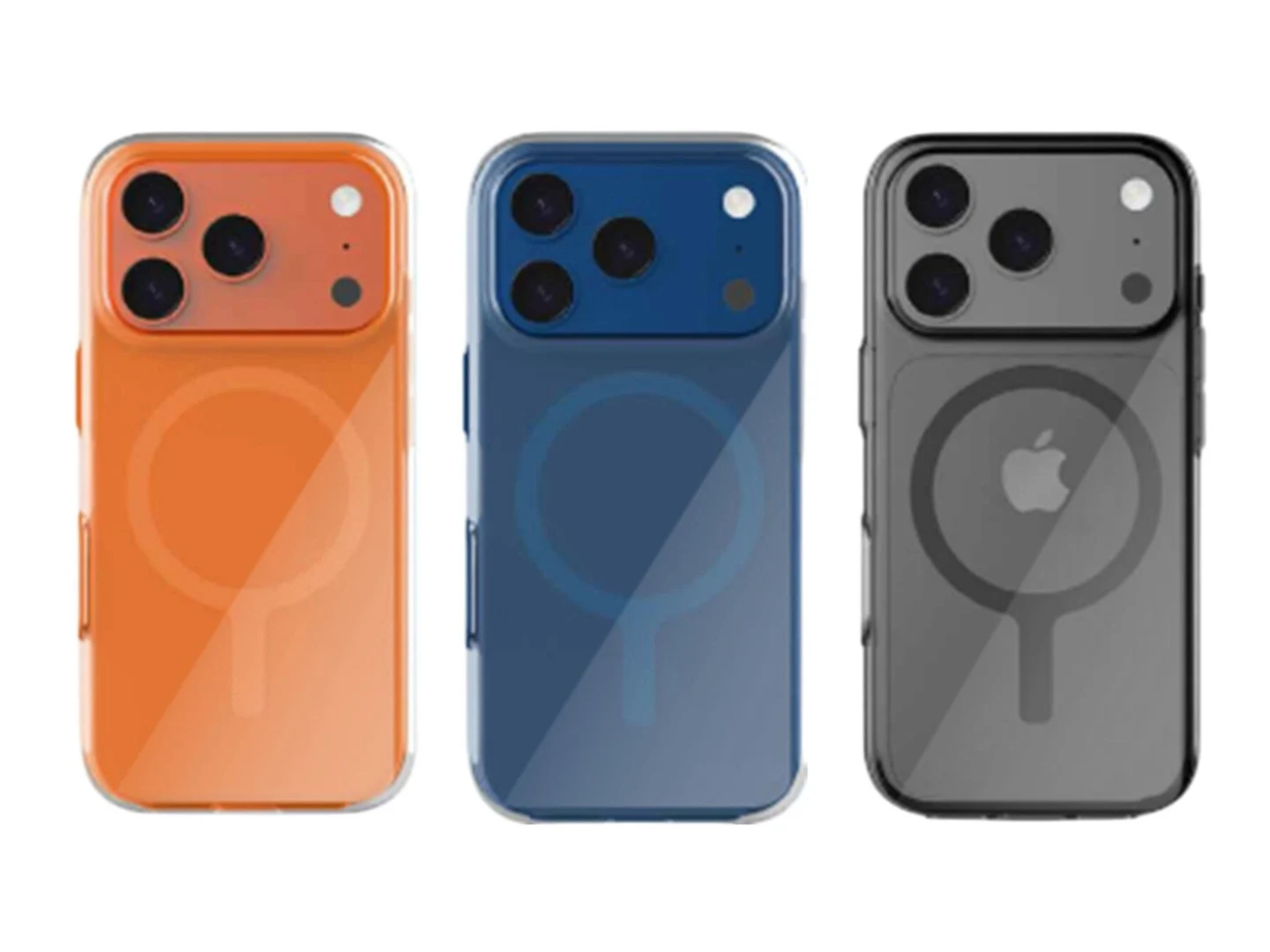
    The iPhone 17 Pro, along with the rest of the range, has been the subject of numerous leaks over the last few months. It is anticipated to feature some camera enhancements like continuous zoom and a new Pro camera application. Additionally, the phone is rumored to be available in fresh color options: orange (Pantone Papaya), dark blue (Pantone Mood Indigo), and dark gray.

    Although Apple hasn’t officially announced the release date for the iPhone 17 series, a recent report suggested that the devices will be revealed on September 9. Interestingly, the iPhone 16 series was launched on the same day last year.

    Source:
    Link


  • Apple iPhone 18: Samsung Camera Sensors Amid Trump Tariffs

    Apple iPhone 18: Samsung Camera Sensors Amid Trump Tariffs

    Key Takeaways

    1. President Trump announced a future 100% tariff on chip imports, prompting Apple to adapt its supply chain.
    2. Apple will produce all glass covers for iPhones and Apple Watches in the United States to seek tariff exemptions.
    3. Samsung will manufacture camera sensors in Texas for the upcoming iPhone 18, marking a shift from Sony as Apple’s supplier.
    4. The new camera sensors will feature advanced stacked image technology and will be used in the iPhone 18 and iPhone 18 Pro.
    5. Apple plans a $600 billion investment to relocate parts of its supply chain to the US, although advanced components like displays and processors will still be sourced elsewhere.


    On Wednesday, US President Donald Trump declared that a 100% tariff would be imposed on chip imports in the future. To get an exemption from this, Apple has announced that all glass covers for iPhones and Apple Watches sold globally will be produced in the United States. As reported by the Financial Times, Apple is also set to use camera sensors made in the US by Samsung Semiconductor, beginning with the iPhone 18.

    Samsung’s Innovations

    Samsung’s factory located in Texas will use cutting-edge chip manufacturing technology, though Apple hasn’t shared any detailed information yet. According to the Financial Times, Samsung is expected to produce stacked image sensors featuring three layers. These sensors will make their first appearance in the iPhone 18 and iPhone 18 Pro. This marks a significant change, as it will be the first time Apple will not use camera sensors from Sony, which were previously made at a TSMC facility in Japan.

    Investment in Local Manufacturing

    These new camera sensors are part of a larger strategy involving a $600 billion investment to shift parts of the iPhone supply chain back to the US, aiming to dodge tariffs set by the Trump administration. Apple stresses that components produced in the US will be utilized in iPhones sold all over the world. However, it’s important to note that there are no current plans to manufacture some of the more advanced and costly components of an iPhone, like the display or the processor, within the US.

    Source:
    Link