Category: Phones

Stay updated with the latest phone news, reviews, and trends. Discover cutting-edge smartphones, features, and innovations in our Phones category at GizNewsDaily

  • Apple’s Future iPhone: Samsung’s New Camera Sensor Technology

    Apple’s Future iPhone: Samsung’s New Camera Sensor Technology

    Key Takeaways

    1. Apple plans to increase domestic manufacturing of iPhone components, including protective glass and camera sensors, primarily in Texas.
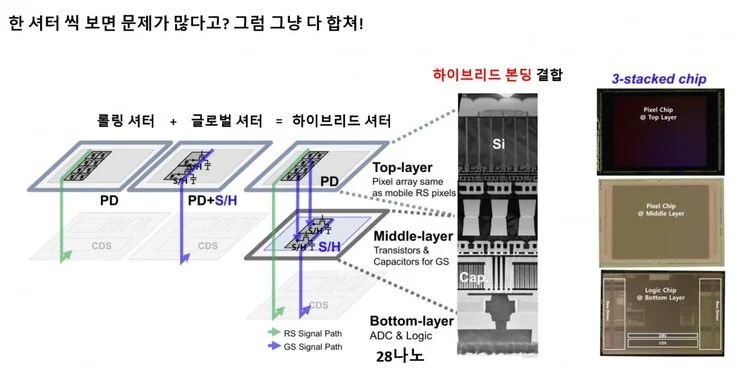
    2. Samsung has developed a new hybrid shutter technology for camera sensors that combines rolling and global shutter features to improve image quality.
    3. The hybrid shutter technology aims to reduce common issues like blurriness and noise in fast-moving scenes.
    4. Apple’s potential shift to using Samsung’s camera sensors may end its long-standing partnership with Sony, although confirmation of this technology’s use is still pending.
    5. The integration of Samsung’s new sensors into iPhones is unlikely before 2027, with the anniversary model possibly being the first to feature this technology.


    Apple has been quite transparent about its plans for the iPhone lately. Although the idea of fully manufacturing an iPhone in the USA seems far-fetched, a growing number of components will be produced domestically. For instance, protective glass for the iPhone and Apple Watch, along with new camera sensors, will be made by Samsung in a facility located in Austin, Texas. A captivating background article on this topic was recently released by the South Korean trade publication Hankyung and later translated in detail by @Jukanlosreve on X. This report is based on a presentation given by Samsung at the International Solid-State Circuits Conference (ISSCC) in February 2025, which can be accessed publicly on Researchgate.

    Technological Motives Behind Changes

    While the changes may have been sparked by US President Donald Trump’s policies, the officially confirmed use of Samsung’s camera sensors, featuring “innovative new technology that the world has never seen before,” appears to stem from a purely technological interest, known as the hybrid shutter. This new Samsung innovation merges the benefits of both rolling shutter and global shutter technologies within a single image sensor, aiming to address their respective limitations.

    Understanding Shutter Technologies

    For more information on how these two shutter technologies function in camera sensors, you can check out Merwansky, for instance. Here’s a quick overview: The “rolling shutter” can lead to blurriness, a jello effect, or flickering in videos when fast-moving subjects are in frame. On the other hand, the theoretically superior “global shutter” is more complicated, uses more energy, and can result in unnatural images with noise. The hybrid shutter technology that Samsung is currently developing consists of three layers for the first time. The top layer has the photodiodes and rolling shutter parts, the middle layer consists of transistors and capacitors for the global shutter, while the bottom layer contains the logic semiconductor that combines the ADC and an image signal processor (ISP) for image correction.

    Innovative Solutions to Image Distortion

    By default, the sensor’s 1.2-micron 50-MP pixels work separately in rolling shutter mode. However, if the smartphone’s chipset identifies a scene that may cause issues, like a spinning fan, it switches to global shutter mode. This involves a type of pixel binning mode where four pixels group together to simplify the global shutter mode. According to Samsung’s findings, this approach produces remarkable results, cutting noise by over half and preventing issues usually associated with rolling shutter mode.

    Apple seems to have been quite impressed by Samsung’s presentation of the new sensor technology in February, leading to a possible end or at least a reduction in its long-standing exclusive partnership with Sony. While Apple has confirmed its intention to use “innovative new technology” for its camera sensors, it remains uncertain if this will actually be the hybrid shutter technology highlighted in Samsung’s presentation.

    Future Prospects for iPhones

    It remains unclear when the new Samsung sensors will be integrated into Apple’s iPhones. The report suggests that this will likely not happen before 2027, meaning the iPhone 18 Pro, anticipated for 2026, will not feature them. As 2027 marks the 20th anniversary of the very first iPhone, the rumored anniversary model, possibly named iPhone 20 Pro or iPhone XX and said to be made entirely of glass, might be the first to utilize this camera technology.

    Source:
    Link


  • Affordable New Honor 5G Smartphone Under $100

    Affordable New Honor 5G Smartphone Under $100

    Key Takeaways

    – The Honor Play 10C is a budget smartphone priced around $78, featuring 5G support and a stylish design.
    – It offers multiple RAM options: 4 GB, 6 GB, and 8 GB, with storage choices of 128 GB or 256 GB.
    – Powered by a MediaTek Dimensity 6300 chip, it supports dual SIM and provides 5G connectivity.
    – The phone has a 6.61-inch LCD display with a 120 Hz refresh rate, but its resolution is lower at 720 x 1,604.
    – The device includes a 13 MP primary camera, a 5 MP secondary camera, and a large 6,000 mAh battery with 15-watt charging.


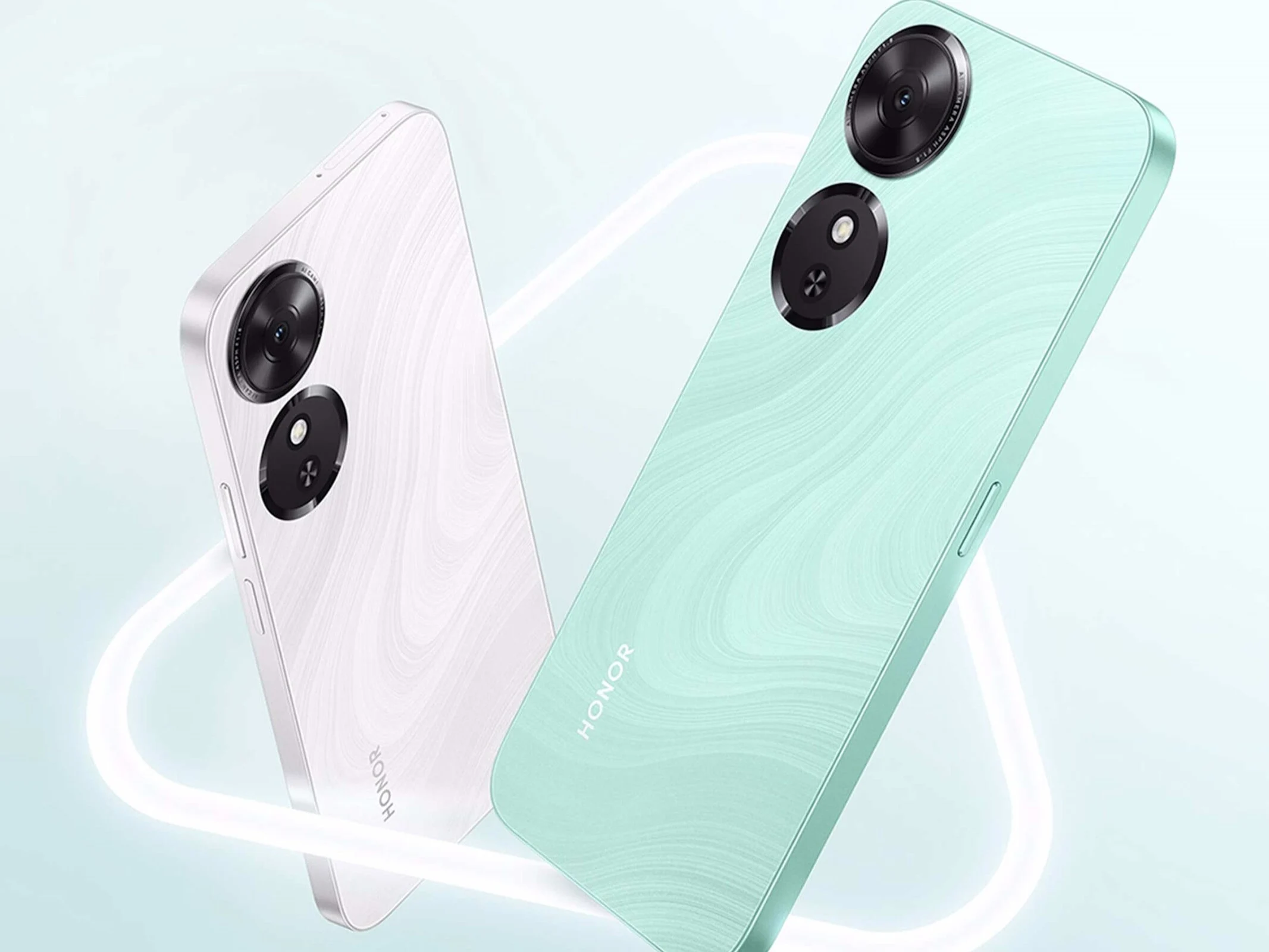
    The Honor Play 10C is a fresh, budget-friendly smartphone that offers 5G support and has an eye-catching design. Its back features a wavy pattern and two distinct round areas for the camera and LED. Available in three colors, the price is about $78. For this amount, buyers receive the entry-level version with 4 GB of RAM and 128 GB of storage. There’s also a variant with either 6 or 8 GB of RAM, and the 8 GB option includes double the storage at 256 GB.

    Performance and Specs

    No matter the version selected, the device is powered by a MediaTek Dimensity 6300 chip, enabling 5G connectivity and dual SIM support. The smartphone boasts a 6.61-inch LCD display with a 120 Hz refresh rate; however, its resolution is just 720 x 1,604, which is not as crisp as many other smartphones in the market. The primary camera is 13 MP, paired with a 5 MP secondary camera on the back. The battery capacity stands at a robust 6,000 mAh and can be charged at a rate of up to 15 watts. Details regarding its price or availability in markets outside China remain unclear.

    Conclusion

    Honor’s new offering aims to attract budget-conscious consumers looking for a stylish smartphone with decent specifications. The unique design and competitive pricing make it an interesting option, but the lower resolution and limited availability may make some potential buyers think twice.

    Source:
    Link


  • iQOO Z10 Turbo Plus: 8000mAh Battery & Flagship SoC Launches Global

    iQOO Z10 Turbo Plus: 8000mAh Battery & Flagship SoC Launches Global

    Key Takeaways

    1. The iQOO Z10 Turbo Plus features a massive 8,000 mAh battery and is powered by the Dimensity 9400+ SoC, targeting the flagship gaming phone market.
    2. The phone is priced at approximately $320 in China but can be imported for about $439.14 through TradingShenzhen.
    3. Imported devices come with Chinese firmware, which may lack certain features like Android Auto, despite supporting multiple languages.
    4. Warranty claims for imported phones might be more complicated compared to official channels, and compatibility with global network bands is not guaranteed.
    5. The Z10 Turbo Plus includes a bright display with a peak brightness of 5,500 nits, stereo speakers, an x-axis linear motor for vibration feedback, and supports 90 W fast charging.


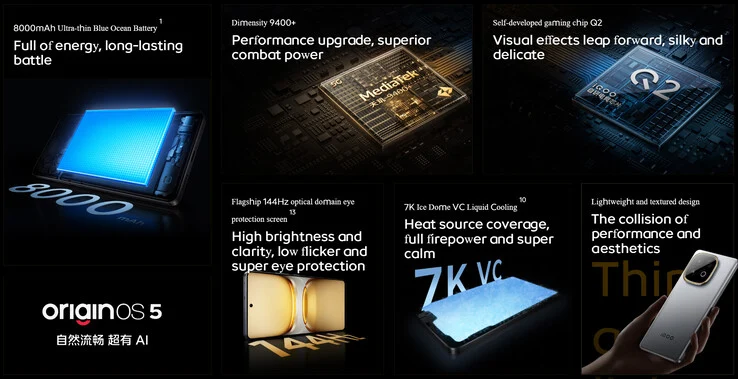
    iQOO launched the Z10 Turbo Plus in August 2025 in China, featuring a massive battery with a rated capacity of 8,000 mAh. It is powered by the Dimensity 9400+ SoC, along with the proprietary Q2 chip, making it a strong contender in the flagship gaming phone segment. However, the company has not yet announced when the phone will be available globally.

    Pricing and Availability

    For those eager to get their hands on this gaming device, it can be imported via TradingShenzhen, where it starts at $439.14. In comparison, the initial launch price of the iQOO Z10 Turbo+ in China was CNY 2,299, which is about $320.

    Important Considerations

    While the import price may seem reasonable, potential buyers should keep a few things in mind. The imported Z10 Turbo Plus will come with Chinese firmware. Although it supports multiple languages, certain features, like Android Auto, typically aren’t available on devices running on a Chinese ROM.

    Another factor to think about is the warranty. TradingShenzhen does have a reasonable policy, but it might not be as straightforward as claiming an official warranty. Additionally, not all Chinese smartphones are compatible with every global network band, which is something to consider before making an import decision.

    Features of the Device

    Returning to the smartphone itself, it boasts the latest flagship SoC from MediaTek, along with an impressive display. Specifically, iQOO states that the full-screen brightness can reach 2,000 nits, while peak brightness goes up to 5,500 nits.

    The Z10 Turbo+ is equipped with other high-end features, such as a stereo speaker setup, an x-axis linear motor for enhanced vibration feedback, DC dimming, and support for 90 W fast charging. You can find more details about this gaming-focused smartphone in our launch coverage.


  • Xiaomi Poco M7 4G: Affordable Phone with 7,000 mAh Battery

    Xiaomi Poco M7 4G: Affordable Phone with 7,000 mAh Battery

    Key Takeaways

    1. The Poco M7 4G features the Snapdragon 685 chip and offers up to 8 GB of RAM and 256 GB of storage, with an option for 8 GB of virtual RAM.
    2. It has a large 6.9-inch FHD+ display with a 144 Hz adaptive refresh rate and several eye-care certifications.
    3. The phone is equipped with a 7,000 mAh battery, providing up to 2.32 days of usage and 28 hours of video playback, but has a maximum charging speed of 33 W.
    4. Additional features include Wet Touch 2.0 technology, HyperOS 2, and a 50 MP rear camera, marking it as a rebranding of the Redmi 15 4G.
    5. The Poco M7 4G is priced starting at $147 on AliExpress.


    Poco M7 Plus came out in August 2025, and now Xiaomi is introducing a new budget-friendly phone, the Poco M7 4G. Earlier this year, the 5G version was released in March, featuring the Snapdragon 4 Gen 2 processor, while the 4G model uses the Snapdragon 685 chip.

    Specifications Overview

    This budget-friendly Snapdragon system-on-chip (SoC) is combined with up to 8 GB of LPDDR4X RAM and 256 GB of UFS 2.2 storage. According to Xiaomi, the memory extension feature can provide an extra 8 GB of virtual RAM. Additionally, users can upgrade their storage using a microSD card, supporting up to 2 TB (currently a 256 GB SanDisk UHS-I memory card is priced at $21.85 on Amazon).

    Display and Battery Life

    On the front side, the Poco M7 4G has a 6.9-inch screen with an FHD+ resolution and a 144 Hz adaptive refresh rate. Xiaomi asserts that the device has several eye-care certifications and utilizes DC dimming to enhance the viewing experience in varying light settings.

    Another impressive feature of this affordable device is its 7,000 mAh battery. The company claims that this hefty battery can last for up to 2.32 days of usage and supports up to 28 hours of video playback. However, unlike some competitors with large batteries, the maximum charging speed is a bit slow at 33 W. The positive side is that it also features 18 W reverse charging.

    Additional Features and Pricing

    Among other notable features of the Poco M7 4G are Wet Touch 2.0 technology, HyperOS 2, and a 50 MP rear camera. These specifications essentially make this new budget phone a rebranding of the Redmi 15 4G. As for the price, it’s available on AliExpress, starting at $147.

    Source:
    Link


  • Redmi Note 15 Pro Plus Launching with Upgraded Chipset Soon

    Redmi Note 15 Pro Plus Launching with Upgraded Chipset Soon

    Key Takeaways

    1. Xiaomi will launch the Redmi Note 15 Pro series in China this month, with the Redmi Note 15 Pro Plus as the leading model.
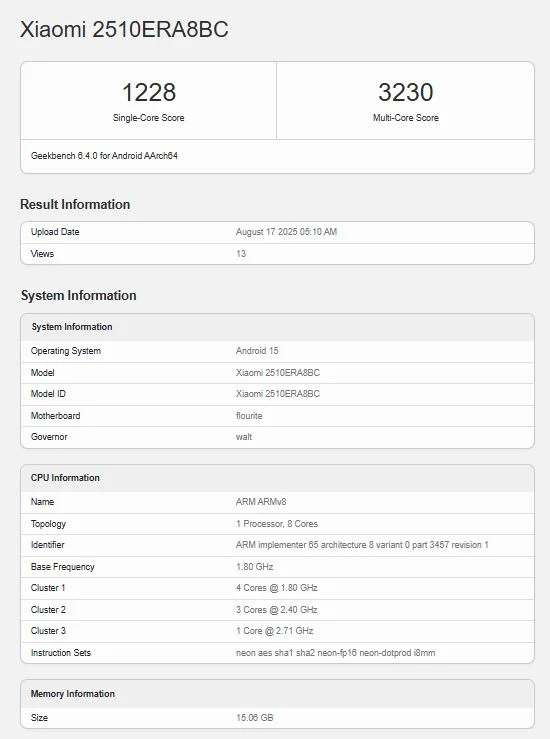
    2. The Redmi Note 15 Pro Plus will feature the Snapdragon 7s Gen 3 chipset, confirmed to be overclocked to 2.71 GHz.
    3. It has an Adreno 810 GPU, achieving Geekbench scores of 1,228 (single-core) and 3,230 (multi-core).
    4. The device includes 16 GB of RAM, an upgrade from the 12 GB maximum in the previous model.
    5. Overall improvements in specifications are modest, raising questions about fan reactions to the upgrades.


    Xiaomi is all set to launch the Redmi Note 15 Pro series in China this month. Information about these devices has slowly been coming out over the past few weeks. It seems that the leading model, the Redmi Note 15 Pro Plus, will feature the same chipset as last year’s Redmi Note 14 Pro Plus. New details seem to back up this notion.

    Geekbench Appearance

    Recently, multiple sources have reported that the Redmi Note 15 Pro Plus has appeared on Geekbench right before its launch in China. This mid-range smartphone was previously speculated to come with a Snapdragon 7s Gen 3 processor, and it is now confirmed to have this chipset, although it operates in an overclocked condition. The Snapdragon 7s Gen 3 version tested on the Redmi Note 15 Pro Plus has its main core clocked at 2.71 GHz, which is a nice increase from the 2.50 GHz found in the Redmi Note 14 Pro Plus (buy on Amazon) and other devices using this chipset last year.

    Performance and Specifications

    The device features an Adreno 810 GPU, affirming that it is indeed powered by the Snapdragon 7s Gen 3. In terms of performance, the Redmi Note 15 Pro Plus achieves scores of 1,228 in single-core and 3,230 in multi-core tests on Geekbench 6. Notably, the single-core score is about 6% higher than what the Snapdragon 7s Gen 3 averaged in our in-house evaluations. Additionally, the phone comes with 16 GB of RAM, which is an upgrade from the 12 GB of RAM that last year’s model had as its maximum. While this is certainly a performance enhancement, it may not excite the series fans too much.

    Conclusion

    In summary, the Redmi Note 15 Pro Plus is shaping up to be an interesting addition to Xiaomi’s lineup, bringing some improved specs to the table. However, with the upgrades being relatively modest, it remains to be seen how the loyal fans of the series will react to these changes.

    Source:
    Link


  • MediaTek Dimensity 9500 Underwhelms on Geekbench with Vivo X300

    MediaTek Dimensity 9500 Underwhelms on Geekbench with Vivo X300

    Key Takeaways

    1. MediaTek is set to launch its flagship chipset, the Dimensity 9500, next month.
    2. The chipset has been benchmarked on the Vivo X300, expected to release in China by the end of the year.
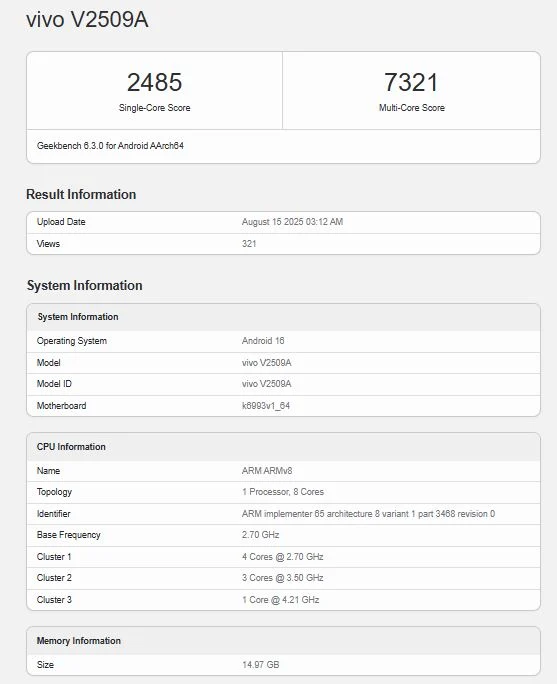
    3. Dimensity 9500 scored 2,485 in single-core and 7,321 in multi-core tests, showing similar performance to the Dimensity 9300.
    4. The SoC features octa-core architecture with various clock speeds, including a prime core at 4.21 GHz.
    5. The GPU will be ARM’s Mali-G1-Ultra MC12, with some cores likely being new Cortex A7 and Cortex X9.


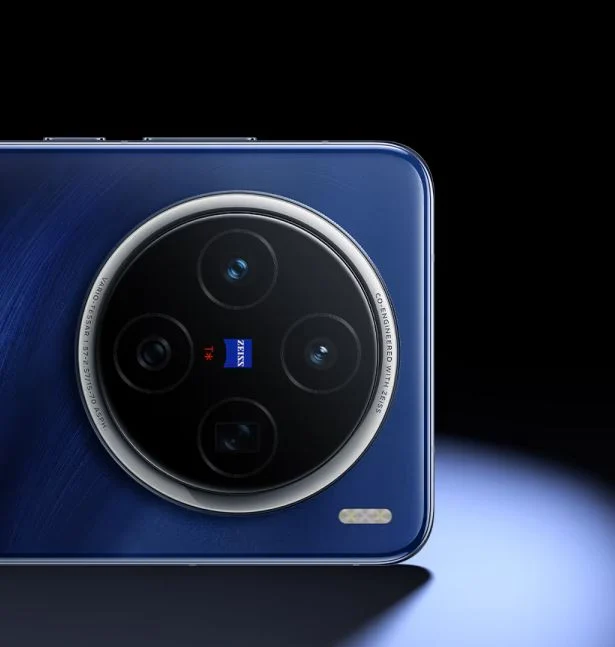
    Recent updates suggest that MediaTek is gearing up to unveil its next flagship chipset, the Dimensity 9500, next month. This system-on-chip (SoC) is set to be utilized by numerous Chinese manufacturers and has recently shown up on Geekbench while being tested on the Vivo X300.

    Geekbench Appearance

    The chipset was benchmarked on a device labeled “V20509A,” which is believed to be the Vivo X300. This phone is expected to launch in China by the end of the year and will compete directly with the upcoming successor to the Xiaomi 15 (available on Amazon).

    Performance Insights

    Sadly, the Dimensity 9500 doesn’t seem to showcase its true performance potential in this listing. It scored a mere 2,485 in the single-core test and 7,321 in the multi-core test. These results are comparable to the Dimensity 9300 from 2023, suggesting that the test may have been conducted with the chipset in a limited capacity.

    Technical Specifications

    The listing does provide some valuable details about the Dimensity 9500. It will retain the octa-core architecture of its predecessor, featuring four cores clocked at 2.70 GHz, three cores at 3.50 GHz, and one prime core at 4.21 GHz. While the specific cores remain unclear, earlier information hints at new Cortex A7 cores alongside a Cortex X9 core from ARM. Additionally, the GPU will include ARM’s latest Mali-G1-Ultra MC12, as previously mentioned.

    Source:
    Link


  • Huawei Accuses Transsion of Patent Theft in Court

    Huawei Accuses Transsion of Patent Theft in Court

    Key Takeaways

    1. Transsion is known for its affordable smartphones, like the Infinix GT 30 Pro, priced at INR 25,190 on Amazon.in.
    2. Huawei has recently topped the DxOMark camera rankings with its Pura 80 Ultra smartphone.
    3. Transsion is facing legal action in the Unified Patent Court (UPC) for allegedly using Huawei’s technology without permission.
    4. The dispute involves Huawei’s video decoding technology, detailed in European patent EP2725797, which improves video playback quality.
    5. This is not the first legal issue between Huawei and Transsion; a 2019 lawsuit involved claims of copyright infringement related to theme wallpapers.


    Transsion is a company that is likely most recognized for its budget-friendly yet intriguing smartphones, like the Infinix GT 30 Pro, which currently starts at INR 25,190 on Amazon.in. However, it has recently found itself in trouble with a much more well-known name in the electronics world for a less-than-pleasant reason.

    Huawei’s Recent Triumph

    Huawei has achieved a significant milestone by claiming the top spot for the Pura 80 Ultra in the newest DxOMark camera rankings. This success may set the stage for another victory in the Unified Patent Court (UPC).

    Legal Challenges Ahead

    Transsion is now facing the UPC’s Munich division after being taken to court over allegations that it has utilized some of Huawei’s technology without authorization.

    Although many Chinese reports do not delve deeply into the specific intellectual property involved, a reliable source known as Fixed Focus Digital has indicated that the issue pertains to video decoding technology owned by Huawei.

    Details of the Dispute

    This technology is detailed in the European patent EP2725797 (titled “Offset Decoding Device, Offset Encoding Device, Image Filtering Device”), which is designed to prevent stuttering and distortion, enhancing the quality of video playback on screens.

    This isn’t the first time Huawei has pursued legal action against Transsion for alleged intellectual property theft. In a 2019 lawsuit, Huawei claimed that Transsion had infringed on its theme wallpaper copyright, with potential damages reaching up to 20 million yuan (approximately $2 million today).

    Source:
    Link


  • Apple iPhone 17 Pro Max features powerful telephoto lens

    Apple iPhone 17 Pro Max features powerful telephoto lens

    Key Takeaways

    1. Chinese flagship phones currently dominate the title of “strongest telephoto lens in a smartphone,” featuring advanced dual periscope systems.
    2. Rumors suggest Apple may release an iPhone 17 Pro with a potentially superior telephoto lens.
    3. A leaker claims the iPhone 17 Pro will feature new telephoto technology, including an 8x optical zoom and adjustable focal lengths.
    4. The iPhone 17 Pro models are expected to upgrade to a 48-MP sensor for the telephoto lens, improving zoom capabilities significantly.
    5. Despite the exciting rumors, the accuracy of the leaker’s claims is uncertain, as past predictions have been mixed.


    Currently, the title of “strongest telephoto lens in a smartphone” is commonly linked to Chinese flagship phones like the Huawei Pura 80 Ultra, Vivo X200 Ultra, or Oppo Find X8 Ultra, which features a dual periscope system. In light of fierce competition in the market, it might be surprising to hear that Apple could potentially release an iPhone with the best telephoto lens available. This intriguing claim was recently made by a well-known leaker on the Chinese platform Weibo, as illustrated in the screenshot below.

    Buzzing Rumors

    The chatter about the iPhone 17 Pro’s telephoto lens has been ongoing long before this Weibo update. Just a few weeks back, another leaker sparked excitement by suggesting that a completely new telephoto technology has been created for the upcoming Pro iPhones. This information was supposedly based on a commercial for the iPhone 17 that is reportedly in production in Slovenia. The leaker specifically mentioned an 8x zoom and a genuine optical zoom solution with adjustable focal lengths, much like what’s found in the Sony Xperia 1 VII.

    Upcoming Sensor Enhancements

    It’s pretty much a given that both iPhone 17 Pro models will receive a sensor upgrade, which is expected to include a 48-MP sensor behind the telephoto lens. This is a significant increase from the 12 MP found in the iPhone 16 Pro Max, allowing for a sensor crop that could facilitate a 10x zoom without excessive difficulty. Nevertheless, this alone might not be sufficient to claim the title of “Best Telephoto” in a smartphone. While the leaker has accurately shared several details in the past, he is not always correct.

    Source:
    Link


  • Honor X9b: From Survivor to AI Powerhouse in Two Years

    Honor X9b: From Survivor to AI Powerhouse in Two Years

    Key Takeaways

    1. The Honor X9b underwent extreme durability tests, including impacts from a wrecking ball, showcasing its toughness before eventually breaking the screen.

    2. The phone features a robust 5800 mAh battery, allowing for up to two days of use without charging, significantly reducing low-battery anxiety.

    3. The MagicOS software updates transformed the phone from a rugged device into a fully functional AI powerhouse, introducing features like Magic Portal and AI Smart Folders for enhanced productivity.

    4. The latest update, MagicOS 9.0, includes advanced photo editing capabilities, such as “Erase passers-by” and “AI Outpainting,” significantly improving the camera experience.

    5. The Honor X9b maintains strong hardware performance with a Snapdragon 6 Gen 1 chipset and features a vibrant 6.78-inch AMOLED display, ensuring it meets modern user demands.


    Since its debut in October 2023, the Honor X9b has been touted as one of the toughest smartphones available. To challenge this claim, Honor invited the media to put the device through rigorous tests.

    This wasn’t your typical drop test on carpets; it was a true trial by fire. The phone faced challenges like being hit by a paintball gun, dropped from significant heights, and even struck by a compact, heavy wrecking ball. After nearly an entire day of pushing the Honor X9b to its limits, the inevitable happened—the screen finally broke. How did that occur? I aimed the wrecking ball directly at the lower right corner of the display.

    @darryllinington Can I smash the unbreakable #honorx9b well thanks to the folks at #honor, I had the opportunity to try break the unbreakable. #x9b #beyondlimitsexperience #honorx9b #HonorX9b #fypシ #fyp ♬ original sound – Darryl Linington

    Yet, the narrative surrounding the Honor X9b goes beyond its sturdiness. This rugged phone has transformed into a powerhouse of AI capabilities, and witnessing this evolution has been truly captivating.

    If you’re curious about what happened to the Honor X9b after my destructive test, I took it to Honor Services for repairs—at my own expense, of course. It was a no-brainer given its extreme durability, a robust 5800 mAh battery that seemed to last forever, and impressive specifications packed inside.

    My decision was straightforward; I required a device that could endure. Although AI wasn’t part of the initial launch pitch, its development over time has been quite remarkable.

    For the first six to eight months, my experience with the Honor X9b was just as I had anticipated. It proved to be a dependable workhorse. I no longer fretted about where I placed it. It would slip off tables, get knocked from my hands, and be tossed into my bag alongside keys and other miscellaneous items without a second thought. Yet, the screen stayed flawless… for a time; I did think minor scratches would show up sooner than they actually did.

    The battery life was outstanding, and even now, I can go two full days with moderate to heavy use without needing to charge it. This altered my routine; I stopped bringing a power bank and no longer experienced the low-battery anxiety that plagued me with other flagship phones.

    Back then, the software, MagicOS 7.2, was adequate. It was straightforward and functional, handling everything an Android phone should. It even included some of Honor’s unique touches, like knuckle gestures. The ability to double-tap with a knuckle for a screenshot or draw a line for split-screen mode was a fun trick and sometimes genuinely useful. However, these features felt more like background traits than main events. The phone was known for its physical strength rather than its digital capabilities.

    The first significant change, which made me sit up and take notice, came with the MagicOS 8.0 update around mid-2024. I expected minor security fixes and possibly some new icons. Instead, I experienced a dramatic shift in the phone’s character.

    Suddenly, it felt less like a passive device and more like an engaging assistant. The standout feature was Magic Portal. Initially, it sounded like just another marketing gimmick, but it turned out to be quite practical. While reading an email containing an address, I could simply press and hold the text, dragging it to the edge of the screen where my maps or ride-sharing app would pop up, ready for navigation. This eliminated the need for awkward copying and switching between apps; it simply worked. For the first time, it felt like the phone was anticipating my next action.

    Another feature, Magic Capsule, was Honor’s approach to an interactive notification system. Notifications for timers, calls, or music would create a small bubble at the top of the screen that I could tap to access quick controls. It was slick and significantly streamlined the notification panel. Additional features like AI Smart Folders, which organized my apps logically, enhanced the impression of a more intelligent and efficient experience.

    The transition wasn’t flawless. There were initial animation hiccups and user interface quirks that required fixes in later patches. However, the trajectory was evident: Honor was not merely allowing this mid-range device to coast on its hardware; they were actively enhancing its intelligence.

    Just when I thought the X9b had peaked in software, an even larger update arrived this month, bringing the August 2025 security patch along with a plethora of new features that felt like I’d received a brand-new phone.

    This early version of MagicOS 9.0 solidified the X9b’s evolution from a tough phone with some intelligence into a fully operational AI powerhouse.

    The infusion of AI has become integrated into my work routine. The new “AI writing” tool is more than just basic predictive text; it can help rephrase sentences, adjust email tones, or quickly draft responses (just remember to proofread). Coupled with “AI Notes,” which organizes my disorganized thoughts and even transcribes audio from the Recorder app with surprising accuracy, the phone has turned into a genuine productivity tool.

    Beyond the standout features, this update refined the overall user experience. “AI Subtitles” generates real-time captions for any video, which is invaluable in noisy settings. For privacy, the “Hidden apps” feature allows me to conceal sensitive applications like banking or work chats, enabling me to lend my phone to someone without concern. Even the keyboard has improved, with new gestures that speed up typing. It’s the result of countless small and large enhancements that render the phone feel so complete.

    In addition to its new capabilities, the Honor X9b maintains reliable performance. With a Snapdragon 6 Gen 1 chipset and up to 12GB of RAM, apps launch swiftly, multitasking flows seamlessly, and even demanding games like Wuthering Waves run smoothly. The 6.78-inch AMOLED display, featuring a 1.5K resolution and a 120 Hz refresh rate, remains competitive for 2025. With vibrant colors and a peak brightness of 1200 nits, it excels in outdoor visibility. This dependable hardware, combined with the long-lasting 5800 mAh battery, ensures the phone consistently meets my daily needs.

    The most significant improvements lie in the gallery and camera features. They genuinely feel like magic. Recently, while browsing family photos, I discovered a perfect shot marred by a stranger in the background. Thanks to the new “Erase passers-by” feature, the Honor X9b processed the image, making the person disappear. There were minimal artifacts and no blurry mess… just gone. The same applies for the “Remove reflection” feature when photographing through a window.

    The feature I’ve enjoyed the most is “AI Outpainting.” It allows you to extend a photo beyond its original edges. I had a lovely landscape shot that was too tightly cropped. With a few taps, the AI generated a broader scene that blended seamlessly with the original image. It’s like having a creative advisor in my pocket. For older or flawed photos, features like “AI Upscale” to enhance resolution and “Eyes Open” to correct blinking have been genuinely helpful for salvaging treasured memories, whether digital or physical.

    As you can see, the Honor X9b has some scuff marks around its edges. The camera has minor scratches, and there are black marks on the back; however, the device was signed by the Honor team. The screen has noticeable scratches, but not a single crack… considering how many drops and impacts it has endured, that’s pretty impressive.

    On wrecking-ball day, I appreciated the X9b for its durability. Nowadays, I value it for its software: meaningful, transformative updates have evolved it from just a rugged device into a versatile, intelligent companion. The X9b didn’t merely survive; it adapted, learned, and has become one of the most rewarding phones I’ve ever used.

    Source:
    Link



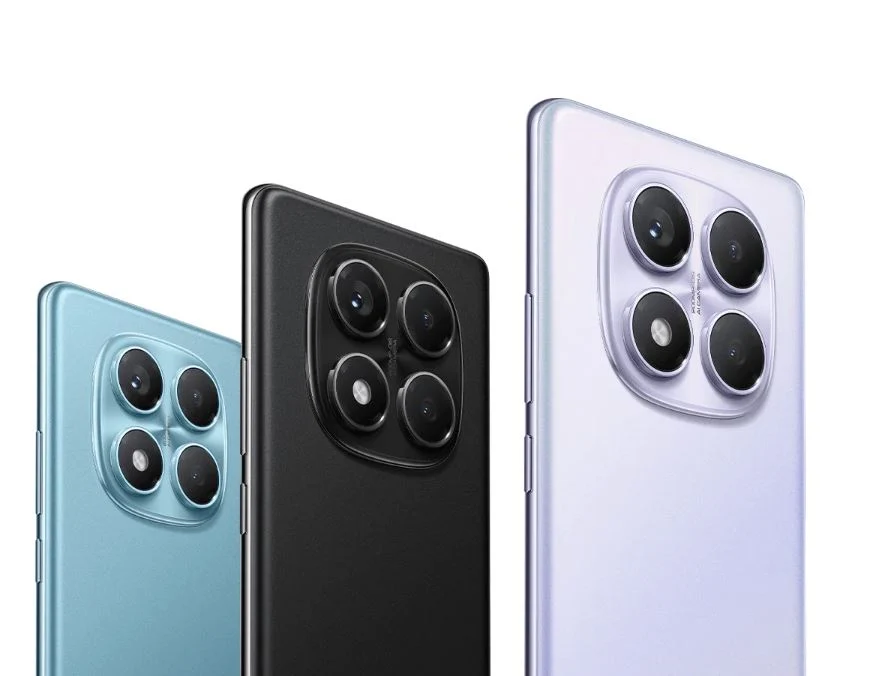
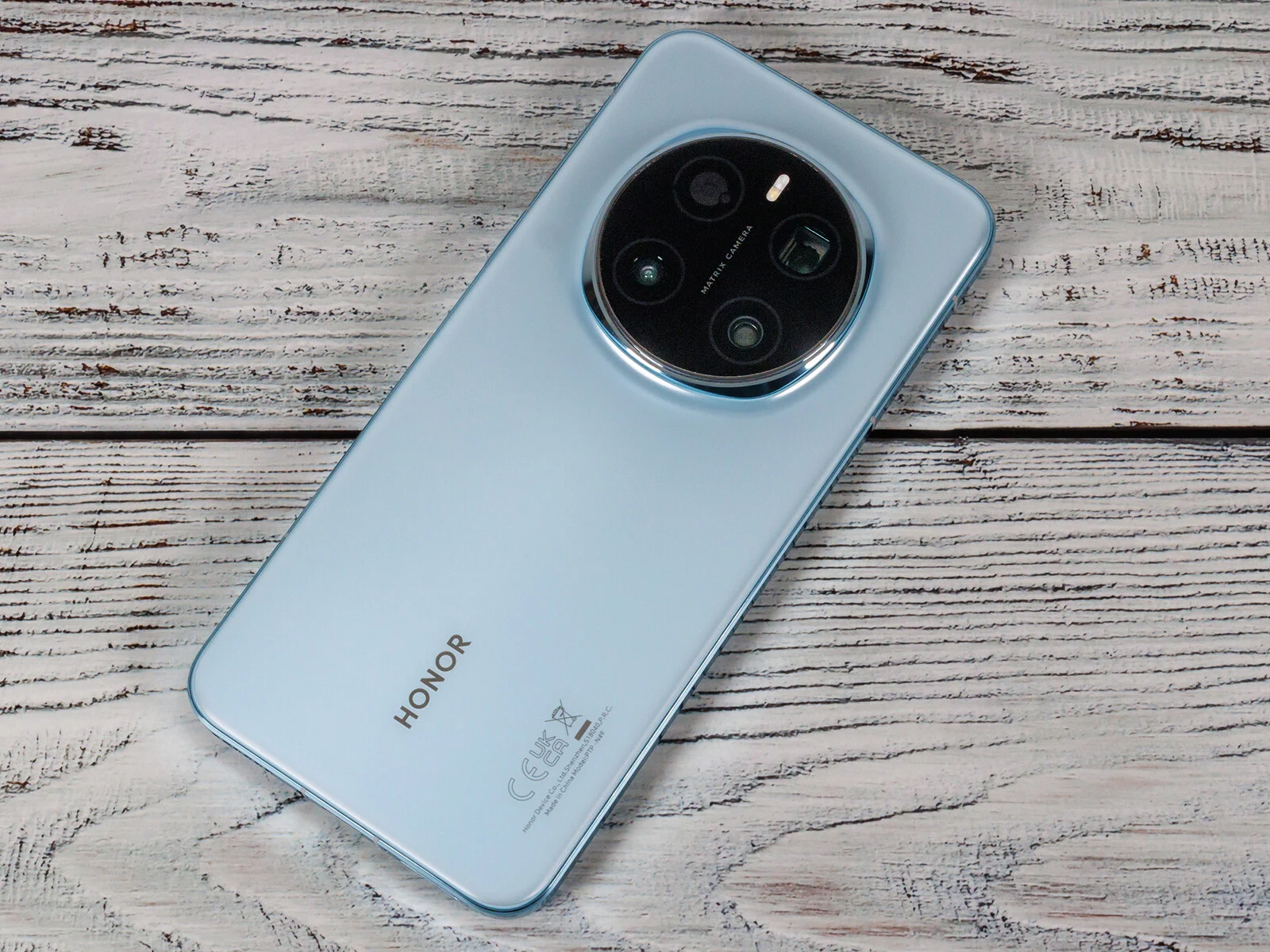
  • Honor Magic 8 Leaks: Upcoming Android Flagship with Charging Change

    Honor Magic 8 Leaks: Upcoming Android Flagship with Charging Change

    Key Takeaways

    1. The first Honor smartphone with the Snapdragon 8 Elite 2 SoC has been spotted in the 3C database in China.
    2. Two models, BKQ-AN00 and BKQ-AN80, will support 80W charging, down from the previous Magic7 series’ 100W.
    3. The device may have a large battery capacity of around 7,000mAh and support 80W wireless charging.
    4. It is expected to run on MagicOS 10, based on Android 16.
    5. The high-end “Ultra” model might feature a dual 200MP camera setup.


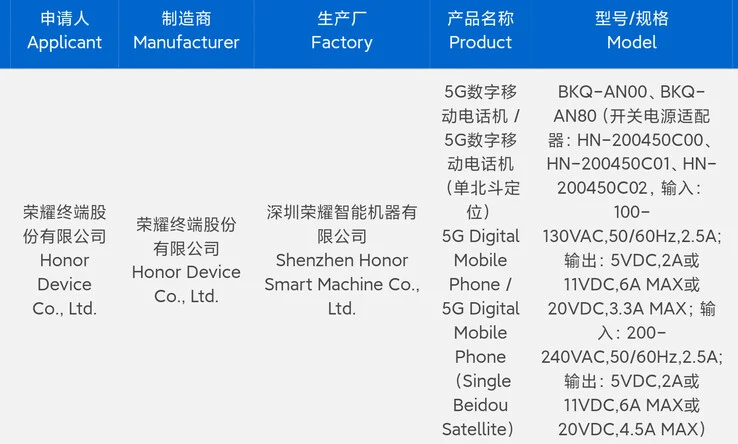
    The first Honor smartphone featuring the future flagship Snapdragon 8 Elite 2 SoC has been spotted in the official 3C database in China, as reported by a new source.

    Device Variants and Charging Capabilities

    It appears that this smartphone comes in two models, specifically the BKQ-AN00 and BKQ-AN80. Both models have received approval to support charging at 80W with an official Honor power adapter, while the previous Magic7 series had a charging capacity of 100W when it launched.

    Generational Changes

    If this device is indeed part of the Magic8 series, it seems to have made a trade-off in its charging capabilities compared to earlier models. However, this might not be a significant concern, as there are rumors suggesting that it will be Honor’s first flagship with a battery capacity of around 7,000mAh. Additionally, it could also support Honor’s 80W wireless charging technology.

    Software and Camera Upgrades

    The Magic8 series is also expected to come equipped with the latest MagicOS 10, which is based on Android 16. Furthermore, there are indications of enhanced camera features, including the possibility of a striking dual 200MP camera setup in the highest-end “Ultra” model, according to Digital Chat Station via Weibo.

    Source:
    Link