Category: Gaming

  • Ayaneo Confirms Flip 2 Release, Denies Flip Series Discontinuation

    Ayaneo Confirms Flip 2 Release, Denies Flip Series Discontinuation

    Key Takeaways

    1. Ayaneo clarified that the Ayaneo Flip is not discontinued; production will resume after some time due to high demand.
    2. There is no specific date for the restart of production, but Ayaneo plans to produce several hundred more units in the next three months.
    3. The company has successfully shipped 98% of Flip crowdfunding orders, with only 18 outstanding.
    4. The Ayaneo Flip series will continue with future models featuring enhanced hardware and new functionalities.
    5. Ayaneo commits to ongoing after-sales service and clear communication with Flip owners through various channels.


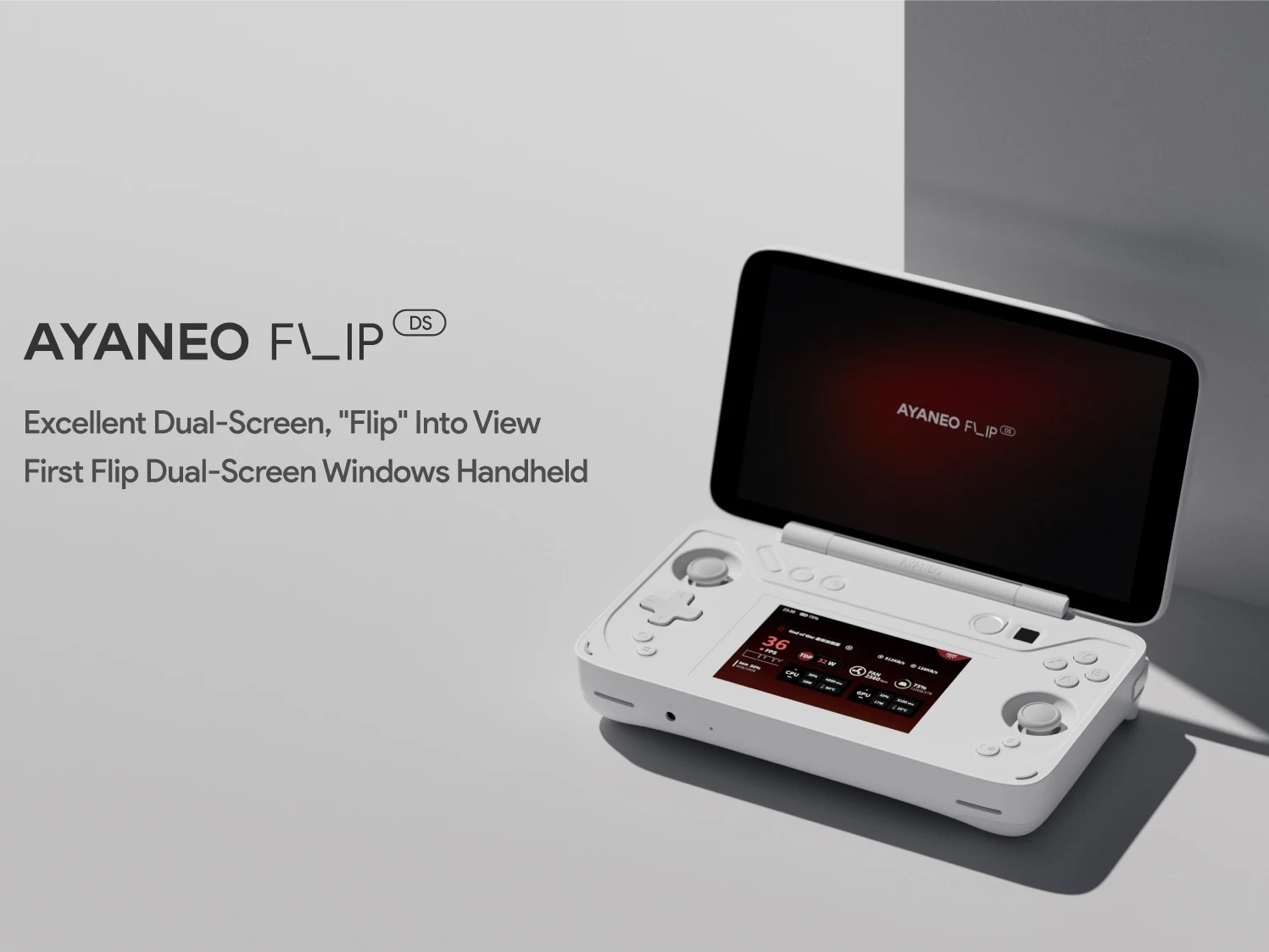
    Following rumors about the discontinuation of the Ayaneo Flip, the Chinese company has released a statement to clear up the confusion. They have also shared information regarding the future of the Flip series.

    Clarification on Production Status

    An update shared today (February 28) on the Indiegogo page for the Ayaneo Flip reveals that claims about the Flip being discontinued are incorrect. This misunderstanding arose from a previous statement that was not interpreted correctly.

    The statement suggested that there are no plans for immediate production of the AYANEO FLIP. However, Ayaneo clarified that this means they are not starting production right away, but will do so after some time. This decision is linked to last year’s choice to make more units due to persistent demand.

    Future Production Plans

    Currently, there is no specific date for when production will start up again, as it relies on smooth coordination with their supply chain. Nevertheless, Ayaneo has announced that they plan to produce several hundred more Ayaneo Flip units within the next three months. These additional units will be sold globally through official channels. Ayaneo also noted that they have successfully shipped 98% of Flip crowdfunding orders, leaving only 18 orders outstanding.

    Continuation of the Flip Series

    The latest announcement also indicates that the Ayaneo Flip will not be a one-off product, as the series is set to continue. Ayaneo promises that future models will maintain the same distinctive design, but will feature enhanced hardware performance and new functionalities.

    Ayaneo reassures Flip owners that they will provide ongoing after-sales service and technical support indefinitely. They are also dedicated to maintaining clear communication through their official website, social media, and Indiegogo updates.

    Source:
    Link

  • AMD RX 9060 GPU: RDNA 4 and FSR 4 for Entry-Level Gaming

    AMD RX 9060 GPU: RDNA 4 and FSR 4 for Entry-Level Gaming

    Key Takeaways

    1. AMD announced specifications, pricing, and features for the RDNA 4 architecture’s Radeon RX 9070 and 9070 XT graphics cards.
    2. The RX 9070 and 9070 XT are positioned as mid-range GPUs, offering excellent performance at an attractive price.
    3. AMD aims to strengthen its position in the GPU market with these new models.
    4. An upcoming RX 9060 is set to target entry-level users, competing with Nvidia’s GeForce RTX 5060.
    5. AMD shared the announcement via their YouTube channel to engage with the community and provide updates.


    AMD has officially announced the details regarding the specifications, pricing, and features of the RDNA 4 architecture’s AMD Radeon RX 9070 and 9070 XT graphics cards. These GPUs are looking like a great option for those in the mid-range market. Additionally, AMD hinted at the upcoming release of the RX 9060, which is expected to be an entry-level graphics card aimed at competing with the Nvidia GeForce RTX 5060 once it hits the market.

    Mid-Range Performance

    The RX 9070 and 9070 XT promise to deliver excellent performance without breaking the bank. The launch price for these GPUs has been set, making them an attractive choice for gamers who want good performance without spending too much. With these new models, AMD is trying to strengthen their position in the competitive GPU market.

    Upcoming Entry-Level GPU

    Moreover, AMD is gearing up to introduce the RX 9060, which is likely to cater to those who are looking for an affordable GPU option. This card will probably go head-to-head with Nvidia’s GeForce RTX 5060, which is expected to be launched in the near future. AMD’s strategy appears to be focused on capturing a broader audience by offering various options across different price ranges.

    AMD’s announcement was made through their YouTube channel, where they shared insights into the capabilities of the new GPUs. This move shows that AMD is keen on engaging with its community and keeping them updated on the latest developments in their product lineup.

    Source:
    Link

  • Xbox Co-Creator Dismisses VR Gaming as Sony Cuts PSVR 2 Price

    Xbox Co-Creator Dismisses VR Gaming as Sony Cuts PSVR 2 Price

    Key Takeaways

    1. Sony plans to reduce the PSVR 2 headset price to $400 in March to attract more users amidst sluggish PS5 sales.
    2. Seamus Blackley argues that VR gaming lacks a standout game and a compelling narrative to engage players effectively.
    3. Blackley critiques the current state of VR, suggesting gamers need a strong story instead of aimless exploration in virtual worlds.
    4. There are concerns about the comfort of VR headsets, even as they become easier to wear; this sentiment is shared by Microsoft Gaming CEO Phil Spencer.
    5. The lack of investment from developers in the PSVR 2 has led to a shortage of recent AAA titles, while the Meta Quest series shows demand for a wireless VR experience.


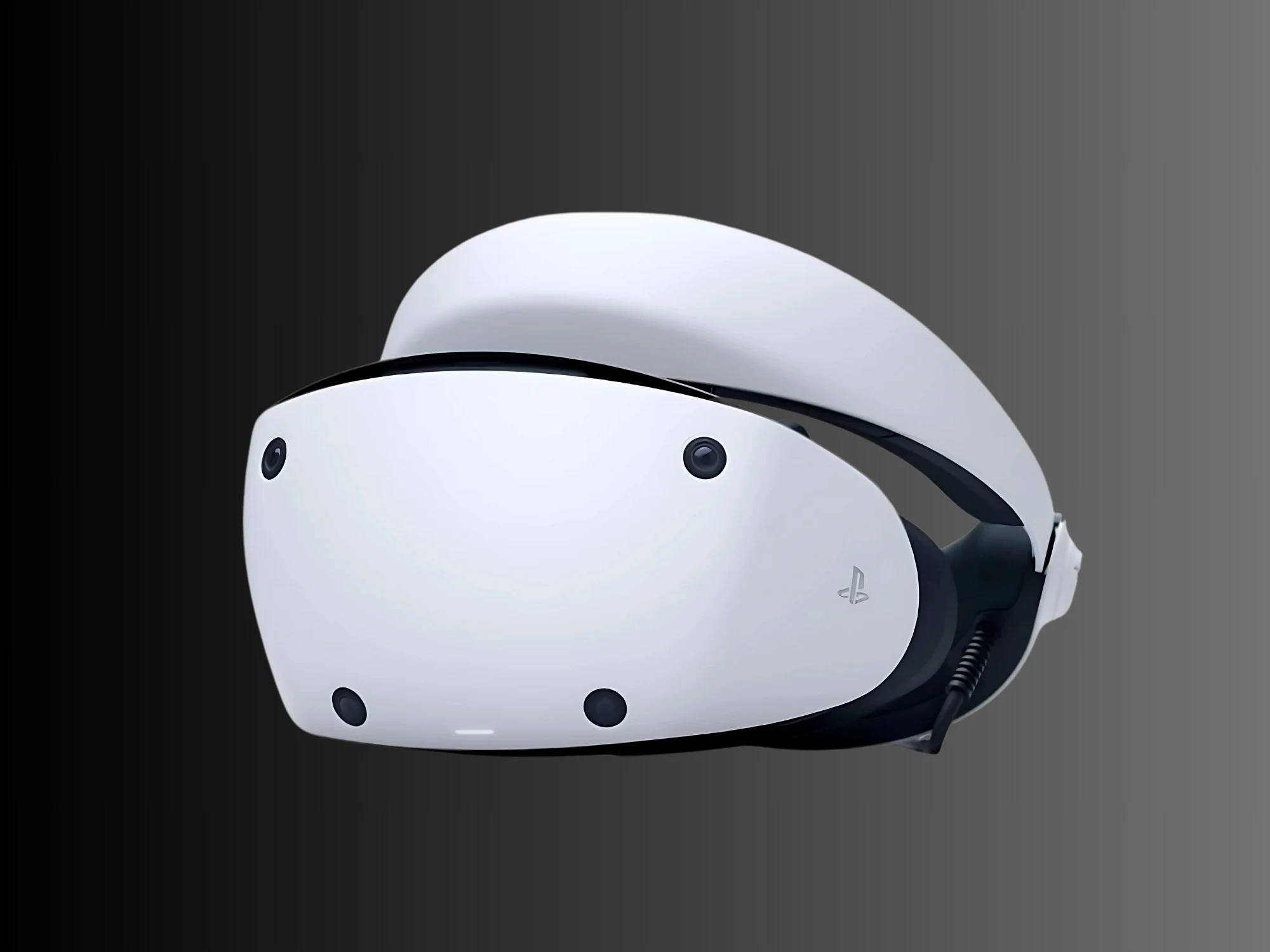
    Despite the sluggish sales of Xbox consoles, the PSVR 2 hasn’t emerged as a strong reason for gamers to choose a PS5. In a bid to attract more users, Sony plans to decrease the price of the VR headset to $400 starting in March. Seamus Blackley, who co-created the first Xbox, has shared his views on the current situation of VR gaming. He argues that VR is missing a standout game or the framework needed to fully engage players in various titles.

    Blackley’s Background and Views on VR

    After meeting Bill Gates in 1999, Blackley persuaded Microsoft to develop a console to compete with the Sony PlayStation 2. After leaving the company, he has worked on projects involving augmented reality. While Blackley embraces new technology, he has some critiques regarding the role of VR in today’s gaming environment.

    The Need for Narrative in VR

    On the VideoGamer Podcast, Blackley mentioned that while VR offers gamers a sense of freedom, it lacks a solid purpose. He believes that instead of wandering aimlessly in virtual worlds, gamers require a compelling story to lead them. Up until now, developers have faced challenges in combining an engaging gaming experience with VR technology.

    Critiques on Headset Comfort and Market Trends

    Blackley’s remarks about the awkwardness of VR headsets might seem tough, given that the devices have become easier to wear. Nonetheless, even with Microsoft Windows supporting Meta Quest VR headsets, Phil Spencer concurs with Blackley’s opinion. Xbox is shifting towards a multi-platform approach, and the CEO of Microsoft Gaming is against any wired device that links only to one console.

    It appears that game developers are hesitant to invest in the PSVR 2, resulting in a lack of recent AAA titles that are compatible. Sony has even introduced a PC adapter to enhance the headset’s appeal. The Meta Quest series demonstrates that there is demand for a wireless alternative with a large application library. If more consumers show interest in a high-end VR gaming experience, Microsoft might reconsider its current position.

    Source:
    Link


  • Monster Hunter Wilds Poor Performance on Steam Deck: Players Struggle

    Monster Hunter Wilds Poor Performance on Steam Deck: Players Struggle

    Key Takeaways

    1. Performance Concerns: Players experienced pixelated visuals and inconsistent frame rates on the Steam Deck, despite Capcom’s assurances of improved rendering.

    2. Compatibility Issues: Monster Hunter Wilds is not officially listed as compatible with the Steam Deck, leading to performance challenges even with setting adjustments.

    3. Framerate Challenges: Maintaining a stable framerate near 30fps is difficult, even with upscaling techniques, making gameplay frustrating for Steam Deck users.

    4. Alternative Devices: Other handhelds like the Asus ROG Ally and MSI Claw 8 AI+ show better performance for the game, but expectations should be tempered due to issues with mid-range graphics cards.

    5. Cloud Gaming Limitations: Cloud gaming options like GeForce Now are not supported for Monster Hunter Wilds, limiting mobile gaming possibilities for players.


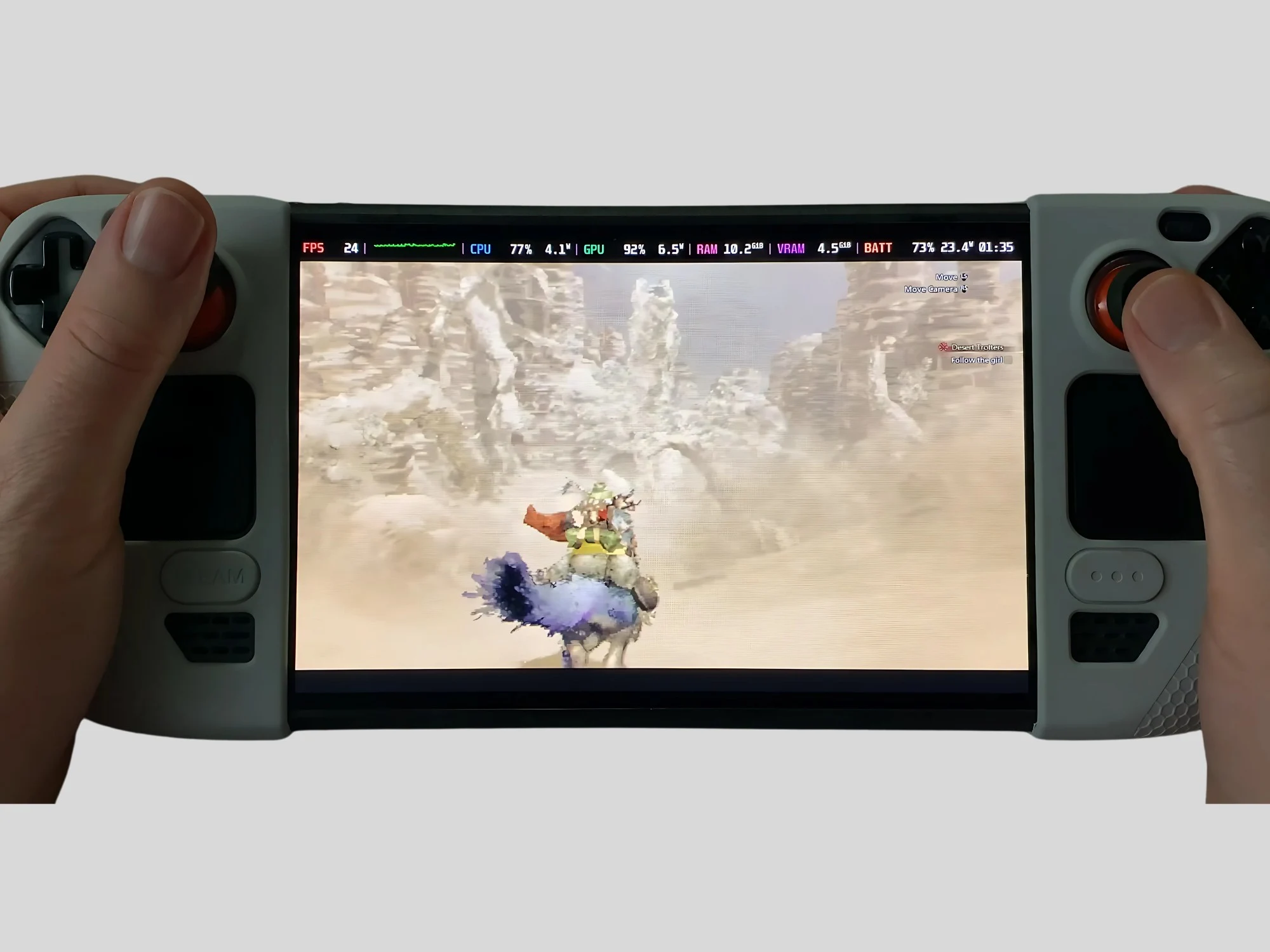
    Players were worried about how well the Steam Deck would perform during the open beta of Monster Hunter Wilds. Capcom had assured fans that rendering would be improved, which could benefit the handheld. Sadly, once the final version was released, gamers noticed pixelated visuals and frame rates that were all over the place.

    Compatibility Issues

    On its official Steam page, Monster Hunter Wilds does not show as compatible with the Steam Deck. Nevertheless, some games without this designation manage to run just fine on the device. Resourceful players often find ways to tweak their settings to work around the limitations. Still, many are discovering that Monster Hunter Wilds does not perform well, no matter the adjustments made.

    Performance Challenges

    Many players have shared videos showcasing Capcom’s new game on the Steam Deck. Even when using upscaling or FSR, it’s a challenge to keep the framerate near 30fps. On a brighter note, upscaling doesn’t seem to add noticeable lag when players are trying to catch monsters. Reducing the detail settings can help, but the overall performance is so lacking that players on the Steam Deck are looking for other options.

    Alternatives for Better Gameplay

    The Asus ROG Ally and MSI Claw 8 AI+, which run on Windows 11, are showing more power. Early feedback indicates that these systems provide slightly better performance with Monster Hunter Wilds. However, since mid-range Nvidia and AMD desktop graphics cards are having their own issues, mobile gamers should manage their expectations. A harsh review from Digital Foundry highlighted that frame rates were not matching up with the disappointing graphical quality.

    Cloud gaming could also be a way to enjoy hunting monsters while on the move. GeForce Now is an option that many would prefer for streaming, but, like other titles in the franchise, Monster Hunter Wilds isn’t supported. The cloud gaming situation on Xbox isn’t looking better either.

    At the moment, Monster Hunter Wilds isn’t the best choice for Steam Deck players. That said, the game does load up, and controls work without issues. If Capcom can manage to optimize the game further, any enhancements may eventually benefit portable PCs as well.

    Source:
    Link


  • Get $3,200 in Game Bundles for Only $10 – 99% Discount!

    Get $3,200 in Game Bundles for Only $10 – 99% Discount!

    Key Takeaways

    1. The “California Fire Relief Bundle” aims to support victims of recent wildfires in California, with proceeds going to CORE (Community Organized Relief Effort).
    2. The bundle includes a vast collection of 189 board games, 187 PC games, and various digital items, making it a diverse offering for purchasers.
    3. Notable games in the bundle include Tunic, Cook, Serve, Delicious 2, Before The Green Moon, and Octodad: Dadliest Catch.
    4. The bundle is priced at just $10, with the option for buyers to donate more if they wish, making it an affordable way to contribute to a good cause.
    5. Many games are available on multiple platforms, including Windows, MacOS, Linux, Android, and web browsers, increasing accessibility for players.


    Once again, itch.io is putting together a bundle packed with gaming goodies for a worthy cause. Following the “Help For Ukraine” bundle from a few years back, the latest offering is the “California Fire Relief Bundle,” aimed at helping victims of the recent wildfires in California. Except for some small processing fees, all the money raised will go to CORE (Community Organized Relief Effort), a non-profit based in Los Angeles that assists survivors of emergencies and focuses on rebuilding efforts. Overall, it’s another noble initiative, but the vast amount of content can be a bit much to take in. It’s likely that many purchasers of the “Help For Ukraine” bundle didn’t experience every game, book, or item included.

    What’s Inside the Bundle

    This bundle features 189 board games, complete with printable templates, alongside nineteen game assets, seventeen digital books, four comics, two tools, a mod, and three extra items. The PC games will probably catch the eye of most buyers. In total, there are 187 games, with many available on various systems: 167 for Windows, 87 for MacOS, 65 for Linux, five for Android, and 11 that can be played directly in a web browser.

    Noteworthy Games to Check Out

    Some highlights from the bundle are the Zelda-inspired game Tunic, the cooking simulation Cook, Serve, Delicious 2, the farming simulation Before The Green Moon, the puzzle-platformer Hoa, the JRPG Fallen Legion: Rise To Glory, the physics-based comedy Octodad: Dadliest Catch, the skateboarding simulation SkateBird (which is like Tony Hawk’s Pro Skater but with a bird), the 2D horror adventure Whispering Willows, the historically accurate visual novel Assassination 1942, and the cat destruction simulator Catlateral Damage: Remeowstered, among others. If you want to explore before purchasing, you can utilize different filters. However, at just $10 for such a good cause, this bundle is an absolute steal, whether or not you manage to play every game included. Additionally, buyers have the option to donate more than $10 if they choose to do so.

    Source:
    Link

  • Iqunix EZ63 and EZ60 Keyboards Update: On-Board Profiles Added

    Iqunix EZ63 and EZ60 Keyboards Update: On-Board Profiles Added

    Key Takeaways

    1. A new beta firmware update for the Iqunix EZ63 and EZ60 improves software issues, resolves bugs, and enhances the Rapid Trigger feature.
    2. Users can now access three distinct keyboard profiles (Custom, Office, and Esports) with individual Rapid Trigger and actuation force settings.
    3. The update introduces a hot-key (Fn+Q) to toggle SOCD on and off, with a visual indication via RGB lights.
    4. Berserk Mode is a new feature allowing a Rapid Trigger sensitivity of 0.005 mm, currently only available with Gateron Magnetic Jade Pro switches.
    5. Iqunix is actively seeking community feedback on Discord regarding updates and features.


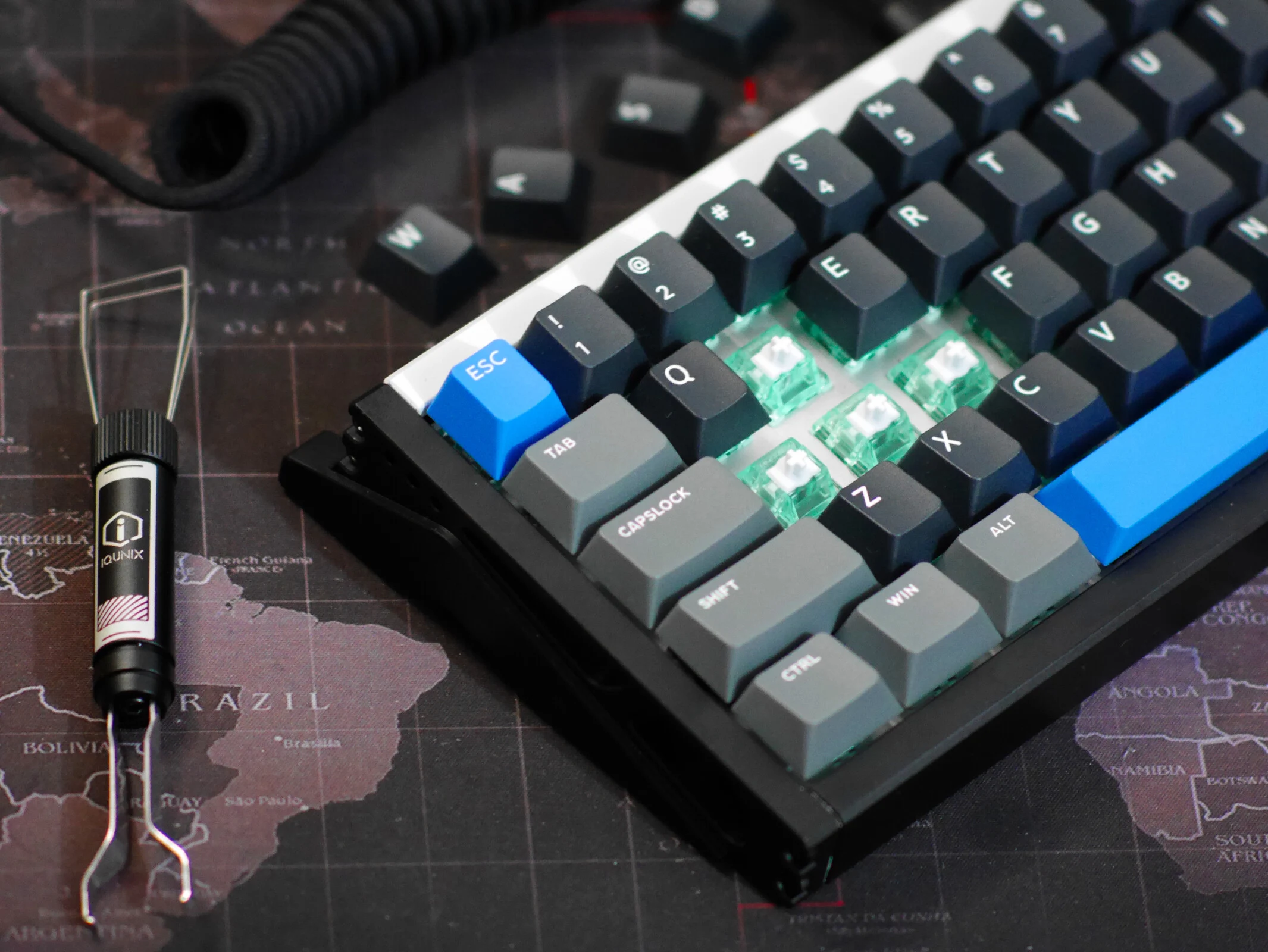
    We recently took a look at the Iqunix EZ63 Hall-effect gaming keyboard. While its hardware and build quality make it a strong contender for the top Hall-effect gaming keyboard, we found that the software and firmware left something to be desired. Now, a new beta firmware update for both the Iqunix EZ63 and EZ60 addresses a common issue noted among the Hall-effect keyboard series, resolves several bugs, and enhances the Rapid Trigger feature. This update brings some of the promised features from Iqunix that were expected by the end of Q2, with just the macro functionality pending. Users who are already on a previous beta firmware version will receive a prompt to update when they visit beta.iqunix.com. It’s important to note that this update will reset the keyboard mapping and other personalized settings.

    New Profiles Available

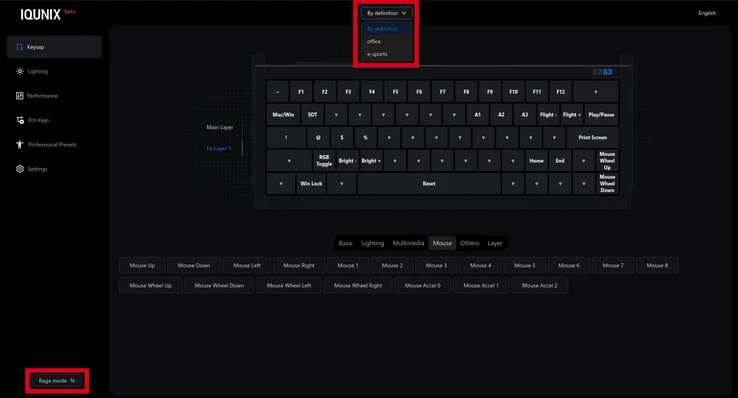
    As of February 27, users with the beta firmware on their Iqunix Hall-effect keyboards can now access three distinct keyboard profiles: Custom, Office, and Esports. Each profile comes with its own Rapid Trigger and actuation force settings.

    In our review of the EZ63, we pointed out the absence of a profile-switching feature. This limitation meant users were locked into the settings they configured for specific gaming sessions. Consequently, it turned the EZ63 into a gaming-only keyboard if you tailored things like actuation points and Rapid Trigger for different games. This made it challenging to fine-tune the keyboard for general gaming use. The introduction of profiles does help alleviate this problem, but it still feels like a temporary fix; having several fully customizable profiles would be a better solution.

    New Features and Updates

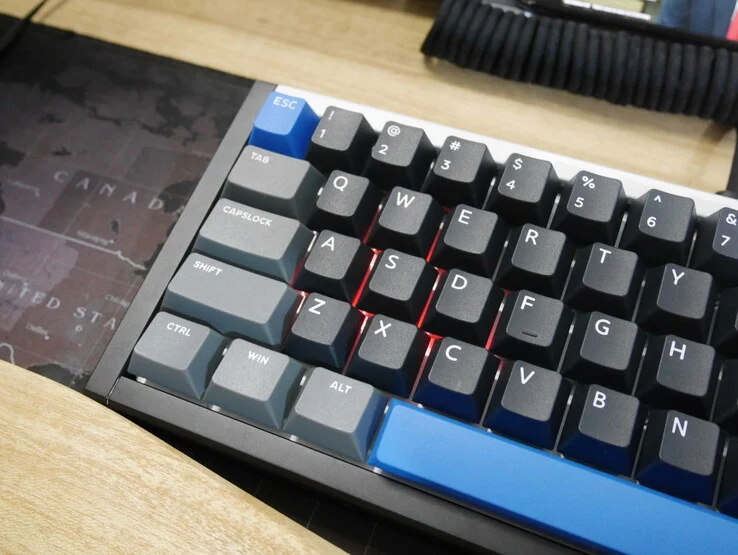
    With the new beta firmware, EZ63 and EZ60 users can also use a new hot-key to toggle SOCD on and off without needing to access the browser-based software. This is especially useful for gamers playing titles that have banned this contested feature. Activating SOCD with the Fn+Q shortcut will cause the WASD keys’ RGB lights to glow green for a short time, while turning it off will make them temporarily red.

    Another interesting feature introduced in the latest beta firmware is Berserk Mode, which allows for a Rapid Trigger sensitivity of 0.005 mm after the actuation point. Iqunix has mentioned that this feature is still being tested, but they aim to refine it in the future. Currently, this setting is only available with the Gateron Magnetic Jade Pro switches (currently priced at $57.99 on Amazon), which are the priciest switch option for the EZ60 and EZ63. There’s still no word on whether the Star Trail or other Gateron switch types will also support the Berserk Mode feature.

    Community Feedback on Discord

    Iqunix has been actively engaging with users on Discord about these updates and features.

    Source:
    Link


  • AMD Radeon RX 9070 XT & RX 9070: 4K Performance at 1440p Prices

    AMD Radeon RX 9070 XT & RX 9070: 4K Performance at 1440p Prices

    Key Takeaways

    1. AMD is launching the RDNA 4 architecture with the Radeon RX 9070 XT and RX 9070 graphics cards, focusing on the midrange market due to strong competition from Nvidia in the high-end segment.

    2. The RX 9070 XT features 64 compute units, peak INT4 performance of 1,557 AI TOPS, and 16 GB GDDR6 memory, while the RX 9070 has 56 compute units and slightly lower specifications.

    3. Both cards support PCIe Gen 5 x16 and HDMI 2.1b, with the RX 9070 outperforming the RX 6800 XT and RTX 3080 by significant margins in 4K gaming and ray tracing.

    4. The RX 9070 XT is marketed as being 51% faster than the RX 6900 XT and 26% quicker than the RTX 3090; both models show impressive performance gains over the RX 7900 GRE.

    5. The RX 9070 and RX 9070 XT will be available from various AMD partners starting March 6, with prices set at $599 and $549, respectively, but AMD will not offer Made by AMD cards for this launch.


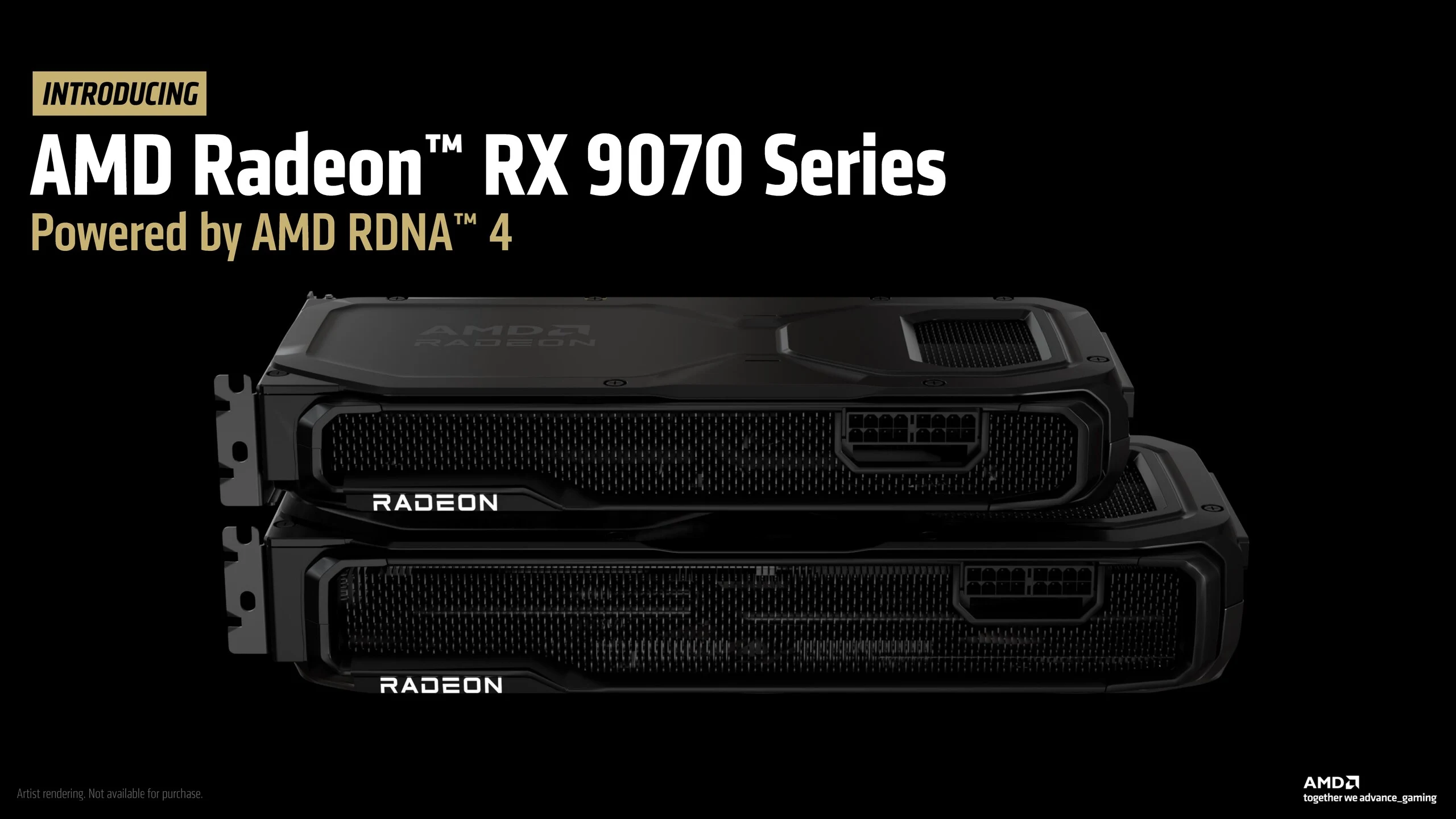
    AMD is launching its RDNA 4 technology with the new Radeon RX 9070 XT and Radeon RX 9070 graphics cards. This time around, AMD is taking a more cautious approach by focusing on the midrange market, as it seems more challenging to compete with Nvidia’s stronghold in the high-end GPU market. The release of the GeForce RTX 5090 has only increased the gap.

    RDNA 4 Architecture Highlights

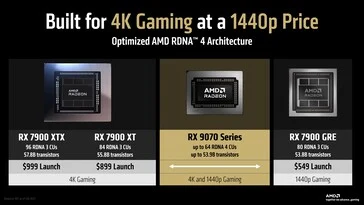
    We have previously covered key features of the RDNA 4 architecture in a separate piece. The Radeon RX 7900 XTX and RX 7900 XT were designed for gamers focused on 4K resolution, while the RX 7900 GRE was tailored for 1440p gaming. With the RX 9070 XT and RX 9070, AMD aims to deliver a solid 4K gaming experience at prices that are more aligned with 1440p.

    Specifications and Performance

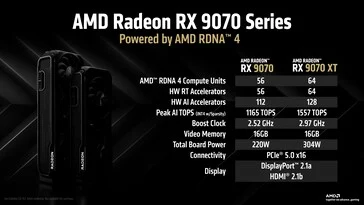
    The RX 9070 XT, the top model, includes 64 compute units (CUs) and can achieve a peak INT4 performance of 1,557 AI TOPS with Sparsity. Both models come equipped with 256-bit 20 Gbps 16 GB GDDR6 memory, providing a bandwidth of 640 GB/s.

    With the new RDNA 4 architecture, both the RX 9070 XT and RX 9070 feature third-generation ray accelerators and AI accelerators. The RX 9070 XT can boost up to 2.97 GHz with a total board power (TBP) of 304 W, while the RX 9070, which has 56 CUs, can reach 2.52 GHz with a TBP of 220 W.

    Competitive Edge

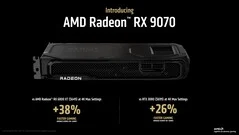
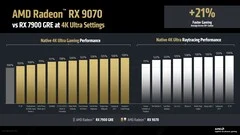
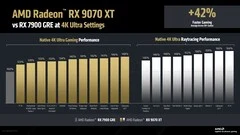
    Both cards support a PCIe Gen 5 x16 interface and include the latest DisplayPort 2.1a and HDMI 2.1b outputs. AMD claims that the Radeon RX 9070 is 38% and 26% faster than the $649 RX 6800 XT and the $699 GeForce RTX 3080 when running at 4K. Compared to the RX 7900 GRE, the RX 9070 is on average 21% quicker, with a maximum of 28% higher performance in native 4K and up to 34% faster in ray tracing scenarios.

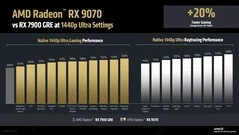
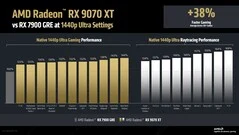
    In 1440p resolution, the RX 9070 reportedly outperforms the RX 7900 GRE by as much as 26%, with ray tracing performance up to 38% higher.

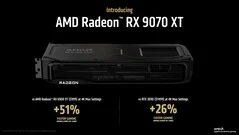
    AMD promotes the RX 9070 XT as being 51% faster than the $999 RX 6900 XT and 26% quicker than the $1,499 RTX 3090. Again, comparisons with the RX 7900 GRE reveal gains of up to 28% in native 4K and 34% in ray tracing.

    Game Testing and Future Competition

    At 1440p, the RX 9070 XT achieves similar performance improvements in native and ray tracing tasks as the RX 9070. All games were evaluated on an AMD Ryzen 7 9800X3D system with 32 GB of DDR5-6000, as noted in the fine print.

    It’s still unclear how these cards will stack up against the GeForce RTX 5070 Ti and the anticipated RTX 5070, which is expected to be launched on March 5.

    While AMD appears to be making strides to align its GPUs with midrange competition, the true test will come once we can evaluate the cards ourselves. Currently, Nvidia maintains a more robust software ecosystem.

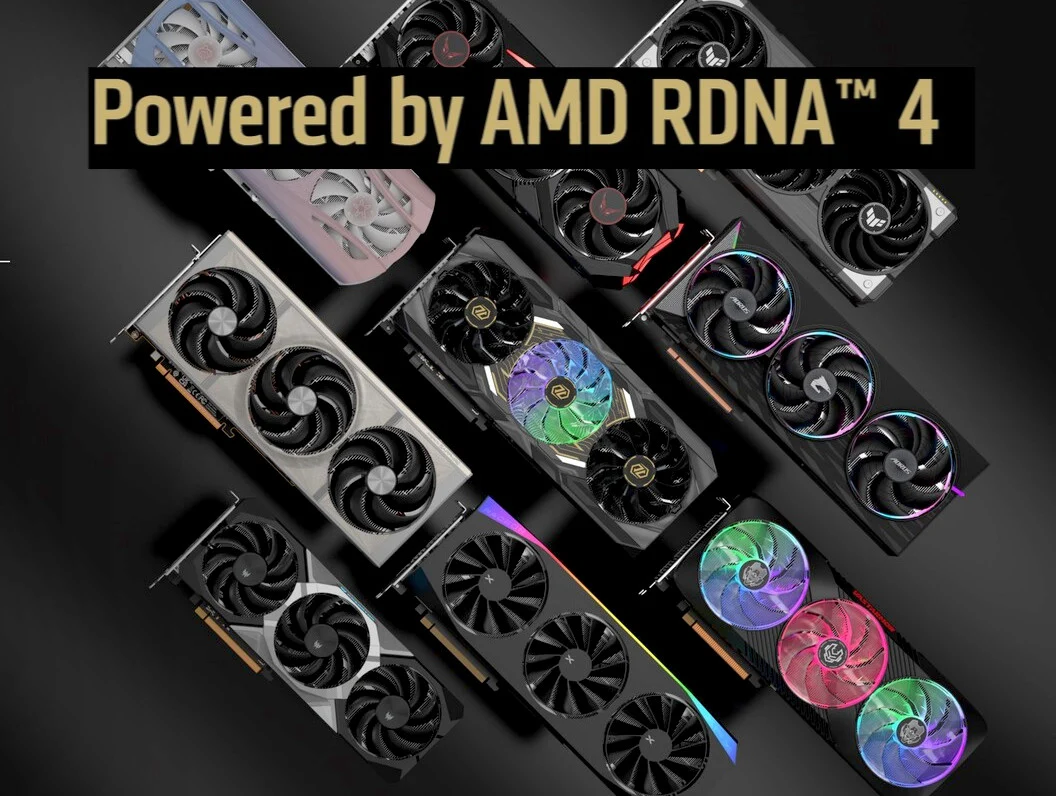
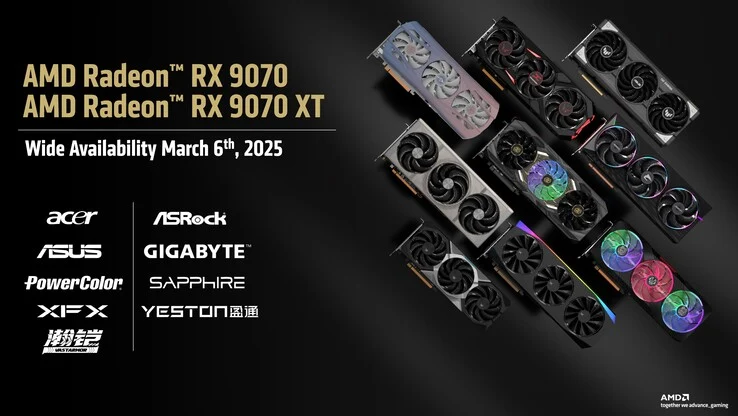
    Unlike Nvidia, AMD won’t be offering Made by AMD (MBA) cards for this launch. Nevertheless, AMD’s add-in board (AiB) partners, including Acer, Asus, ASRock, PowerColor, Gigabyte, XFX, Sapphire, Yeston, and Vastarmor, will have multiple designs of the RX 9070 and RX 9070 XT available starting March 6.

    The AMD Radeon RX 9070 XT is set at a price of $599 SEP, while the RX 9070 is anticipated to retail for $549 SEP.

    Source:
    Link


  • AMD RDNA 4 Architecture: 64-CU Design Boosts Compute & Ray Tracing

    Key Takeaways

    1. AMD officially launched RDNA 4 and the Radeon RX 9070 series GPUs, with a retail release on March 6, 2025.
    2. RDNA 4 features architectural improvements for better raster performance, efficiency, and enhanced ray tracing capabilities, along with upgraded AI and media encoding/decoding.
    3. The design has shifted to a traditional monolithic structure, directly connecting memory and compute through Infinity Cache, with significant upgrades in compute units and memory cache.
    4. Video encoding and decoding capabilities have been improved, addressing past drawbacks, and new features support lower power consumption and better performance for various formats.
    5. RDNA 4 includes advanced AI capabilities with dedicated math pipelines, improved ray tracing performance, and support for innovative rendering techniques, promising substantial gains in gaming experiences.


    AMD gave a glimpse of RDNA 4 at CES 2025, announcing the Radeon RX 9070 XT and RX 9070 models. However, they did not mention the new architecture during the keynote.

    The company assured that further details about RDNA 4 and the new Radeon GPUs would be shared shortly, and now we have that information.

    Launch Details

    Today, AMD officially unveils RDNA 4 along with the new Radeon RX 9070 series GPUs. The RX 9070 series is set to hit retail stores on March 6, with performance reviews expected a day prior.

    Architectural Improvements

    RDNA 4 enhances the objectives AMD established with RDNA 3. As per AMD, RDNA 4 aims to handle more demanding gaming tasks, focusing on better raster performance and efficiency.

    There are also the usual enhancements to ray tracing pipelines, a renewed emphasis on AI capabilities, and media encoding/decoding improvements.

    Design Changes

    While RDNA 3 introduced a chiplet design for GPUs inspired by Ryzen processors, featuring separate memory cache dies (MCDs) from the graphics compute die (GCD), RDNA 4 reverts to a traditional monolithic design. Although the components remain similar, the memory and compute are now directly connected through the Infinity Cache, eliminating MCD-GCD interconnects.

    The RDNA 4 GPU, specifically the Radeon RX 9070 XT, has four shader engines, each with eight workgroup processors (WGPs). Each WGP consists of eight compute units (CUs), totaling 64 CUs.

    AMD claims that the new compute units are now more powerful than before, providing enhanced ray tracing, doubled peak throughput, and support for the latest matrix acceleration features with wider numeric format compatibility.

    Enhanced Features

    A new feature in the RDNA 4 CU, akin to the Tensor cores in Nvidia’s Ampere architecture, is support for structured sparsity. This facilitates quicker matrix operations, especially when many weights are zero.

    The memory subsystem has also seen upgrades. The L2 cache has increased from 6 MB in RDNA 3 to 8 MB in RDNA 4, while the Infinity Cache has been updated to 3rd gen but reduced from 96 MB to 64 MB in RDNA 3.

    AMD continues to use GDDR6 memory in this new generation. Both the RX 9070 XT and RX 9070 provide a 384-bit 16 GB GDDR6 memory interface operating at 20 Gbps, resulting in an effective bandwidth of 640 GB/s. This is lower than the 960 GB/s from RDNA 3, but AMD states that the RDNA 4 memory specifications were deliberately chosen to support both current and future game titles.

    Video Encoding Improvements

    Video encoding was a significant drawback with RDNA 3, and AMD promises considerable enhancements in this area. The company guarantees major improvements in H.264 and AV1 encoding, with fewer blocking artifacts for the same data amount.

    The upgrades also apply to video decoding, featuring lower power consumption and better performance for formats like AV1 and VP9.

    The Radiance Display Engine now operates with much less power in dual-monitor FreeSync setups. Additionally, it supports hardware flip queue in the Windows Display Driver Model (WDDM) 3.0 for video playback.

    Performance Enhancements

    The RDNA 4 CU structure is similar to that of RDNA 3, but improvements in performance and efficiency are seen in each component.

    WMMA (Wave Matrix Multiply Accumulate) operations have been optimized for the new hardware’s demands. Scaler units have received upgrades to manage Float32 operations, and the scheduler can split a large compute task into smaller, manageable barriers.

    AMD states that RDNA 4 is designed to accommodate new rendering techniques that developers utilize in modern games. While upscaling has become popular, effective path tracing requires ML acceleration as an intrinsic part of the rendering process, not merely an afterthought.

    Ray Tracing Features

    RDNA 4 includes 64 3rd gen ray accelerators in the RX 9070 XT. The ray accelerator’s structure resembles that of RDNA 3 but features an extra intersection engine, doubling the number of ray box and ray triangle units.

    There’s also a dedicated hardware ray transform that reduces the need for shader instructions, thereby lowering ray traversal overhead. Each dual CU has a 128 KB memory to store the ray stack for efficient push and sort operations.

    The new RDNA 4 introduces oriented bounding boxes (OBBs) that align BVH bounding boxes with the geometry, which reduces false-positive ray interactions in empty spaces. AMD claims this method can enhance ray traversal performance by up to 10%.

    Memory Request Support

    Additionally, RDNA 4 supports relaxed out-of-order memory requests, effectively reducing wait times for waves that miss the high-level cache. This enhancement benefits not only ray tracing but other tasks as well.

    In RDNA 4, shaders can dynamically allocate registers, allowing for more waves in flight and improved memory latency.

    AMD graphics cards have faced challenges with ray tracing, making path tracing seem unattainable, even for the higher-end RDNA 3 models. RDNA 4 strives to change this with support for neural radiance caching along with a new neural supersampling and denoising model.

    While AMD hasn’t provided specific performance metrics for path tracing titles, we can expect to gather insights during card reviews.

    AI Capabilities

    AMD highlights that RDNA 4 features dedicated math pipelines for ML acceleration, emphasizing high performance with narrower data types. New support for FP8 and BF8 is introduced for high-performance, high-precision inference.

    During a demonstration of SDXL 1.5 image generation, AMD revealed that the RDNA 4-based Radeon RX 9070 XT delivers double the FP16 performance per CU compared to the RDNA 3-based RX 7900 XT.

    Capitalizing on RDNA 4’s AI advancements is FSR 4, an end-to-end pipeline designed on AMD GPUs. FSR 4 utilizes FP8 for optimal bandwidth usage, performance, and power.

    AMD showcased up to a 3.7x increase in fps with FSR 4 when combined with frame interpolation and Radeon Anti-Lag while preserving high image quality.

  • Nintendo Switch 2 Docking Station Images Leaked Online

    Nintendo Switch 2 Docking Station Images Leaked Online

    Key Takeaways

    1. Leaked price information and rumors about the Nintendo Switch 2 are circulating as its release approaches.
    2. A new patent suggests that the Joy-Con controllers may feature a 180-degree flip capability.
    3. There are speculations that GTA 6 could be released on the Nintendo Switch 2.
    4. Recent CAD renderings reveal that the Switch 2 dock has a rounder design with improved cooling features.
    5. The new dock will include a LAN port for a more stable wired connection, enhancing online gameplay.


    With the release of the Nintendo Switch 2 getting closer, rumors are still buzzing around. Recently, the supposed price of the console has been leaked. A newly found patent suggests that the Joy-Con might have a 180-degree flip feature, and there’s even talk that GTA 6 could debut on the Switch 2. The latest information focuses on the dock, with new CAD renderings now making the rounds.

    Dock Details

    The leaked pictures of the Nintendo Switch 2 dock come from a source on the Chinese platform Xiaohongshu. This leaker had previously shared CAD drawings of the console that looked very much like the real design. The latest images were also posted on Famiboards.

    Changes in Design

    The Switch 2 dock appears to be much rounder compared to the current version (which can be found on Amazon for $53). Many small holes on the bottom indicate there could be a better cooling system, probably needed due to the expected performance increase over the previous model. The ports are also interesting to mention. In addition to the usual HDMI output, the dock includes a LAN port, which allows for a more reliable wired connection instead of depending on WiFi. This benefit was once only for the Switch OLED, which was launched in 2021 (currently available on Amazon for $260).

    Source:
    Link


  • Steam Offers Free Weekend for Offroad Adventure Game

    Steam Offers Free Weekend for Offroad Adventure Game

    Key Takeaways

    1. Challenging Off-Road Exploration: Players engage as scientific adventurers, navigating tough terrains with specially designed vehicles and advanced tools.

    2. Realistic Driving Mechanics: The game features realistic vehicle handling influenced by weight, tire pressure, and terrain, requiring strategic resource management.

    3. Mixed Reviews: Released in March 2024, the game has received a mix of feedback, with only 56% positive reviews on Steam and a player rating of 5.5 on Metacritic.

    4. Criticism of Lack of Innovation: Many players feel the game resembles an expansion of SnowRunner, citing repetitive gameplay and technical difficulties.

    5. Promotional Offer: A free weekend is available on Steam, with discounts of up to 43% on various editions until March 13, attracting off-road and simulation game fans.


    Expeditions: A MudRunner Game immerses players into the challenging world of off-road exploration as scientific adventurers. With specially designed vehicles, they traverse tough environments, including dry deserts and rugged mountain trails. Players face obstacles such as deep mud, swift rivers, and steep inclines, while using advanced tools like drones and ground radar to discover hidden areas.

    Realistic Driving Mechanics

    This game emphasizes realistic driving mechanics, where elements like vehicle weight, tire pressure, and the state of the terrain influence how the vehicles handle. Players need to think strategically, managing resources like fuel, spare parts, and other necessary equipment. Completing successful expeditions leads to unlocking new vehicles, enhanced gear, and base upgrades. In cooperative mode, up to three players can join forces to tackle the challenges together.

    Mixed Reviews and Criticism

    Released in March 2024 by Saber Interactive and Focus Entertainment, Expeditions: A MudRunner Game has received mixed feedback. On Steam, only 56% of about 2,150 reviews are positive. Metacritic reflects a similar sentiment, with critics giving it a respectable 77 Metascore, while players rated it lower at 5.5.

    The primary criticism revolves around its perceived lack of innovation when compared to SnowRunner, a game from the same developers that shares a similar premise. Many users argue that it feels more like an expansion pack for SnowRunner rather than a new game. Additionally, repetitive gameplay and technical difficulties have been frequently mentioned in reviews.

    Promotional Offer

    Currently, Saber Interactive and Focus Entertainment are providing a free weekend for Expeditions: A MudRunner Game on Steam. Even though the reviews are mixed, fans of off-road and simulation gaming might still find enjoyment in it. For those who become interested, there are discounts of up to 43% on different editions available until March 13.

    Source:
    Link