Category: Gaming

  • Ridge Racer Fan Ported to Game Boy Advance: Retro Racing Fun

    Ridge Racer Fan Ported to Game Boy Advance: Retro Racing Fun

    Key Takeaways

    1. Ridge Racer has been successfully adapted for the Game Boy Advance, retaining its core excitement and polygonal graphics.
    2. The game runs consistently at 30 frames per second, a notable achievement for the GBA’s limited hardware.
    3. Compromises were made, including simplified car models and a limited draw distance to enhance performance.
    4. Some features, such as race positions and multiple camera angles, were removed to maintain smooth gameplay.
    5. The project is still in development, with updates available on the developer’s itch.io page.


    A beloved arcade racing game has been transformed into a portable version that showcases impressive technology on an unexpected device.

    Ridge Racer, the iconic racing game from 1993, has made its way onto Nintendo’s Game Boy Advance (GBA). This adaptation is a fascinating effort to keep the excitement of the original racer alive, and it mostly achieves this goal, though there are some downsides.

    Key Features Retained

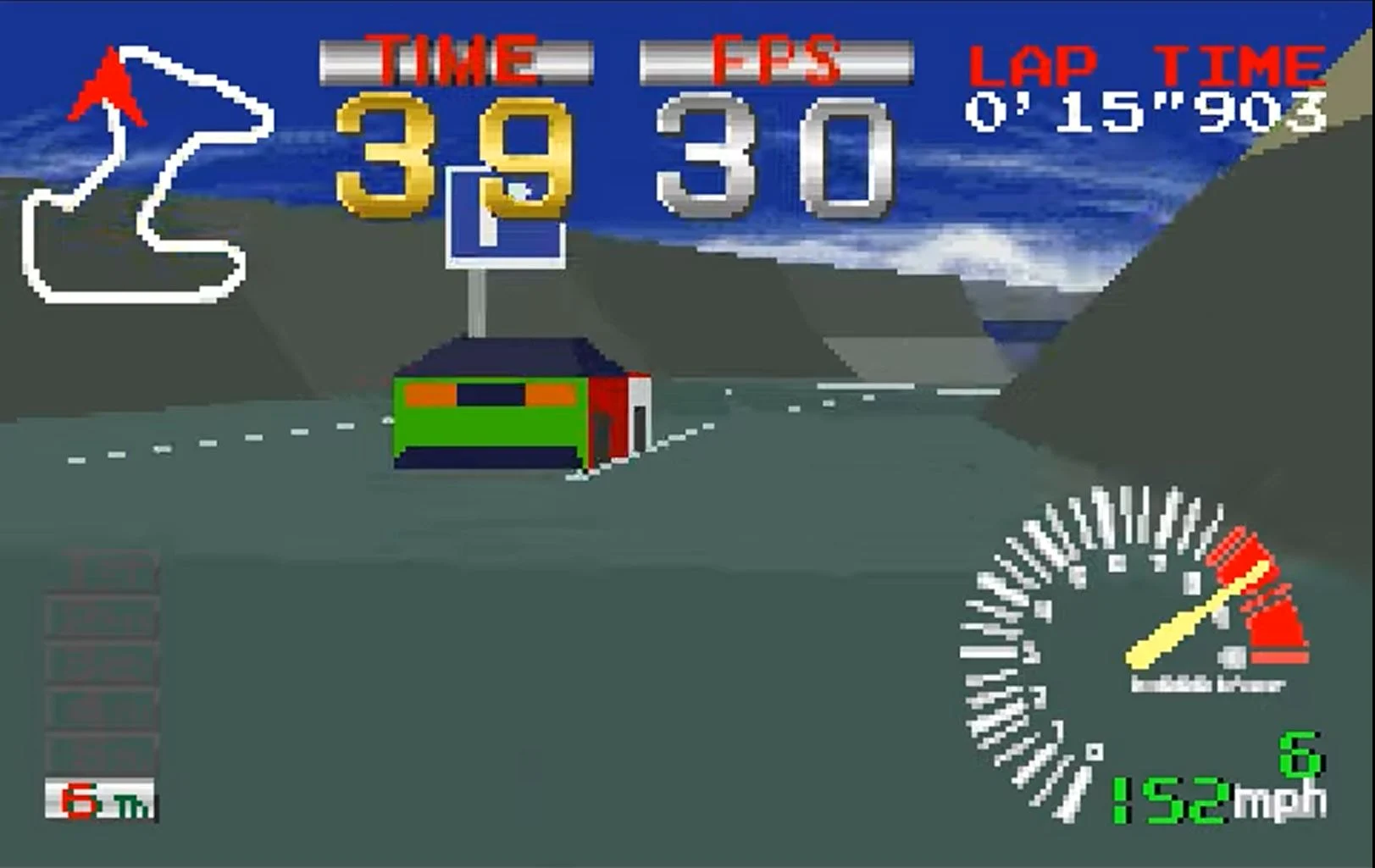
    The port keeps the core elements of Ridge Racer intact, especially its fast-paced excitement and, most crucially, the polygonal tracks and vehicles. While the GBA had a few fully 3D titles, many faced challenges in maintaining smooth framerates and often relied heavily on 2D graphics. Nevertheless, this adaptation of Ridge Racer consistently runs at 30 frames per second, as demonstrated in the demo video.

    Compromises Made for Performance

    To reach that framerate, the developer, Gustavo Valiente, had to make a few sacrifices. The cars are simple, solid-colored polygon models without textures or bitmap graphics. The game’s draw distance is quite limited, leading to noticeable pop-in effects. Some features were removed from the user interface, including race positions, different camera angles, and lap times.

    However, these trade-offs seem to be justified by the enhanced performance and smooth gameplay. The draw distance is sufficient to allow players to react to track curves in time. Plus, Valiente managed to include the announcer’s voice, which adds to the authentic Ridge Racer experience.

    Impressive Achievement on Limited Hardware

    Overall, this port is truly remarkable given the limitations of the GBA. Although the demo isn’t available for public play just yet, it seems to be actively under development. You can follow the project updates on Valiente’s itch.io developer page here.

    GValiente on itch.io

    Source:
    Link


  • YouTuber Tests Valve’s 4K 60 FPS Promise and PS3 Emulation

    YouTuber Tests Valve’s 4K 60 FPS Promise and PS3 Emulation

    Key Takeaways

    1. The Phawx created a custom PC to closely replicate Valve’s Steam Machine for performance testing.
    2. The CPU used in the test was matched to Valve’s semi-custom AMD Zen 4 processor, with similar core and thread counts and power constraints.
    3. The dedicated GPU chosen, Radeon 7600M XT, shares architecture with Valve’s expected GPU, though it has more compute units; performance is limited by bandwidth.
    4. Power management techniques like AMD Smart Access Memory and SmartShift were utilized to simulate the Steam Machine’s design, highlighting the need for efficient power distribution.
    5. Testing showed that achieving 4K 60 FPS gameplay is challenging, with reported frame rates often around 30-40 FPS in demanding games, despite claims of significant GPU performance improvement.


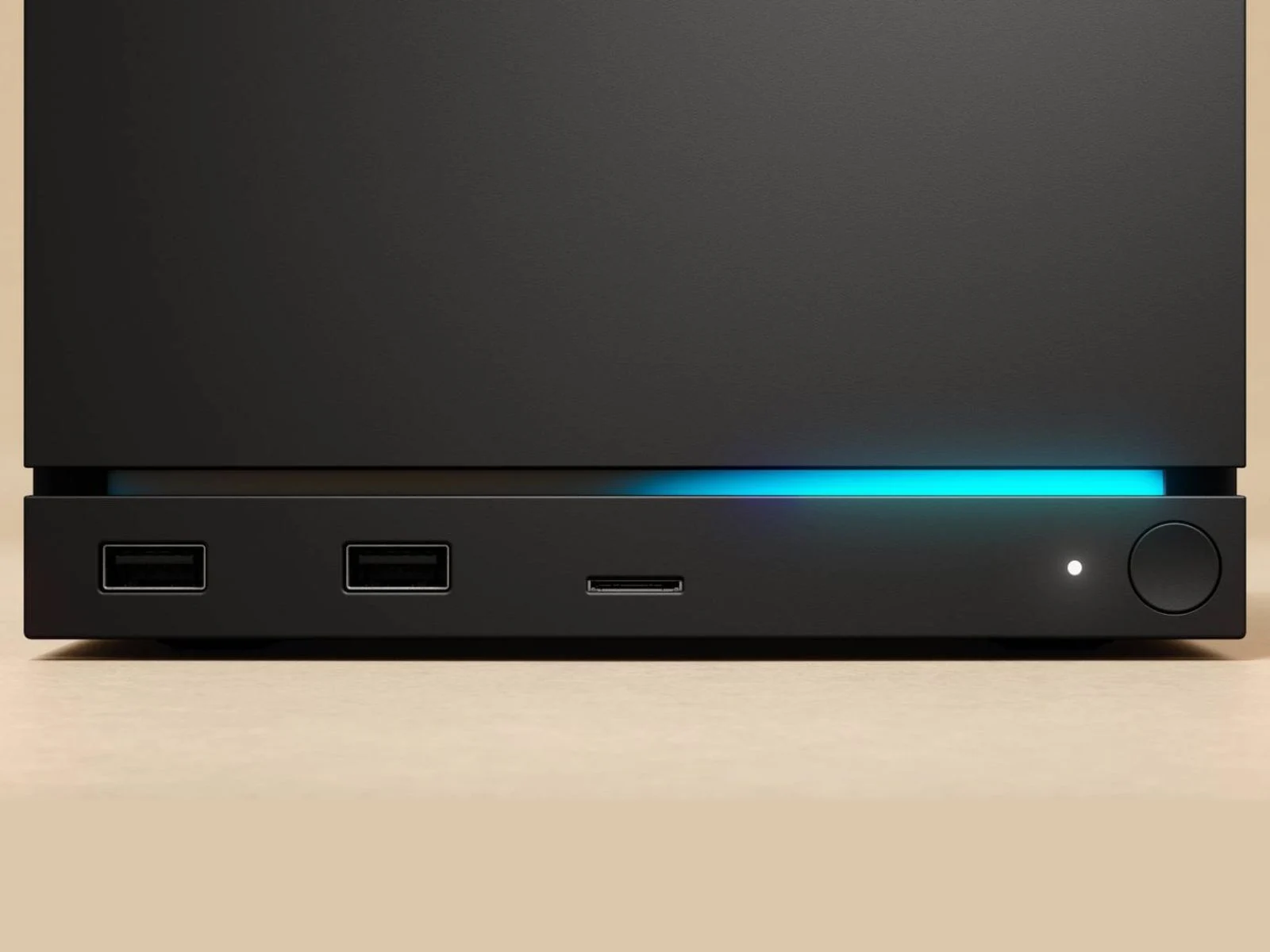
    Valve’s Steam Machine is still a few months away from being launched, yet the gaming community is already trying to estimate how well it will perform. The YouTube channel The Phawx took this concept to another level by constructing a small PC that mimics Valve’s upcoming hybrid console. Rather than just using similar components, they work to closely replicate the Steam Machine’s CPU performance, GPU limitations, power constraints, and overall system design.

    Testing Valve’s Claims

    The purpose of this effort was to test Valve’s significant performance assertions, including the anticipated six-fold GPU improvement over the Steam Deck and the capability to achieve 4K 60 FPS with FSR. They measured how closely their custom-built system could mirror these expectations.

    First, the creator matched the CPU setup of the Steam Machine. Valve’s device features a semi-custom AMD Zen 4 processor with 6 cores, 12 threads, a boost clock of up to 4.8 GHz, and a 30 W power cap. To imitate this, the creator utilized an AMD 8840U laptop CPU and turned off two of its eight cores, while also parking the related hyperthreads, resulting in exactly 6 cores and 12 threads being active.

    Simulating Power Constraints

    To simulate the 30 W CPU power limit from Valve, the processor is set to a maximum of about 4 GHz during workloads that use all cores. The creator’s tests show that achieving the advertised 4.8 GHz is only feasible during single-core tasks, mirroring the expected behavior of Valve’s chip.

    An earlier Geekbench entry for a device tagged “Val Fremont,” which many believe to be an initial Steam Machine model, shows cache configurations similar to the 8840U. This alignment allows the creator to not only match core counts but also replicate the L1, L2, and shared L3 cache setups by parking the appropriate cores.

    They also entirely disable the integrated GPU, suggesting that the Steam Machine’s custom APU will likely have its iGPU disabled.

    Matching the GPU

    For the dedicated GPU, they opted for a Radeon 7600M XT, which shares the same Navi 33 architecture as Valve’s GPU. The Steam Machine is expected to have 28 CUs, unlike the 7600M XT’s 32, so they limit the boost clocks to better align with the roughly 9 teraflops estimated for Valve’s hardware. The card usually operates at 2.3 GHz, in contrast to Valve’s leaked peak clock of 2.45 GHz. Both use 32 MB of Infinity Cache and roughly 288 GB/s of effective bandwidth, which they claim is more suited for 1080p and will depend heavily on FSR to achieve 4K 60 FPS targets.

    They also mention that the extra compute power of the 7600M XT doesn’t provide much actual benefit since bandwidth is the main limiting factor, suggesting that Valve’s lower-CU GPU might actually offer a more balanced performance despite being weaker on paper.

    Power Management Insights

    To further match the Steam Machine’s design, The Phawx enabled AMD Smart Access Memory and SmartShift, which they believe Valve might also use to unify power budgets between the CPU and GPU. In their tests, a limit of 28 W causes both components to downclock significantly, leading to a noticeable drop in performance. Raising the shared TDP back to 150 W restores normal functionality.

    They argue that this illustrates how much the Steam Machine might need to manage power distribution between its components within a small enclosure.

    For performance testing, The Phawx concentrates on how closely their setup can achieve Valve’s claim of 4K 60 FPS gameplay with upscaling and frame generation, even if it means keeping graphics settings at their lowest. Their aim, as they clarify, is not to maximize visual quality but to determine how far they can push resolution and frame rates on hardware designed to simulate the Steam Machine.

    Game Performance Analysis

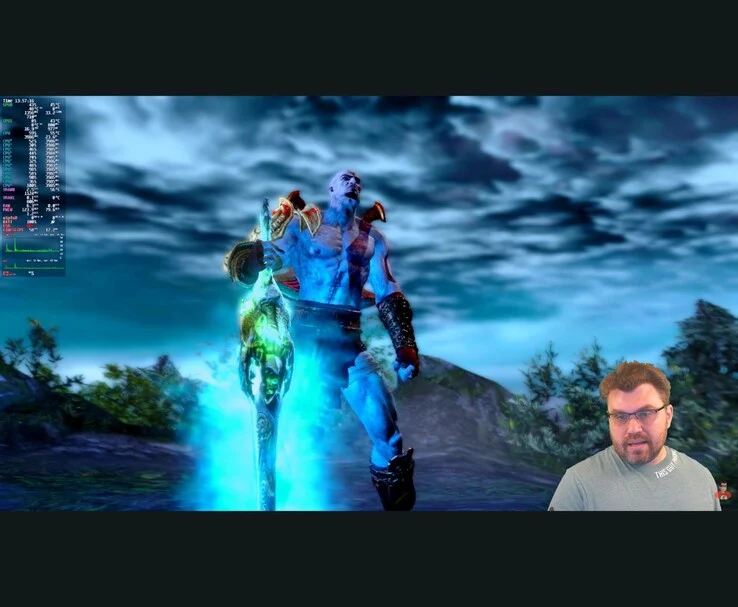
    They start with God of War 3 in the RPCS3 emulator, running at 720p with recommended settings and speed patches turned off. Performance stays just below a locked 60 FPS, but remains relatively playable, providing a realistic view of CPU-bound emulation performance at a 4 GHz all-core cap.

    In Indiana Jones and the Great Circle, the system outputs at 4K, uses low settings, and relies on XeSS Performance mode to approach the 60 FPS target. Even with the heavy upscaling, the game typically runs closer to 30 FPS, with The Phawx pointing out that ray tracing is especially taxing for RDNA-based GPUs.

    For Starfield, they again aim for a baseline of 4K 60 FPS, using 4K output, a 50% render resolution, low graphics settings, and FSR 3 without frame generation. The outcome is generally around 30–40 FPS, dropping lower in densely populated areas like Akila City.

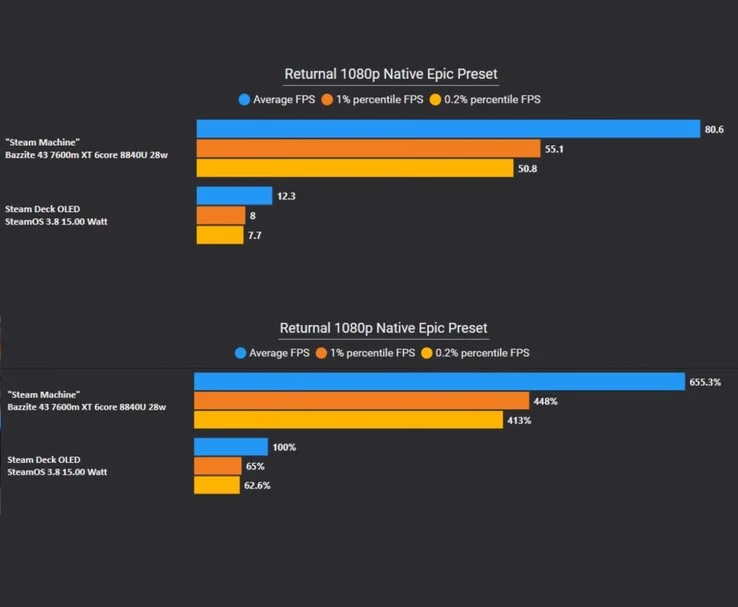
    The YouTuber also revisits Valve’s assertion of six times the GPU performance of the Steam Deck. They report that in GPU-bound tests like Returnal, their matched setup performs roughly 6.5 times faster, noting that their GPU is somewhat stronger than what is anticipated for Valve’s system, although both utilize Navi 33 silicon.

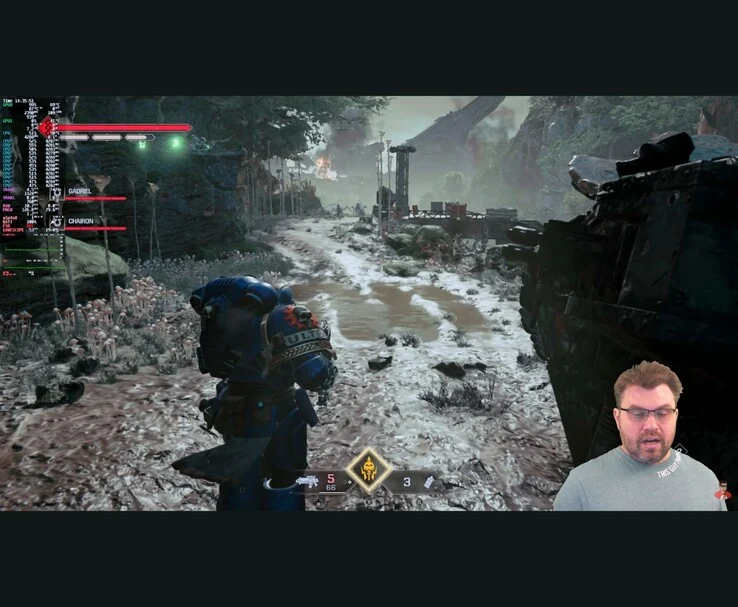
    In addition, The Phawx tests other games such as God of War Ragnarok, Warhammer 40,000: Space Marine 2, and Spider-Man: Miles Morales and shares their concluding thoughts while also speculating on the Steam Machine’s possible pricing. You should definitely check out the video below for the complete analysis.


    Source:
    Link



  • Capcom: Resident Evil Requiem to Avoid Monster Hunter Launch Issues

    Capcom: Resident Evil Requiem to Avoid Monster Hunter Launch Issues

    Key Takeaways

    1. Resident Evil Requiem is expected to avoid the technical issues that affected Monster Hunter Wilds at launch.
    2. Capcom emphasizes differences in gameplay, system architecture, and network elements between the two games.
    3. The early reception of Resident Evil Requiem at gaming expos has been positive, and the company aims to exceed sales of Resident Evil Village.
    4. Feedback from the community is a key focus for Capcom, as they continue to improve Monster Hunter Wilds with ongoing updates.
    5. Development of Resident Evil Requiem is on track, prioritizing stability and consistency across various PC hardware configurations.


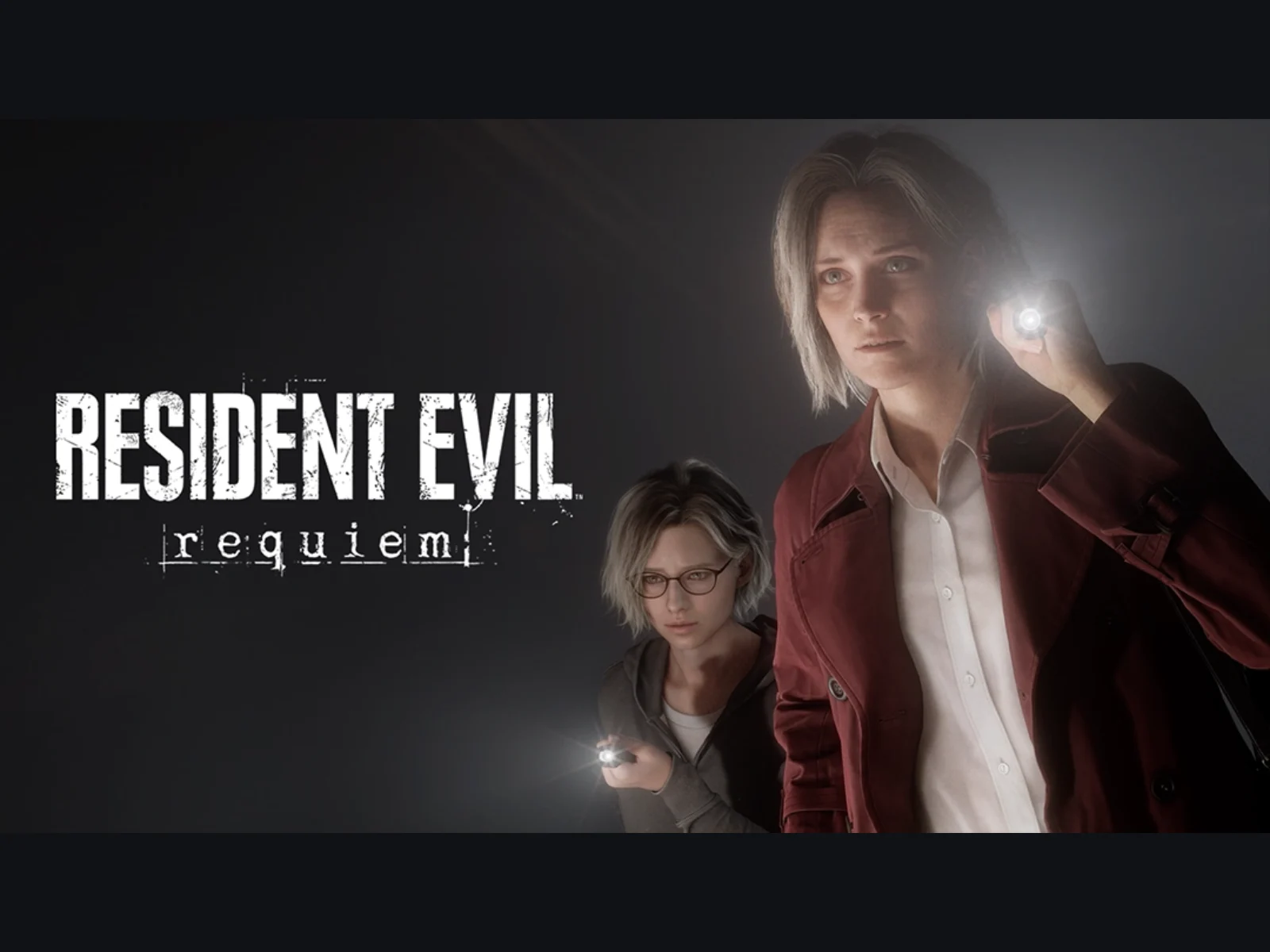
    Capcom has announced that Resident Evil Requiem is not likely to face the same technical issues that plagued Monster Hunter Wilds at its launch. This clarification was provided during Capcom’s financial results Q&A session for the first half of FY2026, addressing player concerns that arose after the rocky start of Wilds.

    Different Approaches to Development

    Capcom explained, “Resident Evil Requiem is different from Monster Hunter Wilds in gameplay, system architecture, and network elements. Currently, we do not foresee any similar challenges. We are working on the game to ensure a seamless experience across diverse PC specifications,” they stated.

    In addition, Capcom pointed out that many of the problems with Monster Hunter Wilds were due to the game’s scale and its technical requirements. The company had previously admitted that the title launched with issues like inconsistent frame rates, shader compilation stutters, excessive CPU usage on mid-range systems, and sporadic online connectivity problems. Capcom emphasized that they are still rolling out system updates and improvements for the game, and they reinforced during the Q&A that feedback from the community is a major focus.

    Positive Early Reception

    Capcom also mentioned that Requiem has been well-received at gaming expos, and they aim to surpass the initial sales figures of Resident Evil Village. The company noted that the announcement of Requiem has already sparked increased interest in the entire franchise, observing that sales of older Resident Evil games have “performed exceptionally” in the first half of the fiscal year.

    Moreover, outside the Resident Evil series, Capcom reported steady growth in the Monster Hunter franchise, particularly with Monster Hunter Rise. They also mentioned that the mobile game Monster Hunter Outlanders, created by TiMi Studio Group under license, is set to enhance brand recognition on a global level.

    Development Progress and Updates

    Capcom concluded by stating that Resident Evil Requiem is progressing as planned, with development efforts concentrated on ensuring consistency and stability across various PC hardware configurations.

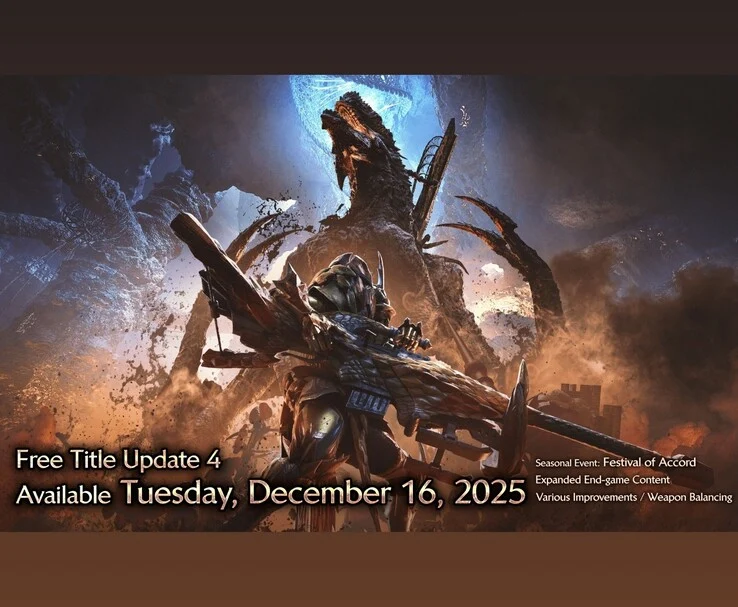
    In related news, Capcom has confirmed that Monster Hunter Wilds will receive its next major update on December 16, 2025. The Free Title Update 4 will include the Festival of Accord seasonal event, expanded end-game content, numerous enhancements, and adjustments for weapon balance.

    Source:
    Link


  • GTA VI Port Plans for Nintendo Switch 2 Revealed After Success

    GTA VI Port Plans for Nintendo Switch 2 Revealed After Success

    Key Takeaways

    1. The Nintendo Switch 2 has sold over 10 million units since its spring launch, indicating strong market performance.
    2. Major game developers, including CD Projekt Red and Take-Two, are showing increased interest in creating titles for the Switch 2.
    3. Cyberpunk 2077 was released as a launch title for the Switch 2, while Civilization VI and a delayed Borderlands 4 port are also in the works.
    4. Reports suggest that Rockstar is developing a port of Grand Theft Auto VI for the Switch 2, but it may not release until at least 2027.
    5. The growing interest from developers hints at a changing gaming landscape, with fans anticipating more significant titles for the Switch 2.


    The Nintendo Switch 2 has been performing remarkably well since its launch in the spring. Currently available for $449 or $499 in the Mario Kart World Bundle, it is reported that the Switch 2 has already crossed the milestone of 10 million units sold by the end of September. With impressive sales figures and enhanced performance, major game developers are beginning to show serious interest in Nintendo’s hybrid console.

    Major Game Titles Arriving

    Take CD Projekt Red, for instance, which released Cyberpunk 2077 as a launch title for the Switch 2 (now priced at $67 on Amazon). On the other hand, there’s been talk about Take-Two improving its stance on Switch consoles since the beginning of the year. This has led to the release of Civilization VI on Switch and the announcement of a delayed port for Borderlands 4.

    Exciting Developments in Gaming

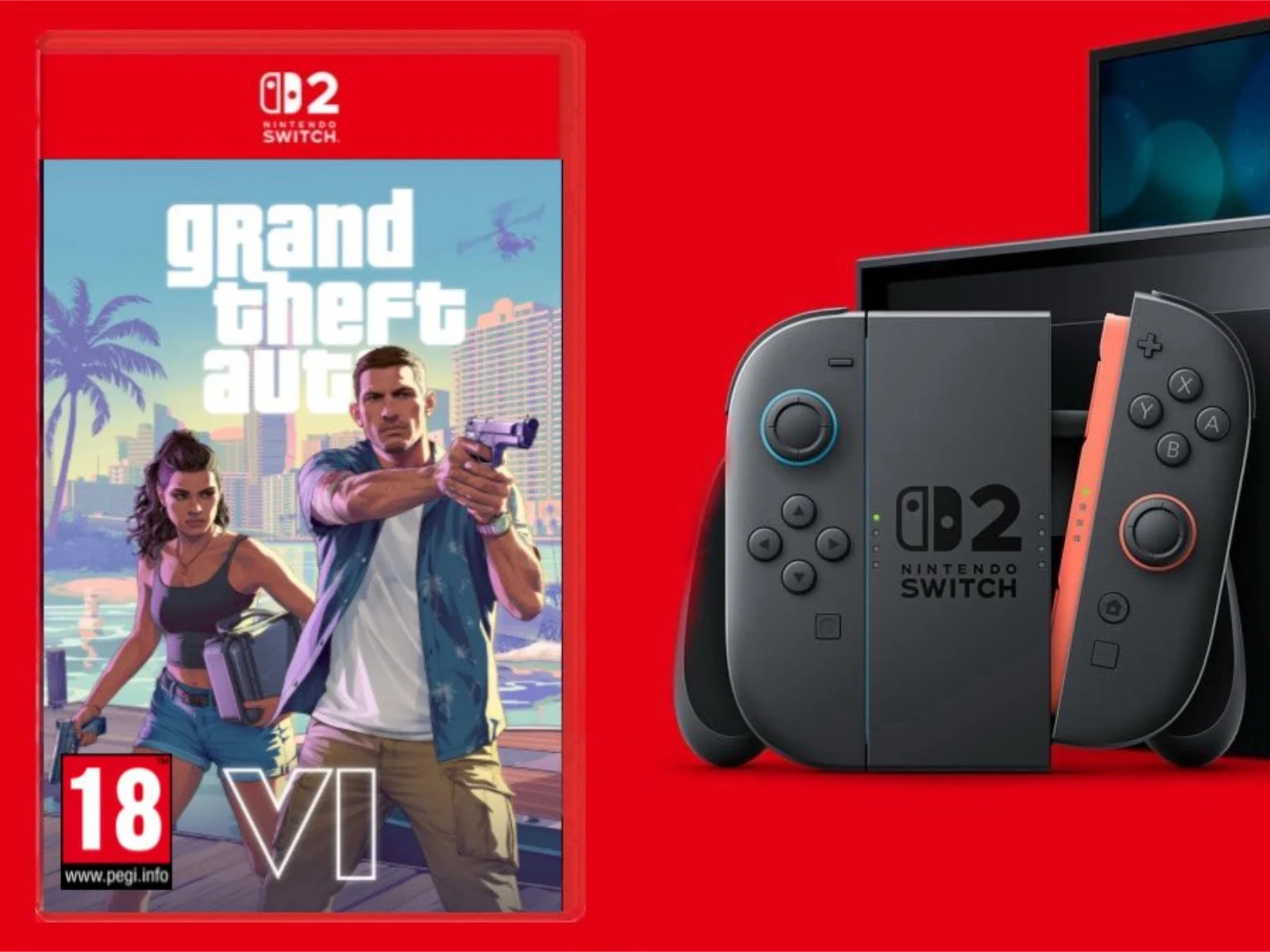
    Recently, Nash Weedle has claimed to have received word that Rockstar is working on a port of Grand Theft Auto VI (GTA VI) for the Switch 2. According to a post on X, this port is not the newest delay set for November 2026. In reality, it appears that the Switch 2 version likely won’t coincide with the launches for Xbox Series S|X and PlayStation 5.

    To put it simply, GTA VI might not make its way to the Switch 2 until at least 2027. For some background, Nash Weedle has a good track record for Switch 2 leaks, including information on an Elden Ring release and DLSS support. However, it’s important to remember that Weedle isn’t always right, so we should take the tweet above with a grain of salt for now.

    Final Thoughts

    All in all, the gaming landscape is shifting as developers start to embrace the Switch 2’s capabilities. As the console continues to gain traction, fans are eager for more big-name titles to join the lineup, which could further elevate the gaming experience on this popular hybrid device.

    Source:
    Link


  • 8BitDo Retro 87 Mechanical Keyboard Launches in UK, DE, FR, ES

    8BitDo Retro 87 Mechanical Keyboard Launches in UK, DE, FR, ES

    Key Takeaways

    1. 8BitDo has introduced four new keyboard layouts for the Retro 87 Mechanical Keyboard Xbox Edition: UK (QWERTY), DE (QWERTZ), FR (AZERTY), and ES (QWERTY).
    2. The UK layout is priced at £105, while the US layout is currently available for £96.29, with the DE and FR versions priced at €119.99 and €109.24, respectively.
    3. All new layouts will be released on December 12, 2023, with the Spanish version currently out of stock.
    4. The keyboard’s features remain unchanged, including Kailh Jellyfish X switches, RGB backlit keys, and a hot-swappable PCB, among others.
    5. The Retro 87 Mechanical Keyboard offers Bluetooth, 2.4GHz, and wired connections, with compatibility for Android 9.0 and newer, and Windows 10 and above, but not Xbox consoles.


    Almost a year ago, 8BitDo launched the Retro 87 Mechanical Keyboard Xbox Edition, paired with the Retro R8 Mouse Xbox Edition. Since then, the keyboard has been for sale in the US and other countries, but it only had a US layout. Now, 8BitDo is expanding its offerings by introducing four new layouts, which are ready for pre-order ahead of the December release.

    New Layouts Available

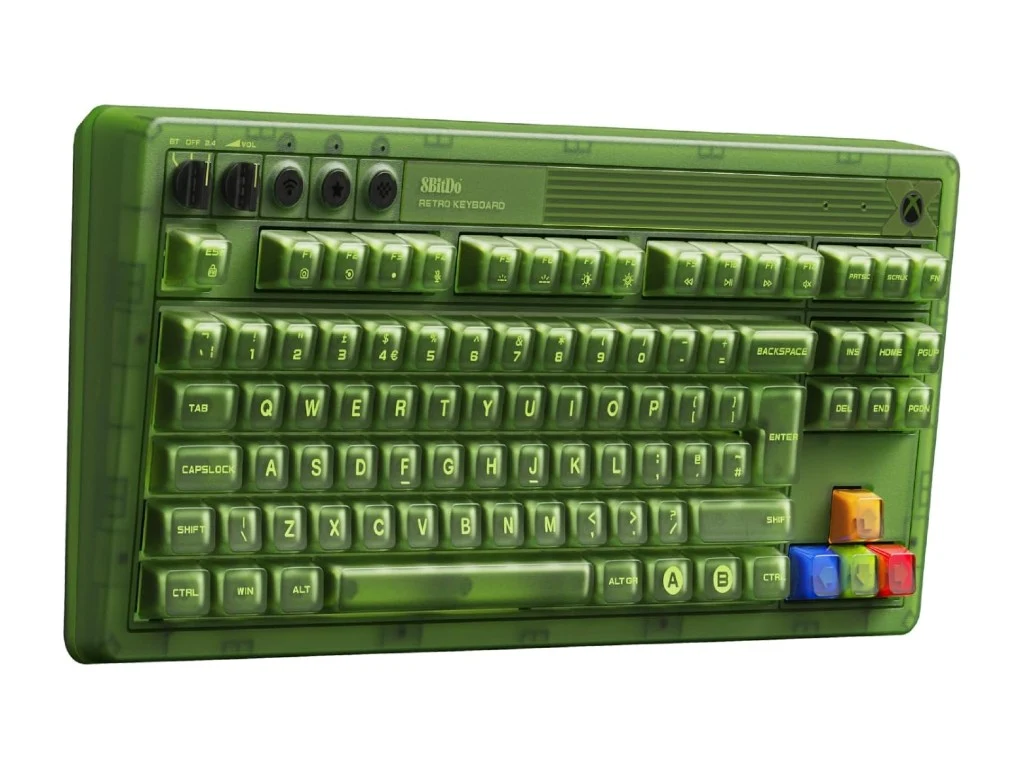
    In addition to the US (QWERTY) layout, the 8BitDo Retro 87 Mechanical Keyboard Xbox Edition is now offered in the UK (QWERTY), DE (QWERTZ), FR (AZERTY), and ES (QWERTY) layouts. The Retro 87 keyboard featuring an ISO UK layout is priced at £105 on Amazon, which is slightly higher than the US layout version that has a list price of £99.99 but is currently being sold for £96.29.

    If you’re interested in the DE (QWERTZ) version, you can pre-order it on Amazon.de for €119.99, while the US version is listed at €109.24. The price is the same on Amazon France for the Retro 87 Mechanical Keyboard with the AZERTY French ISO layout. Unfortunately, Amazon Spain mentions that the Spanish ISO layout version is currently out of stock, so a price is not available yet. Nonetheless, all four layouts will be released on December 12.

    Features Remain Unchanged

    Aside from the new layouts, the features of the keyboard stay the same as those of the version released last year. The 8BitDo Retro 87 Mechanical Keyboard Xbox Edition sports a green translucent shell, Kailh Jellyfish X switches, RGB backlit keys with 8 light modes, and double-layered ABS keycaps with a matte UV coating. It also includes a hot-swappable PCB, supports n-key rollover, and comes with two wired Super (AB) Buttons.

    The 8BitDo Retro 87 Mechanical Keyboard Xbox Edition offers Bluetooth, 2.4GHz, and wired connections. It’s compatible with devices that run Android 9.0 and newer, as well as Windows 10 and above, although it does not work with Xbox consoles. Similar to the Mecha Break edition, the Xbox edition has a 4,000mAh battery capacity, which can last up to 280 hours in 2.4GHz mode and about 300 hours in Bluetooth mode.

    Conclusion

    8BitDo’s new keyboard options provide more choices for users who want a mechanical keyboard with a retro design. With various layouts and consistent features, gamers and typists alike can find a suitable match for their needs.

    Source:
    Link


  • Game Awards 2025: Nominees for Game of the Year Announced

    Game Awards 2025: Nominees for Game of the Year Announced

    Key Takeaways

    1. Game of the Year nominees for 2025 have been announced, highlighting titles like Clair Obscur: Expedition 33.
    2. Some popular games, including Doom: The Dark Ages and Split Fiction, were notably absent from the nominations.
    3. Hollow Knight: Silksong is among the most awaited games this year and was nominated, while Hades 2 outperformed major Xbox titles.
    4. Ghost of Yotei earned recognition in seven additional categories, increasing its chances for an award.
    5. Clair Obscur: Expedition 33 set a record with twelve nominations, and voting is open until the results are revealed live on December 11.


    Game of the Year nominees for 2025 have been announced, along with other contenders in various categories like best indie game, best performance, best ongoing game, and more. The list features some expected names, such as Clair Obscur: Expedition 33. However, there are some popular titles that are surprisingly absent, including Doom: The Dark Ages.

    Notable Absences

    Other well-received games that missed out include Split Fiction, Arc Raiders, Ghost of Yotei, and The Outer Worlds 2, all of which received positive reviews upon release. Hollow Knight: Silksong, being one of the most awaited games this year, was a clear choice for nomination. In contrast, Hades 2 exceeded expectations by outperforming big Xbox titles.

    Awards Chances

    Fortunately, Ghost of Yotei has been recognized in seven additional categories, so it seems Sucker Punch might secure at least one award. Meanwhile, the fan-favorite Clair Obscur: Expedition 33 has racked up an impressive twelve nominations, setting a record for The Game Awards. You can cast your vote for your favorite on The Game Awards’ website, but keep in mind that user votes are just one part of the process that determines the winner. The results will be disclosed live on December 11.


    Source:
    Link


  • VKD3D-Proton 3.0 Launch Enables AMD FSR 4 on Steam Machines

    VKD3D-Proton 3.0 Launch Enables AMD FSR 4 on Steam Machines

    Key Takeaways

    1. VKD3D-Proton 3.0 introduces support for AMD FSR 4 upscaling, enhancing compatibility for Proton on Linux gaming platforms.
    2. FSR 4 can be simulated on older AMD RDNA 2 and RDNA 3 GPUs using INT8 and Float16 options, allowing more users to access this feature.
    3. Valve seeks official driver-level support from AMD for FSR 4 on Steam Machines to improve performance and visuals.
    4. The robust Zen 4 CPU in Steam Machines may help achieve higher framerates, but potential performance drops are a concern for 4K visuals at 60 FPS.
    5. Native driver support for FSR 4 could give Valve a competitive edge against consoles like the PlayStation 5, especially in ray tracing-enabled games.


    VKD3D-Proton, a key component for compatibility in Valve’s SteamOS and other Linux gaming projects, has been updated to version 3.0. This new version introduces support for AMD FSR 4 upscaling, aiming to implement FSR 4 more effectively in Proton.

    Interesting New Features

    What stands out about this update is that while the standard version only activates the feature on AMD RDNA 4 GPUs or newer, there are options to simulate AMD FSR 4 on graphics cards that support INT8 and Float16. This is similar to the FSR 4 mods previously available, which allowed AMD FSR 4 to work on RDNA 2 and RDNA 3 GPUs, relying on a leaked FSR 4 Int8 DLL. The patch notes mention that the choice not to make this emulation option standard is “over my pay grade.” However, it provides AMD RDNA 2 and RDNA 3 GPU users on SteamOS a way to enable FSR 4, which could have positive implications for both Steam Machines and Steam Decks.

    Valve’s Ambitions

    One comment that supports the notion that this could lead to AMD FSR 4 being supported on Steam Machines is Valve’s expression to Digital Foundry about wanting official driver-level support from AMD. The workaround for FSR 4 using INT8 on Windows and now Linux comes with a performance cost compared to FSR 3, which is necessary to produce better visuals on older RDNA GPUs.

    Performance Considerations

    The robust Zen 4 CPU in the Steam Machine should aid in achieving higher framerates with FSR upscaling. However, the potential performance drop may pose a challenge for Valve’s ambition of delivering 4K visuals at 60 FPS for all Steam games. To keep FSR 4 from taxing graphics performance excessively, some level of official support will likely be essential. This concern is magnified when considering the challenges posed by ray tracing in games like Indiana Jones and the Great Circle.

    As testing on a comparable Steam Machine PC build has shown, GPU performance is a significant worry ahead of the Steam Machine’s release. The advantages of SteamOS for gaming, along with the capabilities of Zen 4, could still position Valve to produce a genuine competitor to the PlayStation 5. Since PSSR is only functional on the PlayStation 5 Pro, having native driver support for FSR 4 on Steam Machines could provide Valve with a crucial advantage.


    Source:
    Link


  • Take-Two CEO Acknowledges Growing Popularity of PC Gaming

    Take-Two CEO Acknowledges Growing Popularity of PC Gaming

    Key Takeaways

    1. Delay in GTA 6 Release: PC gamers are disappointed due to the delay in the release date for GTA 6, expected on consoles in November 2026, with no confirmed PC release date.

    2. Shift Towards PC Gaming: Strauss Zelnick noted a trend of increasing PC gaming popularity, with research indicating a decline in console adoption since 2021.

    3. Microsoft’s Platform Unification: Microsoft is merging Xbox and Windows platforms, which may lead to more integration for gaming across devices.

    4. Future of Console Gaming: By Fall 2026, the Series X may become scarce, potentially making GTA 6 a PS5 exclusive, raising concerns about the lack of focus on a PC release.

    5. Need for Strategy Reevaluation: Critics suggest Rockstar should reconsider its release strategy given the growing PC gaming audience, while PS5 continues to generate strong revenue.


    PC gamers are feeling quite let down due to the recent delay in the release date for GTA 6. While it’s anticipated that the game will launch on consoles in November 2026, there’s still no word on when it will be available for Windows. Nevertheless, Strauss Zelnick, the CEO of Take-Two Interactive, acknowledges the missed opportunity in the lucrative PC market. In a chat with CNBC, he elaborated on how the evolution of PC gaming is reshaping the industry.

    Shift Towards PC Gaming

    Zelnick mentioned during his appearance on the Squawk Box show, “I think it’s moving towards PC and business is moving towards open rather than closed.” This view is supported by data from Newzoo and Circana, which was shared by PC Gamer. These research companies have noted a decline in console adoption since 2021, while desktop and laptop gaming continues to grow.

    Microsoft’s Unification Efforts

    Microsoft has started to merge its platforms with new Xbox strategies. Similar to the Asus ROG Xbox Ally handhelds, future Xbox consoles may utilize the Windows operating system. In addition, Valve has recently introduced the Steam Machine, aimed at making it easier to play PC games on televisions. There are also whispers about a potential cross-buy feature that could connect PS5 with PC.

    Future of Console Gaming

    By Fall 2026, it might be challenging to find the Series X in stores. With no announcements regarding a Switch 2 port, this would position the game primarily as a PS5 exclusive. Given these factors, one might argue it’s a misstep not to focus on a GTA 6 PC release date. Still, Zelnick remains optimistic, stating that consoles will continue to thrive as the most user-friendly option for gaming in living rooms.

    Historically, Rockstar Games’ titles have enjoyed periods of exclusivity on consoles. For instance, GTA 5 launched on PS3 and Xbox 360 in September 2013, but it didn’t come to Windows until April 2015. The gap for Red Dead Redemption 2 was shorter, suggesting that the studio favors perfecting console versions before they are released on its Windows platform.

    Changing Perspectives

    Many critics argue that it’s high time for Rockstar to rethink its strategy. Even with the increasing number of PC gamers, the PS5 is still generating robust revenue. Experts don’t believe that the staggered release will dampen the expected high sales of the game.


    Source:
    Link


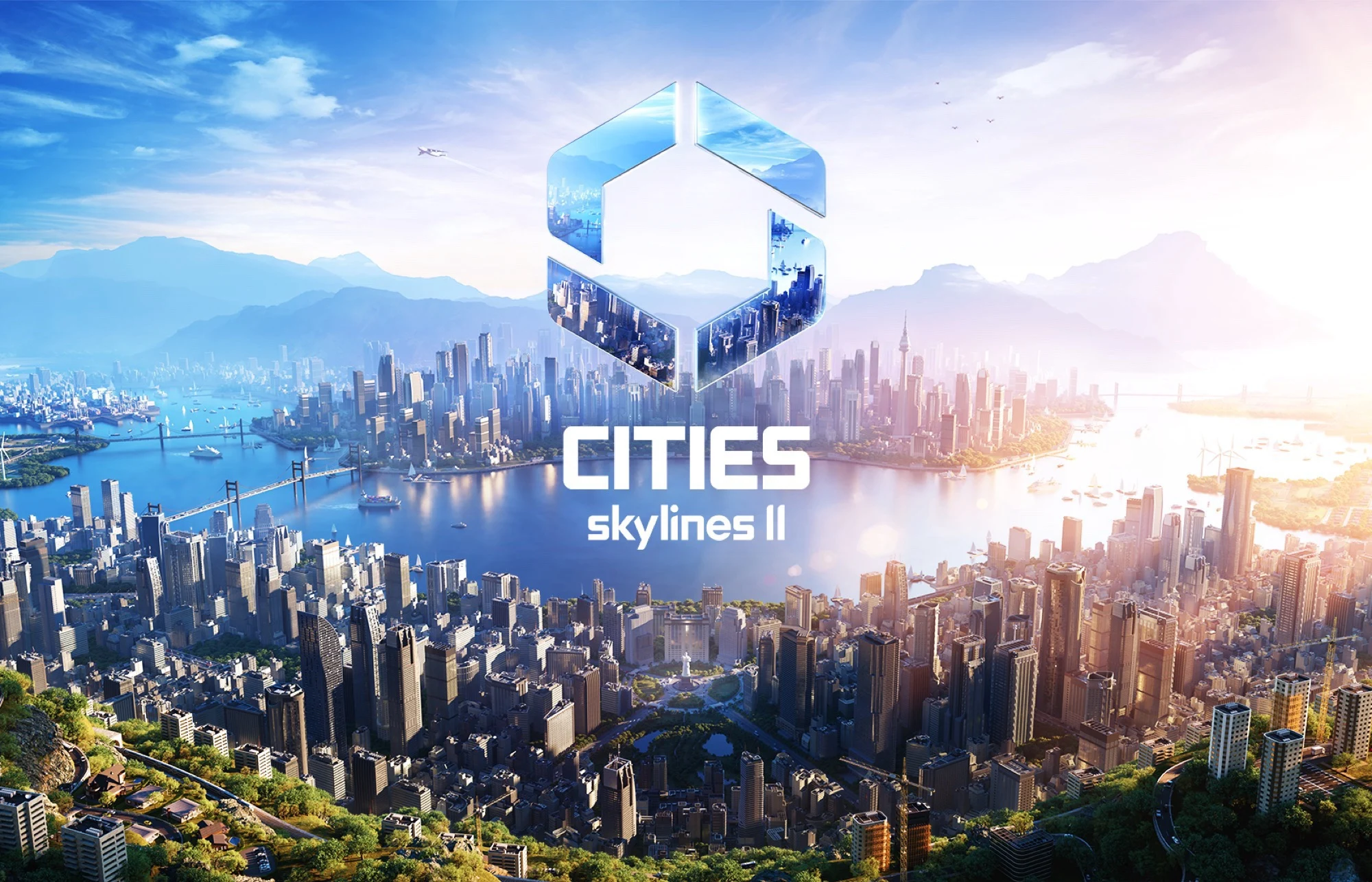
  • Paradox Fires Cities: Skylines 2 Developers for Game Improvement

    Paradox Fires Cities: Skylines 2 Developers for Game Improvement

    Key Takeaways

    1. Mixed Reception of Cities: Skylines II: The sequel has a Metacritic score of 74 and a low user score of 4.3 due to various issues at launch.

    2. Technical Problems at Launch: The game faced significant technical challenges, including high system requirements, crashes, and missing features.

    3. Change in Development Team: Colossal Order will no longer develop Cities: Skylines II; Iceflake Studios will take over, known for smaller projects.

    4. Ongoing Support from Colossal Order: Colossal Order will provide performance patches and add promised features before fully transitioning to Iceflake Studios.

    5. Hope for Future Improvements: Fans are optimistic that Iceflake Studios will implement fresh ideas and enhancements to resolve existing issues and improve the gaming experience.


    The team of around 30 individuals at Colossal Order made significant achievements in the city-building game world with their title, Cities: Skylines. Over the years, this game has improved greatly due to multiple DLCs and mods. However, their effort to create a sequel did not reach the same heights. Cities: Skylines II (starting at $49 for PS5 on Amazon) currently holds a Metacritic score of 74 out of 100 and a disappointing user score of just 4.3 out of 10.

    Technical Challenges

    At launch, various technical problems significantly impacted the game’s reception. Even after some time, players continue to voice concerns about the game’s high system requirements relative to its graphics. Moreover, users have reported crashes and missing features that were promised before the game was released. While updates to address these issues have been rolled out slowly, there have also been several paid DLCs. Recently, the publisher Paradox Interactive announced a major change: Cities: Skylines II will no longer be developed by Colossal Order but will instead be taken over by Iceflake Studios.

    New Development Team

    Iceflake Studios, known primarily for the post-apocalyptic game Surviving the Aftermath, has mainly worked on smaller projects until now. This studio is located in Finland and operates under the ownership of Paradox Interactive. Colossal Order is expected to continue working on performance patches for a few more months. They will also be adding the long-promised bicycles before the transition to Iceflake Studios is fully completed. Following this handover, Iceflake Studios will focus on creating new free updates as well as additional paid DLCs.

    Future Prospects

    The future of Cities: Skylines II is now in the hands of Iceflake Studios. Fans of the franchise are hopeful that the new team will bring fresh ideas and improvements to the game. As Colossal Order finishes its work, players are eagerly waiting to see if Iceflake can resolve the ongoing issues and enhance the overall gaming experience. The transition may be a challenging period, but many believe it could lead to a brighter future for the game.

    Source:
    Link


  • Battlefield 6 Sniper Shot Ruined by Leaf Goes Viral

    Battlefield 6 Sniper Shot Ruined by Leaf Goes Viral

    Key Takeaways

    1. Battlefield 6 has received mixed reviews due to map sizes and the progression system, but it is praised for its attention to detail.
    2. A notable moment in a YouTube clip shows a leaf landing on a player’s scope, highlighting the game’s impressive physics engine.
    3. Fans appreciate the authenticity and surprise elements in Battlefield 6, which contribute to its lasting appeal.
    4. The community actively discusses the technical aspects of the leaf moment, speculating on whether it was a physics-based event or an intentional animation.
    5. Despite some criticisms, moments like these reinforce the game’s strength and maintain a dedicated fan base.


    Since its launch on October 10, Battlefield 6 has been in the news quite a bit. This is not only because of some complaints regarding map sizes and the progression system, but also because of the developers’ impressive attention to detail. This focus leads to those surprise moments that fans love about the series. YouTuber FaZe Scope recently shared a clip that perfectly showcases one of these moments. In the video, a sniper battle takes an unexpected twist when a leaf carried by the wind lands on the player’s scope, momentarily obscuring their view. It might seem like a tiny detail, but it has a significant effect.

    Community Reactions

    Fans have flooded the comments section of the YouTube video, praising the physics engine and highlighting the moment with the leaf as a prime example of the dedication to detail that remains present in Battlefield 6, despite some ongoing critiques. Comments like “Battlefield has more attention to detail than most games in recent years” capture the general sentiment within the player community. Meanwhile, there’s some speculation about how this scene was technically accomplished. Some players are convinced that the leaf is a fully physics-based object that fortuitously landed on the scope as it drifted across the battlefield. Others argue it’s a rare, intentionally crafted animation, akin to the concealed reload animations found in previous Battlefield games.

    The Strength of Battlefield 6

    Regardless of whether it’s a planned detail or just a happy accident, this clip emphasizes one of Battlefield 6’s most significant strengths: those little, surprising moments that resonate with players due to their authenticity, atmosphere, and a hint of humor. For many, it’s instances like these that illustrate why the game still has a dedicated fan base, even with its imperfections.


    Source:
    Link