Category: EV vehicles

  • Europe Celebrates Arrival of Niu RQi Electric Motorcycle

    Europe Celebrates Arrival of Niu RQi Electric Motorcycle

    Niu RQi Electric Motorcycle: Transitioning from Concept to Commercialization

    The movement of the Niu RQi electric motorcycle from a conceptual electric vehicle to a commercially viable product has been successfully realized by Niu after a span of four years from its initial introduction.

    Introduction and Public Reception

    Premiered at CES 2020, the Niu RQi garnered positive reactions from the audience. At the event, it showcased impressive features, boasting a power output of 40HP and a maximum speed of 161km/h (100mph).

    Adjusted Specifications

    Despite its promising debut, Niu found it necessary to make alterations to align with its objectives. By 2022, the model was showcased with power output akin to that of a 125cc motorcycle, signaling a strategic shift towards catering to novice riders in Europe holding an A1 license.

    Fresh Attributes

    • Electric motor with 7,500W and 11Hp power
    • Torque of 450Nm
    • Maximum speed of 110km/h
    • Acceleration from 0-50km/h in 2.9 seconds
    • Range of 200km on a single charge
    • Fitted with Pirelli tires
    • Equipped with dual-channel ABS
    • Features Brembo radial caliper

    Augmented Safety and Functions

    • Inclusion of a traction control system
    • Complete LED lighting setup
    • Incorporation of keyless start mechanism
    • Placement of front and rear-mounted cameras
    • Utilization of GPS tracking technology

    Cost and Accessibility

    • Scheduled market entry in Europe: Second quarter of 2024
    • Available color selections: Gray, green, red, blue
    • Initial retail price in Europe: €7,999 ($8,780) (subject to alteration)

    In Summary

    The Niu RQi electric motorcycle has successfully traversed the path from concept to fruition, albeit with modifications to its technical specifications. Boasting an impressive range, robust safety features, and a respectable power output, it emerges as an enticing choice for city riders. Prospective buyers intrigued by the Niu RQi can anticipate its imminent availability in the European market.

  • Intense Rivalry Ignites in China’s Electric Vehicle Market as Li Auto, Nio, Xpeng, and Tesla Collide.

    Intense Rivalry Ignites in China’s Electric Vehicle Market as Li Auto, Nio, Xpeng, and Tesla Collide.

    Li Auto Sets Records

    Li Auto, a key player in the Chinese electric vehicle (EV) market, ended 2023 on a high note with impressive sales figures. For the week ending December 31, the company reported a milestone of 14,100 units sold, highlighting the increasing demand for their vehicles. The Li L7, L8, and L9 models collectively achieved 14,100 insurance registrations, indicating a strong consumer base for Li Auto.

    Nio and Xpeng Maintain Momentum

    Nio and Xpeng, two other major players in the Chinese EV market, also experienced success in December. Nio reported 5,700 insured registrations for the week ending December 31, contributing to a total of 17,700 units sold during the month. Xpeng, on the other hand, achieved a record-breaking 20,115 vehicle deliveries in December, marking the third consecutive month where they surpassed the 20,000-unit mark.

    Tesla Faces BYD Challenge

    While Tesla reported robust China-made EV sales of 94,139 units for December, the company faced a formidable challenge from BYD. In Q4, BYD emerged as the top global EV maker, surpassing Tesla with an impressive 944,779 new energy vehicles delivered. BYD’s Dynasty and Ocean lineup, which includes both EVs and petrol-electric hybrid models, played a significant role in the company’s success.

    Market Dynamics and Competitions

    The Chinese auto market, known as the world’s largest, remained dynamic throughout 2023. Tesla’s initiation of a price war had a significant impact on over 40 brands. However, the company faced strong competition from Chinese latecomers, signaling a shifting landscape. Notably, Xiaomi entered the EV market with aspirations to become a top-five automaker within the next 15 to 20 years, further intensifying the competition.

    Tesla’s Future Plans and Challenges

    Despite the challenges it faced, Tesla continues to be a key player in the Chinese EV market with ambitious plans for the future. The company’s acquisition of land in Shanghai for a megapack battery manufacturing plant demonstrates its commitment to expanding its EV capacity. However, progress on the megapack battery manufacturing plant has been slower than initially anticipated, pending regulatory approval.

    December 2023 showcased the vibrancy and competitiveness of China’s EV market, with BYD’s rise marking a significant shift in the global EV landscape. As established players and newcomers compete for market share, the stage is set for an exciting and transformative year ahead.

  • Xpeng, a Chinese automaker, aims to commence large-scale production of flying cars by the fourth quarter of 2025.

    Xpeng, a Chinese automaker, aims to commence large-scale production of flying cars by the fourth quarter of 2025.

    XPeng Motors Collaborates to Bring XPeng Huitian Flying Car to Market

    XPeng Motors, a leading Chinese electric vehicle manufacturer, has announced a major collaboration to introduce its XPeng Huitian Flying Car to the market. This groundbreaking project aims to redefine transportation by offering a modular flying vehicle capable of both road and air travel.

    Collaboration for Mass Production

    XPeng Motors has revealed a significant collaboration between Guangdong XPeng and Guangdong Huitian, both subsidiaries of XPeng Motors, through an announcement on the Hong Kong Stock Exchange. This partnership, formalized on January 2, 2024, brings together Guangdong Huitian's expertise in the research and development of flying cars and Guangdong XPeng's proficiency in design and technical development.

    The Innovative Design of XPeng Huitian

    The XPeng Huitian Flying Car, also known as the "Land Aircraft Carrier," boasts a unique land-air integrated design. It features a detachable and recombining land and flying body. The land body, designed for road travel, can accommodate 4-5 passengers and is equipped with a hybrid power system. Its enhanced mobility is attributed to a three-axle six-wheel automotive design.

    On the other hand, the flying body is a fully electric, manned aircraft with vertical take-off capability. It is suitable for low-altitude flight and offers both manual and automatic driving modes. The flying body can be charged within the cabin, providing protection against environmental elements.

    Ambitious Timeline for Mass Production

    XPeng Huitian aims to achieve mass production of the XPeng Huitian Flying Car by the fourth quarter of 2025. Guangdong XPeng will play a crucial role in the final assembly of these innovative vehicles. This ambitious timeline underscores XPeng's commitment to bringing this revolutionary technology to the market at the earliest opportunity.

    Overcoming Challenges

    While XPeng Huitian's vision is promising, there are challenges that need to be addressed. Regulatory hurdles, infrastructure development, and public safety concerns all pose significant obstacles. However, with its innovative design and determined partners, XPeng Huitian is paving the way for a future where flying cars become commonplace, transforming how we live, work, and travel.

  • Xiaomi Develops Concealed Car Door Handle Patent for Upcoming Electric Vehicles

    Xiaomi Develops Concealed Car Door Handle Patent for Upcoming Electric Vehicles

    Xiaomi Introduces Innovative Hidden Car Door Handle Patent

    Xiaomi, the renowned technology company, recently unveiled its latest innovation in the automotive industry – the Hidden Car Door Handles. This breakthrough patent showcases Xiaomi's commitment to pushing the boundaries of design and technology in their future vehicles.

    Reducing Air Drag with Hidden Door Handles

    The patent reveals various handle shapes, including convex, semi-hidden, and hidden door handles. Among these, the hidden door handles offer significant advantages by reducing air drag. Unlike traditional door handles, the hidden handles can be opened simply by pulling them. This eliminates the need for complex mechanisms or electronic motors that retract the handle, resulting in reduced weight and cost.

    A Step Towards Efficiency and Innovation

    Xiaomi's current model, the SU7 electric car, utilizes the semi-hidden indoor handle. However, it is anticipated that future models will adopt fully hidden door handles to further enhance aerodynamics and efficiency. The simplified hidden door mechanism, as depicted in the label diagram, exemplifies Xiaomi's dedication to streamlining design and functionality.

    Unveiling the Xiaomi SU7 Electric Car

    In addition to the innovative hidden door handles, the Xiaomi SU7 electric car boasts impressive performance and enduring design. Collaborating with top design teams from Mercedes-Benz and BMW, Xiaomi has created an elegant exterior featuring water drop-shaped headlamps and aerodynamic features.

    The high-performance Max variant of the SU7 offers remarkable specifications, including 673 horsepower, a 0-100 km/h acceleration time of 2.78 seconds, and a top speed of 265 km/h. Furthermore, it excels in its 800km CLTC range and fast charging capabilities. The spacious interior incorporates Xiaomi's HyperOS system, smart technology, and advanced safety measures. The inclusion of the self-driving Xiaomi Pilot mode adds a touch of futurism to the overall driving experience.

    Xiaomi's Vision for the Future

    With the introduction of the Xiaomi SU7 electric car and the innovative hidden door handle patent, Xiaomi aims to make a significant impact in the automobile industry. By combining cutting-edge technology, exceptional performance, and competitive pricing, Xiaomi seeks to establish itself as a key player in the market.

    Overall, Xiaomi's foray into the electronic vehicle market with the SU7 Car marks a milestone in the company's evolution. As they continue to innovate and refine their designs, it is clear that Xiaomi is poised to shape the future of the automotive industry.

  • Q4 2023 Sees Rivian’s Record-Breaking EV Production and Innovation Surge

    Q4 2023 Sees Rivian’s Record-Breaking EV Production and Innovation Surge

    Rivian’s Impressive Production and Delivery Numbers for 2023

    Rivian has been making headlines with its impressive production and delivery numbers for the year 2023. The company, renowned for its innovative battery electric vehicles (BEVs), has shown remarkable growth, particularly in the fourth quarter of 2023.

    Record-Breaking Production Numbers

    In the fourth quarter alone, Rivian produced a record-breaking 17,541 BEVs at its Normal, Illinois facility. This number represents a significant 75% increase from the previous year. The achievement is not only significant for Rivian but also for the electric vehicle industry as a whole, highlighting the growing demand and capability for electric vehicle production.

    Stock Decline

    Despite the impressive production numbers, Rivian’s stock experienced a slight decline during this period.

    Implications for the Electric Vehicle Industry

    Rivian’s outstanding production and delivery numbers for 2023 are indicative of the increasing demand for electric vehicles. With the company’s innovative approach and commitment to sustainability, Rivian is paving the way for the future of the electric vehicle industry. The record-breaking production numbers demonstrate the company’s ability to meet this demand and further solidify its position as a leader in the market.

    Looking Ahead

    As Rivian continues to expand its production capabilities and deliver on its orders, the company is poised for further success in the coming years. With the global shift towards renewable energy and the growing concern for environmental sustainability, Rivian’s battery electric vehicles are well-positioned to meet the needs and preferences of consumers.

    Pricing and Specifications

    Pricing and specifications for Rivian’s BEVs can be found on their official website. Customers can choose from different models and customization options to suit their preferences and requirements.

    Conclusion

    Rivian’s impressive production and delivery numbers for 2023 showcase the company’s commitment to innovation and sustainability in the electric vehicle industry. With record-breaking production numbers and growing demand, Rivian is well-positioned for continued success in the coming years. The company’s achievements not only benefit Rivian but also contribute to the overall growth and development of the electric vehicle industry.

  • Despite challenges, Tesla surpasses targets with record deliveries in 2023

    Despite challenges, Tesla surpasses targets with record deliveries in 2023

    Tesla Achieves Impressive Delivery Numbers in 2023

    Tesla had a remarkable year in 2023, surpassing its initial goal by delivering 1.81 million electric vehicles (EVs). The company’s strong finish in the fourth quarter, with nearly 483,200 vehicles handed over, contributed to the global deliveries of 484,507 units. This success is particularly noteworthy considering the temporary dip in deliveries during the third quarter due to factory shutdowns.

    Factors Contributing to Tesla’s Success

    Tesla’s success in 2023 can be attributed to several factors. The company boasts a dedicated fan base and has attracted tech-savvy early adopters. CEO Elon Musk has played a crucial role in creating a fervent following. However, Tesla recognizes the need for sustained growth and is now looking to appeal to everyday buyers for its next phase of expansion.

    Challenges and Strategic Moves

    Although Tesla set an ambitious goal of delivering 1.8 million cars in 2023, the company still lags behind competitors like Toyota and General Motors. Reaching everyday buyers who prioritize factors such as price and ease of use posed challenges. Concerns about inflation, high-interest rates, safety, and charging infrastructure added complexity to Tesla’s expansion strategy.

    Tesla’s Response to Market Changes

    One significant change in the market landscape occurred on January 1, when some Tesla models were expected to lose the full $7,500 federal EV tax credit due to stricter battery-component sourcing rules from China. Despite this setback, Tesla took significant steps to enter the mass market by reducing prices across its lineup, particularly in China, where competition is intense.

    Future Growth and Expansion

    Although the introduction of Tesla’s newest vehicle, the Cybertruck, faced delays in reaching volume production, the company remains committed to long-term growth. CFO Vaibhav Taneja emphasized the importance of targeting the next set of EV adopters. While analysts have raised concerns about Tesla’s aged product lineup and increased competition in the EV space, experts believe that the company is well-positioned in the global market alongside BYD.

    Financial Performance

    Tesla’s production for the year reached approximately 1.85 million vehicles, reflecting a 35% year-over-year growth. In the fourth quarter, Model 3 and Model Y deliveries reached 461,538 units, with production numbers for these models standing at 476,777.

    Outlook for 2024

    As Tesla prepares to report its Q4 automotive margins on January 24, all eyes are on the company’s outlook for 2024. The consensus among analysts is that deliveries will reach 2.17 million units, representing a 20% increase compared to the figures reported in 2023. With potential sales boosters such as the revamped Model 3, a new Model Y version, and expanded marketing efforts, Tesla seems poised to continue its trajectory as a major player in the global electric vehicle market.

  • The Electric Vehicle Progress Faces Challenges with Kentucky’s New Tax Policy

    The Electric Vehicle Progress Faces Challenges with Kentucky’s New Tax Policy

    Kentucky Imposes Higher Taxes on Electric Vehicles

    In Kentucky, the start of 2024 brought about a significant change in the taxation of electric vehicles (EVs) compared to their gasoline counterparts. The state has introduced two distinct taxes on electric vehicles, both of which are higher than the taxes imposed on gasoline vehicles for comparable energy units. This decision places Kentucky among the group of states that have opted to heavily tax EVs, seemingly disregarding the environmental benefits and reduced road damage associated with electric vehicle use.

    Additional Annual Registration Fee

    One of the changes affecting EV owners in Kentucky is the introduction of an additional annual registration fee of $120. This fee is in addition to the standard vehicle registration charges and is particularly punitive towards electric vehicles, considering their efficiency and lower road wear when compared to gasoline vehicles. To put it into perspective, a hypothetical gasoline car with a similar efficiency rating of around 140 miles per gallon would pay approximately $30 in gas taxes for driving 15,000 miles a year. In contrast, an electric vehicle with an efficiency of 140 miles per gallon equivalent (mpge) is subject to a flat $120 fee, regardless of the mileage covered.

    Extra Tax on Public EV Charging Stations

    Another change impacting the EV landscape in Kentucky is the introduction of an extra tax on public EV charging stations. These stations are now subject to a tax of 3 cents per kilowatt hour of electricity distributed. For chargers located on state property, this tax doubles to 6 cents per kilowatt hour. This represents a significant increase when compared to Kentucky's average electricity rates and even more so when compared to the state's gasoline tax rate. Consequently, electricity for EVs is taxed at a much higher rate than gasoline, despite EVs causing less road damage and air pollution.

    Disproportionate Impact and Feasibility Concerns

    These new taxes have a disproportionate impact on certain groups, particularly apartment dwellers and commuters who rely heavily on public charging stations. Additionally, businesses that offer free charging as an incentive may find it less feasible to do so due to the increased costs associated with the new taxes. This could potentially hinder the adoption and usage of electric vehicles in the state.

    Rationale and Criticisms

    The rationale behind these taxes is ostensibly to ensure that EVs contribute to road maintenance costs. However, critics argue that this reasoning overlooks the fact that gasoline taxes in Kentucky only cover a fraction of the state's road maintenance costs. This implies that gasoline vehicles are also underpaying for their road usage. Furthermore, the significant road damage caused by heavy trucks is not adequately addressed in this taxation scheme.

    In conclusion, Kentucky's decision to impose higher taxes on electric vehicles raises concerns about the fairness and effectiveness of the taxation system. While the intention may be to ensure that EVs contribute to road maintenance costs, the heavy taxation seems to disregard the environmental benefits and reduced road damage associated with electric vehicle use. These taxes also disproportionately affect certain groups and may hinder the adoption of electric vehicles in the state.

  • Xiaomi Stores Present Xiaomi SU7 Electric Sedan Following Successful China Launch

    Xiaomi Stores Present Xiaomi SU7 Electric Sedan Following Successful China Launch

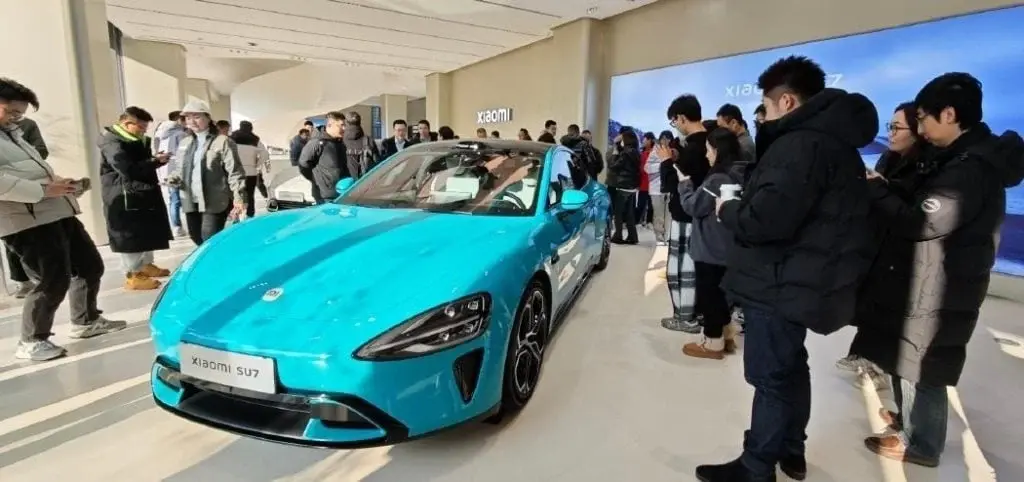
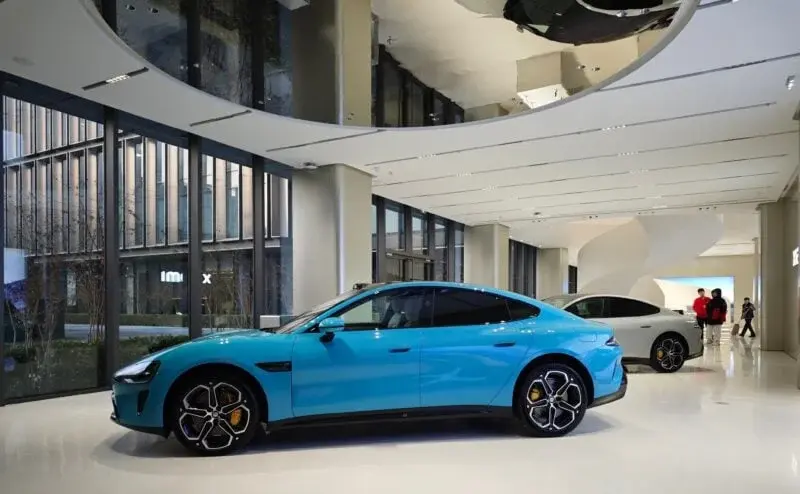
    The Xiaomi SU7 electric sedan is now available in stores in China. This is coming on the heels of the official launch of the EV on December 28. The Xiaomi SU7 is equipped with a 495kW electric motor and a 101kWh CATL Qilin battery giving a range of 800km. It arrived at its first Xiaomi store less than 24 hours after its official unveiling.

    Xiaomi Expands into EV Manufacturing

    Xiaomi is a leading electronics giant but has continued to expand its business model, delving into the turf of EV manufacturing. The mass production of the model is scheduled for H1 2024 while deliveries will follow within a few months. The SU7 will be assembled in a BAIC but will bear the Xiaomi moniker. The Xiaomi SU7 electric sedan was first spotted in the Xiaomi store at the company’s headquarters in Xiaomi Science and Technology Park, Shangdi, Beijing. The model will also be showcased at other Xiaomi flagship stores across China as a precursor to its eventual sales in China.

    Display Cars and Store Renovations

    The Xiaomi SU7 will first arrive as display cars in Xiaomi stores before release to the market. The first display cars are expected to have arrived by Q1 2024 across Xiaomi stores. Many of the Mi Stores, according to store staff, are too small and located on the first floor of the shopping complex. This makes it difficult to display the SU7 but renovations are expected to be carried out on some of the stores.

    Color Variants and Xiaomi Ecosystem Integration

    The Xiaomi SU7 will be available in three color variants namely Aqua Blue, Verdant Green, and Mineral Gray. There are Xiaomi smartphones, watches, and several other accessories that were launched with similar colors to the SU7.

    The Xiaomi-developed HyperOS operating system will replace the existing architecture for all Xiaomi devices, the SU7 inclusive. This will fully integrate all Xiaomi devices into its ecosystem for seamless connectivity and a great digital experience.

    Pricing Details

    There are no details yet on the pricing of the Xiaomi SU7 but some estimates indicate it could cost up to 300,000 yuan ($42,306).

  • Nio CEO Live Streams 14-Hour China Road Trip Testing 1,000km Range Battery

    Nio CEO Live Streams 14-Hour China Road Trip Testing 1,000km Range Battery

    Chinese electric vehicle (EV) company Nio has made a significant breakthrough with the successful testing of its 1,000km EV battery. Nio's CEO, William Li, livestreamed a 14-hour road trip between two Chinese cities, Shanghai and Xiamen, using the battery. The journey achieved an impressive range of 1,044km, with 3% of the battery remaining.

    Nio is considered a strong rival to EV giant Tesla, and this newly developed battery is a groundbreaking development in the industry. The road trip undertaken by CEO Li on December 17 showcased the capabilities of Nio's EV technology. The battery was fitted in a Nio ET7 EV for the entire 14-hour trip, without the need for recharging, despite the cold weather conditions and the car operating at a low battery level.

    The Nio 150kWh battery, as it is called, boasts the highest energy density among mass-produced EV batteries currently available. This exceptional energy density is what enables the battery to achieve a range of 1,000km. However, Nio does not plan to begin mass production of the 150kWh battery until April 2024.

    In terms of pricing, the Nio 150kWh battery comes with a hefty price tag of around 298,000 yuan ($42,000). This is equivalent to the price of a Tesla Model Y in China. However, Nio offers an alternative option for its customers. They have the choice to purchase Nio cars without a battery and instead subscribe to Nio's battery swap service. To support this service, Nio has established over 2,000 battery swap stations across China.

    It is worth noting that Nio has not yet achieved significant market breakthroughs through its current business model. The company has reported an average loss of $12,000 for every EV it manufactures. However, the groundbreaking Nio 150kWh battery could potentially stimulate demand for Nio cars and lead to improved financial performance for the Chinese EV giant.

    In conclusion, Nio's successful testing of its 1,000km EV battery marks a significant achievement in the industry. With its high energy density and impressive range, the Nio 150kWh battery has the potential to drive greater demand for Nio vehicles and contribute to the company's financial success. However, the high price of the battery and Nio's current business model pose challenges that the company will need to overcome in order to fully capitalize on this groundbreaking development.

  • Newly Launched Xiaomi Car Dual-Port Charger Set with UFCS Fast Charging Support Priced at 99 yuan ($14)

    Newly Launched Xiaomi Car Dual-Port Charger Set with UFCS Fast Charging Support Priced at 99 yuan ($14)

    The Chinese tech giant Xiaomi has recently launched its latest product, the 100W car dual-port charger set. This announcement was made during the Xiaomi car technology conference in China. One of the standout features of this new car charger is its compatibility with a wide range of devices, including Xiaomi smartphones, OPPO and Huawei phones, and other UFCS-enabled devices.

    Powerful and Versatile

    The Xiaomi 100W car dual-port charger is capable of delivering a maximum power output of 100W. It features a USB-C interface with a maximum power output of 90W and a maximum current output of 6.1A. This means that it can charge devices at an incredibly fast rate. In fact, it is compatible with Xiaomi smartphones that support both 67W and 33W charging power.

    UFCS Protocol Compatibility

    One of the key selling points of this car charger is its compatibility with the UFCS protocol. This protocol enables fast charging of devices, supporting up to 33W charging power. This means that not only Xiaomi smartphones but also OPPO, Huawei, and other UFCS-enabled phones can benefit from the high-speed charging capabilities of this car charger. Additionally, it is worth noting that the Xiaomi 100W car dual-port charger is also compatible with non-Xiaomi mobile phones.

    Designed for Convenience and Durability

    The Xiaomi 100W car dual-port charger is designed with convenience and durability in mind. Its metal elastic contact design allows it to be used with both 12V and 24V cigarette lighters or power ports of popular car models. The charger also features an anti-slip shrapnel design, ensuring a secure fit even during bumpy rides. Furthermore, it comes with a four-color equivalent display that provides real-time charging status monitoring.

    Pricing and Availability

    The Xiaomi 100W car dual-port charger is currently available for purchase on e-commerce platforms such as JD.com. It is priced at 99 yuan ($14). While the availability of this car charger is initially limited to China, it is expected that it will become available in other regions as well. However, the global availability and pricing details of the Xiaomi car dual-port charger have not been disclosed at this time.

    In conclusion, the Xiaomi 100W car dual-port charger offers a powerful and versatile charging solution for both Xiaomi and non-Xiaomi mobile phone users. With its fast charging capabilities and compatibility with various devices, it is sure to be a popular choice among tech-savvy car owners.