Tag: Lucid Motors

  • Lucid Reveals Pricing and Specs for Model Y, Cybercab, Cosmos SUV

    Lucid Reveals Pricing and Specs for Model Y, Cybercab, Cosmos SUV

    Key Takeaways

    1. Lucid has announced the prices, specifications, and launch date for its Cosmos SUV and Lunar robotaxi, positioning them as competitors to Tesla’s Model Y and Cybercab.

    2. Lucid’s CEO believes Tesla’s technological edge is diminishing due to Elon Musk’s distractions, and Lucid plans to leverage this by introducing three new affordable vehicles.

    3. The Cosmos SUV boasts a 10% efficiency increase over the Model Y, with a range of 4.5 miles per kWh, thanks to a lightweight drive unit and reduced battery housing components.

    4. Lucid’s upcoming Earth SUV targets driving enthusiasts and will compete directly with the Model Y Performance, with a third midsize vehicle also in the pipeline.

    5. Lucid is entering the robotaxi market with the Lunar, partnering with Uber to enhance global autonomous mobility, while focusing on efficient production and cost reductions.


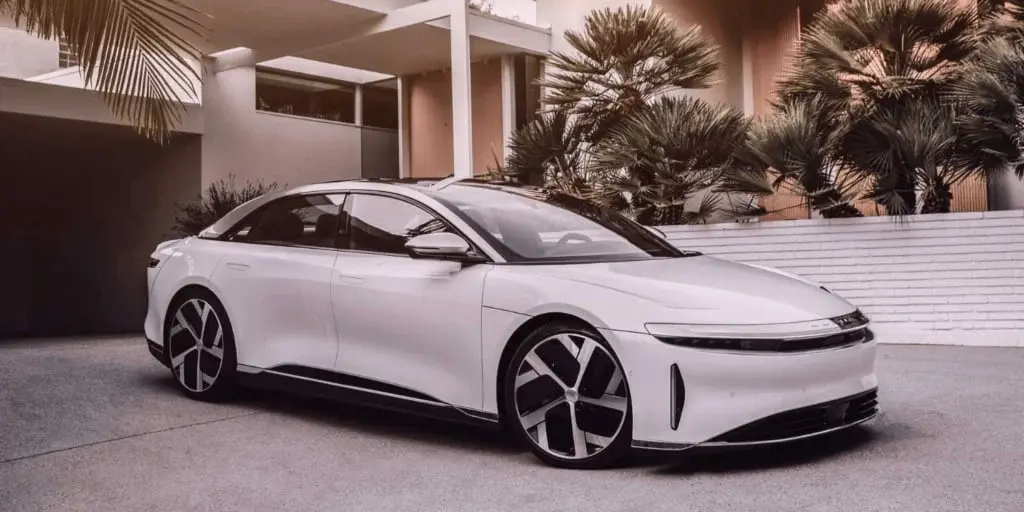
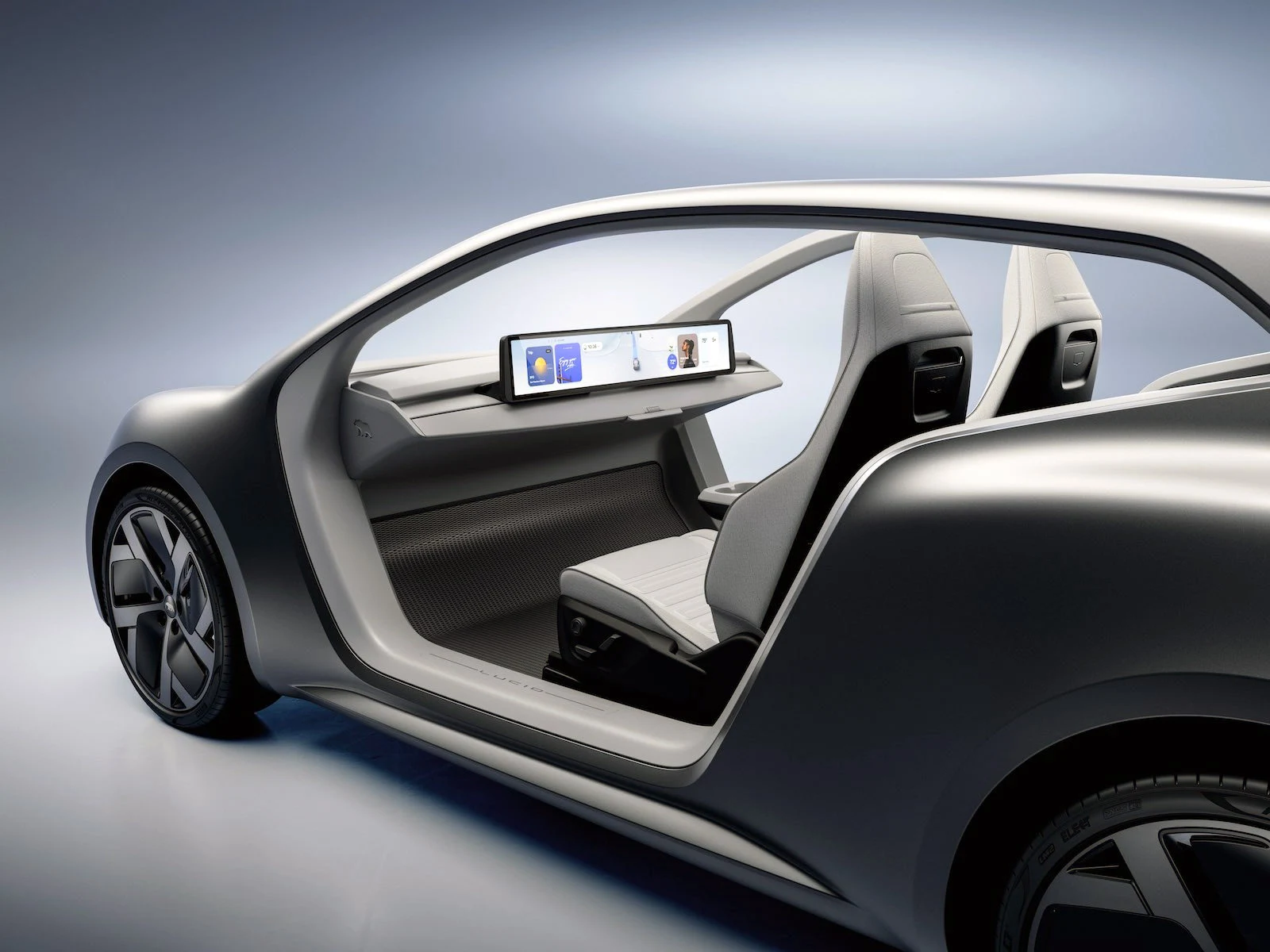
    Lucid has recently announced the prices, specifications, and launch date for its competitor to the Model Y, the Cosmos SUV, as well as its version of a robotaxi called the Lunar.

    CEO’s Remarks on Tesla

    In the past, Lucid’s CEO mentioned that Elon Musk seemed to be “distracted” by numerous responsibilities, leading to Tesla’s technological advantages diminishing. Lucid plans to take advantage of this situation by introducing three affordable and superior vehicles based on a new midsize structure.

    Innovative Technology

    Utilizing its exceptional drivetrain efficiency, Lucid has successfully developed the anticipated competitors to the Tesla Model Y along with an unexpected take on the Cybercab. The Cosmos SUV is recognized as the leader in EV efficiency, boasting a 10% increase in efficiency compared to the Model Y, with a range of 4.5 miles per kWh of battery capacity.

    This performance is attributed to Lucid’s latest drive unit, which is not only lighter and more cost-effective but also showcases a 40% increase in power density compared to its “nearest rival.” The reduction in non-cell components within the battery housing has allowed Lucid to create a lighter Cosmos, extend its range with a smaller battery, and additionally provide 24% more usable cargo space than its closest competitors.

    The Earth SUV

    Another SUV that Lucid plans to manufacture on the midsize platform is called Earth, aimed at enthusiasts seeking a more thrilling driving experience. It could be seen as a direct competitor to the Model Y Performance. There are also plans for a third midsized vehicle, with more details to be announced soon.

    Robotaxi Developments

    Lucid isn’t stepping back from the robotaxi competition against Tesla, Waymo, and other firms. It has introduced a rival to Tesla’s Cybercab, which will also be built on the new midsize platform of the Cosmos SUV. This model aims for the same high efficiency while offering more passenger space due to its compact powertrain design.

    Lucid has already secured a significant partnership with Uber, with the Lunar two-seater likely to be one of the first to join Uber’s fleet. “Lucid’s unparalleled efficiency, vehicle designs ready for autonomy, and focus on customer needs give us confidence in our ability to collaborate on global autonomous mobility,” stated Uber’s CEO.

    Production Plans

    Lucid is now gearing up to enhance its vehicle production in a profitable manner. It has pinpointed new revenue opportunities and will implement “strict capital allocation” alongside considerable reductions in manufacturing costs, akin to its more affordable yet efficient new Atlas drive unit.

    Source:
    Link



  • Lucid Motors Readies to Rival Tesla with Affordable $50,000 Electric Vehicle

    Lucid Motors Readies to Rival Tesla with Affordable $50,000 Electric Vehicle

    Lucid Motors, the well-known manufacturer of premium electric vehicles, has announced its plans to enter the mid-sized electric car market with a $50,000 vehicle. This strategic move positions the California-based company as a direct competitor to Tesla, specifically targeting the market dominated by Tesla's Model 3 and Model Y.

    Transitioning from luxury to more affordable models is a common path for emerging car companies. Lucid, which initially focused on high-end electric vehicles such as the $80,000 Air sedan and the $249,000 Air Sapphire, is now shifting its attention to the more mainstream segment of everyday family cars. This shift is significant, especially considering the recent statement made by Lucid's CEO, Peter Rawlinson, about the company's intention to compete in the high-volume family car market.

    One advantage that Lucid brings to this new venture is its expertise in battery technology. Having started as a battery company, Lucid can leverage its knowledge to offer superior range in its upcoming models. This is a crucial factor for many electric vehicle buyers, as range anxiety remains a common concern.

    Furthermore, Lucid can learn from Tesla's experiences, particularly in terms of quality control. Early Tesla models, such as the Model 3 and Model Y, faced criticisms over minor quality issues. Lucid has the opportunity to address these issues from the start and set a new standard in electric vehicle build quality.

    However, entering this competitive market segment will not be without challenges for Lucid. Tesla and other established automakers already have a strong presence in the mid-sized electric car market. To truly stand out, Lucid will need to find the right balance between affordability, quality, and range.

    In conclusion, Lucid Motors is making a bold move by entering the mid-sized electric car market with a $50,000 vehicle. Leveraging its expertise in battery technology and learning from Tesla's experiences, Lucid has the potential to carve out a significant market share. However, the company will need to overcome the challenges posed by established competitors to establish itself as a prominent player in the segment.

  • Lucid Motors Embraces EV Revolution by Adopting Tesla’s NACS Charging Standard

    Lucid Motors Embraces EV Revolution by Adopting Tesla’s NACS Charging Standard

    As the electric vehicle (EV) market continues to expand, Lucid Motors has taken a significant step by embracing the North American Charging Standard (NACS), a system initially developed by Tesla. Starting in 2025, Lucid’s electric cars in North America will transition from the Combined Charging System 1 (CCS1) to NACS. This move paves the way for Lucid car owners to access Tesla’s vast Supercharging network, which boasts over 15,000 charging stations.

    Tesla Confirms NACS Support for 1000-Volt Systems

    The adoption of NACS by Lucid is a reflection of a broader industry trend, signaling a gradual phase-out of the CCS1 charging standard. Previously, Lucid had reservations about NACS, particularly regarding compatibility with their high-voltage battery systems. However, any such concerns have been resolved, and even brands with a focus on high-voltage systems are now aligning with NACS. Tesla has confirmed that NACS can support systems up to 1,000 volts, which is suitable for the fast-charging needs of modern EVs.

    Peter Rawlinson, Lucid’s CEO, expressed that the integration of NACS is crucial for providing customers with more reliable and convenient charging options. He also emphasized the importance of a unified charging infrastructure to encourage EV adoption in the U.S.

    A Transition Period for a Robust NACS Charging Network

    The transition period until the shift in 2025 allows for the establishment of a more robust NACS-based charging network. SAE International is working to standardize the NACS connector, and various suppliers are expected to develop and offer compatible equipment, ensuring Tesla does not remain the only provider.

    While Lucid has made its position clear, some major automakers like the Volkswagen Group and Stellantis have not yet announced a switch to NACS, leaving a bit of uncertainty in the industry’s direction. Nevertheless, the future of EV charging in the U.S. seems to be consolidating around a single, high-voltage standard, which could be a game-changer for the widespread adoption of electric vehicles.