Category: Computers

  • Scientists Explore the Inner Region of a White Dwarf for First Time

    Scientists Explore the Inner Region of a White Dwarf for First Time

    Key Takeaways

    1. NASA’s IXPE focused on the intermediate polar EX Hydrae, a white dwarf system located about 200 light-years from Earth, for nearly a week in 2024.

    2. EX Hydrae is a binary system with a main-sequence companion star, featuring a magnetic field that allows material to form an accretion disk and be attracted to the white dwarf’s magnetic poles.

    3. IXPE observations measured the polarization of EX Hydrae at eight percent, which exceeded some theoretical expectations.

    4. The X-rays from EX Hydrae originated from a column of extremely hot gas, estimated to be about 2,000 miles high, directing gas from the inner disk to the white dwarf’s surface.

    5. The X-ray polarization direction was found to be perpendicular to the gas column, indicating that X-rays bounced off the white dwarf’s surface before scattering into space.


    NASA’s IXPE (Imaging X-ray Polarization Explorer) directed its attention to a system known as the intermediate polar EX Hydrae in 2024 for almost a week. Located approximately 200 light-years away from Earth, EX Hydrae is a white dwarf system. A white dwarf is the compact core that remains after a star similar to the Sun reaches the end of its life.

    Binary System Dynamics

    EX Hydrae is part of a binary star system, where it has a main-sequence companion star. This system has a magnetic field of moderate strength, which draws material from its companion star. In cases of strong magnetic fields, material is pulled directly into the magnetic poles of the white dwarf. However, where the magnetic field is weaker, the stellar material orbits around the dwarf in an accretion disk. In the case of EX Hydrae, stellar material forms an accretion disk and is also attracted toward the magnetic poles of the white dwarf, thus earning its classification as an intermediate polar.

    Insights from IXPE Observations

    Through IXPE’s observations, astronomers successfully measured the polarization of EX Hydrae, revealing a polarization degree of eight percent. This figure was notably higher than what some theoretical models had suggested.

    Additionally, IXPE’s findings identified the origin of the X-rays. These X-rays were traced back to a column that directs extremely hot gas from the inner disk to the surface of the white dwarf. The astronomers estimated that this column reaches approximately 2,000 miles in height, which is significantly taller than previous predictions.

    X-ray Polarization Discoveries

    The study also examined the orientation of EX Hydrae’s X-ray polarization. The research team measured the polarization direction and found it was perpendicular to the gas column. This indicated that the X-rays emitted from the column bounced off the surface of the white dwarf before scattering into space and reaching IXPE.

    The findings were published in the Astrophysical Journal. The team aims to utilize X-ray polarization in further studies of other white dwarf systems. This research could enhance scientists’ comprehension of larger-scale cosmic events that share similar physical processes.

    The Astrophysical Journal via NASA

    Source:
    Link


  • PSUs and CPU Coolers Face Upcoming Price Increases

    PSUs and CPU Coolers Face Upcoming Price Increases

    Key Takeaways

    1. RAM and SSD Prices Rise: Increased demand from AI data centers has led to sharp price increases for RAM and SSDs.

    2. Escalating Raw Material Costs: Prices for essential materials like copper, silver, and tin are rising, impacting production costs for PC components.

    3. Changes in Ordering Practices: Suppliers have stopped accepting orders at previous pricing levels, leading to immediate price increases for new orders.

    4. Projected Price Adjustments: Anticipated price hikes include 6% to 10% for power supplies and 6% to 8% for heatsinks, affecting CPU coolers.

    5. End of Promotional Pricing: Starting February 1, 2026, all promotional pricing will end, with over 90% of products expected to see additional price increases.


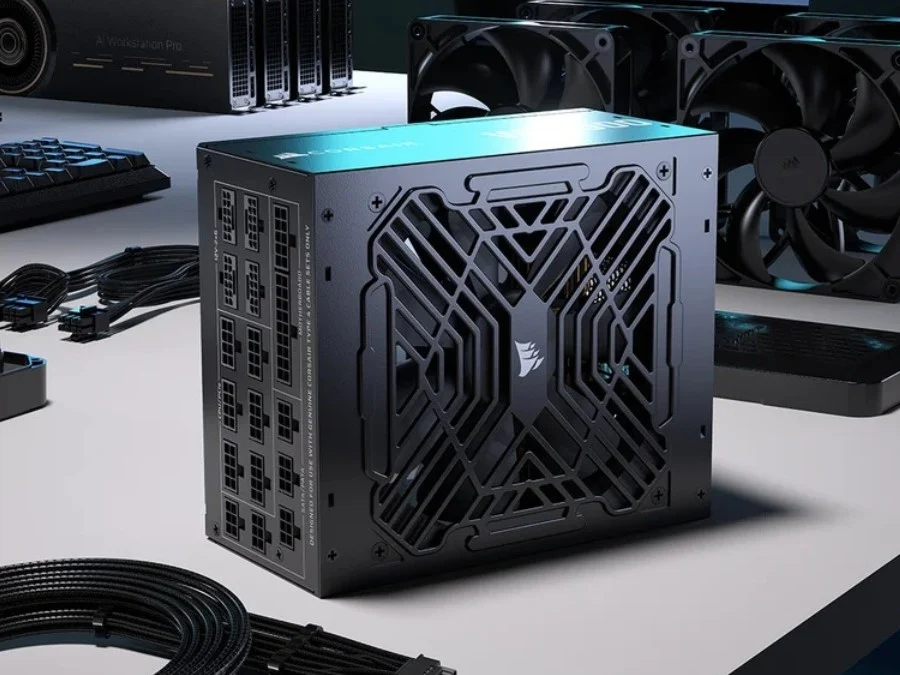
    PC component prices have faced significant pressure lately, with RAM and SSDs seeing sharp increases due to the surge in AI demand. The high needs from AI data centers and other reasons have caused memory and storage prices to rise across the board. Now, it appears that two more essential PC components are set to follow this trend.

    Rising Material Costs

    A notice from Guangzhou Xinhong Zhengdian Electronic Technology pointed out that escalating raw material expenses are heavily impacting their operating costs. The company elaborated that prices for vital upstream materials like copper, silver, and tin have been on the rise over recent months due to global market fluctuations. These materials are crucial for manufacturing PC power supplies and cooling systems, and the ongoing price hikes have greatly increased production expenses.

    Changes in Ordering

    The company also shared that they received a critical notice from their suppliers indicating that factories have ceased to accept new orders at previous pricing levels since January 6. Any orders made after this date will be calculated based on updated prices, meaning that higher costs will be immediately reflected throughout the supply chain.

    As a result, price adjustments for power supplies are anticipated to be between 6% to 10%. Heatsink prices are projected to rise by 6% to 8%, which will directly affect CPU coolers.

    Cancelation of Promotions

    Additionally, the notice stated that starting from February 1, 2026, all promotional pricing policies will be eliminated. This means that discounts and special offers will no longer be valid. Besides reverting to standard pricing, over 90% of products are expected to see an extra price increase on a per-item basis.

    Source:
    Link


  • Minisforum EliteMini M2 Pro: New Panther Lake Mini PC with Arc B390

    Minisforum EliteMini M2 Pro: New Panther Lake Mini PC with Arc B390

    Key Takeaways

    1. The standout product unveiled by Minisforum at CES 2026 is the EliteMini M2 Pro, powered by the Panther Lake series and featuring the Intel Core Ultra X9 388H.
    2. The EliteMini M2 Pro includes the Arc B390 integrated GPU, offering performance comparable to the RTX 4050 Laptop GPU for 1080p gaming and supports external GPUs via USB4 ports.
    3. There will be a base model with the Intel Arc 370 integrated GPU and the Intel Core Ultra 5 338H, with upgrade options for up to 96 GB of LPDDR5x RAM at 9,600 MHz.
    4. The design of the EliteMini M2 Pro resembles the AI X1 Pro, featuring a stylish and compact chassis.
    5. Details on availability and pricing for the EliteMini M2 Pro have not been announced, but a full launch is expected soon following its showcase at CES 2026.


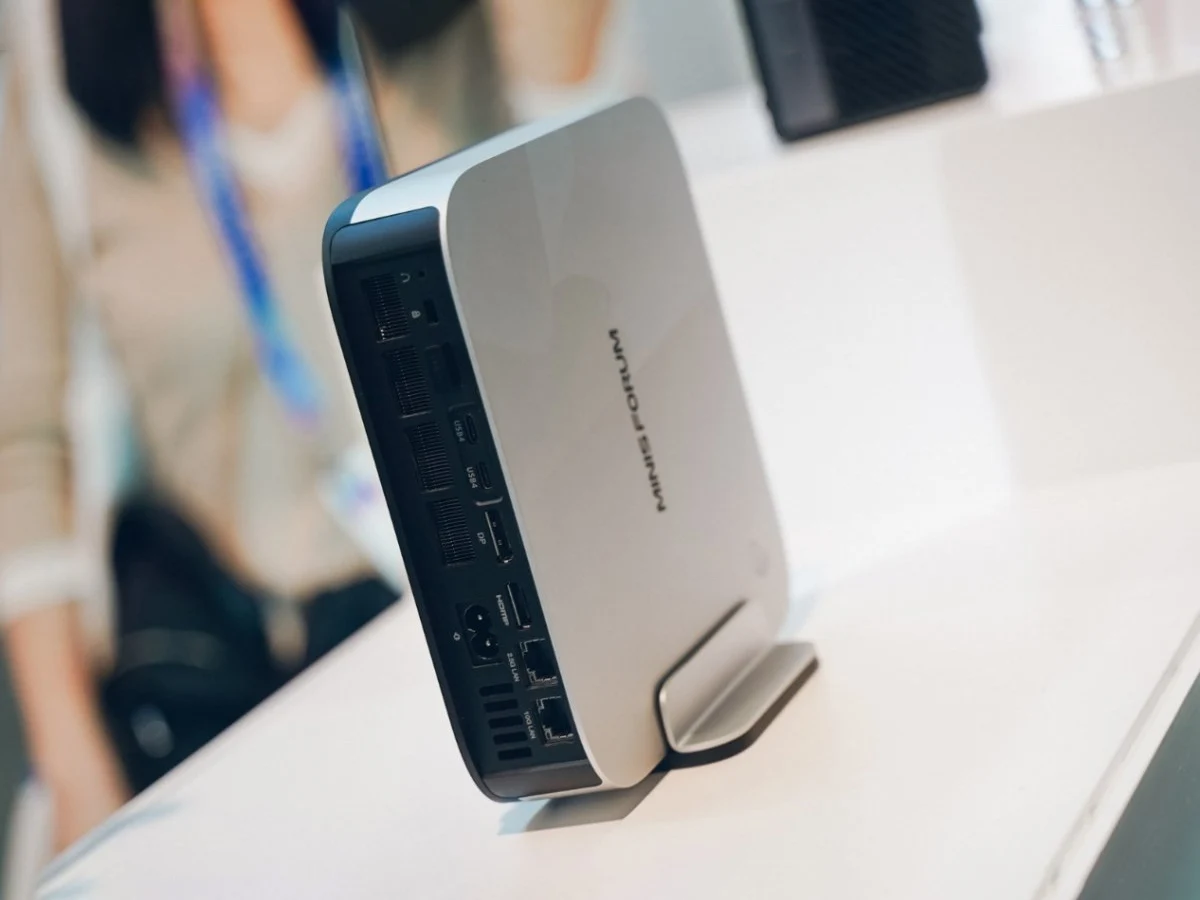
    Minisforum recently revealed several new products at CES 2026. While many of these items were previously announced, the standout surprise is the EliteMini M2 Pro. This model is driven by the latest Panther Lake series, and the highest configuration includes the Intel Core Ultra X9 388H.

    Performance Features

    This particular model is designed for performance, featuring the Arc B390 integrated GPU. Initial benchmarks suggest that it delivers performance on par with the RTX 4050 Laptop GPU, positioning the Minisforum EliteMini M2 Pro as a solid option for 1080p gaming. Additionally, it supports external GPUs via USB4 ports. For those curious about the port setup, it includes several options.

    Configuration Options

    The company has also confirmed a version that will utilize the Intel Arc 370 integrated GPU, meaning the base model will be equipped with the Intel Core Ultra 5 338H. Minisforum highlights that users can upgrade the system to include up to 96 GB of LPDDR5x RAM operating at 9,600 MHz.

    Design and Availability

    Regarding its design, based on a brief showcase at CES 2026, it has a look similar to the AI X1 Pro (which can be found on Amazon), featuring a stylish chassis in a compact size. There is currently no information on when the EliteMini M2 Pro will be available for sale, nor have pricing details been announced. However, since it was showcased at CES 2026, a full launch should occur soon.

    Source:
    Link


  • ECS Liva Z Mini PCs Launch with Intel and AMD Processors

    ECS Liva Z Mini PCs Launch with Intel and AMD Processors

    Key Takeaways

    1. ECS Liva unveiled new mini PCs at CES 2026, catering to diverse consumer and business needs.
    2. The Liva Z4 mini PC features an Intel N150 chip, suitable for light tasks, with support for up to 16 GB of DDR4 memory.
    3. The larger Z4F model offers more powerful options, including an Intel Core 3 N355 octa-core CPU and WiFi 6E connectivity.
    4. The Z6 Plus mini PC is powered by an AMD Ryzen 7 H 255 APU, providing strong performance for demanding tasks, with dual DDR5 slots and 2.5G Ethernet.
    5. Pricing and availability for these models are currently unclear, with expectations for more details soon.


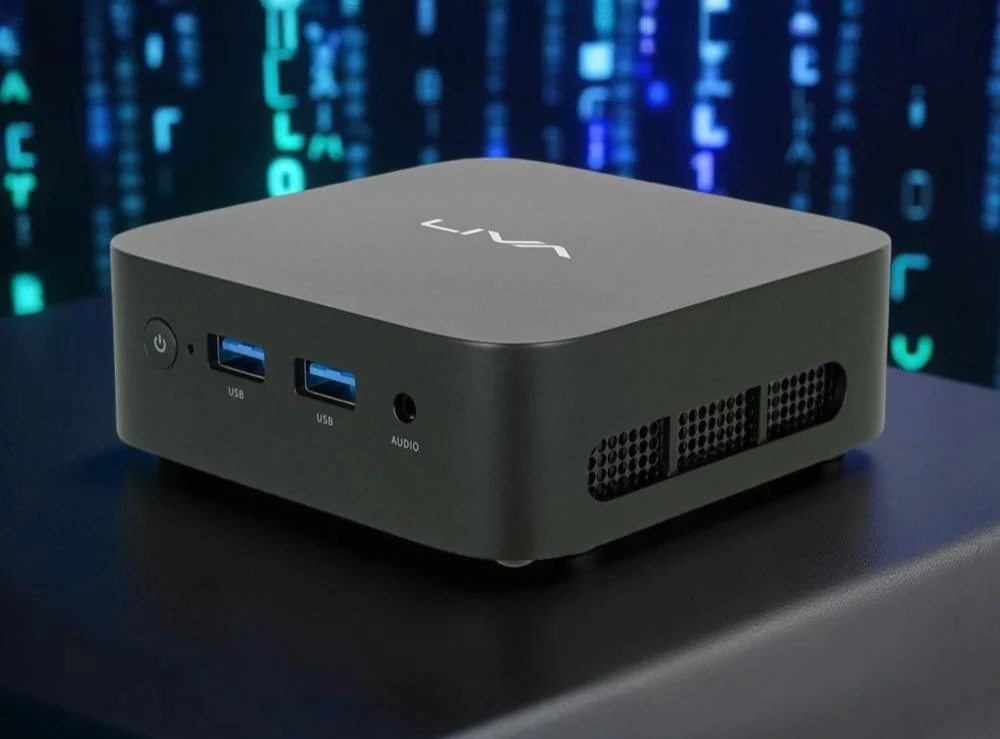
    ECS Liva has revealed several new mini PCs at CES 2026. These devices range from ultra-small models with six-watt Intel Twin Lake processors to robust octa-core Hawk Point APUs. ECS Liva seems ready to meet the diverse computing needs of both consumers and businesses.

    The Liva Z4 Mini PC

    First, there’s the Liva Z4 mini PC, which runs on the Intel N150 chip. This processor features four cores and four threads, making it suitable for light tasks like web browsing, office applications, and point-of-sale systems. It has a single SODIMM slot that supports up to 16 GB of DDR4-2666 memory, and an M.2 2280 slot for storage capabilities. The I/O specifications are as follows:

    The Larger Z4F Model

    Next, we have the Z4F, which is larger at 0.7 liters compared to the Z4’s 0.33 liters, yet it remains impressively compact. This model is set to house more powerful processors, with options going up to the Intel Core 3 N355 octa-core CPU. It also comes with a single DDR5 SODIMM slot, an M.2 2280 storage slot, and WiFi 6E connectivity. However, the product page for the Z4F is currently unavailable, leaving its I/O details uncertain.

    The Z6 Plus with AMD Ryzen

    Lastly, there’s the Z6 Plus, which is equipped with the capable AMD Ryzen 7 H 255 APU from the older Hawk Point lineup. This processor features eight Zen 4 cores and sixteen threads, providing ample power for most consumer applications and even some more demanding tasks.

    Similar to the Z4F, the Z6 Plus product page hasn’t been updated yet, so we lack specific I/O information. Fortunately, TechPowerUp has shared that the Z6 Plus will include dual DDR5 SODIMM slots, an M.2 2280 Gen 4 slot, an M.2 2230 slot for WiFi and Bluetooth cards, and 2.5G Ethernet. At only 0.6 liters, the Z6 Plus is also very compact.

    As of now, pricing and availability are not clear, but we expect more information to surface soon. For anyone in need of a Hawk Point mini PC right away, the GMKtec K12 is available for $600 on Amazon.

    Source:
    Link


  • QNAP Unveils 100 GbE Network Expansion Card with Dual Ports

    QNAP Unveils 100 GbE Network Expansion Card with Dual Ports

    Key Takeaways

    1. QNAP’s QXG-100G2SF-BCM network expansion card features two QSFP28 slots, providing data transfer rates of up to 2 x 100 Gbps.
    2. The card supports RDMA to reduce CPU load and minimize latency during data transfers.
    3. It requires a PCIe 4.0 x16 slot for optimal performance but is compatible with PCIe 3.0 at lower speeds.
    4. QNAP offers a compatible 4.9-ft Direct Attached Cable (DAC) that does not need transceivers.
    5. The card is compatible with NAS systems and Windows 11, priced at $999, with limited initial availability expected to improve soon.


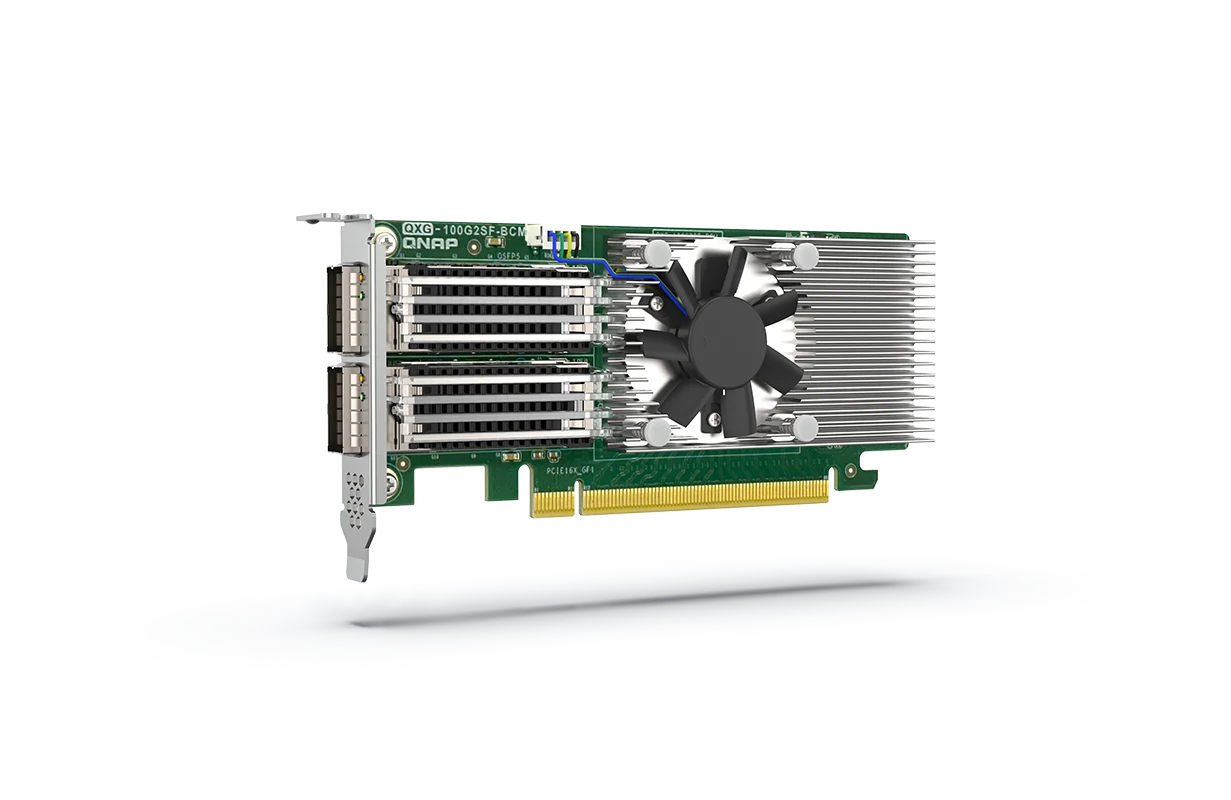
    QNAP has introduced the QXG-100G2SF-BCM network expansion card. This PCIe card, which is actively cooled, provides extremely fast network connections through two QSFP28 slots, achieving data transfer rates of up to 2 x 100 Gbps. It utilizes a Broadcom 57508 controller.

    Enhanced Performance

    To lessen the load on the system, this card supports RDMA (Remote Direct Memory Access). This feature is designed to offload the CPU during data transfers, helping to minimize latency. As per usual practice, users must purchase and install the appropriate SFP modules separately according to their specific needs.

    Additional Accessories

    QNAP also offers a compatible 4.9-ft Direct Attached Cable (DAC) with the model CAB-DAC15M-Q28, which does not require transceivers. The card needs a PCIe 4.0 x16 slot for optimal performance, but it can still function with PCIe 3.0, albeit at lower speeds.

    Compatibility and Availability

    The new QNAP network card comes with both standard and low-profile brackets, which are often essential for NAS systems or rack servers. QNAP also notes that special mounting brackets for certain QNAP NAS models are included. Besides NAS systems like QTS/QuTS hero, this card is also compatible with Windows 11. QNAP states that the QXG-100G2SF-BCM is currently available for an MSRP of $999 in the US. However, it is listed by a limited number of retailers in some areas, but availability is expected to improve in the following weeks.


  • NASA Probe Uncovers Violent History of Milky Way’s Black Hole

    NASA Probe Uncovers Violent History of Milky Way’s Black Hole

    Key Takeaways

    1. The Milky Way contains a supermassive black hole that is still not fully understood.
    2. Black holes have strong gravitational pulls that capture everything, even light, but powerful outbursts from orbiting material can occur.
    3. The XRISM telescope has provided new insights into the black hole’s history by studying a molecular cloud near the galaxy’s center.
    4. Researchers detected intense X-ray eruptions from the black hole that happened in the last millennium.
    5. Future research will focus on discovering new elements and further understanding the cosmic environment around the black hole.


    At the heart of our galaxy, known as the Milky Way, lies a supermassive black hole that remains shrouded in mystery. Numerous studies are underway, and NASA’s X-ray space probe has recently uncovered significant insights regarding its tumultuous history.

    The Nature of Black Holes

    It’s important to understand that black holes possess such strong gravitational pulls that they trap everything within their reach, including light. Yet, the material that orbits these enormous entities responds to this gravity, leading to the potential for powerful outbursts, although current instruments have not detected any related to Sgr A*.

    New Discoveries with XRISM

    Recently, researchers have utilized the XRISM telescope to delve into the history of this supermassive black hole. In their exploration, they examined a molecular cloud situated near the galaxy’s center. They successfully captured a reflection of the X-rays emitted by the black hole, revealing intense eruptions that occurred in the last millennium.

    Stephen DiKerby, the project leader from Michigan State University, expressed his astonishment at this finding in a press release, stating,

    “Nothing in my professional training as an X-ray astronomer had prepared me for something like this. This is an exciting new capability and a brand-new toolbox for developing these techniques.”

    Future Research Avenues

    Looking ahead, further research may be conducted in the upcoming months to identify new elements. There is no doubt that these investigations will enhance our understanding of the cosmos surrounding us.

    EurekAlert! Science News Releases

    Source:
    Link


  • Affordable Fanless Mini PC: Zotac Zbox CI360 with Intel CPUs

    Affordable Fanless Mini PC: Zotac Zbox CI360 with Intel CPUs

    Key Takeaways

    1. The Zotac Zbox CI360 nano mini PC supports quad-core Intel Twin Lake CPUs and DDR5 memory for improved performance over its predecessor, the CI338.
    2. It features a low-power Intel N150 processor, suitable for basic tasks like browsing and emailing, with performance comparable to an Intel Core i5 8250U.
    3. The mini PC supports up to 16 GB of DDR5-4800 memory and has dual M.2 2280 slots for flexible storage options.
    4. The integrated GPU can handle video playback and basic tasks, but is not suitable for demanding applications or gaming.
    5. While pricing is not confirmed, it is expected to be budget-friendly, likely around $180 based on similar models in the market.


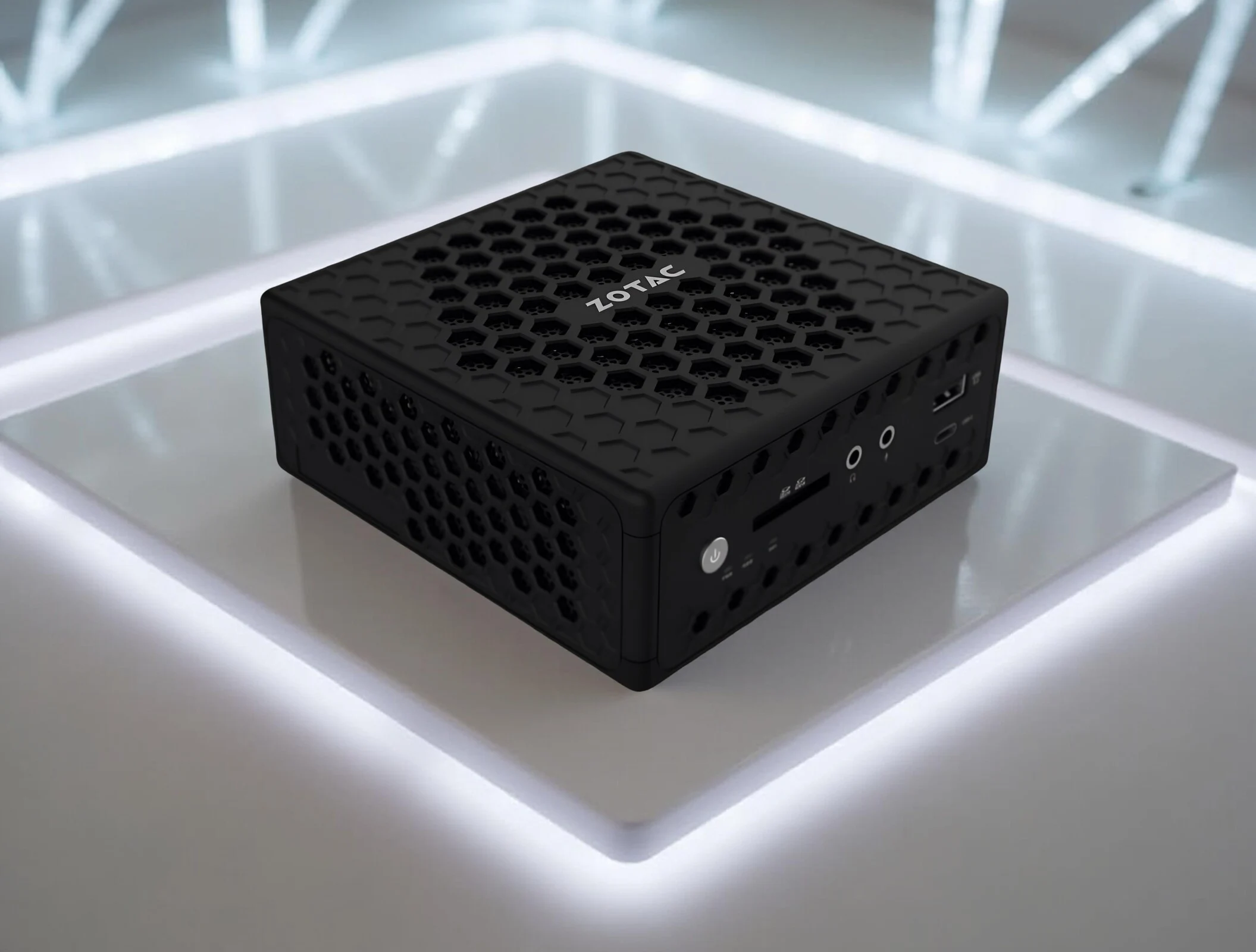
    Zotac has revealed a new member of its mini PC family, the Zbox CI360 nano. This model builds on the previous CI338 mini PC and features support for quad-core Intel Twin Lake CPUs along with DDR5 memory. While the exact pricing is not confirmed at this moment, the specifications suggest that it should be relatively budget-friendly.

    Performance Overview

    The Zotac CI360 mini PC is driven by the quad-core, quad-thread Intel N150 processor. This low-power 6-watt chip is suitable for basic, entry-level tasks, handling simple activities like browsing and emailing. In benchmark tests, the N150 shows performance similar to that of an Intel Core i5 8250U, which was commonly used in ultrabooks nearly 8 years ago.

    Memory and Storage

    This mini PC includes a single SODIMM slot that can support up to 16 GB of DDR5-4800 memory. Due to the current surge in DRAM prices, the base model of the CI360 is expected to be the only version offered at a reasonable cost. For storage, the Zbox CI360 has dual M.2 2280 slots to meet various needs. The I/O options are quite good, as outlined below:

    Graphics and Pricing

    As expected, this mini PC does not include support for discrete graphics. The integrated GPU with 24 execution units should manage video playback and basic motion tasks, but anything more demanding than simple games is likely too much for this system.

    As stated earlier, the pricing and availability for the Zotac Zbox CI360 mini PC remain uncertain at this time. However, given that other mini PCs powered by the N150, like the Asus NUC 14, are priced around $180 for the barebones model, it can be assumed that the Zbox CI360 will be in a similar price range.

    Source:
    Link


  • Minisforum N5 Max: Powerful Mini-PC with Large Network Storage

    Minisforum N5 Max: Powerful Mini-PC with Large Network Storage

    Key Takeaways

    1. Minisforum has launched two new network storage devices: the N5 Air and N5 Max.
    2. The N5 Max features an AMD Ryzen AI Max+ 395 processor and Radeon 8060S graphics card, functioning as a traditional PC.
    3. The N5 Max includes expansion options with a PCIe slot and supports up to five SSDs or standard hard drives.
    4. The device has a 10 and 5 GBit/s Ethernet port for fast network connections.
    5. Pricing and availability details for the N5 Air and N5 Max are currently unknown.


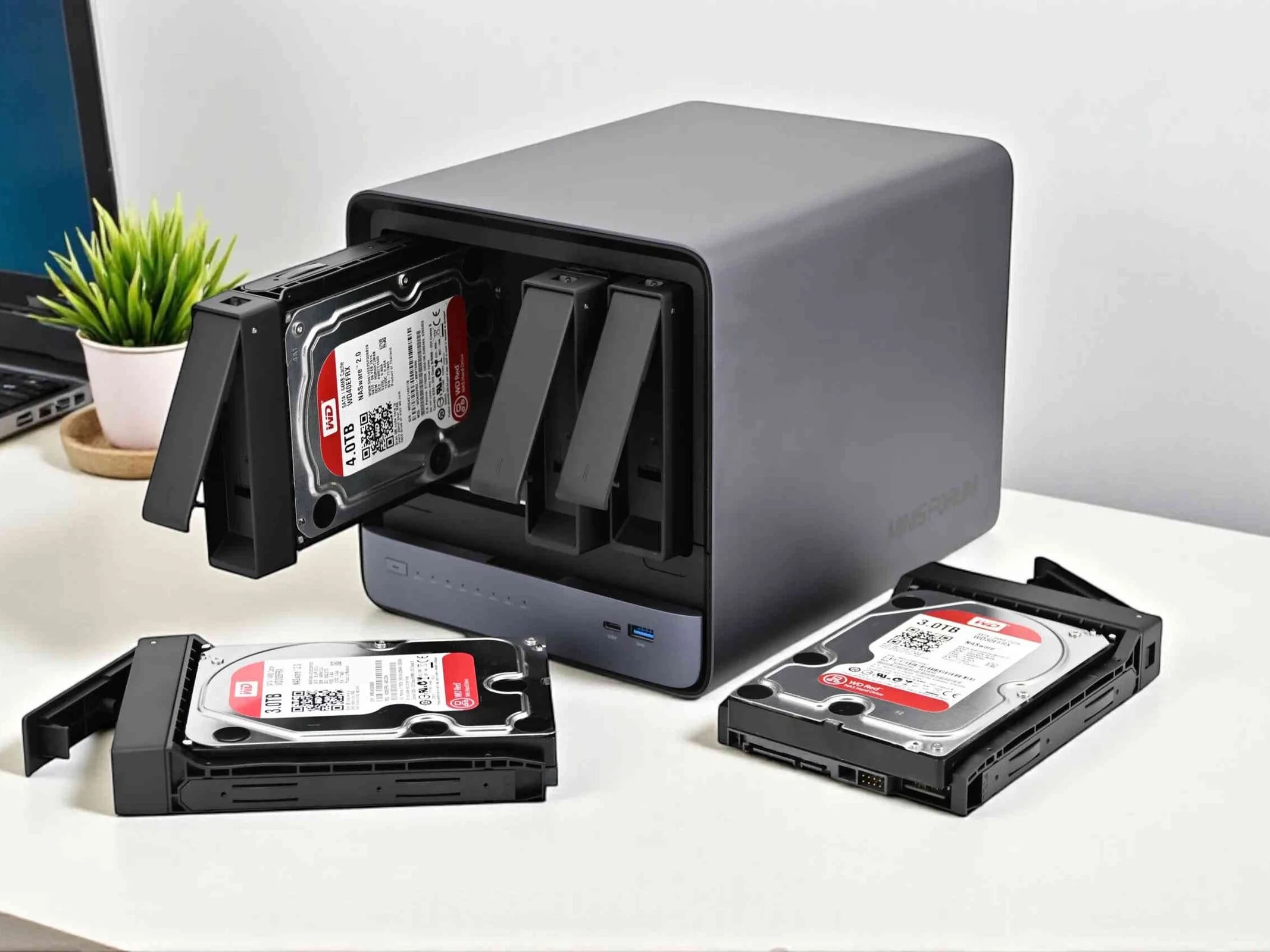
    Minisforum has introduced two new network storage devices ahead of CES 2026: the N5 Air and the Minisforum N5 Max. Among the two, the N5 Max stands out as the more robust option, featuring an AMD Ryzen AI Max+ 395 processor and an integrated Radeon 8060S graphics card. This storage unit measures 199 x 202.4 x 25.3 mm and can function as a traditional PC, supporting Windows operating system and providing image output through USB Type C and HDMI 2.1.

    Expansion Options and Connectivity

    The device includes a PCIe slot with four PCIe 4.0 lanes, enabling users to add extra network cards as needed. For network connections, it has one Ethernet port that supports data transfer rates of 10 and 5 GBit/s. Users can install up to five SSDs or standard magnetic hard drives in both 3.5 and 2.5-inch sizes to accommodate significant data storage needs. Additionally, multiple M.2 2280 format SSDs can be added at once. The N5 Max will come equipped with 128 GB of soldered LPDDR5x RAM, while the N5 Air will provide 96 GB.

    Pricing and Availability

    Currently, there is no information regarding the pricing or release date for these new models. Meanwhile, the Minisforum N5 Pro remains available on Amazon.

    Source:
    Link


  • Keychron Nape Pro Wireless Trackball Estimated at $130 Launch Soon

    Keychron Nape Pro Wireless Trackball Estimated at $130 Launch Soon

    Key Takeaways

    1. The Keychron K2 HE Concrete is a limited edition keyboard set to launch in February 2026, featuring a heavy design and a matte finish resembling a bathroom tile.
    2. It includes Gateron Double-Rail Magnetic Nebula switches, double-shot PBT keycaps, and supports Bluetooth and 2.4 GHz connectivity, with a 100-hour battery life.
    3. Keychron introduced the Nape Pro, a wireless trackball designed as a companion device for their keyboards, featuring customizable buttons and a unique trackball design.
    4. The Nape Pro has ergonomic features, including a rotary dial for scrolling and a tripod mount for versatile positioning next to the keyboard.
    5. The Nape Pro is expected to launch in April or May 2026, with an estimated price of around $130 in the US, subject to final pricing adjustments.


    Of all the many things Keychron presented at CES 2026, the K2 HE Concrete was perhaps the most unusual. This upcoming Concrete keyboard is set to be one of three limited edition HE keyboards that the brand is planning to release in February 2026. The Notebookcheck team visited the Keychron booth at CES to check out the K2 HE Concrete keyboard, and their main observations were that it is quite heavy, has a matte finish, and “feels like a bathroom tile.”

    Specs and Features

    Besides the color-matched keycaps, the K2 HE Concrete will probably be similar to the other Keychron K2 HE models. For a better understanding of what the K2 HE is all about, you can look at our review of the Keychron K4 HE, as the only variation is the layout. This means it will include the same Gateron Double-Rail Magnetic Nebula switches, double-shot PBT keycaps in OSA profile, and the same Bluetooth and 2.4 GHz connectivity along with handy hardware switches for OS and connectivity modes. The familiar specs and hardware also ensure that the K2 HE Concrete will have a 1 kHz polling rate, TMR sensors, and an impressive battery life of 100 hours.

    Companion Device

    While concrete keyboards might be amusing, Keychron also introduced a new wireless trackball named the Nape Pro, which is intended to be a companion device for Keychron’s wireless mechanical keyboards — or really any keyboard. The Nape Pro features a somewhat unique design, with a 25 mm trackball positioned in the center of a bar surrounded by six customizable buttons. By default, two of these buttons function as mouse buttons, but all buttons can be customized using Keychron Launcher, a web app that has consistently proven to be an excellent customization tool in our reviews. All the switches in the Nape Pro are Huano silent switches — likely the same ones used in the Keychron M6 8K that we recently reviewed. These mouse switches have a shorter average lifespan compared to other mouse switches but offer good tactile feedback and are not mushy.

    Innovative Usability

    The Keychron Nape Pro includes some clever design features that enhance its usability. It can be positioned horizontally beside a keyboard, where you would move your hand off the keyboard to control the cursor, or you could lay it horizontally at the bottom of the keyboard, allowing your thumbs to navigate and scroll. Besides the trackball and buttons on the Nape Pro’s body, there is a rotary dial-style ring around the trackball, which seems especially helpful for tasks like scrolling. Beyond its fun design and internals, the new trackball module appears to have a 1/4-20 threaded tripod mount on the bottom, a common addition for ergonomic split keyboards that opens up various possibilities for angled mounting and similar ideas.

    The Nape Pro will feature a 200 mAh battery, which Keychron estimates will provide 50 hours of continuous use. It employs a PixArt 3222 sensor and supports up to 1 kHz polling over 2.4 GHz. However, it’s unclear if the battery life was tested using Bluetooth or 2.4 GHz.

    Launch and Pricing

    Keychron has announced that the Nape Pro wireless trackball will be available in April or May in the US. While the pricing has not been finalized, the Nape Pro is currently listed at 21,648 Yen with a 20% discount on the crowdfunding platform CoStory. This roughly translates to about $137 before the discount and an MSRP of $171. This is not an official price, and Keychron’s pricing in Japan often sees an increase of up to 30% in the Japanese market — for instance, the K10 HE is priced at $144.99 in the US but costs the equivalent of $187 in Japan. Based on this, it wouldn’t be surprising to see the Nape Pro launched closer to $130 when it hits the US and other international markets. Only time will tell how practical the Nape Pro will be, but the initial impressions are favorable, especially given that the trackball can be positioned near the space bar and used without lifting your hands from the keyboard.

    Source:
    Link


  • ASRock Launches New Mini PCs with Modern Intel Processors

    ASRock Launches New Mini PCs with Modern Intel Processors

    Key Takeaways

    1. ASRock is developing two new models: the ASRock NUC Ultra 300 and the NUCS Ultra 300, with the latter being more compact.
    2. The NUC Ultra 300 features one Thunderbolt 4 port and two Ethernet ports, while the NUCS Ultra 300 has only one Ethernet port and supports HDMI 2.1 and DisplayPort 2.1.
    3. Both models can support up to 128 GB of DDR5 RAM and two M.2 SSDs, with one using PCIe 5.0 and the other PCIe 4.0 lanes.
    4. They will be powered by Intel Core Ultra Series 3 processors, with AI performance reaching up to 180 TOPS.
    5. Complete specifications, pricing, and availability details are yet to be announced.


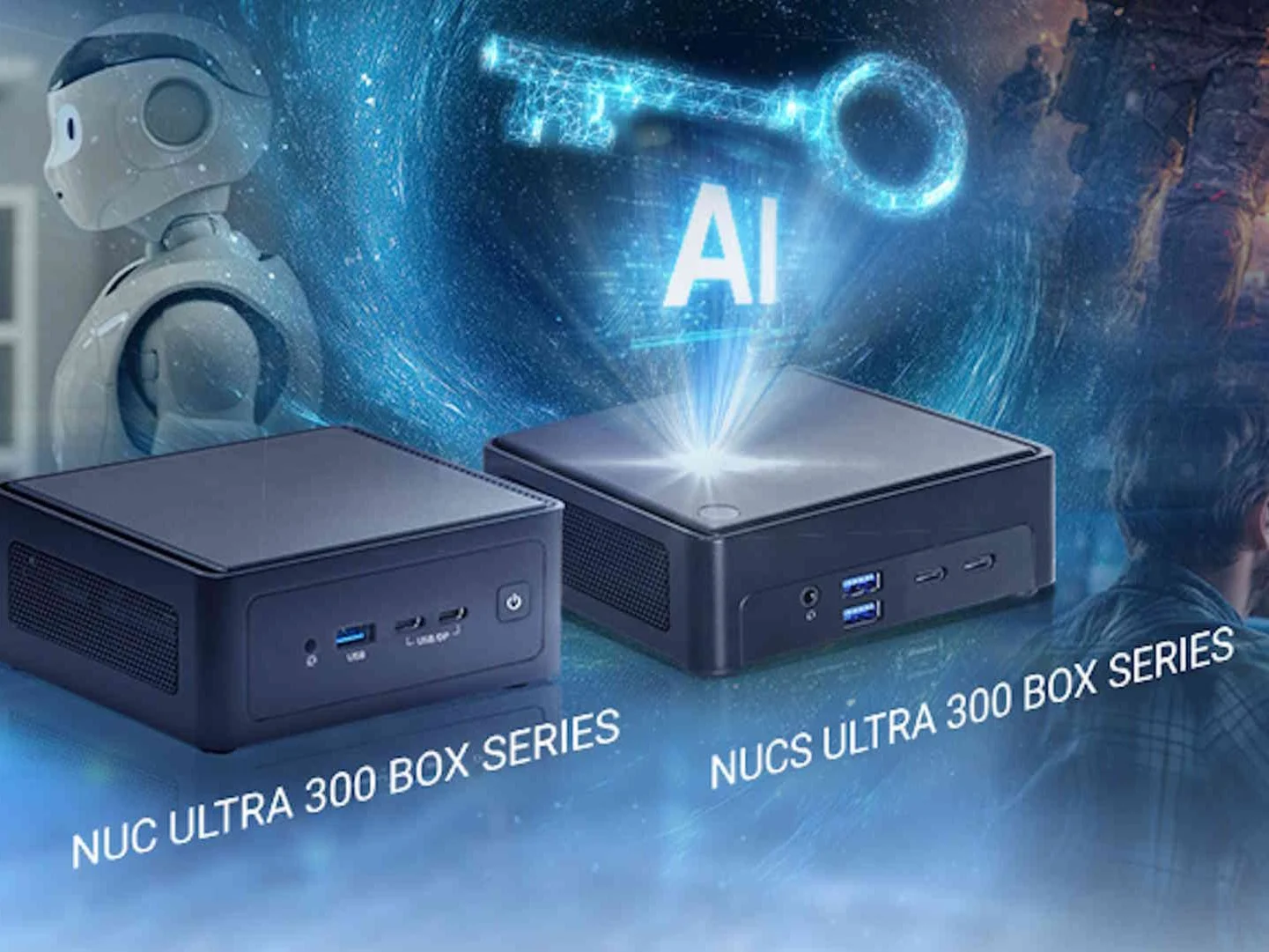
    ASRock is working on two new models, the ASRock NUC Ultra 300 and the NUCS Ultra 300. The NUCS Ultra 300 is slightly more compact, measuring 117.5 x 110 x 38 millimeters, while the NUC Ultra 300 stands at 49 millimeters in height. Connectivity options are different between the two models. The NUC Ultra 300 includes one Thunderbolt 4 port, four USB 3.2 Gen 2 ports, and a pair of Ethernet ports, capable of a maximum data transfer rate of 2.5 Gbps. In contrast, the NUCS Ultra 300 offers four USB 3.2 Gen 2 ports but only has a single Ethernet port. It also supports HDMI 2.1 and DisplayPort 2.1.

    Memory and Storage Capabilities

    ASRock states that both models can support up to 128 GB of DDR5 RAM running at 7,200 MHz, along with the option for two M.2 SSDs. One SSD can connect through four PCIe 5.0 lanes, while the other utilizes four PCIe 4.0 lanes. However, any noticeable performance gap between the two is likely to be minimal in most real-world scenarios.

    Processor and Performance

    Complete specifications have not been released yet, but it is confirmed that these systems will come equipped with Intel Core Ultra Series 3 processors. ASRock claims that the AI performance can reach up to 180 TOPS. This number accounts not just for the performance of the NPU alone, but also the combined capabilities of the NPU, CPU, and graphics unit. Details on pricing and when they will be available are still awaited.

    Source:
    Link