Category: Computers

  • AMD Ryzen 9 9950X3D and 9900X3D Outperform Zen 4 in Geekbench

    AMD Ryzen 9 9950X3D and 9900X3D Outperform Zen 4 in Geekbench

    Key Takeaways

    1. AMD has not yet announced pricing or availability for the Ryzen 9 9900X3D and Ryzen 9 9950X3D, but a Geekbench listing suggests a launch may be imminent.
    2. The Ryzen 9 9950X3D shows a performance improvement of around 12% in single-core and 10% in multi-core tests compared to the Ryzen 9 7950X3D.
    3. The Ryzen 9 9900X3D is approximately 7% faster in single-core performance compared to the Ryzen 9 7900X3D, with multi-core results being similar.
    4. Both new CPUs are expected to excel in gaming performance due to their 3D V-cache and may feature a reverse CCD design similar to the 9800X3D.
    5. Ryzen 9 processors are anticipated to have better overclocking potential compared to Ryzen 7 models due to their premium silicon quality.


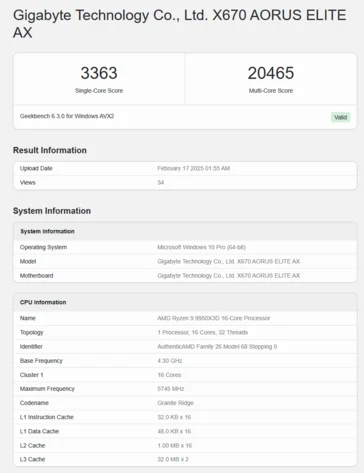
    After making a splash at CES 2025, AMD has been rather quiet about the Ryzen 9 9900X3D and Ryzen 9 9950X3D. We still don’t have any info on the pricing or when they will be available, but a recent listing on Geekbench indicates that these CPUs might be launching soon. Interestingly, the test setup used an older X670E motherboard and was equipped with 32 GB of DDR5-4800 MT/s RAM.

    Performance Highlights

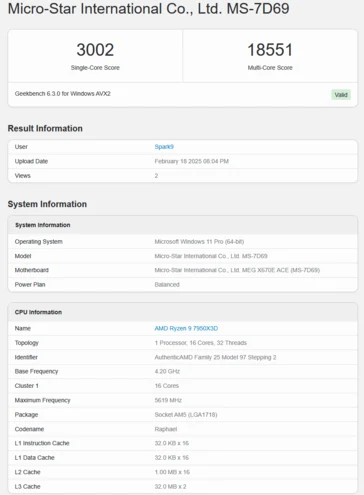
    Examining the Ryzen 9 9950X3D, it achieved scores of 3,363 and 20,465 in Geekbench’s single and multi-core tests, respectively. For context, the Ryzen 9 7950X3D recorded scores of 3,002 and 18,551 in the same benchmarks. This shows an improvement of around 12% in single-core and about 10% in multi-core performance. On the other hand, the Ryzen 9 9900X3D obtained 3,274 and 19,227 points, making it roughly 7% quicker than the Ryzen 9 7900X3D in single-core performance, while multi-core results were almost the same. It’s important to note that these results come from a single test on a pre-production unit, and performance may enhance once the CPUs are officially launched.

    Gaming Performance and Features

    Regarding pure performance, the Ryzen 9 9950X3D and Ryzen 9 9900X3D are expected to deliver similar improvements as other Zen 5 processors. However, the true benefits will likely shine in gaming scenarios, where the CPUs’ 3D V-cache will have a significant impact. Although not yet confirmed, both processors are expected to feature the reverse CCD design seen in the 9800X3D and should allow for overclocking. Ryzen 9 chips typically represent the cream of the crop from a silicon wafer, suggesting they may overclock better than the Ryzen 7 models.

    Source:
    Link


  • Bapaco’s 12-Inch Touchscreen Mechanical Keyboard Now on Kickstarter

    Bapaco’s 12-Inch Touchscreen Mechanical Keyboard Now on Kickstarter

    Key Takeaways

    1. Multi-Functionality: Bapaco merges a mechanical keyboard, mini PC, and ultra-wide screen into one device, compatible with Windows, Mac, and Android via USB-C.

    2. Independent Operation: It can function as a standalone mini-computer with an Intel Core i5-1235U after adding an SSD, RAM, and OS, powered by a built-in battery for about six hours.

    3. Display and Design: Features a 12.3-inch touchscreen with a 16:6 aspect ratio, adjustable hinge, RGB lighting, and multiple ports, weighing just over 4 pounds.

    4. Kickstarter Funding: Currently funded through Kickstarter, with a “Kickstarter Special” price of HKD 5,000 for a barebone model, delivery expected in May 2025.

    5. Risks of Crowdfunding: Potential risks include non-delivery or quality issues, especially as this is Bapaco’s first project.


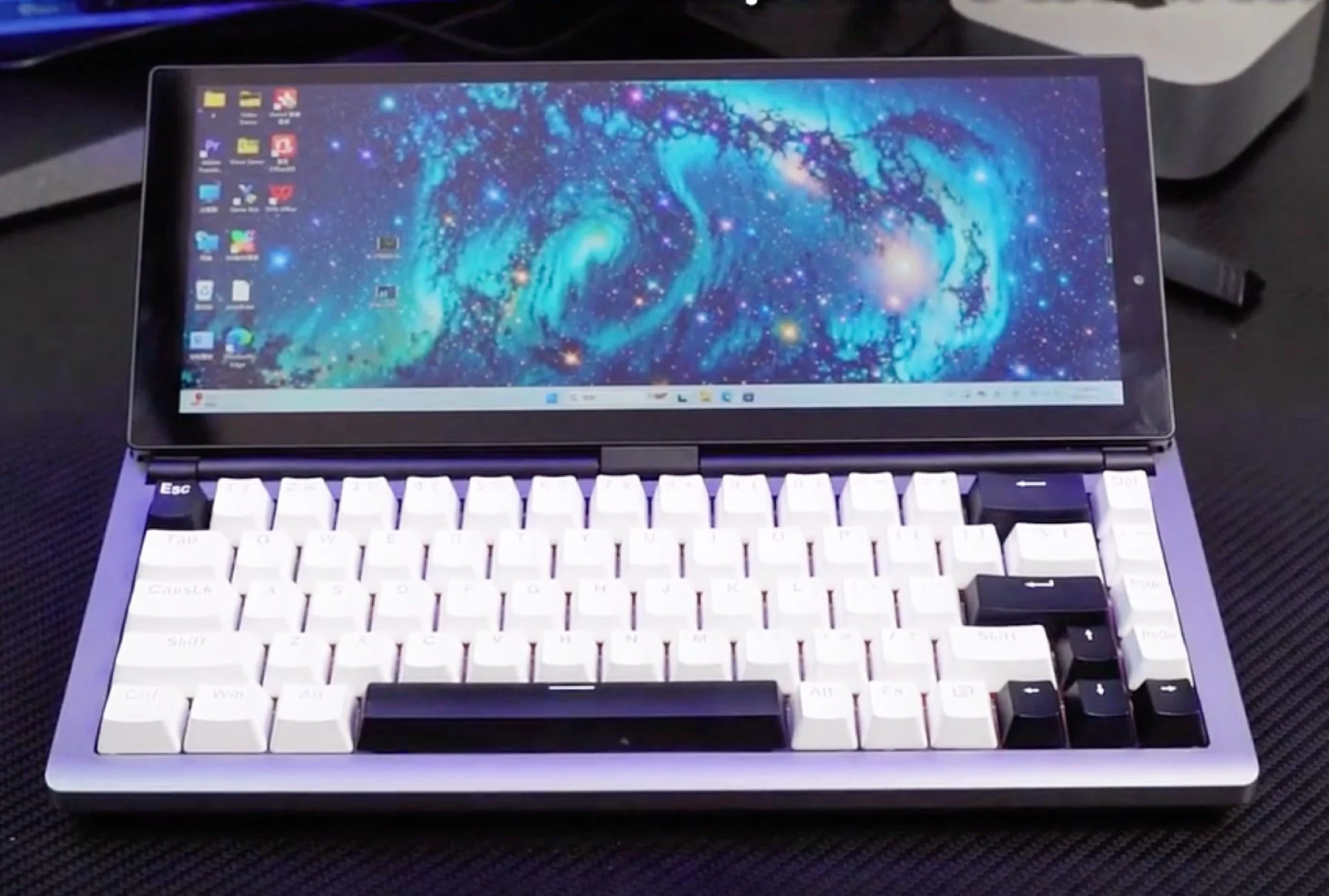
    Bapaco merges three gadgets into a single device: a mechanical keyboard, a compact mini PC, and a small ultra-wide second screen, specifically the Asus ProArt PA147CDV. By connecting it to a Windows, Mac, or Android device via a USB-C cable, Bapaco functions as a keyboard with a built-in display.

    Independent Functionality

    Equipped with an Intel Core i5-1235U, the device can operate fully without needing to be connected to a PC. Once users install an SSD, RAM, and an operating system, Bapaco transforms into a complete mini-computer. Thanks to its built-in battery, it can be used like a laptop without needing a power cord, although the 5,000 mAh battery only supports around six hours of video playback.

    Impressive Display and Features

    The 12.3-inch touchscreen features a 16:6 aspect ratio and utilizes an IPS panel with a resolution of 1,920 x 720. The hinge allows for a display angle adjustment from 0 to 90 degrees. The keyboard is available only in a QWERTY layout and comes with linear switches, but users can change the switches later. RGB lighting is included as a standard feature. Additionally, it has a 3-watt speaker, two USB-C ports, two USB-A ports, and a 3.5 mm headphone jack. This keyboard computer weighs just over 4 pounds or 1.82 kilograms.

    Funding and Risks

    Currently, Bapaco’s keyboard computer is being funded through Kickstarter. The “Kickstarter Special” offers a barebone model, which excludes RAM or SSD, priced at HKD 5,000 (about $643), plus import VAT and shipping fees. The expected delivery time is set for May 2025.

    As always, there are risks involved with Kickstarter projects, such as non-delivery or subpar quality, especially for a company’s first venture, which is the case with Bapaco.

    Source:
    Link


  • Honor MagicBook Pro 14 Launching in China: 3K+ 120Hz Display

    Honor MagicBook Pro 14 Launching in China: 3K+ 120Hz Display

    Key Takeaways

    1. Launch Date: The Honor MagicBook Pro 14 will launch in China on February 26, 2025, at 2:30 PM local time.

    2. Display Features: It will feature a 14.6-inch OLED screen with a 3:2 aspect ratio, 120Hz refresh rate, and a resolution of 3120×2080 (3K+), with a peak brightness of 700 nits.

    3. Turbo X Technology: The laptop will include Honor’s Turbo X technology, aimed at enhancing performance and battery life.

    4. Oasis Eye Protection: The MagicBook Pro 14 will incorporate Honor’s Oasis Eye Protection technology for improved visual comfort.

    5. Cooling and Storage: It will have a dual fan cooling system, a D12 heat pipe for thermal management, and dual 2280 hard disk slots for expanded storage.


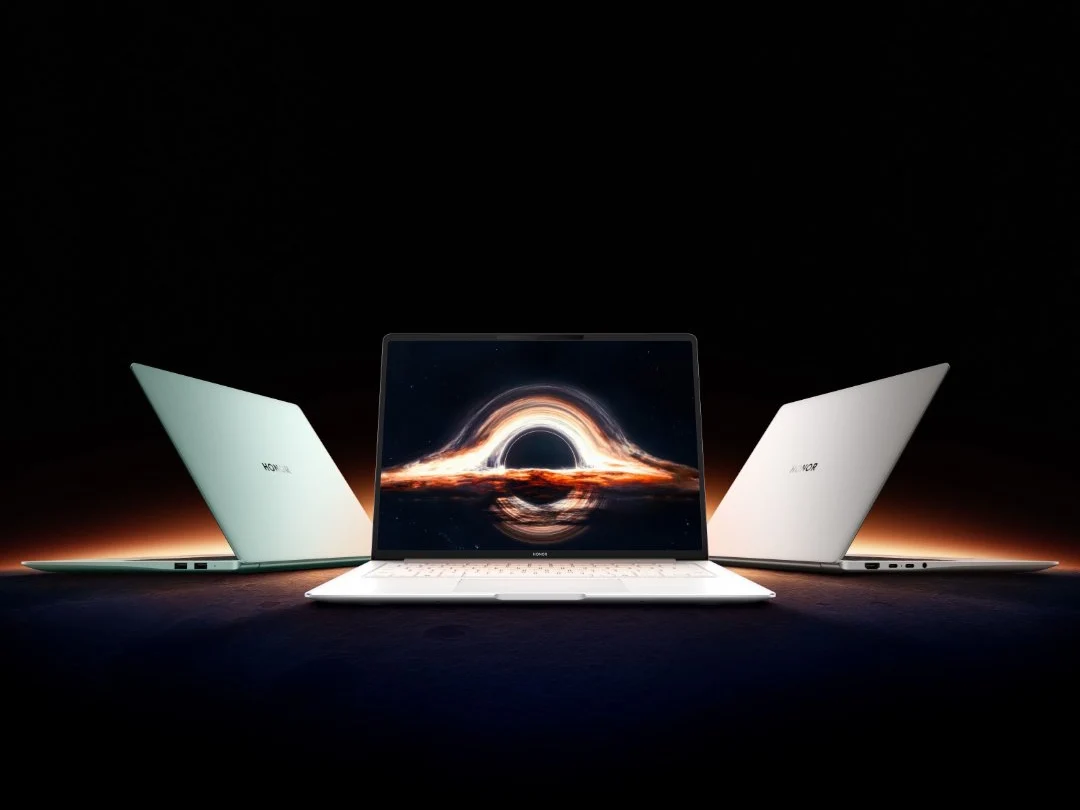
    Honor has made it official about when to expect its new premium notebook in China. The MagicBook Pro 14 is a sleek, lightweight laptop that promises top-notch specs and features. Here’s what we know so far about its anticipated specifications, launch date, and additional information.

    Launch Date of Honor MagicBook Pro 14

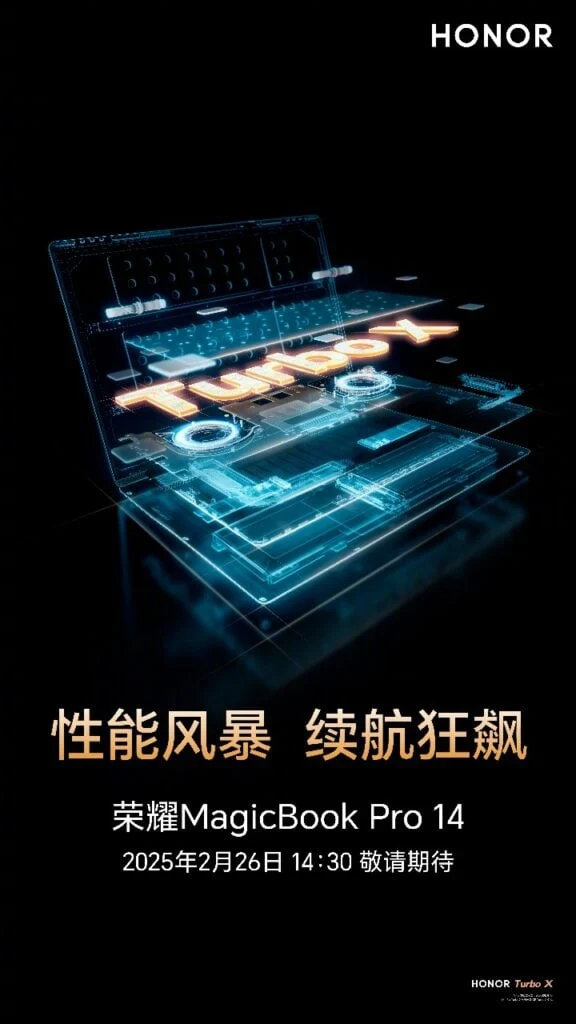
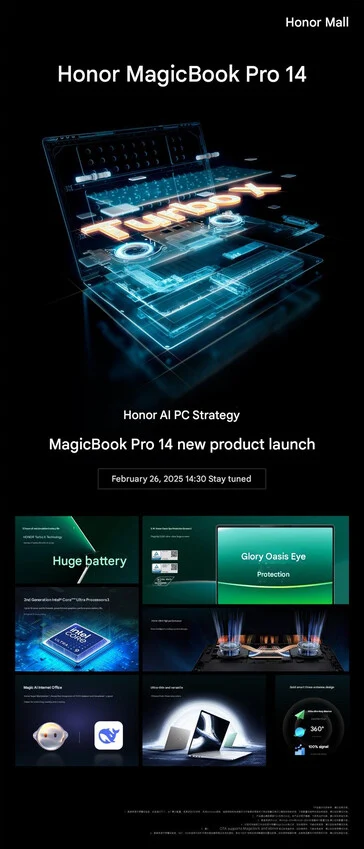
    The exciting news is that the MagicBook Pro 14 will be making its debut in Honor’s home country on February 26, 2025, at 2:30 PM local time. The promotional image highlights the laptop featuring Honor’s Turbo X technology. While the exact workings of this system are not fully disclosed yet, it is believed to enhance performance and improve battery longevity.

    Specifications and Features

    This information was confirmed by Lin Lin, who is the Vice President and Director of the Smart Life Business Department at Honor China. The teaser poster shared limited details apart from Turbo X and the launch date. However, based on the available information, the laptop will have a 14.6-inch OLED screen with a 3:2 aspect ratio, a 120Hz refresh rate, and a screen resolution of 3120×2080 (3K+), along with a peak brightness of 700 nits.

    Additional Insights

    Another teaser hinted at Honor’s Oasis Eye Protection technology. Lin Lin also recently posted a glimpse of the internal layout of the MagicBook Pro 14. It will come equipped with a dual fan cooling system and a D12 heat pipe, which are designed to enhance thermal management. Additionally, the laptop will offer dual 2280 hard disk slots for expanded storage options.

  • Honor Teases MagicBook Pro 14 with Intel Core Ultra 9 and OLED

    Honor Teases MagicBook Pro 14 with Intel Core Ultra 9 and OLED

    Key Takeaways

    1. Honor has announced the MagicBook Pro 14 laptop, distinct from Apple’s MacBook Pro 14.
    2. The laptop features an OLED screen with a 3.1K resolution and will use 2nd Generation Intel Core Ultra Processors.
    3. It includes a large battery, two M.2 2280 slots, and dual cooling fans.
    4. The MagicBook Pro 14 is expected to offer over 12 hours of battery life on a single charge.
    5. The official launch is set for February 26 at 06:30 (14:30 CST) in China, with no details on international availability yet.


    Honor has officially announced when its upcoming laptop will hit the market, just a day after its Vice President shared images of the device on Weibo. The laptop is named the MagicBook Pro 14, and it should not be mistaken for Apple’s MacBook Pro 14, which currently costs $1,439 on Amazon.

    Features and Design

    The images released yesterday showcased that the Honor MagicBook Pro 14 will come equipped with a sizable battery, along with two M.2 2280 slots and a pair of cooling fans. The initial teasers from Honor not only confirm these features but also provide some sneak peeks into the laptop’s specifications before its full announcement.

    Display and Processors

    One of the exciting features confirmed by Honor is that the MagicBook Pro 14 will have an OLED screen with a resolution of 3.1K. Additionally, the laptop will be powered by ‘2nd Generation Intel Core Ultra Processors.’ While this term is somewhat vague, Honor clarified that the CPUs will support up to 16 cores and 16 threads, indicating the laptop will utilize the Arrow Lake-H architecture.

    Battery Life and Launch Details

    In practical terms, Honor might equip the MagicBook Pro 14 with the Core Ultra 9 285H, which we recently evaluated in the newest Asus Zenbook Duo OLED. Honor claims that this new model will provide more than 12 hours of usage on a single charge, aligning with our findings from the Zenbook Duo OLED, which features a 75 Wh battery. The official launch of the MagicBook Pro 14 will take place on February 26 at 06:30 (14:30 CST) in China; however, there’s still no information available regarding an international release.

    Honor via @RODENT950

    Source:
    Link


  • Chuwi Launches AuBox Mini PC with AMD Ryzen 7 and 16GB RAM

    Chuwi Launches AuBox Mini PC with AMD Ryzen 7 and 16GB RAM

    Key Takeaways

    1. Powerful Processor: The AuBox miniPC features an AMD Ryzen 7 8745HS CPU with 8 cores and 16 threads, ideal for multitasking and gaming.

    2. Robust Graphics: It includes the AMD Radeon 780M GPU, supporting hardware ray tracing and providing strong integrated graphics performance.

    3. Multi-Monitor Support: The device can connect up to four 4K monitors simultaneously, with high refresh rates for immersive experiences.

    4. Upgrade Options: Users can expand RAM up to 64 GB and SSD storage up to 2 TB, ensuring long-term scalability.

    5. Extensive Connectivity: It offers multiple connectivity options, including dual 2.5G Ethernet, Wi-Fi 6, and a variety of USB ports, enhancing versatility for users.


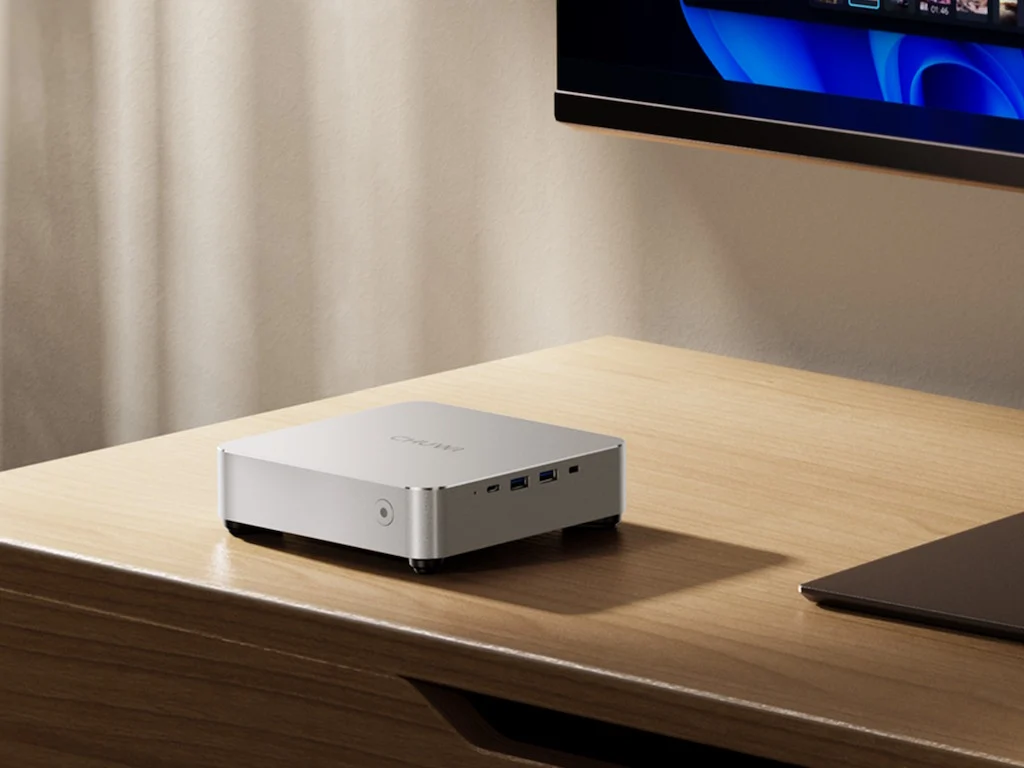
    Chuwi has revealed its new AuBox miniPC, which features a strong AMD Ryzen 7 8745HS CPU. This mid-range processor offers 8 cores and 16 threads, making it ideal for multitasking.

    Graphics and Memory

    The processor is paired with the AMD Radeon 780M GPU, which provides robust integrated graphics with 12 compute units and supports hardware ray tracing. The device includes 16 GB of DDR5 RAM along with a 512 GB PCIe SSD. Additionally, it has dual memory and SSD slots that allow for upgrades to a maximum of 64 GB of RAM and 2 TB of SSD storage.

    Cooling and Connectivity

    To ensure efficient operation, the miniPC comes with a 120-watt external power supply and an internal cooling fan, maintaining a thermal design power (TDP) of 65 watts—adequate for extended 3D rendering and gaming sessions. Gamers can connect over LAN through dual 2.5G Ethernet, Wi-Fi 6, and Bluetooth 5.1. There’s also a 3.5 mm headphone jack for those who prefer wired headphones, which generally offer lower latency compared to Bluetooth options.

    Display Capabilities

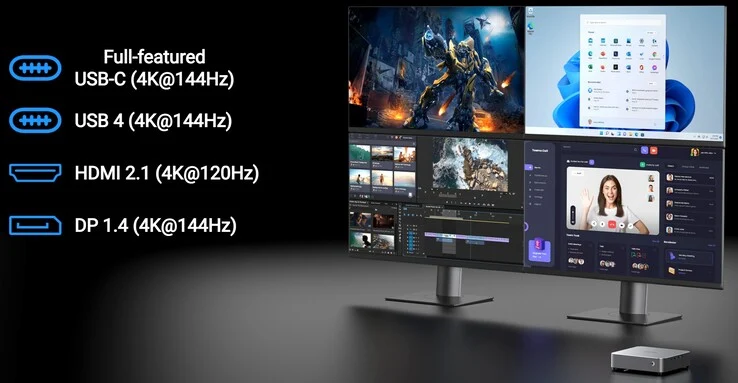
    The AuBox 8745HS can support as many as four external 4K monitors simultaneously through its two USB ports, one HDMI port, and one DisplayPort. All displays can operate at 144 Hz, except for the HDMI-connected monitor, which runs at 120 Hz. The aluminum casing of the AuBox can be discreetly mounted behind a monitor using a VESA mount. Its dimensions are 154 × 152 × 45 mm (6.1 x 6.0 x 1.8 in.) and it weighs 740 g (1.6 lbs.).

    Pricing and availability details have yet to be disclosed.

    CHUWI Introduces AuBox Mini PC with AMD Ryzen 7 8745HS

    News Released By Chuwi Innovations Ltd. February 17, 2025, 08:00 GMT

    The AuBox Mini PC is offered in various configurations, with the latest model featuring the AMD Ryzen 7 8745HS, 16GB DDR5 RAM, and a 512GB PCIe SSD.

    SHENZHEN, GUANGDONG, CHINA, February 17, 2025 /EINPresswire.com/ — CHUWI has launched the AuBox Mini PC, an advanced gaming mini PC tailored for both performance and flexibility. It comes in several configurations, with the latest model equipped with AMD Ryzen 7 8745HS, 16GB DDR5 RAM, and a 512GB PCIe SSD for remarkable speed and efficiency.

    Enhanced Processing Power

    The core of the AuBox Mini PC is its AMD Ryzen 7 8745HS processor, boasting 8 cores, 16 threads, and a maximum turbo frequency of 4.9GHz. Built on a 4nm process and featuring a 65W TDP with Zen 4 architecture, this device delivers outstanding multitasking abilities, gaming prowess, and content creation functionality with impressive responsiveness.

    Superior Graphics Performance

    Utilizing RDNA 3 architecture, the AMD Radeon 780M integrated GPU operates with 12 compute units and a core speed reaching 2,600 MHz, equaling entry-level dedicated graphics performance. It also supports hardware ray tracing, producing breathtaking visuals and realistic lighting effects.

    Multi-Monitor Support

    The AuBox 8745HS features USB 4, USB-C, HDMI, and DisplayPort, allowing users to connect up to four 4K displays at the same time. The USB 4, USB-C, and HDMI ports deliver ultra-smooth visuals at up to 4K@144Hz, making it ideal for gaming, productivity, and immersive multimedia experiences.

    Upgrade Possibilities

    Weighing only 740g and measuring 154 x 152 x 45mm, the AuBox Mini PC is compact and can be VESA-mounted, making it suitable for tidy setups. It supports RAM expansion up to 64GB and SSD expansion up to 2TB, ensuring it remains scalable and capable over time.

    Extensive Connectivity Options

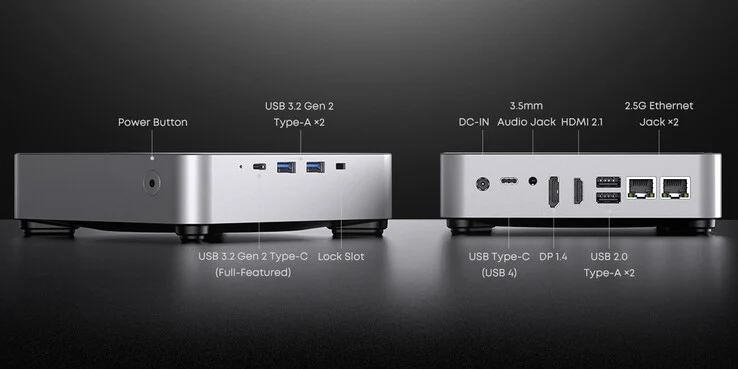
    For connectivity, this gaming mini PC includes a USB4 port with 40Gbps bandwidth, dual 2.5Gbps Ethernet ports, Wi-Fi 6, USB 3.2, DP 1.4, and HDMI. With 12 ports available, the new CHUWI compact powerhouse can fulfill all users’ needs.

    Pre-installed Software

    The AuBox Mini PC comes with Windows 11 Pro already installed, which provides enhanced security, virtualization features, and tools for enterprise productivity, offering a seamless experience right from the start.

    Specifications

    CPU: AMD Ryzen™ 7 8745HS (8 Cores, 16 Threads, 4 nm Process, up to 4.9 GHz)
    GPU: AMD Radeon™ 780M, supports hardware ray tracing
    Memory: 16GB DDR5 5600MHz (DDR5 Dual-channel SO-DIMM Slots, Expandable up to 64GB)
    Storage: 512GB PCIe SSD (2× M.2 2280 PCIe 4.0 SSD Slots, Expandable up to 2TB)
    Operating System: Windows 11 Pro
    I/O Ports:
    – 1× Full-featured USB 3.2 Gen 2 Type-C Port
    – 1× USB 4
    – 2× USB 3.2 Gen 2 Type-A Ports
    – 2× USB 2.0 Type-A Ports
    – 1× HDMI 2.1 Port
    – 1× DisplayPort 1.4 Port
    – 2× 2.5G LAN Jacks
    – 1× 3.5mm Audio Jack
    – 1× DC-In Jack
    Display Support:
    – Supports up to four displays simultaneously:
    – One display with up to 4K resolution at 144Hz over USB 4
    – One display with up to 4K resolution at 144Hz over USB-C
    – One display with up to 4K resolution at 144Hz over DisplayPort 1.4
    – One display with up to 4K resolution at 120Hz over HDMI 2.1
    Wireless Connectivity: Wi-Fi 6, Bluetooth 5.1
    Ethernet: Supports 2.5Gbps
    Power Adapter: 19V/6.32A, 120W Power Adapter
    Size: 154 × 152 × 45 mm
    Weight: Approx. 740g

    About CHUWI

    Founded in 2004, CHUWI is an international technology brand dedicated to providing innovative and high-quality electronic products at reasonable prices, making technology enjoyable and accessible for all. The company follows the motto “Smart Technology, Smart Life,” consistently innovating and striving to deliver users with unparalleled digital experiences at affordable prices. For more information about CHUWI and its product offerings, please visit www.chuwi.com.

    Source:
    Link


  • Lenovo ThinkBook Flip: The Must-Watch Foldable Laptop at MWC

    Lenovo ThinkBook Flip: The Must-Watch Foldable Laptop at MWC

    Key Takeaways

    1. Unique Design: The Lenovo ThinkBook Flip features a foldable OLED screen that doubles display height when fully opened, differentiating it from typical convertible laptops.

    2. Functional Operation: The device operates with one half of the screen in a traditional laptop orientation and the other facing outward, allowing for versatile viewing options and space-saving.

    3. Integrated Keyboard: Unlike other foldable models that require a separate keyboard, the ThinkBook Flip maintains a built-in keyboard, enhancing usability and convenience.

    4. Limited Ports: The laptop has a minimal port selection, likely including USB-C or USB-A ports, with a webcam housed in a notch at the top of the screen.

    5. Upcoming Specs: While specific specifications are not yet available, the ThinkBook Flip is expected to utilize Intel’s upcoming Arrow Lake-H or Lunar Lake processors, with potential AMD versions featuring Ryzen AI 7.


    MWC is a place where Lenovo often reveals its latest hardware advancements. This year is no exception. Thanks to a new leak from Evan Blass, we’re getting our first glimpse of what might be one of the most exciting laptops at the event: the Lenovo ThinkBook Flip.

    Unique Design Features

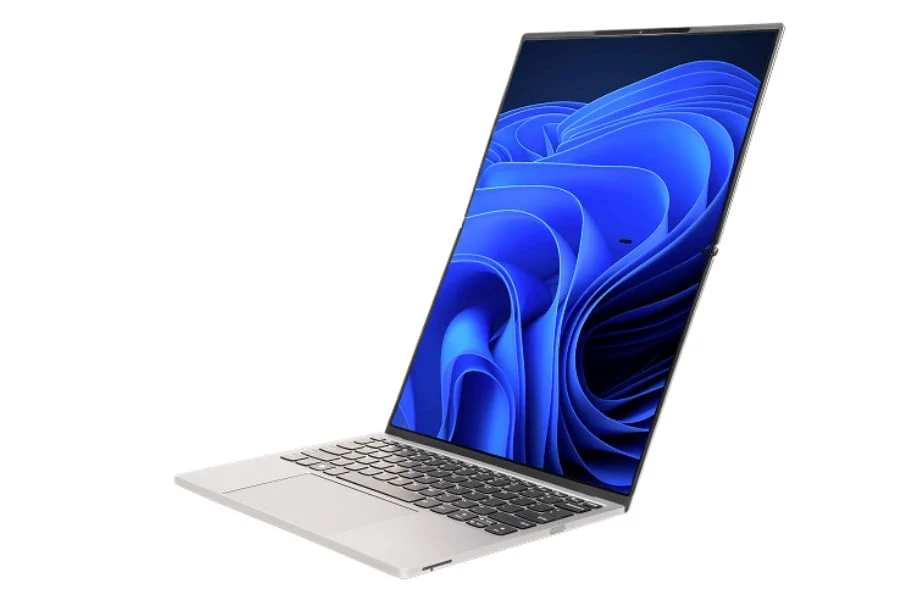
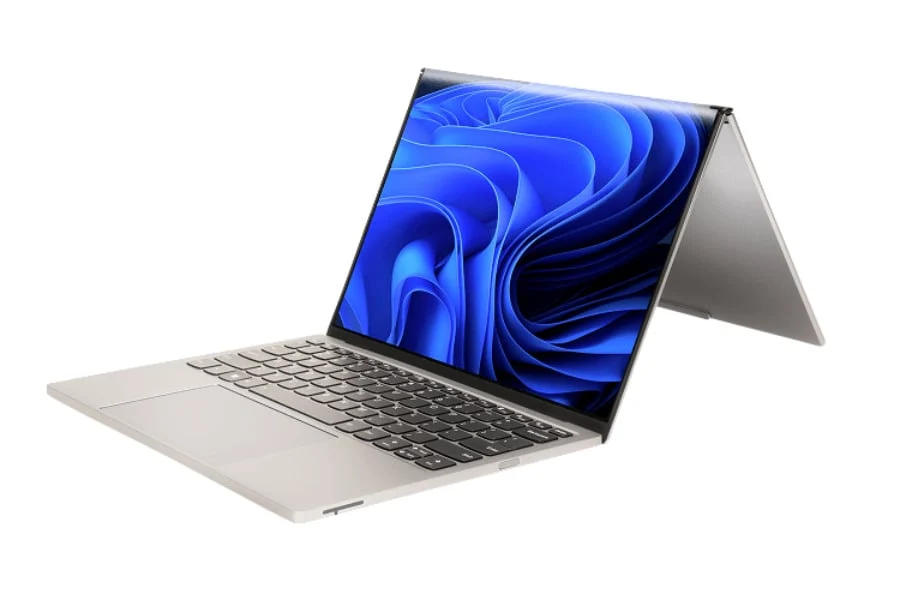
    The name itself suggests what sets this device apart. Unlike typical convertible laptops, the ThinkBook Flip is equipped with a foldable OLED screen that effectively doubles its display height when fully opened. Lenovo has been exploring foldable technology for some time now—the ThinkPad X1 Fold, for instance, was among the early foldable laptops introduced. However, that model leaned more towards a tablet design, whereas the ThinkBook Flip AI PC includes a built-in keyboard and a dual-hinge design, making it feel more like a classic notebook.

    A Functional Approach

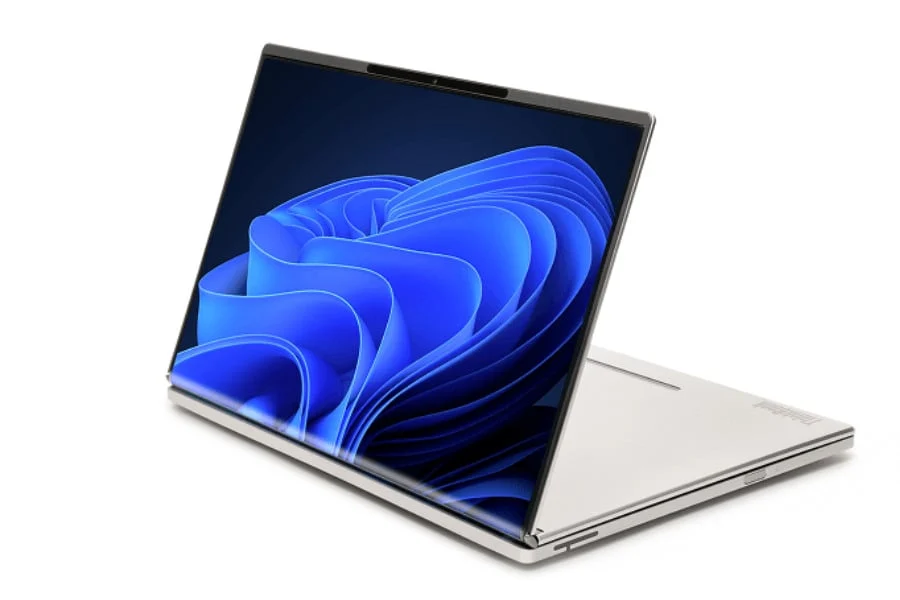
    Here’s how the device operates: when closed, the upper part of the display faces outward, resembling a tablet. Upon opening, one half of the screen is positioned in a traditional laptop orientation, while the other half faces away. By unfolding the top section of the display, it rises upward to offer an ultra-tall view for more screen area. If you wish to save space or share what’s on your screen, you can rotate the upper half to allow someone across from you to see.

    What really excites me is that the ThinkBook Flip keeps the keyboard intact, even with the added screen space. Unlike devices such as the ThinkBook X1 Fold or Asus ZenBook Duo, which have two separate screens connected by a hinge and fold like a book, those models require a wireless keyboard. While that’s one approach to creating a foldable laptop, it adds an extra piece of equipment to carry, and I personally dislike the whole keyboard-as-an-add-on idea. The design of the ThinkBook Flip feels more sensible.

    Minimal Port Selection

    The leaked images suggest that the port selection is limited. Each side of the laptop appears to have a pill-shaped indentation, likely for USB-C or USB-A ports. The webcam is located within a notch at the top of the screen. Although the images do not reveal a visible crease where the screen folds, it’s reasonable to expect that one will be present in the final model.

    Regarding specifications, no information is available yet. However, considering its design, the ThinkBook Flip will probably come with Intel’s upcoming Arrow Lake-H or Lunar Lake processors. If AMD versions are released, they will likely feature a Strix Point-based Ryzen AI 7 SKU.

    With MWC approaching quickly, we won’t have to wait long for more details. From what has been revealed thus far, the ThinkBook Flip could turn out to be one of Lenovo’s most fascinating ventures into foldable technology yet.


  • Honor MagicBook Pro 14 Teardown: Dual M.2 SSDs & Big Battery

    Honor MagicBook Pro 14 Teardown: Dual M.2 SSDs & Big Battery

    Key Takeaways

    1. Honor is set to launch a smaller version of the MagicBook Pro 16, a 14-inch model.
    2. The design will likely feature a white chassis, and the numeric keypad has been removed for space.
    3. The laptop will have two M.2 SSD slots for expandable storage, but RAM is not upgradeable.
    4. It will include two fans and a large heatsink, suggesting efficient cooling without a dedicated GPU.
    5. No information is yet available on pricing and availability for the MagicBook Pro 14.


    After the impressive performance of the MagicBook Pro 16 (2024) in our detailed review, which highlighted its excellent battery life and bright PWM-free IPS display, it seems that Honor is getting ready to unveil a smaller version of the laptop. The vice president of Honor China shared some images on Weibo, a popular Chinese social media platform.

    Design Features

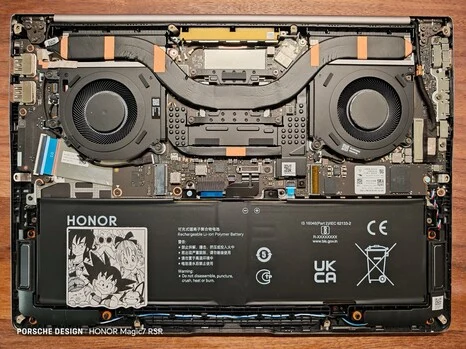
    One of the images reveals a glimpse of the chassis, indicating that the 14-inch model might come in white, just like the larger version. Interestingly, the numeric keypad has been entirely removed, probably due to limited space. On the right side, there are also two USB-A ports visible. Another image shows a look inside the laptop. Since this device is an older prototype from several months ago, some specifications may have changed since then. The battery appears to have a notably high capacity, but Honor has hidden additional details behind a “Dragon Ball” sticker.

    Storage and Memory

    It’s confirmed that the laptop will include two M.2 SSD slots, which will let users add extra storage after their purchase. On the other hand, the memory is not upgradeable since the RAM chips seem to be soldered directly to the motherboard. Honor has also outfitted the MagicBook Pro 14 with two fans and a large heatsink. The design implies that the laptop might not have a dedicated GPU, but it could still deliver decent gaming performance with a processor like the AMD Ryzen AI Max+ 395. However, based on the shape of the chip seen in the image, it is more likely that the laptop will use a modern Intel processor. As of now, there are no updates regarding the pricing and availability of the MagicBook Pro 14.

    Source:
    Link


  • Lenovo Yoga Slim 9i: Premium Laptop with Under-Panel Webcam Ships

    Lenovo Yoga Slim 9i: Premium Laptop with Under-Panel Webcam Ships

    Key Takeaways

    1. Lenovo has started global shipping of the Yoga Slim 9i, powered by Intel’s Lunar Lake platform.
    2. The device features a 32 MP under-panel webcam and boasts a 98% screen-to-body ratio with a nearly borderless 14-inch OLED display.
    3. The display has a 4K native resolution, a 120 Hz refresh rate, and peak brightness of 600 nits.
    4. It includes a 75 Wh battery, offering up to 17 hours of usage with Core Ultra 7 processors.
    5. The Yoga Slim 9i is lightweight at 1.25 kg and features Thunderbolt 4 ports.


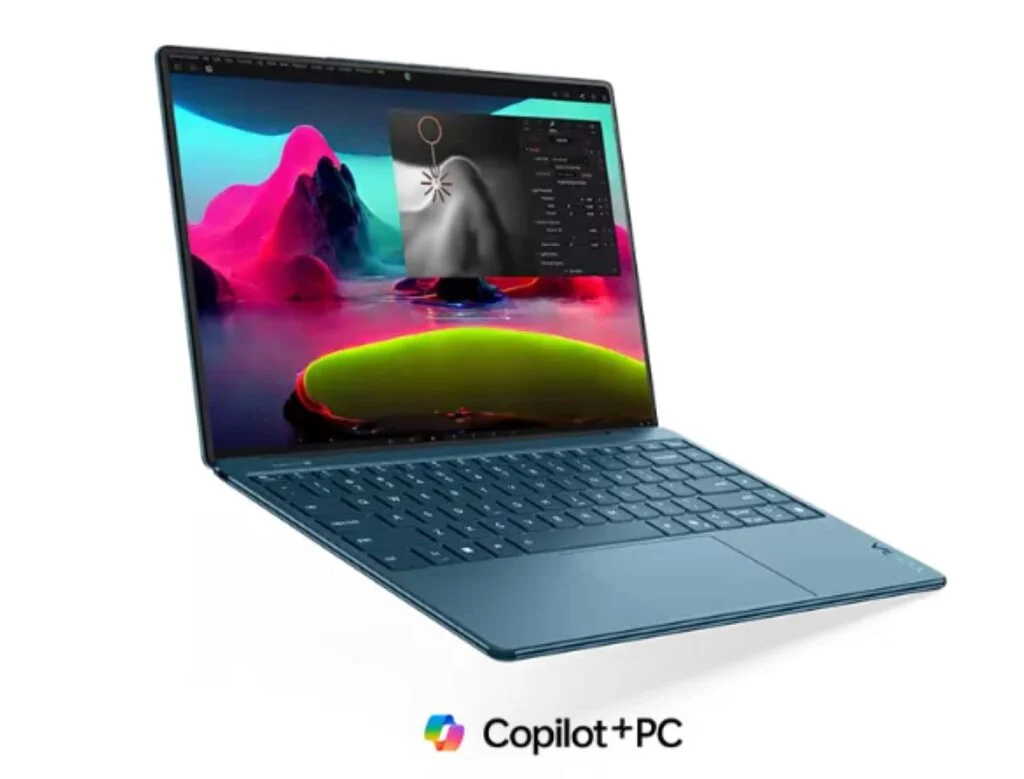
    Lenovo has kicked off the global shipping of the Yoga Slim 9i, just a bit over a month after it was first showcased at CES 2025 in Las Vegas. To summarize, the Yoga Slim 9i is built on Intel’s Lunar Lake platform, similar to the Yoga Slim 7i Aura Edition (current price: $1,199.99 on Amazon). One of its standout features is the under-panel 32 MP webcam, which contributes to an impressive 98% screen-to-body ratio.

    Almost Borderless Display

    Because of this design, the Yoga Slim 9i delivers a nearly borderless visual experience on its 14-inch OLED screen. For context, this display has a 16:10 aspect ratio and can output at a native resolution of 4K, with a refresh rate of 120 Hz and peak brightness of 600 nits. Lenovo has also packed a 75 Wh battery into the Yoga Slim 9i, claiming it can provide up to 17 hours of use when paired with either the Core Ultra 7 256V or Core Ultra 7 258V processors.

    Lightweight with Great Features

    Incredibly, Lenovo has managed to fit all of this technology into a lightweight 1.25 kg chassis, which also includes Thunderbolt 4 ports. As of now, the Slim 7i is priced at $1,759.99, featuring 1 TB of storage and a Core Ultra 7 256V processor paired with 16 GB of LPDDR5X-8533 RAM. In comparison, this same configuration is available for £1,800 in the UK and €2,199 in the Eurozone. For more technical specifications and links to regional stores, refer to our original launch article.

    You can find Lenovo products at Lenovo Germany, Lenovo UK, and Lenovo US, as noted by Liliputing.

    Source:
    Link
  • Lenovo Launches Yoga Slim 9i: Thinnest 4K OLED Laptop Yet

    Lenovo Launches Yoga Slim 9i: Thinnest 4K OLED Laptop Yet

    Key Takeaways

    1. The Lenovo Yoga Slim 9i features a 14-inch 4K OLED display with a 98% screen-to-body ratio and a 120Hz refresh rate.
    2. It is powered by Intel’s Lunar Lake platform and offers options for Core Ultra 7 processors with AI enhancements.
    3. The laptop boasts a 32 MP under-display webcam and is TÜV Low Blue Light certified for eye comfort.
    4. Weighing only 1.25kg, it has a 75Wh battery that provides up to 17 hours of battery life.
    5. Pricing starts at $1,759.99 in the U.S., £1,800 in the UK, and €2,199 in Europe.


    Lenovo has begun shipping the Yoga Slim 9i around the globe after its introduction at CES 2025. This high-end 14-inch OLED laptop is built on Intel’s Lunar Lake platform and includes a 32 MP under-display webcam, providing an impressive 98% screen-to-body ratio for a nearly edge-to-edge viewing experience.

    Key Specs and Performance

    The Yoga Slim 9i features a stunning 4K OLED PureSight Pro screen with a refresh rate of 120Hz, peak brightness of 600 nits, and Delta E<1 for color precision. It covers 100% of sRGB, P3, and Adobe RGB color spaces and is TÜV Low Blue Light certified. The display is safeguarded by impact-resistant glass, which helps avoid scratches and damage from pressure.

    Equipped with Intel Core Ultra 7 256V or 258V processors, the Yoga Slim 9i comes with a 48 TOPS NPU for AI enhancements in creative tasks and optimizing battery life. Lenovo asserts that the device can last up to 17 hours on a single charge with its 75Wh battery. Remarkably, it only weighs 1.25kg. It also includes two Thunderbolt 4 ports, boosting connectivity for professionals.

    Pricing and Availability

    The starting price for the Yoga Slim 9i is $1,759.99 in the United States, while in the UK, the same model is priced at £1,800 and €2,199 in Europe.

    Asus has introduced the ZenBook 14 Air Snapdragon Edition, which is now available for pre-order on JD.com in China, with official sales kicking off on February 14th. Weighing in at just 960g, this exceptionally light laptop is driven by a Qualcomm Snapdragon X processor and boasts a robust ceramic aluminum construction.


  • SanDisk Plans 1-Petabyte SSD, Release Date Uncertain

    SanDisk Plans 1-Petabyte SSD, Release Date Uncertain

    Key Takeaways

    1. SanDisk plans to develop solid-state drives (SSDs) with capacities up to 1 petabyte (1PB) using UltraQLC technology.
    2. UltraQLC integrates Kioxia’s BICS 8 3D QLC NAND memory with a proprietary controller featuring 64 NAND channels for improved performance.
    3. The controller includes hardware accelerators that enhance storage functions, resulting in lower latency and higher reliability.
    4. Initial UltraQLC SSDs will use 2-terabit NAND memory chips, enabling capacities up to 128TB, with future plans for 256TB, 512TB, and 1PB.
    5. SanDisk emphasizes the design’s focus on density, performance, and power efficiency to meet modern data infrastructure needs.


    At a recent Investor Day, SanDisk shared its grand plans to create solid-state drives (SSDs) with astonishing capacities reaching up to 1 petabyte (1PB = 1,024TB). These innovative drives will utilize the company’s cutting-edge UltraQLC technology. Although they provided an exciting overview of these high-capacity drives, SanDisk didn’t mention when we can expect to see them on the market.

    Details on UltraQLC

    UltraQLC isn’t exactly a new type of memory. Instead, it’s an integrated platform that merges Kioxia’s BICS 8 3D QLC NAND memory with a state-of-the-art proprietary controller that boasts an impressive 64 NAND channels and tailored firmware.

    The controller plays a crucial role in the system’s performance. It is equipped with domain-specific hardware accelerators that take over essential storage functions usually performed by firmware. This setup leads to lowered latency, heightened throughput, and enhanced reliability in hyperscale storage settings. Moreover, the controller smartly adapts the SSD’s power usage based on the demands of the workload, which helps in maintaining energy efficiency. An advanced bus multiplexer further aids the system by handling the large data flow from the dense 3D QLC NAND memory stacks, ensuring all channels are effectively used without any drop in performance.

    Insights from SanDisk’s Leadership

    UltraQLC is specially designed based on our years of experience and what we’ve learned lately to be effectively used in modern data infrastructures without sacrificing density, performance, and power efficiency. The design centers on three main aspects: BICS 8 NAND technology and future NAND advancements, customized controllers, and superior system design, explains Khurram Ismail, the new Chief of Engineering and Product Management at SanDisk.

    At first, SanDisk’s UltraQLC SSDs will use 2-terabit (2Tb) NAND memory chips, allowing for capacities up to 128TB. While the 64-channel controller is capable of supporting even larger capacities, pushing it too far might affect performance. Looking into the future, SanDisk expects to create higher-capacity NAND devices, paving the way for SSDs that can reach 256TB, 512TB, and ultimately the ambitious goal of 1PB in the upcoming years.

    Source:
    Link