Category: Computers

  • Lenovo ThinkPad E14 Gen 6 Needs Better Quality Screens

    Lenovo ThinkPad E14 Gen 6 Needs Better Quality Screens

    Key Takeaways

    1. Target Audience: Lenovo ThinkPad laptops are primarily purchased by large companies for employee use, while the E series targets small and medium businesses.

    2. Screen Quality Concerns: Large corporations often overlook screen quality since employees use external monitors, but this is more critical for smaller businesses and freelancers.

    3. Budget Constraints: Basic models like the ThinkPad E series are affected by budget-friendly screen choices, resulting in low-quality displays that lack vibrant colors.

    4. Potential for Improvement: The cost difference for better screens is minimal for small orders, suggesting that Lenovo should enhance screen quality to better serve small business clients.

    5. Overall Experience: Improving screen quality in the E series could significantly enhance the user experience for small businesses and individuals, making the laptops more appealing.


    Who purchases Lenovo ThinkPad laptops? Mostly, the answer is: Large companies. For these clients, who provide these devices to their employees for work purposes, the quality of the screen may not be a major concern, especially if the laptops are usually linked to an external monitor. Thus, as unfortunate as it is, budget-friendly screen choices keep affecting the basic models of business laptop lines, such as the ThinkPads or HP’s EliteBook range, due to financial reasons.

    Target Audience of the E Series

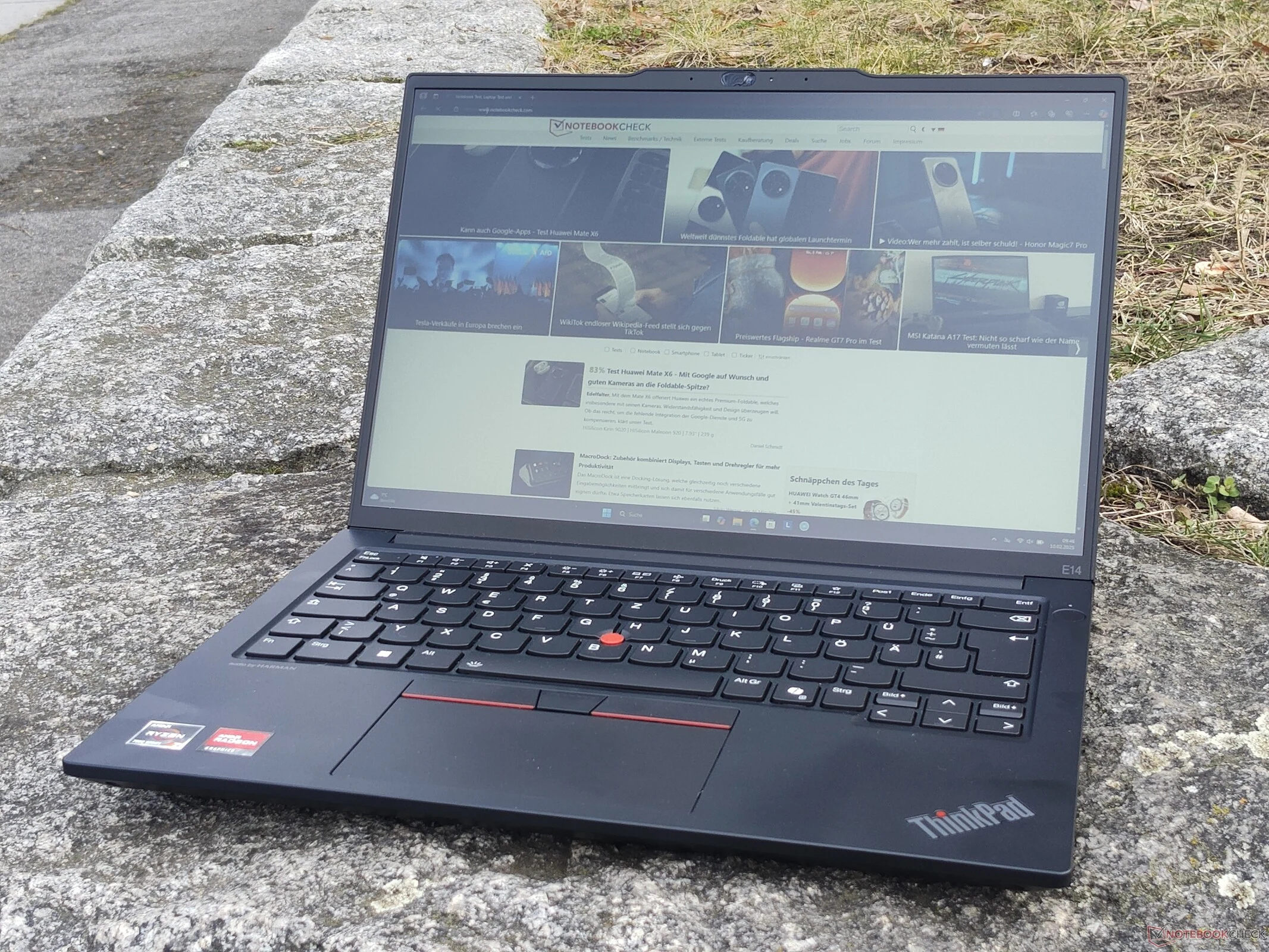
    When discussing “basic models,” the Lenovo ThinkPad E series perfectly fits this description. However, it’s crucial to note that this series stands apart from other ThinkPads in an essential way: It doesn’t aim at large enterprise clients. Instead, Lenovo markets devices like the Lenovo ThinkPad E14 Gen 6 AMD (available from Amazon), which we recently reviewed, as “laptops for small and medium businesses,” designed for freelancers and smaller firms.

    Importance of Screen Quality

    In these situations, the quality of the screen generally holds more significance compared to large corporations, as external monitors are less common, and individual users often place a higher value on screen clarity. Despite this, the E series remains burdened with the same disappointing and low-quality screens that only cover a narrow color range, leading to lifeless, muted, and inaccurate colors.

    From discussions with OEMs, we understand that screens with improved color ranges aren’t significantly more expensive. The cost difference is noticeable when ordering thousands of laptops, but for a purchase of just five, it hardly matters. Therefore, we believe Lenovo ought to cease providing the E series with screens incapable of displaying the sRGB color range—small business clients, students, and others looking for an economical ThinkPad laptop truly deserve superior options, and they would likely find the E series much more appealing if the screen quality were enhanced.

    Conclusion

    In summary, the Lenovo ThinkPad E14 Gen 6 AMD has a lot of potentials, but the screen quality drags it down. By addressing this issue, Lenovo could greatly improve the experience for small businesses and individual users alike.

    Source:
    Link
  • LincStation S1: Compact NAS with Dual 2.5G and 112TB Storage

    LincStation S1: Compact NAS with Dual 2.5G and 112TB Storage

    Key Takeaways

    1. LincStation S1 NAS features an Intel N97 ‘Alder Lake-N’ processor with four cores and four threads for solid performance.
    2. It supports up to four 2.5-inch SATA drives and dual M.2 2280 NVMe slots, offering a total of 112 TB of raw storage.
    3. The S1 runs on Unraid OS and includes a starter license, but does not support 10 G networking, only offering dual 2.5 G.
    4. It comes with 128 GB of eMMC storage for the OS and 8 GB of DDR5 memory, along with multiple USB port options.
    5. Early backers on Kickstarter can receive a 30% discount off the retail price of $610, but should be aware of crowdfunding risks.


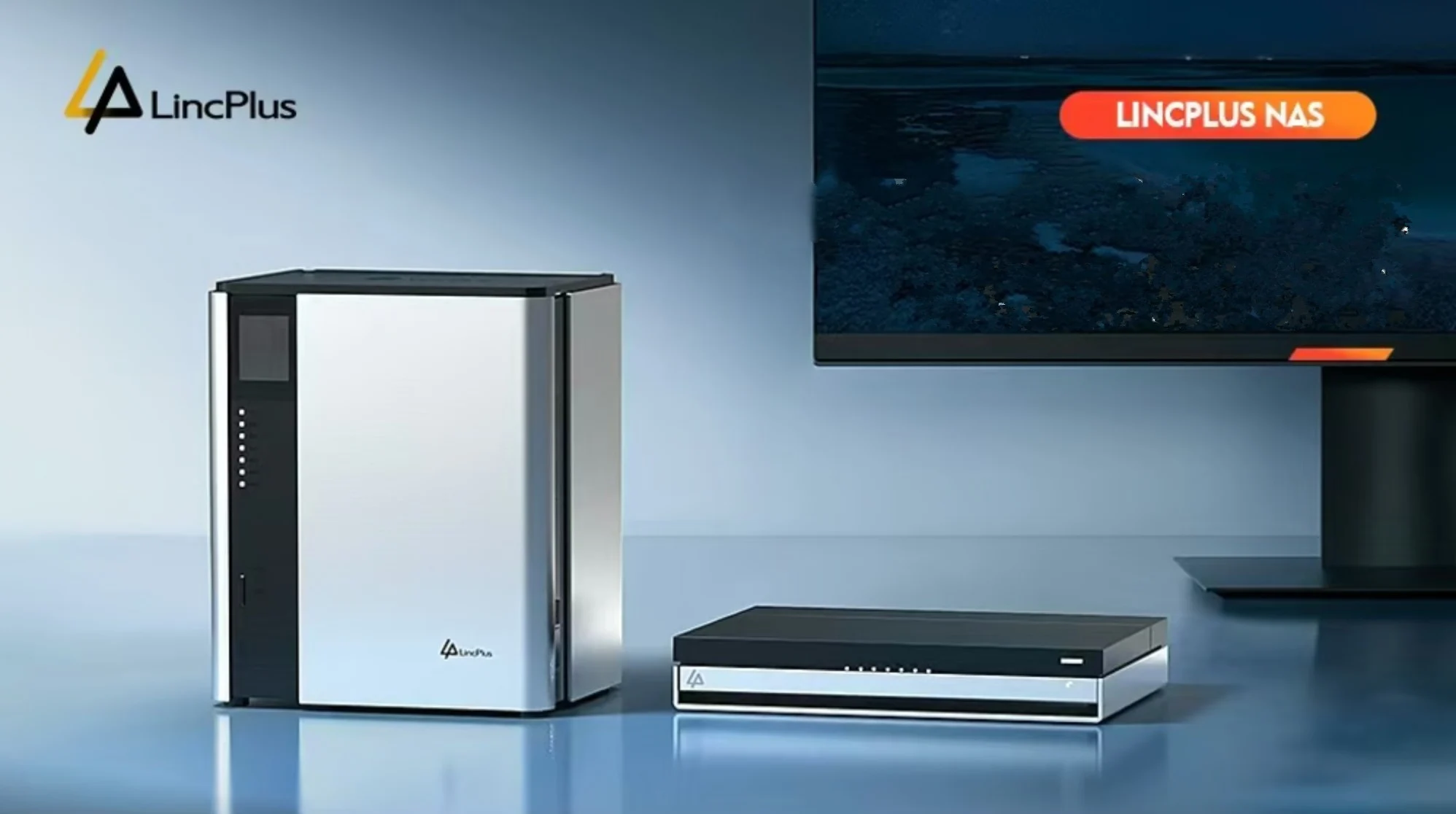
    LincStation has introduced a new NAS (Network-Attached Storage) called the S1. Although it’s not yet in the crowdfunding phase, it has been showcased on KickStarter. On paper, the S1 seems to have solid specifications. The retail price for the S1 NAS is set at $610, but early supporters on Kickstarter can enjoy a 30% discount.

    Core Features and Performance

    The LincStation S1 is driven by the Intel N97 ‘Alder Lake-N’ processor, featuring four cores and four threads. This setup should provide satisfactory performance for the system’s needs. Storage is, of course, a key feature for any NAS, and the S1 does not disappoint. It can accommodate four 2.5-inch drives (SATA 3.0) and has dual M.2 2280 slots (NVMe), totalling a possible 112 TB of raw storage. Actual usable space may vary depending on the parity configuration.

    Operating System and Connectivity

    This system runs on the well-known Unraid OS, and LincStation includes a starter license with each unit. However, the S1 does not offer 10 G networking—it instead comes with dual 2.5 G. For users who primarily need the S1 for archival purposes, the absence of 10G networking likely won’t be a major issue. The S1 NAS has 128 GB of eMMC storage dedicated to the OS and other utilities, along with 8 GB of DDR5 memory. The port options are quite good, featuring dual USB 3.2 Gen 2 Type-A, Type-C, and USB 2.0 Type-A ports.

    Considerations for Backers

    As with all crowdfunding ventures, it’s important for potential backers to be cautious and aware of the risks before supporting the project. For those who don’t want to wait for the campaign to kick off, they might find the 4-bay Ugreen NASync DXP4800 NAS, which is available for $700 on Amazon, to be a better choice.

    Source:
    Link

  • Satechi 13-in-1 USB-C Adapter: Triple 4K Display for Mac & PC

    Satechi 13-in-1 USB-C Adapter: Triple 4K Display for Mac & PC

    Key Takeaways

    1. Compatibility: Works with both Mac and Windows systems, supporting SST for MacOS and MST for Windows.
    2. Display Capabilities: Allows connection of up to three monitors, supporting 4K resolution at 60 Hz via DisplayPort and up to 8K resolution for Windows users.
    3. Variety of Ports: Includes multiple USB-A and USB-C ports, a Gigabit LAN port, and a headphone jack.
    4. Data Transfer and Power Delivery: Offers data transfer speeds up to 10 Gbit/s and power delivery of 85 W through USB-C PD ports.
    5. Pricing: Available for $99.99 directly from the manufacturer.


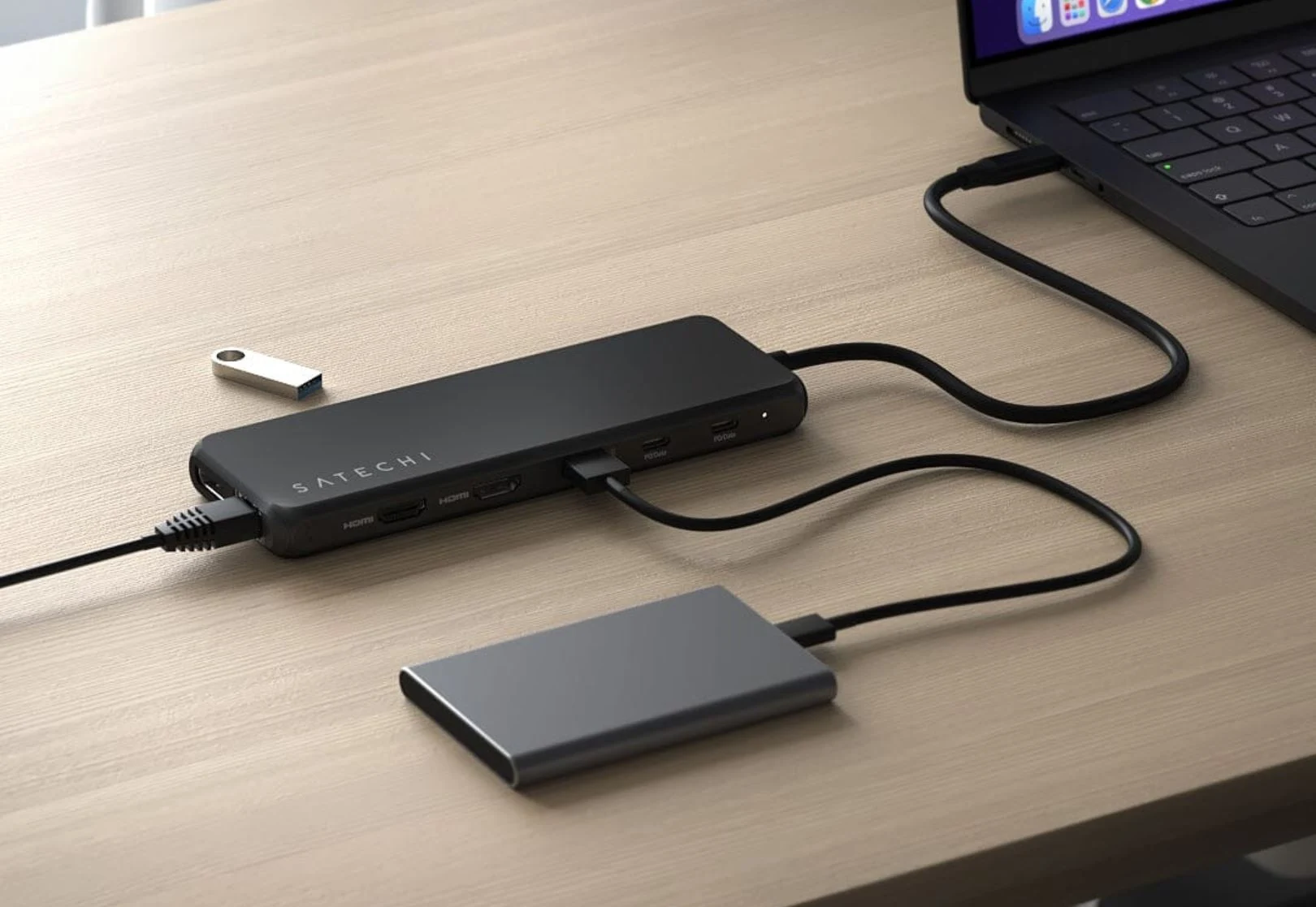
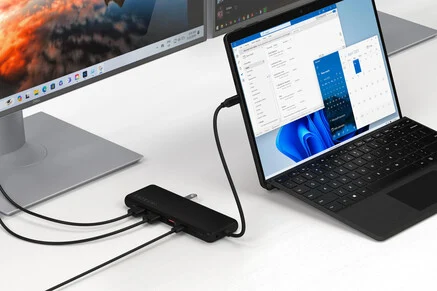
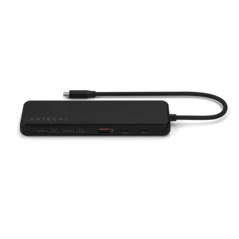
    Satechi has recently launched a new USB-C hub called the Satechi 13-in-1 USB-C Triple Display Multiport Adapter. This adapter serves as a comprehensive solution for enhancing the connectivity of notebooks and other devices.

    Compatibility and Versatility

    The Satechi 13-in-1 USB-C Triple Display Multiport Adapter works with both Mac and Windows systems. It offers single-stream transport (SST) for MacOS, as well as multi-stream transport (MST) for Windows, making it a highly adaptable option. The main purpose of this adapter is to expand display capabilities, allowing users to connect up to three monitors. It supports 4K resolution at 60 Hz through one DisplayPort 1.4 port and 4K at 30 Hz through two HDMI 2.0 ports. Additionally, Windows users can achieve up to 8K resolution using the DisplayPort.

    Connectivity Options

    In terms of connectivity, the Satechi 13-in-1 USB-C Triple Display Multiport Adapter has a variety of options. Its sleek black aluminum casing includes one USB-A 3.1 port, three USB-A 3.0 ports, and two USB-A 2.0 ports. There are also two USB-C PD ports that can transfer data at up to 10 Gbit/s and deliver 85 W of power, along with one USB-C 3.2 port. Furthermore, it features one Gigabit LAN port as well as a 3.5 mm headphone jack.

    Pricing and Availability

    You can currently purchase the Satechi 13-in-1 USB-C Triple Display Multiport Adapter directly from the manufacturer for $99.99. This device offers a robust solution for anyone looking to expand their connectivity options.

    Source:
    Link


  • Ryzen 9 9950X3D and Core Ultra 9 275HX Review Release Date Leak

    Ryzen 9 9950X3D and Core Ultra 9 275HX Review Release Date Leak

    Key Takeaways

    1. The Ryzen 9 9950X3D and Ryzen 9 9900X3D are set to debut on Geekbench, with a review embargo planned for March 11.
    2. The Ryzen 9 9900X3D is expected to be revealed alongside the 9950X3D.
    3. Intel’s Core Ultra 275HX review embargo is scheduled for March 12, competing against AMD’s new CPUs.
    4. The launch of the Radeon RX 9070 XT and RX 9070 coincides with the Ryzen CPUs’ release, benefiting AMD PC builders.
    5. Many gaming laptops are anticipated to use new AMD CPUs paired with the upcoming GeForce RTX 50 series GPUs, available for pre-order starting February 25.


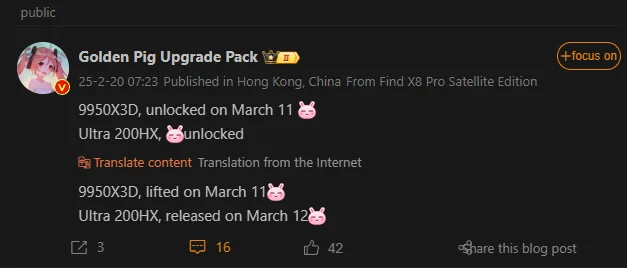
    The Ryzen 9 9950X3D and Ryzen 9 9900X3D have finally made their appearance on Geekbench as of yesterday. Prior to this, Intel’s Core Ultra 275HX had gained attention on PassMark by reaching the top of the leaderboard, but the Arrow Lake-HX CPU didn’t manage to achieve the same level of success on Cinebench. Recently, a leak from Weibo has provided insight into when we might see these CPUs in action.

    Release Dates Revealed

    According to Golden Pig Upgrade Pack, a trusted leaker on Weibo, the review embargo for the Ryzen 9 9950X3D is planned for March 11. The Ryzen 9 9900X3D is expected to be showcased alongside it. If this information holds true, the CPUs should become available shortly after that date. For those interested in constructing an all-AMD PC, this timing is quite favorable, as it coincides with the launch of the Radeon RX 9070 XT and RX 9070.

    Intel’s Next Moves

    Moving on, the review embargo for the high-end Intel Arrow Lake-based Core Ultra 9 275HX is scheduled for March 12, just one day after the big Zen 5 announcement. This new CPU will compete against AMD’s Ryzen 9 9955HX3D, Ryzen 9 9955HX, and Ryzen 9 9850HX. However, there is currently no information on when the reviews for these AMD processors will be released. Regardless, many gaming laptops are expected to pair one of these CPUs with a GeForce RTX 50 series laptop GPU, which will be available for pre-order starting February 25.

    Source:
    Link


  • Microsoft Unveils Majorana 1: A Breakthrough Quantum Processor

    Microsoft Unveils Majorana 1: A Breakthrough Quantum Processor

    Key Takeaways

    1. Microsoft has introduced a new quantum processor called “Majorana 1,” utilizing topological qubits for potential advancements in scalable quantum computing.

    2. Majorana 1 employs a novel material, a “topoconductor,” to create a unique state of matter that enhances qubit stability and resistance to disruptions.

    3. The current prototype of Majorana 1 has only eight qubits, much fewer than competitors like IBM and Google, highlighting the early stage of development.

    4. Transitioning from prototype to practical application will require extensive testing and validation of Microsoft’s claims, emphasizing the need for cautious optimism.

    5. If successful, Microsoft’s strategy could address scalability challenges in quantum computing through enhanced stability and a structured approach to error correction.


    Microsoft has recently unveiled its new quantum processor called “Majorana 1,” which has sparked a lot of excitement within the technology sector. The company asserts that this innovative chip, which utilizes a “topological qubit,” signifies a notable advancement towards achieving scalable and practical quantum computing. Microsoft suggests that Majorana 1 may pave the way for the creation of a single chip capable of housing a million qubits—an objective that has been seen as a far-off dream for some time.

    New Material Innovations

    This breakthrough is especially fascinating since Majorana 1 incorporates a novel substance referred to as a “topoconductor” to establish a unique state of matter that supports topological qubits. These qubits, derived from Majorana particles, are believed to exhibit greater stability and resistance to environmental disruptions, which have posed significant hurdles in current quantum computing designs. If these assertions are validated, enhanced stability could facilitate the increase in qubit quantities and achieve fault tolerance, a vital necessity for practical quantum applications.

    Cautious Optimism Required

    Nevertheless, while the announcement is exciting, it is crucial to remain realistic about expectations. The existing prototype of Majorana 1 consists of merely eight qubits—significantly less than the quantum processors produced by IBM and Google, which already incorporate hundreds or even thousands of qubits using different technologies. Although Microsoft’s aspiration of a million-qubit chip is indeed ambitious, it is essential to recognize that this represents the early stages of development rather than a polished final product.

    Path to Practical Use

    Transforming a prototype into a usable application is a challenging and lengthy endeavor. Validating Microsoft’s claims will necessitate comprehensive testing, and the capabilities of Majorana 1 must be showcased through concrete benchmarks and practical assessments. The history of quantum computing is rife with instances where overzealous predictions failed to materialize, underscoring the importance of approaching such announcements with caution and prioritizing verifiable outcomes.

    That being said, if Microsoft’s strategy proves effective, it could greatly influence the field. The advantages in stability and error correction provided by topological qubits might help resolve longstanding scalability challenges in quantum computing. Microsoft’s strategic plan, which features a “tetron” architecture along with gradual scaling methods, presents a well-structured route toward achieving error detection and ultimately, fault-tolerant quantum computing.

    Source:
    Link

  • Advantech UBX-330M: Compact Mini PC with Intel Meteor Lake Processors

    Advantech UBX-330M: Compact Mini PC with Intel Meteor Lake Processors

    Key Takeaways

    1. Advantech launched the UBX-330M mini PC, designed for industrial applications and enhancing intelligent city services.
    2. It features Intel’s Meteor Lake-H and Meteor Lake-U processors, with options for Core Ultra 5 and Core Ultra 7 configurations.
    3. The UBX-330M supports up to 48 GB of DDR5 RAM and offers multiple storage options, including an M.2 slot and a 2.5-inch bay.
    4. Connectivity includes dual USB 3.2 Gen 2, 2.5G LAN, USB-C, HDMI 2.1, and expansion options for RS232 and 4G/5G SIM connectivity.
    5. Its compact size (125 x 125 x 58.25 mm) makes it suitable for light to moderate tasks, but it lacks discrete graphics capabilities.


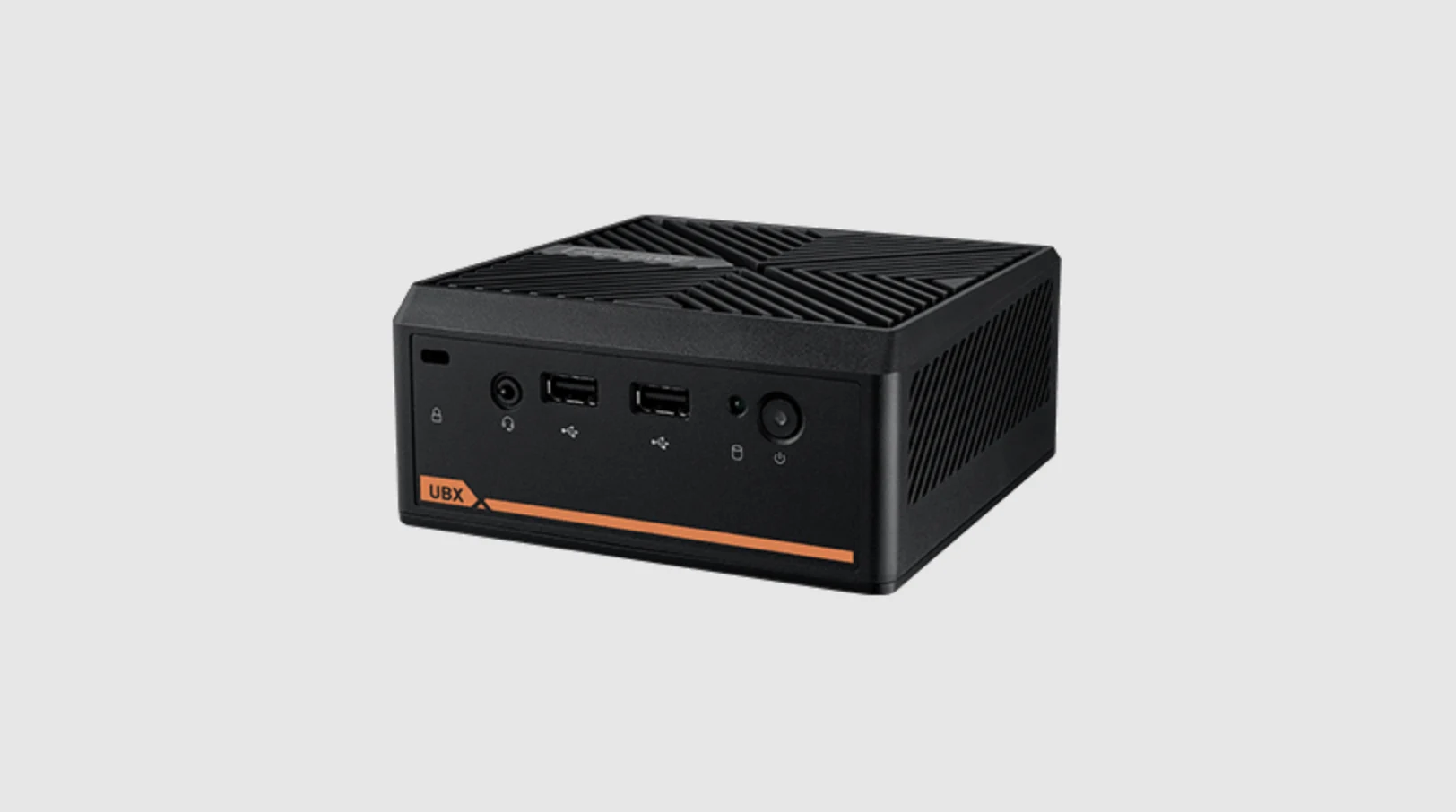
    A new mini PC has been launched by Advantech, called the UBX-330M. This device, as its name suggests, seems to be aimed at industrial applications, with Advantech asserting that it is built to “enhance intelligent city services.” This mini PC is driven by Intel’s Meteor Lake-H and Meteor Lake-U processors, promising solid performance, and it’s already up for grabs.

    Specifications and Performance

    The UBX-330M can be outfitted with several processors: the 28-watt Core Ultra 5 125H, the 15-watt Core Ultra 5 135U, or the 15-watt Core Ultra 7 155U. The most powerful option is obviosly the 28-watt Core Ultra 5 125H, which features 14 cores and 18 threads, along with a strong Intel Arc 7-core integrated GPU. Nevertheless, all configurations are expected to manage light to moderate tasks quite well without much trouble.

    Memory and Storage

    This system includes a single SODIMM slot that supports up to 48 GB of DDR5 RAM. For storage options, an M.2 2280 slot is available, along with a 2.5-inch bay, which is suitable given the intended audience for the UBX-330M. Its compact dimensions of 125 x 125 x 58.25 mm make it quite small, and it doesn’t have space for discrete graphics, which isn’t a major concern since the mini PC isn’t designed for heavy graphics processing.

    Connectivity Options

    The Advantech UBX-330M comes equipped with a variety of ports, including dual USB 3.2 Gen 2, a 2.5G LAN port, USB-C, HDMI 2.1, an audio combo port, and dual USB 2.0 ports. There are also expansion modules that include RS232 serial ports for communication, along with one that has a SIM slot for 4G/5G connectivity. Given the industrial focus of this mini PC, everyday users might find better value in alternatives like the Beelink SER8, which is currently priced at $499 on Amazon.

    Source:
    Link


  • Aoostar WTR Pro NAS CPU Upgrade: Now Functions as Mini PC

    Aoostar WTR Pro NAS CPU Upgrade: Now Functions as Mini PC

    Key Takeaways

    1. The Aoostar WTR Pro NAS now features Intel processors, specifically the N150 and N100.
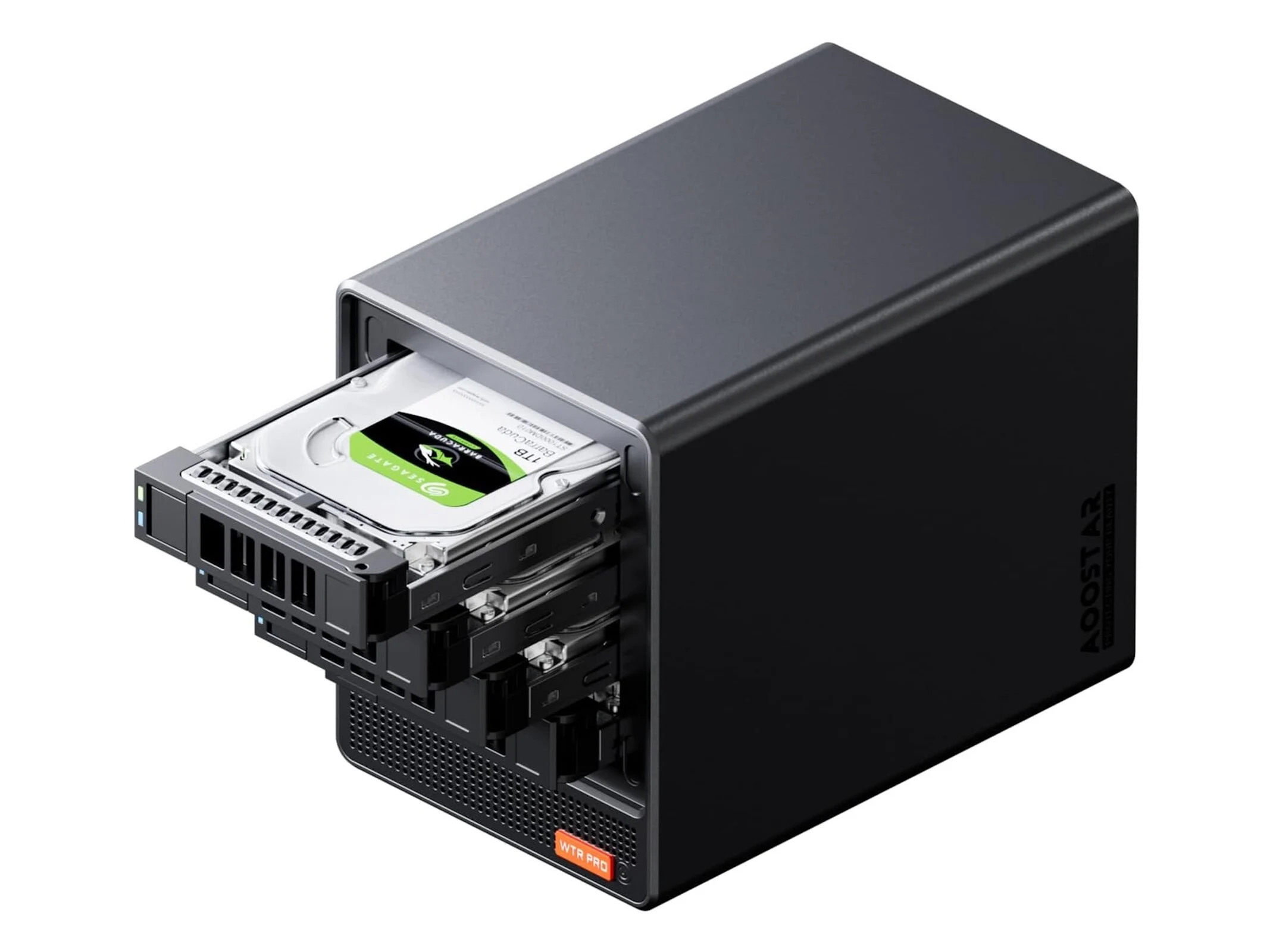
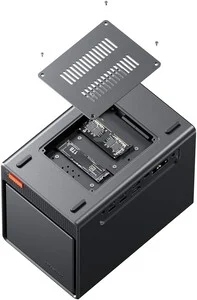
    2. The device can hold up to five storage devices: one M.2 2280 SSD and four SATA HDDs/SSDs.
    3. It includes two 2.5 GBit/s Ethernet ports and can accommodate a Wi-Fi card for connectivity.
    4. The Aoostar NAS also functions as a mini-PC with multiple connectivity options, including HDMI 2.1 and USB ports.
    5. Pre-order pricing starts at $315 for a barebone version, with a complete setup available for $379.


    The Aoostar WTR Pro NAS has launched in a fresh setup. Previously offered in various versions with APUs from multiple makers, the Intel-powered mini PC is now available with the N150, in addition to the Intel N100.

    Processor Performance

    It’s worth mentioning that the basic design remains unchanged, and neither the Intel N150 nor the N100 qualifies as highly powerful processors. However, since the WTR Pro isn’t intended to be a workstation, its speed should be adequate for typical NAS tasks.

    Storage Capabilities

    This storage device measures 9 x 5.9 x 7.3 inches and can hold up to five storage devices: one M.2 2280 SSD plus four SATA HDDs or SSDs. The slots can accommodate 3.5-inch drives, allowing for significant data capacity by using conventional spinning hard drives.

    Network and Connectivity

    True to a consumer-grade NAS, the WTR Pro features two Ethernet ports with 2.5 GBit/s. No matter how speedy the installed hard drives or SSDs are, the actual transfer rates can often be restricted by the network connection. The device also has the option to add a Wi-Fi card.

    Multi-Use Functionality

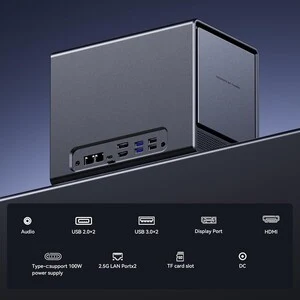
    This Aoostar NAS doubles as a mini-PC with HDMI 2.1, DisplayPort, and USB Type C for connectivity. Additionally, it includes two USB 3.0 ports, two USB 2.0 ports, an SD card reader, and a 3.5mm headphone jack.

    Pricing and Availability

    Currently, as part of a pre-order deal, the Aoostar WTR Pro is priced at $315. This barebone version does not include memory or an SSD. For $379, you can get the mini PC with 16GB RAM and a 512GB SSD.

    Source:
    Link


  • EK Launches Customizable Water Blocks for LGA 1700/1851/AM5

    EK Launches Customizable Water Blocks for LGA 1700/1851/AM5

    Key Takeaways

    1. The EK-Quantum Velocity³ CPU water blocks have a modular design for adjustable setup and improved cooling efficiency.
    2. Users can choose from three models: White, Acetal, and Plexi, all featuring a Nickel-plated copper cold plate.
    3. The water blocks can provide up to a 2-degree Celsius temperature drop, which is significant in high-performance computing.
    4. New mounting brackets simplify installation with a clip-on and off design, enhancing user convenience.
    5. The compact height of 25mm ensures compatibility with smaller builds, and all models are priced at $111.9.


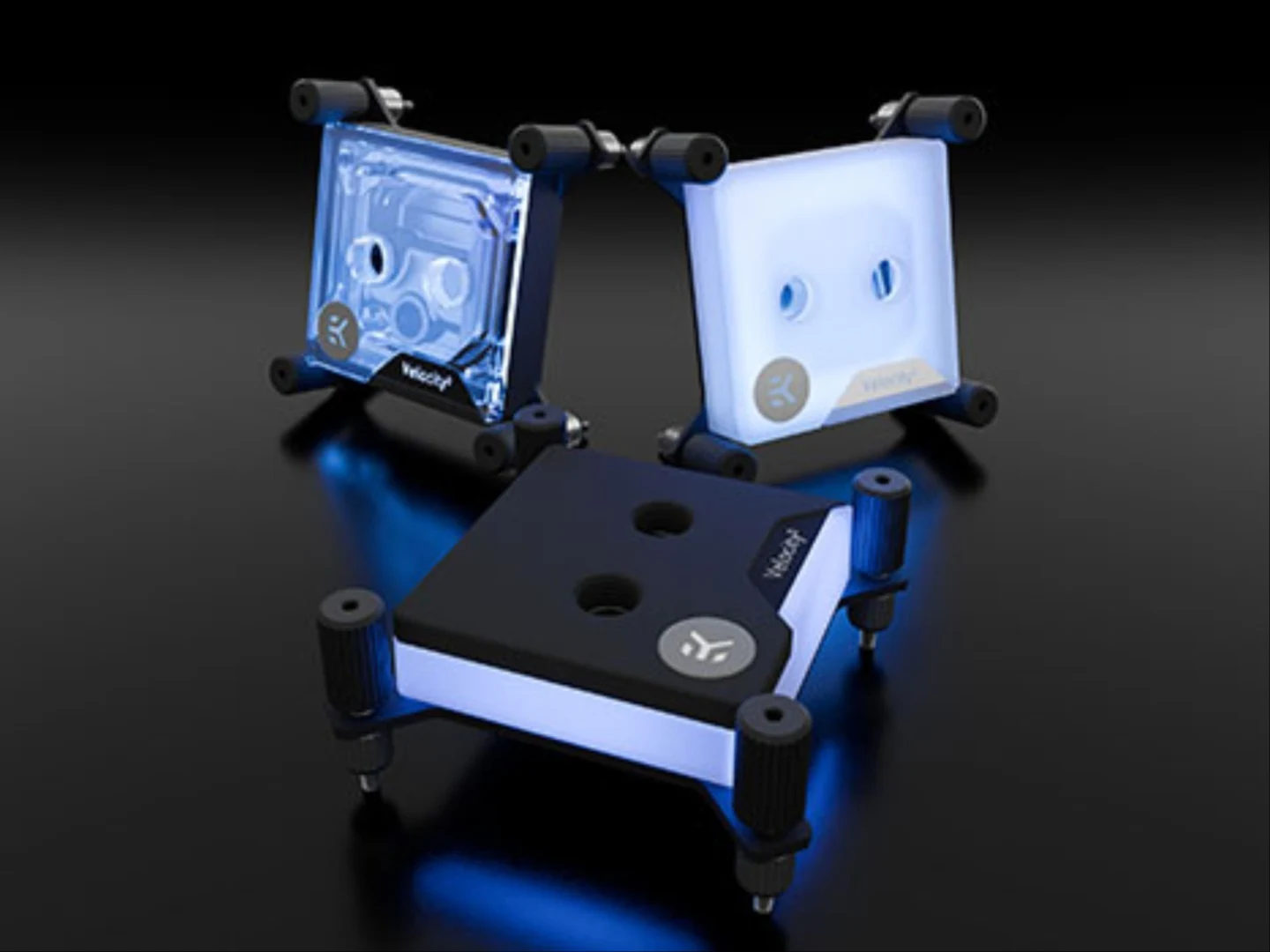
    The newest EK-Quantum Velocity CPU water blocks have been unveiled, featuring a fully adjustable setup due to their modular design. These water blocks are the next step after the Velocity² range and are claimed to provide up to a 2-degree Celsius drop in temperatures. While this might not sound like much, in the world of high-performance computing, even a single degree can make a significant difference.

    Variants and Features

    There are three models of the EK-Quantum Velocity³ water blocks: a White version, an Acetal version, and a Plexi version. Each model boasts a modular build that allows users to turn the internal components and modify the alignment of the heat spreader, along with the port positions, ensuring they fit perfectly into any custom water-cooling loop. New mounting brackets are included, making installation simpler with a clip-on and off design. All versions feature a Nickel-plated copper cold plate topped with either white Acetal, black Acetal, or clear Plexi.

    Size and Compatibility

    The EK-Quantum Velocity³ CPU water blocks have a compact height of just 25mm, which means there shouldn’t be any clearance issues, even in smaller builds.

    All three versions of the water blocks are priced equally at $111.9 and can currently be bought from EK’s official website.

    Source:
    Link

  • Asus ROG Flow Z13 Pre-Orders Now Open, Spring Shipments Confirmed

    Asus ROG Flow Z13 Pre-Orders Now Open, Spring Shipments Confirmed

    Key Takeaways

    1. Limited Availability: The ROG Flow Z13 is currently out of stock in the US, with Newegg being the only retailer accepting pre-orders for one version.

    2. Pricing Details: The pre-order price for the Ryzen AI Max+ 395 model is set at $2,299.99, which includes 32 GB of RAM and a 1 TB SSD.

    3. Shipping Delays: Pre-orders from Newegg will not ship until March 18, while the UK release is delayed until April 2.

    4. Different Configurations: In the UK, the starting price is £2,199.99 for a model with a Ryzen AI Max 390 APU and the same RAM configuration.

    5. Upcoming Options: While there are multiple SKUs available in China, the highly anticipated 128 GB RAM option is currently not available anywhere.


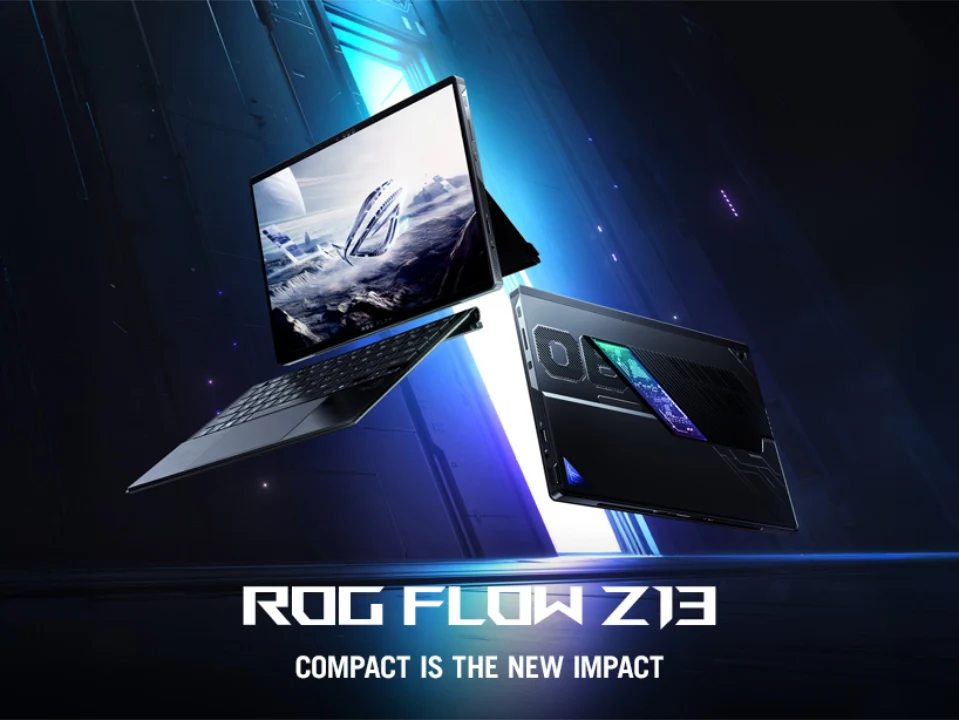
    Early feedback for the latest ROG Flow Z13 has been released around the world, including our review of the most affordable Ryzen AI Max+ 395 model. The timing of these first reviews aligns with the start of global pre-orders, but there are some important details to note.

    Availability Issues

    At the moment, Asus in the US doesn’t have the new 2-in-1 in stock, nor do major retailers like Amazon, Best Buy, or B&H Photo. Currently, Newegg is the only retailer accepting pre-orders. However, they are only offering one version priced at $2,299.99, which comes with a Ryzen AI Max+ 395 APU, 32 GB of RAM, and a 1 TB SSD.

    Shipping Dates

    Newegg has also made it clear that pre-orders will not ship until March 18. On the other hand, Asus is delaying the release of the ROG Flow Z13 (2025) in the UK until April 2. In the UK, it will retail starting at £2,199.99, featuring the same RAM configuration but a less powerful Ryzen AI Max 390 APU. In contrast, three different SKUs have appeared on JD.com in China, including one with the Ryzen AI Max+ 395 that comes with 64 GB of RAM. For now, the highly anticipated 128 GB RAM option is not available anywhere.

    Summary

    Overall, while excitement builds for the ROG Flow Z13, potential buyers should be aware of limited availability and shipping delays. For those interested in the latest tech, keeping an eye on the situation will be essential as more information becomes available.

    Source:
    Link

  • NBook HX: AMD Ryzen 9 6900HX, 32GB RAM, 165Hz Display for $775

    NBook HX: AMD Ryzen 9 6900HX, 32GB RAM, 165Hz Display for $775

    Key Takeaways

    1. The NBook HX is priced under $775 and ships free from China to the USA, with an estimated delivery time of 20-30 business days.
    2. It features powerful specifications, including an AMD Ryzen 9 6900HX processor, 32 GB of DDR5 RAM, and a 1 TB SSD, running Windows 11 Pro.
    3. The laptop has a 15.6-inch IPS display with a resolution of 2,560 x 1,440 and a 165 Hz refresh rate, but lacks a dedicated graphics card for gaming.
    4. Connectivity options include multiple USB ports, HDMI 2.1, a memory card reader, and support for Wi-Fi 5 and Bluetooth 5.0.
    5. The NBook HX may have warranty challenges for defects or damages, and the QWERTY keyboard layout may be difficult for non-English speakers.


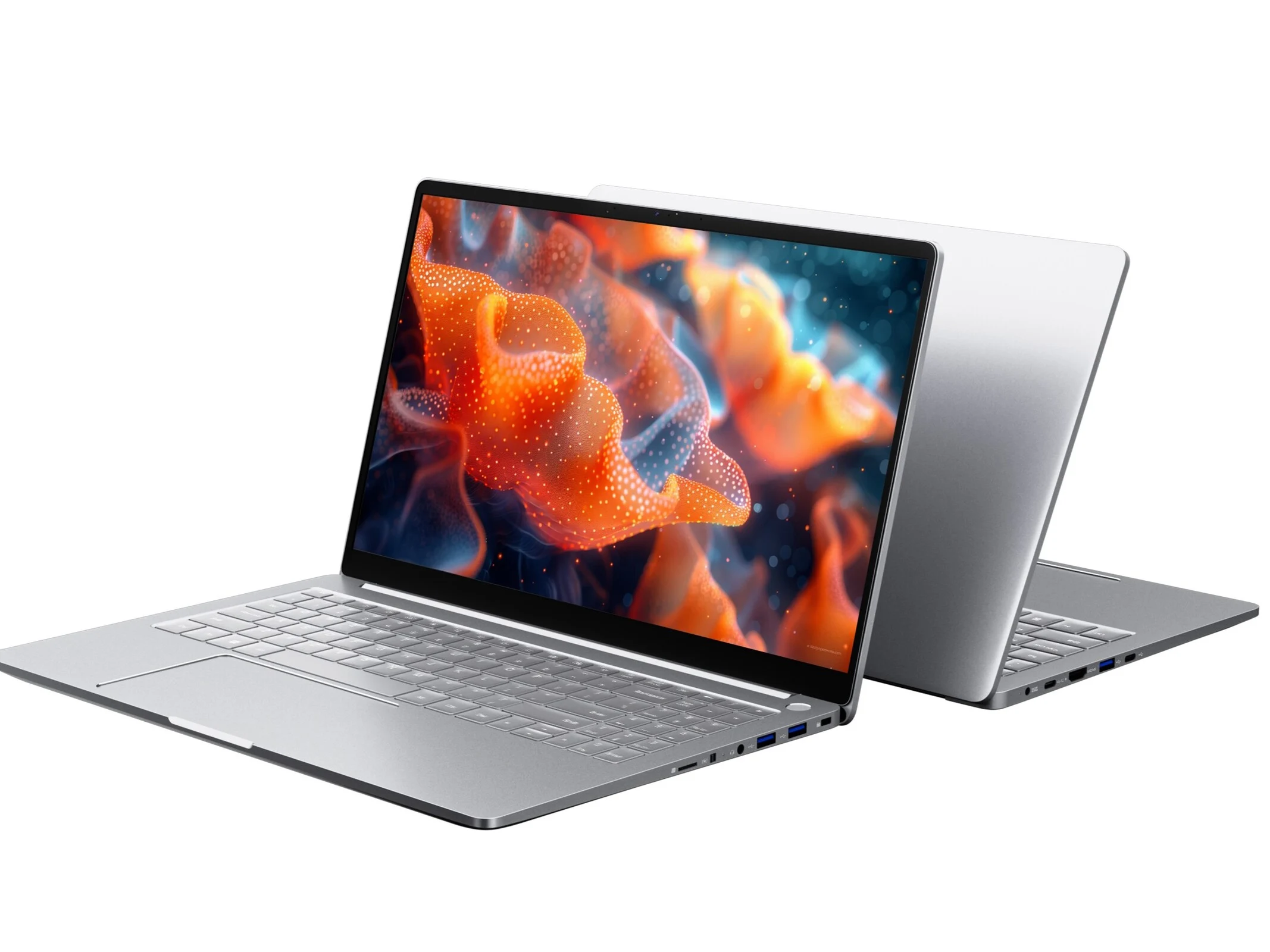
    N-One has introduced a new laptop called the NBook HX, which is now available for direct import at a price just under $775. Shipping from China to the USA is estimated to take between 20-30 business days. While this might seem like a lengthy wait, shipping is free and there are no import fees since the threshold is set at $800 (you can find more details on this). However, potential buyers should remember that if there are any defects or damages, exercising warranty rights might be tricky or even impossible. Additionally, the laptop features a QWERTY keyboard layout, which could pose challenges for users who speak languages other than English.

    Powerful Performance

    The NBook HX packs an AMD Ryzen 9 6900HX processor alongside 32 GB of DDR5 RAM, providing it with the power needed for most tasks, except for the most resource-intensive ones. It also includes a 1 TB SSD and comes pre-installed with Windows 11 Pro, ensuring a modern computing experience.

    Size and Display

    Measuring 360 x 275 x 18 millimeters and weighing 3.81 pounds (1.73 kilograms), this laptop is not the lightest or most compact option available. The device features a 15.6-inch IPS display with a resolution of 2,560 x 1,440, a 16:9 aspect ratio, and an impressive refresh rate of 165 Hz. However, since the NBook HX does not have a dedicated graphics card, it is unlikely that users will fully benefit from the high refresh rate when playing demanding video games.

    Connectivity and Features

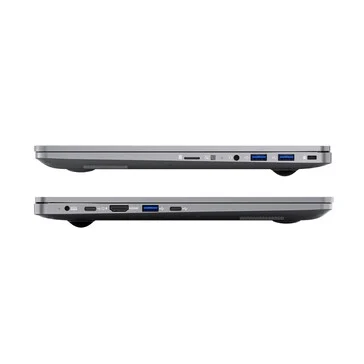
    For connectivity, the NBook HX offers one full-function USB-C port, an additional USB-C port for data transfer only, three USB 3.2 ports, one HDMI 2.1 port, a memory card reader, and a 3.5-millimeter headphone jack. It supports Wi-Fi 5 and Bluetooth 5.0 as well. Other noteworthy features include a fingerprint sensor and a 2 MP front camera. The battery capacity is 57.75 Wh, so users should not expect exceptional battery life. While we can’t provide specific battery life estimates without testing it, similar laptops typically last between 6 to 13 hours, depending on how they are used.

    Source:
    Link