Category: Computers

  • Compal Adapt X: New Modular Concept Laptop Redefines Flexibility

    Compal Adapt X: New Modular Concept Laptop Redefines Flexibility

    Key Takeaways

    1. The Compal Adapt X laptop features a hub method for modular design, allowing easy plug-in of components.
    2. This design offers limited flexibility, as all I/O ports are combined into a single module that cannot be swapped independently.
    3. Users can easily change the display, keyboard, battery, storage, and memory, with many modules functioning independently.
    4. The display can serve as a mobile USB-C monitor, and the keyboard and trackpad can operate as Bluetooth devices.
    5. The Adapt X is currently a concept, and its commercial viability is uncertain due to potential weight and cost issues in modular designs.


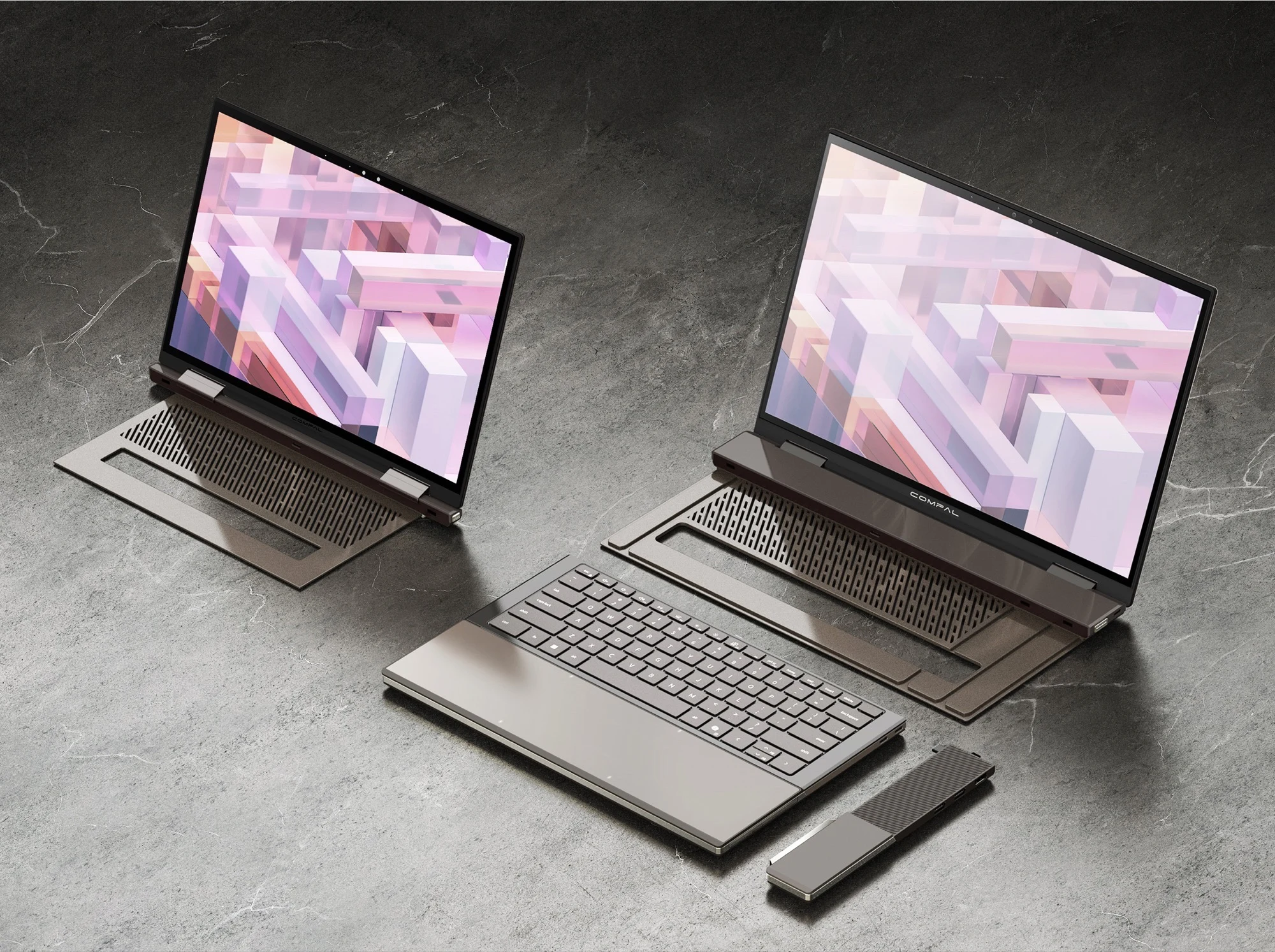
    The Compal Adapt X laptop first appeared after winning an iF Design Award. The firm behind it brought forth an alternative to the Framework Laptop that takes a different route to modular design. While Framework expects users to handle the installation and removal of components from the motherboard themselves, relying on their own screwdriver skills, Compal chose a hub method that lets users plug in components easily.

    Limited Flexibility

    This method is not as adaptable as the Framework’s system. For example, all input/output ports are combined into a single module, which means they can’t be swapped out independently. Still, the Compal Adapt X concept laptop is crafted to make it simple to change the display, keyboard, battery, storage, and memory. Interestingly, many of these modules can operate on their own without the laptop.

    Independent Functionality

    Take the display, for instance; it can act as a mobile USB-C monitor. The keyboard and trackpad can work as Bluetooth input devices, and the I/O module can also function as a standalone USB hub. This ensures that the chosen components can still be used even if the laptop encounters a problem. The Compal Adapt X is planned to come with a 14-inch or 16-inch display.

    Currently, since the Adapt X is just a concept, it’s uncertain if this design will reach consumers. Modular designs often lead to heavier and pricier products, which may be why modular laptops, except for the Framework Laptop, haven’t seen much commercial success until now.

    Source:
    Link


  • Dell Pro 13 Premium Review: Nearly Perfect with 90% Score

    Dell Pro 13 Premium Review: Nearly Perfect with 90% Score

    Key Takeaways

    1. Skepticism Towards Terminology: Terms like “AI,” “Premium,” and “Pro” do not always guarantee better performance or quality in laptops.

    2. Exceptional Performance: The Dell Pro 13 Premium stands out for its impressive performance in various tests, defying initial skepticism.

    3. High-Quality Build: The laptop is made from 90% recycled magnesium, making it sturdy, compact, and lightweight, with notable design features like 180-degree hinges and an 8 MP webcam.

    4. Effective Cooling System: Equipped with two fans, the Dell Pro 13 manages heat well, remaining cool and quiet during use, which is a significant advantage for a small laptop.

    5. Strong Battery Life and Connectivity: With the Lunar Lake processor, the laptop boasts nearly 24-hour battery life and includes advanced features like two Thunderbolt 4 ports and Wi-Fi 7 support.


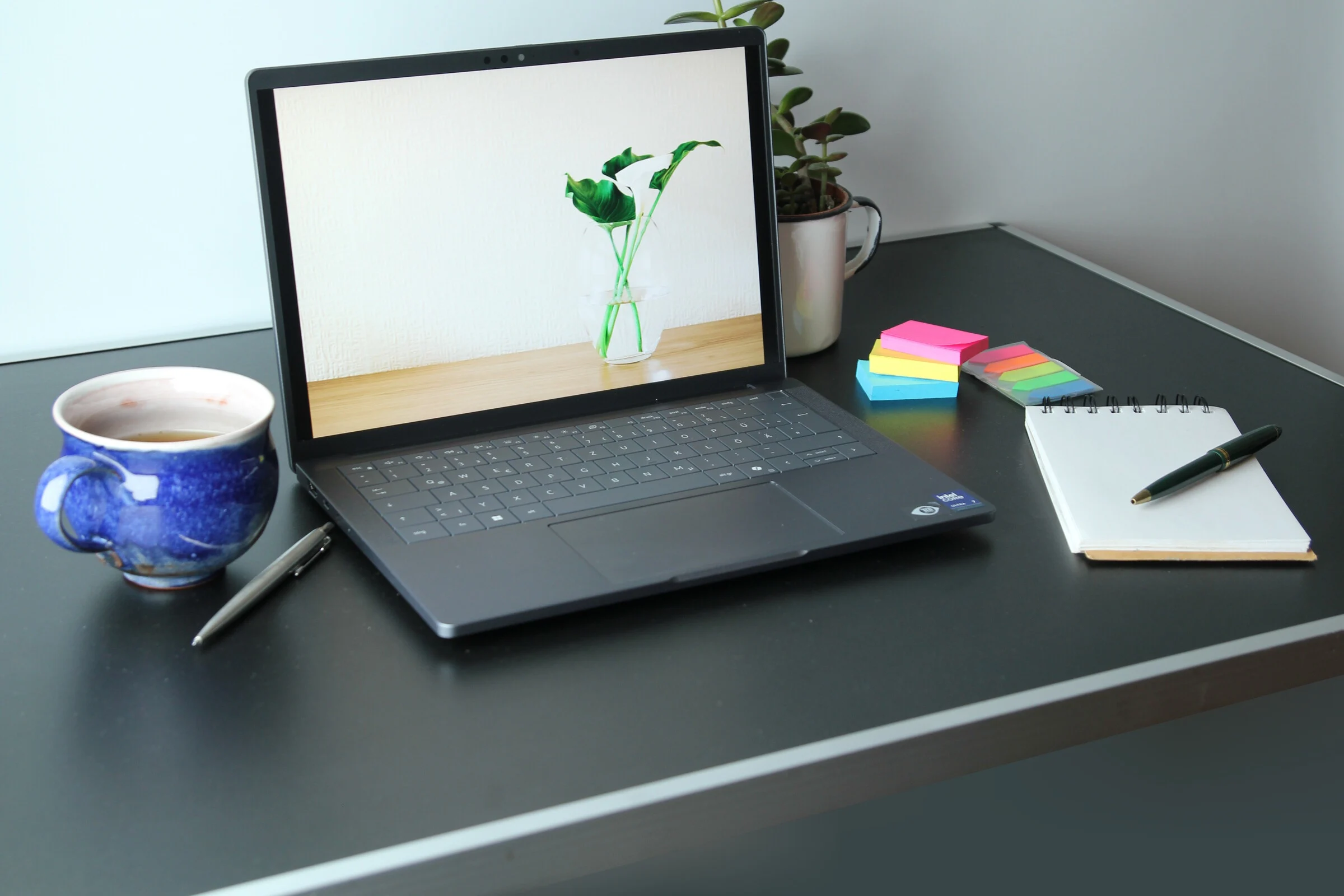
    AI in a laptop’s name doesn’t guarantee it’s better or more efficient, just like the term “Premium” doesn’t always mean high quality or craftsmanship in every item. The word “Pro” also doesn’t necessarily signal professionalism or top-tier features. As reviewers with a lot of experience, we approach products labeled “Pro” or “Premium” with a healthy dose of skepticism.

    Impressive Performance

    The Dell Pro 13 Premium stands out as a noteworthy exception, not because of its questionable terminology, but because our doubts are mostly unfounded in this instance. This business laptop excels in nearly every test we conducted.

    Solid Build and Features

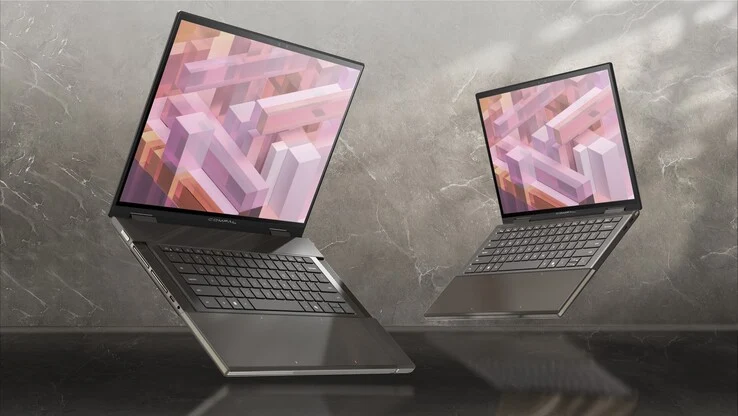
    Starting with the design, the casing is constructed from 90% recycled magnesium, which contributes to the Dell Pro 13 being very sturdy, compact, and lightweight. The build quality is remarkable, and the hinges that open to 180 degrees are quite impressive. Additionally, the high-resolution webcam features 8 MP for capturing photos, and video calls can be conducted in 1440p, with extra capabilities available for AI enhancements.

    Advanced Cooling System

    Unlike many other small 13-inch laptops, the Dell Pro 13 is equipped with two fans instead of one. This design choice helps prevent the common issue of heat buildup seen in many laptops, allowing the device to stay generally cool, and the noise levels remain very reasonable; the fans are mostly silent during light usage.

    Thanks to the Lunar Lake processor, the Dell Pro 13 has significantly improved its battery performance: the laptop can now last nearly 24 hours at lower brightness settings, meaning Intel is finally competing with Snapdragon-powered devices in this area.

    Connectivity and More

    Other notable aspects of the Dell 13 “Premium” include its two Thunderbolt 4 ports and Wi-Fi 7 support.

    Source:
    Link


  • Fonecyc MegaHub Dock for MacBook Pro Adds 16TB SSD Storage

    Fonecyc MegaHub Dock for MacBook Pro Adds 16TB SSD Storage

    Key Takeaways

    1. The MegaHub is a docking solution specifically designed for the Apple MacBook Pro 16, with some compatibility for other devices using USB Type-C ports.
    2. The dock’s design offers ergonomic advantages but makes the laptop bulkier, potentially affecting its portability.
    3. It allows users to expand storage capacity significantly, accommodating up to four M.2 2280 SSDs for a total of 16TB.
    4. The technical features include a maximum bandwidth of 1 Gbit/s, multiple USB ports, a headphone jack, and an SD card reader.
    5. The MegaHub is currently crowdfunding on Kickstarter, with a backing price of $158 and potential risks associated with investing in crowdfunding projects.


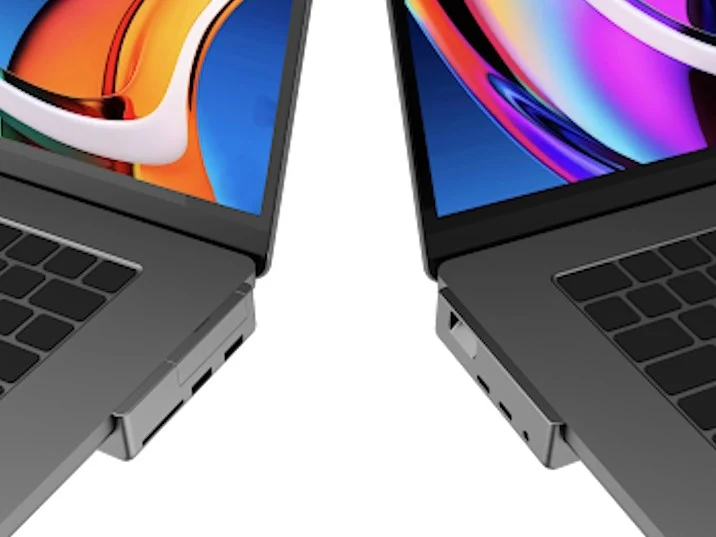
    The MegaHub is now in the process of crowdfunding on Kickstarter. As its name implies, this is a docking solution created for the Apple MacBook Pro 16 (starting at $2,229 on Amazon). Although the MegaHub utilizes USB Type-C ports that could theoretically work with other gadgets, its design is particularly tailored for the 16-inch MacBook Pro.

    Dock Design and Ergonomics

    The docking station has dimensions of around 14.4 x 3.5 x 1.1 inches and is partially situated beneath the Apple laptop. This positioning creates an angle that may provide ergonomic advantages. Nonetheless, it does make the laptop notably thicker, which could prevent it from fitting into sleeves or bags that are designed specifically for this model.

    Storage Expansion Capabilities

    On a positive note, the MegaHub allows users to significantly boost the storage capacity of the MacBook Pro, which can be a lot cheaper than Apple’s high prices for additional SSD space. Specifically, it can accommodate up to four M.2 2280 SSDs, offering a whopping total of 16TB of mass storage, as stated by the manufacturer. This amount of storage is sufficient to manage vast quantities of data, including RAW and high-resolution video files, thus making external hard drives unnecessary.

    Technical Features and Crowdfunding Details

    The dock boasts a maximum bandwidth of 1 Gbit/s and includes two USB Type-A ports, two USB Type-C ports that support up to 100W PD, a headphone jack, and an SD card reader. Those interested in supporting the Kickstarter campaign can secure their MegaHub by contributing $158. However, potential backers should keep in mind the typical risks of crowdfunding, which includes the possibility of losing their investment if the product fails to reach the market.

    Source:
    Link

  • 14-inch Acer Go Air: New MacBook Air Alternative with Intel Core

    14-inch Acer Go Air: New MacBook Air Alternative with Intel Core

    Key Takeaways

    1. The Acer Go Air is a lightweight laptop (2.2 lbs) designed for portability, currently available only in China with prices between $730 and $785.

    2. It features a 14-inch IPS display with a 2240 x 1400 pixel resolution and a hinge that allows the screen to open 180 degrees.

    3. The laptop is equipped with Intel Core i5 or i7 processors, 32GB LPDDR5 RAM, and a 1TB SSD, but is not intended for gaming.

    4. Connectivity options include three USB Type-C ports, one HDMI 2.0 port, and a USB 3.2 Gen 1 port, but there is no Ethernet port.

    5. The device supports WiFi 6, but does not support the latest WiFi 7 standard.


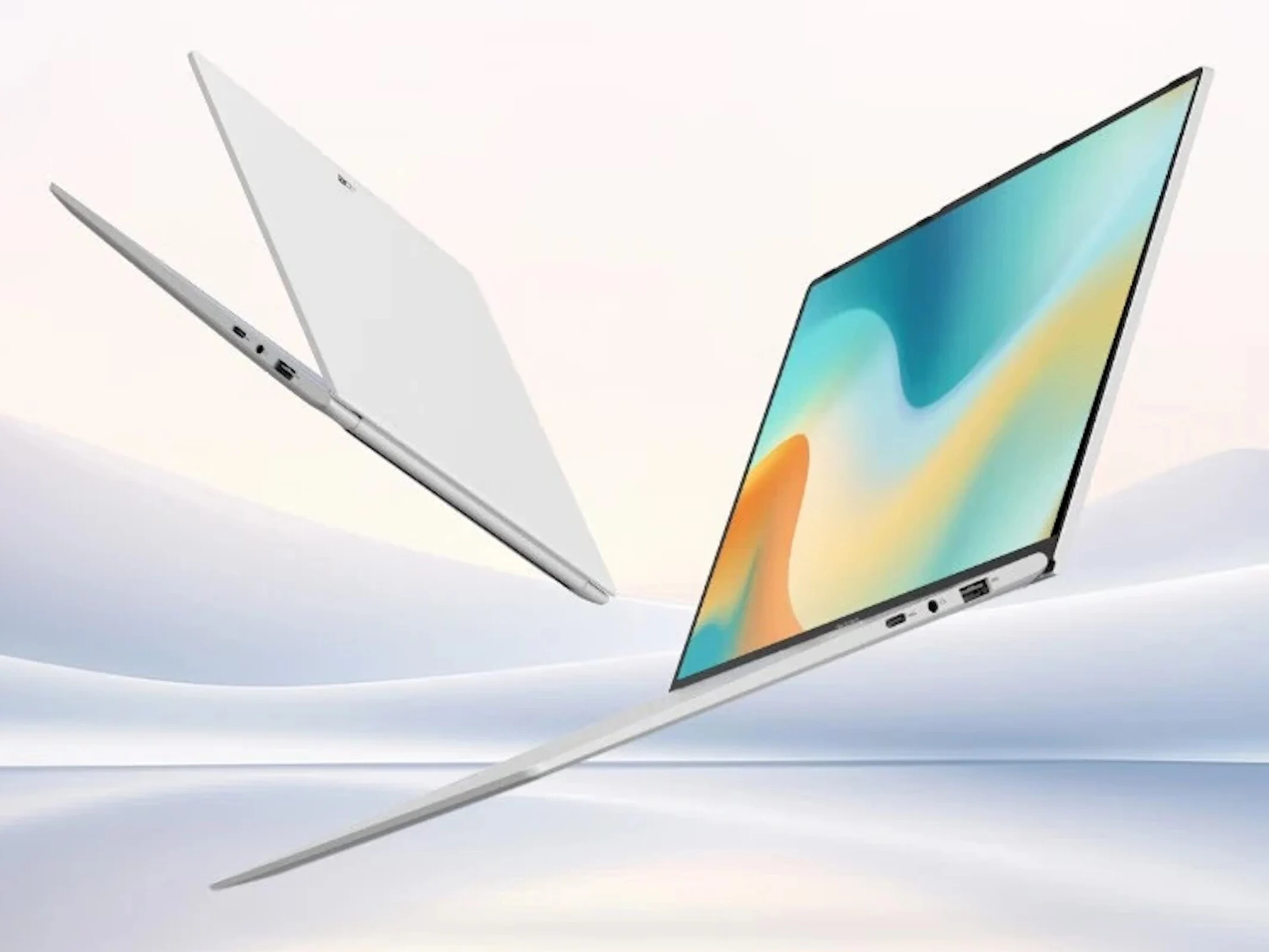
    Acer has introduced the Go Air, a new laptop designed for individuals seeking a highly portable device running on Microsoft’s Windows OS. Currently, this laptop is only available in China, with prices ranging from $730 to $785, depending on the chosen processor. Acer has yet to share any information about a possible international release.

    Build and Design

    The laptop is impressively lightweight at just 2.2 lbs and features a magnesium-aluminum alloy body along with a 60Wh battery. It boasts a 14-inch IPS display with a resolution of 2240 x 1400 pixels. The hinge allows the screen to open up to 180 degrees, enabling it to lay flat on a surface. Additionally, the display is said to cover the full sRGB color spectrum; however, the Acer Go Air is clearly not intended for gaming purposes.

    Performance Specifications

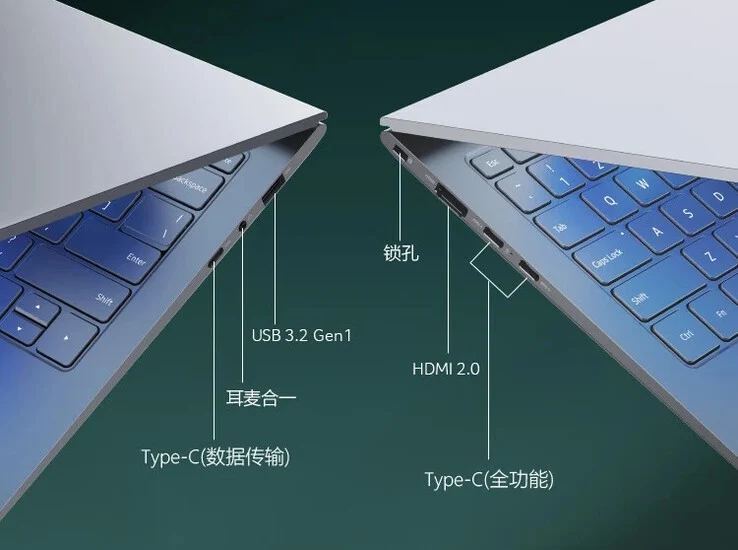
    Under the hood, the Acer Go Air is equipped with either the Intel Core i5 210H or the Intel Core i7 240H processors, coupled with 32GB of LPDDR5 RAM and a 1TB SSD. Besides three USB Type-C ports, this alternative to the MacBook Air includes one HDMI 2.0 and a USB 3.2 Gen 1 port. It’s worth noting that there is no Ethernet port, and users will need to connect to the internet using WiFi 6, as the newest WiFi 7 standard is not supported.

    Source:
    Link


  • Ayaneo AM01S Upgrade: Boosted with AMD Ryzen AI 9 HX 370

    Ayaneo AM01S Upgrade: Boosted with AMD Ryzen AI 9 HX 370

    Key Takeaways

    1. Ayaneo has launched various devices in the x86 and Android handheld categories, with some models like Ayaneo 3 and Ayaneo Pocket S currently available.
    2. The AM01S, announced in May 2024, has been upgraded to include the Ryzen AI 9 HX 370, featuring AMD’s latest architectures.
    3. The AM01S now has 12 Zen 5 CPU cores, providing a significant performance boost over earlier models, particularly in GPU tasks.
    4. The updated mini-PC features a Radeon 890M iGPU with 16 Compute Units, potentially making it 20% faster in GPU-intensive tasks.
    5. The AM01S maintains its original design with a 4-inch landscape display, but pricing and availability details are still unknown.


    Ayaneo has launched several devices over the past year, many of which fall into their x86 or Android handheld categories. While some models, like the flagship Ayaneo 3 and Ayaneo Pocket S, are currently available, others are still in the works, waiting for a full launch.

    Updates on the AM01S

    A prime example of a device still in development is the AM01S, which Ayaneo revealed in May 2024 featuring AMD Ryzen 7 8845HS and Ryzen 9 8945HS APUs. These APUs utilize AMD’s RDNA 3 and Zen 4 architectures, but AMD has since upgraded to RDNA 3.5 and Zen 5. To keep pace, Ayaneo has refreshed the AM01S to include the Ryzen AI 9 HX 370, which is also seen in contemporary gaming handhelds like the OneXFly F1 Pro, currently priced at $1,439 on Amazon.

    Performance Boost

    With this upgrade, the AM01S now boasts 12 Zen 5 CPU cores, offering a significant performance boost compared to the Ryzen 7 8845HS and Ryzen 9 8945HS. Additionally, the updated mini-PC features a Radeon 890M iGPU with 16 Compute Units (CUs). This enhancement suggests that the AM01S could be about 20% faster in GPU-intensive tasks than if it had been released with the Ryzen 9 8945HS APU.

    Design Consistency

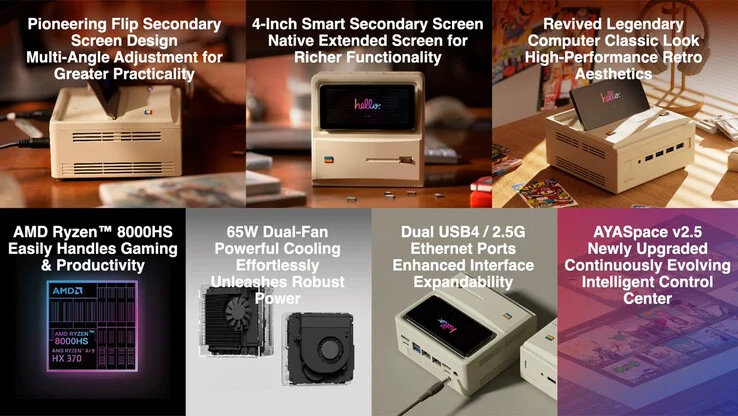
    Nonetheless, not much else has changed for the AM01S since its initial announcement nearly a year ago. Ayaneo still includes a 4-inch display meant to function as a secondary monitor, which they now describe as a native landscape panel. The AM01S also keeps the classic Macintosh design style that Ayaneo has used in its other mini-PCs. At this point, pricing and availability details remain unclear.

    Source:
    Link


  • Ninkear Mbox 8 Pro: Modular Mini PC with AMD Ryzen APU

    Ninkear Mbox 8 Pro: Modular Mini PC with AMD Ryzen APU

    Key Takeaways

    1. The Ninkear Mbox 8 Pro features a modular design with a magnetic base for expanded storage and connectivity options.
    2. It supports up to 32 GB of DDR5 RAM and includes multiple ports, such as USB-C, HDMI, and Ethernet.
    3. The mini PC utilizes the Ryzen 7 8845HS APU, providing strong performance capabilities.
    4. It offers Bluetooth 5.2 and WiFi 6 for enhanced wireless connectivity.
    5. The price for the configuration with 32 GB of RAM and 1 TB of storage is $634.99.


    While the AMD Hawk Point is over a year old, new mini PCs are still being launched that run on the Zen 4 APUs. One such device is the Ninkear Mbox 8 Pro, which features the Ryzen 7 8845HS. What mainly distinguishes it from other systems using the same APU is its unique design.

    Modular Design

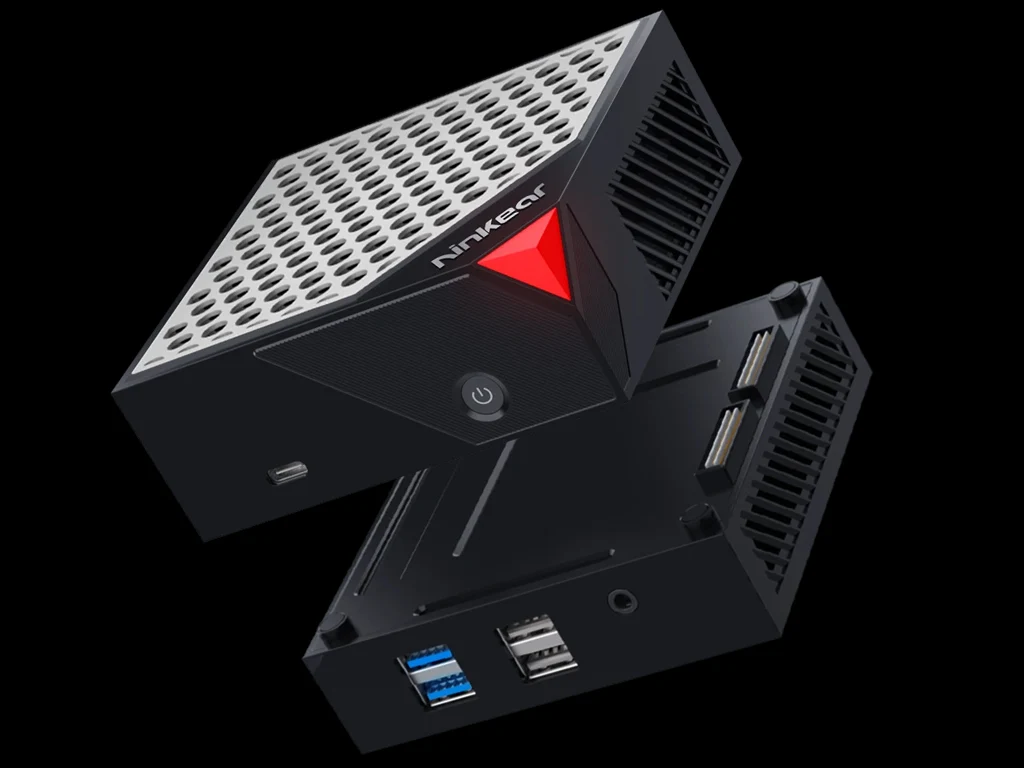
    The standout feature of the Mbox 8 Pro is its modular design. It includes a magnetic base that users can attach to the mini PC for increased storage. This base can accommodate an additional 3.5-inch SATA drive (like the 4 TB Seagate IronWolf, currently priced at $84.99 on Amazon), and it not only expands storage but also provides extra connectivity ports that are absent from the upper section of the device.

    Performance and Connectivity

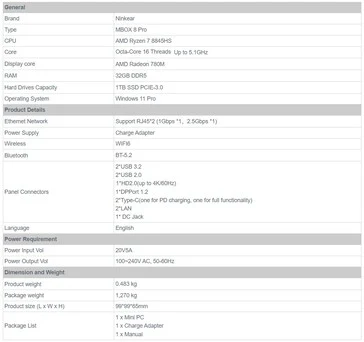
    In terms of specs, the Mbox 8 Pro supports up to 32 GB of DDR5 RAM and, without the base, can hold an M.2 PCIe 3.0 SSD. The upper section of the mini PC includes two USB-C ports, one DisplayPort 1.2, one HDMI 2.0, and two Ethernet ports. The separate base adds two USB 3.2 ports, two USB 2.0 ports, and a 3.5 mm audio jack.

    Wireless Features and Cooling

    For wireless connectivity, the mini PC comes with Bluetooth 5.2 and WiFi 6. Although Ninkear hasn’t shared more details about the device, the vents around the system indicate it likely has a good cooling setup to keep the Ryzen 7 8845HS working efficiently under heavy loads. The price for the configuration that includes 32 GB of RAM and 1 TB of storage is $634.99 and is available on Banggood.

    Source:
    Link


  • CheckMag | The Future of Quantum Computing with Photonic Logic

    CheckMag | The Future of Quantum Computing with Photonic Logic

    Key Takeaways

    1. Introduction of Aurora: Aurora is the first modular photonic quantum computer designed for scalability, developed by Xanadu, a Canadian quantum tech company.

    2. Addressing Key Challenges: Aurora improves fault tolerance and error correction while using light-based qubits, eliminating the need for extreme cooling typical in traditional quantum systems.

    3. Expansion of Photonic Quantum Computing: Companies like PsiQuantum and startups like Quantum Source are exploring photonic quantum technologies to create efficient, commercially viable systems by 2027.

    4. Sustainability in Quantum Technologies: The shift towards photonic quantum computing suggests a move towards more sustainable and environmentally friendly quantum technologies, supported by investments like NATO’s in Ephos.

    5. Transformative Potential: The development of photonic quantum computing could significantly impact various industries and address complex challenges, marking a pivotal moment for practical quantum technologies.


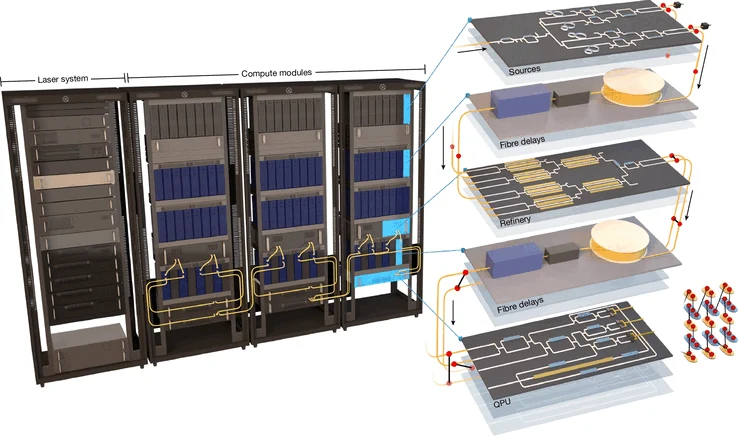
    A major breakthrough in quantum computing is the introduction of Aurora, the first-ever modular photonic quantum computer that can function at scale with linked modules. Created by Xanadu, a Canadian firm specializing in quantum tech, Aurora utilizes photonic qubits for data processing, connected via fiber optic cables. This modular approach not only promotes scalability but also works well with current data center setups, which could change the game for quantum computing entirely.

    Addressing Key Challenges

    Aurora’s design tackles many old problems in quantum computing, such as fault tolerance and error correction. By using light-based qubits, Aurora avoids the necessity for extreme cooling that is common in traditional quantum systems. This breakthrough could lead to more practical and accessible quantum data centers, potentially speeding up progress in fields like cryptography, material science, and modeling complex systems.

    Expanding the Horizons

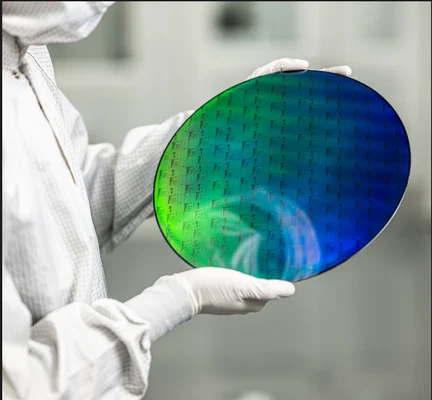
    The reach of photonic quantum computing goes beyond just Aurora. Companies like PsiQuantum are working on mass-producing quantum chips, aiming to create commercially viable quantum computers by 2027. Their method also utilizes photonics, using light particles for quantum calculations, which simplifies cooling needs. In a similar vein, startups like Quantum Source are investigating light-based quantum computing to create systems that are more efficient and can work at room temperature.

    A Sustainable Future

    The shift towards photonic quantum computing indicates a significant move towards more sustainable and scalable quantum technologies. As research and development progress, the incorporation of photonic systems might result in quantum computers that are not only more efficient but also friendlier to the environment, which aligns with worldwide efforts for sustainability in tech. Ephos, an Italian startup, has secured a $500,000 investment from NATO, aiming to achieve this goal with their glass-based integrated photonic circuits.

    In conclusion, the emergence of photonic quantum computing, highlighted by innovations like Aurora, signifies a crucial moment in the search for practical and scalable quantum technologies. As these systems become increasingly integrated with existing infrastructures, they have the potential to transform industries and tackle complex challenges that were once thought to be insurmountable.

    PsiQuantum, Nature, Xanadu, Reuters, Ephos.

    Source:
    Link


  • Upgrade Lenovo Yoga 9 with Superior 4K OLED Display

    Key Takeaways

    1. New Design and Efficient Chipset: The revamped Yoga 9 14 convertible features a new design and uses Intel’s efficient Lunar Lake chipsets, enhancing battery life and reducing fan noise.

    2. Display Limitations: The 4K OLED screen lacks good color accuracy, limited to the P3 color space, making it unsuitable for professional photo and video editing.

    3. Low Refresh Rate: The 60Hz refresh rate affects the user experience during motion scenes, although the more affordable configurations have improved displays.

    4. Graphics Performance: While multi-core performance is weaker, single-core and graphics performance remain impressive.

    5. Need for Better Color Profiles: To compete in the creative professional market, Lenovo must provide adequate color profiles for its high-end displays, especially the 4K OLED models.


    Lenovo has recently revamped the pricey Yoga 9 14 convertible, giving it a totally new design, and the latest G10 now uses Intel’s more efficient Lunar Lake chipsets. This upgrade, along with the Copilot+ certification, brings about enhanced battery life and quieter fans, although the multi-core performance of the processor isn’t as strong as it was before. On a positive note, both single-core and graphics performance are impressive.

    Display Complications

    The situation with the display is a bit tricky, as our test unit priced at €2,199 features a 4K OLED screen. While that sounds appealing, the details tell a different story. Lenovo seems to be aiming this 14-inch convertible at creative professionals, but simply having a high resolution isn’t sufficient. We would anticipate that devices designed for this audience would provide good color profiles with high color accuracy and an appropriate sRGB mode.

    Sadly, this isn’t the case for the Yoga 9 14, which is limited to the P3 color space. Some color deviations exceed the critical target value of 3, which indicates the DeltaE-2000 deviation from the P3 standard. Even after manual calibration, we couldn’t enhance this, suggesting that the OLED display isn’t suitable for serious or professional photo or video editing, despite Lenovo’s marketing assertions. Lenovo might want to take notes from Asus, which provides solid color profiles even on more affordable Full-HD OLED screens.

    General User Experience

    Another drawback impacting all users is the low refresh rate of 60Hz, which is noticeable during motion scenes. However, the 2.8K 120Hz display in the more affordable configurations has seen improvements, being brighter in SDR (500 nits) and HDR (1,100 nits). We’re in the process of testing this panel in the Yoga 7 14 2-in-1, but it has a grainy appearance, a known issue from the previous model’s 2.8K display. This version also lacks proper color profiles.

    In summary, the current 10th generation Yoga 9 14 2-in-1 is a solid overall device, but for those serious about image editing, it might not meet their expectations. To stay competitive in this space, Lenovo needs to offer adequate color profiles, particularly for its high-end 4K OLED models. For more in-depth information including detailed benchmarks and additional measurements, you can check out our comprehensive review of the Yoga 9.

  • Microsoft Surface Laptop 7: Snapdragon X Elite Faces Return Issues

    Microsoft Surface Laptop 7: Snapdragon X Elite Faces Return Issues

    Key Takeaways

    1. Intel’s claim about high return rates for Qualcomm Snapdragon X laptops sparked debate, with Qualcomm refuting it.
    2. The Microsoft Surface Laptop 7 is labeled as a “Frequently returned item” on Amazon, suggesting potential issues.
    3. User reviews highlight problems, including difficulty in setting up an Android development environment.
    4. Some users report inability to stream Hulu in 4K due to lack of Widevine L1 DRM on the Surface Laptop 7.
    5. Overall customer satisfaction is mixed, indicating Snapdragon X Elite laptops have room for improvement compared to Intel, AMD, and Apple Silicon devices.


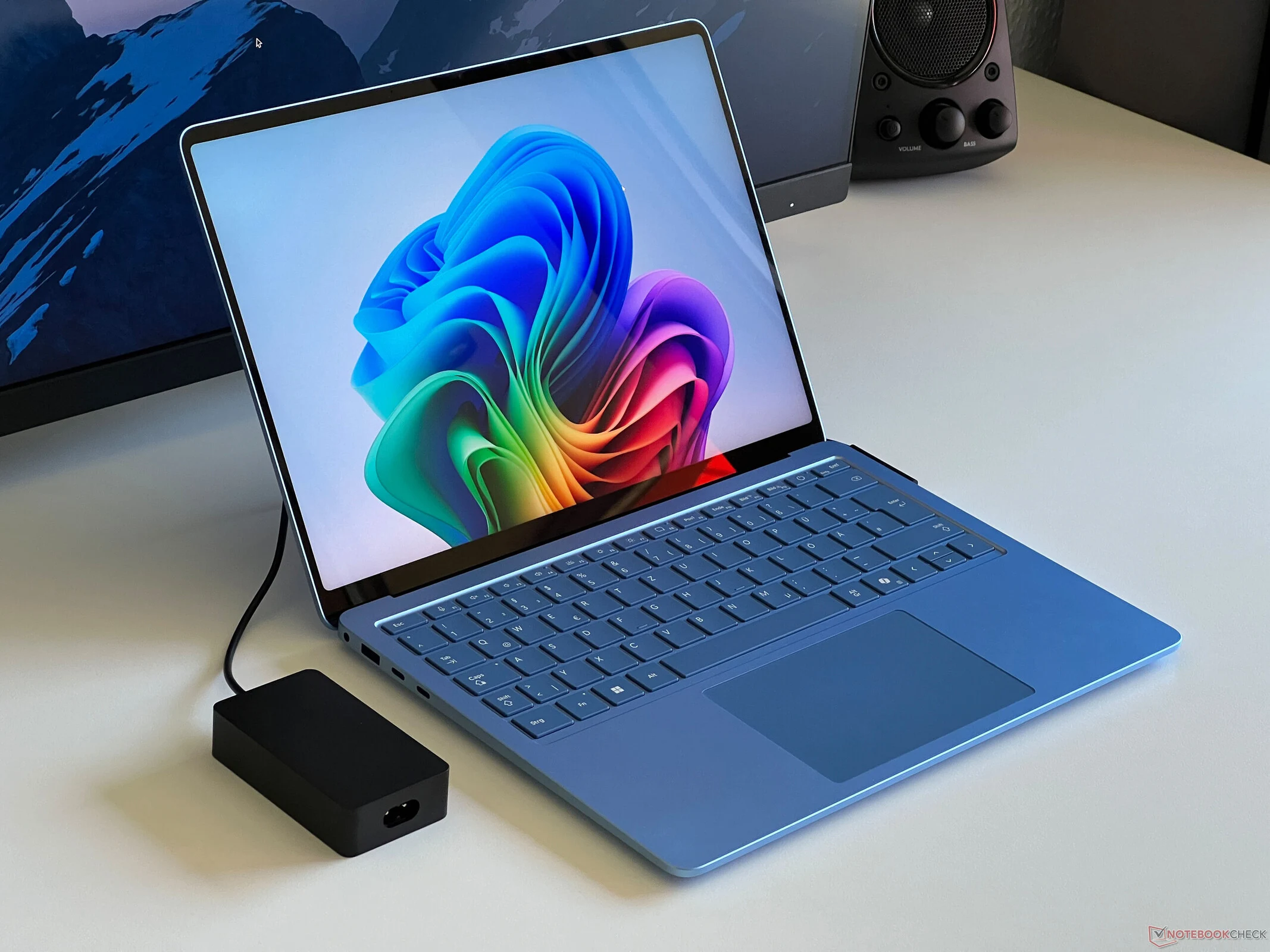
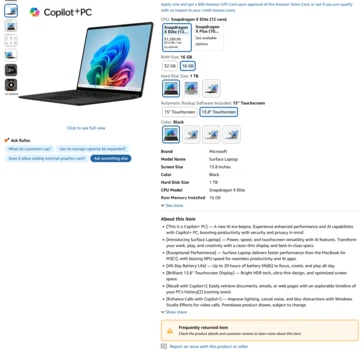
    Last year, an executive from Intel stirred up some debate when she claimed that laptops using Qualcomm’s Snapdragon X chips “suffer from high return rates.” Qualcomm later refuted this assertion. Nevertheless, a listing on Amazon for the newly revealed Microsoft Surface Laptop 7 seems to hint that there might be some merit to Intel’s words.

    Return Rates and User Feedback

    The Surface Laptop 7 is marked with a tag stating it’s a “Frequently returned item” (H/T Windows Central), prompting Amazon to advise potential buyers to read reviews prior to making a decision. A quick look at the review section for the Surface Laptop 7 reveals some rather intriguing comments. One reviewer mentions having difficulty in establishing an Android development environment. This is quite strange since the device is powered by the Arm-based Snapdragon X Elite chip.

    Streaming Issues

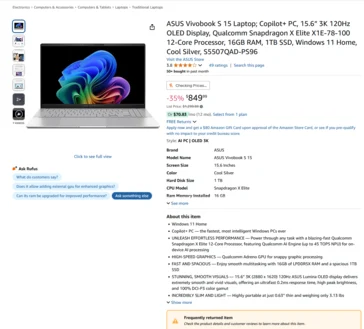
    In addition, another user points out that they are unable to stream Hulu in 4K. This could be linked to the fact that the Surface Laptop 7 lacks Widevine L1 DRM, which is again baffling. Interestingly, the Asus Vivobook S 15 also carries the same “Frequently returned item” label. However, the reviews for this laptop focus more on its specific issues rather than the Windows on Arm platform in general, including the fact that the RAM is not upgradeable.

    Overall Customer Satisfaction

    While a majority of customers seem happy with their purchase, it is evident that laptops with Snapdragon X Elite chips have some distance to cover before they can match the performance and experience offered by those that run on Intel, AMD, and Apple Silicon.

    Source:
    Link


  • New AMD Threadripper CPUs: 24-Core 9965WX & 32-Core 9975WX

    New AMD Threadripper CPUs: 24-Core 9965WX & 32-Core 9975WX

    Key Takeaways

    1. AMD’s new Threadripper CPUs, the 9975WX and 9965WX, are built on the Zen 5 architecture and use the SP6 socket.
    2. The 9975WX features 32 cores, while the 9965WX has 24 cores, both with a thermal design power (TDP) of 350W.
    3. A flagship model, the Threadripper 9980X, is expected to feature 96 cores and 192 threads, also with a TDP of 350W.
    4. There may be 3D V-cache versions of the upcoming Threadripper CPUs, but details on clock speeds and cache amounts are currently unknown.
    5. AMD has not yet confirmed the release date or the number of SKUs for the new Threadripper series, leaving many questions unanswered.


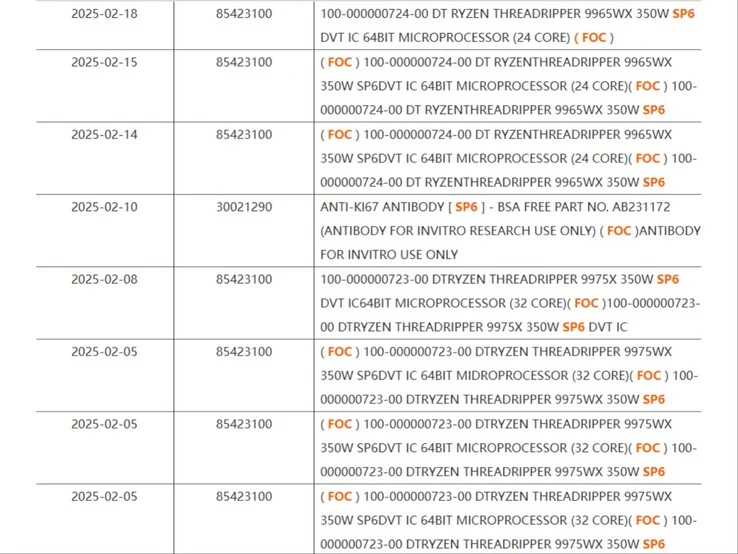
    AMD has kept things pretty quiet regarding the new Threadripper CPUs, with little info coming out since November. Recently, some new details about two models have emerged, but they are quite basic, including just their names, core counts, and thermal design power (TDP). The same leaker who previously stated that the Threadripper series will offer CPUs ranging from 16 to 96 cores has now revealed two specific models: the 9975WX and 9965WX.

    Details on the CPUs

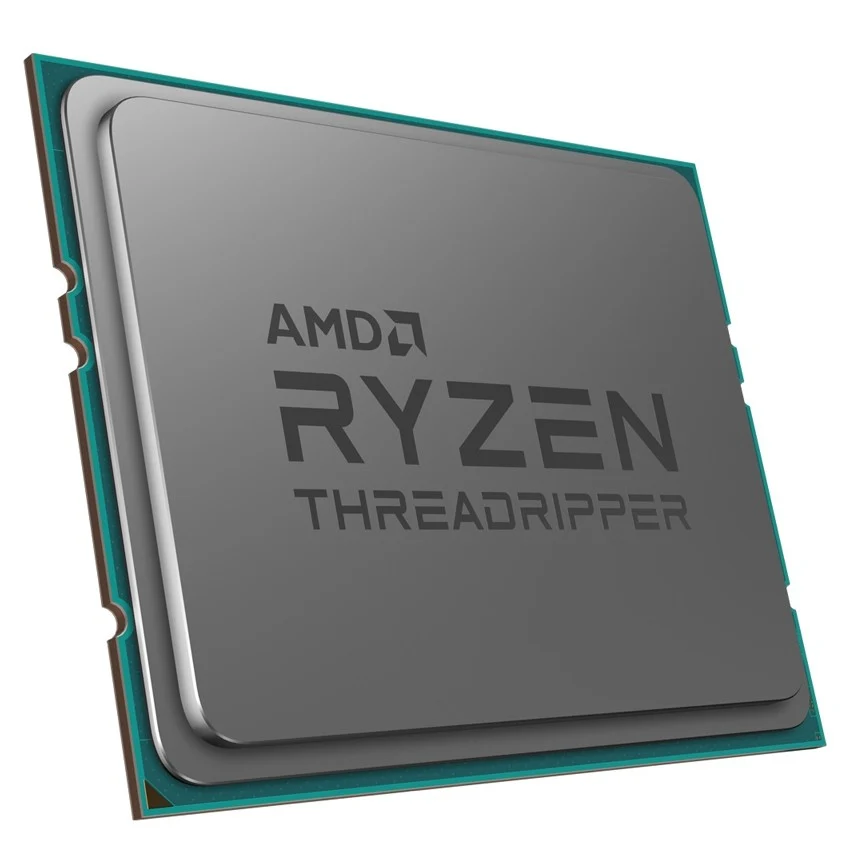
    Known as Shimada Peak, the Threadripper 9000 series CPUs are built on the Zen 5 architecture and use the same SP6 socket. According to a new shipping manifest leak, the two models, the 9975WX and 9965WX, are set to have 32 cores and 24 cores, respectively. Both will share a TDP of 350W, but that’s about all we know for now. There are no details about clock speeds or cache amounts, although earlier leaks hinted that there might be 3D V-cache versions of these upcoming Threadripper CPUs.

    The Flagship Processor

    The manifest leak from last November indicated a flagship processor with 96 cores and 192 threads, anticipated to be the Threadripper 9980X. This model also had a TDP of 350W, matching its predecessor, the Threadripper 7980X. It appears that the 96-core variant might represent the maximum core count, suggesting that the 9000 series could exclude processors based on Zen 5c.

    AMD has yet to provide any specifics about the next Threadripper CPUs, leaving many questions unanswered, including how many SKUs will be released and when they might arrive.

    Source:
    Link