Category: Computers

  • Asus Launches CX14 and CX15 Chromebooks with Intel Twin Lake CPUs

    Asus Launches CX14 and CX15 Chromebooks with Intel Twin Lake CPUs

    Key Takeaways

    1. Asus has updated the CX14 and CX15 Chromebook laptops with higher-end configurations featuring Intel’s Twin Lake CPUs, ranging from basic N150 to i3 N355 options.

    2. Entry-level models come with Celeron N4500, 4 GB RAM, and 32 GB storage, while higher-end models include at least 8 GB RAM and 128 GB storage.

    3. Display quality varies: entry-level models have 1080p TN displays with narrow viewing angles, while higher-end configurations offer FHD VIPS or IPS screens, some with touch functionality.

    4. The CX14 features a 14-inch screen and weighs 3.1 pounds, while the CX15 has a larger 15.6-inch display and weighs 3.5 pounds.

    5. Both models support WiFi 6 or 6E, Bluetooth 5.3 or 5.4, include an up to FHD webcam, and have a 63 Wh battery, but pricing and availability are still unannounced.


    Asus has updated its CX14 and CX15 Chromebook laptops, introducing higher-end configurations that feature Intel’s Twin Lake CPUs. The range includes options from the basic N150 to the more powerful i3 N355. For the entry-level models, they come equipped with the Celeron N4500 from the Jasper Lake series, along with 4 GB of RAM and 32 GB of storage space.

    Display Features

    The entry-level models are fitted with lower-quality 1080p TN displays, which are known for their narrow viewing angles. In contrast, the higher-end configurations boast FHD VIPS or IPS screens, with some models offering touch functionality. There are also Chromebook Plus variants available that come with a minimum of 8 GB of RAM and 128 GB of storage.

    Differences in Models

    When comparing the CX14 and CX15, the main distinctions lie in the display size and the overall build. The CX14 models feature 14-inch screens, while the CX15 models offer larger 15.6-inch displays. Additionally, the CX14 laptops are lighter, weighing in at 3.1 pounds, compared to the CX15’s 3.5 pounds.

    Connectivity Options

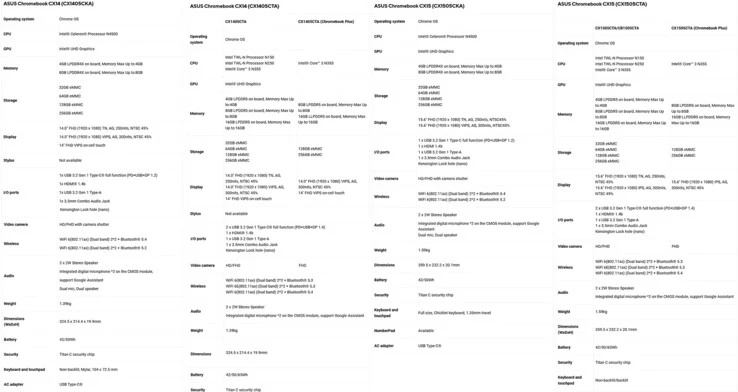
    These new Chromebook laptops provide a good variety of connectivity ports. For wireless options, both the CX14 and CX15 come with WiFi 6 or WiFi 6E, and support for Bluetooth 5.3 or 5.4, depending on the specific model. Other notable features include an up to FHD webcam and a 63 Wh battery (Ugreen Nexode 145 W laptop power bank curr. $74.99 on Amazon). For further details, check the complete specifications provided below. Asus has yet to reveal the pricing and availability for these latest laptops.

    Source:
    Link

  • Sixfab Alpon X4: Raspberry Pi Mini PC with 4G LTE Connectivity

    Sixfab Alpon X4: Raspberry Pi Mini PC with 4G LTE Connectivity

    Key Takeaways

    1. The Alpon X4 Edge is a mini PC built on the Raspberry Pi Compute Module 4, integrated into a dedicated motherboard with user-friendly ports.

    2. It features four external antennas for enhanced wireless connectivity, supporting 2.4GHz, 5GHz WiFi, Bluetooth, and 4G LTE.

    3. The dimensions of the computer are approximately 4.4 x 3.9 x 1.3 inches, and it can be mounted on a DIN rail for industrial applications.

    4. Additional connectivity options include two USB 2.0 ports, Gigabit Ethernet, a 100 Mbit/s Ethernet port, and support for external displays.

    5. The Alpon X4 Edge comes with 8GB LPDDR5 RAM, 32GB eMMC storage, and can be powered via USB Type-C or standard power cables (9-30 volts), priced at €550.


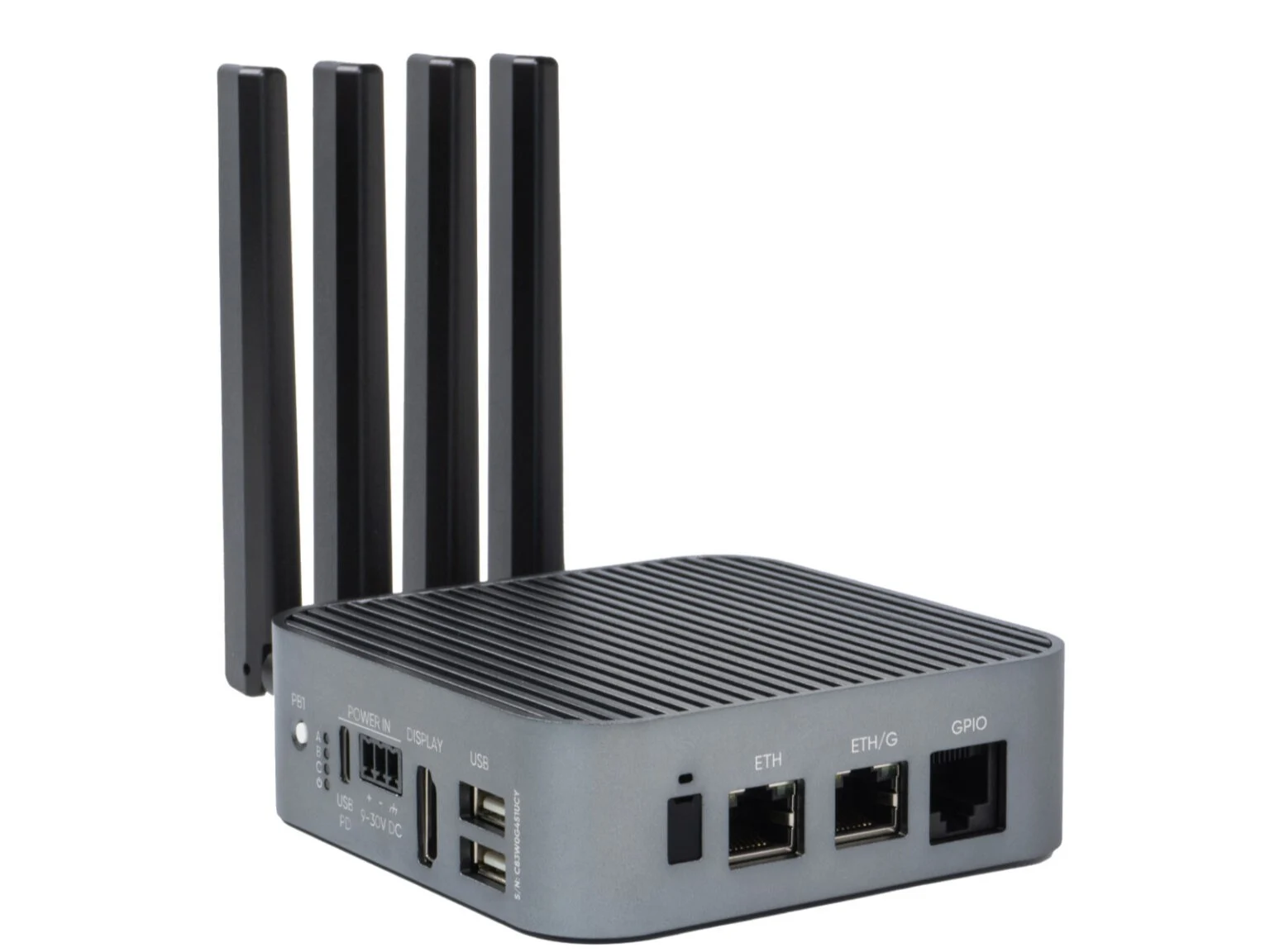
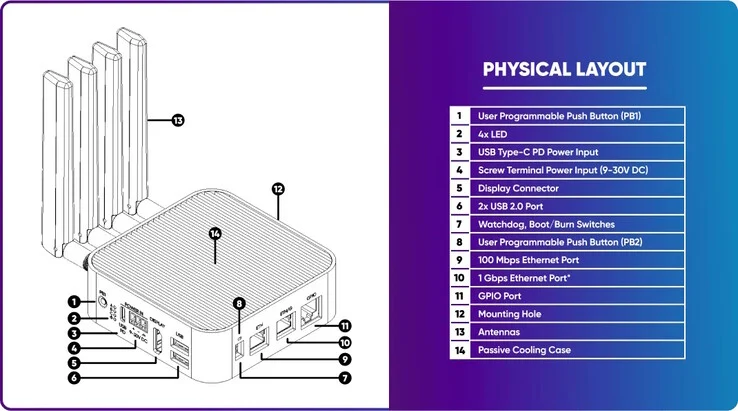
    Sixfab has launched a new computer using the Raspberry Pi. More specifically, the Alpon X4 Edge is built on the Raspberry Pi Compute Module 4. The company, Sixfab, has integrated the Compute Module 4 into a dedicated motherboard, providing the typical ports within a user-friendly case.

    Wireless Connectivity

    You can spot the four external antennas designed for wireless connections, which likely enhances reception and ensures quick data speeds. This mini PC works with the standard 2.4GHz and 5GHz WiFi frequencies, in addition to supporting Bluetooth and even 4G LTE.

    Dimensions and Mounting

    When you take away the antennas, the computer measures approximately 4.4 x 3.9 x 1.3 inches. The Alpon X4 Edge is capable of being mounted on a DIN rail, a feature that is often utilized in industrial environments, where this mini PC might be employed to monitor or control various machines.

    Additional Connectivity Options

    With an appropriate add-on board, users can connect extra devices through GPIO. The base setup includes two USB 2.0 ports, Gigabit Ethernet, and an additional slower Ethernet port that operates at 100 Mbit/s. The mini PC also supports external display connections.

    Furthermore, it can be powered using USB Type-C or standard power cables ranging from 9 to 30 volts. Lastly, the Sixfab Alpon X4 Edge, which supports 4G, features 8GB LPDDR5 RAM and 32GB eMMC storage, with an official price tag of €550.

    Source:
    Link


  • Beelink ME Mini: Company’s First NAS Launch Announcement

    Beelink ME Mini: Company’s First NAS Launch Announcement

    Key Takeaways

    1. Beelink has launched the ME series, entering the NAS market, starting with the ME mini model.
    2. The ME mini features an Intel N200 CPU, 64 GB of eMMC storage, and 12 GB of LPDDR5 RAM.
    3. It supports up to 24 TB of NVMe storage with six M.2 SSD slots, though only one slot supports PCIe 3.0 x2.
    4. The device includes a quiet cooling system, a 45 W built-in power supply, and various connectivity options, including WiFi 6 and Bluetooth 5.2.
    5. The initial price in China is CNY 1,295 (approximately $177), with potential for global availability soon.


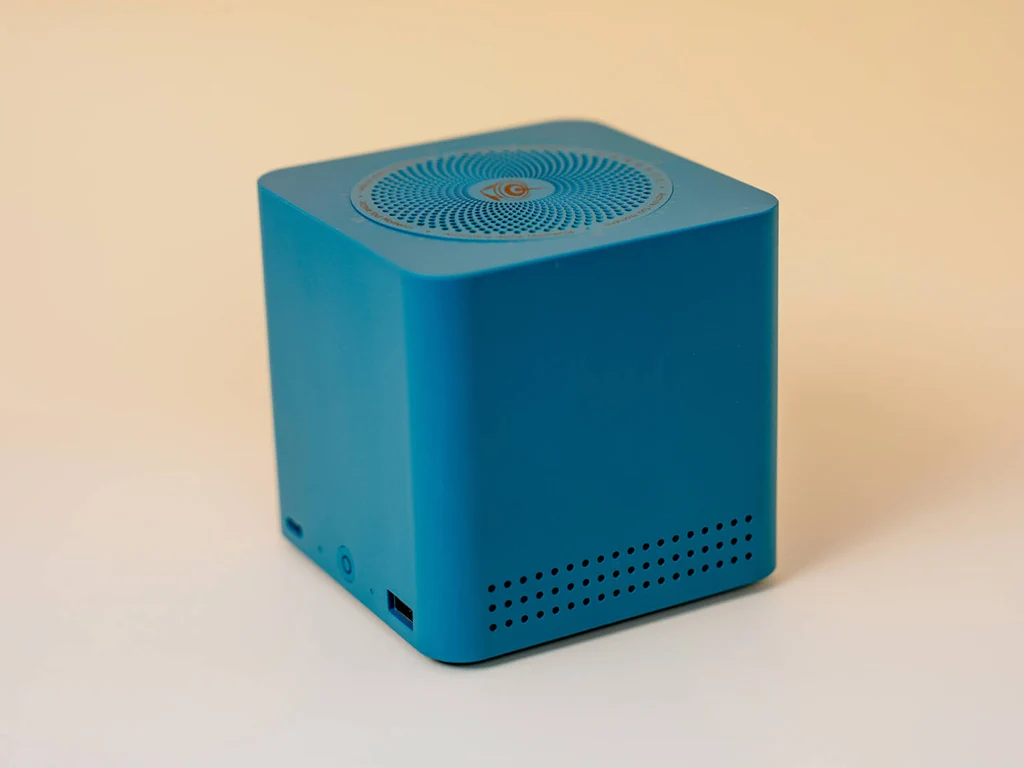
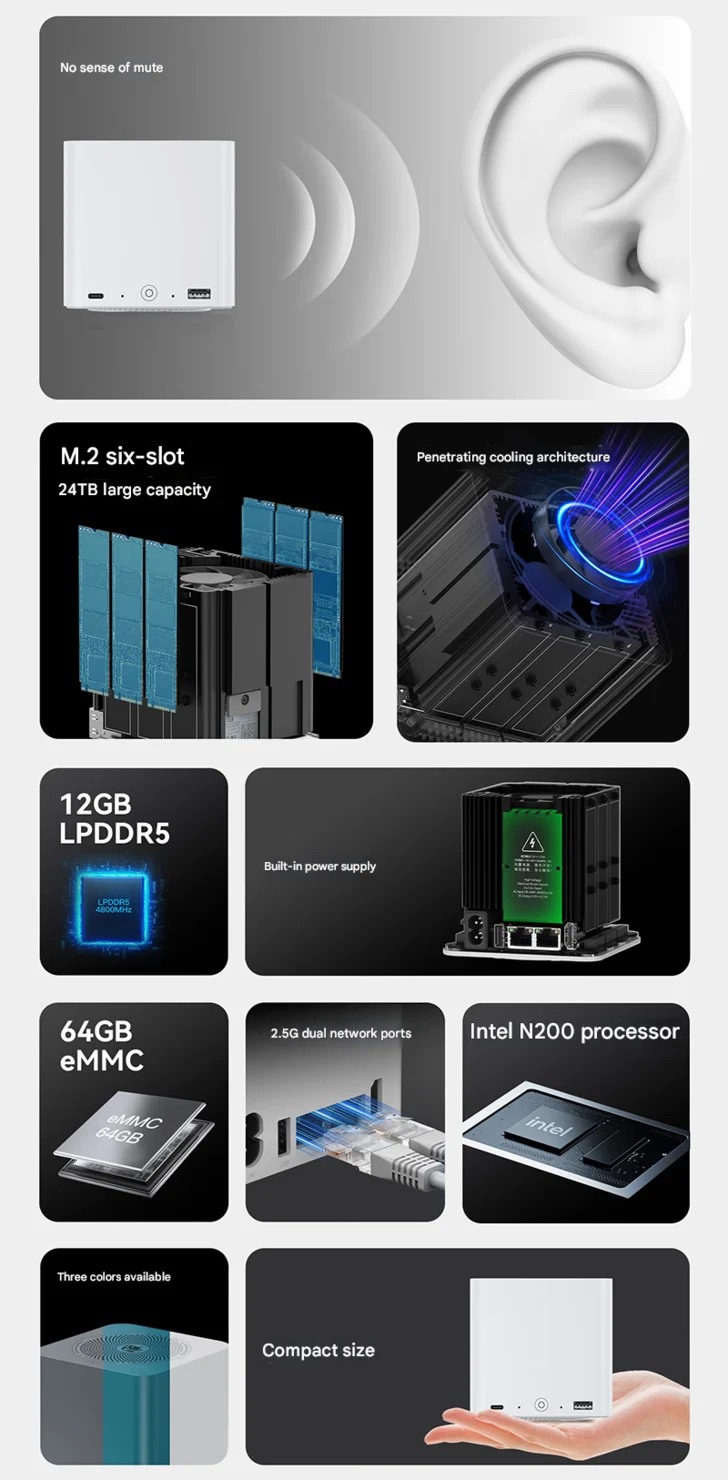
    Beelink has entered the NAS market with the launch of the ME series. This series was first hinted at in early March 2025, and the first product is known as the ME mini. It features the Intel N200, which is a basic mobile CPU from the Alder Lake-N series that includes four E-cores but lacks performance cores.

    Specs and Storage

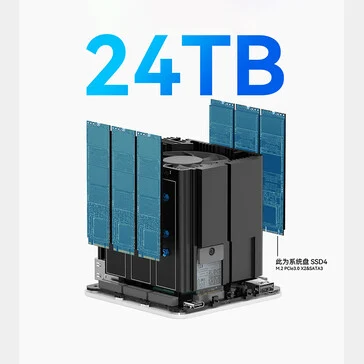
    This entry-level CPU is combined with 64 GB of eMMC storage and 12 GB of LPDDR5 RAM that operates at 4800 MHz. A key feature of the Beelink ME mini is its capability to support up to 24 TB of NVMe storage, facilitated by six M.2 SSD slots. Among these six slots, only one supports PCIe 3.0 x2, while the remaining slots are PCIe 3.0 x1.

    Cooling and Connectivity

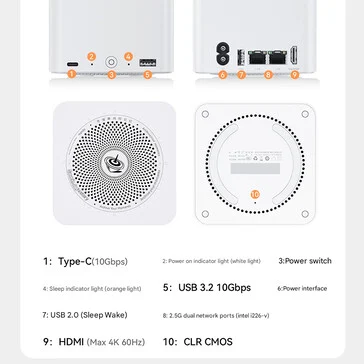
    The company asserts that the Beelink ME mini is equipped with a quiet cooling system that efficiently cools both the CPU and the storage drives. Additionally, Beelink emphasizes that this NAS includes a built-in power supply rated at 45 W and offers a variety of connectivity options, which includes:

    Other notable features of the Beelink ME mini are its small size, measuring 99 mm in both height and width, along with WiFi 6 and Bluetooth 5.2 capabilities. The initial price in China is CNY 1,295, translating to about $177. There has been no announcement regarding the global launch and pricing yet, but since Beelink typically releases its products internationally, this NAS is likely to be available worldwide soon.

    Source:
    Link


  • Motorola Launches Moto Book 60: Its First Laptop Release

    Motorola Launches Moto Book 60: Its First Laptop Release

    Key Takeaways

    1. Motorola offers a range of smartphones, including affordable Moto E models and premium foldable devices like the Razr 50 Ultra.
    2. The company has expanded into smartwatches with the budget-friendly Moto Watch 120.
    3. The newly launched Moto Book 60 features a 14-inch 2.8K OLED display with a 120 Hz refresh rate.
    4. It comes with a 60 Wh battery, dual speakers, and supports Bluetooth 5.4 and Wi-Fi 7 connectivity.
    5. The Moto Book 60 is priced starting at INR 66,900 (around $783) and has two processor options, but availability outside India is not confirmed.


    Motorola is primarily recognized for its range of smartphones, including affordable models from the Moto E series and higher-end foldables like last year’s Razr 50 Ultra, which is currently priced at $449.97 for a renewed version on Amazon. Recently, the company has ventured into different markets, introducing budget-friendly smartwatches like the Moto Watch 120.

    New Additions to the Line-Up

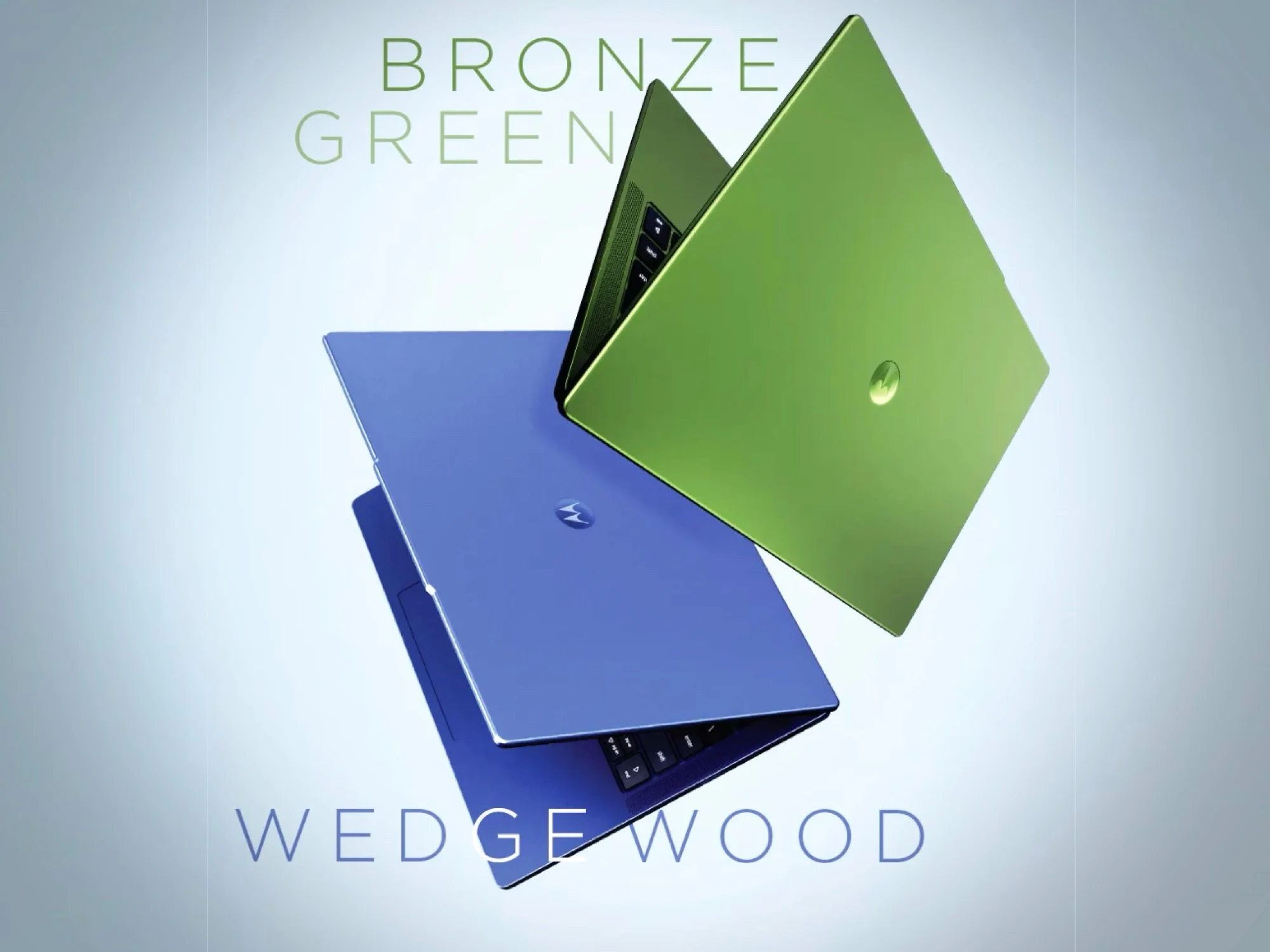
    Now, Motorola has launched the Moto Book 60, showcasing it in eye-catching finishes of ‘Bronze Green’ and ‘Wedge Wood.’ At its release, the company is providing three different configurations of the laptop, all featuring the same display. The 14-inch screen uses a 16:10 OLED panel that boasts a sharp 2.8K resolution (2,880 x 1,800) and can achieve a peak brightness of 500 nits, along with a refresh rate of 120 Hz.

    Key Features and Specifications

    Additionally, the Moto Book 60 is equipped with a 60 Wh battery, dual 2 W speakers, and a basic webcam that supports Windows Hello. All versions come with Bluetooth 5.4 and Wi-Fi 7 connectivity, alongside a variety of ports included.

    The starting price for the Moto Book 60 is INR 66,900 (around $783), which features an Intel Core 5 210H processor, 16 GB of RAM, and a 512 GB SSD. Alternatively, Motorola is also providing a model with a more powerful Core 7 240H processor, available for INR 69,999 (approximately $819). However, the company has not yet announced if the Moto Book 60 will be available outside of India. For further hardware specifications, you can check the company’s official website.

    Source:
    Link


  • Minix Elite Mini PCs with Intel Core Ultra CPUs and 32GB DDR5

    Minix Elite Mini PCs with Intel Core Ultra CPUs and 32GB DDR5

    Key Takeaways

    – Minix has launched two new mini PCs: EU715-AI and EU512-AI, featuring Intel Core Ultra processors.
    – The EU715-AI model includes 32GB of DDR5 RAM and a 1TB SSD, supporting multiple display connections.
    – Both models are equipped with integrated graphics and a Neural Processing Unit (NPU).
    – Connectivity options include dual 2.5Gbit/s Ethernet ports and WiFi 6E support.
    – The mini PCs have compact dimensions (5.5 x 5.5 x 1.5 inches) and utilize USB Type-C for power.


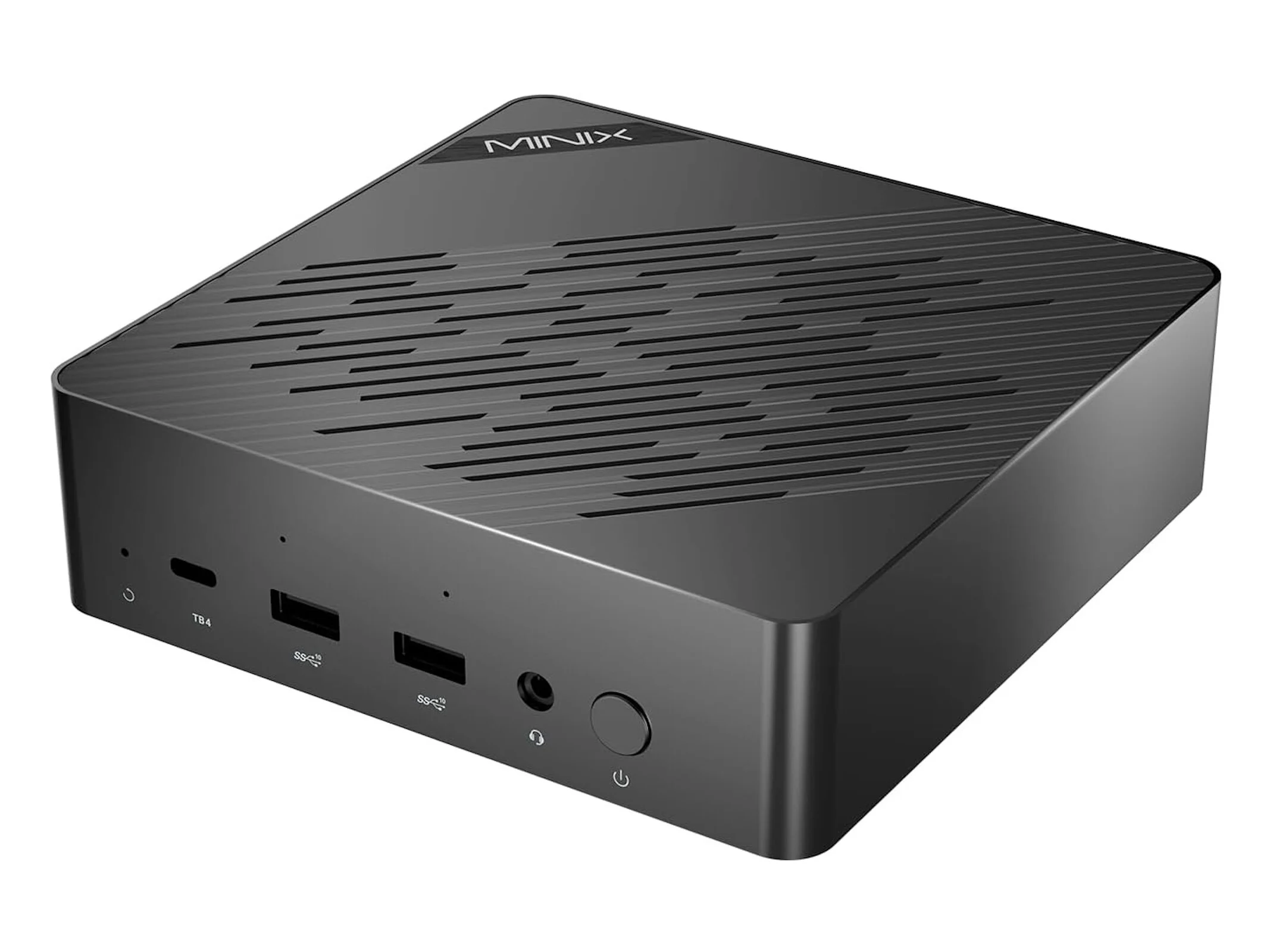
    Minix, the maker of mini PCs, is introducing two fresh models to its product lineup. The new systems are identified as EU715-AI and EU512-AI, and they feature different Intel processors.

    New Processor Details

    Specifically, these devices are driven by the Core Ultra 5 125H and Core Ultra 7 155H processors. Each of these chipsets includes an integrated graphics card along with a Neural Processing Unit (NPU). The new models are available at the brand’s official website for prices of $749 and $999, respectively.

    Specifications and Features

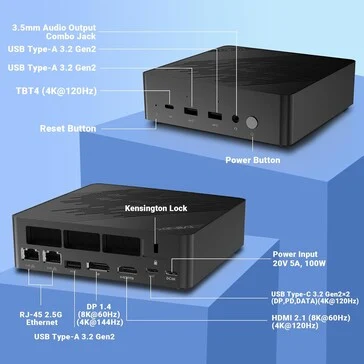
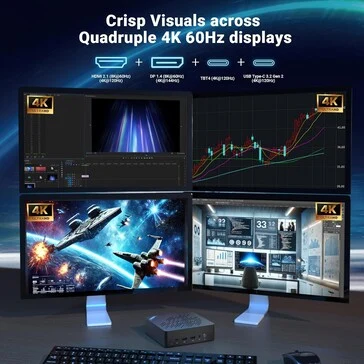
    The Minix Elite EU715-AI boasts 32GB of DDR5 RAM and comes with a 1TB SSD. This SSD utilizes one of the two M.2 2280 slots, both of which are linked through four PCIe 4.0 lanes. Users can connect multiple monitors, thanks to HDMI, DisplayPort, and Thunderbolt 4 ports. The DisplayPort 1.4 can even support a single 4K display at a refresh rate of up to 144Hz, while the other connections are capped at 120Hz.

    Connectivity Options

    For network connections, users of these mini PCs can choose between two Ethernet ports with speeds of 2.5Gbit/s or opt for WiFi 6E. Both of these options necessitate compatible network hardware, like a modern WiFi router. Lastly, these new Minix Elite PCs have dimensions of roughly 5.5 x 5.5 x 1.5 inches and are equipped with an active cooling system. They are powered through USB Type-C, supporting up to 100 watts.

    Source:
    Link


  • Radxa Dragon Q6A: New Qualcomm-Based Raspberry Pi Alternative

    Radxa Dragon Q6A: New Qualcomm-Based Raspberry Pi Alternative

    Key Takeaways

    1. Radxa is launching the Dragon Q6A single-board computer as an alternative to Raspberry Pi.
    2. The Dragon Q6A features a Qualcomm QCS6490 SoC with powerful AI capabilities and integrated GPU.
    3. Connectivity options include MIPI DSI, HDMI, Gigabit Ethernet, WiFi 6, and Bluetooth 5.4, but lack integrated mass storage.
    4. Compatibility with Raspberry Pi accessories is provided through a 40-pin GPIO header.
    5. Community interest is growing on platforms like Weibo, discussing the Dragon Q6A’s potential applications.


    Radxa is set to introduce a new single-board computer called the Dragon Q6A. This SBC can be seen as a substitute for the well-known Raspberry Pi. It has dimensions of 3.35 x 2.56 inches and features a 40-pin GPIO header, which is compatible with Raspberry Pi accessories. Thus, users can connect related expansion boards, although there may be instances where software support is not assured.

    Powerful Specifications

    This SBC is powered by the Qualcomm QCS6490 SoC, which includes four Cortex-A78 cores and four Cortex-A55 cores, along with an Adreno 634L integrated GPU. Additionally, it comes with an NPU that is capable of delivering an AI performance of 12 TOPS, enabling the local execution of certain AI models, such as image object recognition. Users can connect cameras through USB or MIPI CSI ports, which are commonly found in the SBC market.

    Connectivity Options

    For video output, MIPI DSI and HDMI ports are provided. Network connectivity can be achieved through Gigabit Ethernet, which includes optional Power over Ethernet (PoE) support, or via WiFi 6. Support for Bluetooth 5.4 is also included; however, there is no integrated mass storage. As a result, hobbyists will need to install eMMC, UFS modules, or an M.2 SSD for additional storage. Similar to many other single-board computers, the Radxa Dragon Q6A is compatible with microSD cards and can support up to 16GB of LPDDR5 RAM. The company has yet to disclose pricing or a release date.

    Community Reactions

    The announcement has sparked interest among tech enthusiasts on platforms like Weibo, where discussions about its potential applications and performance are already underway.

    Source:
    Link


  • NASA’s James Webb Telescope Suggests Alien Life on K2-18b

    NASA’s James Webb Telescope Suggests Alien Life on K2-18b

    Key Takeaways

    1. K2-18b is an exoplanet located 120 light-years away in the habitable zone of a cool dwarf star and is 8.6 times heavier than Earth.
    2. The planet may have water vapor and complex carbon-based molecules, including methane, carbon dioxide, and potentially dimethyl sulfide (DMS), which are essential for life.
    3. K2-18b is classified as a Hycean planet, indicating it may have hydrogen-rich atmospheres and liquid water oceans beneath its surface.
    4. The detection of DMS, a potential biosignature produced by marine microorganisms on Earth, suggests the possibility of life but requires further validation.
    5. This discovery encourages scientists to explore a wider range of planets, not just Earth-like ones, in the search for extraterrestrial life.


    First noticed back in 2015 by NASA’s K2 mission, K2-18b orbits a cool dwarf star that’s about 120 light-years away in the Leo constellation. This faraway planet, which is around 8.6 times heavier than Earth, is situated in the habitable zone, also known as the “Goldilocks zone.” This is the area around a star where conditions might just be right for liquid water to exist, similar to Earth. While early data from Hubble suggested there might be water vapor in the atmosphere, a group of astronomers and researchers from the University of Cambridge used Webb’s advanced tools to discover traces of methane (CH₄), carbon dioxide (CO₂), and potentially dimethyl sulfide (DMS). This indicates the presence of more complex carbon-based molecules, which are essential for life.

    Exciting Possibilities of K2-18b

    These findings imply that K2-18b could be classified as a Hycean planet, a type of exoplanet characterized by hydrogen-rich atmospheres and likely liquid water oceans underneath. This combination makes it a fascinating candidate in the quest for extraterrestrial life. K2-18b is larger than Earth, having about 2.6 times its radius, which suggests that its surface might be covered with high-pressure ice or a very thick ocean, possibly too hot for any known forms of life to survive. Nonetheless, the detection of life-friendly chemistry in its atmosphere represents a significant advancement.

    The Significance of Dimethyl Sulfide

    One of the most exciting findings is the potential detection of DMS. On Earth, this compound is mainly produced by microorganisms in the ocean, such as marine phytoplankton, making it a possible biosignature. Yet, scientists warn that this detection is still uncertain and requires more validation in future observations using the Webb telescope.

    Lead researcher Nikku Madhusudhan mentions that this discovery encourages scientists to think about a wider variety of planets—not only Earth-like rocky ones—in their search for alien life. He noted, “Traditionally, the search for life on exoplanets has focused primarily on smaller rocky planets, but the larger Hycean worlds are significantly more conducive to atmospheric observations.” The research team is now gearing up for further observations with the James Webb Space Telescope’s Mid-Infrared Instrument (MIRI) to confirm the DMS signal and gain a deeper understanding of this intriguing exoplanet.

    Source:
    Link

  • Motorola Launches Moto Book 60: 14″ 2.8K OLED, Intel Core, Wi-Fi 7

    Motorola Launches Moto Book 60: 14″ 2.8K OLED, Intel Core, Wi-Fi 7

    Key Takeaways

    1. Motorola has entered the personal computing market with the launch of the Moto Book 60, its first laptop, available exclusively in India.
    2. The Moto Book 60 features a 14-inch 2.8K OLED screen, military-grade design, and powerful Intel Core processors, targeting professionals, students, and creators.
    3. Smart Connect capabilities allow seamless syncing with Motorola devices, enhancing user experience through features like Smart Clipboard and Swipe to Share.
    4. The laptop supports advanced connectivity options, including Wi-Fi 7 and multiple USB ports, while also featuring Dolby Atmos speakers and a 1080p IR webcam.
    5. The Moto Book 60 comes in three variants, with launch prices ranging from Rs. 61,999 to Rs. 73,999, and will be available on various platforms starting April 23, 2025.


    Motorola has stepped into the personal computing market with the launch of its inaugural laptop, the Moto Book 60, which can only be found in India. This is a major move for the company as it expands its product range and applies its focus on design to a fresh category. The Moto Book 60 combines top-notch design with strong performance, targeting professionals, students, and creators. Along with this laptop, Motorola has also launched the Moto Pad 60 Pro.

    Moto Book 60 Features

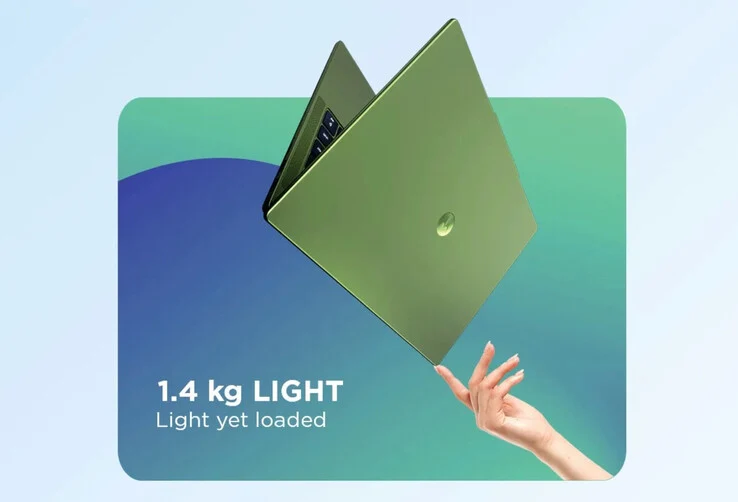
    The Moto Book 60 comes with a 14-inch 2.8K OLED screen featuring Dolby Vision, HDR, and TÜV certifications, delivering bright and comfortable visuals. It supports a full 100% DCI-P3 color gamut and boasts a refresh rate of 120Hz. Crafted with a stylish, military-grade (MIL-STD-810H) all-metal frame, it weighs 1.39kg and is available in unique colors like Pantone-curated Bronze Green and Wedgewood.

    This laptop is driven by Intel’s latest Core 5 210H and Core 7 240H processors, equipped with 16GB DDR5 RAM (which can be upgraded to 32GB) and offers up to 1TB PCIe 4.0 SSD storage. It operates on Windows 11 Home and includes Microsoft Office Home & Student 2024 in the package.

    Smart Connect and Connectivity

    The Moto Book 60 features Smart Connect, Motorola’s solution for syncing multiple devices. It includes handy features such as Smart Clipboard, Swipe to Share, and File Transfer, ensuring smooth interactions with Motorola smartphones and tablets.

    On the connectivity front, the laptop supports Wi-Fi 7, Bluetooth 5.4, and has many I/O ports: two USB Type-A 3.2 Gen 1, two USB Type-C 3.2 Gen 1 (with DisplayPort 1.4), HDMI, a microSD card reader, and a 3.5mm audio jack.

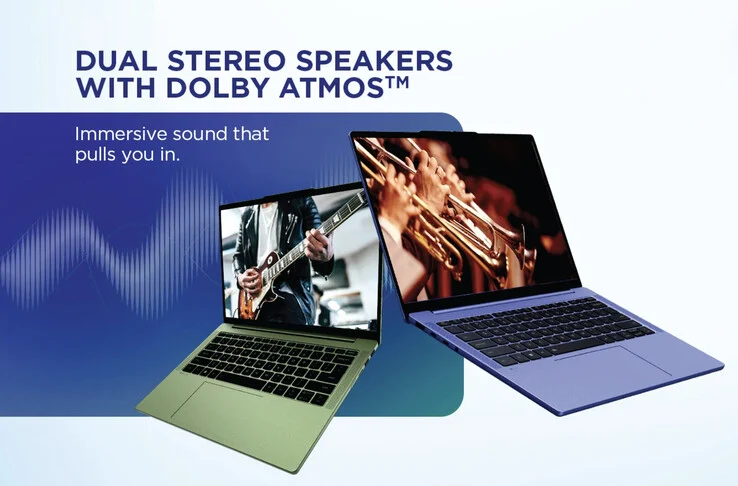
    The device is equipped with stereo speakers featuring Dolby Atmos, a 1080p IR webcam with a privacy shutter, dual microphones, and a sizable 60Wh battery that supports 65W fast charging through USB-C.

    Pricing Details

    The Moto Book 60 is offered in three variants:
    Intel Core 5 (16GB RAM + 512GB SSD)
    – Regular Price: Rs. 66,990 ($782)
    – Launch Price: Rs. 61,999 ($724)

    Intel Core 7 (16GB RAM + 512GB SSD)
    – Regular Price: Rs. 74,990 ($876)
    – Launch Price: Rs. 69,999 ($818)

    Intel Core 7 (16GB RAM + 1TB SSD)
    – Regular Price: Rs. 78,990 ($922)
    – Launch Price: Rs. 73,999 ($864)

    The laptop is set to launch on April 23, 2025, and will be available on Flipkart, Motorola.in, and in leading brick-and-mortar stores. EMI plans for up to 12 months are also offered, with No Cost EMI options starting at just Rs. 5,167/month ($60).

  • Casio’s 60th Anniversary: Japanese-Themed Eco-Friendly Calculators

    Casio’s 60th Anniversary: Japanese-Themed Eco-Friendly Calculators

    Key Takeaways

    1. Casio has launched the MS-20UC-J series to celebrate 60 years of electronic desktop calculators, combining Japanese aesthetics with sustainability.
    2. The series features three models inspired by Japanese cultural symbols: Asanoha (hemp leaf), Seigaiha (wave pattern), and Takekago (bamboo weave), all maintaining the MS-20UC layout.
    3. The calculators are made from recycled plastics, and their packaging has reduced plastic usage by 81% by using recyclable paper-based materials.
    4. Casio’s environmental initiatives are guided by its Environmental Vision 2050, aiming to eliminate greenhouse gas emissions and promote resource recycling.
    5. The MS-20UC-J series will have limited availability and will not be sold in several regions, including Cyprus, Poland, Russia, Spain, and Ukraine.


    To mark the 60th year since the launch of its first electronic desktop calculator, Casio has unveiled the MS-20UC-J series. This collection merges traditional Japanese aesthetics with a fresh focus on sustainability. These new models come after the January release of the Comfy JT-200T, which, according to the Verge, showcases a subtle color scheme and a solar panel that has been repositioned to the top for a more appealing look.

    Unique Cultural Designs

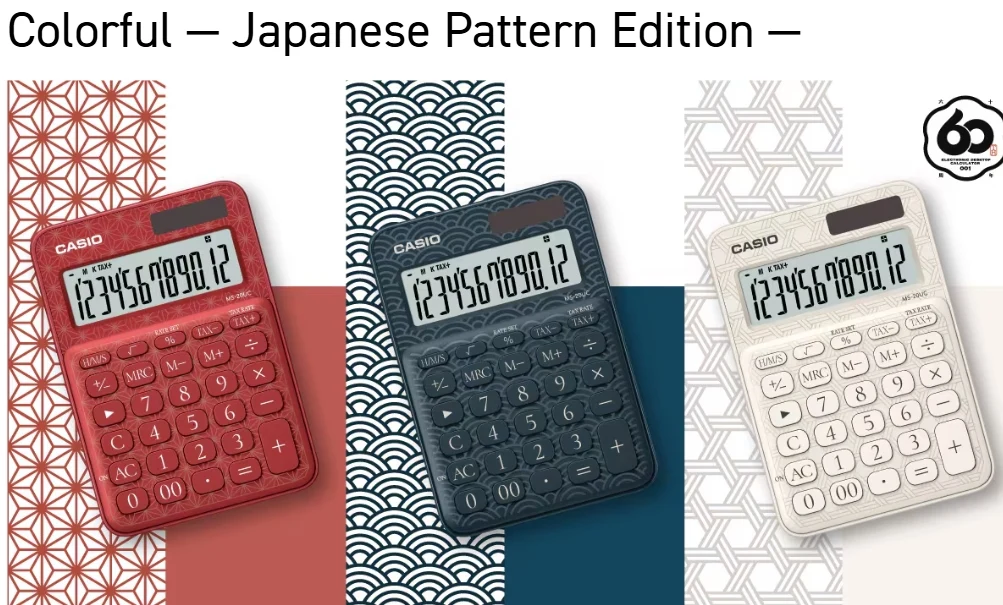
    The MS-20UC-J series offers three distinct variations influenced by Japanese cultural symbols. The Asanoha model in red features a hemp leaf design, symbolizing strength and growth. The blue Seigaiha model showcases a wave pattern that represents calm and continuity. Meanwhile, the white Takekago edition displays a bamboo weave pattern, which signifies resilience and balance. All calculators maintain the functionality of Casio’s popular MS-20UC layout, making them suitable for everyday tasks at school or in the workplace.

    Commitment to Sustainability

    This new series highlights Casio’s commitment to environmental responsibility. According to the company’s press release, the MS-20UC-J calculators are made from recycled plastics. Their packaging has also seen a redesign, cutting down plastic usage by around 81 percent by employing recyclable paper-based materials instead.

    Casio’s environmental initiatives are directed by its Environmental Vision 2050, a long-term strategy aimed at eliminating greenhouse gas emissions, encouraging resource recycling, and living in harmony with nature. This plan is supported by Green Targets 2024, which lays out immediate goals. Additionally, Casio has an environmental management system certified under ISO 14001 that helps coordinate sustainable practices throughout its operations.

    Limited Availability

    Even though the MS-20UC-J series is part of a wider international launch, Casio has stated that these calculators will not be sold in several regions, which includes Cyprus, Poland, Russia, Spain, and Ukraine.

    With the release of its 60th-anniversary calculators, Casio continues to blend cultural significance with a sense of environmental duty, reaffirming its position as a leader in creating accessible and sustainable designs.

    – Comfy JT-200T Product Page
    – Casio’s official announcement
    – The Verge – Casio’s new Comfy calculator shifts its solar panel up for aesthetics
    – Casio Sustainability Concept
    – Casio Sustainability Goals
    – Casio Environmental Management

    Source:
    Link


  • AMD Ryzen Z2: Part of AMD’s Van Gogh Family Explained

    AMD Ryzen Z2: Part of AMD’s Van Gogh Family Explained

    Key Takeaways

    1. AMD showcased three Ryzen Z series processors at CES 2025: Ryzen Z2 Go, Ryzen Z2, and Ryzen Z2 Extreme.
    2. Only the Ryzen Z2 Go is currently available, while the other two models are expected to launch later this year.
    3. Two additional models, Ryzen Z2 A and Ryzen AI Z2 Extreme, are planned, with some details leaked about the Ryzen Z2 A.
    4. The Ryzen Z2 A will use AMD’s Van Gogh architecture, which is older technology compared to the other Z2 series processors.
    5. The Ryzen Z2 A is anticipated to be more affordable, potentially making handheld devices more accessible for consumers.


    AMD recently displayed three Ryzen Z series processors at CES 2025: Ryzen Z2 Go, Ryzen Z2, and Ryzen Z2 Extreme. Among these, only the Ryzen Z2 Go is currently available, while the other two are expected to launch later this year. Additionally, past information has suggested there are two more models planned, the Ryzen Z2 A and Ryzen AI Z2 Extreme. A fresh leak provides some insights on the Ryzen Z2 A.

    Details on Ryzen Z2 A

    Leaker @AnhPhuH, who first disclosed the Ryzen Z2 A, states that this chip will utilize AMD’s Van Gogh architecture. This architecture is the same type of tech that powers the Steam Deck, combining elements of Zen 2 and RDNA 2. In fact, its CPU is older than that of the Ryzen Z2 Go, which means the Ryzen Z2 A will be the weakest option among the group.

    Speculations and Expectations

    However, most of what we know about the Ryzen Z2 series is based on guesswork since the Ryzen Z2 (Hawk Point) and Ryzen Z2 Extreme (Strix Point) have not yet appeared. AMD’s lack of communication on this topic hasn’t helped either. Still, the Ryzen Z2 A is expected to make handheld devices more accessible, as this older chip should be less expensive than newer models, hopefully allowing manufacturers to pass on these savings to consumers.

    Source:
    Link