Category: Computers

  • ASRock DeskMini X600: Updated 1.92L Mini-PC with USB4 Connectivity

    ASRock DeskMini X600: Updated 1.92L Mini-PC with USB4 Connectivity

    Key Takeaways

    1. ASRock refreshed its DeskMini X600 series with a new model supporting AMD Socket AM5 for Ryzen 8000G APUs.
    2. The DeskMini X600 is available for under $225 as a barebones setup.
    3. The new models include USB4 connectivity and additional ports compared to last year’s versions.
    4. Both DeskMini X600 and X600W feature SATA3 and M.2 2280 slots, plus dual SO-DIMM slots supporting up to 128 GB of DDR5-6400 RAM.
    5. The mini-PCs have a compact case size of 155 x 155 x 80 mm, with a total volume of only 1.92 litres.


    ASRock has refreshed its DeskMini X600 series with a new model. This new device comes a year after the release of its previous version, which was known as the ‘first-ever’ Mini STX mini-PC that supported AMD Socket AM5. The latest DeskMini X600 is now available on Amazon for less than $225 as a barebones setup. In essence, the updated DeskMini X600 continues to support Socket AM5 and is designed for Ryzen 8000G APUs.

    Additional Model Information

    To complement the DeskMini X600, ASRock has introduced the DeskMini X600W, which features an Intel AC-3168 Wi-Fi kit. It’s important to note that these new mini-PCs shouldn’t be confused with earlier models, as they both include USB4 connectivity in addition to the ports available in last year’s versions. From what we understand, both the new ‘USB4’ variants, the DeskMini X600 and X600W, are equipped with the following ports:

    Hardware Specs

    Furthermore, ASRock’s latest mini-PCs come with SATA3 and M.2 2280 slots, as well as dual SO-DIMM slots that allow for a maximum of 128 GB of DDR5-6400 non-ECC RAM. The DeskMini X600 encapsulates all of this hardware within a compact case measuring 155 x 155 x 80 mm, which has a total volume of only 1.92 litres. For further information, please check ASRock’s official website.

    Source:
    Link


  • GPD Announces Global Release Date for MicroPC 2, Cheaper in China

    GPD Announces Global Release Date for MicroPC 2, Cheaper in China

    Key Takeaways

    1. The GPD MicroPC 2 mini laptop will be available for backing on Indiegogo starting July 10 at 02:00 UTC, with a starting price of $495.
    2. The MicroPC 2 is a compact and less powerful alternative to the Pocket 4, which costs $1,481 on Amazon.
    3. The device will come with 512 GB of storage by default, with an option for storage expansion via an M.2 2280 slot.
    4. GPD is already selling the MicroPC 2 in China at a lower price (CNY 2,999 or about $417.99) compared to the Indiegogo price.
    5. The Indiegogo campaign claims to offer an 18% discount compared to the future global MSRP of the MicroPC 2.


    The highly anticipated debut of GPD’s latest mini laptop is just around the corner. After announcing a starting price of $495 last week, the company has revealed that the MicroPC 2 will be available for backing on Indiegogo in only three days. Specifically, the launch time is set for 02:00 UTC on July 10, and the device will come equipped with the following specifications:

    Overview of the MicroPC 2

    Essentially, the MicroPC 2 serves as a more compact and less powerful option compared to the already small Pocket 4, which is currently priced at $1,481 on Amazon. By default, GPD intends to ship the MicroPC 2 with 512 GB storage. Nevertheless, users have the option to enhance storage through its M.2 2280 slot. It is important to highlight that this slot has a bandwidth limitation of PCIe Gen3 ×4.

    Availability and Pricing Discrepancies

    Meanwhile, GPD has already started selling the MicroPC 2 in China with the same setup. Interestingly, the price in China is notably lower than that on Indiegogo, even though the company claims that its Indiegogo campaign offers an 18% discount compared to its future global MSRP. For example, the MicroPC 2 can be acquired from JD.com for CNY 2,999, which currently translates to about $417.99.

    Source:
    Link


  • RayCue Mac Mini Docking Station with Display, M.2 SSD, USB PD

    RayCue Mac Mini Docking Station with Display, M.2 SSD, USB PD

    Key Takeaways

    1. RayCue is crowdfunding a new docking station for the Mac Mini M4 on Kickstarter, with a pledge starting at $150 and shipping expected in August 2025.
    2. The docking station features a built-in 1.65-inch display that shows charging power, data transfer rates, and information about connected devices.
    3. It includes an HDMI port for connecting an external 4K monitor at up to 60Hz and supports SSD speeds of up to 1,000 MB/s.
    4. Additional connectivity options include SD and microSD card readers, a 3.5mm headphone jack, and three USB Type-C ports with varying power outputs.
    5. The dock is designed to allow proper ventilation for the Mac Mini, which does not sit perfectly flat on it.


    We have talked before about some interesting docking solutions for Apple’s new Mac Mini, which is currently priced at $545 on Amazon. There are plenty of accessories to choose from, and you can find various options available at big retailers. Now, the company RayCue is trying to fund a new docking station through Kickstarter. Supporters can snag one for a pledge of about $150, with shipping expected to start in August 2025. As with all crowdfunding projects, there are financial risks involved, but it’s worth noting that RayCue is a somewhat established company, not just a newcomer.

    Docking Station Features

    The main feature that RayCue is promoting for this Mac Mini M4 dock is its built-in display. This display is 1.65 inches and can show various information, like charging power, data transfer rates of attached USB storage and SD cards, or specifics about the SSD or connected monitor. An HDMI port is included for linking an external 4K monitor at a refresh rate of up to 60Hz. Furthermore, the SSD connected can achieve speeds of up to 1,000 MB/s. There are also two USB 3.2 Type-A ports that can deliver speeds of up to 10 Gbit/s.

    Additional Ports and Connectivity

    You will find both SD and microSD card readers in addition to a 3.5mm headphone jack. On the front side, there are three USB Type-C ports that provide power with up to 140, 100, and 30 watts. The dock is powered through a standard barrel connector, and the connection to the Mac Mini M4 happens via USB Type-C. Finally, it’s important to note that the Mac Mini doesn’t sit perfectly flat on the dock, which is intentional and is meant to allow for proper ventilation and airflow.

    Kickstarter.

    Source:
    Link


  • Minix Reveals Details on New AMD Strix Point Mini PCs

    Minix Reveals Details on New AMD Strix Point Mini PCs

    Key Takeaways

    1. Minix introduced two new mini PCs, ER937-AI and ER936-AI, powered by AMD Strix Point processors.
    2. The ER937-AI features the more powerful Ryzen AI 9 HX 370, while the ER936-AI has the Ryzen AI 9 365.
    3. Pricing is set at €1,019 (approximately $1,195) for the ER937-AI and €919 (around $1,077) for the ER936-AI.
    4. Both models come with 32 GB of RAM and 1 TB of PCIe 4.0 storage, with the option to expand storage up to 8 TB.
    5. The release date for these mini PCs is not confirmed, but a launch is expected soon.


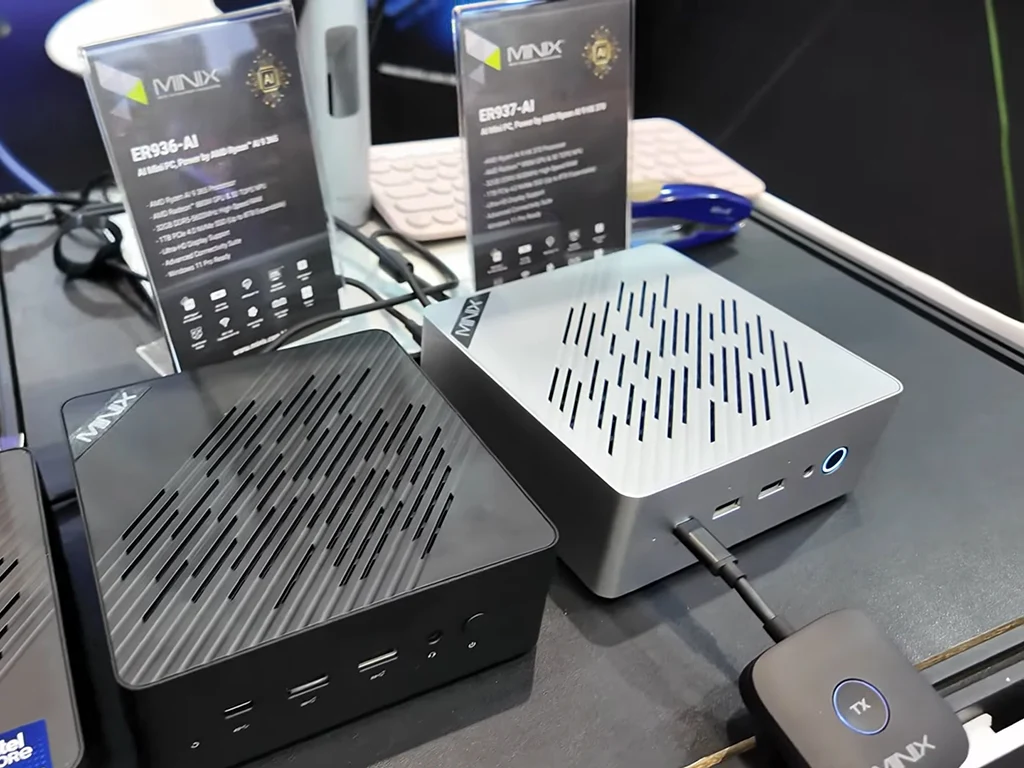
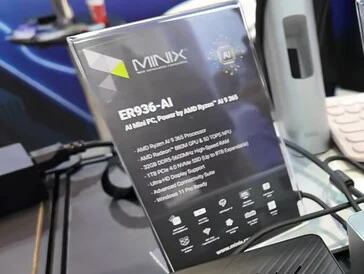
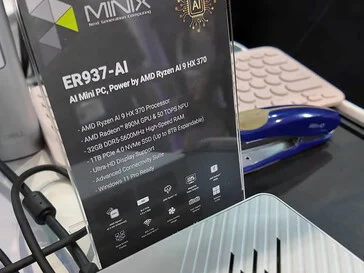
    Minix has unveiled two new mini PCs powered by AMD Strix Point at the Computex 2025 event. The ER937-AI stands out as the more powerful option, equipped with the Ryzen AI 9 HX 370. In contrast, the ER936-AI comes with a slightly less powerful Ryzen AI 9 365.

    Pricing Information Revealed

    Although the company did not initially disclose the pricing for these mini PCs, Minix has now announced that the ER937-AI will retail for €1,019, which is around $1,195. Meanwhile, the ER936-AI will be a bit more budget-friendly, priced at €919, or roughly $1,077.

    Specifications and Features

    Both mini PCs seem to come in a single configuration, each offering 32 GB of RAM and 1 TB of PCIe 4.0 storage. Minix hasn’t provided any details on whether the memory is upgradeable, but users can increase the storage capacity up to 8 TB (the 4 TB Samsung 990 EVO Plus is currently listed at $234.99 on Amazon).

    Minix also revealed the port layout for these devices. As mentioned in our Computex 2025 coverage, the chassis design for both the ER936-AI and ER937-AI looks identical, and the ports are the same as well. Specifically, they include the following ports:

    Availability Status

    The exact date for when these mini PCs will hit the market is still unconfirmed. However, since much of the information has been released, it seems likely that Minix will launch them in the near future.

    Source:
    Link


  • Starlink Boosts In-Flight Wi-Fi Speeds for Airlines

    Starlink Boosts In-Flight Wi-Fi Speeds for Airlines

    Key Takeaways

    1. Hawaiian and Qatar Airways lead in in-flight Wi-Fi speed using SpaceX’s Starlink service.
    2. Many airlines struggle with in-flight Internet due to a lack of strong satellite networks.
    3. Spirit Airlines follows closely, using Boeing’s Hughes satellite system for Wi-Fi.
    4. Most airlines use Panasonic’s in-flight Wi-Fi, while Lufthansa relies on a ground network, affecting performance.
    5. Starlink excels in upload speeds and latency, prompting more airlines to adopt it for improved service.


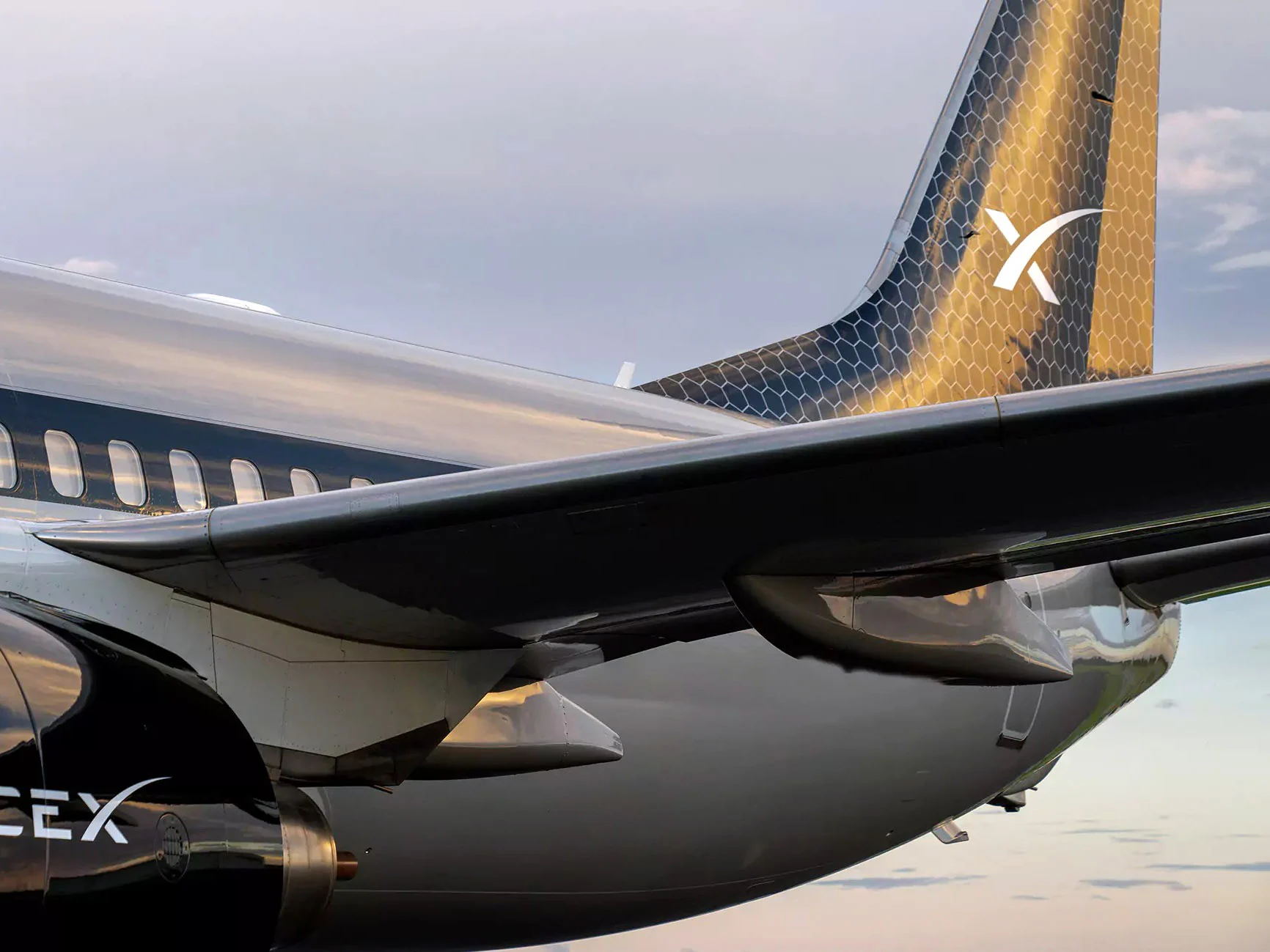
    Airlines such as Hawaiian and Qatar Airways that have signed up for SpaceX’s Starlink Aviation service provide the quickest in-flight Wi-Fi, as recent speed tests have shown.

    Current In-Flight Wi-Fi Situation

    At present, many airlines, including those recognized for outstanding customer service or punctuality, struggle with their in-flight Internet offerings. This is largely because they have various Wi-Fi providers, lacking a strong low Earth orbit (LEO) satellite network like that of SpaceX’s Starlink.

    Top Performers in Wi-Fi Speed

    The median download speeds for airline Internet highlight two clear frontrunners—Hawaiian and Qatar Airlines—both utilizing Starlink for their in-flight service. Following them is Spirit Airlines, which relies on Boeing’s Hughes, a company that manages over 70 satellites positioned in geostationary or medium Earth orbit.

    Wi-Fi Services Utilized by Airlines

    Most airlines listed utilize Panasonic’s in-flight Wi-Fi, which serves as an aggregator and provides decent performance. Lufthansa is an outlier due to many of its passengers relying on the surface-to-air LTE ground network from Deutsche Telekom, which significantly impacts its data performance.

    Meanwhile, both Qatar and Hawaiian airlines do use other providers besides SpaceX. However, it is their Starlink Aviation subscription that boosts their median download speeds to the forefront of in-flight Internet rankings.

    Uploads and Latency Performance

    Uploads and ping rates are also critical when measuring in-flight Wi-Fi quality, and airlines equipped with Starlink excel in these areas. A recent study, however, indicated that airline Internet ranks low on passengers’ priority lists, which might have made some cautious about investing in improved in-flight Wi-Fi.

    Nonetheless, more airlines are opting for Starlink, and SpaceX is making significant advancements with V3 satellites that are expected to launch in 2026, promising to increase capacity by tenfold. Thus, it might not be long before in-flight Internet experiences see a remarkable improvement compared to what they are now.

    Source:
    Link


  • Intel Arrow Lake Refresh CPUs: Faster Clock Speeds for Desktops

    Intel Arrow Lake Refresh CPUs: Faster Clock Speeds for Desktops

    Key Takeaways

    1. Launch Timeline: Intel’s Arrow Lake Refresh CPUs are expected to be released in the second half of 2025.

    2. Performance Improvements: The new CPUs will feature higher clock speeds and will include NPU 4, though specific clock speed details are not yet available.

    3. Comparison to Previous Generations: The flagship Core Ultra 9 285K has a boost clock of 5.5 GHz, which needs to increase by over 8% to match the performance of the 14th-gen Core i9-14900K.

    4. NPU Integration: The Arrow Lake Refresh will incorporate NPU 4, which has seen limited practical applications on Windows, raising questions about its utility in desktop CPUs.

    5. Gaming Landscape: The second half of 2025 is shaping up to be exciting for gamers, with new Intel CPUs and anticipated launches of desktop GPUs from AMD and Nvidia.


    While Intel is gearing up to introduce Nova Lake as the next significant CPU architecture for desktops, the company is also working on the Arrow Lake Refresh chips. Similar to previous updates, the Core Ultra 200 Arrow Lake Refresh CPUs are not anticipated to deliver drastic changes. Nevertheless, there are certain important aspects where Intel aims to enhance performance.

    Upcoming Release

    As reported by ZDNET Korea (via @harukaze5719 on X), the Intel Arrow Lake Refresh CPUs are set to launch sometime in H2 2025, featuring quicker clock speeds and NPU 4. The specifics regarding the improvement in clock speeds for the Arrow Lake Refresh chips remain unclear, as the report does not provide any numerical details.

    Key Specifications

    To put it into perspective, the Core Ultra 9 285K, which is the leading Arrow Lake processor, has a boost clock of 5.5 GHz. This represents a significant reduction compared to the 14th-gen Core i9-14900K (Available on Amazon). In order for the Arrow Lake Refresh flagship to match the 14th-gen models, it will need to achieve a boost clock increase of over 8%.

    NPU Enhancements

    Currently, the Core Ultra 200S desktop CPUs utilize NPU 3, an earlier version that Intel first rolled out with Meteor Lake chips in late 2023. Intel later integrated the much-improved NPU 4 into the Core Ultra 200V Lunar Lake mobile chips. This is the NPU that Intel is reportedly planning to implement in the Arrow Lake Refresh CPUs.

    Despite the potential power of the NPU that Intel includes in its new processors, there are not many truly practical applications for an NPU on Windows at this moment. Thus, it raises the question of whether it’s wise to allocate valuable silicon for something as underused as an NPU in desktop CPUs.

    Exciting Times Ahead

    Overall, H2 2025 seems to be quite promising, as both AMD and Nvidia are also rumored to be launching new desktop GPUs within a few months. Alongside the new Intel CPUs, gamers will have plenty to look forward to this upcoming holiday season.

    Source:
    Link

  • Amateur Astronomers Discover New Gas Giant Planet

    Amateur Astronomers Discover New Gas Giant Planet

    Key Takeaways

    1. TOI-4465 b is a newly discovered gas giant located over 400 light-years from Earth, with a mass six times that of Jupiter.
    2. The planet orbits its star in about 102 days and maintains temperatures between 93°C and 204°C.
    3. The discovery was made using the TESS telescope, which detects brightness changes when planets transit in front of their stars.
    4. Thousands of amateur astronomers contributed by using personal telescopes to confirm the planet’s existence, often from locations inaccessible to professional instruments.
    5. Exoplanets like TOI-4465 b are still largely unexplored, and findings like this could lead to further studies using advanced tools like the James Webb Telescope.


    The universe is full of wonders, and while scientists have unveiled many secrets, a recent discovery was made by amateur astronomers instead of experts. They found a new gas giant planet.

    Discovering TOI-4465 b

    This exoplanet, named TOI-4465 b, is situated over 400 light-years away from Earth and boasts a mass that is six times heavier than Jupiter. Additionally, it takes about 102 days to complete its orbit around its star, following an elliptical path while keeping its distance stable.

    Unique Characteristics

    Considering these factors, TOI-4465 b maintains its temperature between 93°C and 204°C. This makes it a significant target for astronomers and scientists for various research purposes.

    The discovery of this gas giant was achieved with the TESS telescope, which is specially built to spot decreases in brightness when a planet transits in front of its star. However, to verify its existence, a large number of people were required to contribute.

    Community Efforts in Astronomy

    As a result, thousands of astronomers from all corners of the globe utilized their personal telescopes to carry out observations. Though it may sound surprising, it’s crucial to note that these telescopes are often set up in locations that professional instruments cannot reach, such as backyards or rural settings. By staying fixed for extended periods, they can notice light variations linked to a star, showing that a celestial object is crossing in front of it. If this happens repeatedly, it becomes possible to confirm that a planet is orbiting.

    Nonetheless, exoplanets like TOI-4465 b remain largely unexplored by scientists. In fact, only a handful have been found in the past. Such findings could enable astronomers to study these celestial wonders more thoroughly with various tools, including the renowned James Webb Telescope, which has successfully observed its first exoplanet.

    Source:
    Link

  • Adlink Unveils Strong Raspberry Pi Alternative with Windows Support

    Adlink Unveils Strong Raspberry Pi Alternative with Windows Support

    Key Takeaways

    1. Powerful Processor: The SBC35-MTL features an Intel Core Ultra 5 125H, offering superior computing capabilities compared to the Raspberry Pi 5.

    2. High RAM Capacity: Users can install up to 96 GB of DDR5 RAM at a maximum clock speed of 5,600 MHz, though ECC memory is not supported.

    3. Multiple Storage Options: The board includes an M.2 2280 slot for PCIe 4 internal storage and additional M.2 slots for expansion, including a cellular modem.

    4. Versatile Display and Connectivity: It supports multiple display outputs (HDMI 2.0, DisplayPort 1.4, USB-C) and has two Ethernet ports for high-speed network performance.

    5. Customizable and Expandable: The SBC35-MTL offers various connection options (RS232/422/485, GPIO) and supports multiple operating systems, with a design guide for customization.


    The Adlink SBC35-MTL is a recently launched single-board computer. As per the specifications, it features an Intel Core Ultra 5 125H, which is expected to offer better computing capabilities than the Raspberry Pi 5. Users can install up to 96 GB of DDR5 RAM, with a maximum clock speed of 5,600 MHz, although it does not support ECC memory. There’s an M.2 2280 slot available for PCIe 4 internal storage, along with an additional M.2 2230 and M.2 3042 slot, making it feasible to add a cellular modem as well.

    Versatile Display and Connectivity Options

    For display outputs, the board supports HDMI 2.0, DisplayPort 1.4, eDisplayPort, and USB-C, enabling connection to up to four monitors at once. It includes two Ethernet ports, both capable of reaching data transfer rates up to 2.5 Gbps, ensuring robust network performance. Additionally, users can connect external storage or other devices through USB 3.2 Gen 2 ports, while USB 2.0 access is available via headers.

    Expandability and Customization

    Connections for other devices are also possible through RS232/422/485, and GPIO connections are supported. The board measures 146 x 102 millimeters and is powered through a circular connector. Users have a broad selection of operating systems available, with Windows being easy to install. Adlink also offers a detailed design guide to help users customize the SBC35 to fit various needs, making it suitable for multiple industries. Currently, there is no information regarding pricing or availability.

    Source:
    Link


  • Security Risk in Ubuntu and Fedora Laptops: Full System Compromise

    Security Risk in Ubuntu and Fedora Laptops: Full System Compromise

    Key Takeaways

    1. A serious flaw in the Initial RAM Filesystem (initramfs) can lead to evil maid attacks on encrypted Linux laptops, despite using Secure Boot and password-secured bootloaders.
    2. Attackers can exploit the vulnerability by entering incorrect disk decryption passwords, accessing a low-level debug shell, and injecting malicious scripts.
    3. The initramfs is not cryptographically signed, allowing hackers to modify it without triggering security alerts.
    4. This vulnerability highlights a design flaw prioritizing system recoverability over security, often overlooked in hardening manuals and evaluations.
    5. Users can enhance security by changing kernel settings to prevent the launch of a debug shell after failed password attempts.


    Cybersecurity experts have uncovered a serious flaw that threatens the safety of many encrypted Linux laptops, opening the door to evil maid attacks. A new report from Ernw reveals that even when systems use established protections like Secure Boot and password-secured bootloaders, a major lapse in security can lead to total system takeover.

    The Attack Method

    The vulnerability is found in the Initial RAM Filesystem (initramfs), which is a temporary setup used during the boot process to get the main operating system ready. By deliberately entering the wrong disk decryption password multiple times, an attacker can push the system into a potent, low-level debug shell.

    Exploiting the Weakness

    From within this shell, the essence of the vulnerability can be taken advantage of. Since the initramfs isn’t cryptographically signed — only the kernel and its modules are — a hacker can extract it, add harmful scripts, and repackage it without triggering any security alerts. When the laptop is next booted and the user types in their password correctly, the concealed malware activates with the highest privileges, which allows it to steal the decryption key, record keystrokes, or send out data.

    The researchers emphasize that this issue is more a flaw in design prioritizing system recoverability than a simple bug related to physical security. Importantly, this attack method is frequently overlooked in typical hardening manuals and security evaluations.

    Simple Solutions

    Luckily, addressing the issue is quite easy. Users and system admins who are concerned can change their system’s kernel settings to make sure the computer stops or restarts instead of launching a debug shell after failed password entries. The findings serve as a clear warning that even strong security measures can be compromised by one weak point.

    Source:
    Link

  • Lexar Unveils Durable High-Speed SSD with MagSafe and ProRes Support

    Lexar Unveils Durable High-Speed SSD with MagSafe and ProRes Support

    Key Takeaways

    1. Storage Options and Pricing: The Lexar ES5 is available in 1 TB (€150) and 2 TB (€220) versions, with the 2 TB option offering better cost per gigabyte.

    2. Performance and Connectivity: The SSD features a USB-C port for compatibility with various devices and can magnetically attach to MagSafe-compatible devices.

    3. Video Recording Capabilities: It can record Apple ProRes video at 4K (60 and 120 fps) and supports Samsung Pro Video at 8K (30 fps).

    4. Speed and Backup Features: Offers transfer speeds up to 2,000 MB/s and includes an option for automatic backups via the Lexar App.

    5. Durability: The ES5 has an IP65 rating for dust and water resistance and can withstand drops from three metres.


    The Lexar ES5 has just been released and comes in two storage options. The 1 TB version will cost you €150 (around US$176), while the 2 TB version bumps the price up to €220 (about US$259). This larger option gives you a better deal when you look at the cost per gigabyte, which is usually a smart move.

    Performance and Connectivity

    This new SSD is built to be a versatile portable solution that offers top-tier performance. It has a USB-C port that allows it to connect seamlessly with various devices, including laptops and gaming consoles. Additionally, it can easily attach magnetically to devices that are MagSafe-compatible, like newer iPhones, making it super convenient. Lexar claims that the ES5 can record Apple ProRes video at 4K with frame rates of 60 and 120 fps, and it also supports Samsung Pro Video at 8K 30 fps.

    Speed and Durability

    The drive features impressive transfer speeds of up to 2,000 MB/s through USB 3.2 Gen 2×2, which means users can quickly back up large quantities of data. There’s also an option for automatic photo and video backups via the Lexar App. Designed to last, the ES5 has an IP65 rating for both dust and water resistance, ensuring it can withstand drops from as high as three metres.

    Source:
    Link