Category: Artificial intelligence

  • NASA and IBM Collaborate for AI Weather Forecasting

    NASA and IBM Collaborate for AI Weather Forecasting

    The Revolution of Climate Observation through an Alliance of NASA and IBM Empowered by Artificial Intelligence (AI)

    The Innovation of AI Technologies

    Artificial Intelligence (AI) technologies persist in making substantial advancements, heightening efficiency, and enhancing quality across diverse sectors. Concerns related to job security have surfaced owing to these progressions. The latest development in this realm sees meteorologists in focus, as NASA and IBM unite to sculpt an AI model dedicated to incessantly monitoring the Earth’s climate.

    Collaborative Endeavor of NASA and IBM in AI for Weather and Climate Surveillance

    The convergence of NASA and IBM aims to craft an AI model tailored for weather and climate surveillance, envisioning an era where this progressive technology transcends prevailing meteorological tools. While AI has already made inroads in this domain, extant models are confined to specific functions, akin to technologies such as ChatGPT, serving as emulators at their core.

    Progressing Beyond Precise Prognostications

    The synergistic venture between NASA and IBM seeks to move past exact weather forecasts. Their ambition lies in engineering an AI system that perpetually scrutinizes and monitors Earth’s climate and weather patterns tirelessly. Envisaged attributes of this AI model encompass the capacity to prognosticate meteorological phenomena, extrapolate intricate details from rudimentary data, and foretell events like aircraft turbulence and forest fires.

    Elevating Weather Forecasts and Averting Catastrophes

    Both NASA and IBM align their vision towards refining weather forecast precision and forestalling potential calamities. As an instance, this AI technology could foresee forest fires triggered by intense heat, a looming challenge in numerous global regions, including our homeland, particularly during summer periods. While attaining absolute precision may pose a hurdle, the AI model anticipates proving highly advantageous in enforcing precautionary measures.

    Ambiguity Enveloping Integration and Data Origins

    The uncertainty surrounding integrating this AI technology into our routine existence prevails. The AI model will access data from NASA satellites and harness IBM technologies, yet the exact application methodology remains ambiguous. The partnership between NASA and IBM harbors boundless potential in bolstering climate surveillance and weather forecasting, eventually fostering a safer and sustainable world.

    In summary, the collaboration between NASA and IBM, sculpting an AI model for climate surveillance, stands poised to catalyze revolutionary alterations in the meteorological domain. By surpassing existing technologies and aiming for perpetual monitoring and precise predictions, this cooperative initiative teems with prospects for enhancing weather forecasts and averting latent disasters. While the incorporation of this technology into our lives lingers in uncertainty, its potential impact looms undeniable.

  • Introducing Amazon Q: An Innovative AI-Powered Workplace Assistant by Amazon

    Introducing Amazon Q: An Innovative AI-Powered Workplace Assistant by Amazon

    Amazon Web Services (AWS) has recently launched Amazon Q, an advanced generative artificial intelligence (AI) assistant that aims to revolutionize the corporate sector. This move by Amazon demonstrates its strategic entry into the competitive AI chatbot market, where it will compete with established players like Microsoft and Google.

    Purpose and Innovation

    Amazon Q is a highly sophisticated assistant specifically designed to cater to the unique requirements of corporate customers. Its standout features include conversational Q&A, error troubleshooting, and network issue resolution. What sets Amazon Q apart is its seamless integration into the AWS console, allowing for the infusion of generative AI into various products. This integration enhances workplace efficiency and addresses specific business needs.

    AWS Response to Competition

    In the face of fierce competition from Microsoft and Google, AWS is leaving no stone unturned in its quest to dominate the generative AI space. Although previous initiatives like Bedrock received mixed reviews, AWS has responded strongly by introducing new products and forging partnerships. Collaborations with industry leader Nvidia, known for its AI chips, and the significant investment in AI startup Anthropic showcase Amazon’s determination to stay ahead in the rapidly evolving AI landscape.

    Amazon Q Features

    Amazon Q comes equipped with a wide range of features aimed at simplifying tasks for both developers and business users. From personalized recommendations for selecting Amazon EC2 instances to troubleshooting errors and network connectivity issues, Amazon Q seamlessly integrates into the workflow. The assistant’s integration with supported Integrated Development Environments (IDEs) allows developers to seek help and perform actions effortlessly, fostering a dynamic and interactive development environment.

    Market Position and Criticisms

    Despite AWS’s extensive corporate client base, some industry observers remain skeptical. Critics argue that Amazon lacks the name recognition enjoyed by competitors like Microsoft and Google, emphasizing the need for a clearer generative AI strategy. Customer feedback suggests a desire for more transparency and a refined approach to competing in this rapidly evolving space.

    AWS Executive Insights

    In response to competitors, AWS executives have criticized Microsoft’s reliance on OpenAI, highlighting the importance of providing users with a choice of models and providers. They describe the current state of the generative AI field as being in its “early days,” acknowledging the rapid pace of experimentation and learning within the industry.

    Getting Started with Amazon Q

    Users who are eager to leverage the power of Amazon Q can seamlessly engage with the assistant for a variety of tasks, including answering questions, writing code, troubleshooting, workload optimization, and feature development. Integration with AWS Support ensures a comprehensive customer support experience that aligns with the entitlements of the AWS Support plan.

    Amazon Q represents a significant advancement in generative AI, with its tailored features catering to the diverse needs of corporate users. As AWS intensifies its efforts to compete in the AI chatbot space, Amazon Q emerges as a powerful tool poised to reshape how businesses operate. The integration of generative AI into everyday workflows is set to redefine workplace efficiency, solidifying Amazon’s position as a formidable player in the AI landscape.

  • Alibaba Launches AI-Powered CRM Tool for Enhanced Customer Relationship Management

    Alibaba Launches AI-Powered CRM Tool for Enhanced Customer Relationship Management

    Alibaba.com Integrates AI to Enhance Merchant Efficiency and Global Reach

    Chinese tech giant Alibaba.com is taking a significant step forward by integrating artificial intelligence (AI) into its operations. This strategic move aims to enhance the efficiency and global reach of the merchants on its platform, rather than just embracing modern technology.

    Automating Client Interactions for Time Savings

    Alibaba.com, a prominent player in international business-to-business wholesale, is introducing an AI-upgraded version of OKKI, a customer relationship management tool. This upgrade goes beyond technical enhancements and proves to be a game changer for merchants dealing with overseas clients, particularly in communication. With AI-powered assistance, merchants can now automate client interactions, including the time-consuming task of drafting business emails. This capability is expected to attract more customers globally, providing a critical advantage in the competitive e-commerce sector.

    Boosting Productivity and Sales

    Alibaba’s integration of AI into its operations reflects the company’s commitment to staying ahead in the digital race. By automating client-facing operations, merchants can divert their focus to other aspects of their business, leading to increased productivity and potentially higher sales. The AI tool has already displayed promising results, with a reported 32% improvement in response rates from overseas clients when utilizing OKKI to refine business correspondence.

    Advancing Accessibility to AI Tools

    This innovation is part of Alibaba Cloud’s broader initiative to make advanced AI tools more accessible to businesses. Their recent suite of AI tools, built on a large language model, aims to help enterprises unlock the potential of generative AI, which is the same technology behind notable services like ChatGPT.

    A Timely Move in a Competitive Market

    Alibaba’s integration of AI comes at a crucial time, considering the growing competition in global markets. By offering advanced tools like OKKI, the company not only supports its merchants but also positions itself as a leader in the digital transformation of e-commerce. The AI-enabled Software-as-a-Service (SaaS) offering could be a critical factor in Alibaba’s growth, particularly when domestic sales are facing challenges.

    Overall, the integration of AI into Alibaba.com’s operations demonstrates the company’s commitment to leveraging technology to enhance merchant efficiency and expand its global reach. With the automation of client interactions and the promise of increased productivity, Alibaba is well-positioned to maintain its leadership in the ever-evolving e-commerce industry.

  • First AI Core update released for Pixel 8 Pro

    First AI Core update released for Pixel 8 Pro

    Google Enhances On-Device AI Capabilities with Update to Pixel 8 Pro

    Google has released a unique update for the Google Pixel 8 Pro, focusing on enhancing the on-device AI capabilities. The update specifically targets the AI Core app, which powers the AI-driven functionalities directly on the device, eliminating the need for cloud servers and an internet connection.

    Update Details

    The recent update, which takes the AI Core app from version 0.release.539035001 to 0.release.582652206, is designed exclusively for the Pixel 8 Pro (codenamed “husky”). Pixel devices have included a placeholder for AI Core since the initial Android 14 update.

    Automatic Download

    If you own a Pixel 8 Pro, the update should have already been downloaded automatically onto your phone. While the average user may not directly interact with the AI Core app, it significantly enhances the overall user experience on the Pixel 8 Pro.

    Future Availability

    Currently, this update is reported to be exclusive to the Pixel 8 Pro. However, it is expected to make its way to the Pixel 8 and potentially older Pixel devices with Tensor chips in the near future.

    Potential Applications

    The update to the AI Core app brings several notable applications of the latest foundation models. These applications may include the implementation of features like ‘Zoom Enhance’ or making Magic Eraser work more swiftly. Samsung has also confirmed the addition of similar capabilities to its upcoming flagship, the Galaxy S24 series, referring to it as an ‘AI Phone.

    In conclusion, Google’s update to the AI Core app for the Pixel 8 Pro enhances the on-device AI capabilities and improves the user experience. While currently limited to the Pixel 8 Pro, it is expected to expand to other Pixel devices in the future. The update brings exciting potential applications, making the Pixel 8 Pro a powerful device for AI-driven functionalities.

  • Tech-Driven Industrial Growth Boosted as Huawei Collaborates with China’s Hailiang Group

    Tech-Driven Industrial Growth Boosted as Huawei Collaborates with China’s Hailiang Group

    Huawei Partners with Hailiang Group to Offer Advanced Digital Solutions

    Chinese tech giant Huawei Technologies is making strategic moves to diversify its business amid challenges from US sanctions. The company has now partnered with Hailiang Group, China’s top copper pipe exporter and a global market leader, to offer advanced digital solutions.

    Expanding Collaboration

    The collaboration between Huawei and Hailiang Group builds on their ongoing partnership since 2022. Hailiang Group, with its diverse interests in mining, education, agriculture, and real estate, stands to benefit significantly from Huawei’s expertise in cloud computing, artificial intelligence (AI), and 5G technology.

    Revolutionizing Operations

    The aim of this partnership is to revolutionize Hailiang’s operations across various fronts, including digital management, smart manufacturing, and green energy initiatives. By leveraging Huawei’s technological prowess, Hailiang Group can enhance its efficiency and competitiveness in these areas.

    Diversifying Revenue Streams

    This move is part of Huawei’s broader strategy to create new revenue streams by offering its technological capabilities to conventional industries. The sanctions imposed by the US in 2019 prompted Huawei to rethink and reshape its business model. In response, the company established specialized teams, known as “legions,” to focus on creating bespoke digital transformation solutions for industries such as mining, customs, and smart highway systems.

    A Testament to Resilience

    The collaboration with Hailiang Group not only expands Huawei’s business but also serves as a testament to its resilience and adaptability in the face of external pressures. This initiative showcases Huawei’s capability to drive innovation beyond telecommunications and highlights its commitment to finding new opportunities for growth.

    In conclusion, Huawei’s partnership with Hailiang Group represents a strategic move to diversify its business and offer advanced digital solutions. By combining their expertise, the two companies aim to revolutionize operations and drive growth in various industries. This collaboration demonstrates Huawei’s resilience and adaptability, as well as its commitment to innovation beyond telecommunications.

  • Alibaba Shifting Attention from Quantum Research to AI in Healthcare and Agriculture

    Alibaba Shifting Attention from Quantum Research to AI in Healthcare and Agriculture

    Alibaba Group Holding's Damo Academy has made a strategic move by transferring its quantum lab to Zhejiang University. This move signifies a shift in the company's focus towards artificial intelligence (AI), particularly in agriculture and healthcare. The decision to prioritize AI research reflects a broader trend in technology, where there is a pivot from theoretical exploration to real-world application.

    Alibaba's Focus on AI

    Since its establishment in 2017, Damo Academy has been at the forefront of research in various areas, including AI, autonomous driving, and quantum computing. However, the recent decision to prioritize AI research in practical sectors like farming and medical care highlights the company's commitment to advancing technology.

    The Commercialization Challenge of Quantum Technology

    Quantum technology has been a key area of competition between major global powers like China and the US. Despite significant investments and advancements, the commercialization of quantum technology still remains a distant goal. This might explain Alibaba's shift towards AI, a field that is witnessing rapid growth and immediate impact.

    The Timeliness of Alibaba's Pivot

    Alibaba's move towards AI is timely, especially considering the recent release of Tongyi Qianwen, an AI chatbot that showcases the practical applications of AI in everyday technology. In contrast, quantum computing, although revolutionary, is still in a realm of future potential rather than present utility.

    A Reflection of Shifting Landscapes

    Alibaba's pivot is not just a change in research focus but also a reflection of the shifting landscapes in global technology. By investing in AI for agriculture and healthcare, Alibaba is aligning with current market trends and addressing crucial global challenges. This realignment from the abstract complexities of quantum mechanics to the tangible benefits of AI in critical sectors demonstrates a strategic and forward-thinking approach to technology application.

    Strengthening Academia-Industry Collaboration

    The donation of the quantum lab to Zhejiang University signifies a strengthening of academia-industry collaboration, which is crucial for nurturing future innovations and generations. This collaboration will further enhance the development and application of AI technology in practical sectors like agriculture and healthcare.

    In conclusion, Alibaba's decision to transfer its quantum lab to Zhejiang University and focus more on AI research in agriculture and healthcare reflects the company's commitment to advancing technology and addressing global challenges. This strategic move also aligns with the shifting landscapes in global technology and emphasizes the importance of academia-industry collaboration.

  • Integration challenges delay launch of Nvidia’s China-focused AI Chip, H20, causing setback

    Integration challenges delay launch of Nvidia’s China-focused AI Chip, H20, causing setback

    Nvidia, the California-based AI chip giant, has announced a delay in the launch of its highly anticipated China-focused AI chip, H20. Initially slated for release on November 16, the company has pushed the launch to the first quarter of the following year, with insiders suggesting a potential unveiling in February or March. The setback is reportedly linked to challenges faced by server manufacturers in seamlessly integrating the H20 chip into their systems.

    Delayed Launch of H20 Chip

    Anonymous sources, citing confidentiality concerns, revealed that Nvidia has refrained from commenting on the delay. The H20 chip is part of Nvidia’s strategic move to comply with new U.S. export regulations, reflecting the company’s efforts to maintain a foothold in the Chinese market after facing restrictions on certain product shipments. The delay has resulted in a 1.9% drop in Nvidia’s shares, impacting the market on a shortened U.S. trading day.

    Development of L20 and L2 Chips

    In addition to H20, Nvidia is concurrently developing two other chips, L20 and L2, designed to adhere to the updated U.S. export rules. While the launch of L20 is reportedly unaffected and proceeding as scheduled, no information is available regarding the status of the L2 chip.

    Nvidia’s Alternative Chips for Chinese Customers

    Nvidia’s A800 and H800 chips were introduced as alternatives for Chinese customers in November 2022, following the initial ban on exports of advanced microchips and equipment to China. These new chips, including H20, L20, and L2, incorporate Nvidia’s latest AI features, albeit with adjusted computing power to align with the stringent U.S. regulations.

    Potential Setback and Competitor Opportunities

    The delayed H20 chip launch poses a potential setback for Nvidia, whose GPUs traditionally dominate the AI market. The U.S. export restrictions have opened opportunities for competitors like Huawei to secure orders that might have otherwise gone to Nvidia. Notably, Chinese tech giant Baidu has reportedly placed a substantial order for Huawei AI chips, possibly anticipating future procurement challenges from Nvidia due to U.S. restrictions.

    Sales Impact and Future Strategy

    Nvidia, having reported a remarkable tripling of revenue in the September quarter, issued a cautionary note, indicating that sales in regions affected by export restrictions are expected to “decline significantly” in the current quarter. As the company navigates these challenges, the spotlight remains on the forthcoming releases of L20 and L2 chips, which are pivotal to Nvidia’s strategy in adapting to the evolving landscape of U.S.-China trade relations.

  • Samsung confirms the Galaxy S24 as an “AI Phone.”

    Samsung confirms the Galaxy S24 as an “AI Phone.”

    The highly anticipated Galaxy S24 series from Samsung is set to launch globally on January 17, 2024, according to an exclusive report from The Elec. The series includes the Galaxy S24, Galaxy S24+, and Galaxy S24 Ultra.

    Samsung has been actively filing for trademarks for future devices, including the Galaxy Z Fold 7 and Galaxy S25, which are still two years away. Additionally, the company has applied for trademarks for product categories such as AR glasses and smart rings.

    Samsung Confirms Galaxy S24 as an AI Phone

    In line with previous reports from SamMobile, Samsung has confirmed its focus on artificial intelligence (AI) with the upcoming Galaxy S24 series. The company has unveiled the Galaxy AI experience, which will be launched alongside the Galaxy S24 series and will offer various AI capabilities.

    Galaxy Club, a Dutch website, has discovered several trademark applications in different countries, one of which reveals that the Galaxy S24 will be marketed as an AI phone. Samsung has registered trademarks for titles like AI Phone and AI Smartphone, indicating its dedication to integrating AI technology into its devices.

    Samsung Explores AR Glasses and Other Products

    In addition to its AI focus, Samsung is also placing emphasis on augmented reality glasses. The company has applied for trademarks for televisions, smartphone screens, and other products with names and logos like Magic Pixel, Flex Magic, and Flex Magic Pixel.

    These trademark applications suggest that artificial intelligence will be a key feature of the Galaxy S24 series. However, it is important to note that these names may not be awarded the trademarks due to their limiting nature.

    Overall, the upcoming Galaxy S24 series is expected to bring significant advancements in AI technology, offering users a range of innovative features and capabilities. With its launch just around the corner, Samsung is positioning itself as a leader in the AI smartphone market.

  • Nio, the Chinese EV Giant, Targets 30% Workforce Automation by 2027

    Nio, the Chinese EV Giant, Targets 30% Workforce Automation by 2027

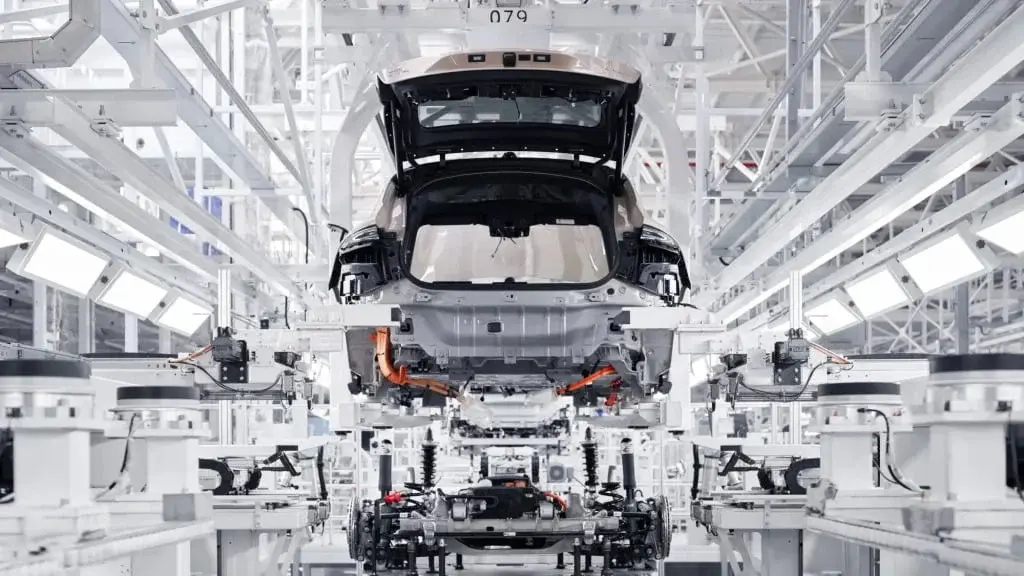
    Nio, a leading Chinese electric vehicle (EV) manufacturer, is taking bold steps to revolutionize its workforce and stay ahead in the highly competitive market. By 2027, the company plans to reduce its workforce by 30% through the integration of advanced artificial intelligence (AI) and robotics. This move reflects a growing trend among EV makers to embrace technological advancements.

    Embracing AI and Robotics in Automotive Manufacturing

    Nio’s strategy goes beyond simply reducing numbers; it aims to transform the very method of automotive manufacturing. The company’s vice-president, Ji Huaqiang, emphasizes their intention to heavily rely on AI, leading to significant reductions in managerial roles. This shift indicates a future where data-driven decisions and automation play a crucial role in enhancing efficiency and precision in production processes.

    Balancing Innovation and Workforce Dynamics

    Nio’s approach highlights the broader challenge faced by the EV industry in balancing technological innovation with workforce dynamics. As Nio, Xpeng, Li Auto, and other players navigate this new landscape, they must find ways to maintain growth and profitability in a market crowded with over 200 competitors, including newcomers like Xiaomi and Baidu.

    Shaping the Future of EV Manufacturing

    Nio’s pursuit of automation is a testament to the evolving nature of the EV industry. Despite not yet turning a profit since its establishment in 2014, the company’s aggressive adoption of automation and AI technologies positions it as a frontrunner in shaping the future of EV manufacturing. This approach is not solely focused on cost-cutting but aims to redefine efficiency and set new benchmarks for the industry.

  • Luxeed S7 press conference reveals new autonomous parking feature by Huawei

    Luxeed S7 press conference reveals new autonomous parking feature by Huawei

    Luxeed S7: Introducing Autonomous Parking Feature

    During a recent press conference, Huawei's CEO, Yu Chengdong, proudly unveiled the Luxeed S7 and its groundbreaking autonomous parking feature. In a six-minute video demonstration, two key aspects of the feature were highlighted: valet parking and one-click summoning.

    Valet Parking: A New Level of Autonomy

    The valet parking function of the Luxeed S7 allows drivers to confidently exit their vehicles as it autonomously navigates to the designated parking space. This autonomous behavior includes following the road, activating turn signals, and even dynamically responding to pedestrians and other vehicles by adjusting its speed or applying brakes.

    One impressive aspect of the Luxeed S7's autonomy is its ability to reach speeds of up to 20 km/h in favorable road conditions. The vehicle adeptly handles complex maneuvers, smoothly navigating through multi-curves with ease. Even in narrow sections, the Luxeed S7 showcases its sophistication and safety by proactively reversing to accommodate oncoming traffic.

    Effortless Parking Process

    Once the Luxeed S7 reaches the designated parking space, it autonomously completes the parking process. This valet parking feature not only matches but exceeds the efficiency of many human drivers, providing a seamless and effortless experience for users.

    One-Click Summoning: Convenient and Flexible

    In addition to valet parking, the Luxeed S7 offers a one-click recall feature that allows users to remotely summon their vehicle with a simple command via a mobile phone. Upon receiving the command, the car activates its driving function and autonomously navigates to the summoner's location.

    The video demonstration showcased the system's flexibility and ability to navigate through diverse road conditions, including narrow spaces. This feature proves to be especially useful in crowded parking lots where finding the vehicle manually can be a challenge.

    Pricing and Specifications

    While the article does not provide specific pricing and specification details, interested customers can refer to Huawei's official website or contact their local Huawei dealers for more information on the Luxeed S7 and its autonomous parking feature.

    In conclusion, Huawei's Luxeed S7 introduces an impressive level of autonomy with its valet parking and one-click summoning features. With its ability to navigate complex maneuvers and respond dynamically to road conditions, the Luxeed S7 showcases the sophistication and safety of the autonomous parking system.