Category: All News

  • GoPro warns it may not survive financial troubles

    GoPro warns it may not survive financial troubles

    Key Takeaway

    – GoPro disclosed “substantial doubt” about its ability to continue as a going concern.
    – Revenue fell nearly 19% in 2025 to $651.5 million, with a net loss of $83.3 million.
    – Cash reserves declined by over half, from $102.8 million to $49.7 million.
    – Loan agreements treat the going concern warning as a default, risking all current financing.
    – The troubled launch of the MAX2 360-degree camera contributed to the financial decline.


    Financial Turmoil Hits Action Camera Pioneer

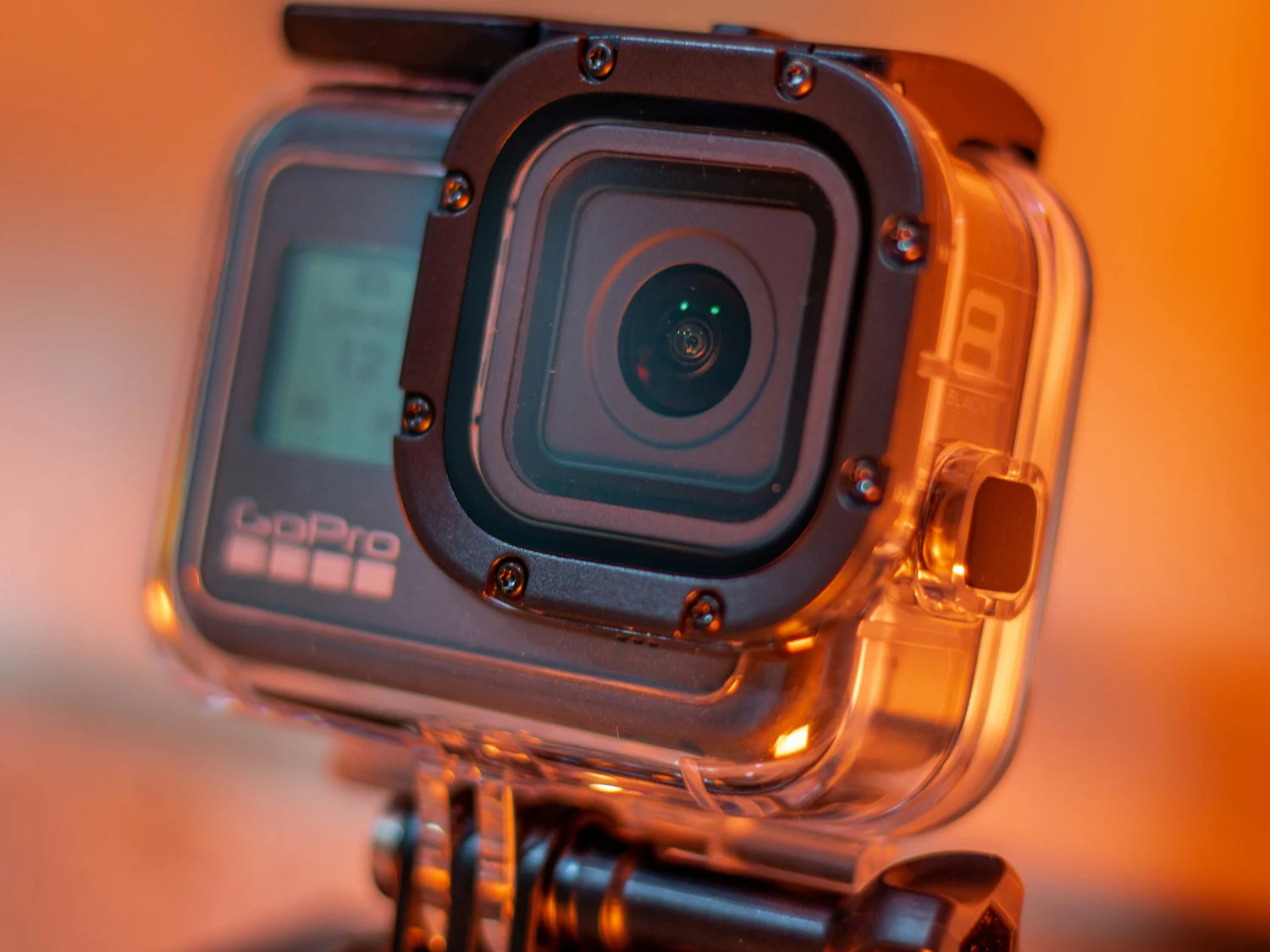
    GoPro, which was once the biggest name in the action camera market, is now fighting for its financial survival. The company disclosed substantial doubt about its ability to continue as a going concern in refiled financial statements published Monday (June 1). This sent shares down 8% in premarket trading.

    The warning, which would be a serious flag in any company’s filings, was included in GoPro’s amended 2025 annual report and its Q1 2026 quarterly report. Auditor PricewaterhouseCoopers separately added explanatory going concern language to its audit opinion, specifically touching on the severity of the situation. GoPro noted the circumstances behind the disclosure became more clear after it originally filed its annual report on March 12, 2026.

    Revenue Decline and Cash Depletion

    The numbers paint a grim picture as well. GoPro brought in $651.5 million in 2025 — down nearly 19% from the $801.5 million it made the year before — and still managed to lose $83.3 million in the process. Its cash pile almost halved in a single year, shrinking from $102.8 million to just $49.7 million, while its total accumulated losses now sit at $775.1 million. Part of the blame falls on the MAX2, GoPro’s 360-degree camera that had a troubled, delayed launch in September 2025. The company was also caught breaching its own loan conditions during the year — a warning sign that, in hindsight, foreshadowed exactly the situation it now finds itself in.

    Complex Financing and Default Risks

    The company currently holds $50 million in financing through arrangements with Farallon Capital Management and Wells Fargo Bank, alongside a separate $50 million convertible debenture agreement signed with YA II PN in February 2026. It gets more complicated. GoPro’s loan agreements contain clauses that treat this kind of warning as a default — similar to breaking a contract. And because its loans are interlinked, one default could legally trigger others simultaneously, which could put all of its financing at risk at once.

    Discussions and Future Uncertainity

    GoPro says it is actively in discussions with its lending partners to address the whole situation. For a brand that essentially invented the consumer action camera market and became a cultural icon among athletes and content creators, the disclosure isn’t really a good sign. GoPro has not announced any restructuring plans at this time.



  • Asus Zenbook 14 Copilot AI: Intel, AMD, Qualcomm Laptops

    Asus Zenbook 14 Copilot AI: Intel, AMD, Qualcomm Laptops

    Key Takeaway

    – Four 2026 Zenbook 14 models released with Intel, AMD, or Qualcomm CPUs, each offering 45-50 TOPS of AI compute power.
    – Durable, MIL-SPEC-tested Ceraluminum chassis in earthy colors, weighing 1.1-1.2 kg.
    – Features include FHD IR camera, OLED display (up to 3K 120 Hz), large touchpad, 1.7 mm key travel, and dedicated Copilot key.
    – Battery life ranges from 17 hours (Intel) to 21 hours (AMD/Qualcomm) for video playback.


    Asus Launches Four New Zenbook 14 Copilot AI Laptopss

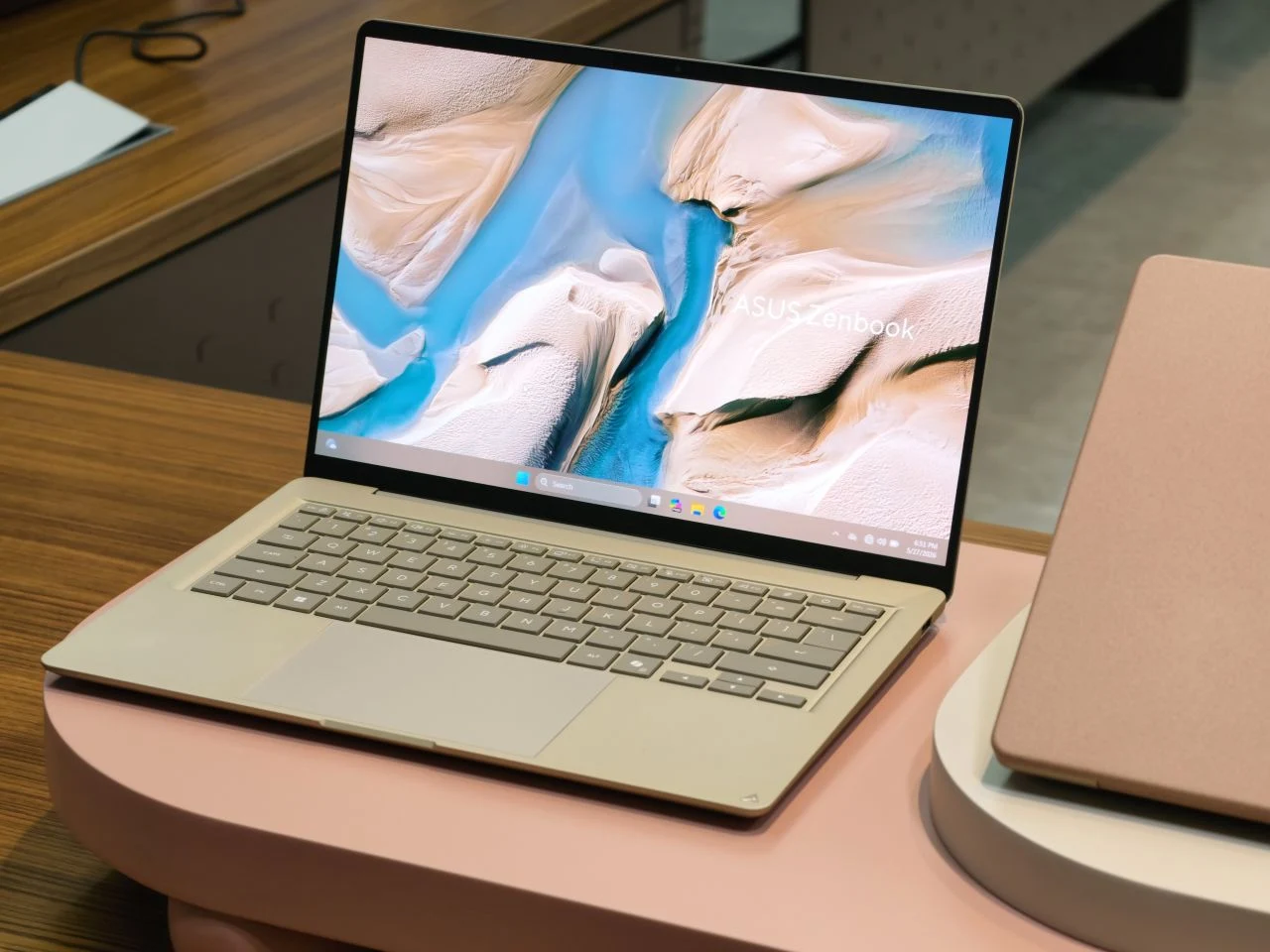
    At Computex in Taiwan, Asus has announced four 2026 Zenbook 14 devices featuring Intel, AMD, and Qualcomm CPUs, these are called Copilot+ PCs. The lineup includes different models for different processing needs, each with specific AI capabilites. Theres a model with the AMD Ryzen AI 7 345 CPU and another with the AMD Ryzen AI 9 465 CPU, both offering 50 TOPS of AI compute. An Intel Core Ultra 9 386H CPU option also gives you 50 TOPS, while the Snapdragon X X1 26 100 CPU has a slightly lower 45 TOPS of AI performance. These laptops are designed to be powerful portable machines for modern computing tasks.

    Colorful Design and Build Quality

    The colorful Zenbook 14 comes with Ceraluminum covers in earthy colors like Zabriskie Beige, Komodo Coral, and Arctic Blue. They are MIL-SPEC-tested laptops built for durability, resisting shocks from drops, scratches, and smudges very effectively. Regarding weight, all models weigh 1.2 kg, that is 2.6 lbs, but two Qualcomm variants are slightly lighter at 1.1 kg or 2.4 lbs. This makes them easy to carry around for work or travel. The device is also designed with a Easy-Lift display that reveals an FHD IR camera for facial login when opened.

    Display, Touchpad, and Battery Life

    Opening the Easy-Lift display reveals a FHD IR camera for secure biometric facial log-in above the OLED screen. The laptop includes a large touchpad and a keyboard with 1.7 mm key travel, plus a dedicated Copilot AI key for quick access. You get a 60 Hz OLED display on the Ryzen AI 7 and lower-end Snapdragon variants, while other models can have a premium 3K 120 Hz Lumina OLEDs for smoother visuals. Large batteries allow the Intel model to achive up to 17 hours of video playback with Dolby Atmos sound from dual speakers, while other models can run up to 21 hours according to Asus.

    • AMD Ryzen AI 7 345 CPU model: 50 TOPS
    • AMD Ryzen AI 9 465 CPU model: 50 TOPS
    • Intel Core Ultra 9 386H CPU model: 50 TOPS
    • Snapdragon X X1 26 100 CPU model: 45 TOPS

    Comparison with Older Models

    Readers can look at the 2025 Zenbook 14 laptops for comparision in our reviews while waiting for the 2026 models to arrive in stores. These new machines seem to offer significant improvements in AI processing and battery life. The 2026 Zenbook 14 UX3480 series includes the AMD, Intel, and Qualcomm versions, each with specific pricing and features. It will be interesting to see how the new Copilot AI key and enhanced displays perform in real world useage.

  • Valve Almost Delisted Rainbow Six Siege From Steam Over Uplay Price

    Valve Almost Delisted Rainbow Six Siege From Steam Over Uplay Price

    Key Takeaway

    – Valve aggressively enforces pricing parity, threatening to delist games if publishers offer lower prices on competing platforms.
    – Ubisoft was given a short ultimatum to stop selling a cheaper “starter pack” for Rainbow Six Siege on its own Uplay store or face removal from Steam.
    – Warner Bros.’ preorders for Middle-earth: Shadow of War were removed from Steam due to lower prices at other retailers, prompting quick resolution talks.
    – Steam’s dominant market position allows it to impose strict distribution and pricing terms on major publishers.


    Steam’s Dominance in PC Gaming

    Steam is the biggest PC video game marketplace in the world. For most PC gamers, it is the default place to buy and download games. Competitors like Ubisoft Connect (formerly Uplay), Epic Games Store, and others exist, but Steam still dominates in reach, sales, and visibility.

    Allegations of Aggressive Pricing Tactics

    A recent Bloomberg report has now brought attention to how aggressively Valve has handled pricing and distribution decisions involving major publishers, including Ubisoft and Warner Bros. One of the most notable cases involves Ubisoft’s Rainbow Six Siege. According to emails reviewed during an ongoing antitrust lawsuit, Valve allegedly threatened to delist all editions of the game from Steam “by end of day tomorrow.” This happened after Valve discovered that Ubisoft was marketing a cheaper $15 “starter pack” exclusively through its own Uplay store. The report suggests Ubisoft was effectively given a short deadline to fix the situation or risk losing its Steam presence entirely.

    Warner Bros. and Preorder Removal

    Another example cited in the same report involves Warner Bros. Interactive Entertainment. In 2017, Valve employee Kassidy Gerber reportedly informed Warner Bros. that preorders for Middle-earth: Shadow of War had been removed from Steam. The reason given was that the Steam price was “significantly higher than what was available at other retailers for the same version of the game.” According to the report, Warner Bros. leadership quickly reached out to resolve the issue. Bloomberg provides the source for this information.

    Sources
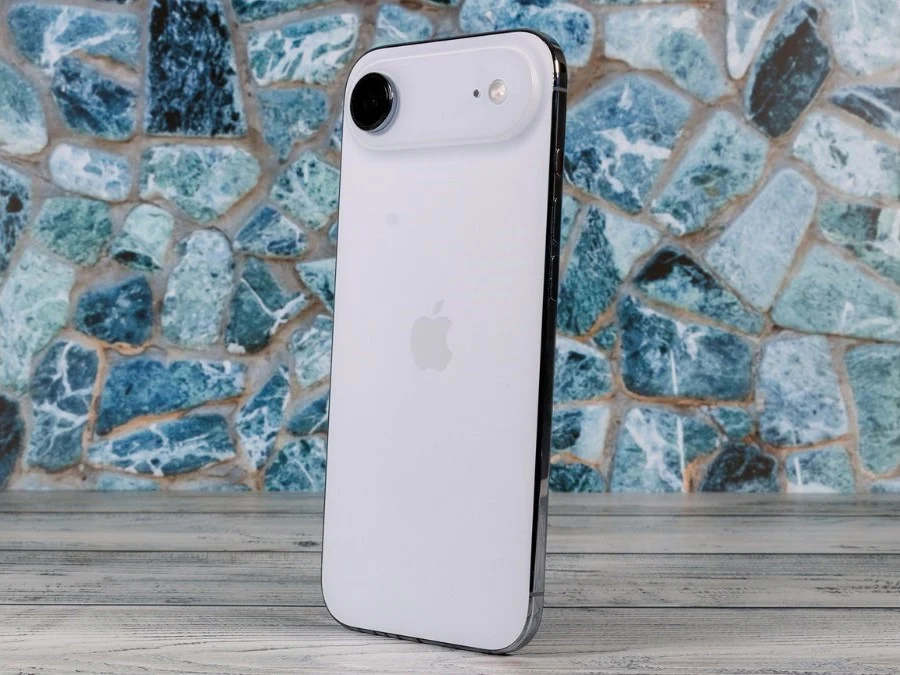
  • iOS 17 & iPhone Air Update Fixes Major Charging Bug

    iOS 17 & iPhone Air Update Fixes Major Charging Bug

    Key Takeaway

    – iPhone 17 and iPhone Air models had a bug preventing wired charging after the battery fully died.
    – Affected devices would remain unresponsive when plugged into a wired charger.
    – A temporary workaround was using a wireless charger to revive the phone.
    – Apple released iOS 26.5.1 with a fix specifically for this wired charging issue.
    – Users can install the update via Settings > General > Software Update.


    iPhone Charging Bug Finally Fixed

    Back in April, several iPhone 17 and iPhone Air users started reporting a serious issue after their phones died completly. In many cases, the devices would not turn back on once the battery hit zero. This issue was not limited to a single model, as it was effecting the entire iPhone 17 lineup, including the iPhone 17, iPhone 17 Pro, and iPhone 17 Pro Max, as well as the iPhone Air.

    How the Problem Manifested

    Basically, when the phone shut down due to low battery, plugging it into a wired charger did nothing. The phone would stay completly unresponsive, as if it was still powered off. This issue was first reported over six months ago, and since then, more users have continued to face the same situation. The lack of any visual response was deeply concerning.

    Temporary Workaround Discovered

    Some users found a temporary work around. They were able to bring their phones back to life using a wireless charger. Once the phone started charging wirelessly, it would eventually boot up again. But this was not a proper solution, as many users who only had wired chargers were left stuck with a phone that would not turn on at all. Thankfully, Apple has now finally acknowledged the issue and released a fix through a software update.

    Apple’s Official Fix

    Today, Apple released a new iOS update, 26.5.1, and compared to some previous updates, this one is very small. In fact, it only includes one key fix: “This update addresses an issue for a small number of users that may prevent wired charging on iPhone Air and iPhone 17 models when the battery is nearly drained.” The update is avaliable for all affected devices.

    How to Install the Update

    The update is available for all affected devices, and if you havent already, you can install it by going to Settings > General > Software Update. Apple recommends all users with these models to download this patch imediately to avoid being stuck with a dead phone. The download size is minimal and requires no special steps.

    Sources
  • Gabe Newell: Gamers Have Choices in Valve Antitrust Defense

    Gabe Newell: Gamers Have Choices in Valve Antitrust Defense

    Key Takeaway

    – Valve faces ongoing antitrust lawsuits in the US and UK over alleged monopolistic practices on Steam.
    – Gabe Newell denies dictating prices on other platforms, but developers report threats of delisting for offering cheaper games elsewhere.
    – The 30% fee Steam charges publishers is widely criticized, including by Epic Games CEO Tim Sweeney.
    – 72% of industry representatives surveyed believe Valve holds a monopoly, with Steam earning over $16 billion in 2025.
    – If Valve loses the UK lawsuit, it could face up to $900 million in damages to affected buyers.


    Valve’s Legal Troubles and Market Dominance

    Valve co-founder Gabe Newell usualy takes a hands-off approach to operations at Steam. However, in 2023, a court forced him to testify in an ongoing antitrust lawsuit. Wolfire Games began the proceedings in 2021, accusing the gaming giant of holding a monopoly. Newell denied that the company has an unfair advantage, but questions linger about anti-competitive policies.

    Newell’s Defense in Court Testimony

    Bloomberg published an extensive report highlighting the litigation Valve faces in the US and UK. In transcripts from the Wolfire Games case, Newell argued, “Customers have enormous choice.” He then explained that buyers can decide:

    • Where they purchase their products, whether they buy the game on an Xbox, whether they buy it on Steam, whether they buy it on Epic Games Store, or whether they buy it directly from software developers.

    Critics, including Epic Games CEO Tim Sweeney, believe the 30% fee the marketplace charges publishers is excessive. Another focus of the Valve antitrust lawsuit is whether it influences pricing on other storefronts. When asked about the matter, Newell replied:

    • Valve does not have a policy or practice of dictating prices to third-party software developers on other platforms.

    Allegations of Anti-Competitive Pressure

    The unorthodox executive didn’t provide clarification when pressed. Regardless, various developers have described threats of delisting Steam games. Smaller studios reportedly were dissuaded from offering the same titles for cheaper elsewhere. Bloomberg also documented how Valve discouraged the more powerful Ubisoft from selling exclusive DLC off-site.

    Industry Perception of Valve’s Monopoly

    A survey conducted by Rokky found that 72% of industry representatives agreed that Valve has a monopoly. It dominates the Epic Games Store and other competitors, having earned more than an estimated $16 billion in revenue in 2025 alone. Many gamers remain loyal to Steam for its immense selection, regular discounts, and useful community features.

    Courts may decide that Newell’s company acted illegally to maintain its position. Allegations that it prevents publishers from listing Steam games for less on other stores are a critical issue. If Valve loses a separate UK antitrust lawsuit, it risks paying out up to $900 million to affected buyers.

  • New Casio G-Steel Minimalist Watches: Black Metal, Tough Solar, Bluetooth

    New Casio G-Steel Minimalist Watches: Black Metal, Tough Solar, Bluetooth

    Key Takeaway

    – Sleek, minimalist design with a logo-free bezel and stainless steel band, marking a departure from traditional bold G-Shocks.
    – Two dial color options: all-black (B1000BD-1) and deep blue (B1000BD-2), with identical size and materials.
    – Powered by Tough Solar charging, Bluetooth connectivity for smartphone pairing, and standard G-Shock durability (200m water resistance, shock resistance).
    – Eco-friendly construction using biomass plastics in the carbon fiber reinforced resin case.
    – Initially launched in Japan at ¥75,900, with global release expected shortly after.


    New G-Steel Watches Unveiled

    Casio has took the wraps off two new sleek G-Steel watches. We’ve known the company was gearing up to launch the GST-B1000BD-1 and GST-B1000BD-2 for a few weeks now, thanks to a May leak that gave us a pretty good look at the upcoming lineup. Now, they’re finally out and launching first in Japan before shortly making their way to the global markets.

    Designed for Everyday Style

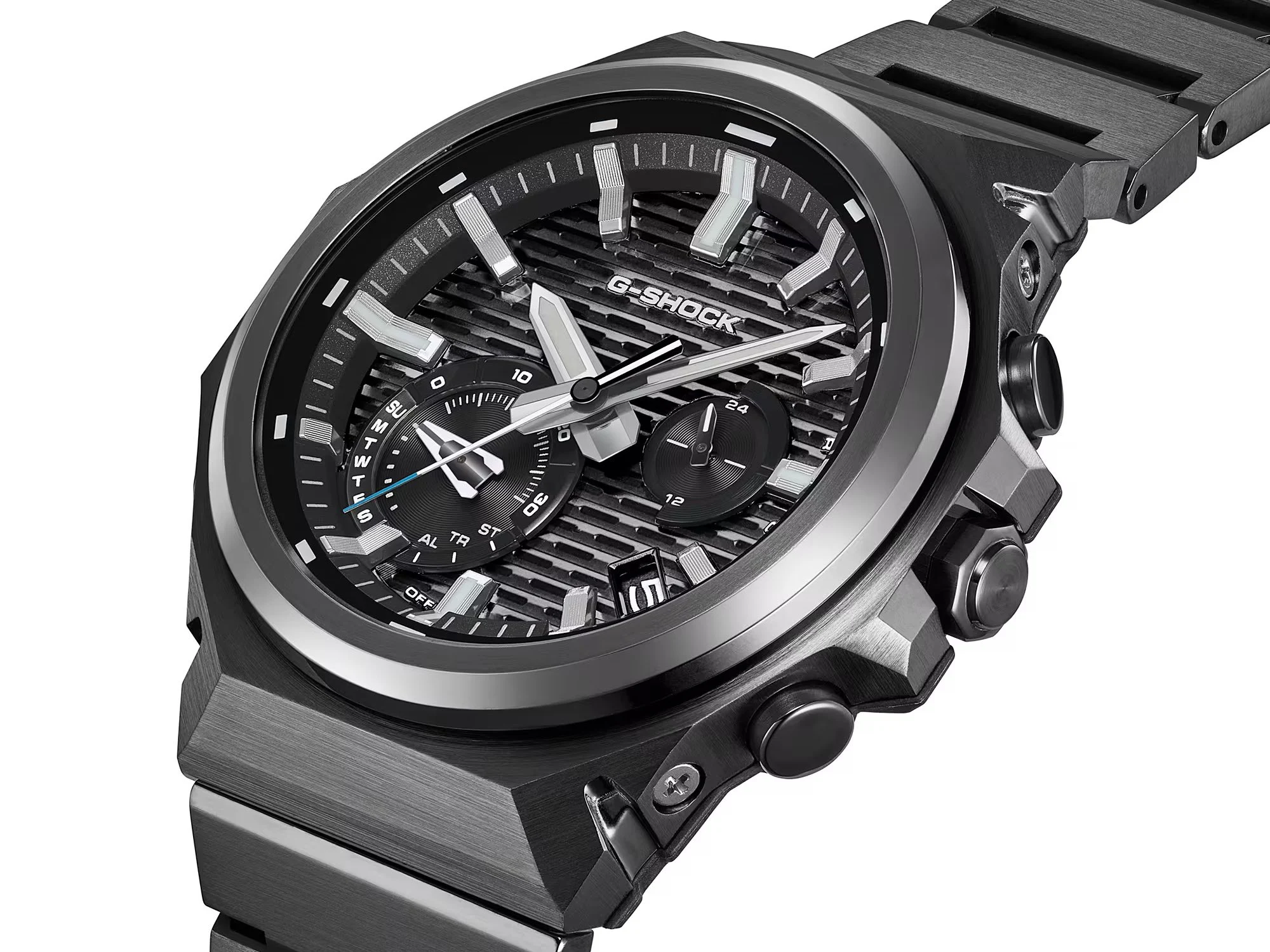
    Casio is positioning the G-Shock GST-B1000BD-1 and B1000BD-2 as stylish “all-around watches,” something you can practically wear all the time. Except for the dial color, both watches are identical in size and material, with the dial hue being the only real differentiator. The B1000BD-1 sports an all-black dial, while the B1000BD-2 comes with a deep blue dial, with both featuring dual sub-dials and a date display.

    The minimalist design of the GST-B1000BD is quite a departure from your usual bold, logo-clad G-Shocks. Here, we have a sleek, logo-free bezel that shifts its appearance depending on the lighting. You also get a stainless steel band showing off both hairline and mirror finishes, alongside a newly developed one-push tri-fold clasp. Throwing a nod to the original DW-5000C, the dial incorporates a brick pattern for a sporty touch. Underneath the black ion-plated exterior, the carbon fiber reinforced resin case—made using eco-friendly biomass plastics—keeps the module safe. The result is a highly wearable footprint measuring 46.9 x 44.2 x 11.6 millimeters and weighing just 118 grams.

    Technical Features and Pricing

    As for the technical features, these models are packing Casio’s Tough Solar charging system, delivering up to five months of battery life on normal use or eighteen months on power-saving mode. You also get Bluetooth connectivity to pair the watch to your smartphone using the Casio Watches app, which offers features like automatic time correction, easy clock settings, and a handy phone finder tool. Standard G-Shock perks like 20 ATM (200 meters) water resistance, a Super Illuminator LED light, and a shock-resistant structure are all present.

    International Launch Details

    Both models are currently available for pre-order in Japan for ¥75,900 and are set to go on sale later in June. They are expected to make their way to international markets, including the US and Europe, shortly after.


    Sources

  • Baldur’s Gate 2 Remake Officially Confirmed

    Baldur’s Gate 2 Remake Officially Confirmed

    Key Takeaway

    – Kevin Martens, former BioWare co-lead designer of Baldur’s Gate 2, has reportedly returned to work on a remake.
    – The project is unannounced, with no official details on gameplay, platforms, or release window.
    – A modern remake would likely update visuals and introduce quality-of-life improvements.
    – The remake is not expected to resemble Baldur’s Gate 3, but may borrow modern RPG mechanics.
    – Until an official announcement, the project should be treated as a rumor.


    A Beloved Classic May Be Getting Another Revival

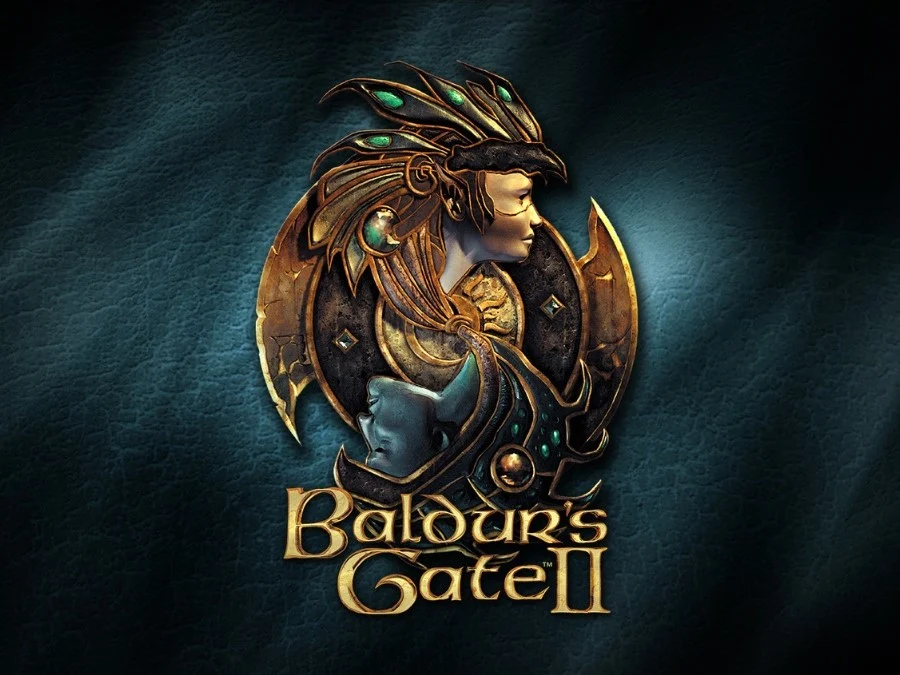
    Baldur’s Gate 2 was released over two decades ago, in September 2000, and it is one of the most beloved RPGs ever made. More than a decade later, an Enhanced Edition arrived in 2013 for Windows, bringing several improvements such as support for high-resolution displays, bug fixes, cross-play multiplayer, and other quality-of-life features. Now, it seems that the classic RPG could be getting another major revival.

    Former BioWare Dev Reportedly Returns

    According to a new report from PC Gamer, former BioWare developer and Baldur’s Gate 2 co-lead designer Kevin Martens has returned to work on a remake of the game. The report claims that, according to a source familiar with the project, Martens is already involved and actively working on the remake. At the moment, information about the project is extremely limited.

    No Official Details Yet

    There are no official details regarding gameplay, platforms, or a release window. It is also unclear how long the remake has been in development. In fact, there has been no official announcement from any studio involved, meaning the only information currently available comes from the source cited in PC Gamer’s report. The original game was built using technology from more than two decades ago.

    What a Remake Could Look Like

    A modern remake would likely update the visuals significantly and introduce several other improvements. That said, fans probably shouldn’t expect it to resemble Baldur’s Gate 3, the latest entry in the series. Baldur’s Gate 3 was built with modern technology and features a very different presentation style. However, a remake could still borrow certain ideas, mechanics, and quality-of-life improvements from newer RPGs while staying faithful to the original experience.

    But for now, it’s best to treat the project as a rumor until an official announcement is made. PC Gamer is the source of this information.

    Sources
  • New PixVerse R1 Model: Live Input and Subject Priority

    Key Takeaway

    – PixVerse focuses on maintaining subject consistency across clips to improve narrative storytelling.
    – It calculates token cost before generation to reduce user risk.
    – The R1 model enables real-time, collaborative video generation from live prompts.
    – AI video excels at dangerous or costly scenes but struggles with realistic physics.
    – Aggressive pricing allows low-risk trial for both novices and professionals.


    A New Approach to AI Video

    Undoubtedly, text-to-video generation has made huge leaps in capabilities over the past few years, and while this has improved quality and video fidelity, the core narrative function of what video represents has largely been overlooked. This is where PixVerse takes a new approach. In addition to generating higher-quality AI videos, the platform emphasizes keeping the video’s subject as consistent as possible across generated clips, allowing users to focus on directing character movements and establishing narrative concepts. Also, to address the risk involved whenever a user commits to generating a video, the PixVerse platform calculates the number of tokens required to generate that specific video. With features like these, PixVerse aims to cater to both novices and professionals.

    Struggles with Real-World Physics

    While this is ambitious, there are still a few pitfalls to address in practice, as well as the purpose of AI-generated video. One of the examples used in the presentation was to generate a video of a car accident where a taxi was going underwater, an event that would be too dangerous for a person to film. This type of scene is ideal for generating effects to avoid the high costs of filming, but it faces the perpetual struggle of replicating real-world physics. Additionally, because the platform offers three tiers of capabilities, users will still need to navigate the model selection process. However, among these models, the R1 is by far their most ambitious offering, featuring real-time video generation from live user prompts.

    By gathering information from multiple users simultaneously, the R1 model uses context from each second of video to maintain PixVerses’ character focus while incorporating user requests. In the demo, the results were disjointed, but the potential for true collaboration is there if a team is all on the same page.

    Aggressive Pricing and Availability

    Lastly, PixVerse is aggressive with its pricing strategy, so at the very least, users can try out the platform without too much investment. Curious users can find more information in the resources below. The platform offers a free tier for basic generation, with paid plans starting at $15 per month for 5000 tokens, while the Pro plan at $49 per month gives 25000 tokens and access to the R1 model. The R1 model processes video at 720p resolution, generating up to 15 seconds per clip, with token costs varying based on complexity—typically 60 tokens for a short scene. Special effects and longer durations require additional tokens, but the precise calculations are handled automatically during generation.

    Sources
  • Vivo Premium Foldable Leak Reveals Key Highlights

    Vivo Premium Foldable Leak Reveals Key Highlights

    Key Takeaway

    – Dimensity 9500 chipset
    – 7,000mAh battery
    – Slim and lightweight body
    – 200MP primary camera + 50MP periscope telephoto lens
    – Expected launch in late June 2026 in China


    The Vivo X Fold 5 was launched back in July 2025 as the companys flagship foldable smartphone. Equipped with the Snapdragon 8 Gen 3 chipset a 50MP triple rear camera arraingment and a respectable 6,000mAh battery, its had a decent run. But now, a fresh leak from a tipster known as Digital Chat Station on Weibo has revealed some key highlites of Vivios next-generation foldable device, which is expected to be called the Vivo X Fold 6.

    New Processor and Battery Leak

    According to the tipster, the upcoming Vivo X Fold 6 may be powered by the Dimensity 9500 chipset, which is MediaTeks latest flagship processor. Interestingly enough, this same silicon is also rumored to be used in the Vivo X300 and the Vivo X300 Pro, showing MediaTek’s increasing presence in high-end mobile hardware. Beyond the chip, the leak points to a massive 7,000mAh battery, which is a huge step up from the 4,400mAh cell found inside the Samsung Galaxy Z Fold 7. The tipster also mentions that the X Fold 6 will maintain a slim and lightweight body, despite that larger power pack.

    Camera Upgrades and Design Details

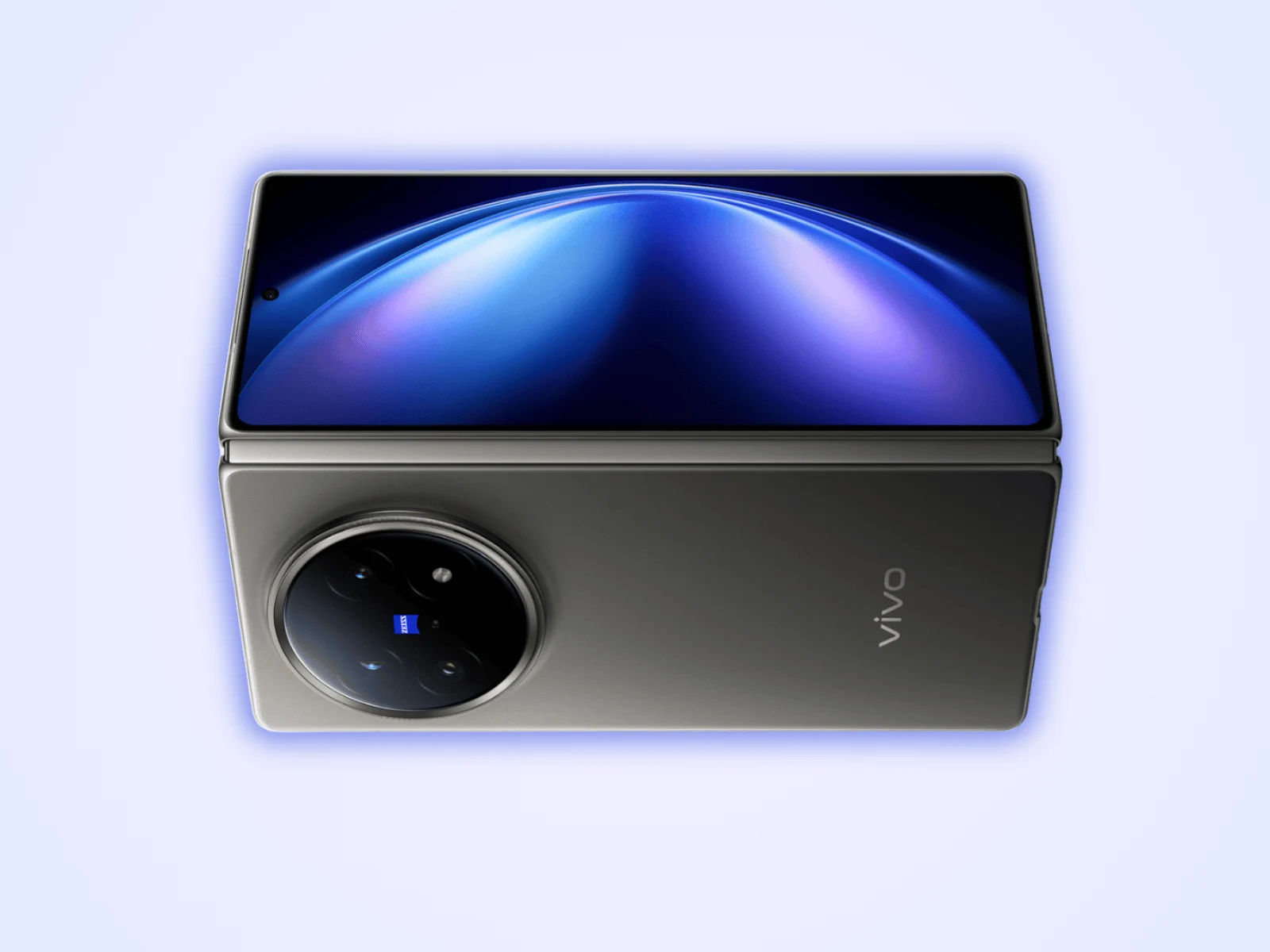
    In terms of photography, the Vivo X Fold 6 is expected to recieve some substantial upgrades. The leak suggests a 200MP primary camera, a massive jump from the previous generation, combined with a 50MP periscope telephoto lens for improved zoom capabilitys. According to Digital Chat Station, the camera module might feature a circular design, similar to what we saw on last years model, keeping the aesthetic familier but with better internal hardware. For reference, the current Vivo X Fold 5 measures 9.2mm when folded and weighs 217 grams, so users can expect a similar if not more refined form factor.

    Release Timeline and Official Status

    At the time of writing this, Vivo has not yet revealed any official details about the X Fold 6, so all this remains in the realm of rumor and speculation. The foldable phone is rumored to be anounced in late June 2026 in China, which would be about 11 months after the X Fold 5 debut. In other news that may be related, the Vivo X500 series has recently appeared on the GSMA IMEI database, hinting at future product launches from the brand.

    Sources
  • LG 32-Inch E-Ink Display Powers Qi2 Magnetic Power Banks

    Key Takeaway

    – 31.5-inch E Ink Spectra 6 panel with 2560×1440 resolution and 15:1 contrast ratio.
    – Excellent readability in daylight (like printed paper), but unusable in darkness without external light.
    – Extremely low power consumption; power used only when changing the displayed image.
    – Powered by a 72 Wh battery with unknown life; chargeable via USB-C or magnetic power bank.
    – Runs webOS Micro, fully controllable via web browser; launches July 2026.


    A Different Kind of Monitor For Low Power Needs

    So the LG E-Paper Display is another option for adding a low-power color display to business premises or even the living room at home. LG relies on a 31.5 inch E Ink Spectra 6 panel, which is designed in 16:9 format. The display achieves a resolution of 2,560 x 1,440 pixels and a contrast ratio of 15:1.

    How The Screen Technology Works Differently

    While the contrast on paper is low, E Ink relies on reflected light instead of a backlight. As a result, the display should look almost like a printed image in daylight, but cannot be recognized at night without artificial light. In addition to the good readability in daylight, the enormously low power consumption is the biggest advantage of E Ink, as the panel uses ink particles so that power is only consumed when the displayed image changes.

    Battery, Charging and Software Details

    LG has installed a 72 Wh battery, but the manufacturer does not provide any information on the battery life – whether the screen lasts for days or years on a single charge is likely to depend on how often the displayed image is changed and whether an active Wi-Fi connection is maintained. Unusually, the battery can not only be charged via a USB-C cable, but also via a magnetic power bank, such as the Anker MagGo ($69.99). The screen is powered by webOS Micro and, according to LG, all settings can be adjusted via a web browser without additional software.

    Launch Timeline and Pricing Details

    The LG E-Paper Display (32RS1Q-B) will be launched in July 2026, details on the price should be confirmed at the launch at the latest. Further details on the features can be found on the official product page.