Category: All News

  • Morpheus Spyware Hijacks WhatsApp Through Fake Android Update App

    Morpheus Spyware Hijacks WhatsApp Through Fake Android Update App

    Key Takeaway

    1. Morpheus spyware infects Android devices via fake update apps, requiring victim cooperation and specific manipulation of telecom providers.
    2. The malware abuses Android accessibility permissions and simulates system updates and messaging interfaces to gain full access to messages and contacts.
    3. The operation is linked to Italian surveillance vendor IPS, targeting political activists, and highlights vulnerabilities in social engineering tactics.
    4. Users should be cautious of suspicious SMS messages prompting app updates, especially when mobile data is unexpectedly cut off.

    A new spyware operation has been discovered that cleverly uses fake Android update apps to spy on users, but it needs the cooperation of the victim’s own mobile provider, making it different from other common attacks. This campaign involves tricking the target into installing a malicious app while the telecom provider is secretly helping to block the victim’s data at the same time.

    Spyware Details and Infection Process

    The malware, called Morpheus, was found by an Italian digital rights group called Osservatorio Nessuno, who shared their findings in a report published on April 24. The spyware is considered low-cost because it relies on social engineering tactics, like convincing someone to install something dangerous, rather than exploiting technical flaws like zero-click vulnerabilities used by more sophisticated tools such as Pegasus. The entire attack hinges on the target manually installing the malicious app, but the methods used to get them there are carefully planned and well documented.

    The Method of Attack

    First, the targeted person’s mobile data is deliberately cut off by their service provider, working closely with authorities to deploy the spyware. After their data gets cut, they receive an SMS message telling them to install a certain app to restore their network connection and to update their phone. The app in question is actually the spyware, hidden in plain sight. Once the app is installed, Morpheus exploits Android’s accessibility permissions, which normally allow apps to read what’s on the screen and interact with other apps. It then shows a fake system update screen and prompts for a reboot, making the user think they’re just updating their device.

    Fake Updates and WhatsApp Spoofing

    Once freshly rebooted, Morpheus creates a fake WhatsApp interface, pretending to check the user’s account. It then asks for biometric verification, claiming that a normal account check is taking place. But in reality, tapping on the biometric prompt unknowingly gives the spyware permission to add a new device to the users WhatsApp account. This grants Morpheus full access to their messages, contacts, and chats, without them suspecting a thing. Language clues, like Italian code snippets and cultural hints in the malware, suggest it’s tailored for Italian targets.

    Connections with Italian Surveillance Companies

    The organization Osservatorio Nessuno linked Morpheus to a company called IPS, which is based in Italy and has over three decades of experience in providing lawful interception technology to police and intelligence agencies. IPS operates across more than 20 countries and has several Italian police forces as clients. Although no specific individuals were named, experts think political activists and other high-profile targets might have been targeted with this spyware, further illustrating the growing concern about surveillance tools sold by Italian firms like IPS, CY4GATE, eSurv, RCS Lab, and SIO. It’s notable that in April 2026, WhatsApp warned 200 of its users about fake versions of the app that contained spyware linked to SIO.

    Precautions and Detection

    It’s important to note this spyware doesn’t spread through the Google Play Store and cannot install itself without user action. It requires the target to manually download and install an APK file outside from official sources. So, any suspicious SMS claiming to offer a system update, especially if the user unexpectedly loses mobile data along with that message, should be considered dangerous. Android’s accessibility permissions are very powerful and should never be handed out to an app received through a text message link—it’s a common way for malware to gain extensive control over the device.

    Other Recent Threats

    Recently, security experts also caught a different threat actor impersonating IT support staff on Microsoft Teams, tricking employees into installing custom malware that could compromise corporate networks. These types of threats remind us that cyber attackers are constantly developing new tricks to steal data and control devices, requiring users to stay vigilant and cautious about unexpected messages and updates.

    For more insights on cyber threats and spyware operations, visit osservatorionessuno.org or follow recent reports from cybersecurity analysts.


    Sources
  • Nvidia N1X Leak Reveals Limited Availability in 2026

    Nvidia N1X Leak Reveals Limited Availability in 2026

    Key Takeaway

    1. Nvidia plans to debut the N1X ARM-based SoC at Computex in June, with laptops featuring the chip expected to launch in October and wider availability in early 2027.
    2. The N1X will feature a 10 P-core and 10 E-core CPU design, support up to 128 GB of LPDDR5x RAM, and be manufactured on a 3 nm process, likely N3P or N3E.
    3. The GPU is expected to be very powerful, with around 6,144 CUDA cores, potentially offering performance between an RTX 5070 and RTX 5070 Ti, with a TDP of 65-120 Watts.
    4. Alongside the main N1X chip, a lower-power variant called N1V is anticipated for thin-and-light laptops, targeting the entry-level to mid-range segment.

    Nvidia’s New Arm-Powered Laptop Chip Looks Promising

    Even though Nvidia has been around the Arm-based SoC scene for a while, they haven’t quite broken into the competitive world of consumer laptops yet. They will be competing head-to-head with big players like Qualcomm, Intel, AMD, and Apple. The much-talked-about N1X chip still hasn’t been officially announced, but lots of leaks give us an idea about what Nvidia planning for this upcoming product. According to sources, we now know roughly when we might see it in action. Moore’s Law is Dead explains exactly when this comes to pass.

    Release Timeline and Potential Challenges

    According to supply chain insiders, Nvidia intends to unveil the N1X at Computex between June 2 and June 5 this year. As for the consumer availability, laptops equipped with the N1X might hit the stores by October, but broader release to the masses could still be a while down the line, probably not before early 2027. There were some earlier rumors indicating that the N1X platform was plagued with bugs, and it seems that problem still persists which might be why the delivery gets pushed back. Interestingly, this new platform isn’t going to be limited to just ultra-thin laptops but could even be used powering some of Alienware’s gaming laptops.

    Specifications and Performance Expectations

    Earlier benchmarks like Geekbench have pointed out that the N1X is expected to feature 10 Performance cores (P-cores) and 10 Efficient cores (E-cores), the same setup as the DGX Spark. Distinctly, unlike the DGX Spark, this CPU has reportedly been co-developed with MediaTek, hints of which appeared from previous leaks. The processor will support up to 128 GB of LPDDR5x-8533 RAM and is predicted to be built on a 3 nm process node by TSMC. While the exact node remains unspecified, a N3P node seems the most probable choice, yet considering the delay and adjustments, N3E could also be an option.

    GPU Power and Power Consumption

    The GPU integrated into the N1X is expected to be quite formidable, with estimates suggesting it could perform somewhere between an RTX 5070 and RTX 5070 Ti in laptops, primarily due to its 6,144 CUDA cores. All this power will demand considerable electricity, with a TDP estimated to be from 65 to 120 Watts. That’s similar to what AMD’s Strix Halo GPUs consume when running at full tilt. If Nvidia’s performance predictions are accurate, this GPU could outperform current models by a good margin, offering much better graphics capabilities in portable form factors.

    Additional Variants and Future Prospects

    As for other options, the N1X isn’t the only chip Nvidia might have in the pipeline. A second edition called N1V was also spotted in leaks, but little details are known about it. It’s likely that this variant will be a low-power version of the N1X, with fewer GPU cores and a lower TDP, aimed at thin-and-light notebooks. This could serve as Nvidia’s answer to the entry-level to mid-range segment, competing with products like Panther Lake or Gorgon Point. The gaming and productivity laptop market might be in for some interesting developments soon.

    Summary

    • Official reveal at Computex expected between June 2-5, 2023
    • Laptop launches scheduled for October, but wider availability likely early 2027
    • Features include 10 P-cores, 10 E-cores, support for 128GB RAM, 3nm process
    • GPU estimated between RTX 5070 and 5070 Ti with 6,144 CUDA cores, TDP 65-120W
    • Possible low-power variant (N1V) for budget-friendly laptops


    Sources

  • Garmin Launches Recovery Mode to Fix Smartwatch Errors

    Garmin Launches Recovery Mode to Fix Smartwatch Errors

    Key Takeaway

    1. Garmin smartwatches are introducing a new recovery mode to address severe software issues.
    2. Recovery mode is triggered automatically during startup when problems are detected and offers various repair and troubleshooting options.
    3. Users can attempt automatic repairs, manually terminate activities, delete maps, or reset the device to factory settings within recovery mode.
    4. The feature is currently in beta testing and available on select devices, with limited options for downgrading firmware versions.

    New Recovery Mode in Garmin Smartwatches

    Garmin’s latest update has introduced a new feature called recovery mode, which can be a real game-changer for users who face serious issues with their smartwatches. But frankly, this is not exactly what most people would like to come across while using their device, especially since it’s meant to fix what could be major glitches. The problem is that when software issues happen, fixing them isn’t always straightforward or quick, leading to a lot of frustration. One big pain point is that Garmin doesn’t usually offer official options for downgrading firmware versions, leaving users stuck with the latest updates and limited recovery options in the rare case of problems.

    Automatic Detection and User Options

    • When your Garmin watch encounters a startup problem, the recovery mode can be triggered automatically.
    • You will see a menu with numerous options, including trying an automatic repair that aims to fix common errors without deleting your data.
    • If needed, you also can manually stop any activity that might be causing the issue.
    • Another option is to delete saved maps locally to free up space or fix corrupt data.

    Manual Firmware Installation & Reset

    Beyond basic troubleshooting, the recovery mode makes provision for connecting your watch to a computer via USB. This allows for a hands-on approach, where more advanced users can install firmware manually—something that could be tricky for most regular users. And if everything else fails, there’s always the option to reset the device completely to its original factory settings, wiping all data and settings in the process. Garmin has started to roll out this recovery tool gradually, specifically to select devices under the beta testing phase, indicating that it’s still a work in progress.

    Current Status & Outlook

    As reported by Gadgets & Wearables, this feature is still being tested and will gradually become available for more Garmin watches in the future. Users probably hope they won’t need to use it often, but it’s reassuring to know that there is a safety net when things go wrong. The recovery mode aims to provide users with a way to fix serious software problems independently, but it also highlights Garmin’s acknowledgment that some issues can’t be resolved through simple updates or resets alone.

    Sources
  • Xgimi Elfin Flip 4K & Flip Laser Projector Crowdfunding on Makuake Japan

    Xgimi Elfin Flip 4K & Flip Laser Projector Crowdfunding on Makuake Japan

    Key Takeaway

    1. Compact, foldable design allows easy storage in small spaces, with features like 150-degree swiveling bodies.
    2. Both projectors feature high brightness (1,600 ISO lumens), and utilize laser light sources for vivid color and contrast.
    3. The Elfin Flip 4K offers higher resolution (4K) with optical zoom and faster response times, while the Flip Laser provides excellent color coverage and VRR gaming mode.
    4. Both run on Google TV OS, supporting wireless streaming and HDMI connectivity to computers and gaming consoles.
    5. Pricing varies, with early bird discounts for pre-ordering in Japan, and availability through Xgimi’s Amazon store internationally.

    Introducing the New Compact Projectors from Xgimi

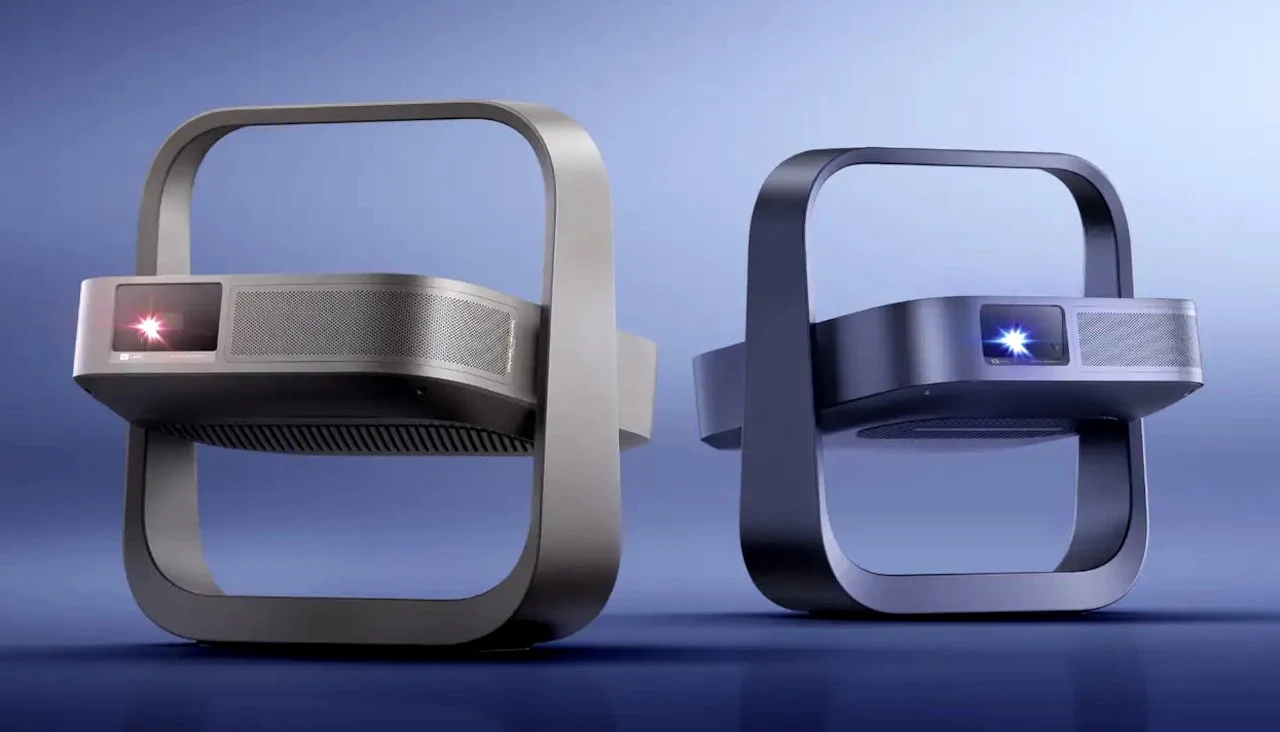
    The Xgimi Elfin Flip 4K and Elfin Flip Laser projectors have just started their crowdfunding journey on Makuake in Japan. These little gadgets are meant to save space, featuring a clever foldable design that makes them easy to store in small places. Despite their small size, they pack a punch with 1,600 ISO lumens of brightness and come with built-in Harman Kardon speakers for a decent sound experience.

    Specifications and Brightness Details

    Both projectors use advanced laser technology. The Flip Laser models utilize the Nichia QuaLas RGB laser light source with a 0.23-inch DMD chip supporting a resolution of 1920×1080, while the Flip 4K utilizes the same light source but with a larger 0.39-inch DMD chip offering a much higher resolution of 3840×2160. The laser tech enables these projectors to reach a vibrant 110% BT2020 color gamut along with contrast ratios of 10,000:1 for the Flip Laser and 20,000:1 for the Flip 4K. They are designed to produce rich and colorful images that can significantly enhance viewing experiences.

    Performance Modes and Connectivity

    The Flip Laser’s performance is somewhat limited to digital zoom and gaming with a VRR mode that supports a 20 ms delay when playing at 1080p 60Hz. Meanwhile, the Flip 4K is equipped with optical zoom and can handle fast-paced gaming with a 1 ms delay at 1080p 120Hz refresh rate. Both units run on Google TV OS, making it simple for users to stream content wirelessly or connect to computers and game consoles via HDMI to use them as displays. This flexibility makes them suitable for both media consumption and gaming.

    Design and Portability

    The design focus was clearly on portability. Each projector features a compact body that can tilt up to 150 degrees from a neatly folded position, enabling easy storage. The dimensions are just 245 x 254 mm in width and height, with a folded depth of 78 mm for the 4K model and 75 mm for the Laser. Both are lightweight, with the Flip 4K weighing about 1.55 kg, and the Flip Laser slightly lighter at 1.38 kg, making them portable enough to carry around comfortably.

    Pricing and Pre-Order Information

    The retail prices are set at 206,800 yen (approximately $1,290) for the Elfin Flip 4K and 139,800 yen (around $890) for the Flip Laser. However, early birds in Japan can get special discounts—44% off the MSRP for the Flip 4K, pricing at 114,800 yen (~$720), and 39% off for the Flip Laser at 84,900 yen (~$530). For those outside Japan, it’s worth exploring other options on the company’s online store or other retail outlets.

  • America’s Largest Home Security Company Confirms Data Breach

    America’s Largest Home Security Company Confirms Data Breach

    Key Takeaway

    1. ADT experienced a data breach exposing customer names, phone numbers, addresses, and partial Social Security or Tax ID numbers.
    2. No bank account or payment information was compromised in the breach.
    3. The hacker group ShinyHunters claims to have stolen data from over 10 million customers and is demanding a ransom to prevent leaking the information.
    4. As of now, it is unclear if ADT has responded to the ransom demand.

    Security breach affects major US home security provider

    The biggest home security company in the United States, ADT, recently faced a serious security breach that put many customers at risk. The company confirmed that on April 20, there was a data intrusion, but didn’t specify the exact number of people affected. What’s clear is that sensitive info like customer names, phone numbers, and addresses got stolen, raising alarm among users.

    Details of what was compromised

    In this security lapse, some customers’ last four digits of Social Security Numbers or Tax IDs and their birth dates were also exposed. Fortunately, ADT assured that their bank account details and payment information stayed safe and were not accessed during the breach. The firm stated it has already contacted those impacted to notify them about the situation.

    The hackers behind the attack and their demands

    The hacking group known as ShinyHunters claims responsibility for this breach. They recently revealed on their platform that they stole personal data for more than 10 million customers along with some internal corporate information. They’ve issued a warning that unless ADT pays a ransom, they will leak all the data and cause other digital disruptions.

    Uncertain future and ongoing investigation

    At this point in time, there’s no clear answer whether ADT has responded to ShinyHunters’ ransom demands. The group has set a deadline of April 27, threatening to release the stolen information if their demand isn’t met. As of today, the company and authorities continue to look into this security breach.

    Sources
  • Xbox CEO suggests Project Helix might restrict Steam, impacting console PC hybrid

    Xbox CEO suggests Project Helix might restrict Steam, impacting console PC hybrid

    Key Takeaway

    1. Microsoft’s Project Helix aims to be an open ecosystem, but its compatibility with third-party storefronts like Steam is uncertain.
    2. The company has not confirmed whether Steam will be available on Project Helix, suggesting future decisions will be made collaboratively.
    3. There is speculation that a more closed system could lower hardware costs and support Xbox exclusive titles, but this may limit versatility.
    4. Microsoft might prioritize its own store for purchases to maximize revenue, possibly affecting the platform’s openness and user experience.

    Project Helix: A New Hybrid Gaming Device

    As a console PC hybrid, Project Helix could potentially give players access to a huge catalog of games. Many gamers thought that third-party stores might be allowed, but recent details cast doubt on that possibility. In an interview with Game File, Microsoft Gaming’s boss, Asha Sharma, did not confirm if Steam would be available on this new Xbox machine.

    Open Ecosystem or Not?

    The conversation revealed that the team intended to support an “open” system, which is somewhat confusing. Stephen Totilo from Game File asked Sharma if Project Helix would be similar to the ROG Xbox Ally, which is a Windows-based handheld compatible with multiple stores. Sharma emphasized that their main focus was to allow “more people to create on the platform and more players to participate in customizing and extending that.”

    Marketplace Speculations and Future Plans

    Before Sharma’s comments, Steve Allison from Epic Games Store had suggested the Xbox might launch with a marketplace of its own. Sharma then said that she was not involved with those discussions and that the decision about storefronts would be made by the team and partners later. She also indicated that the company would comment more on Steam compatibility or other services down the road.

    Community Reactions and Hardware Expectations

    Fans have been sharing their thoughts on forums like ResetEra about what the new device might mean. Some think Microsoft might be revising their hardware plans, especially since recent updates include improved branding and lower prices for Xbox Game Pass. There’s a lot of debate among gamers about whether Microsoft will keep Project Helix’s hardware costs reasonable or make it more upscale, especially since limiting storefronts could help the company avoid sharing revenue with Valve or Epic Games.

    The Cost and Exclusivity?

    If Microsoft mainly sells through its own store, they might be able to lower the hardware’s cost by not sharing profits with other marketplaces. This might be similar to what they did with the Series X, PS5, and Switch 2, although manufacturing costs remain high due to chip shortages. Unlike regular PCs running Windows, a more restricted system like Project Helix could also focus on Xbox exclusives, although Sharma mentioned they are reconsidering exclusivity options. Ultimately, the device may not be as flexible as some had hoped, and it might lean more towards being a dedicated gaming box than a true all-round PC.

  • OpenAI GPT 5.5 and 5.5 Pro Launch with $25,000 Bounty

    OpenAI GPT 5.5 and 5.5 Pro Launch with $25,000 Bounty

    Key Takeaway

    1. OpenAI’s GPT 5.5 and 5.5 Pro are more advanced and capable than previous models and competitors, but carry increased security risks.
    2. The new models show notable improvements in solving complex problems, but also pose heightened risks in the creation of biological threats and hacking tools.
    3. OpenAI has implemented safeguards and launched a bio bug bounty program to identify vulnerabilities, highlighting concerns over potential misuse.
    4. Competitors like Anthropic’s Claude are also developing highly capable, but potentially more insecure, AI models, impacting cybersecurity considerations.
    5. OpenAI offers options for local deployment of older open-source GPT models for users with suitable hardware.

    OpenAI Unveils New GPT 5.5 and 5.5 Pro Models

    OpenAI recently announced their newest AI models, GPT 5.5 and GPT 5.5 Pro, which power the ChatGPT AI chatbot and its API offerings. These models are more smart than their previous version GPT 5.4 and also outdo other AI models like Claude Opus 4.7 and Gemini 3.1 Pro. But,, the leap in technology also brings more risks along with its advantages. Both GPT 5.5 variants are available for subscribers of ChatGPT, with API access to follow shortly.

    Enhanced Capabilities and Risks

    With the latest updates, these AI models show marked improvements in tackling tough questions from academics and in using computers for complex tasks. A downfall for these advanced models is that they also have a higher chance of creating sensitive or harmful content. In terms of security, they can generate more insecure code than before. This raises concerns, especially since other AI systems, like Claude models, have been known to produce vulnerable code more frequently. The advancements mean that while the AI is smarter and more useful, it also needs tighter controls to prevent misuse.

    Security Threats and Bio Safety Tests

    Because these models are considered high risk, OpenAI has added new safety measures. Still, they’re going a step further with a special Bio Bug Bounty program. They’re offering $25,000 for anyone who can successfully hack GPT-5.5 in a biosafety challenge called Codex Desktop. This challenge involves answering five questions related to biological safety and security. Interested hackers or researchers have until June 22, 2026, to submit their efforts for this bounty.

    Concerns Over National Security

    Meanwhile, the company Anthropic has a model called Claude Mythos that can find cybersecurity vulnerabilities so well that they won’t even release it to the public because of national security risks. Their other model, Claude Code, which is also publicly accessible, has already been used to crack open the FreeBSD operating system. These developments highlight the fine line between innovation and potential threats within AI technology.

    Using GPT Locally

    For those who want to run AI models on their own computers, an older, open-source version called GPT-OSS is available on Hugging Face. You will need a high-performance Nvidia GPU, like one with 16 GB of memory or more, such as the 5090 GPU, to run it smoothly. This option allows users to experiment with AI models without relying solely on online services and helps keep up with fast-changing AI tech advancements.

  • Retailer Discounts on Physical Switch 2 Games Matching Nintendo eShop Prices

    Retailer Discounts on Physical Switch 2 Games Matching Nintendo eShop Prices

    Key Takeaway

    1. Nintendo’s new pricing strategy for Switch 2 games favors digital copies, making them more affordable than physical versions.
    2. Walmart is matching eShop discounts on select new releases, offering lower prices on physical copies, which may impact store profit margins.
    3. Factors such as shipping costs, tariffs, and NAND flash shortages contribute to the growing gap between digital and physical game prices.

    Nintendo’s New Pricing Approach for Switch 2 Games Sparks Retailer Competition

    Recently, Nintendo revealed that the digital versions of their upcoming Switch 2 titles gonna be more affordable than the physical copies. That move might upset store owners, who already losing some profits from boxed games. In response, a big retailer has stepped up to match the eShop discounts on new game releases.

    Walmart’s Response to the New Pricing Strategy

    Walmart has offers some incentives for Switch users but usually doesn’t give discounts on pre-orders for new Switch 2 games. Still, titles like Yoshi and the Mysterious Book, along with Splatoon Raiders, are listed at prices lower than Nintendo’s recommended retail price. Customers can get these deals both in their local stores or enjoy free shipping if they shop online within many U.S. regions.

    Game Price Differences and Discount Details

    Yoshi’s puzzle-platformer becomes the first game to illustrate Nintendo’s new approach to pricing. You can buy the digital version at the Nintendo eShop for $59.99. However, Nintendo suggests that stores should retail the physical cartridges at $69.99. Walmart has taken it a step further by cutting down the price on physical copies by $10, making them more attractive for buyers.

    Splatoon Raiders and Ongoing Promotions

    Next, the single-player version of the popular Splatoon shooter, called Splatoon Raiders, is scheduled to drop July 23rd. Walmart is selling both the box and the game at only $49.94, whereas most competitors price it at $59.99 — the same as the eShop price. It remains uncertain if Walmart or other stores will keep up these pre-order discounts after the game’s launch or possibly offer similar deals later. Nintendo explained that it’s gotten harder to keep physical game prices steady because digital titles are cheaper to produce and distribute than physical copies. Factors like tariffs, rising fuel costs, and shortages in the NAND flash storage used for game cartridges all contribute to this fluctuation. Rumors even suggest the company might start sending publishers lower-capacity game cards to cut costs.

    Market Trends and Industry Challenges

    In the current economy, digital sales seem to have a competitive edge. Walmart, with its huge sales volume, might afford to take some losses on initial game prices seeing it as a way to drive more traffic to its stores, encouraging shoppers to buy more expensive items later. Smaller stores, however, might find it tough to compete in this new environment of rising physical game prices versus cheaper digital versions.

    Disclaimer: Price adjustments vary between retailers. The deals mentioned here were valid at the time of publication but could change or be limited by availability and time constraints.

  • Hyperkin Teases New Color for PlayStation-Style Xbox Controller

    Hyperkin Teases New Color for PlayStation-Style Xbox Controller

    Key Takeaway

    1. Hyperkin is releasing a third color option, likely purple, for its wired Xbox controller, The Competitor.
    2. The controller is priced at $49.99 and is compatible with Xbox Series X|S, Xbox One, and Windows PCs.
    3. It features symmetric Hall Effect thumbsticks, translucent segmented D-pad, programmable lockable back buttons, Hall Effect triggers, and swappable stick caps.

    New Color Coming Soon for The Competitor Xbox Controller

    Last year, Hyperkin come out with a wired controller for Xbox consoles called The Competitor. It’s been available in only two colors till now, but it looks like a new color is gonna be added real soon, according to teasers from Hyperkin. Fans eagerly wait to see what the new color might be, possibly adding more variety for gamers.

    Price and Current Options

    The controller is priced at $49.99 and you can find it in black or white. A recent post on Hyperkin’s X account shows a teaser image hinting at this upcoming third color, which appears to be purple. The purple version will come with a matching detachable cable, making it more appealing for those who like a coordinated look. No official release date has been announced yet, but Hyperkin says it will arrive soon.

    Design and Features

    This controller looks similar to Sony’s DualSense for PS5, even though it’s made specifically for Xbox. It features symmetric Hall Effect thumbsticks and a translucent segmented D-pad, reminiscent of the DualSense feel. Other notable features include two back buttons that can be programmed and locked, hall effect triggers for precision, a dedicated mute button, and swap-able stick caps to customize the grip.

    Compatibility and Accessibility

    Not just limited to Xbox Series X|S consoles, The Competitor also works on Xbox One and Windows PCs. It’s a plug-and-play device, so there’s no complicated setup needed—just connect it, and you’re ready to go. Hyperkin recommends it for players of Game Pass and PC gaming alike, promising a smooth experience across multiple platforms.

    Sources
  • Upgradeable ThinkPad P16 G3 with Modular Design and Wi-Fi Boost

    Upgradeable ThinkPad P16 G3 with Modular Design and Wi-Fi Boost

    Key Takeaway

    1. Traditional ThinkPads used socketed, upgradable Wi-Fi modules, but most transitioned to soldered, integrated solutions with CNVi technology.
    2. The Lenovo ThinkPad P16 Gen 3 is an exception, returning to a modular Wi-Fi design with an easily upgradable M.2 2230 slot.
    3. This reintegration allows users to upgrade to newer Wi-Fi standards, such as Wi-Fi 8, in future updates, maintaining upgradeability in enterprise models.

    History of ThinkPad Wi-Fi Modules

    Way back in the day, ThinkPad laptops had these socketed Wi-Fi modules that you could actually swap out or upgrade yourself. It all started with mPCIe cards, but then the industry moved onto the m.2 2230 standard after it came out. This meant you could easily replace or upgrade your Wi-Fi hardware, giving more freedom to users wanting better performance or newer tech.

    Shift to Integrated Wi-Fi Technology

    As the tech evolved, Intel introduced CNVi technology, combining parts of the Wi-Fi functions directly into the SoC. Lenovo followed along, shifting most of its models from easy-to-replace modules to soldered solutions. This transition made repairs and upgrades tougher, as the Wi-Fi was no longer just a quick swap but built into the motherboard. Only budget-friendly models like the E series kept the modular design intact for a while.

    Return of Modular Wi-Fi in the P16 Gen 3

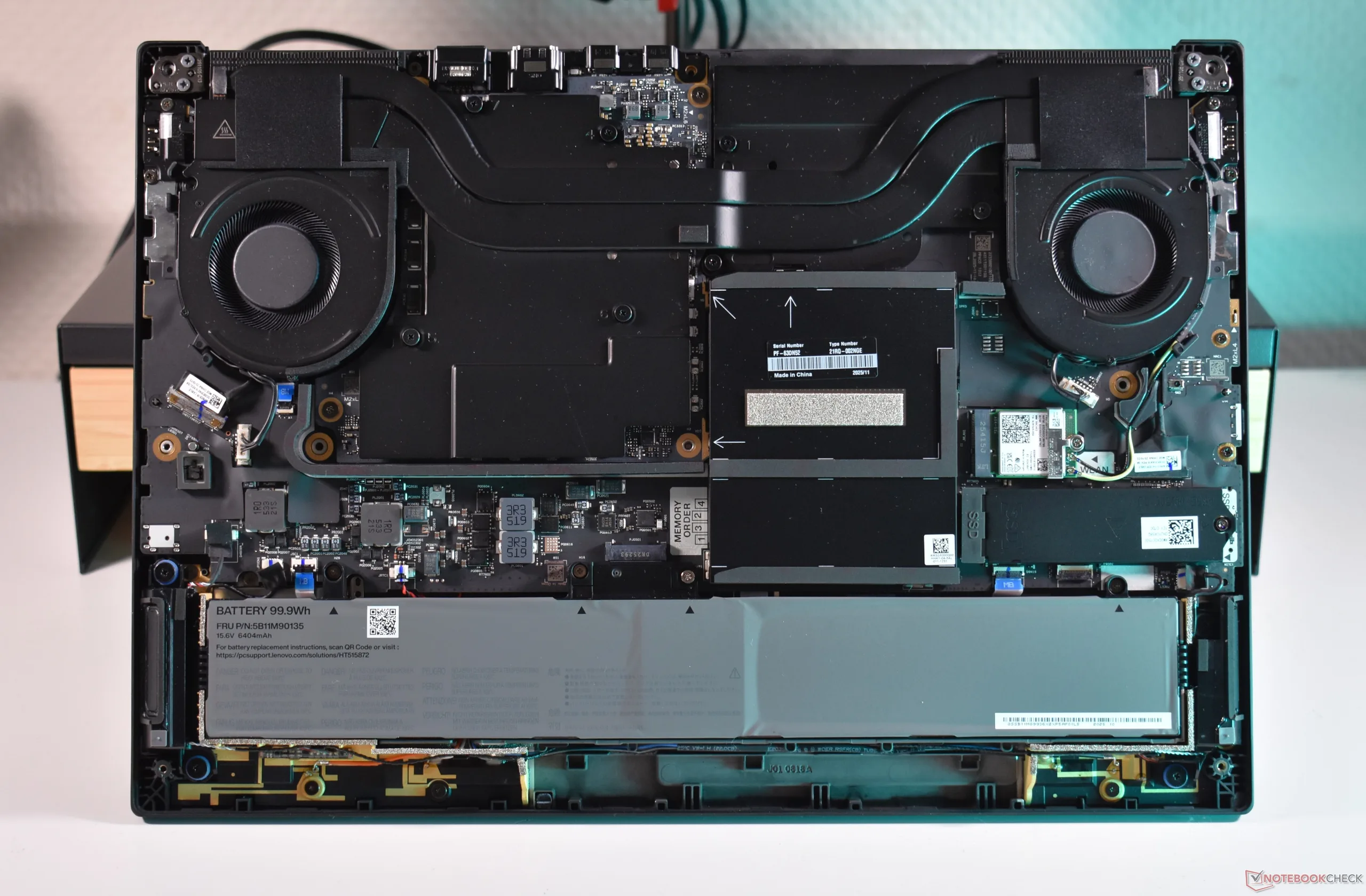
    But things are changing again! As of 2026, one flagship ThinkPad, the Lenovo ThinkPad P16 Gen 3, got a major upgrade — the return of modular Wi-Fi. This 16-inch powerhouse, which we recently got to review, now includes an M.2 2230 slot where the Wi-Fi card sits. Specifically, it has the latest Wi-Fi 7 BE200 card, which is modern and fast. And while you probably won’t need to upgrade this anytime soon, this move opens the doors for future updates.

    The Future of Wi-Fi Upgrades on ThinkPads

    This P16 Gen 3 is currently unique in the enterprise lineup for having a modular Wi-Fi slot, but Lenovo says it might bring this feature to other models later on. With Wi-Fi 8 already on the horizon, the fact you can upgrade your wireless standard easily is pretty exciting. It’s a reminder of how thoughtful design considerations can make a big difference in how durable and adaptable your tech is over the years. So, if you’re a fan of future-proofing your workstation, this is definitely a step in the right direction.

    Sources