Category: All News

  • Garmin Beta Update Adds Five Changes to Smartwatches

    Garmin Beta Update Adds Five Changes to Smartwatches

    Key Takeaway

    – Beta 22.32 is available for Fenix 8 family, Fenix E, Quatix 8 and Enduro 3; ECG and Dive features are disabled in this beta.
    – Touchscreen volume control responsiveness has been improved.
    – Bug fix addressing multisport workout issues that could cause freezes or resets.
    – Fix for an unexpected wearable reset issue.
    – Nutrition Glance now lets you log both hour and minute of meal time; translations have been updated.

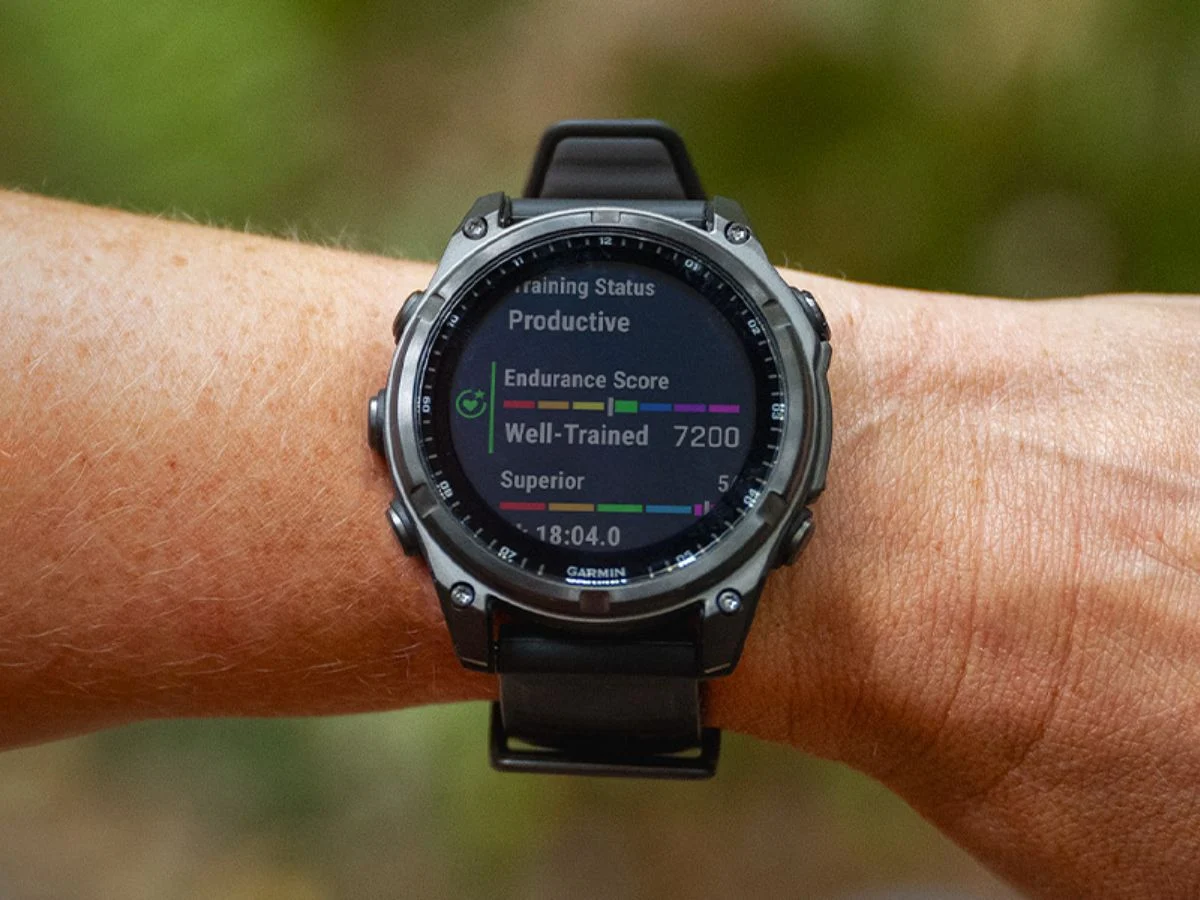
    Garmin has pushed a new beta update to some users of the Fenix 8 AMOLED, Fenix 8 Solar, Fenix 8 Pro AMOLED, Fenix 8 Pro MicroLED, Fenix E, Quatix 8 and Enduro 3 smartwatches. The last release in this testing cycle was version 22.29, which included a wide range of bug fixes for these wearables. Early adopters report a smoother navigation and quicker responses on the touchscreen, though betas tend to behave differently depending on firmware combinations and sensor setups that people run in daily life.

    Snapshot of Changes

    The new Garmin beta version 22.32 update brings five changes for the Fenix 8 and related smartwatches. According to the change log (below), the responsiveness of volume adjustments using the touchscreen has been improved. There is a bug fix for issues linked to multisport workouts, which could cause the watches to freeze or reset. Garmin has also tackled a problem which could cause the wearable to reset unexpectedly. The update also includes tweaks aimed at smoother wake gestures and more stable screen redraws when switching between apps during workouts. Each tweak seems small, but collectively they should feel snappier overall.

    Nutrition Glance and Translations

    The release notes, shared in a recent post on the Garmin forum, mention a change linked to the Fenix 8’s Nutrition Glance. Users can now log both the hour and the minute of a meal time; previously, users could only specify the hour of the meal when logging their food. Plus, translations have been updated, though unfortunately, Garmin has not clarified which languages benefit from this update. The wording in the notes hints at broader international support, but the specifics remain unclear to many testers and enthusiasts.

    Beta Availability and Restrictions

    Garmin’s beta version 22.32 release is now available for all beta testers of the Fenix 8, Fenix E, Quatix 8 and Enduro 3 (curr. $749.99) smartwatches. It is worth noting that, as is typical for such testing updates, the ECG and Dive features are disabled. The update arrives through standard beta channels and is expected to precede a wider public rollout once stability checks are completed. Users reporting improved touchscreen volume control and fewer unexpected resets might soon see those signals reflected in daily wear.

    Sources
    • Lenovo 14-inch laptop launches early with Intel Panther Lake

      Lenovo 14-inch laptop launches early with Intel Panther Lake

      Key Takeaway

      – Lenovo has released the ThinkBook 14 2-in-1 Gen 6 in Europe (replacing Gen 5); North America release slated for June may vary.
      – Available with Core Ultra 5 325 or Core Ultra 7 355 (Panther Lake); benchmarks show similar performance between the two.
      – Up to 32 GB DDR5-5600 RAM via two SODIMM slots; M.2 2242 slot pre-populated with 512 GB or 1 TB SSD; 60 Wh battery; 1200p 60 Hz display at 400 nits/45% NTSC.
      – Pricing: UK starting at £1,269 (16 GB RAM / 512 GB); Eurozone pricing €1,479–€1,588; no confirmed pricing for other markets yet.

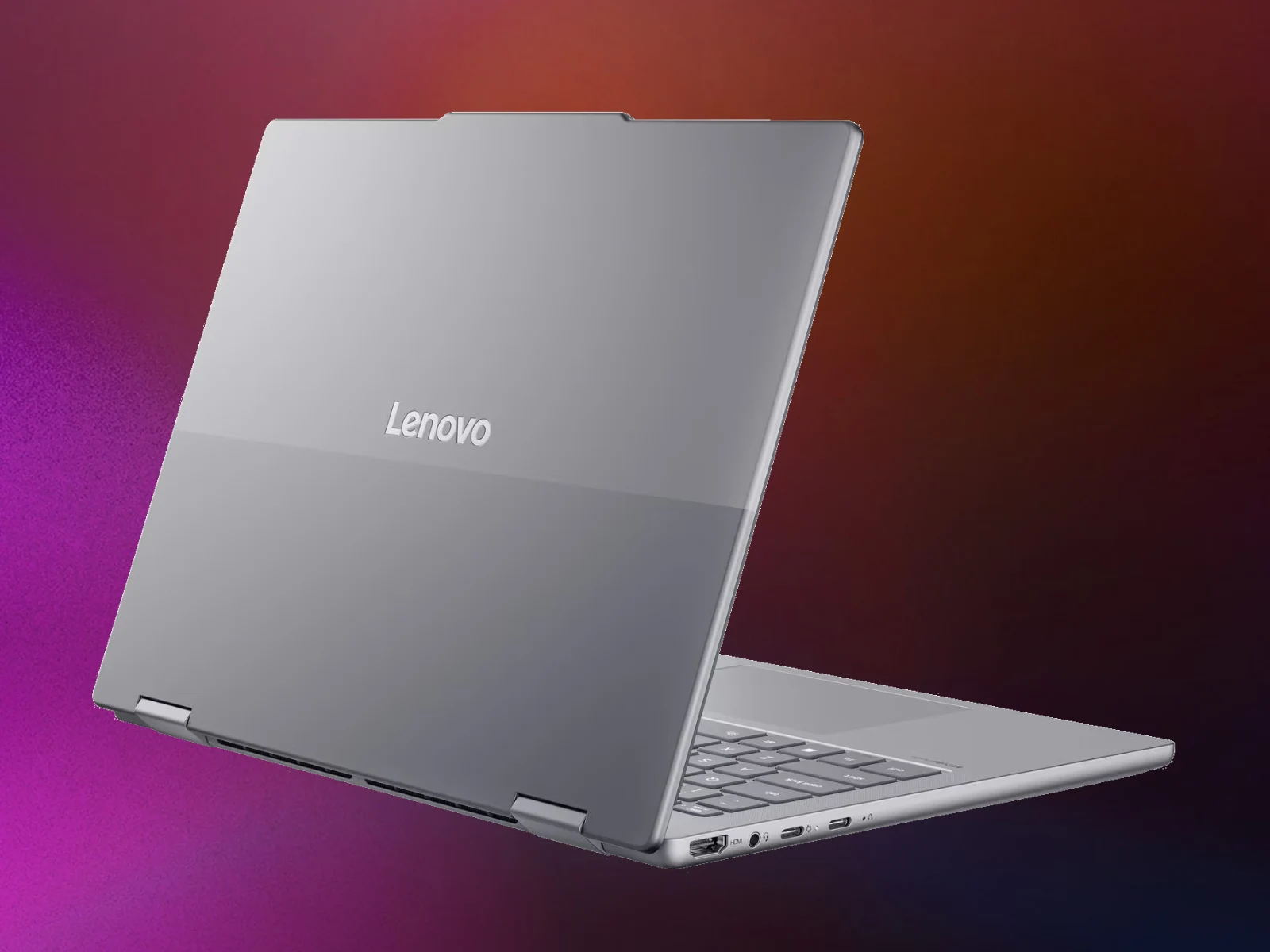
      Lenovo has quietly released a new ThinkBook 2-in-1 in Europe. Specifically, the company is now offering the ThinkBook 14 2-in-1 Gen 6 to replace last year’s Gen 5 model (curr. $1,299 on Amazon). Presented in March, the new 14-inch ThinkBook was apparently set for a June release. From the outset the European lineup emphasizes practical upgradability over flashy features, hinting at a shift toward midrange configurations that appeal to students and mobile professionals alike.

      Europe release and specs

      While that may still be true in North America, Lenovo has already started selling the ThinkBook 14 2-in-1 Gen 6 in Europe. Currently, the company offers the new ThinkBook with a choice between Core Ultra 5 325 and Core Ultra 7 355 processors. Both Panther Lake parts, the pair hardly differ performance-wise according to our benchmarks. In everyday use this means similar responsiveness for typing, video calls, and light multitasking, while keeping a lightweight chassis and quiet operation.

      Processor options and performance

      Additionally, the ThinkBook 14 2-in-1 Gen 6 can be configured with up to 32 GB of DDR5-5600 RAM, which is user-upgradable thanks to a pair of SODIMM slots. Lenovo also includes an M.2 2242 slot that it pre-populates with a 512 GB or 1 TB SSD. Only a 60 Wh battery is configurable though, as a 1200p and 60 Hz display that outputs at 400 nits with 45% NTSC colour space coverage.

      Memory, storage and display specs

      The ThinkBook 14 2-in-1 Gen 6 starts at £1,269 in the UK. At the time of publication, this price includes a Core Ultra 5 325 processor, 16 GB of RAM and 512 GB of storage. Meanwhile, the same SKU costs between €1,479 and €1,588 in the Eurozone. Lenovo has not confirmed pricing for other markets like Australia or North American pricing yet. Lenovo France, Germany, Ireland & UK.


    • Epic Games Store Teases Upcoming Mystery Free Games

      Epic Games Store Teases Upcoming Mystery Free Games

      Key Takeaway

      – The Epic Games Store mystery freebies event runs with the Mega Sale until June 11, 2026, and the first batch has already been revealed (surprising picks).
      – First mystery games were Sunderfolk (unexpected) and Telltale Batman Shadows Edition (roughly predicted by some).
      – A second-batch clue: a pickaxe-like symbol that could point to mining/crafting games such as Forager, Core Keeper, Deep Rock Galactic, Steamworld Dig entries, or a Tomb Raider collection.
      – Another clue is less clear, with theories ranging from a glitchy Freddy Fazbear image to Dead Cells or a pirate ship game.
      – Official reveal begins May 21, 2026, with potential extra hints before the unveiling.

      Epic Games Store is holding another mystery free game giveaway event, which is happening alongside the Mega Sale event. Both are expected to run until June 11, 2026, and the first batch of mystery freebies has already been revealed, and they were not what many predicted. The air around the giveaway buzzed with curiosity as players scanned leaks and threads, wondering what hidden titles could possibly emerge from the cryptic hints and timed drops. The announcement signaled that something unusual was underway, with surprises promised and a curious vibe permeating the community.

      Hints point toward second batch and a cryptic road

      For those who missed it, the first mystery free games for this event are Sunderfolk, which is far from what everyone speculated, and Telltale Batman Shadows Edition, which is close to what Redditor u/Prophet_NY predicted. The platform has now shared a new set of hints for the second batch, and as expected, they are quite confusing. Fans scramble through posts, threads, and comments, trying to thread together motifs, dates, and symbols, while still hoping for a surprising turnout that contradicts early odds.

      Symbolic clues and wild predictions

      Among the two, one of them looks like a pickaxe, and if this is correct, this symbol could be pointing to different games. Notable predictions point to Forager (curr. $6.99 on Humble), Core Keeper, and Deep Rock Galactic. It could be one of the Steamworld Dig entries or a collection as well, while some wild guesses suggest that it could be a Tomb Raider game. All of these titles have something to do with mining and crafting. The chatter grows louder as more voices weigh in, yet the hints remain deliberately slippery, inviting playful speculation without offering confirmation.

      Clues diverge into mining myths

      As for the second clue, it’s not as obvious as the first one. Some believe it’s a glitchy picture of Freddy Fazbear from Five Nights at Freddy’s. Other predictions suggest that it’s a different game, with some speculating that it’s Dead Cells or a pirate ship game. The contrast between familiar icons and unfamiliar symbols fuels debates that swing from nostalgic nostalgia to fresh curiosity, and conversations bounce between hopeful predictions and cautious skepticism about licensing and crossovers.

      Pop culture echoes and speculation

      Regardless of what the two mystery free games could be, the good part is that the reveal date is quite close. Epic Games Store will officially open up the curtains on these and give them away starting from May 21, 2026, and it’s possible that the platform will offer further hints before the unveiling. Until then, players watch horizons, save the dates, and hope that the second batch brings something that actually surprises rather than duplicates, keeping the community’s enthusiasm alive and the forums buzzing with fresh theories.

      Sources
    • Sony headphones specs: price, launch date, 12-mic ANC 34h battery

      Sony headphones specs: price, launch date, 12-mic ANC 34h battery

      Key Takeaway

      – Sony 1000X The ColleXion is a premium luxury headset above the XM6, signaling a move into high-end fashion/audiophile markets and a naming shift away from WH.
      – Hardware updates include a continuous curved headband with polished metal hinges to improve durability over XM5/XM6.
      – Official announcement set for May 19, 2026; pricing expected at €629 / £549 / $649, competing with AirPods Max 2 and Px8.
      – In-the-box contents: The ColleXion headphones, a 1.2m (3.5mm) cable, and a sculpted purse-style carrying case with handle and magnetic closure.
      – Charging cable ambiguity: some listings exclude a charging cable for e-waste reduction, while promo images show USB-A to USB-C; the May 19 datasheet should clarify.

      A comprehensive leak has fully revealed Sony’s upcoming premium audio offering, the 1000X “The ColleXion”. Positioned as a luxury pair of cans above the WH-1000XM6, these headphones signal a shift toward the high-end fashion and audiophile markets, moving away from the traditional “WH” naming convention. The chatter online suggests Sony wants to redefine premium listening as a lifestyle statement rather than a mere product line, and early images fuel the speculation.

      Design language and positioning

      The most notable hardware change is a move to a continuous curved headband with polished metal hinges, seemingly addressing the durability issues and plastic hinge failures that have plagued the XM5 and XM6 generations. Build notes leaked alongside other specs describe an intent to deliver a sturdier fit, less creak, and a more premium tactile feel, even if some early prototypes tested only reluctantly resist.

      Hardware refinements

      According to the leaked info, the official announcement for the headphones is locked in for May 19, 2026, with retail pricing expected to sit at €629 / £549 / $649. The luxury price tag positions “The ColleXion” directly against high-end competitors like the Apple AirPods Max 2 and Bowers & Wilkins Px8. If true, Sony is inviting a debate about value versus fashion in the premium segment.

      Pricing and market rivals

      Inside the packaging, buyers will find the 1000X “The ColleXion” headphones, a 1.2m (3.5mm) audio cable, and a brand-new, sculpted purse-style carrying case featuring an integrated handle and a magnetic closure. The whole bundle appears tailored for travel and showpiece moments, with careful attention paid to the case’s silhouette and color accents that echo luxury accessories rather than mere shipping materials.

      Packaging and accessories

      It’s worth noting that there is currently some uncertainty regarding the charging cable. While Sony’s official “in the box” slide states that a charging cable is omitted to reduce e-waste, separate promotional family shots explicitly show a USB-A to USB-C cable included in the layout. The official datasheet on May 19 will likely resolve this contradiction. Until then, buyers must watch both sources and decide what to believe.

      Clarifications and official timeline

      Once again, Sony’s 1000X “The ColleXion” should be announced on May 19. Stay tuned for more updates and subtle leaks as analysts weigh the design cues against the price tag, and as the company reveals more about the listening experience, codecs, Bluetooth version, and how the new model will position itself in a crowded high-end market.

      Sources
    • Gen Z Buys Casio’s Cheapest Watches, Saving the Company

      Gen Z Buys Casio’s Cheapest Watches, Saving the Company

      Key Takeaway

      – Casio posted a strong FY2026: net profit ¥18.2b (~$115m), more than double prior year; revenue up 5.5% to ¥276.3b; operating profit up 62% to ¥23.1b.
      – Growth is led by the Casio Watch line (retro A159, MTP-1302), driven by younger buyers and a successful Korea social strategy; G-Shock remains solid but not the main driver.
      – Watch segment delivered ¥185b (~$1.17b) with a 14.7% operating margin, but Q3 demand outpaced supply in Q4, causing stockouts on popular G-Shock models and partial production relief.
      – Outlook: revenue guidance of ¥295b (~$1.86b) for the current year and a target operating margin of 11.1% by 2029.

      Casio just dropped its fiscal year 2026 earnings, and the numbers are genuinely quite surprising. Net profit came in at ¥18.2 billion (roughly $115 million) — more than double the previous year’s figure. Revenue grew 5.5% to ¥276.3 billion (~$1.74 billion), and operating profit jumped 62% to ¥23.1 billion (~$146 million). For a company that was posting pretty dismal numbers just two years ago, this is a huge turnaround.

      Sales momentum and product mix

      The interesting part is what’s actually driving it. It’s not the G-Shock — though that’s doing just fine on its own and pulling its own weight alongside, considering it’s arguably Casio’s most popular line. Instead, it’s the “Casio Watch” line: thin, lightweight retro models that were never supposed to be cool again. Watches like the A159 and MTP-1302, which you’d find on your someone’s wrist in the 90s and don’t cost more than $50-$70, have become highly sought-after, especially among younger buyers who’re into the whole “vintage” aesthetic. Casio’s Korea social media strategy caught on particularly fast there and reportedly created demand that spread across the region.

      Demand dynamics and production constraints

      The watch business overall pulled in ¥185 billion (~$1.17 billion) at a 14.7% operating margin, which is healthy by any measure. However, there was one wrinkle — demand in Q3 was so strong that popular G-Shock models went out of stock in Q4, and emergency production increases could only partially cover it. To be fair, that’s a good problem to have, but it still deserves an explicit mention.

      Profitability and outlook

      Looking ahead, Casio is projecting ¥295 billion (~$1.86 billion) in revenue for the current year and is targeting an operating margin of 11.1% by 2029.

    • Asus Launches ROG Certified RAM Program for Gaming Memory

      Asus Launches ROG Certified RAM Program for Gaming Memory

      Key Takeaway

      – Asus unveiled the ROG Certified memory program at its China launch, expanding ROG branding into RAM with multiple partners.
      – The first ROG kit is a 48GB DDR5 CL26 (2x24GB), using SK Hynix M-die ICs and made by BIWIN; priced around CNY 5,999 (~$881) in China and supports Intel XMP and AMD EXPO.
      – The program will feature 14 partners (including ADATA, Corsair, G.Skill, Lexar, Silicon Power, and Apacer), suggesting a broader lineup and potential global rollout.
      – This marks Asus’s foray into memory branding after a rumor of making its own RAM; the company did not confirm that rumor but is moving forward with ROG Certified RAM.

      Asus has just held a relatively big launch event in China, introducing a couple of new products, including the refreshed ROG NUC gaming mini PC. At this event the company also announced something called the ROG Certified memory program, a move that leans into a branded ecosystem beyond simple hardware. The show was busy with press and fans, and while the agenda looked dense, the mood was upbeat, a sign of growing confidence.

      ROG Certified memory program expands

      That timing isn’t surprising for those following chatter from late 2025, where a wild rumor claimed Asus could make its own RAM by the second quarter of 2026. The company publicly denied the notion, but in the end they did dip into the memory market with the ROG Certified program, hoping to bind performance and branding under one name. Some analysts cautioned it would be risky, others said it could increase compatibility leverage.

      Asus showed a 48GB DDR5 CL26 kit that’s developed by BIWIN, a Chinese manufacturer specializing in flash memory and storage. This kit is currently available in China for CNY 5,999, around $881. A comparison is the G.SKILL Trident Z5 2x24GB DDR5 CL40 curr. $649.99. The company claims that this ROG-branded RAM can deliver stable and better performance when paired with ROG motherboards.

      This first ROG-branded kit uses SK Hynix M-die ICs, and it has support for both Intel XMP and AMD EXPO profiles. Asus highlights that more memory kits with ROG branding are on the way, and they will be from 14 different partners, including Adata, Corsair, G.skill, Lexar, Silicon Power, and Apacer.

      Although a global launch isn’t confirmed yet, given that the partners have an international presence, it seems plausible that ROG-branded memory kits will soon be officially available outside China. Check out the video below to learn more about the first Asus ROG RAM kit and how the brand aims to expand its footprint beyond its domestic stage. Industry watchers say that success will hinge on compatibility across motherboards and the pricing against existing high end memory kits, and that the real test will be availability and support in other markets.


      Sources

    • Vivo X300 Ultra: 2026’s Best Videography Phone

      Vivo X300 Ultra: 2026’s Best Videography Phone

      Key Takeaway

      – Robust video capabilities: up to 8K, 4K120 across all focal lengths, plus 120fps in Dolby Vision with 10-bit Log.
      – Pro video suite and cinematic presets: Pro Video controls with white balance/ISO and Film Look/Film Style profiles.
      – Strong stabilization: excellent OIS + EIS, comparable to the 2025 Galaxy flagships in motion testing.
      – Autofocus caveat and versatile zoom: autofocus can struggle during fast movement; 14mm–230mm range with multiple zoom levels tested.

      In our Vivo X300 Ultra review, we’ve already discussed the flagship phone’s excellent camera capabilities – setting aside its weaknesses in color reproduction for the moment. Nevertheles, for a high-end device to claim an outstanding camera system, the ability to capture high-quality video remains essential, not optional. The X300 Ultra leans into this expectation with a refined approach to motion recording, promising that the best moments can be preserved with pleasn detail, stability, and nuance even in challenging lighting.

      Video capabilities and format

      On the video front, the X300 Ultra doesn’t disappoint. It offers a 4K120 option across all focal lengths, and it can also record at 120 fps in Dolby Vision and 10-bit Log. As any flagship expected, the ability to capture video up to 8K is also supported, though real-world workflows may vary. Pricing details are not provided in this extract.

      Pro Video features and modes

      Vivo has equipped the X300 Ultra with a new Pro Video mode that offers comprehensive control over parameters such as white balance and ISO. Other additions highlighted by Vivo include Film Look and Film Style modes, which use film-inspired color profiles to help create professional-looking cinematic footage.

      Stability and testing setup

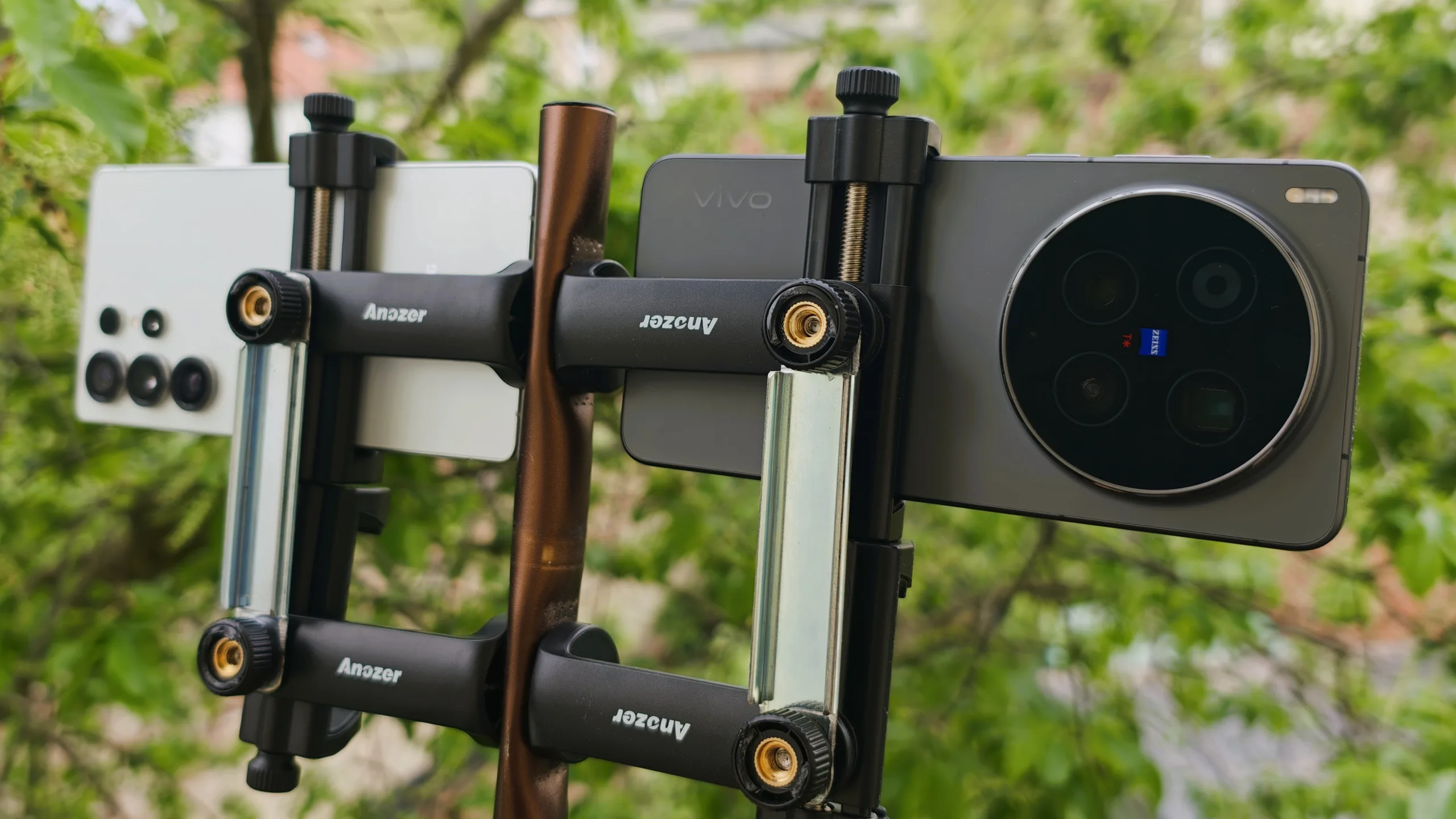
      In the video below, we set out to evaluate the Vivo X300 Ultra’s image quality and stabilization (OIS + EIS) in motion by subjecting the phone to a very challenging scenario involving rapid pans and shakes. For this test, we used the 4K30 option with Dolby Vision, which is supported by all sensors. For a more complete picture, we also compared the main camera’s image stabilization with what the Samsung Galaxy S25 Ultra offers.

      Footage context

      Check out our full review of the Vivo X300 Ultra for more details and access to all the footage we captured with the Zeiss camera system. The combination of these tests and the accompanying clips provide a broad view of how the device handles real-world video tasks, from steady family moments to fast-paced action scenes, all while maintaining a premium feel that elevates mobile videography.

      Zoom range and focus issues

      With the Vivo X300 Ultra, videography enthusiasts can look forward to highly detailed footage across a range of 14 mm to 230 mm. In our test videos, we used zoom levels of 0.6x, 1.5x, 3.7x, 7.4x and 10x. Image stabilization is excellent and roughly on par with the 2025 Galaxy flagship. However, the X300 Ultra’s autofocus exhibited noticeable issues during fast movements, which we demonstrated by running in the second video. The second clip was captured in Film Look.

      Final thoughts and test note

      Test Vivo X300 Ultra. To wrap up, the final evaluation reflects a blend of strengths and caveats that videographers will weigh against their needs. The 4K120 across focal lengths, 120 fps Dolby Vision, 10-bit Log, and the Pro Video options offer meaningful creative leverage, even if autofocus can stumble during rapid motion. In controlled scenarios, the X300 Ultra proves itself as a capable tool for cinematic ambitions.


      Sources

    • GTA 6 Best Buy Pre-Order Leak Adds $2B to Publisher Valuation

      GTA 6 Best Buy Pre-Order Leak Adds $2B to Publisher Valuation

      Key Takeaway

      – Leaked Best Buy email sparked a stock jump (~5–10%), adding about $2B in market value for Take-Two on May 14, 2026.
      – The email outlined a May 18–21, 2026 physical GTA VI pre-order promo with a 5% influencer commission, later corroborated by multiple affiliates.
      – GTA VI pre-orders are expected to begin May 18, 2026, with a targeted November 19, 2026 launch; Q4 2026 earnings call on May 21 may reveal more.
      – Hype is at an all-time high; Strauss Zelnick describes the situation as exciting yet terrifying, with no official pre-order date or public statement yet.

      The ongoing hype for Grand Theft Auto VI is surging to new highs as Rockstar Games’ sixth mainline entry in the franchise is shaping up to be one of the biggest video game launches in history. Even the mere rumor that fans might be able to pre-order the game soon has already sent tremors through Wall Street. On Thursday, May 14, 2026, Rockstar Games and GTA VI publisher Take-Two Interactive saw their shares jump roughly between 5% and 10% in a single day, adding about $2 billion to the company’s market value. The reason for this was a small blip, a leaked email, from Best Buy that gave insights into pre-order details for the physical edition of Grand Theft Auto VI. Take-Two’s stock had been hovering between $216 and $230 earlier in the week. After the pre-order email leak became public, the stock price climbed to more than $240 per share. The email was sent to affiliate partners and included a brief promotional window for “GTA 6 Pre-Order (Physical Game)” running between May 18 and May 21, 2026, with a 5% commission for influencers who drove sales. While this seemed too good to be true, multiple affiliate partners later shared screenshots online, and reports confirmed that the email was, in fact, real. With that said, Grand Theft Auto VI pre-orders are now expected to begin on May 18, 2026. Take-Two investors may be celebrating, as the publisher’s Q4 2026 earnings call is scheduled for May 21, 2026, and some information is sure to be released about its largest title to date, building on the success of its predecessor. These developments also largely reassure the GTA fanbase that the game is on track for a November 19, 2026, launch, with no further delays in sight.

      Market Tremors and Pre-Order Rumors

      Expectations are at an all-time high for Grand Theft Auto VI. Take-Two CEO Strauss Zelnick recently spoke with Bloomberg and discussed the game’s hype. He said, “Being on the sidelines but pretty close to the front of the sidelines is very, very exciting. And terrifying. Because the expectations are so high.” Still, Rockstar and Take-Two have yet to confirm the pre-order date or issue a public statement regarding the Best Buy email. Take-Two’s Q4 2026 earnings call is just a few days away, and fans hope Strauss Zelnick will share a clearer picture of what’s coming next for GTA VI’s promotional marketing and trailer drops.

      Officials Silence and Investor Optimism

      The situation remains fluid as neither Rockstar nor Take-Two has publicly confirmed the pre-order date or issued a formal response to the Best Buy email. The Q4 2026 earnings call approaches, and investors expect some sense of the schedule for promotional marketing and trailer drops, but until then the GTA VI chatter will keep oscillating between cautious optimism and skepticism. For now, expectations linger high, and the community hopes the official word arrives soon, setting a concrete launch plan rather than more rumors.

      Sources
    • AMD expands FSR 4.1 beyond RDNA 4 amid community backlash

      AMD expands FSR 4.1 beyond RDNA 4 amid community backlash

      Key Takeaway

      – FSR 4.1 INT8 will reach RDNA3 RX 7000 series in July 2026, with 300+ games supported at launch.
      – RDNA2 RX 6000 series will gain FSR 4.1 in early 2027, expanding support to older GPUs.
      – The update eliminates the need for workarounds like OptiScaler by providing official out-of-the-box FSR 4.1.
      – The rollout responds to prior community backlash over leaks and perceived long-term support, announced by AMD’s Jack Huynh.

      Following a major AMD GitHub repository leak last month, which revealed that the PS5 Pro’s PSSR 2.0 uses the AMD FSR 4.1 INT8 version for the RDNA 3-based console, the internet criticized AMD for skipping RDNA 3 and RDNA 2 GPUs on PC. The majority of AMD GPU owners bought these cards with long-term support in mind, and when the leak surfaced, the community felt betrayed. With AMD’s RX 7000 series GPUs remaining competitive in a variety of use cases and games, often at better price points than AMD’s own offerings and the competition, this is a particularly bitter pill to swallow for many who assumed such support was coming.

      Industry Response

      One month later, AMD finally addressed these concerns and announced that the very same FSR 4.1 INT8 model will be coming to RDNA 3-based RX 7000 series GPUs in July 2026 and to RDNA 2-based RX 6000 series graphics cards in early 2027. FSR 4.1 is expected to support over 300 games at launch on RDNA 3 GPUs. The update was unexpected and surprised gamers who saw it as AMD responding to community outrage.

      Official Confirmation

      AMD’s Senior Vice President and General Manager of Computing and Graphics, Jack Huynh, directly announced FSR 4.1 on X for RX 7000 and RX 6000 series GPUs alongside an announcement video: “My team and I have been working hard to evolve AMD FSR 4 and bring it to more cards. This July, RDNA 3 players will experience FSR 4.1 upscaling, delivering sharper visuals and smoother gameplay than ever before. We tested across hundreds of PC configurations and in hundreds of games to ensure visuals are sharp and everything works out of the box.” For gamers who’ve stuck with RX 6000 series GPUs, he added, “And for our RDNA 2 players, we have something exciting coming in early 2027. FSR 4.1 upscaling will be coming to your cards as well.”

      Impact on Early Adopters

      When FSR 4.1 launched earlier this year, it was limited to just RX 9000-series RDNA 4 GPUs, leaving many AMD Radeon users to resort to workarounds. Those stuck with older versions of FSR used OptiScaler to unofficially inject FSR 4.1 into games, but the workaround was hit-or-miss. With AMD finally introducing FSR 4.1 for RDNA 3 and RDNA 2 GPUs, gamers won’t have to resort to workarounds like OptiScaler to gain performance. The official implementation of FSR 4.1 for older RDNA cards will likely be fine-tuned to run better and more smoothly in supported games than competing 3rd-party mods. While RX 7000 series owners will get FSR 4.1 in the coming months, RDNA 2 users will have to hold on a bit longer until 2027.

      Sources
    • Smart Home Display with E-Ink Screen, Battery and WiFi

      Smart Home Display with E-Ink Screen, Battery and WiFi

      Key Takeaway

      – 4-inch color E Ink Spectra display (400×600) with low power and good outdoor readability, but slower refresh.
      – ESP32-S3R8 dual-core up to 240 MHz, 16 MB flash, 8 MB PSRAM; microSD required for photos.
      – 2.4 GHz WiFi only; suitable as a smart home display; development effort required.
      – 1250 mAh battery for portable use; $75 price; sold directly by M5Stack.

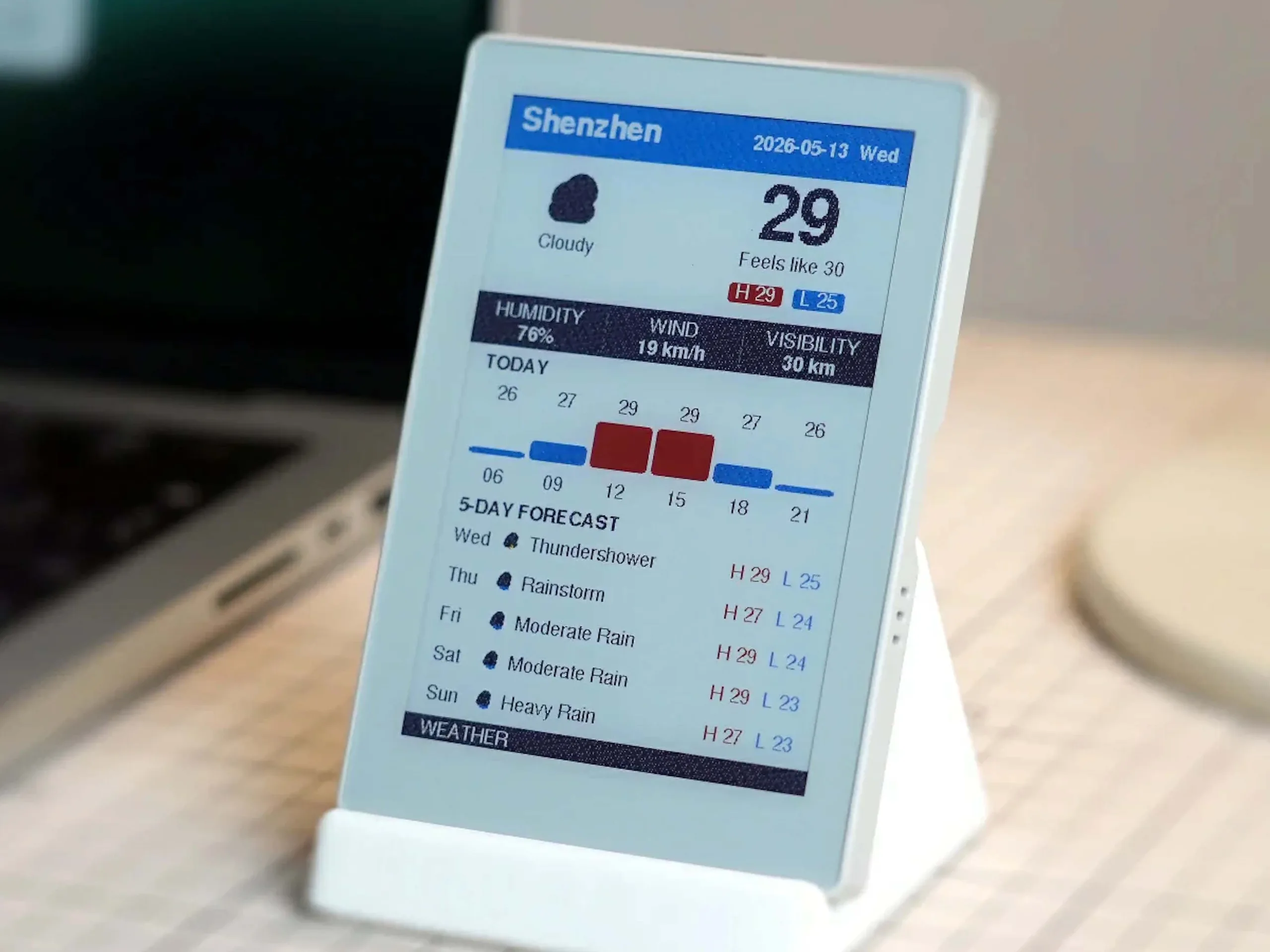
      M5Stack is offering the M5Paper Color ESP32S3 dev kit, a new display that can effectively also be described as a dev board with an integrated display. Specifically, it uses a 4-inch e-ink display, making it smaller than most e-readers. The E Ink Spectra display has a resolution of 400 x 600 pixels and supports colors. Taken together, this combo could appeal to hobbyists and professionals alike who want a screen on a compact board without extra modules. The setup feels ready to plug into a project and show status, alerts, or simple UI elements at a glance. In short, it merges display and processing in one glassy package.

      Overview

      The usual advantages and disadvantages of displays based on electronic ink apply. They require little power and remain easy to read in bright ambient light without strong backlighting, but they are not particularly responsive. As a result, these displays are especially well suited for showing information when the content does not change within milliseconds. The system is based on an ESP32-S3R8 processor with two Xtensa LX7 cores and a clock speed of up to 240 MHz. It has 16 MB of flash storage and 8 MB of PSRAM. A microSD card can be used and is more or less required if photos are to be displayed, for exmple.

      Specifications & Power

      The WiFi connection is supported only in the 2.4 GHz band, but this wireless data transfer option enables use as a smart home display, for instance. However, users will largely have to handle development themselves. Thanks to a battery with a capacity of 1,250 mAh, the display can also be used without a permanent power supply. The M5Paper Color ESP32S3 Dev Kit is available directly from the manufacturer for $75. M5Stack


      Sources