Category: All News

  • AMD Zen 7 CCD on TSMC A14 node: latest tip for 2025

    AMD Zen 7 CCD on TSMC A14 node: latest tip for 2025

    Key Takeaway

    – Zen 7 is rumored to use TSMC A14 for the Zen 7 CCD (Grimlock) with up to 16 cores and 224 MB L3 cache via 3D V-cache, and may adopt FOPLP packaging.
    – Not all Zen 7 parts may be on 14A; Samsung Foundry may supply IO die and Infinity Fabric for some components, suggesting mixed manufacturing.
    – Cost pressure is a concern, as A14 wafers are expensive and AMD may split production to balance price competitiveness against Intel 14A offerings.


    AMD Zen 7 Rumors Summary

    Overview

    Even though Zen 6 is yet to surface, leaks have already started talking about its successor: Zen 7. Moore’s Law is Dead predicted it would first surface sometime in 2027-28 with new Epyc CPUs codenamed Florence, complete with a top-spec SKU with a whopping 288 physical cores. The chatter keeps shifting, yet the core idea remains: AMD plans to push more cores and bigger caches into the lineup, claiming a leap that could redefine workstation performance for multi-threaded workloads. The tone of the talk mixes optimism with cautious notes about supply and manufacturing realities, and it sets a horizon that enthusiasts and enterprise buyers are watching closely.

    Spec highlights

    Consumer Zen 8 CPUs should ideally launch a year later. Taiwanese news outlet Commercial Times has now tacitly confirmed yet another Zen 7 spec foretold by Tom. For starters, it states a Zen 7 CCD can support up to 16 cores and 224 MB of L3 cache with a 3D V-cache tile. The details suggest AMD plans to equip Zen 7 with substantial cache and core counts that could significantly boost performance in memory-bound workflows, gaming, and content creation. This spec read sounds ambitious, yet it lines up with AMD’s historical trend of expanding cache sizing to improve throughput.

    Fabrication plans

    AMD plans to use TSMC’s A14 node for its Zen 7 CCD, codenamed Grimlock. Unlike Intel 18A and newer nodes, TSMC A14 won’t support backside power delivery. That upgrade is expected to arrive in a subsequent node revision. The exact details about how 14A improves upon current-gen nodes like N2 and N2X are unclear. Zen 7 will also leverage cutting-edge tech like FOPLP (Fan-Out Panel-Level Packaging) to enable more efficient operation. The manufacturing story remains murky, with mixed signals about where each die will be produced and how packaging innovations could affect power handling and yields.

    Industry implications

    If true, it will be one of the first major players to fabricate its high-end chips on TSMC A14, joining the likes of Apple and likely Qualcomm. However, not all Zen 7 parts may be made on 14A, or, for that matter, even at TSMC. Jukan, a South Korean analyst, hints that Samsung Foundry has won some orders from AMD, likely for laptop CPUs. Therefore, it would be reasonable to assume some non-critical components, such as the IO die and Infinity Fabric, could be manufactured on Samsung production lines. A14 wafers won’t be cheap, and AMD will definitely look for ways to keep overall costs low, lest it run the risk of being undercut by Intel’s 14A products.

    Sources
  • Thypoch 198g 35mm f/2 Full-Frame Lens Unveiled

    Thypoch 198g 35mm f/2 Full-Frame Lens Unveiled

    Key Takeaway

    – Ultra-compact, lightweight design: 3.5 cm length, 2.7 cm protrusion, 5.2 cm diameter, 198.6 g.
    – Optical and build features: 8 lenses in 5 groups with an aspherical element; Epoch Coating 84 for a warm retro look; ten-blade aperture; 39 mm filter thread.
    – Autofocus: Manual focus only from 0.5 m, with a noticeable tactile click below 0.7 m signaling rangefinder range; Leica M mount with adapter compatibility for other systems.


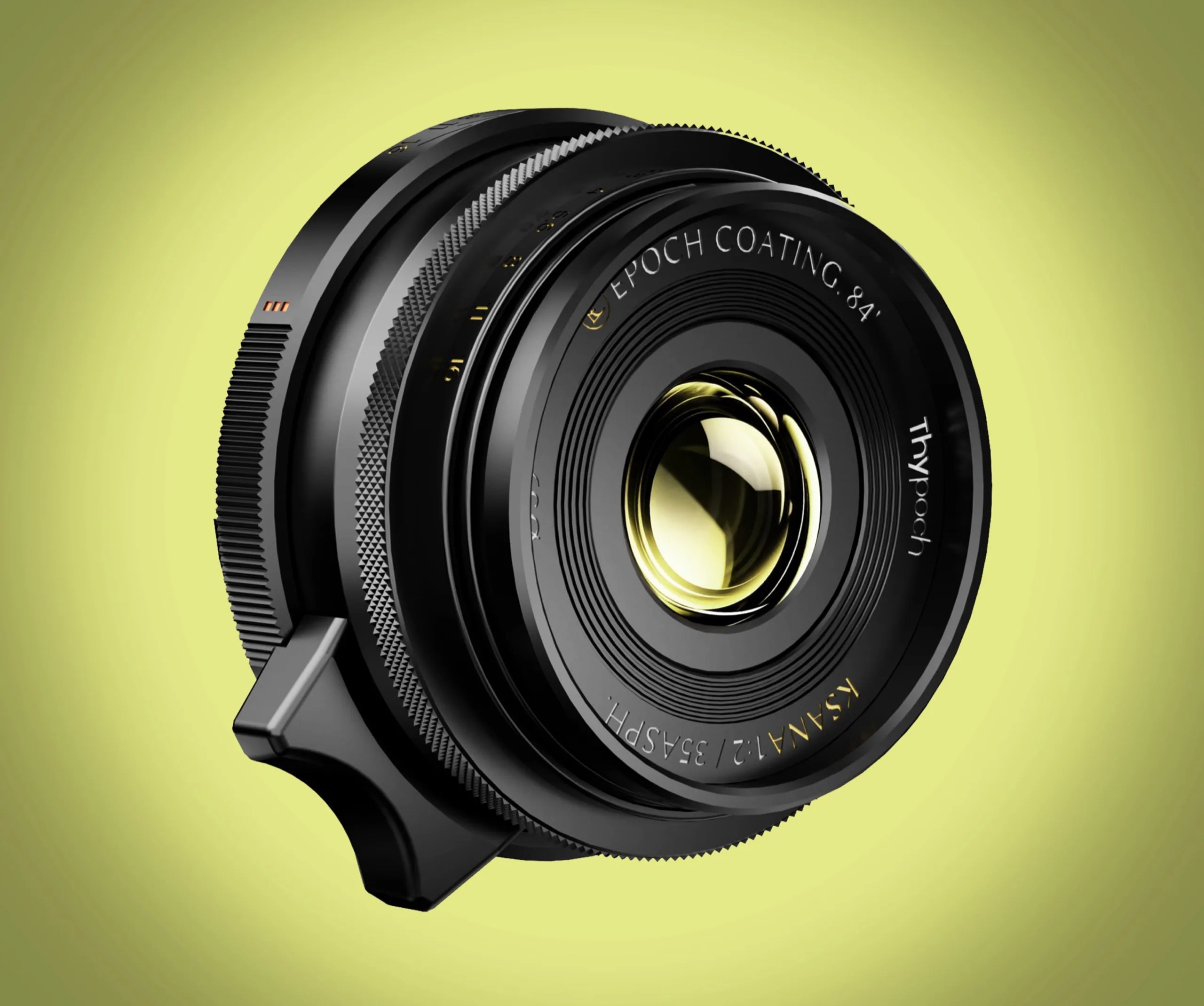
    Thypoch unveils a remarkably compact wide-angle option, claiming a body length of just 3.5 centimetres and a protrusion of 2.7 centimetres from the camera when mounted. The lens body measures 5.2 centimetres in diameter and weighs 198.6 grams, making it a notably portable choice for enthusiasts who crave portability without sacrificing specs.

    Design and optical notes

    Voigtländer counters the scene with the 35 mm f/1.4 Nokton VM II, touted as even more compact and faster, yet Thypoch pushes for superior image quality through a design that uses eight lenses in five groups, including a single aspherically ground element. This contrast highlights how different brands pursue sharpness and character in varied ways, particularly at wide angles where distortion control and micro-contrast matter.

    Focusing and coatings

    The Thypoch Ksana 35 mm f/2.0 is manually focused, with a precise minimum focus distance of 0.5 meters. A tactile click indicates when the distance falls below 0.7 meters, signaling the rangefinder-coupled focus range. The lens surface receives Epoch Coating 84, a coating meant to impart a warm retro look to captured images. The aperture features ten blades, and a 39 millimeter filter thread completes the optical package, offering compatibility with a range of filters for creative control.

    Availability and compatibility

    The Ksana 35 mm f/2.0 full-frame lens is currently sold through the manufacturer’s online store, priced at $599 without the lens hood or $649 with the hood included. In both configurations, front and rear caps are provided. Shipping is advertised as free, though the price excludes import taxes and customs duties. The lens is provisioned for Leica M mount, and adapters unlock compatibility with Sony E, Nikon Z, Fujifilm X, and Canon RF systems, broadening its usability across multiple camera bodies.

    Notes on usage

    Thypoch emphasizes that the primary mount is Leica M, yet the practical reach extends via adapters to several popular mirrorless bodies, enabling work across different ecosystems. This flexibility can be a selling point for photographers who own different brands but want a consistent focal length and rendering from a single optic.


  • Honor 600 Super Edition: 200 MP Camera, 8600mAh, 8000 nits

    Honor 600 Super Edition: 200 MP Camera, 8600mAh, 8000 nits

    Key Takeaway

    – Battery capacity increased to 8,600 mAh with 80W USB-C charging, while keeping the Snapdragon 7 Gen 4.
    – Significantly narrower camera module, giving a look reminiscent of the iPhone Air.
    – High-end display and cameras: 6.57″ AMOLED at 2,728×1,264 with up to 8,000 nits HDR peak brightness; 50 MP selfie, 200 MP main, 12 MP ultra-wide.
    – Other specs: 0.98 mm bezels (likely only the black bezel), dual SIM, fingerprint sensor, Wi‑Fi 6, Bluetooth 5.4, NFC, charger and case included.
    – Availability in China: 12/256 GB for CNY 3,299 and 12/512 GB for CNY 3,699; international launch date not announced.


    Honor unveils the 600 Super Edition with upgraded power and a slimmer camera module

    A few weeks after the launch of the Honor 600 and the Honor 600 Pro the company presents the Honor 600 Super Edition. In particular, Honor has made two major changes. Firstly, the camera module is significantly narrower, making it more reminiscent of the iPhone Air than the iPhone 17 Pro. And secondly, the battery capacity increases from 7,000 mAh to 8,600 mAh.

    Specifications and charging details stay consistent, with tasteful enhancements

    As before, charging takes place via USB-C with up to 80 watts. Honor uses the same Qualcomm Snapdragon 7 Gen 4 which has five ARM Cortex-A720 performance cores and three Cortex-A520 efficiency cores. The 6.57-inch AMOLED display achieves a resolution of 2,728 × 1,264 pixels and a remarkable HDR peak brightness of 8,000 nits, with 1,800 nits possible over the entire display area.

    Bezel claims and camera lineup paint a familiar yet fresh look

    According to Honor, the screen bezels are extremely narrow at 0.98 millimetres, but these dimensions probably only specify the black bezel, not the metal frame. The Honor 600 Super Edition has a 50 megapixel f/2.0 selfie camera, a 200 MP f/1.9 main camera and a 12 MP f/2.2 ultra-wide-angle camera. A dual SIM slot, a fingerprint sensor, Wi-Fi 6, Bluetooth 5.4 and an NFC chip round off the features. Honor includes a charger and a protective case.

    Pricing and availability hint at a strong regional focus

    The Honor 600 Super Edition is available in China either with 12 GB RAM and 256 GB storage for CNY 3,299 ($485), or with 512 GB storage for CNY 3,699 ($545). Details on the international launch are still pending.


    Sources

  • New Ugreen Compact Charger Now Available Worldwide

    New Ugreen Compact Charger Now Available Worldwide

    Key Takeaway

    – EU version uses fixed Type-C pins (no folding Type-A), making it slightly larger than the US variant.
    – Single USB-C port with GaN tech and Airpyra design; claims to charge a MacBook Air to 55% in 30 minutes.
    – Priced at €34.99 on Amazon EU with mid-June delivery; up to 20% in-page vouchers available in some cases.


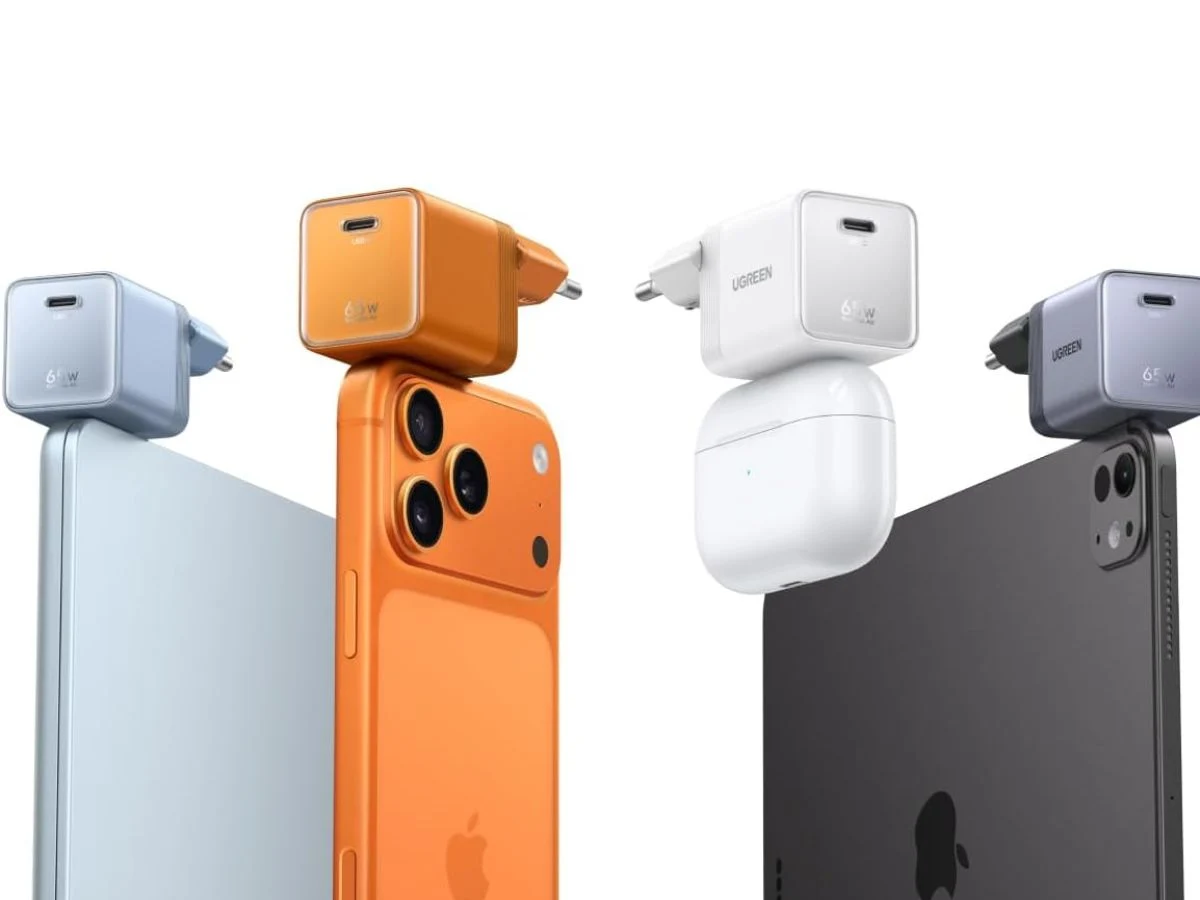
    Ugreen Nexode Air 65W Charger lands in Europe with GaN tech

    Ugreen has announced the Nexode Air 65W Charger for the EU market, following its US debut in mid May 2026 after a brief appearance on the brand’s Amazon storefront in April 2026. The rollout in Europe marks a notable expansion for the line, and it arrives with a blend of compact design and GaN efficiency that enthusiasts have been watching for. The information here preserves the key pricing and spec details exactly as presented, so you’ll find the numbers consistent with the official notes.

    Design details and build

    The European version mirrors the US variant in overall styling, sporting a matte finish along the sides and ridges near the pins to improve grip. A frosted glass panel surrounds the single port area, contributing to a modern, understated look. Unlike some models, this version uses fixed Type C pins rather than folding Type A pins, making it a touch less compact. Its dimensions come in at 3.3 × 3.1 × 7.3 cm, roughly 1.30 x 1.22 x 2.88 inches, and it is sold currently in dark gray with orange, light blue, and white variants expected to follow.

    Technical specs

    Powered by GaN technology and featuring the company’s Airpyra structure to maintain a slim form factor, the Nexode Air 65W Charger provides a single USB-C port. The maximum output is described as capable of charging a MacBook Air to 55% in just 30 minutes, a claim that reflects its high-efficiency design and compact footprint. It ships with a braided 1.5 m (~5 ft) long USB-C to USB-C cable rated at 100W, ensuring strong power delivery and reliability for devices that demand steady charging.

    Pricing and availability in Europe

    In Europe, the Ugreen Nexode Air 65W Charger is listed at €34.99 through retailers like Amazon in several countries, including the Netherlands, France, and Spain. Delivery estimates place mid-June 2026 as the expected arrival window. Additionally, shoppers may see savings up to 20% via in-page vouchers offered by some retailers, which can reduce the effective price for a limited time. These numbers are presented to reflect the current listings at the time of release.

    Color options and future availability

    At launch, the charger is available in dark gray, with orange, light blue, and white colorways slated to become available soon. The continued expansion of color options provides choices for buyers who want to match their devices and accessories, while the fixed Type C design keeps the profile stable for those prioritizing a compact, travel-friendly charger. This model’s pairing with a robust USB-C to USB-C cable is intended to deliver dependable performance for mobile workstations and everyday devices alike.


    Sources

  • Lenovo 15-Inch Gaming Laptop: 48 GB VRAM, 1100 nits OLED Display

    Lenovo 15-Inch Gaming Laptop: 48 GB VRAM, 1100 nits OLED Display

    Key Takeaway

    – Legion 7a 15ASH11 offers two Ryzen AI Max+ options (388/392) with RTX 50-series graphics and up to 64 GB RAM, limiting VRAM to 48 GB with the 392 CPU.
    – All configurations include 1 TB storage, a spare M.2 2242 slot, and an 84 Wh battery with 180 W USB-C charging.
    – OLED 16:10 display at 1600p, 165 Hz, 100% DCI-P3, 500 nits SDR (up to 1100 nits HDR).
    – Availability is regional (Australia, Hong Kong, Malaysia, Singapore, Thailand) with no Europe/NA release yet.


    Review Summary

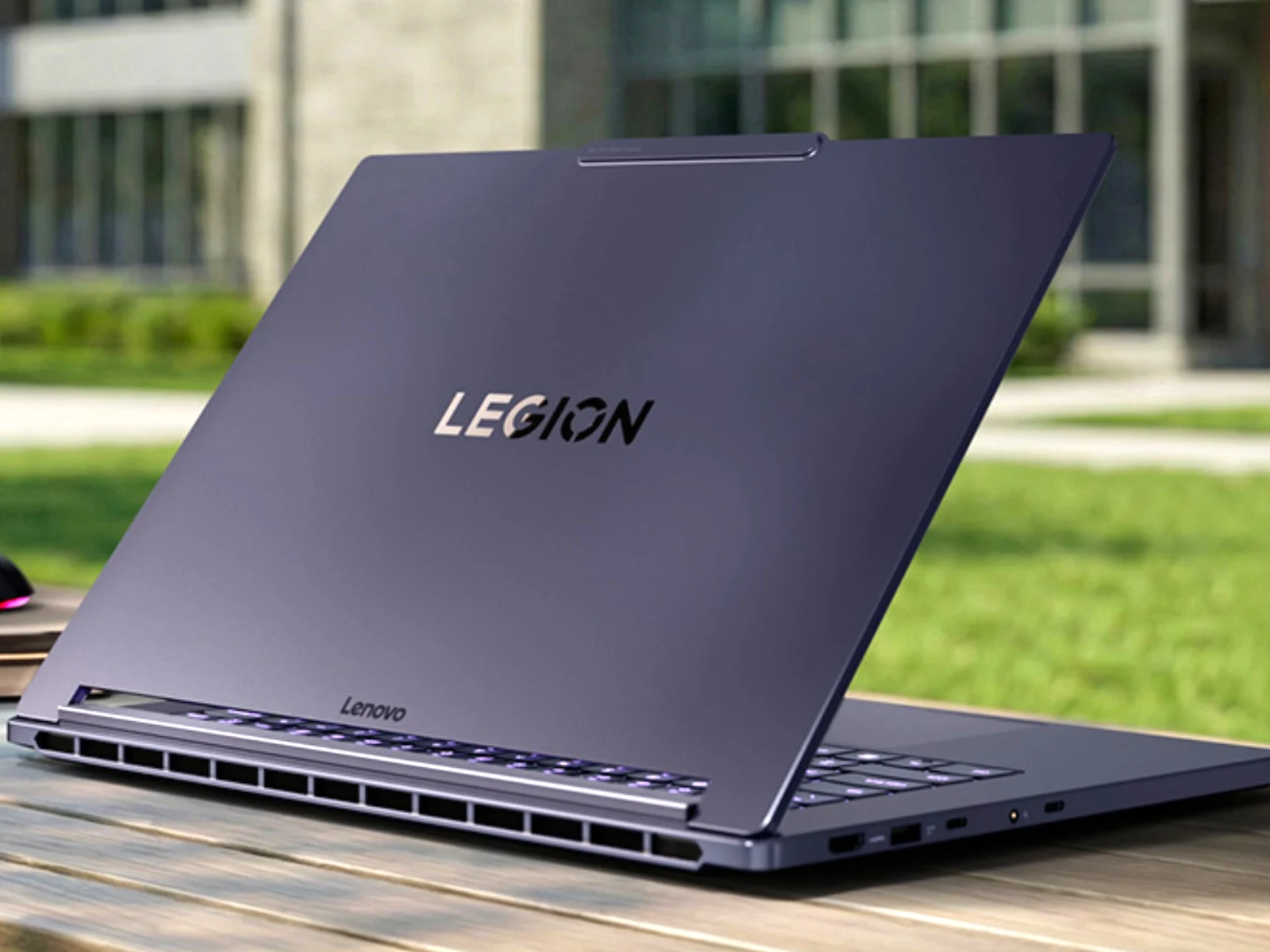
    We have just reviewed Legion 7a with a 16-inch display (curr. $2,969 on Amazon). Smaller and lighter than the older Legion 7 16IAX10, the Legion 7 16 AGP11 combines AMD Ryzen AI 400 processors with Nvidia GeForce RTX 50 series graphics. Now, Lenovo has gone even smaller with the release of the Legion 7a 15ASH11 across East Asia and Southeast Asia.

    Regional Availability

    Presented during MWC, the Legion 7a 15ASH11 then appeared earlier this month on many of Lenovo’s regional websites. While the laptop remains unavailable in Europe and North America, it can now be purchased in countries like Australia, Hong Kong, Malaysia, Singapore and Thailand. At the time of writing, the 15.3-inch laptop starts at the following prices:

    Processor and RAM Options

    Currently, Lenovo is offering the Legion 7a 15ASH11 with a choice between Ryzen AI Max+ 388 and Ryzen AI Max+ 392 processors. Although both feature Radeon 8060S graphics, the latter contains 50% more CPU cores and 50% more CPU threads at 12 and 24, respectively. Also, Lenovo distinguishes the two processors with 32 GB of RAM for the Ryzen AI Max+ 388 and 64 GB of RAM for the Ryzen AI Max+ 392.

    VRAM and Storage

    As a result, the Legion 7a 15ASH11 can only assign up to 48 GB of VRAM to its Radeon 8060S iGPU when configured with a Ryzen AI Max+ 392 processor. By contrast, Lenovo equips all models with 1 TB of storage, a spare M.2 2242 slot and an 84 Wh battery that supports 180 W USB Type-C charging. Likewise, all Legion 7a 15ASH11 variants feature the same OLED display that resolves at 1600p with a 165 Hz refresh rate, 100% DCI-P3 colour space coverage and 500 nits peak brightness in SDR mode that rises to 1,100 nits when viewing HDR content. Pricing for other markets remains unknown for now.


  • Casio G-Shock Camouflage Face Watches Launching Soon

    Casio G-Shock Camouflage Face Watches Launching Soon

    Key Takeaway

    – Two new camouflage-faced G-Shock models: DW-6900CF-1 and GA-700CF-1A, listed by a Vietnamese retailer.
    – Distinct camouflage dial designs with black resin casing and strap; GA-700CF-1A features more prominent golden accents.
    – GA-700CF-1A is a round hybrid with two analog hands, stopwatch, LED backlight, and 200 m water resistance; DW-6900CF-1 is a digital Triple Graph with similar core features and 20 bar water resistance.


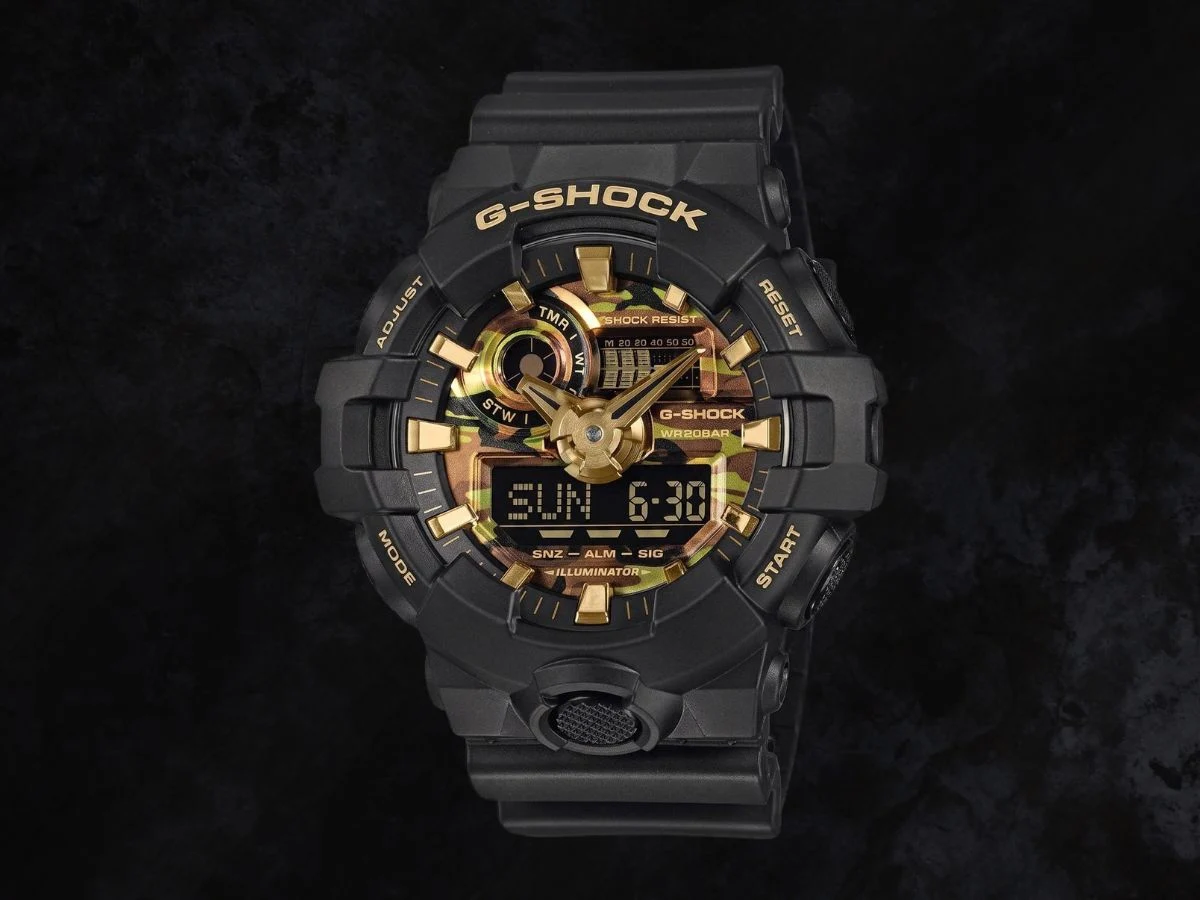
    Casio is releasing two new G-Shock Camouflage Face watches in the near future. The DW-6900CF-1 and the GA-700CF-1A were both recently listed at Vietnamese retailer G-Shock Hai Phong. They appeared shortly after a range of new Camo and Gold watches were spotted.

    Camouflage Face G-Shock models

    With a camo pattern that blends blacks, browns, and greens, these watches sport black resin casings and straps, while the GA-700CF-1A showcases more pronounced golden accents. The style choice leans toward rugged boldness and a touch of metallic flash, making them stand out in a crowd, yet still remain practical for daily wear.

    GA-700CF-1A design details

    The GA-700 series is known for its chunky, round hybrid silhouette and a bezel that emphasizes ruggedness. It includes two analog hands, a stopwatch, an LED backlight, and 200 m water resistance. The camouflage finish adds a layer of urban toughness, while the gold accents provide contrast that catches the eye in certain lighting.

    DW-6900CF-1 design details

    The DW-6900CF-1 continues the round digital aesthetic with a Triple Graph (three sub-dials) on a dark backdrop. Like its sibling, it includes a stopwatch, backlight, and water resistance suitable for everyday use. The camo motif keeps the display practical yet stylish, integrating modern digital features with a classic G-Shock vibe.

    Release information

    According to the retailer, Casio will release the G-Shock Camouflage Face DW-6900CF-1 and the GA-700CF-1A watches in June 2026. However, this has yet to be officially confirmed by the brand, and the pricing also remains a mystery for the time being.

    Sources
  • Casio G-Shock GA-2100LXB: Metal Accent Watch Images Leak

    Casio G-Shock GA-2100LXB: Metal Accent Watch Images Leak

    Key Takeaway

    – Four new G-Shock GA-2100 variants (GA-2100LXB-1A, GA-2100LXB-1A9, plus GM-2100LXB-1A and GM-2100LXB-1A9) are tied to a Luxury Black collection with black resin casings.
    – The GA-2100LXB models differ in accent colors: 1A with dark metallic gray indexes and brown digits; 1A9 with golden-hued indexes and gold-toned inset display elements.
    – Official release timing and pricing are unconfirmed; Vietnamese retailer listing suggests June 2026 availability, but no pricing details are provided.


    Casio G-Shock GA-2100LXB Series Unveiled

    Two new Casio G-Shock GA-2100LXB models have been revealed, the GA-2100LXB-1A and GA-2100LXB-1A9, following rumors that also mentioned the GM-2100LXB-1A and GM-2100LXB-1A9 during May 2026. These four watches are being discussed under the banner of the Luxury Black collection.

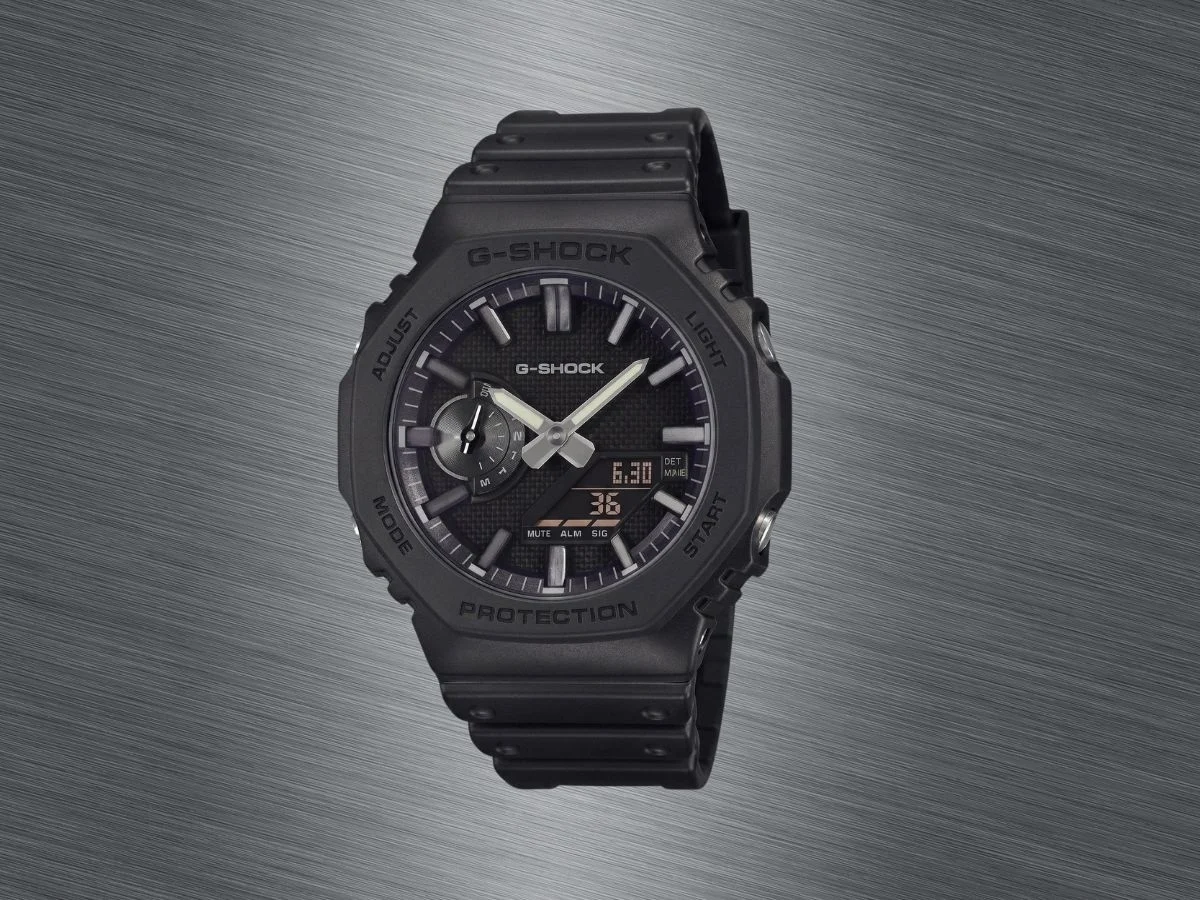
    The leaks came from a Vietnamese retailer, showing images of the GA-2100LXB watches. They sport black resin cases with dimensions of 48.5 x 45.4 x 11.8 mm and come with matching black straps. The two variants, however, differ in accent colors: the GA-2100LXB-1A features dark metallic gray indexes and a similarly colored indicator ring with brown digits on the black digital display, whereas the GA-2100LXB-1A9 presents golden-hued indexes and indicator elements with gold-toned numbers on the inset display.

    What makes the GA-2100LXB Standout

    The GA-2100 series stands out as an octagonal bezel model, often referred to as a CasiOak, continuing Casio’s Carbon Core Guard construction philosophy. It is built to endure up to 200 meters of water resistance and is powered by a long-lasting battery, typically around three years under normal use. The watch includes a 1/100th second stopwatch, a countdown timer, and multiple daily alarms, with a selection of 31 time zones across 48 cities for global timekeeping.

    Market Status and Pricing Uncertainty

    Official details about the GA-2100LXB-1A and GA-2100LXB-1A9 release dates beyond the June 2026 window marked by the Vietnamese retailer are not clearly disclosed. There is no confirmed information on pricing for these models in this or other markets yet, leaving enthusiasts waiting for Casio’s formal announcement.

  • Meshtastic: Off-Grid Mobile Communication Without Fees or Coverage

    Meshtastic: Off-Grid Mobile Communication Without Fees or Coverage

    Key Takeaway

    – LoRa emphasizes energy efficiency and long-range over high data rate, making it suitable for small data payloads (Kbit/s) and use cases like text messages or location data without relying on traditional networks.
    – Meshtastic creates a mesh network (and MeshCore as an alternative) to extend effective range via multi-hop relays, with devices acting as routers and clients.
    – ThinkNode M1 exemplifies typical Meshtastic hardware (LoRa + GNSS, e-ink display, Bluetooth phone pairing) and supports easy message sending and position sharing through the Meshtastic app.


    We have already covered LoRa several times. It is a rather special wireless standard. In principle, LoRa is a transmission method similar to IEEE 802.11 (WiFi), but LoRa has a very different focus: instead of enabling the fastest possible transmissions with low latency, LoRa is much more about energy efficiency and range. However, LoRa is only useful when relatively small amounts of data are being transmitted, meaning more in the KBit/s range. Sending and receiving images, for example, is not realistically practical, but sending longer texts is supported. Location data can also be transmitted. Such systems can be useful on factory sites or hikes, for example, or for communication independent of state network infrastructure in repressive countries.

    LoRa products, or in this specific case Meshtastic products, create a mesh network

    This means the message can be transmitted indirectly, increasing the effective range far beyond the range of a direct connection. MeshCore is also available as an alternative technology or implementation that effectively runs on the same hardware, although it does have some differences in detail. For example, MeshCore works with more clearly defined roles, such as router and client, which tends to make MeshCore better suited for more or less professional, permanent mesh networks.

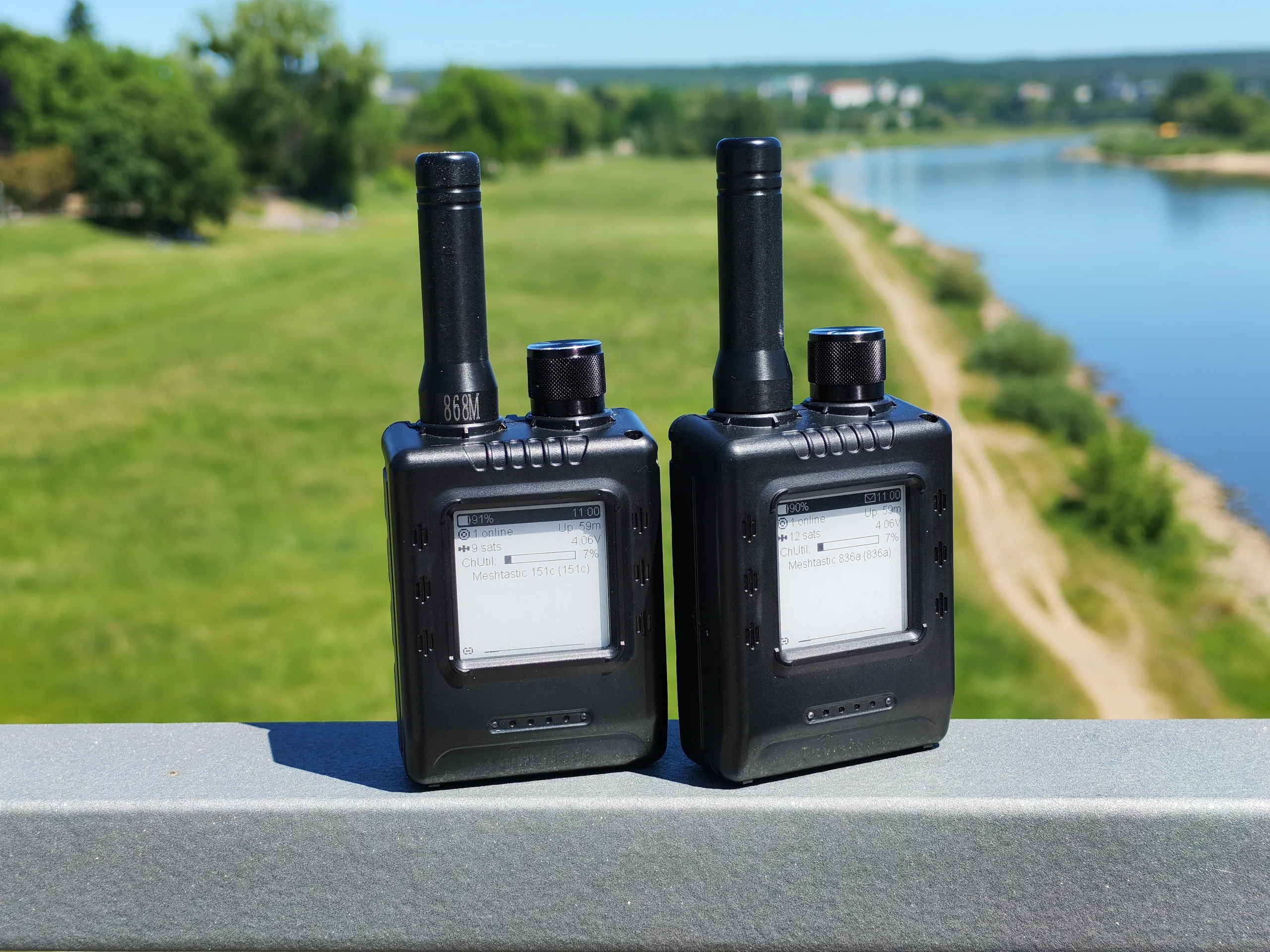
    But how exactly does Meshtastic work? The answer is fairly simple. We took a look at the ThinkNode M1, a LoRa- and Meshtastic-compatible system. There is a wide selection of such systems, including on Amazon. The ThinkNode M1 comes with an e-ink display, a GNSS module, a rotary dial for powering it on and controlling brightness, two buttons, and a switch for the GNSS connection. The battery-powered system can communicate directly with other Meshtastic devices. A smartphone can be connected via Bluetooth, with the ThinkNode M1 then also acting as an external “LoRa modem.” The Meshtastic app supports setup and configuration of Meshtastic devices and also works as a messenger. This makes it easy to send messages from a smartphone.

    Operation and practical notes

    Operation via the two buttons is not entirely intuitive. The e-ink display remains easy to read even in direct sunlight, though overlapping image content can occasionally appear, which is partly due to the technology. This can happen with a partial refresh, although the ThinkNode M1 eventually performs a full refresh again. The e-ink display is relatively sluggish. Overall, we have little to criticize about the ThinkNode M1, although we simply lack the comparison base for a fully detailed assessment. Recording the user’s own position works without issues. This position can also be sent to the mesh network, and the location history of a device can be displayed. Users can receive notifications on their smartphone for incoming messages.

    At this point, however, one thing should be pointed out directly: ranges of hundreds of miles are unlikely to be achievable with two ThinkNode M1 handhelds and a network established only between those two devices. For that, several mobile devices or repeaters have to be integrated as relay stations. With 868MHz and the LONG-SLOW modem preset, around 1,600 feet was achievable near a river, while in inner-city areas the range was more like a few hundred yards, in both cases without line of sight.


    Sources

  • Xiaomi 240Hz Gaming Monitor Launches Globally

    Xiaomi 240Hz Gaming Monitor Launches Globally

    Key Takeaway

    – 240 Hz native refresh rate with 1 ms GTG and FreeSync Premium, aimed at esports/competitive gaming.
    – 24.5″ Fast IPS panel, 1080p (1920×1080), brightness ~400 nits, contrast ~1000:1; limited feature set with only tilt stand (no height/swivel).
    – Ports are limited to HDMI 2.0 and DP 1.4 plus audio out; no advanced ergonomic adjustments.
    – Price in Europe around €180 (listed by some retailers), but availability locally is uncertain.
    – Additional features: crosshair display and a night-vision/gradation color tuning capability.


    Xiaomi G25i 2026 gaming monitor: Europe launch details

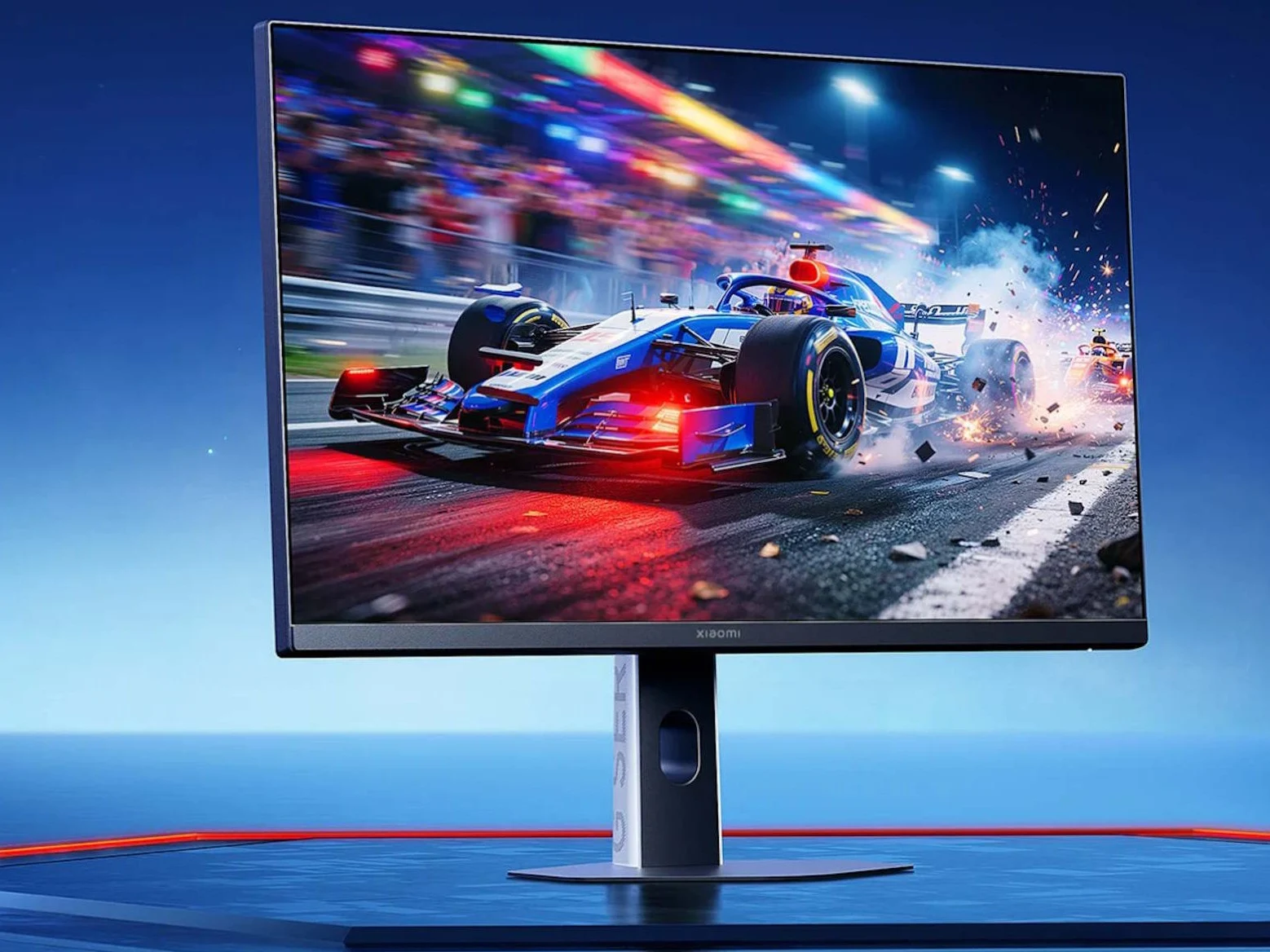
    the Xiaomi G25i 2026 gaming monitor is coming to Europe. this is confirmed not only by a listing on Xiaomi’s global website, but the EU version of the monitor is also already listed by at least one distributor and a Finnish retailer. There, the Xiaomi Gaming Monitor G25i 2026 is listed at a price of €180, although this price should still be treated with caution for now. The monitor is not yet available through local retailers. Xiaomi also advertises the Xiaomi Gaming Monitor G25i 2026 as suitable for esports, which naturally primarily refers to the higher refresh rate and low response time. The native refresh rate is listed at 240Hz, and the gray-to-gray response time is specified at one millisecond. FreeSync Premium is supported.

    Display specs and panel details

    the Fast IPS panel measures 24.5 inches diagonally, while the resolution is listed as 1920 x 1080 pixels, which is not necessarily standard anymore. Higher-resolution and similarly fast displays are now also available at very mainstream prices, including on Amazon. The Xiaomi Gaming Monitor G25i 2026 is, to put it positively, pragmatically equipped, with just one HDMI 2.0 port, one DisplayPort 1.4 port, and the obligatory audio output. The limited feature set is not restricted to the ports, as ergonomic adjustment options are also missing. Only tilt adjustment is possible, not swivel or height adjustment. The typical contrast ratio is listed at 1,000:1, while typical brightness is specified at 400 nits. A crosshair can be displayed, and there is also said to be a kind of night vision feature. We suspect that some kind of sharp gradation or color curve is applied.


    Sources

  • Oppo Reno16 Pro: 200 MP + 50 MP Quad Rear Cameras

    Oppo Reno16 Pro: 200 MP + 50 MP Quad Rear Cameras

    Key Takeaway

    – High-end mid-range with flagship-level power: Dimensity 9500s processor, 12–16 GB RAM options, and up to 512 GB storage.
    – Impressive camera array and video potential: 200 MP main, plus three 50 MP sensors (ultra-wide, telephoto 3.3x, and selfie).
    – Fast charging and robust build: 7.7 mm, 205 g, IP69K waterproof, 80W wired and 50W wireless charging.


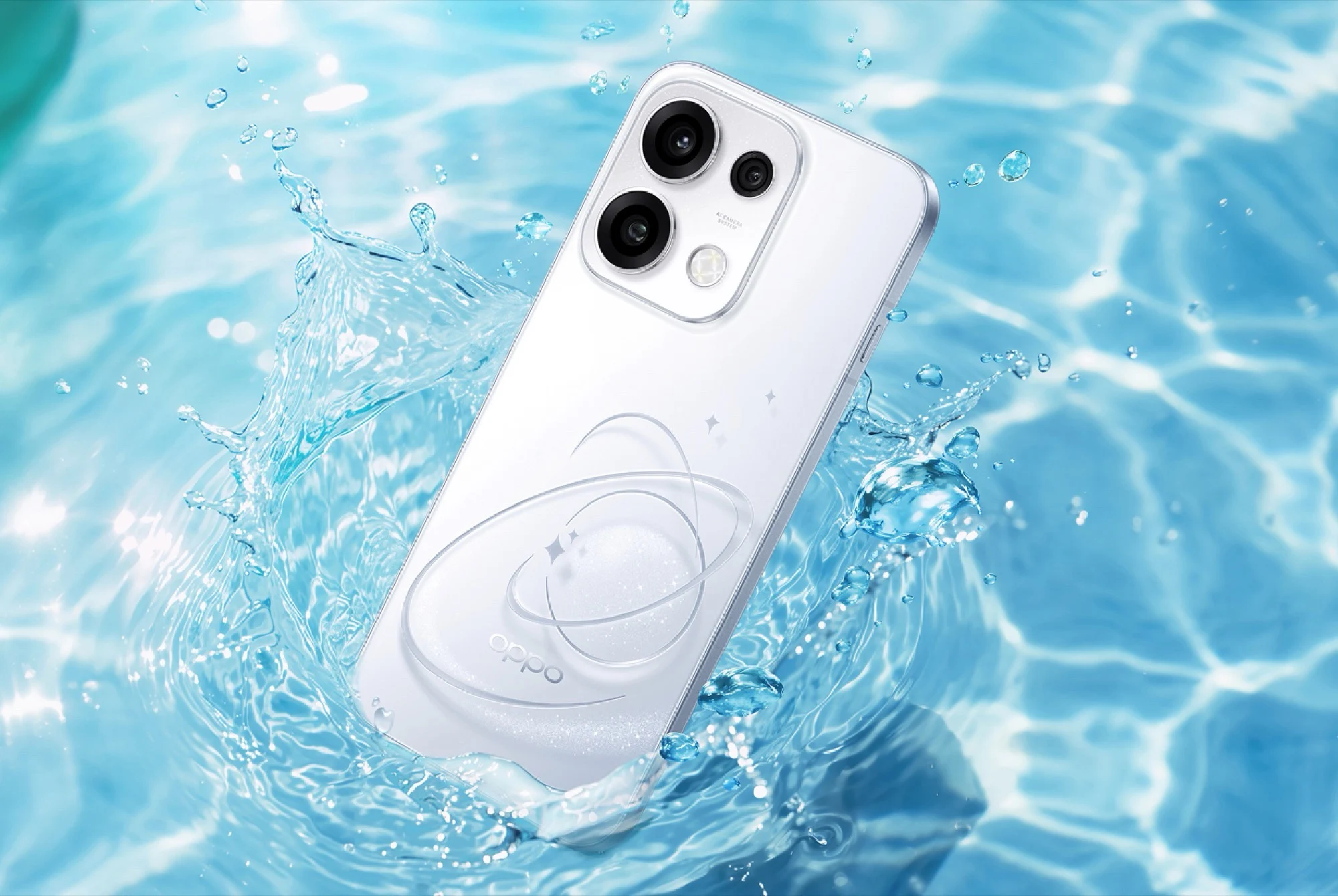
    The Oppo Reno16 Pro was officially unveiled in China today, and the device brings with it a slightly modernized look along with sturdy build quality. The IP69K-certified and therefore waterproof body measures a slim 7.7 millimetres in thickness and weighs 205 grams, which is not overly heavy given the hefty 7,000 mAh battery crammed inside. The blend of durability and practicality makes it a compelling choice for buyers who value resilience in a premium mid-range phone.

    Design and power delivery

    The charging options stand out, offering USB-C charging up to 80 watts or wireless charging at 50 watts. The most significant upgrade is the heart of the device: Oppo replaces the Dimensity 8450 with the newer Dimensity 9500s, aiming to push the Reno16 Pro toward flagship performance arenas. A remarkable 200-megapixel main camera sits at the fore, flanked by three 50 MP sensors that include a 50 MP f/2.0 ultra-wide, a 50 MP f/2.8 telephoto with 3.3x optical zoom, and a 50 MP f/2.0 selfie camera, creating a versatile camera trio for varied shooting scenarios.

    Display and features

    The rest of the package continues to impress, featuring a 6.78-inch LTPO AMOLED display capable of 120 Hz refresh, with a peak HDR brightness rated at 3,600 nits and a PWM frequency of 2,160 Hz to reduce visible flicker. The fingerprint sensor sits beneath the display, and a programmable action button is located on the left edge for quick access. Connectivity options include Wi-Fi 7, Bluetooth 5.4, and dual SIM support for flexible network use.

    Pricing and availability

    The Oppo Reno16 Pro is offered in China with 12 GB RAM and 256 GB storage for CNY 4,499, which converts to roughly $662, while the higher-end configuration with 16 GB RAM and 512 GB storage is priced at CNY 5,299, about $779. There has been no confirmation yet regarding an international launch from Oppo, leaving potential buyers outside China waiting for further announcements.

    Sources