
Category: All News

  • RPG Hidden Gem (92% Positive) Under $1.50 on Steam

    Key Takeaway

    – 92% positive Steam rating, currently at all-time low of $1.39 (80% off)
    – Cozy point-and-click adventure with light RPG elements like fishing, hunting, and gathering
    – Relaxed atmosphere praised for the “one more task” gameplay loop
    – Short playtime (~2-4 hours) is main criticism, but easily overlooked at under $1.50
    – Serves as a prequel, making it a good entry point to the series, and is Steam Deck Verified


    Hidden Gem on Steam!

    In Hero of the Kingdom: The Lost Tales 1, players take on the role of a traveler who, together with an orphan boy, investigates a mysterious dragon threat. Almost 1,200 Steam reviews are 92% positive, but according to SteamDB, the 2020 title from Lonely Troops rarely exceeds 10 concurrent players. For fans of indie RPGs, Hero of the Kingdom could therefore be a real hidden gem – and it is currently available on Steam with an 80% discount at its all-time low of $1.39, down from $6.99.

    Story begins with a dragon attack

    The story begins in a town that has recently been attacked by a dragon. As a traveling adventurer, players meet the orphan boy Brent, who dreams of proving himself as a hero. Together, they set out to uncover the origin of the dragon. In gameplay terms, Hero of the Kingdom: The Lost Tales 1 is a cozy point-and-click adventure with light RPG elements. Players can learn new skills such as fishing, hunting or gathering and collect better equipment.

    What players are saying about it

    According to Steam reviews, players particularly like the game’s relaxed atmosphere and easy accessibility. The gameplay is said to deliver that classic RPG pull where you always want to “just finish one more task.” Apart from the simple presentation, the main criticism is its length, which is only around 2 to 4 hours. At a price of less than $1.50, however, that should be easy to overlook. Although Hero of the Kingdom: The Lost Tales 1 is not the first game in the series, it still works well as an entry point. The story is a prequel and takes place before the events of the original Hero of the Kingdom, which was released back in 2012.

    More adventures in the series

    If the ending leaves you wanting more, several more adventures are waiting. The series so far includes Hero of the Kingdom (2013), Hero of the Kingdom II (2015), Hero of the Kingdom III (2018), Hero of the Kingdom: The Lost Tales 1 (2020), Hero of the Kingdom: The Lost Tales 2 (2021) and Hero of the Kingdom: The Lost Tales 3 (2024). Thanks to its “Verified” status on the Steam Deck, Hero of the Kingdom is also an interesting choice for gaming on the go.

    A note on pricing

    Notebookcheck is not responsible for price changes carried out by retailers. The discounted price or deal mentioned in this item was available at the time of writing and may be subject to time restrictions and/or limited unit availability.

    Sources

  • Steam Machine: Valve’s Living Room PC Power Revealed

    Key Takeaway

    – Steam Machine targets 4K at 60 FPS but will likely require upscaling or lower settings for native 4K.
    – Estimated performance is roughly on par with PS5, potentially using GPUs like RX 6600, RX 6600 XT, or RTX 4060.
    – System expected to feature 16–32 GB of RAM, enabling smooth 1080p/1440p gaming on demanding titles.
    – Not designed to compete with high-end gaming PCs; focus is on convenience as a living room device.
    – Success hinges on balance of solid performance, ease of use, broad game compatibility, and fair pricing.


    Steam Machine Hardware Specs Under Scrutiny

    After recent discussions focused mainly on the Steam Machine’s price and release date, attention on Reddit has now turned to its hardware. How powerful will Valve’s living room PC actually be – and will it be able to keep up with current gaming hardware? That is the question Reddit user u/pimemento recently raised. Many users are diving deep into what the system may offer, although concrete details remain elusive.

    Potential Performance and Comparisons

    In principle, the Steam Machine should be able to run a broad range of current Steam games. According to Valve, the system is even designed for 4K at 60 FPS. The key question, however, is what level of visual quality players can expect. Valve has not yet revealed any concrete technical specifications. The processor, GPU and RAM configuration remain unknown. As part of the “Steam Machine Verified” program, however, Valve did at least state that the system should be roughly six times more powerful than the Steam Deck. Some Reddit users speculate that the Steam Machine could perform roughly on par with the PlayStation 5 (currently priced at around $650 on Amazon), or perhaps slightly below it.

    • Frequently mentioned points of comparison include the Radeon RX 6600, Radeon RX 6600 XT and GeForce RTX 4060.
    • Many users expecting 16 to 32 GB of RAM.
    • If those assumptions are accurate, demanding games such as Cyberpunk 2077 and Alan Wake 2 would likely run smoothly at 1080p or 1440p with medium to high settings.
    • Native 4K gaming, however, would probably require upscaling or reduced detail settings.

    Competing with High-End PCs

    Will the Steam Machine be able to compete with high-end gaming PCs? Probably not. However, several commenters point out that raw performance is unlikely to be the system’s main selling point. Instead, they see the Steam Machine as a convenient living room device for Steam games – somewhere between a traditional console and a gaming PC. That means benchmark results may ultimately be less important than the overall package. For the Steam Machine to succeed, Valve will likely need to combine solid performance with ease of use, broad game compatibility and a fair price. For many fans, that balance could matter more than sheer computing power.

    Sources
  • GTA 6 Fan Uses Cigarette Butts & O2 Sensors to Hunt Trailer Details

    Key Takeaway

    – A GTA fan is now tracking oxygen levels, noise, and cigarette butts near Rockstar’s office to guess when the GTA 6 trailer will drop.
    – The logic: more people working weekends means lower oxygen, higher noise, and more butts — indicating a big announcement.
    – Even expensive shoes are being monitored, supposedly to spot more executives in the building.
    – The oxygen readings are admitted by the user to be unreliable, and the community largely ridicules the effort.


    Fan’s Extreme GTA 6 Snooping Methods Draw Ridicule

    A GTA fan had already raised eyebrows after eavesdropping on Rockstar North’s headquarters in Edinburgh with audio equipment and monitoring its parking lot. Now, the self-proclaimed GTA spy is taking the hunt for new information to an even more extreme level. In another Reddit post, u/Then-Pomgegranate-625 claims he is no longer just counting cars, but also analyzing environmental data around Rockstar’s headquarters – including oxygen levels, noise levels and even the number of cigarette butts near the building.

    Theories Based on Cigarette Butts and Oxygen

    The theory behind it: if more people are working in the building over the weekend, oxygen levels should supposedly change as well. Higher decibel readings and more cigarette butts are also meant to indicate that developers or executives are staying on site longer and working under pressure on a major announcement for the successor to GTA 5. More expensive shoes, meanwhile, are supposed to suggest that more executives are in the building. For the amateur detective, these are possible clues pointing to the third GTA 6 trailer. Only the documented oxygen readings have been disclosed – and the Reddit user himself admits that they are not particularly reliable.

    Community Mocks the Self-Appointed Investigator

    The community is once again reacting with ridicule. While the earlier car-counting effort was at least partly treated as a serious GTA theory, the latest efforts of the self-appointed GTA investigator feel more like comedy to many. The spying effort was also picked up by GTA 6 Countdown on X and in another Reddit thread.


    Sources

  • Wuben X5: Flat USB-C Flashlight with UV, Laser & White Light

    Wuben X5: Flat USB-C Flashlight with UV, Laser & White Light

    Key Takeaway

    – Replaceable battery with AAA backup option (4x AAA)
    – Dual output: 1,250 lumens (Li-ion) / 850 lumens (battery backup)
    – Turbo mode drops to 400 lumens after 1 minute; runtime varies by mode (2h at 350 lumens, 15h at 50 lumens)
    – Additional features: UV light, green Class 1 laser, and rotary switch for mode selection
    – Price: ~$80 USD; IP65-rated, 14 cm length, 130 g weight


    Wuben X5, A Fresh Take On Everyday Carry Flashlights

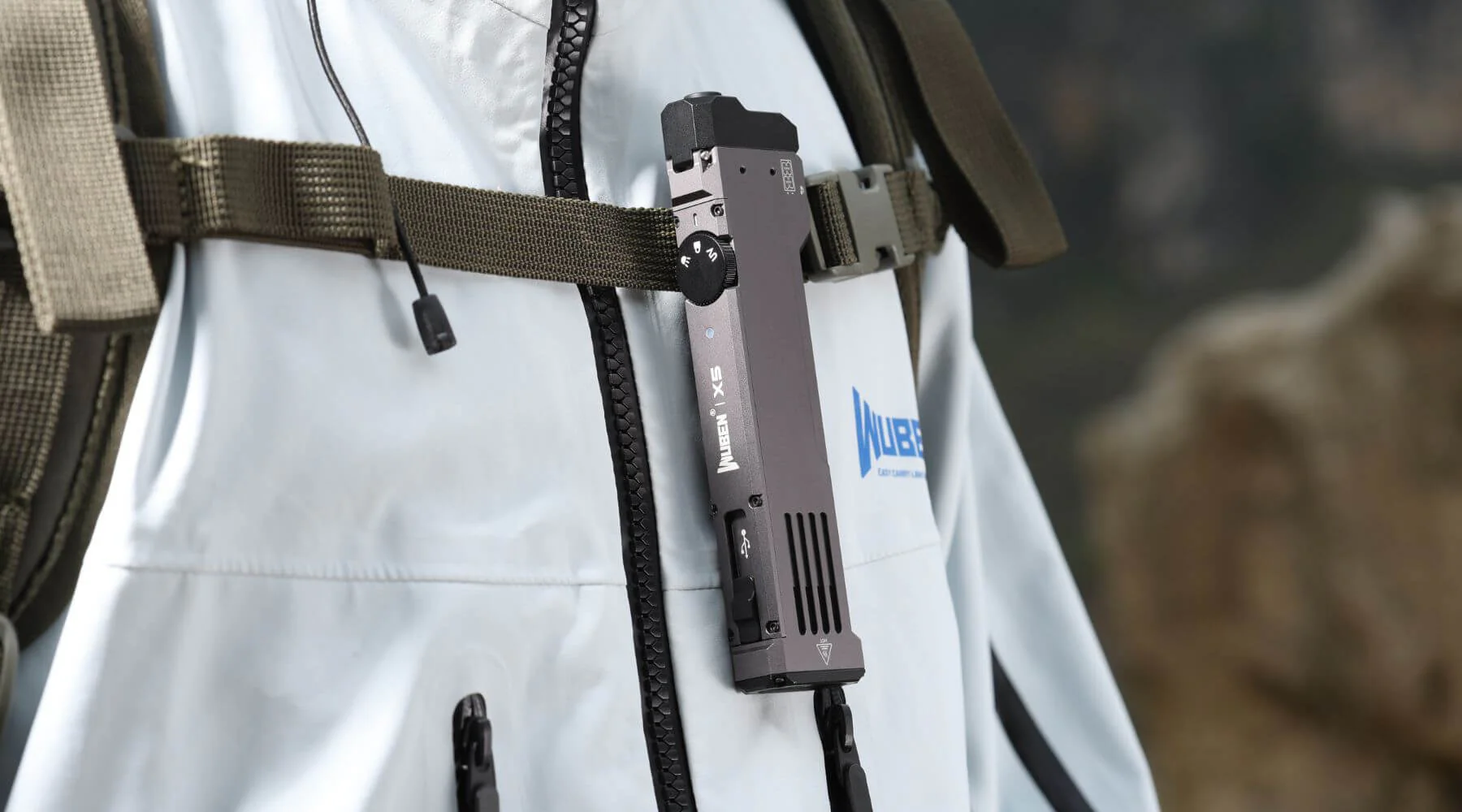
    So Wuben just dropped the X5, its a new EDC flashlight. The company is following the current trend of flat-style flashlights but avoids the typical compromises. That is because the Wuben X5 features a replaceable battery. Furthermore, if no USB-C charger is available, standard AAA batteries can be used instead. Four of them are required for this.

    Light Output and Battery Flexibility

    However, the light output is reduced in this case. With the battery backup, it only delivers 850 lumens. In contrast, the lithium-ion battery offers 1250 lumens. The flashlight can also be operated in a moonlight mode. At one lumen, a runtime of 200 hours is possible. The LED emits light at 5,000K. However, the flashlight can only maintain the 1,250 lumens for one minute before the turbo mode steps down to 400 lumens, which remains available for another 1.5 hours.

    Detailed Runtime and Modes

    Anyone selecting 350 lumens can get a continuous runtime of 2 hours. 150 and 50 lumens last for 5 and 15 hours, respectively. The UV light lasts for 2 hours. The USB-C port is located on the side of the flashlight, and it appears to feature a sliding cover that protects the port.

    Laser, UV, and Rotary Controls

    As an additional light source, a Class 1 laser (green) is available with a runtime of 50 hours. In certain regions, the flashlight is also shipped with a Class 3R laser offering a 24-hour runtime. A UV light is also present. A rotary switch allows users to toggle between the different light modes and lock out the flashlight.

    Dedicated Laser Button and Build

    The only exception is the laser, which has its own dedicated button. Measuring around 14 cm in length, the flashlight weighs approximately 130 grams, features a rugged aluminum housing, and is IP65-rated. A two-way clip enables various attachment options. According to the manufacturer, the Wuben X5 is now shipping and costs around 80 USD.


    Sources

    • Deal: New Pompeii City Builder at 40% Off After Launch

      Key Takeaway

      – Pompeii: The Legacy left Early Access in April 2026 and recently received its first 40% discount, dropping from $20 to $12.
      – The game mixes city building, economic strategy, and Roman family drama, focusing on rebuilding Pompeii after the eruption of Vesuvius.
      – Gameplay involves constructing houses, markets, temples, and aqueducts while managing political influence and facing random disasters like earthquakes and epidemics.
      – Players praise the atmospheric setting, attractive buildings, and narrated campaign, but note issues with supply chains and an unreliable trading system.
      – The Steam rating is 82% positive from 240 reviews, with Steam Deck compatibility listed as “Playable.”


      Pompeii: The Legacy Leaves Early Access, Gets First Big Discount

      Pompeii: The Legacy only left Early Access on April 9, 2026. Around two months later, the city builder from Siscia Games has unexpectedly received its first 40% discount, according to SteamDB, dropping the regular price from around $20 to $12. In gameplay terms, Pompeii: The Legacy feels like a mix of building simulation, economic strategy and Roman family drama.

      More Than Just a Disaster Story

      When it comes to Pompeii, people tend to think first of the destruction following the eruption of Mount Vesuvius in 79 AD. The game, however, shows a more hopeful side of the ancient city: its reconstruction, at least in digital form. Around 20 years after the eruption of Vesuvius, the city is rebuilt under Roman rule. In reality, Pompeii was never rebuilt and is now a famous archaeological site. This giving a unique twist to the gameplay where you build something that historically never existed!

      Gameplay and Family Politics

      In Pompeii: The Legacy, players rebuild the ancient city as the head of a Roman ruling family – with houses, markets, temples, arenas, aqueducts and everything else a functioning Roman city needs. The twist: it is not just about laying out attractive streets, but also about political influence. Over the decades, the family’s influence grows, for example through imperial privileges or alliances. Battles play no role. However, disasters such as earthquakes, fires, epidemics or famines can disrupt the rebuilding process at any time. Its a constant juggle between construction and crisis management.

      Player Feedback and Issues

      Pompeii: The Legacy has been well received by players so far. Many compare the title favorably with Caesar IV, Imperium Romanum or CivCity: Rome. The atmospheric Pompeii setting, attractive buildings and pleasantly narrated campaign with voice acting have drawn particular praise. However, the city builder still seems to need some fine-tuning. According to Steam reviews, supply chains can cause problems, for example because food and other resources do not always arrive predictably. The trading system is also said to be somewhat unreliable at times. Pompeii: The Legacy currently has 240 Steam reviews with a solid average of 82% positive. Compatibility with the Steam Deck is listed as “Playable.” There is no word on future patches yet but player are hopefull.

      Price and Availability

      The discounted price or deal mentioned in this item was available at the time of writing and may be subject to time restrictions and/or limited unit availability. Its a solid discount for anyone who been waiting for a better price to jump in. The sale is live now on Steam so dont miss it if your intrested in Roman city building games.

      Sources

    • Insta360 Luna Ultra Gimbal Camera vs DJI Osmo Pocket 4P

      Key Takeaway

      – Insta360 Luna Ultra is a new gimbal camera with a dual-lens design (Leica 1” 8K main + telephoto 1/1.3” sensor), 3-axis stabilization, and up to 12x zoom.
      – It records up to 8K/30 fps with Dolby Vision and includes a detachable 2-inch OLED touchscreen that doubles as a wireless remote with 20m range.
      – The camera offers 4-hour battery life with fast charging (0–80% in ~23 min), 47GB built-in storage (expandable to 1TB), and 4-mic audio with wind guard.
      – Priced at $769.99, it directly competes with DJI’s upcoming Osmo Pocket 4P.


      Over the years, DJI has dominated the gimbal camera market with its signature Osmo Pocket series lineup. Now, rival Insta360 is stepping into the gimbal camera space with its first-ever gimbal camera, the Luna Ultra. The company’s latest Leica co-engineered gimbal camera directly competes with DJI’s Osmo Pocket 4P, which is currently under wraps.

      Dual-Lens Design and Pro-Grade Specs

      The Luna Ultra features a dual-lens design with a pro-grade telephoto lens. This means you get two lenses here. Speaking more precisely, the gimbal camera ships with a Leica Summicron lens paired with a 1” 8K sensor and a secondary telephoto lens system with a 1/1.3” sensor, featuring an f/1.8 and f/2.0 aperture, respectivly. On top of these, it offers a 20 mm equivalent focal length, 14 stops of dynamic range, a mechanical 3-axis stabilization, and up to 12x zoom, including 6x lossless zoom.

      Videography and Photography Capabilities

      Speaking of videography and photography, the Luna Ultra can record videos up to 8K/30 fps with Dolby Vision and captures 37 MP UltraPhotos and 200 MP scenic panorama photos. Furthermore, there’s support for 10-bit I-Log, which further offers greater color information and flexibility in post-production. Insta360 has also incorporated a Triple AI chip into the camera, which is said to support advanced image processing and it handles noise reduction real good.

      Detachable Touchscreen and Storage

      The gimbal camera is advertised as the industry’s first detachable 2-inch OLED touchscreen that can also double as a wireless remote, enabling remote monitoring and control with HD transmission up to 20 meters. Plus, it has 47 GB of built-in storage, with room for storage expansion up to 1 TB via microSD card. Like the Insta360 X5, you also get a built-in wind guard here for clear outdoor recording, along with direct compatability with the Insta360 mic system which is nice.

      Battery Life and Charging Speeds

      As far as the battery capacity is concerned, the Luna Ultra boasts a 1,550 mAh battery, and according to the company, it offers up to four hours of shooting time on a single charge. Interestingly, it also supports fast charging and the company claims that the camera can charge from 0 to 80% in approximately 23 minutes. Additionally, the detachable remote also features 210 mAh battery capacity. Other features include 4 mics (3 mics on the main gimbal, 1 mic on the detachable screen), Deep Track 5.0, active zoom tracking, group tracking, Insta360 companion app support, auto tracking, and smart framing to help keep subjects in frame and in focus.

      Pricing, Colors, and Availability

      As for price, the Insta360 Luna Ultra 360 is now available for purchase via the Insta360 store, Amazon, Best Buy, and other authorized retailers for $769.99. Buyers can choose from cosmic black and stellar white color options. Speaking of bundles, there’s no bundle information available at the time of writing and the company might add more later.

      Sources
      • Casio MTG-B4000B-1A Launches in US at $1,500

        Casio MTG-B4000B-1A Launches in US at $1,500

        Key Takeaway

        – $1,500 US price for the MTG-B4000B-1A
        – Case developed using a three-step human-AI-engineer process for impact resistance
        – Triple G Resist rating: withstands mechanical shock, centrifugal force, and heavy vibration
        – Powered by Tough Solar charging with Bluetooth and Multiband 6 radio time sync
        – Available now on Casio’s US website with limited stock


        Casio’s Latest Shock-Resistant Watch Reaches America

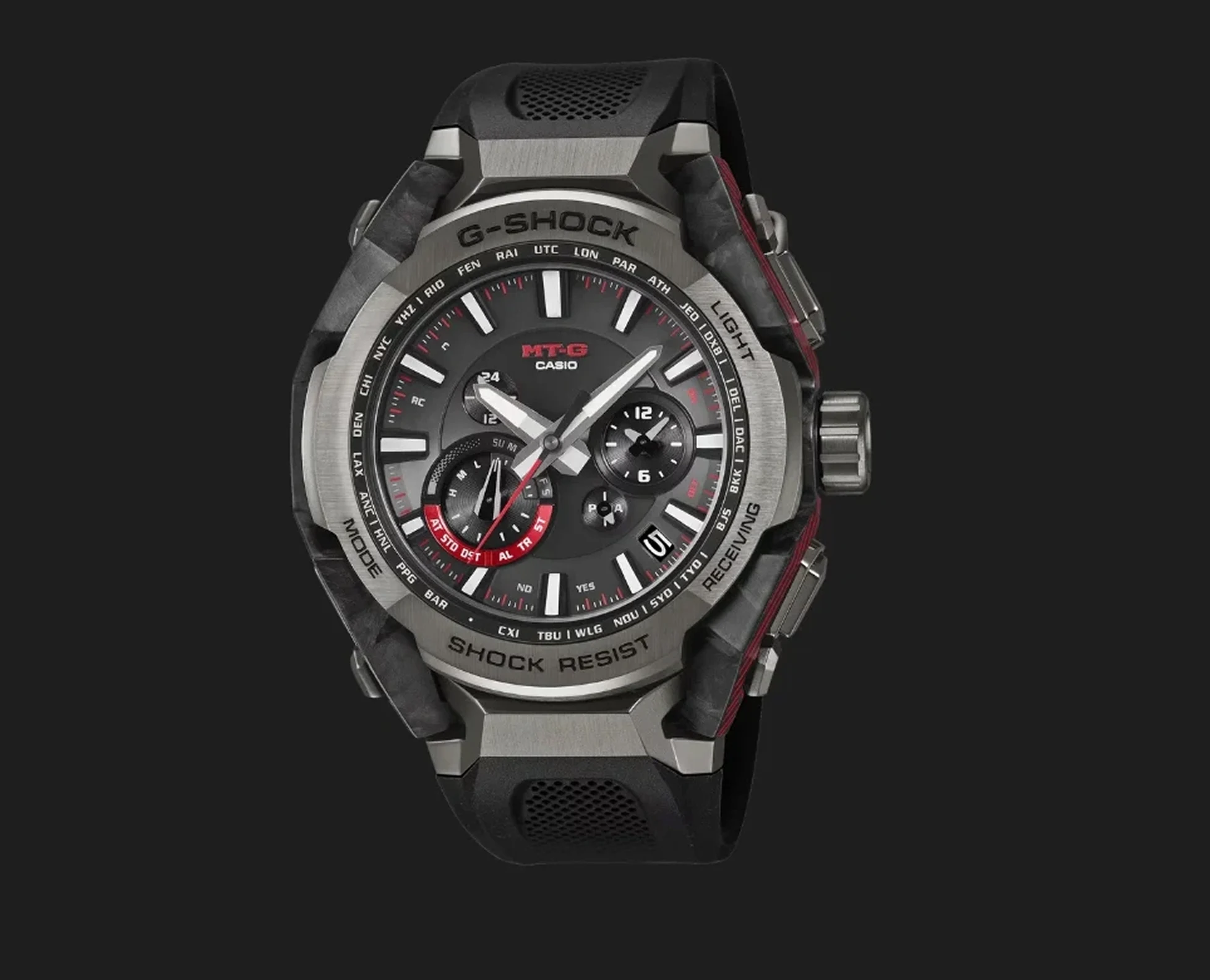
        Japanese watch maker Casio has finally bring the MTG-B4000B-1A to the US, priced at $1,500. The watch was launched in Japan about a month ago. The watch features an enhanced version of Casio’s Dual Core Guard construction, which consists of laminated carbon, glass fiber sheets, and stainless steel in the form of the protective housing for the internal module.

        A Three-Step Design Process That Stands Out

        What is interesting about the development of this particular model is how that structure was developed. Casio used a three-step process, with human designers comming up with the initial concepts, AI software conducting structural stress analysis on those concepts, and engineers using the simulation data to fine-tune the final form. What you get is a case built for impact resistance, not simply designed to a visual template.

        Materials and Construction Details

        The case back is made using metal injection molding, a process that can produce more complex and dimensional shapes than are possible with standard machining techniques. This particular setup sports a black carbon body with red dial accents and a soft urethane band.

        Physically, the MTG-B4000B-1A measures 56.6 by 45.3 by 14.4mm and weighs 112g. It’s called the Casio Triple G Resist, meaning the internal module is rated to endure mechanical shock, centrifugal force, and heavy vibration. The dial is protected by a sapphire crystal with anti-reflective coating, and the case is water-resistant to 200 meters.

        Power and Connectivity Features

        The power is provided by a Casio Tough Solar charging system, which keeps the battery charged by exposure to light. The watch links with Android and iOS devices over Bluetooth using the Casio Watches app that handles automatic time synchronization, alarms, and world time settings in 300 cities.

        • For those who don’t want to rely on a smartphone, the watch includes Multiband 6 radio control, which is able to recieve signals for time calibration from six transmission towers across the globe.
        • The internal battery is good for about five months of use without exposure to any light. Power saving mode on and stashed in the dark, that figure becomes 18 months.

        Availability and Limited Stock Notice

        The MTG-B4000B-1A is available now on Casio’s US website, though the company notes that stock is currently limited.

        Sources
      • Affordable OnePlus Phone Lacks Key Global Feature

        Affordable OnePlus Phone Lacks Key Global Feature

        Key Takeaway

        – Most affordable Turbo series phone, similar to global Nord CE6 Lite
        – 6.72-inch 144Hz LCD, 50MP main camera, MediaTek Dimensity 7360
        – Massive 7,000mAh battery with 45W charging
        – Includes NFC, stereo speakers, IP64 rating (unlike Nord CE6 Lite)
        – Launch discounts June 10–30, sales start June 15 in China


        A Budget Friendly Powerhouse

        The OnePlus Turbo 6X is positioned as the most affordable smartphone in the Turbo series. It shares a similar design and most of its specifications with the global OnePlus Nord CE6 Lite. Despite being cheaper, the device still aims to provide a premium experience with a large display and a massive battery.

        Dimensions and Display Specs

        The Turbo 6X measures 8.55mm thick and weighs approximately 208 grams. It is available in black, white, and green. The phone sports a 6.72-inch LCD panel with a resolution of 1,080 × 2,400 pixels and a 144Hz refresh rate. It has a peak brightness of 1,000 nits and supports DC dimming. This makes the screen smoother than many flagship phones.

        Under the Hood and Camera

        The Turbo 6X is powered by the MediaTek Dimensity 7360 Super chipset. It is a 4nm chipset that uses the Mali-G615 GPU. The phone features a 50MP main camera with support for 4K video recording at 30fps. Additionally, it has an 8MP front camera with 1080p video recording at 30fps. Performance is decent for everyday tasks but won’t break records.

        Battery, Connectivity, and Software

        The Turbo 6X packs a 7,000mAh battery and supports 45W fast charging. The device features 5G and Wi-Fi 5 connectivity options. Notably, the Turbo 6X also supports NFC, which the global Nord CE6 Lite does not. It also has stereo speakers and IP64 dust and water resistance. The phone runs on ColorOS 16, a custom skin on top of Android 16.

        Pricing and Launch Info

        The phone is available in three configurations, priced as follows:
        8GB RAM + 128GB storage for ¥1,899 (about $260).
        8GB RAM + 256GB storage for ¥2,099 (about $290).
        12GB RAM + 256GB storage for ¥2,299 (about $315).

        OnePlus is offering launch discounts from June 10 to June 30, while sales of the Turbo 6X will begin on June 15 in China. Apart from the standard Turbo 6X, the company also launched the Turbo 6X Pro with a larger battery and an AMOLED display.


        Sources

      • Xiaomi Smartphone Production Drops 40%; iPhone 17 Gains

        Xiaomi Smartphone Production Drops 40%; iPhone 17 Gains

        Key Takeaway

        – Global DRAM/NAND prices have surged dramatically since fall 2025 (e.g., 16GB DDR5 from $37 to ~$200), driven by massive AI demand from companies like OpenAI.
        – Smartphone manufacturing fell 1.7% year-over-year in Q1 2026 to 284 million units, with a projected 16.2% annual decline to 1.051 billion units.
        – Budget smartphone makers are hit hardest: Xiaomi’s production dropped 38%, while Vivo’s fell 8%.
        – Premium manufacturers are more resilient: Samsung’s production rose 2%, and Apple’s surged 20% due to strong iPhone 17 sales.


        Since fall 2025, prices for RAM and NAND flash memory have risen dramatically – 16 GB DDR5 now costs consumers around $200, while the same RAM stick was still being offered for $37 last year. The immense demand for RAM and NAND from AI giants such as OpenAI is not only increasing costs for consumers, but also for manufacturers of products such as desktop PCs, laptops and smartphones. This situation has put a lot of strain on the entire supply chain, making it harder for budget-friendly devices to stay affordable.

        Manufacturing Decline and Inventory Effects

        An analysis by TrendForce shows how the crisis effected various smartphone manufacturers in the first quarter of 2026. In total, only 284 million smartphones were manufactured in the first quarter, 1.7% fewer than in the same quarter of the previous year. According to TrendForce, the DRAM crisis is only having a delayed affect, as smartphone manufacturers still have DRAM inventories from the previous year and fears of further price increases have boosted demand. TrendForce expects production to fall by 16.2 percent to 1.051 billion units over the year as a whole.

        Impact on Budget vs Premium Brands

        However, the data from the first quarter already shows that manufacturers of cheaper smartphones are likely to be hit harder. Xiaomi produced 38 percent fewer smartphones than in the same period last year, while Vivo’s production volume was reduced by 8 percent. Manufacturers with higher average selling prices, on the other hand, are in a better position – Samsung was able to produce 2% more smartphones than the previous year, while Apple’s production volume even increased by 20% due to the popularity of the iPhone 17 series.

        Market Outlook Amidst Crisis

        It seems that the market is now split into two different segments, with premium brands weathering the storm while budget makers are struggling. TrendForce is predicting further declines as the year progresses, which could mean even higher end-user prices for RAM modules. The shortage of DRAM is unlikely to resolve quickly, and this could reshape the smartphone landscape for years to come.


        Sources

      • Leaked: Microsoft Surface Laptop 8 & Surface Pro Prices Higher

        Key Takeaway

        – Snapdragon X2 Elite upgrade for Surface Laptop 8 and Surface Pro.
        – Price increase expected, with Surface Pro and 13.8″ Laptop 8 set at €1,699.
        – Surface Pro features OLED display and up to 32 GB RAM / 1 TB SSD.
        – Surface Laptop 8 uses LCD, offers up to 32 GB RAM / 2 TB SSD.
        – Battery life rated at 20 hours (13.8″) and 19 hours (15″).


        New Microsoft Surface Models Spotted Before Launch

        The next gen Surface Laptop 8 and the Surface Pro could already be seen in many images at the begining of June, the launch is expected on June 16, 2026. Both product lines are set to be upgraded to the Qualcomm Snapdragon X2 Elite, but a price increase is also to be expected according to reports.

        Pricing Details for the Upcoming Devices

        According to the latest information from Roland Quandt the next-generation Surface Pro will cost €1,699, just like the 13.8-inch Surface Laptop 8, while the Surface Laptop 8 with a 15-inch display will cost €2,299. As it is not yet known which processor and memory configurations these prices apply to, they cannot be directly compared with last years models.

        Comparing Costs With Previous Generation Models

        To put things in perspective: The 13-inch Microsoft Surface Pro with Snapdragon X, LCD, 16 GB RAM and 256 GB SSD was offered for a list price of €1,399, while the Surface Laptop 7 was offered at prices starting at €1,669 and €1,769, depending on the screen size. The next-generation Surface Pro is said to combine a Snapdragon X2 Elite with twelve CPU cores with a maximum of 32 GB RAM and a 1 TB SSD. Microsoft is reportedly installing a 120 Hz OLED display, two USB-C ports with support for USB 4 and is offering a keyboard case with space for the Surface Slim Pen 2.

        New Specifications for the Surface Pro and Laptop 8

        The Surface Laptop 8 offers similar features with a Snapdragon X2 Elite and a maximum of 32 GB RAM as well as an SSD with up to 2 TB of storage, although both the 13.8-inch and 15-inch models are said to rely on an LCD instead of an OLED display. The smaller model is expected to achieve a battery life of 20 hours with a 54 Wh battery, while the larger Surface Laptop 8 will achieve 19 hours with a 66 Wh battery. The base model is said to be equipped with a Snapdragon X2 Plus and only 256 GB of SSD storage.