Tag: GeForce RTX 4060

  • Steam Machine: Valve’s Living Room PC Power Revealed

    Key Takeaway

    – Steam Machine targets 4K at 60 FPS but will likely require upscaling or lower settings for native 4K.
    – Estimated performance is roughly on par with PS5, potentially using GPUs like RX 6600, RX 6600 XT, or RTX 4060.
    – System expected to feature 16–32 GB of RAM, enabling smooth 1080p/1440p gaming on demanding titles.
    – Not designed to compete with high-end gaming PCs; focus is on convenience as a living room device.
    – Success hinges on balance of solid performance, ease of use, broad game compatibility, and fair pricing.


    Steam Machine Hardware Specs Under Scrutiny

    After recent discussions focused mainly on the Steam Machine’s price and release date, attention on Reddit has now turned to its hardware. How powerful will Valve’s living room PC actually be – and will it be able to keep up with current gaming hardware? That is the question Reddit user u/pimemento recently raised. Many users are diving deep into what the system may offer, although concrete details remain elusive.

    Potential Performance and Comparisons

    In principle, the Steam Machine should be able to run a broad range of current Steam games. According to Valve, the system is even designed for 4K at 60 FPS. The key question, however, is what level of visual quality players can expect. Valve has not yet revealed any concrete technical specifications. The processor, GPU and RAM configuration remain unknown. As part of the “Steam Machine Verified” program, however, Valve did at least state that the system should be roughly six times more powerful than the Steam Deck. Some Reddit users speculate that the Steam Machine could perform roughly on par with the PlayStation 5 (currently priced at around $650 on Amazon), or perhaps slightly below it.

    • Frequently mentioned points of comparison include the Radeon RX 6600, Radeon RX 6600 XT and GeForce RTX 4060.
    • Many users expecting 16 to 32 GB of RAM.
    • If those assumptions are accurate, demanding games such as Cyberpunk 2077 and Alan Wake 2 would likely run smoothly at 1080p or 1440p with medium to high settings.
    • Native 4K gaming, however, would probably require upscaling or reduced detail settings.

    Competing with High-End PCs

    Will the Steam Machine be able to compete with high-end gaming PCs? Probably not. However, several commenters point out that raw performance is unlikely to be the system’s main selling point. Instead, they see the Steam Machine as a convenient living room device for Steam games – somewhere between a traditional console and a gaming PC. That means benchmark results may ultimately be less important than the overall package. For the Steam Machine to succeed, Valve will likely need to combine solid performance with ease of use, broad game compatibility and a fair price. For many fans, that balance could matter more than sheer computing power.
    Sources
  • Asus V500 Mini Tower: Quiet, Affordable, and GPU-Friendly Design

    Asus V500 Mini Tower: Quiet, Affordable, and GPU-Friendly Design

    Key Takeaways

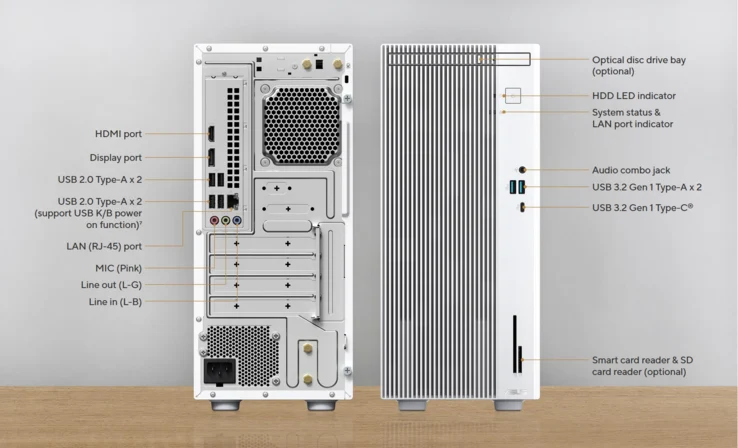
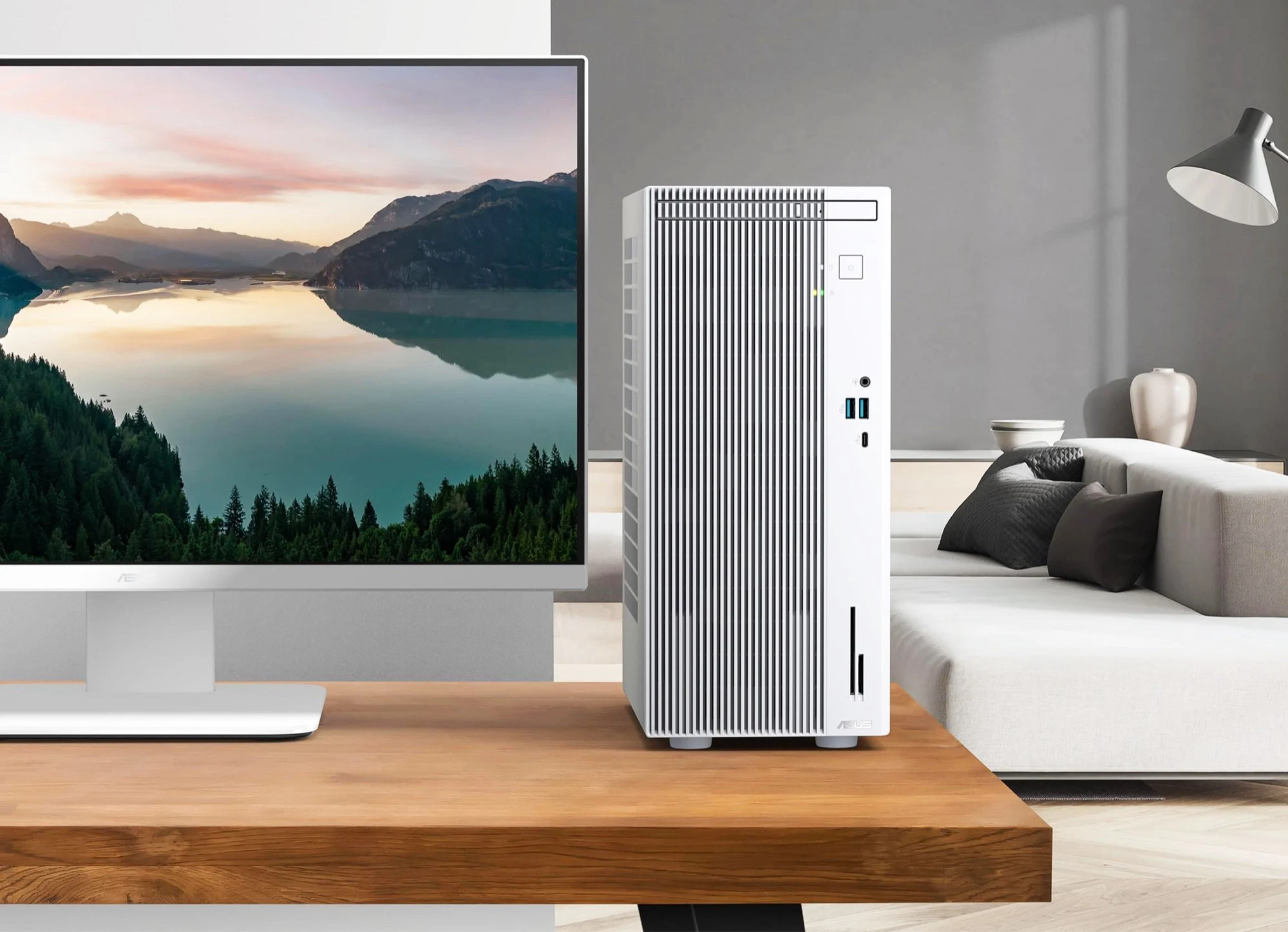
    1. Compact Design: The Asus V500 Mini Tower has dimensions of 34.7 x 29.6 x 15.5 cm and a volume of nearly 24 liters, making it smaller than traditional towers but larger than mini PCs.

    2. Powerful Processor: It features a laptop-sized Intel Core i7-13620H processor with six performance cores that can boost up to 4.9 GHz and six efficiency cores.

    3. Efficient Cooling and Noise: The device uses a desktop-sized cooler, maintaining 95 watts power dissipation, and operates at a low noise level of 38 dB under load, thanks to the laptop processor.

    4. Upgrade Options: It supports up to 64 GB of RAM, 4 TB of SSD storage, and includes an upgradable Nvidia GeForce RTX 4060 GPU via PCIe 4.0 x8.

    5. Pricing and Features: The base model starts at $549.99, with optional upgrades available, including a $230 upgrade for the i7 processor and 16 GB of RAM, along with a variety of ports and Wi-Fi 6 support.


    The Asus V500 Mini Tower is a compact device with dimensions of 34.7 x 29.6 x 15.5 centimeters and a volume of nearly 24 liters. While it is small, it is not as tiny as a mini PC. It’s quite surprising that Asus has included a laptop-sized processor in this model, going up to the Core i7-13620H. This chip has six performance cores that can boost up to 4.9 GHz, along with six efficiency cores.

    Performance and Cooling

    This processor is teamed up with a desktop-sized cooler, which helps it maintain a power dissipation of 95 watts. Asus claims that using a laptop processor instead of a traditional desktop one offers two main benefits. Firstly, it reduces power usage by around 34%. Secondly, it keeps the tower quieter, with a fan noise level of 38 dB when under load. It’s unfortunate that Asus chose a notebook chip, as it limits future upgrades, while a power-efficient Intel T-series desktop processor could have provided similar benefits.

    Upgrade Options and Features

    One version of this tower includes an Nvidia GeForce RTX 4060 desktop GPU, which is upgradable through PCIe 4.0 x8. The device is powered by a 180-watt power supply. Asus states that it can support up to 64 GB of RAM and 4 TB of SSD storage. Besides HDMI and DisplayPort, the tower also comes with a USB-C port (5 Gbps), six USB-A ports, Wi-Fi 6, and Bluetooth 5.4 capabilities.

    The starting price for the Asus V500 Mini Tower is $549.99, available directly from Asus for the base configuration. For an extra $230, you can upgrade to the i7-13620H and 16 GB of RAM. However, the variant featuring the GeForce RTX 4060 is currently not available. More detailed specifications are available on the official product page.

    Source:
    Link


  • Intel Arc Battlemage GPU Debuts on Geekbench with 12 GB VRAM

    Intel Arc Battlemage GPU Debuts on Geekbench with 12 GB VRAM

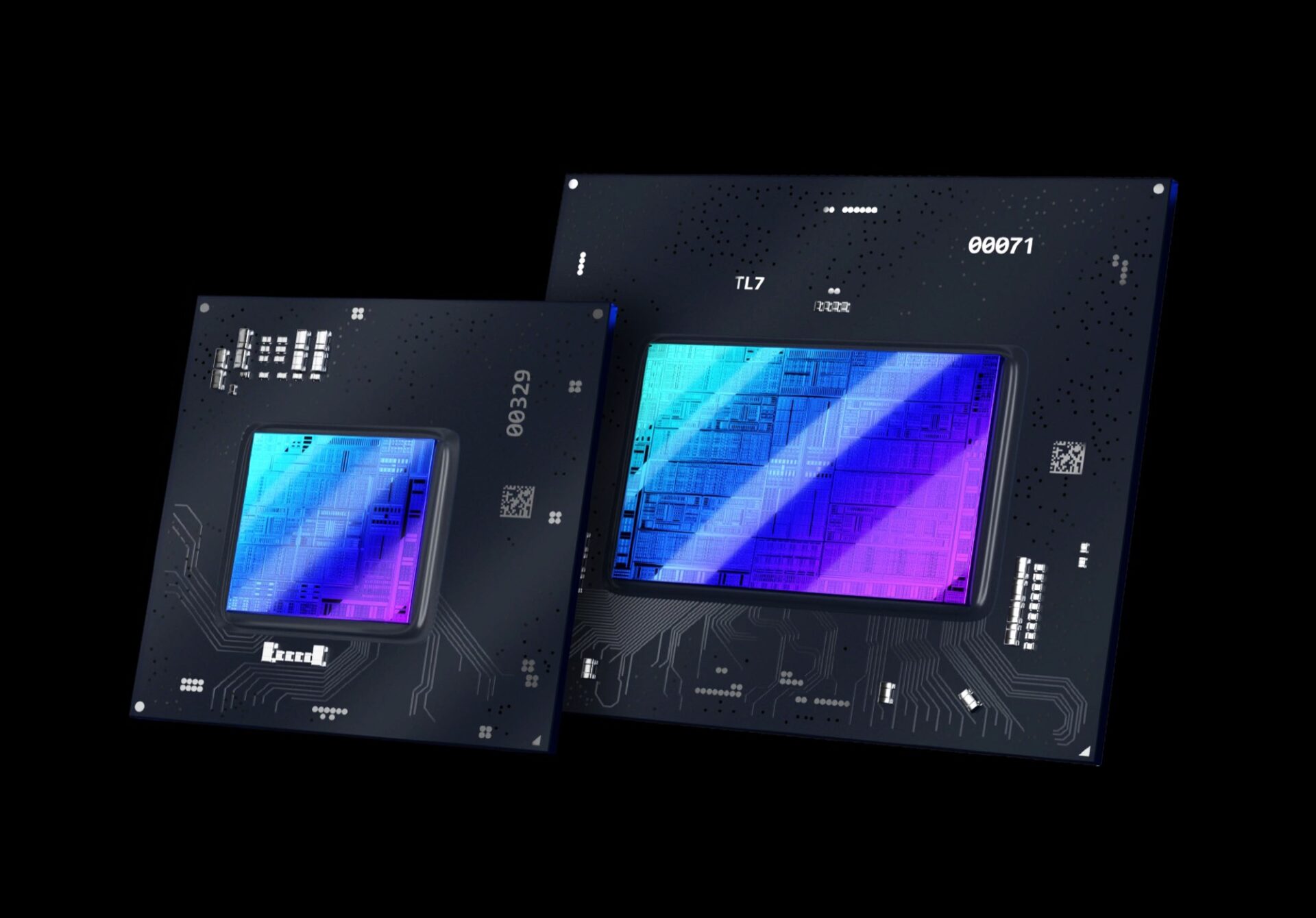
    A new Intel desktop GPU has recently appeared on Geekbench for the first time. This marks the debut of the first Battlemage SKU on the benchmarking platform, where it achieved an impressive score of 97,943 points in the OpenCL test. This performance is comparable to that of the Nvidia GeForce RTX 4060 and the Intel Arc A770 desktop. Additionally, on the AMD side, it positions itself between the Radeon RX 7700 XT and the RX 7600 XT.

    GPU Specifications Unveiled

    Further investigation into the Linux kernel driver database using the GPU’s PCIe ID (E20B) indicates that it is built on Intel’s upcoming Battlemage architecture. There are five Battlemage SKUs listed, and based on their names, this GPU is likely the second strongest in this lineup. The testing was conducted with an Intel Core i7-13700K on a Z970 motherboard, complemented by 32 GB of DDR5-4800 RAM.

    Performance Details

    In terms of specifications, the GPU features 160 compute units (which corresponds to 20 Xe cores), includes 12 GB of VRAM, and can reach a maximum boost clock of 2,850 MHz. This is the inaugural appearance of a Battlemage desktop GPU on Geekbench, so it is expected that Intel will showcase it soon. While a CES 2025 launch may seem optimistic, Intel will likely be busy presenting Arrow Lake laptop chips, non-K Arrow Lake-S desktop chips, and various other products during that time.

    Sources: Geekbench, Cateee.net, Benchleaks via Wccftech


    Image 1
    Image 1