Tag: Replaceable Battery

  • Steam Frame Kit with Swappable Battery Leaks Ahead of VR Release

    Steam Frame Kit with Swappable Battery Leaks Ahead of VR Release

    Key Takeaway

    – Steam Frame will have a replaceable lithium-ion battery, with an “Enthusiast Kit” offering an extra battery for extended playtime.
    – The VR headset can operate as a standalone device, store and run non-VR and VR games, and work without wired connectivity.
    – Default hardware includes a head strap with attached battery, two motion controllers, wireless dongle, and power supply.
    – An alternative head strap with BMR speakers for spatial audio is also in development.
    – Official release date is Summer 2026, but recent FCC filings and shipments suggest a possible earlier debut.


    Valve’s New Controller Leak and Battery Kit

    Recent Valve import data raised hopes for an imminent Steam Frame release date. Now, an FCC leak has shed light on an unannounced accessory pack for the VR headset. One of the more notable discoveries is an option for a replaceable lithium-ion battery.

    Filing Reveals Enthusiast Kit Details

    Before products with wireless capabilities ship in the U.S., manufacturers typically must submit them to the FCC for inspection. In the process, consumers occasionally learn more details about the tech before announcements. After analyzing documents on the agency’s website, Valve insider Brad Lynch shared some insights.

    Controller Photos and Extra Battery

    Lynch posted pics on social media that show the exterior and interior of the Steam Frame controllers. As LabeVR notes, the linked documentation also mentions an “Enthusiast Kit”. Among other potential accessories, buyers of the VR headset add-on would receive an extra battery.

    Portability and Standalone Operation

    Unlike the Valve Index, its follow-up can be used as a standalone device that can store and run non-VR and VR games. To further enhance portability, it can operate without any wired connectivity. By default, the hardware will ship with a head strap with an attached battery. Presumably, the Enthusiast Kit would further extend playtime.

    Alternative Strap with Spatial Audio

    It’s unclear whether the bundle consists of a separate head strap or just the additional swappable power source. Lynch also leaked that Valve was developing an alternative strap with BMR speakers. On the Index VR headset, the speakers would float near the ears to produce spatial audio.

    Price Concerns and Included Components

    While speculation has focused on the cost of the Steam Machine, the memory shortage may also inflate the Steam Frame price. Still, there are no indications yet that Valve will skimp on included components. Without the kit, buyers should receive two motion controllers, a wireless dongle to communicate with PCs, and a power supply for uninterrupted play.

    Release Date Slated for Summer

    The official Steam Frame release date remains Summer 2026. Yet, after the manufacturer accepted shipments of “Virtual Reality Devices”, the FCC filing is another encouraging sign for a debut earlier in the season.
  • Why Most Laptops Lack This One Practical Feature

    Key Takeaway

    – Replaceable batteries are extremely rare despite sustainability marketing and EU right-to-repair regulations.
    – The Schenker Connect 15 is currently the only tested laptop with a fully user-removable battery.
    – Sealed-in batteries are not a technical necessity; they mainly benefit manufacturers by encouraging laptop replacement.
    – Removable batteries enable longer device lifespan, easier repairs, and the ability to swap spares for extended runtime.
    – Removing the battery while plugged in reduces wear from continuous charging cycles.


    Replaceable Batteries: A Vanishing Feature

    Although manufacturers are increasingly eager to market themselves and their products as environmentally friendly, a feature that was once standard can currently only be found on the Schenker Connect 15 (our review): a replaceable battery. Even last year’s Dynabook Portégé Z40L-N didn’t feature a “true” replaceable battery. However, its battery was at least accessible through a service hatch and could be replaced by the user.

    The Schenker Connect 15’s Unique Design

    The Schenker Connect 15, on the other hand, comes with a fully removable battery. To take it out, slide the right latch to the left position, then push the left latch to the right (it does not lock in place) while pulling the battery out using the notch at the top center. That’s all there is to it. Despite ongoing marketing campaigns centered around sustainability and despite the EU’s right-to-repair regulations, a replaceable battery remains extremely rare.

    Why Built-In Batteries Dominate

    In the early days of laptops—and for many years afterward—it was completely standard, proving that sealed-in batteries are by no means a technical necessity. Built-in batteries certainly save a bit of space and weight. However, for years the far greater benefit for manufacturers was likely that users with a failing battery would rather buy a new laptop than pay to have the internal battery professionally replaced—and that remains true today.

    Practical Benefits of Swappable Power

    Beyond easier repairs, longer service life, and improved sustainability, replaceable batteries offer additional benefits. Anyone spending extended periods away from a power outlet can simply carry spare batteries and swap them once one runs out, effectively doubling the laptop’s usable runtime. And when using the laptop at home while plugged in for extended periods, the battery can be removed altogether, reducing wear by avoiding continuous charging and discharging cycles.

    An Optimistic Outlook for Business Use

    This year, the Schenker Connect 15 is the first laptop with a replaceable battery that we have tested. The advantages are especially compelling for businesses: battery failures are easier to repair, potentially extending the lifespan of the devices considerably. As a result, the laptops become more sustainable, and carrying additional batteries allows employees to work longer away from a power source. We hope to see more laptops with replaceable batteries return in the future.


    Sources

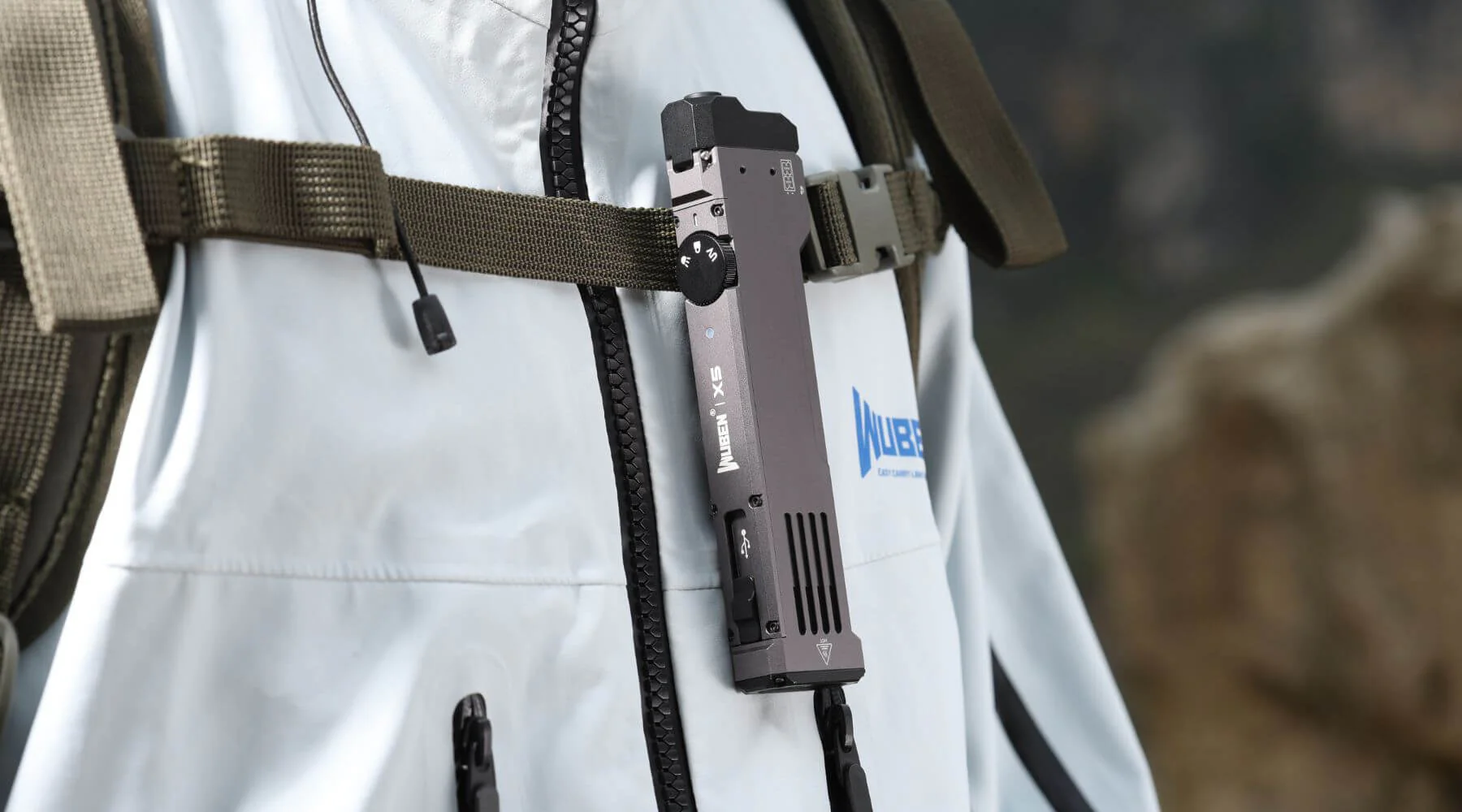
    • Wuben X5: Flat USB-C Flashlight with UV, Laser & White Light

      Wuben X5: Flat USB-C Flashlight with UV, Laser & White Light

      Key Takeaway

      – Replaceable battery with AAA backup option (4x AAA)
      – Dual output: 1,250 lumens (Li-ion) / 850 lumens (battery backup)
      – Turbo mode drops to 400 lumens after 1 minute; runtime varies by mode (2h at 350 lumens, 15h at 50 lumens)
      – Additional features: UV light, green Class 1 laser, and rotary switch for mode selection
      – Price: ~$80 USD; IP65-rated, 14 cm length, 130 g weight


      Wuben X5, A Fresh Take On Everyday Carry Flashlights

      So Wuben just dropped the X5, its a new EDC flashlight. The company is following the current trend of flat-style flashlights but avoids the typical compromises. That is because the Wuben X5 features a replaceable battery. Furthermore, if no USB-C charger is available, standard AAA batteries can be used instead. Four of them are required for this.

      Light Output and Battery Flexibility

      However, the light output is reduced in this case. With the battery backup, it only delivers 850 lumens. In contrast, the lithium-ion battery offers 1250 lumens. The flashlight can also be operated in a moonlight mode. At one lumen, a runtime of 200 hours is possible. The LED emits light at 5,000K. However, the flashlight can only maintain the 1,250 lumens for one minute before the turbo mode steps down to 400 lumens, which remains available for another 1.5 hours.

      Detailed Runtime and Modes

      Anyone selecting 350 lumens can get a continuous runtime of 2 hours. 150 and 50 lumens last for 5 and 15 hours, respectively. The UV light lasts for 2 hours. The USB-C port is located on the side of the flashlight, and it appears to feature a sliding cover that protects the port.

      Laser, UV, and Rotary Controls

      As an additional light source, a Class 1 laser (green) is available with a runtime of 50 hours. In certain regions, the flashlight is also shipped with a Class 3R laser offering a 24-hour runtime. A UV light is also present. A rotary switch allows users to toggle between the different light modes and lock out the flashlight.

      Dedicated Laser Button and Build

      The only exception is the laser, which has its own dedicated button. Measuring around 14 cm in length, the flashlight weighs approximately 130 grams, features a rugged aluminum housing, and is IP65-rated. A two-way clip enables various attachment options. According to the manufacturer, the Wuben X5 is now shipping and costs around 80 USD.


      Sources

      • Nintendo May Discontinue Switch in EU, Boosting Switch 2 Lite Needs

        Nintendo May Discontinue Switch in EU, Boosting Switch 2 Lite Needs

        Key Takeaway

        – Nintendo is revising the Switch 2 to meet EU right-to-repair rules, with easier battery replacement by February 2027.
        – A “BEE” code and “OSM” labels will appear on Switch 2 products, but the original Switch lacks this labeling, raising regulatory concerns.
        – The original Switch will be retired eventually, but CEO Shuntaro Furukawa suggests continued support for several more years.
        – A lower-priced Switch 2 Lite with limited features (e.g., smaller screen, no detachable Joy-Cons) may become desirable as a cheaper alternative.
        – A Switch 2 price increase from €469.99 to €499.99 is set for September 2026, and high R&D costs complicate creating a budget model.


        Nintendo’s Switch 2 getting EU repairs

        Nintendo is revising the Switch 2 to meet EU right-to-repair regulations. By February 18th 2027, buyers should be able to replace the console’s battery more easier. However, the manufacturer has not addressed whether it will make changes to the original Switch. If its forced to discontinue the handheld, a lower-priced Switch 2 Lite would become desireable.

        Datamined code reemerges

        Nintendo Patents Watch noted that a code datamined in January 2026 has reemerged. In the announcement, the company explained that products using the “BEE” code will have “OSM” labels after the tweaks. Gamers can find “BEE” listed on Switch 2 consoles, games, controllers, and accessories.

        Since the first Switch lacks this labeling, its future in the EU and in regions with replaceable-battery regulations is unclear. The guidelines don’t impact existing units, and Nintendo would have until February 2027 to stockpile enough of the aging hardware. Eventually, some buyers would demand a cheaper alternative to the current-gen system.

        Retirement of the original Switch

        Released in 2017, the gaming giant will inevitably retire the last-gen option. Even so, it remains a more affordable way to access newer games, many of which are compatable with both consoles. TheGamer reported on recent comments from CEO Shuntaro Furukawa, who suggested it will be supported for several years to come.

        • Without the Switch, EU gamers would need a larger budget to purchase the newer handheld.
        • A Switch 2 price increase from €469.99 to €499.99 is also set for September 2026.
        • One solution could be a Switch 2 Lite with limited functionality.

        R&D costs and confidential designs

        Patents Watch reminded followers that Nintendo’s last fiscal report showed a sharp rise in R&D costs. Recently, the company registered four confidential designs at the EUIPO website. These may refer to revisions with an easier-to-replace battery. Its also possible that they describe new models of consoles or controllers.

        A Switch 2 Lite could offer a smaller screen, sacrifice detachable Joy-Cons, or ship without a dock. Still, given that the higher Switch 2 price may not cover manufacturing costs, economizing on the hardware is challenging.


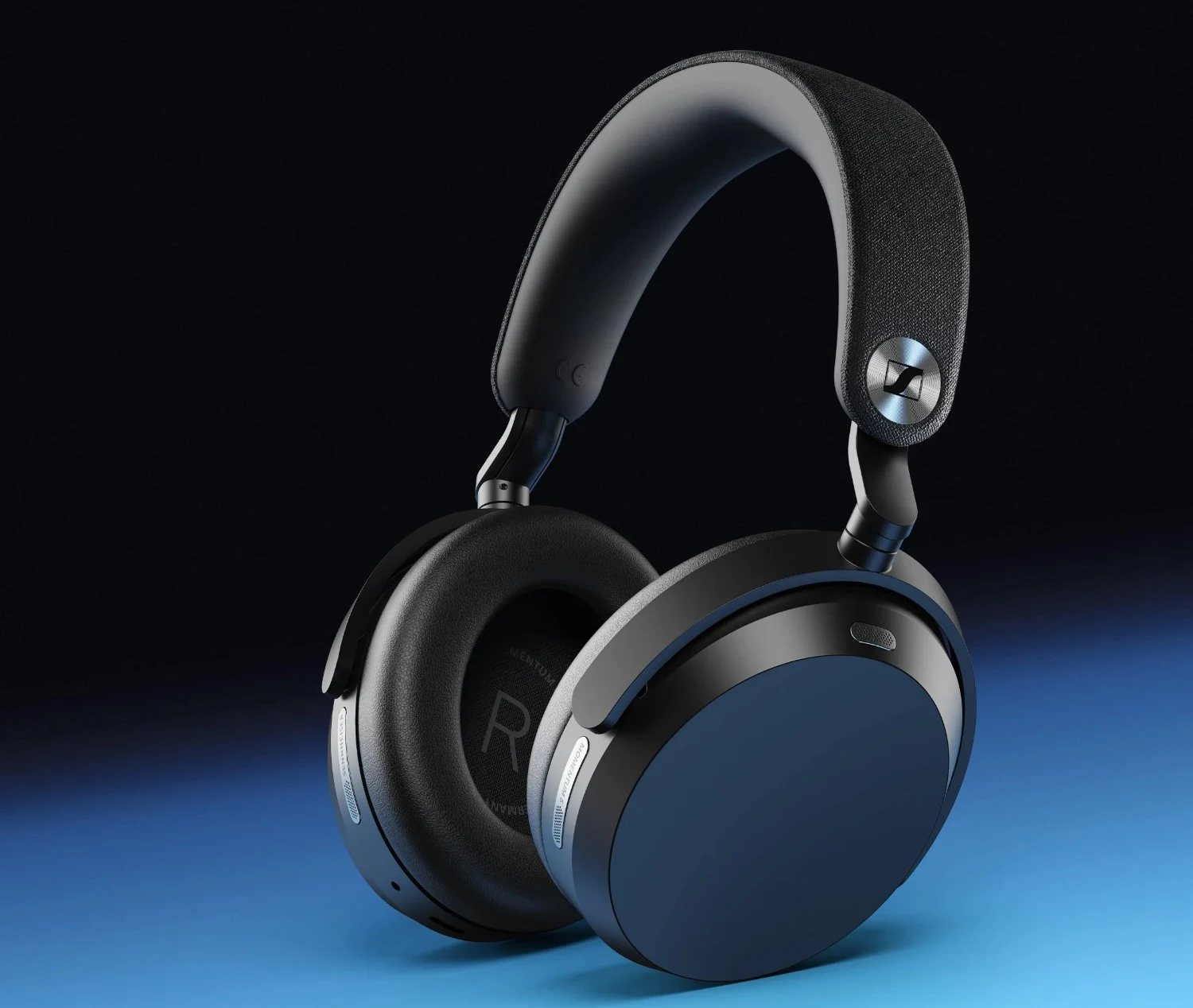
      • Sennheiser Momentum 5 Headphones: Better ANC, Mics, Replaceable Battery

        Sennheiser Momentum 5 Headphones: Better ANC, Mics, Replaceable Battery

        Key Takeaway

        – Replaceable battery extends longevity and reduces total cost of ownership.
        – Notable improvements to ANC and call quality due to 8 microphones, with up to 57-hour battery life (slightly less than prior gen).
        – Feature-rich spec: 42mm drivers, spatial audio with head tracking, AptX Lossless, Snapdragon Sound, Bluetooth 5.4 (upgradable to Bluetooth 6.0/LE Audio), USB-C wired/aux options.


        Overview

        Sennheiser has finally refreshed its Momentum line of over-the-ear headphones. The new Momentum 5 headphones arrive nearly four years after the Momentum 4, and despite the long period between both pairs, not a lot has changed. The write-up keeps you posted on what stayed and what moved, with careful attention to pricing and specs that matter to buyers today. Some readers may expect drastic shifts, but this release leans toward evolution rather than revolution, offering a more refined experience without rewriting the playbook.

        Design and Build

        The Momentum 5 headphones have kept the overall design, but with a few minor changes such as the logo on the fabric-top headband and the metal plates on each earcup, which we believe are covering the microphones. However, a major change that they bring is that they have a replaceable battery, which means a possibility for the headphones to last for a very long time. In this section, the emphasis is on how the aesthetics and durability align with modern tastes while ensuring serviceability remains practical for long-term ownership, even if that means some users will want to swap parts themselves.

        Technical Specifications

        In terms of features, the Momentum 5 headphones have 42mm drivers, like their predecessors. They also have active noise cancellation (ANC), which Sennheiser says is three times stronger in mid-range frequencies than that of the previous generation. The improvement in ANC (and calls) is attributed to the 8 mics on the Momentum 5, double that of the Momentum 4. As expected, there’s also a transparency mode for when you want to let external sound in. The specification sheet remains friendly for enthusiasts who care about driver size, mic count, and the claimed improvements in listening clarity under real world conditions.

        Battery and Charging

        Sennheiser says the Momentum 5 headphones have a battery life of up to 57 hours, a few hours less than the 60 hours of the previous generation. Of course, real life usage will vary depending on personal settings, but it should still be amazing, nonetheless. There are five LEDs that indicate the remaining battery life and the headphones charge via USB-C. The USB-C port can also be used for wired playback or you can use the 3.5mm aux jack next to it. This section emphasizes practical endurance and flexible charging options that matter to daily users who travel or commute.

        Features

        The Momentum 5 also have spatial audio (Dolby Atmos with head tracking), support for AptX Lossless Bluetooth codec, Snapdragon Sound, and Bluetooth 5.4 (will be updated to Bluetooth 6.0 and LE audio via a firmware update). There are physical controls as well as touch controls on the right earcup. The headphones come in a flat but large hard shell case since the headphones lay flat. The case has a pocket and slots for the USB-C and 3.5mm aux cables. This blend of spatial audio, codecs, and durable case makes them versatile for tech enthusiasts who value both soundstage and portability.

        Pricing and Availability

        Sennheiser is charging $399.99/€399.90/£329.90 for the Momentum 5, and they will be available to buy in Black, White, and Denim when they are released on June 30. They are cheaper than the $450 price tag the Sony WH-1000XM6 headphones had at launch, but at the moment, you can buy Sony’s headphones for $398 on Amazon. This comparison helps potential buyers weigh value against contemporaries while noting the Momentum 5’s replaceable battery as a differentiator.

        Sennhesier: 1, 2

        Sources
      • Amazon Kindle e-readers replaceable batteries leak issue

        Amazon Kindle e-readers replaceable batteries leak issue

        Key Takeaway

        – The EU will require user-replaceable batteries in smartphones and tablets starting February 2027, prompting device makers to design easily replaceable cells.
        – Evidence suggests Amazon may implement this in Kindle devices, including firmware hints like a Battery Replacement Kit and third-party battery warnings.
        – Small design changes (removable back, exposed battery with cable, removable adhesive) could dramatically improve repairability and extend device life.


        New EU Rules Push for End-User Replaceable Batteries in Mobile Devices

        A fresh EU regulation now mandates that smartphones and tablets sold inside the European Union from February 2027 must feature a battery that can be replaced by the end user without requiring specialized tools. In light of this, it appears that Amazon is already preparing new Kindle models with batteries that can be swapped out more easily. This development signals a broader shift toward user-serviceable components, which could impact repairability, longevity, and consumer freedom over time.

        Firmware Clues Hint at Battery Replacement Capabilities

        On a MobileRead forum thread, a user managed to uncover references to the rumored battery replaceability in Kindle firmware version 5.19.4. Among multiple mentions, the firmware reportedly includes a warning that appears if a third-party battery is inserted, cautioning about potential consequences for overall performance and battery life, while also noting that charging speed may be limited. The discovery further hints at a “Battery Replacement Kit” that end users could purchase, suggesting official support for this functionality may be planned or already in motion.

        Design Tweaks Could Meet EU Demands Without Huge Overhauls

        Even modest design adjustments could suffice to satisfy the EU requirements. For instance, a teardown by iFixit of the Kindle Paperwhite indicates the battery is glued inside the housing but connected via a cable rather than being soldered directly. The process of opening the housing currently demands specialized tools, and the use of removable adhesive strips combined with a back panel that can be unscrewed would make repairs substantially quicker and simpler. If such changes are paired with official replacement batteries being sold, the overall lifespan of a Kindle e-reader could be meaningfully extended.

        Repairability and Longevity as Strategic Trends

        The evolving repairability landscape, amplified by regulatory push and visible firmware hints, points toward a future where users may replace batteries without professional service. This could reduce electronic waste, extend device usefulness, and empower consumers to manage their hardware more directly. While the exact steps and components remain to be officially confirmed, the interplay between policy, firmware signals, and hardware design remains a focal point for ongoing discussions in the tech community.