Author: GizNews

  • Spyro Devs Let Go: Microsoft’s Strategic Publishing Win

    Spyro Devs Let Go: Microsoft’s Strategic Publishing Win

    Key Takeaway

    – Toys for Bob became independent in May 2024 by “buying back” itself from Xbox and Activision.
    – The studio was previously forced to support live-service titles like *Overwatch 2* and *Call of Duty*, losing its core identity.
    – Microsoft and Activision supported the split on the condition that Toys for Bob’s next game be published by Xbox.
    – The resulting game is *Spyro: A Realm Beyond*, the first mainline *Spyro* entry in over 20 years.
    – *Spyro: A Realm Beyond* is multiplatform (Xbox, PS5, Switch 2, PC) and introduces true dragon-flying mechanics.


    Toys for Bobs Journey Back to Independence

    Toys for Bob was acquired in its entirety by Activision in 2005 and later brought under Microsoft’s umbrella through the Microsoft–Activision Blizzard deal. The studio was then relegated to supporting live-service titles like Overwatch 2 and Call of Duty. Eventually, Toys for Bob became independent by “buying back” its independence from Xbox and is now gleefully working on what the studio does best, i.e., platforming games. Still published by Xbox, Toys for Bob is now working on Spyro: A Realm Beyond.

    The Split and Corporate Changes

    Toys for Bob became independent from Activision Blizzard via a deliberate split in May 2024. The head of the studio, Paul Yan, sat down for an interview with GamesRadar+ and explained that once COVID hit, corporate priorities changed, and Toys for Bob had to support other titles. This shift was a massive turning point for the studio’s culture and its core focuss on platforming games.

    Yan stated: “During this timeline, COVID hit, and the world turned upside down. There were many, many changes that happened. One of the changes at the company was a corporate mandate to support large blockbuster IPs, such as Warzone, Modern Warfare, and Overwatch 2. So, Toys for Bob actually shifted into a support structure in order to support those teams, those initiatives, those games, those updates, those features, and we learned a ton. We spread out into territories that we weren’t familiar with. We learned a lot.”

    Loss of Identity and the Bold Plan

    However, Toys for Bob felt like it was losing its core identity. Yan and other studio members thought hard about the Microsoft–Activision Blizzard acquisition as they considered their future. They ultimately approached leadership at both Activision and Xbox with a “really bold plan.” This plan was risky but the studio believed strongly in their own vision for the future.

    In a separate interview with GamesIndustry.biz, the studio said it wanted to “buy back our independence and take back creative control, organizational control, and financial control of our team, and spin off as a completely separate company so that we can focus on the types of games that are near and dear to our hearts, and also preserve the team and all the tenure that’s been built up over the years.” Basically, Toys for Bob said it “placed a big bet” on itself.

    Microsofts Condition and The New Game

    To the studio’s surprise, Microsoft and Activision supported its decision, but on one condition: the studio would have to make a game for Xbox to publish. The result was Spyro: A Realm Beyond, which is the first mainline entry in the Spyro franchise in over two decades. This new title is a huge milestone for the studio and the franchise.

    • Spyro: A Realm Beyond will arrive as a multiplatform release on Xbox Series X|S, PlayStation 5, Nintendo Switch 2, and PC, and will feature the first true dragon-flying mechanics for Spyro the Dragon.
    Sources
  • Google Confirms New Home Smart Speaker Spring 2026

    Google Confirms New Home Smart Speaker Spring 2026

    Key Takeaway

    – Google confirms new smart speaker launch next week via a company email.
    – Release date is likely June 25, aligning with a previous Best Buy Canada listing.
    – Priced at $100, available in four colors: Berry, Hazel, Jade, and Porcelain.
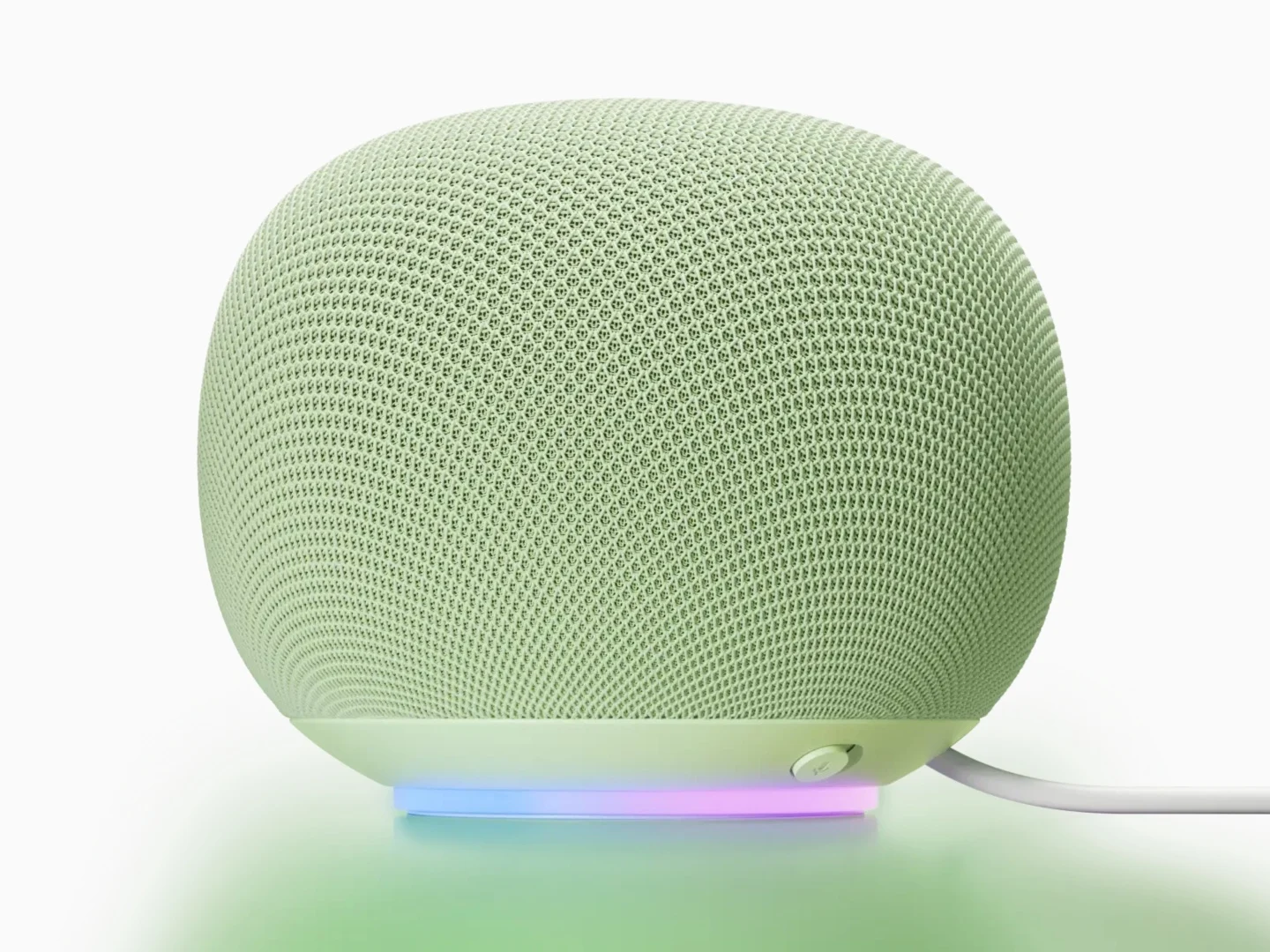
    – Features a squished Apple HomePod mini shape and can pair with Google TV Streamer for surround sound.


    At I/O last month, it was a widely anticipated that Google would unveil details regarding its upcoming smart speaker. However, no such announcements materialized during the event itself. A recent listing from a retailer did indicate a June 25 release date, which does align with Google’s initial promise of a Spring 2026 launch window. As it stands now, a brand new update straight from Google has confirmed the product’s launch for the very next week.

    Email Confirmation and Release Details

    A check-in and thank you email, which was sent from Anish Kattukaran, who is the Chief Product Officer of Google Home & Nest, it reached our inbox and likely the inboxes of many other users too. This particular email talks about the various developments concerning Gemini for the home and also thanks customers for they’re continued feedback. Right at the end of the email, it states, “those of you who have been patiently waiting for a certain speaker… keep a very close eye on your inbox next week.” This is a pretty clear hint at the upcoming device.

    Timeline and Retailer Listings

    This is likely the very same Google Home Speaker that was first teased back in October of last year, with a previously announced release date was set for Spring 2026. Since the spring season is almost over, Google has now finally decided to share a concrete release timeline. Just recently, a Best Buy Canada listing showed up which originally had a June 25 release date. That date has since been changed to simply read “Coming soon.” It is a possibility that Google will make the official announcement for the new smart speaker between June 15 and June 22, and then sales will actually start on June 25.

    Design, Colors, and Pricing

    The Google Home Speaker will have a completly different shape compared to the old Google Nest mini speaker, it looks more like a squished up version of the Apple HomePod mini. The device will allow users to pair two of them together with a Google TV Streamer to achieve a full on surround sound experience. There will be four different colors avaliable to choose from, which are namely, Berry, Hazel, Jade, and Porcelain. Interestingly though, the Best Buy listing only shows off the Hazel and Porcelain color options. The speaker is going to be priced at $100.

  • Apple & Leaker Hint at MacBook Ultra Details

    Apple & Leaker Hint at MacBook Ultra Details

    Key Takeaway

    – A major MacBook Pro redesign is expected between fall 2026 and spring 2027.
    – The new model is rumored to feature an OLED panel and a touchscreen.
    – A leaker claims the inclusion of a touchscreen is “100% confirmed.”
    – Recent macOS updates include touchscreen-friendly gestures, hinting at the change.
    – The redesign would be the first significant update to the laptop’s fundamental features since 2021.


    A Shift in the Design of Apple’s Pro Laptop

    The current Apple MacBook Pro’s design ($1,549) goes all the way back to the model that came out in October 2021, which had the M1 Pro and M1 Max chips inside. Over the last five years, Apple’s flagship notebook has mainly just gotten new processors, meaning it got faster, but the company hasn’t touched core things like the overall look or the screen itself. This is all supposedly going to change pretty soon, if you believe the rumors floating around.

    New Rumors About a Touchscreen and OLED Panel

    According to whispers, a MacBook Pro with a totally new design will show up sometime between fall 2026 and spring 2027, and they might even call it the MacBook Ultra. For a while now, people have been saying this machine wont just have an OLED display, but it will also be the very first Mac to ever include a touchscreen. The usually spot-on leaker known as Instant Digital now backs up these claims, stating it’s “100% confirmed” that the next-gen model will indeed have touch capabilities.

    • The notebook could be marketed as the MacBook Ultra.
    • It will supposedly feature an OLED panel alongside the touchscreen.
    • Instant Digital claims the touchscreen is definitely coming.

    Clues Found Within Apple’s Software

    Apple themself have actually left several hints about a Mac with a touchscreen. The new operating system now allows the iPad to be controlled by its own touch when its used as an external monitor through Sidecar, and it even supports simple multitouch gestures. MacRumors dug up two other clues: first, you can refresh Safari webpages by swiping down with your finger, like on an iPhone or iPad. And second, the position and the taller shape of the new Spotlight and Siri windows look wierdly like they were made to fit around something like a Dynamic Island.

  • Baseus 20800mAh Power Bank 145W Digital Display

    Baseus 20800mAh Power Bank 145W Digital Display

    Key Takeaway

    – 20,800mAh capacity with up to 145W total output (100W per USB-C port)
    – Charges up to four devices simultaneously via two USB-C and two USB-A ports
    – Supports PPS, PD, and UFCS fast-charging standards
    – Recharges itself at 65W, taking about two hours for a full charge
    – Priced at $99.99, $20 more than the GR11 but with a slightly larger battery


    New Power Bank Hits US Market

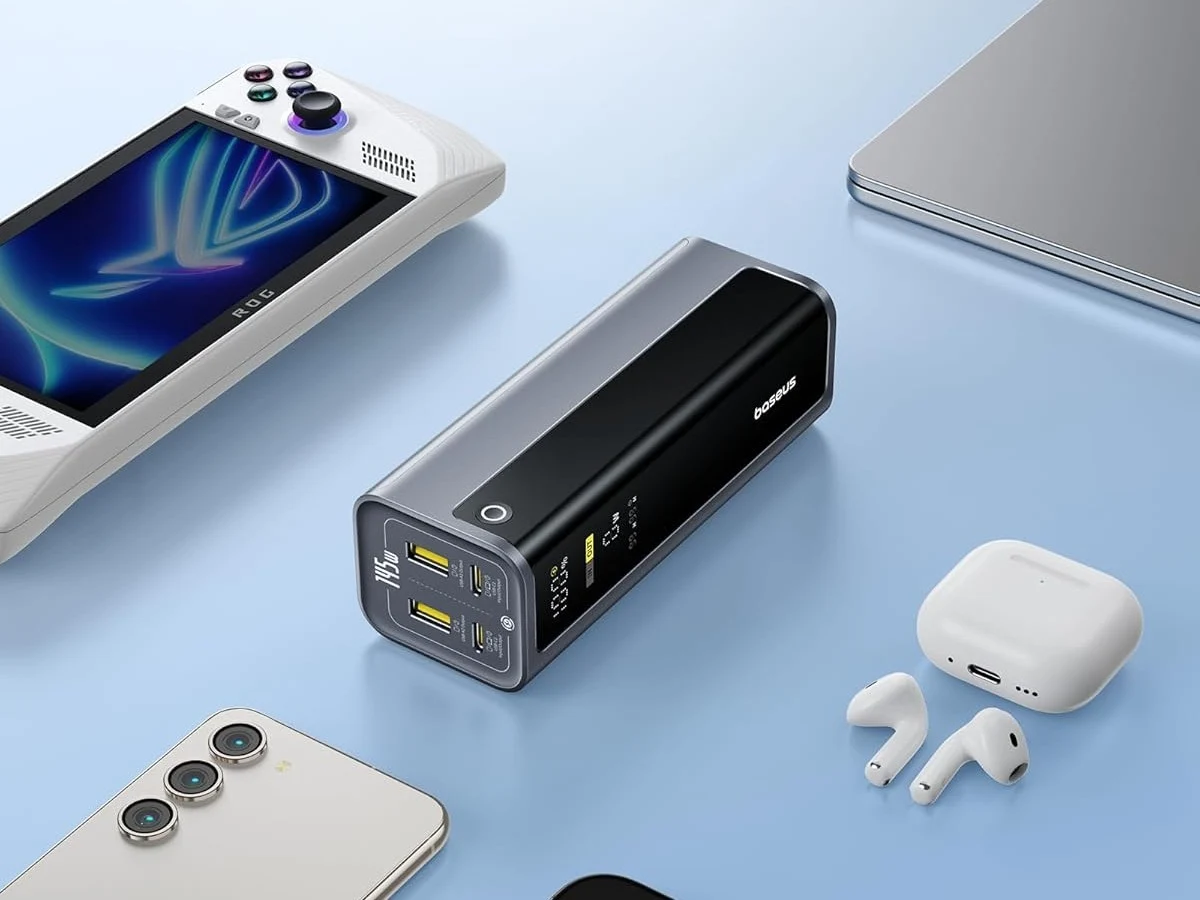
    The Baseus EnerGeek GR12 145W 20800mAh Power Bank with Digital Display is now available to order in the US. Surprisingly, the GR12 arrives with a higher $99.99 price tag compared to the EnerGeek GR11, which sells for $79.99 and includes a retractable USB-C cable. That said, the GR12 offers a slightly larger 20,800mAh capacity, which could come in handy if you lug a lot of devices.

    Charging Multiple Devices at Once

    The GR12 is designed to charge up to four devices at the same time through its two USB-C and two USB-A ports. Both USB-C ports can deliver up to 100W when charging a single device or split the output between two devices at either 100W/45W or 65W/65W. In other words, theres enough power here to charge one laptop at full speed or even two laptops simultaneously. The USB-A ports, meanwhile, top out at 33W each. With all four ports in use, the power bank can deliver a combined output of up to 145W.

    Battery Life and Fast Charging Specs

    As mentioned, the device packs a 20,800mAh capacity (8 x 2,600mAh cells), which Baseus claims can fully charge an iPhone 16 Pro around 3.6 times or a 13-inch MacBook Air once. It also supports a wide range of fast-charging standards, including PPS, PD, and UFCS for many Chinese smartphones. The power bank itself charges at 65W and takes around two hours for a full charge. Up front, a built-in digital display shows usefull information such as the remaining battery capacity and charging output.

    Size, Weight, and Availability

    The EnerGeek GR12 measures 2.0 x 1.7 x 6.1 inches and weighs 1.1 pounds. It is now available through Amazon for $99.99. Baseus has also listed a cheaper EnerGeek GR11, featuring a 20,000mAh capacity and a retractable USB-C cable.

    Sources
  • TrimUI Brick Hammer Pro U & Brick Pro Handhelds

    TrimUI Brick Hammer Pro U & Brick Pro Handhelds

    Key Takeaway

    – TrimUI Brick Pro and TrimUI Brick Hammer Pro U are two upcoming vertical handhelds with different specs.
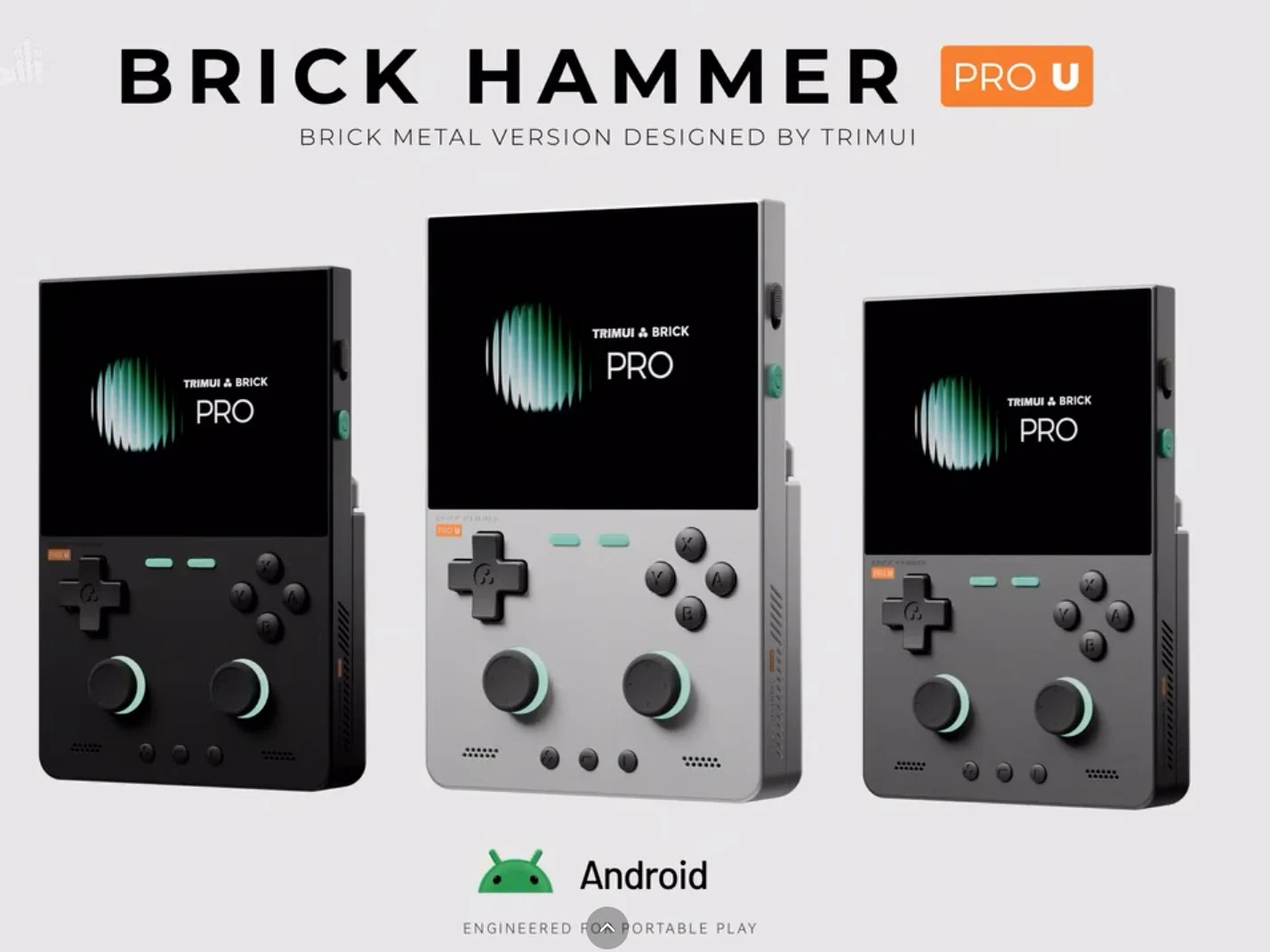
    – Brick Hammer Pro U is the premium model with a Snapdragon G2 Gen 1, 3.95-inch IPS display, 6-axis gyroscope, and a metal shell.
    – Brick Pro is the budget model with an Allwinner A133p processor, Linux OS, and a polycarbonate shell.
    – Both devices share the same 3.95-inch IPS panel (1024×768, 60Hz) and identical design, but differ in materials and price tier.
    – No release date, RAM, storage, or battery details have been announced yet.


    New Handhelds Announced by TrimUI

    TrimUI has gone and released an official video that confirms the launch of two new handhelds. The video not only reveals the names of the devices, wich will launch as the TrimUI Brick Pro and TrimUI Brick Hammer Pro U, but it also includes some of there key specs as well.

    TrimUI Brick Hammer Pro U Specifications

    According to the leaked video, the TrimUI Brick Hammer Pro U will have a 3.95-inch IPS screen with a 1024 x 768 pixels resolution and a 60Hz refresh rate. It is powered by the Snapdragon G2 Gen 1 processor wich includes an Adreno A21 GPU. It also has a 6-axis gyroscope integrated. Unfortunatly, TrimUI didnt reveal the RAM, storage, or battery capacity at this time.

    The more premium model, the Brick Hammer Pro U, will feature a metal shell similiar to the previous TrimUI Brick Hammer. It will be available in three colors: Black, Silver, and Gray. This device is designed to be the companys highest-end vertical handheld based on its specs and build quality.

    TrimUI Brick Pro Details

    On the other hand, the TrimUI Brick Pro also has a 3.95-inch IPS LCD panel, but it is powered by the Allwinner A133p. This is a quad-core processor that clocks at 1.8GHz, and its the same chipset found inside the Powkiddy V90S handheld. The Brick Pro will ship with Linux operating system out of the box, where as the Brick Hammer Pro U will run Android instead.

    • The Brick Pro uses a polycarbonate shell material.
    • It will be available in Light Grey, Black, and White color options.
    • Both devices share the same overall design for buttons, ports, and vents.

    Release and Availability

    TrimUI has not yet revealed an exact release date for either of these handhelds. However, the official video’s title suggests they are coming soon and more details will be shared in the near future. The less powerful Brick Pro is expected to be more affordable due to its plastic construction and weaker processor.

    Sources
  • Mini flagship outshines Apple, Samsung in battery & camera, still disappoints

    Key Takeaway

    – Strong build quality and IP69 dust/water resistance
    – 6.32-inch OLED with very thin bezels and modern design
    – Excellent battery and Hasselblad cameras, outperforming iPhone 17 and Galaxy S26
    – Gaps in LTE bands 20 and 32 hurt coverage in rural Europe
    – GPS and battery management issues linked to China ROM and power policies


    Initial Thoughts on the Oppo Find X9s Pro

    The Oppo Find X9s Pro looks like an insider tip among compact smartphones when looking at the compact smartphones. The Oppo phone starts for a budget‑friendly level at around $940 from our loan partner Trading Shenzhen. However, our review of the mini flagship shows that the strong first impression cannot be maintained throughout.

    Design and Build Quality Stand Out

    There are many points where the compact top smartphone from oppo is convincing. The built-quality is excellent complemented by an IP69 certified resistance to dust and water. The very thin bezels around the 6.32-inch OLED panel also give the Find X9s Pro a modern look and efficient design. It feels premium in hand and the water resistance is a major plus over competitors.

    Camera and Battery Performance Shine

    The Find X9s Pro also plays to its strengths with its XXL battery and Hasselblad cameras. In these areas, the Oppo phone performs in a different league compared to the iPhone 17 or Galaxy S26 in our review. The cameras capture vibrant colors and the battery capacity is huge for this form factor, easily lasting a full day under heavy usage conditions.

    Disappointing USB and Connectivity Issues

    However, several minor weaknesses noticeably tarnish the overall picture. The USB 2.0 port is particularly hard to understand, as it matches neither the price range nor the Pro claim of the mini flagship – even the “normal” Find X9 achieved better performance with a 3.2 standard in our review. In terms of communication, the Find X9s Pro shines with fast Wi-Fi 7, but loses some of its suitability for everyday use due to the lack of LTE bands 20 and 32, which are essential for optimal coverage outside urban areas in Europe.

    Software and GPS Problems Are Concerning

    When it comes to software, our review also raises certain questions. Although the China version with the ColorOS 16 interface, including a multilingual package, can be used without any major restrictions, our test data revealed significant dropouts in positioning, as gps data in motion is not recorded reliably. These may simply be early‑stage issues that future updates will address, but the problems with gps tracking could also be a consequence of the restrictive power‑management policies of the China ROM.

    Battery Life Not Matching Expectations

    We also see great potential for improvement in the energy management of the Oppo Find X9s Pro. Despite the very large battery, the endurance of the mini flagship powered with the Dimensity 9500 is not at the level of the large flagship from oppo. This is surprising given the battery capacity and the claimed efficiency of the chipset, leaving the device feeling slightly under-optimized in real-world usage.

    Sources
    • Xbox Exclusives Risk: New Strategy That Could Work

      Xbox Exclusives Risk: New Strategy That Could Work

      Key Takeaway

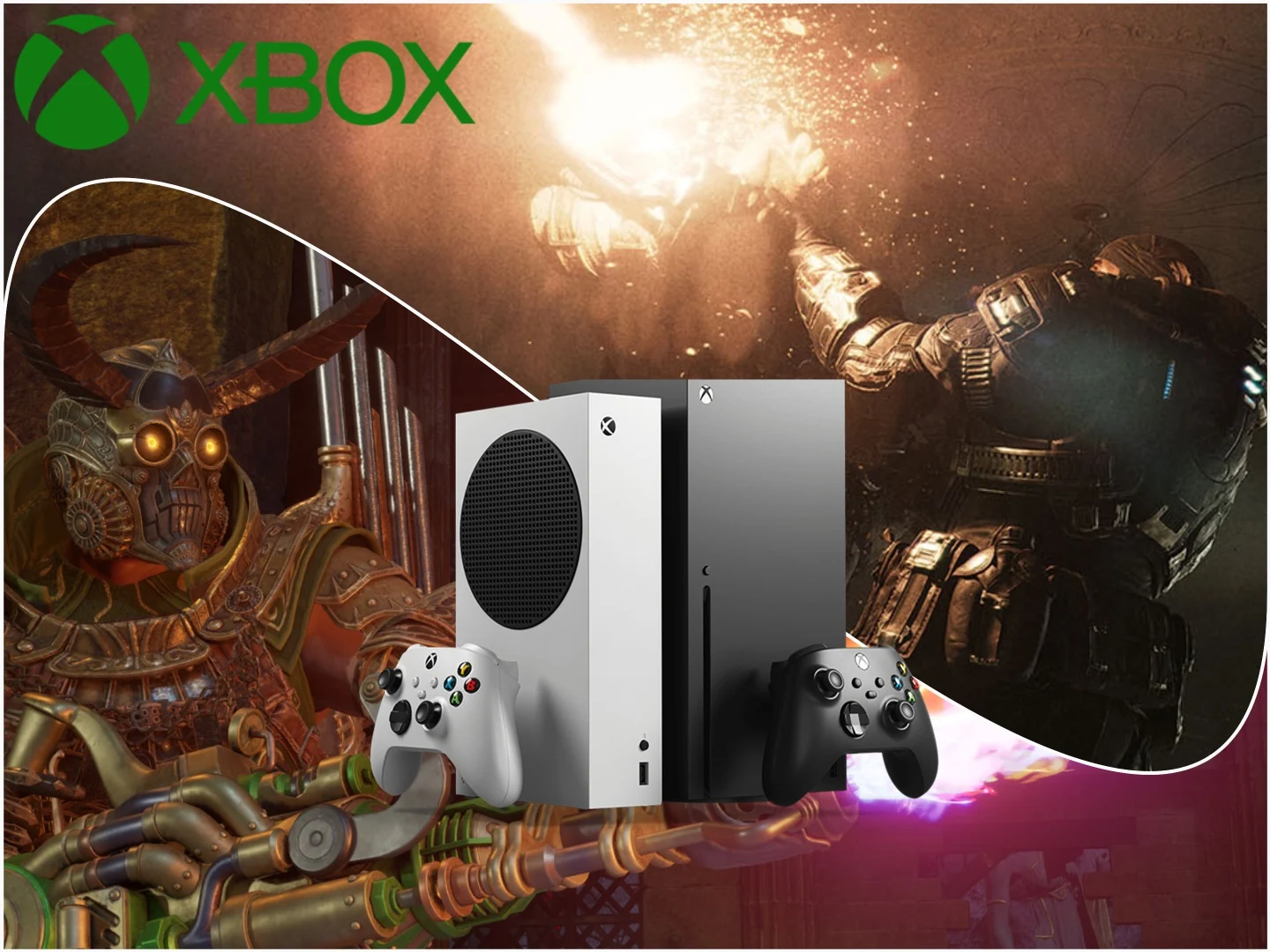
      – Xbox plans to release at least one major exclusive title per year, starting with Gears of War: E-Day (2026) and Clockwork Revolution (2027).
      – Exclusives are seen as essential for driving console sales and making the investment in an Xbox worthwhile.
      – The strategy is contentious: some value exclusives for building a strong game library, while others criticize them for forcing players to buy multiple consoles.
      – Xbox leadership has internalized that exclusivity is a necessary business move, similar to Sony’s approach.


      Exclusives Are a Pain But They Do Help Move Consoles

      As unfortunate as it is, having exclusives will help Microsoft sell Xbox consoles. While the leadership is still finalising the details of how exclusivity will work, there are already two upcoming titles that will release for Xbox consoles only. But having a new exclusive title every year could make investing in a dedicated console worth it.

      What the Xbox Bosses Said in Their Secret Message

      At least that’s what Xbox CEO Asha Sharma and CCO Matt Booty are hoping for. In the recent internal memo that was publicly shared, one of the statements that stood out was, “We reintroduced exclusives with Gears of War: E-Day in 2026 and Clockwork Revolution in 2027. Players can continue to expect signature exclusives from us every year.”

      Why Some Gamers Hate This Strategy While Others Love It

      Console exclusivity in general is a contentious subject, be it first-party or third-party exclusives. Some see the appeal, while others label it as a bad move. Those who do see some value in it will surely appreciate getting new exclusive titles every year, depending on the games, of course. In fact, having a healthy library of exclusives is what drove people towards consoles in the first place. That, among other benefits, like couch gaming and ease of use.

      The Problem With Forcing People to Buy Multiple Machines

      The other side of the conversation is that exclusivity forces people who want to enjoy all kinds of games to invest in multiple consoles, which goes against the equally valid argument that all games should be accessible to everyone. That, however, would be tricky for Xbox and Microsoft as a business. Sony seems to have realized it as well.

      And Heres What We Know About the Release Dates So Far

      For now, Gears of War: E-Day will be a 2026 exclusive for Xbox, while Clockwork Revolution will be the 2027 exclusive. Xbox leadership has already stated that there will be more exclusives in the future, but having one every year is an interesting proposition.

      Sources
    • Tecno Mid-Range Phone: Dot Matrix Display, 8000mAh Battery

      Key Takeaway

      – Downgraded chipset: MediaTek Dimensity 7100 instead of the Dimensity 7300 Ultimate.
      – New “Alive Matrix” mini-display on the camera island, similar to Nothing Phone’s Glyph.
      – Massive battery upgrade to 8,000 mAh with 45W wired and 30W wireless charging.
      – Same display (6.76″ 1080p 144Hz IPS) and 50MP main camera as the Pova 7.
      – Priced starting at INR 30,000 (~$313), available for pre-order on Flipkart.


      New Mid-Range Phone from Tecno

      Transition Holdings’ sub-brand, Tecno, has unveiled its latest mid-range smartphone, the Pova 8 5G, in the Indian market. It comes as a direct successor to the Pova 7, though there are notable downgrades rather than upgrades. Speaking more precisely, the Pova 8 is powered by the 6 nm-based MediaTek Dimensity 7100 chipset, although this chip was introduced earlier this year. For context, the last-generation model ships with the Dimensity 7300 Ultimate chipset.

      Cooling and Display Features

      Plus, there’s a 15,000 mm² sheet of graphite, which is said to keep the phone under normal temperature while gaming. This time, Tecno has incorporated a small dot-matrix display in the third lens of the Pova 8’s camera island, which the company refers to as the Alive Matrix display. This is very much similar to the Nothing Phone 4a Pro’s Glyph Matrix display.

      Same Display and Camera Specs

      Furthermore, it retains the same display and camera specs as its predecessor. It boasts a 6.76-inch IPS LCD panel that resolves at 1080p resolution with a 144 Hz refresh rate. It has a 50 MP Sony Lytia 600 single sensor with 2x in-sensor zoom and an AF lens. Up front, you get a 13 MP snapper for selfies and video chats.

      Massive Battery and Charging

      On the positive side, you get a large 8,000 mAh battery, a step up from the 6,000 mAh of the Pova 7. The battery supports 45 W wired, 30 W wireless, and 10 W reverse charging. Other features include an IP64 water resistance rating, an in-display fingerprint sensor, and MIL-STD 810H certification.

      Pricing and Availability

      Available in arc white, graphite black, helios orange, and echo green colorways, the Pova 8 5G starts at INR 30,000 (~$313.13) for the base 6 GB + 128 GB model, and the 8 GB + 128 GB model is priced at INR 32,000 (~$334). It’s now available for pre-order on Flipkart in India with open sales scheduled on June 18.


      Sources

    • Gemini North Telescope Captures Star’s Final Death Throes

      Gemini North Telescope Captures Star’s Final Death Throes

      Key Takeaway

      – The Gemini North telescope captured the final moments of a star in the Crystal Ball Nebula (NGC 1514), located 1,500 light-years away.
      – The nebula is shaped by a binary star system with an unusually long orbital period of nine years.
      – Powerful, asymmetrical stellar winds from the dying star and its companion distort the expanding gas into lumpy layers.
      – Planetary nebulae like NGC 1514 have a lifespan of 10,000 to 25,000 years before their gas disperses into space.


      The Universe Has Many Spectacular Events

      Many events occur in the universe, causing powerful and spectacular phenomena. Recently, the Gemini North telescope has managed to capture the final moments of a star with its Gemini Multi-Object Spectrograph (GMOS).

      Crystal Ball Nebula (NGC 1514) Details

      The image shows the Crystal Ball Nebula, also known as NGC 1514, which is located about 1,500 light-years from Earth. It is possible to see a bright star at its center. However, this star is not part of this nebula.

      A Binary System With a Long Orbit

      In fact, this structure is composed of a binary system with a giant star and a hot companion star. Furthermore, while most binary systems have short orbital periods, these two celestial objects have an orbital period of nine years, which is one of the longest known to date.

      The shape of this structure is linked to this binary system. Indeed, when these stars orbit each other, they generate powerful winds that distort the surrounding gas, as explained in a statement:

      “Scientists believe that one of these stars, which was once several times more massive than our sun, released its outer layers while in the throes of death. As the progenitor star and its binary companion orbit each other, they mold the expanding shell of gas with their strong, asymmetrical winds, forming the lumpy layers we see today.”

      How the Nebula Will Evolve

      While the shape of this structure is already impressive, it will continue to evolve in the future. Indeed, according to astronomers, planetary nebulae have a lifespan of between 10,000 and 25,000 years. Consequently, the gas in NGC 1514 will gradually disperse into space.

      • Distance: Approximately 1,500 light-years away.
      • Orbital period of the binary system: 9 years (one of the longest known).
      • Lifespan of planetary nebulae: 10,000 to 25,000 years.


      Sources

    • Keychron K Ultra-Series: 760-Hour Battery, Affordable Mechanical

      Key Takeaway

      – K8 Ultra and K2 Ultra receive same hardware/firmware upgrades as K3 Ultra, priced at $119.99
      – ZMK firmware delivers up to 760 hours (no backlight) or 225 hours (with backlight) battery life
      – Steel plate, double-shot PBT keycaps (OSA profile), and bolt-on aluminum frame for premium feel
      – New Apex switch series (Red, Brown, Banana) with box stem and clear top design
      – Fully programmable via Keychron Launcher, but south-facing RGB limits shine-through keycap options


      Hot on the heels of the new Keychron K3 Ultra low-profile keyboard that we are in the process of reviewing, Keychron has announced that its K8 and K2 keyboard models would be getting the same firmware and hardware upgrades while keeping the price of the new wireless mechanical keyboards fairly affordable. The K8 Ultra 8K and K2 Ultra 8K are launching on Keychron’s online store at $119.99, which is by far not cheap, but it is on the more affordable side when it comes to premium mechanical keyboards. Keychron’s claims about battery life and its highly customisable designs make the new keyboards viable contenders at the price.

      Alternative Options and Pricing Considerations

      It should be noted that the new K Ultra keyboards cost $5 more than Keychron’s gasket-mounted V1 Ultra (curr. $114 on Amazon), and that keyboard features full-POM switches, identical keycaps, and a programmable knob, all of which may be better features for your needs.

      Form Factors and Construction Quality

      The Keychron K2 Ultra 8K and K8 Ultra 8K are effectively the same keyboard design in different form factors, with the K8 Ultra offering a traditional TKL layout, much like the Keychron C1 Pro 8K we reviewed not too long ago, while the K2 Ultra takes the more compact 75% form factor. Both new Ultra keyboards feature case designs intended to keep the keyboards affordable.

      The bottom cases of the new keyboards are injection-moulded ABS, but they come with a bolt-on aluminium frame around the top half of the case — an add-on that previously cost extra on the K Max series keyboards and that both serves to make the keyboards look and feel more premium when in use and give them some added rigidity and durability.

      Battery Life and Firmware Efficiency

      Keychron has put the same 4,000 mAh-capacity battery in the K2 Ultra and K8 Ultra as it did in the Q13 Max we reviewed in 2025. In the case of the Q13 Max, that battery capacity delivered a respectable 83 hours with backlighting at medium brightness. With the move to ZMK firmware instead of QMK, Keychron claims that the K8 Ultra and K2 Ultra are capable of up to 760 hours on a single charge with no backlighting and up to 225 hours with backlighting enabled.

      This improvement is due to ZMK being designed specifically for wireless applications, as opposed to QMK, where wireless connectivity was more or less added as an afterthought. The efficiency claims have so far proven true in our review of the Keychron Q1 Ultra, which was able to make it through an entire workday without dropping from 100% charge.

      Keycaps, Plate, and Switch Options

      Keychron has equipped the K8 Ultra and K2 Ultra with a steel plate and double-shot PBT keycaps in the OSA profile. We have previously praised this keycap design in our review of the Keychron K4 HE, as the keycaps share the same height and cylindrical tops as a traditional OEM profile, but they have a more unique look.

      The new K Ultra keyboards are launching alongside Keychron’s new Apex switch series, which is a new switch design from Keychron featuring a box stem and a clear top, as opposed to the traditional MX stem and the opaque top and light guide in the slightly less recent Silk POM switches we tested in the Q1 Ultra. The new Apex switches come in Keychron’s usual variety of Red linear (45 gf actuation force, 4 mm travel), Brown tactile (50 gf actuation force, 4 mm travel), and Banana tactile (55 gf actuation force, 3.6 mm travel with a sharper tactile bump).

      Software Customisation and RGB Lighting

      The K2 and K8 Ultra are also customisable and programmable in Keychron Launcher, which allows you to do everything from configure macros to remap keys, and tweak per-key RGB backlighting. That RGB backlighting is, however, south-facing, which means it may prove challenging to find shine-through keycaps that actually illuminate the legend on the keycaps.

      Sources