Author: GizNews

  • Seiko Unveils Marinemaster Diver with 8L45 Movement and Upgrades

    Seiko Unveils Marinemaster Diver with 8L45 Movement and Upgrades

    Key Takeaways

    1. Model Updates: The Seiko Prospex Marinemaster HBF001 features the new 8L45 movement, improving from the older 8L35 movement used in the SLA079.

    2. Enhanced Performance: The HBF001 offers a power reserve of 72 hours and improved timekeeping accuracy, with a daily deviation of +10 to -5 seconds.

    3. Innovative Clasp: The new one-push diver adjuster clasp allows for easy extension and retraction, providing better fit and comfort compared to older designs.

    4. Limited Edition HBF002: The JAMSTEC Limited Edition features a unique blue gradient dial and is limited to 1,000 units, celebrating Arctic research.

    5. Specifications: Both models are water-resistant up to 300m, have dual-curved sapphire glass, and are made with a sturdy 42.6mm stainless steel case with DiaShield coating.


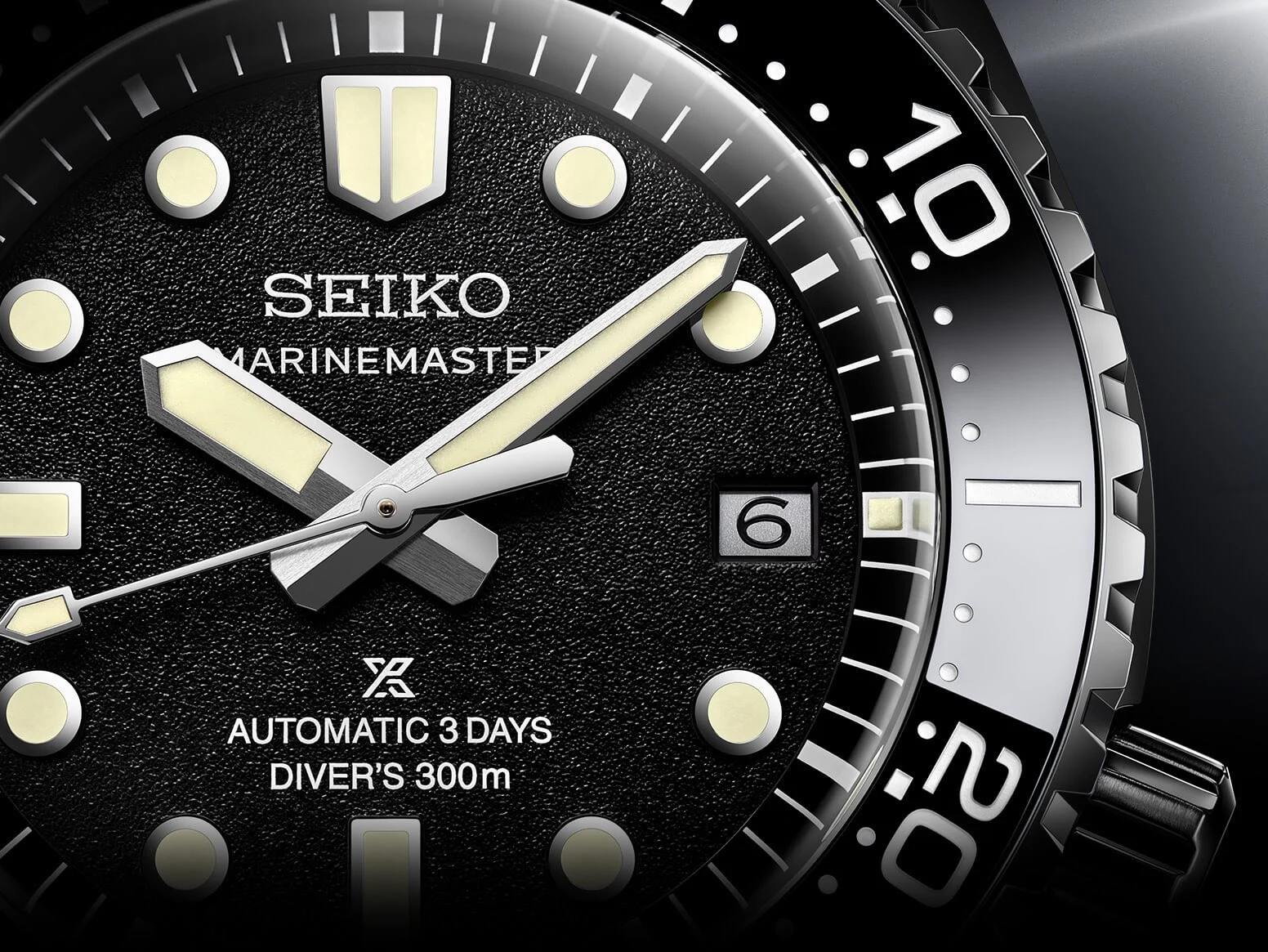
    Three years after bringing back the Marinemaster brand, Seiko is updating its main dive watch by introducing the new Prospex Marinemaster 1968 Heritage Diver’s Watch HBF001 along with the HBF002 JAMSTEC Limited Edition.

    Similar Looks, Different Features

    At first glance, you might confuse the Marinemaster HBF001 with the SLA079 due to their similar appearance. However, if you take a closer look, you will notice a few differences, like the placement of the date window and the “3 days” text on the HBF001’s dial. The main difference is the transition to the new 8L45 movement, which is a significant upgrade from the older 8L35 movement that the SLA079 uses.

    Improved Performance

    With the new caliber 8L45, the Marinemaster HBF001 has a power reserve of 72 hours when fully wound, a notable improvement over the 50 hours offered by the 8L35. The timekeeping accuracy is also enhanced, with the new model showing a daily time deviation of just +10 seconds to -5 seconds, which Seiko claims to be the best accuracy among its current mechanical movements.

    Innovative Clasp Design

    Another standout feature of the new watch is Seiko’s one-push diver adjuster clasp system. This newly designed clasp allows for an extension of up to 16mm, with eight fine adjustment steps of 2mm each, simply by sliding it. Seiko notes that you can also retract the extension even when the clasp is closed. This is a major upgrade from the older stamped clasps that were used before.

    The HBF002 JAMSTEC Limited Edition, developed in partnership with the Japan Agency for Marine-Earth Science and Technology, takes a more artistic route. It celebrates future Arctic research and is limited to just 1,000 units worldwide. This exclusive model features a three-dimensional blue gradient dial that resembles an icebreaker moving through sea ice, along with a matching blue ceramic bezel.

    Specifications

    Both 1968 Heritage models offer 300m of diving water resistance, unidirectional rotating bezels, dual-curved sapphire glass, and a sturdy 42.6mm stainless steel case protected by DiaShield coating. They also have bright LumiBrite details for excellent visibility even in dark underwater conditions and magnetic resistance up to 4800 A/m.

    The Seiko Prospex Marinemaster 1968 Heritage HBF001 is priced at $3,600 / £3,300 / €3,800, while the JAMSTEC Limited Edition HBF002 costs $3,900 / £3,550 / €4,100. These watches will be available for purchase in the US, UK, Europe, and Japan starting in July.

    Source:
    Link


  • DIY Solar Drone Achieves 5-Hour Flight Duration

    DIY Solar Drone Achieves 5-Hour Flight Duration

    Key Takeaways

    1. Luke Maximo Bell unveiled a second version of his solar-powered drone, which now includes a battery for enhanced performance.
    2. The updated drone features GPS, flight automation software, and five additional solar panels, aiming to break the Guinness World Record for longest flight time.
    3. Design changes include a slat with 32 solar panels and shorter arms for improved agility, with panels positioned above the propellers.
    4. Initial flight attempts faced challenges due to wind and stability issues, leading to design adjustments and a reduction in solar panels to 28.
    5. The final drone achieved a flight time of 5 hours, 2 minutes, and 21.75 seconds, with plans to eliminate the battery in future designs.


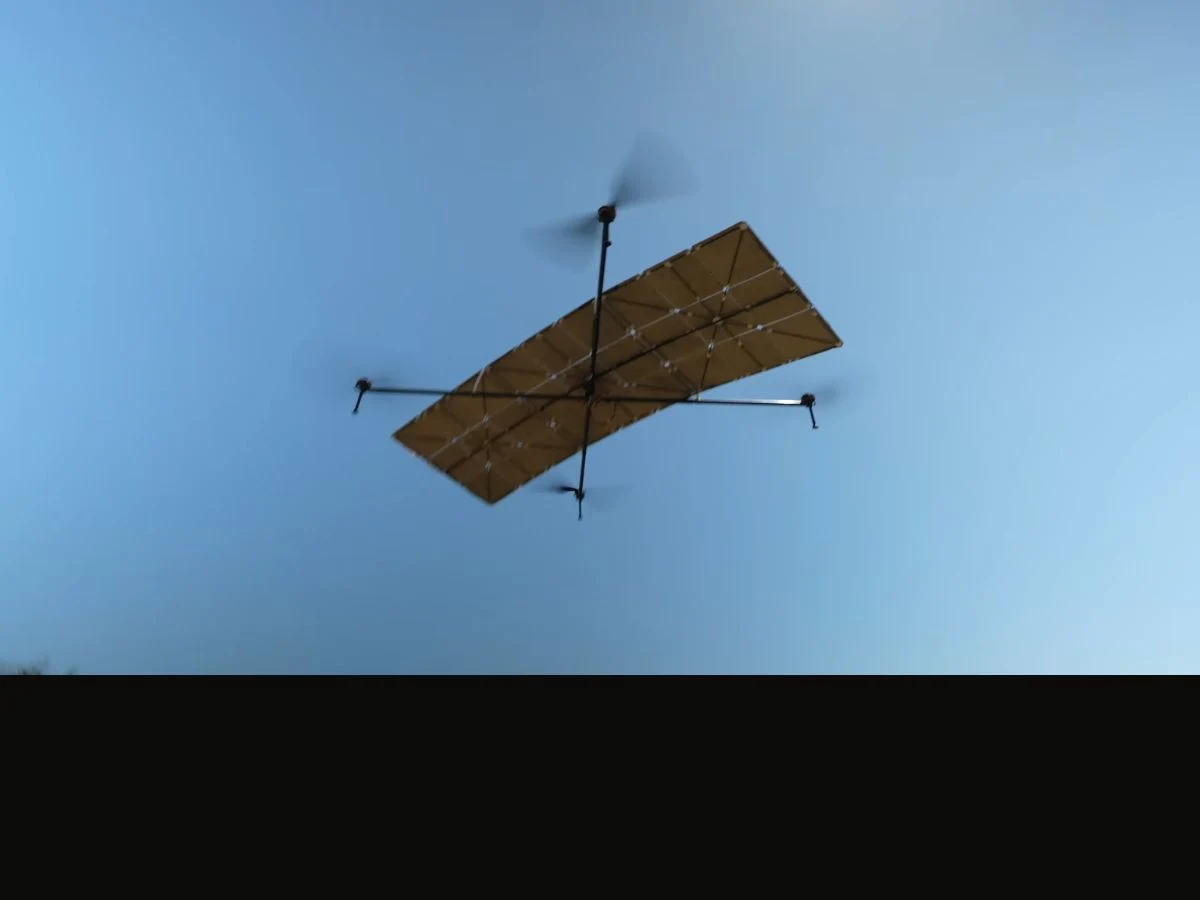
    DIY engineer and drone specialist Luke Maximo Bell has unveiled the second version of his solar-powered drone that doesn’t need a battery. However, for this new model, he had to include a battery in the design.

    Upgrades and Features

    In this update, Luke enhanced the drone as he announced in his last video, incorporating GPS, flight automation software, and additional solar panels. This drone has also succeeded in its aim to beat the existing Guinness World Record for the longest flight time of an RC quadcopter.

    Design Changes

    For this design, he started with a slat made from 32 small solar panels, which is 5 more than what he used before. He also shortened the arms to improve the drone’s agility. With the arms shorter, the panels were placed above the propellers instead of in the center. To create space for this, he elevated them higher.

    Flight Challenges

    During the first attempt, the drone successfully flew using only solar energy, but some issues came up. Since South Africa is known for its windy conditions, the drone struggled against the wind, leading to a higher power consumption than the panels could support. Additionally, having the solar panels positioned high above the main structure caused stability concerns.

    To address these challenges, Luke lowered the slat after running a simulation to ensure it would work fine. He also modified the frame that holds the panels to minimize wobbling and decided to decrease the panel count to 28. To solve the power drop issue, he included a battery that functioned as a UPS system, supplying extra power when the solar panels couldn’t meet the demands.

    Impressive Results

    The final version of the drone achieved an impressive flight time of 5 hours, 2 minutes, and 21.75 seconds before landing. For his next project, Luke aims to eliminate the battery through innovative engineering solutions.

  • Anbernic RG Vita & RG Vita Pro: Pricing and Availability Updates

    Anbernic RG Vita & RG Vita Pro: Pricing and Availability Updates

    Key Takeaways

    1. Pre-orders for the RG Vita and RG Vita Pro start on March 23, with early bird prices of $99.99 and $109.99 respectively, rising after 72 hours.
    2. The RG Vita features a 5.46-inch HD screen, Unisoc T618 chip, 3GB RAM, and 64GB storage, while the RG Vita Pro has a clearer 1920 x 1080 display, Rockchip RK3576 processor, and 4GB RAM.
    3. Both models come with a 5,000mAh battery, Wi-Fi, Bluetooth, and run Android 12, but the Pro model supports dual-boot with Android 14 and a 64-bit Linux OS.
    4. The RG Vita Pro includes additional features like an HDMI port, two microSD slots, and USB-C with DisplayPort support.
    5. Both handhelds will include an AI assistant and can emulate games from various retro consoles, with the Pro model offering better performance for PS Vita games.


    After waiting for weeks, Anbernic has finally revealed the pricing and availability details for their two new handheld consoles, the RG Vita and the RG Vita Pro. Like many makers of retro handhelds, they are offering an early bird discount, but the price will increase after the pre-order phase.

    Pre-order Information

    According to Retro Handhelds, pre-orders for the RG Vita and RG Vita Pro will start on March 23. The RG Vita is priced at $99.99, and customers can buy it at that price for the first 72 hours. After this initial period, the cost will rise to $139.99.

    Pricing for the Pro Model

    On the flip side, the RG Vita Pro will be available for $109.99 during the early bird offer. Similar to the regular version, this price won’t last long, as its final retail cost is reported to be $149.99. There are no details yet on when the shipping will commence for those who pre-order.

    Specifications and Features

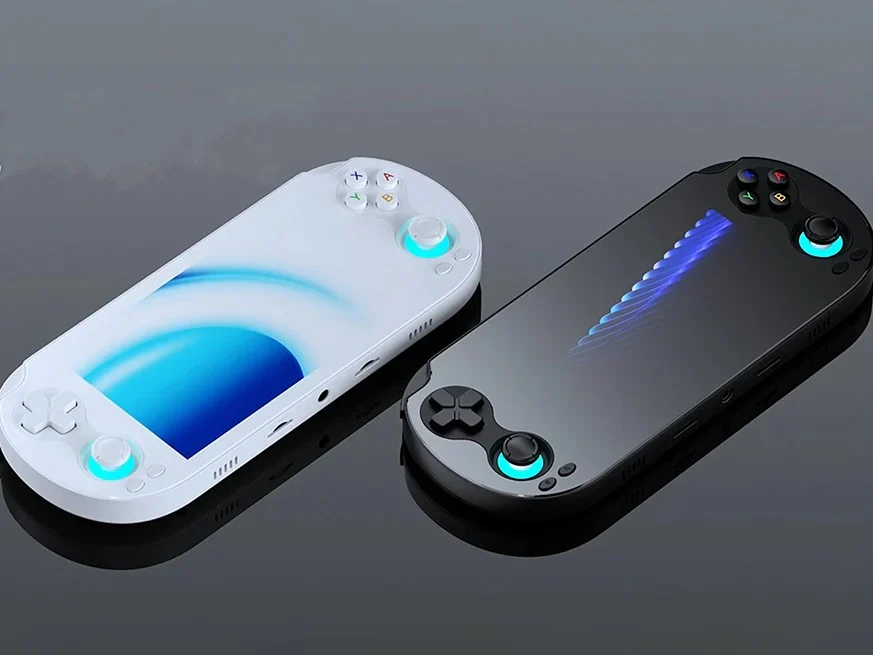
    The RG Vita features a 5.46-inch HD screen with a 60Hz refresh rate. It runs on a Unisoc T618 chip and comes with 3GB of RAM and 64GB of storage. There’s also a microSD card slot for additional memory. This handheld, which will be offered in Black and Gray, has a 5,000mAh battery, Wi-Fi 5, Bluetooth 5.0, and includes a headphone jack. It will come with Android 12 right out of the box.

    The RG Vita Pro, on the other hand, shares the same 5.46-inch 60Hz display, however, it boasts a clearer 1920 x 1080 resolution (FHD). It is powered by a Rockchip RK3576 processor, coupled with 4GB of RAM and 64GB of expandable storage. This model also features a 5,000mAh battery that supports 18W wired charging, and it includes Wi-Fi 8 and Bluetooth 5.2.

    Dual-boot Capabilities

    The RG Vita Pro supports dual-booting with Android 14 and a 64-bit Linux OS, allowing users to select which operating system they want to start with. Unlike the standard RG Vita, it includes an HDMI port, two microSD card slots, and a USB-C port with DisplayPort support. It will be available in Black and White color choices.

    Anbernic has also mentioned that both handhelds will feature an AI assistant, providing one-click guides, real-time translations, and text-to-image generation capabilities. They will be capable of emulating games from various retro consoles, including up to the PS2. However, the Pro model promises superior performance, especially when it comes to emulating PS Vita games.

    Given that there’s only a $10 price difference between the two models, the RG Vita Pro seems like a smart choice. But at that price point, it will compete fiercely with other handhelds such as the Mangmi Air X, which is available on Amazon for $159.99.

    Source:
    Link


  • Crimson Desert Reviews: Metacritic Average 78, Control Issues Persist

    Crimson Desert Reviews: Metacritic Average 78, Control Issues Persist

    Key Takeaways

    1. Mixed Reviews: Crimson Desert has a Metascore of 78 on Metacritic, highlighting both praise for its visuals and criticism for gameplay issues.
    2. Gameplay Challenges: Players experience varying difficulties with combat, facing both overly tough early bosses and less challenging later enemies.
    3. Control and Narrative Issues: Awkward controls hinder gameplay, and the scattered narrative makes it difficult for players to piece together the story.
    4. Inventory Management Problems: The lack of storage leads to frustration, as players may become overwhelmed with collected items.
    5. Technical Achievement: Despite its flaws, Crimson Desert is noted as a technical milestone in open-world gaming, setting a new benchmark for detail.


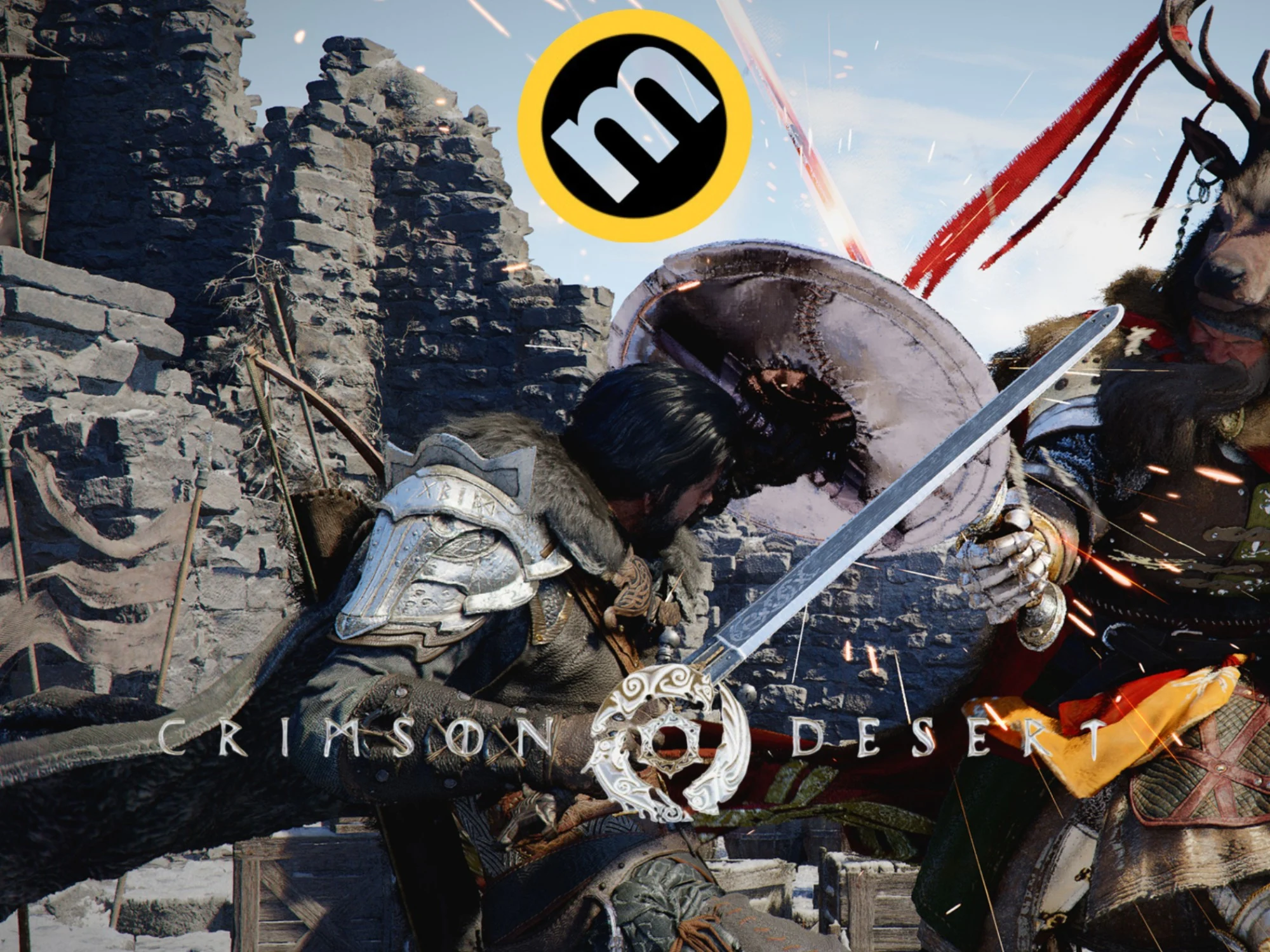
    While not always the main factor in sales, critics can still sway consumer choices. The review embargo for Crimson Desert has finally lifted, revealing a wave of assessments on Metacritic. After 82 reviews, the open-world game holds a Metascore of 78. Many reviewers commend its ambitious visuals and physics but point out issues that may frustrate numerous players.

    Reviews and Performance Insights

    The initial reviews of Crimson Desert mainly concentrate on the PC version, which generally does not highlight many performance issues. However, even with stable frame rates, certain elements of the Pearl Abyss game are creating some divide among players. If gamers had come across leaked feedback, they might not be shocked by the recurring criticisms.

    Mixed Reactions to Gameplay

    Even with a 7/10 rating on Metacritic, Insider Gaming captures the general sentiment, dubbing the game a “title of extremes.” The reviewer praises Pywel as a vast and intricately detailed universe worth exploring. However, the game is bogged down by an “excess of unfocused systems, a weak story, and combat that has trouble with consistency.”

    From other feedback, players might have varied experiences with Crimson Desert’s combat. Diverse enemies demand skill and patience to overcome. Conversely, some bosses early in the game could be overly challenging for an unprepared Kliff. As he advances, other foes may not provide the same level of difficulty.

    Control Issues and Narrative Quality

    A significant issue affecting the game, both during combat and exploration, is the awkward controls. Even after remapping, the intricate layout can take a considerable amount of time to get used to.

    Prior to the release of Crimson Desert, there were concerns regarding the narrative quality. There is a story present, but it is scattered across such expansive maps that piecing it together can be tough. Several reviews also mention uninspired characters that do little to enhance the storyline.

    Inventory Management Frustrations

    Unfortunately, handling inventory can lead to frustration and even rage-quitting. Without storage boxes, players may quickly find themselves with too many items collected in Pywel. It’s possible that Pearl Abyss could address some of these quality-of-life concerns through patches.

    Even if it doesn’t compete with GTA 6 for Game of the Year, many entries on Metacritic recognize Crimson Desert as a technical milestone. Open-world titles may now have a new benchmark to aspire to in terms of detail. Some players, undeterred by its flaws, will find themselves deeply engaged. As described by GamingTrend, it is a “once-in-a-generation action RPG that redefines the genre.”

    Source:
    Link


  • reMarkable’s Next E Ink Tablet: Details Leaked Ahead of Release

    reMarkable’s Next E Ink Tablet: Details Leaked Ahead of Release

    Key Takeaways

    1. reMarkable has released the Paper Pro Move, a portable e-reader with stylus support, marking its fourth product.
    2. A new device, the reMarkable Paper Pure, is set to launch in the second quarter of this year, targeting a broader market.
    3. The Paper Pure is designed to be more mass-market focused compared to the higher-end Paper Pro models.
    4. Specific technical details for the Paper Pure are not yet available.
    5. The Paper Pure will compete with devices like the Kindle Scribe and BOOX Go series, which are priced around $399.99 to $429.99.


    It’s been half a year since reMarkable unveiled the Paper Pro Move, a small e-reader that comes with stylus support, aimed at individuals who are often moving around. The Paper Pro Move marks reMarkable’s fourth product, joining its siblings: the Paper Pro, reMarkable 2, and reMarkable 1. Recently, a leak has surfaced indicating that a fifth device is in the pipeline.

    What’s Coming Next?

    A tweet from well-known leaker Evan Blass suggests that reMarkable is currently working on a new tablet set to launch later this year, particularly in the second quarter.

    This upcoming tablet will be named the reMarkable Paper Pure, and according to the leak, it is intended to be “more mass-market focused” than the Paper Pro or Paper Pro Move. This likely indicates that the new tablet will appeal to a broader audience compared to the higher-end Paper Pro with its color display and the smaller Paper Pro Move.

    Competing Devices

    At this point, there are no details regarding the technical specifications for the reMarkable Paper Pure. However, when it is released, it will compete with products like the Kindle Scribe Without Front Light, which retails for $429.99, and the recently launched BOOX Go 10.3 (Gen II) series. The BOOX line comes in a $429.99 Lumi version that includes a front light, along with a standard model priced at $399.99 that lacks this feature.

    Evan Blass on X

    Source:
    Link


  • Nintendo Switch 2 Boost Mode Issues with Pikmin and Major Games

    Nintendo Switch 2 Boost Mode Issues with Pikmin and Major Games

    Key Takeaways

    1. Boost Mode for Switch 2 enhances backward compatibility, allowing Switch 1 games to be played in Docked Mode at up to 1080p.
    2. Some popular titles, including all Pikmin games and several others, are not compatible with Boost Mode due to its requirements for full-motion or touch inputs.
    3. Certain games like Okami HD and Ring Fit Adventure have questionable support, as their motion control features remain unplayable in Boost Mode.
    4. The decision to not update all Switch 1 titles for full compatibility is seen as a reasonable trade-off given the costs involved.
    5. The new firmware update also has reported issues with expandable storage on the Switch 2.


    The new firmware update for the Nintendo Switch (available for both the Switch and Switch 2) has received a lot of good feedback due to the introduction of Boost Mode for the Switch 2. This feature allows games from the Switch 1 to be played in Docked Mode (up to 1080p) on the newer device. As a result, there has been a significant enhancement in the backward compatibility for the entire Switch library on Switch 2 consoles, even for games that used to need a specific Switch 2 patch or version to take advantage of these improvements. However, if your Switch 1 game has already been updated, it won’t be able to use Boost Mode because it is unnecessary and could even be seen as a downgrade.

    Issues with Boost Mode

    Despite the positive aspects, Boost Mode has its flaws, and some issues could have been avoided. For instance, none of the Pikmin games from the original Pikmin to Pikmin 4 are compatible with the Boost Mode of the Switch 2, even though they were well-suited for handheld gameplay on the original console. The reason is that Boost Mode acts as an override, making the original Switch 1 game operate in a simulated Docked mode, which may require full-motion or touch inputs that aren’t supported when the system is Docked.

    Unsupported Games

    This also affects several other popular titles, including the Super Mario 3D All Stars collection, Super Mario Maker 2, The Legend of Zelda: Skyward Sword HD, The World Ends With You: Final Remix, and both Pokémon Let’s Go games, which are not supported. A few games have questionable support, as Okami HD, Ring Fit Adventure, and Rayman Legends: Definitive Edition can still be played. However, modes that depend on touch or detached Joy-Con motion controls are still unplayable in Switch 2’s Boost Mode, even if other parts of the game work fine.

    It’s a bit disappointing, but it’s a reasonable trade-off considering the costs involved in manually updating all of the Switch 1 titles for proper compatibility with the new Switch 2 handheld. For most games, the upgrades are game-changing and a great way to utilize the Switch 2’s superior display. Sadly, this isn’t the only issue with the latest Switch 2 firmware update, as problems with expandable storage have also been widely noted. More details on that are coming up.

    Source:
    Link


  • DLSS 5 Transforms Pokémon and Phoenix Wright into Hyperrealistic AI

    DLSS 5 Transforms Pokémon and Phoenix Wright into Hyperrealistic AI

    Key Takeaways

    1. DLSS 5 aims to enhance gaming performance and create more lifelike graphics using artificial intelligence, but may lead to games looking unrecognizable.
    2. The online community has reacted with memes, including a DLSS 5 Anything image generator that allows users to create AI-enhanced memes from any photo.
    3. Retro games often look more like AI remakes, with noticeable quirks, such as missing walls in Pokémon and character designs that humorously diverge from originals.
    4. Indie games may lose unique character customization features when enhanced by AI, leading to unexpected alterations in character appearances.
    5. While classic games can be rendered more realistically with DLSS 5, they may lose their distinctive charm in the transformation process.


    Unlike DLSS 4, Nvidia’s DLSS 5 is expected to not just enhance gaming performance but also “transform” graphics by making lighting appear much more lifelike with the help of artificial intelligence. This sounds great, but it also means that some games might look unrecognizable, leading to criticisms that the results are just AI mess.

    Reactions and Memes

    The online community has already started to share a plethora of memes following the DLSS 5 announcement. A new image generator called DLSS 5 Anything now allows users to create memes from any photo. It’s worth mentioning that the tech behind this generator is unrelated to DLSS 5, but it’s still fun to see how your favorite games might appear if enhanced by an AI.

    Retro Games and AI Remakes

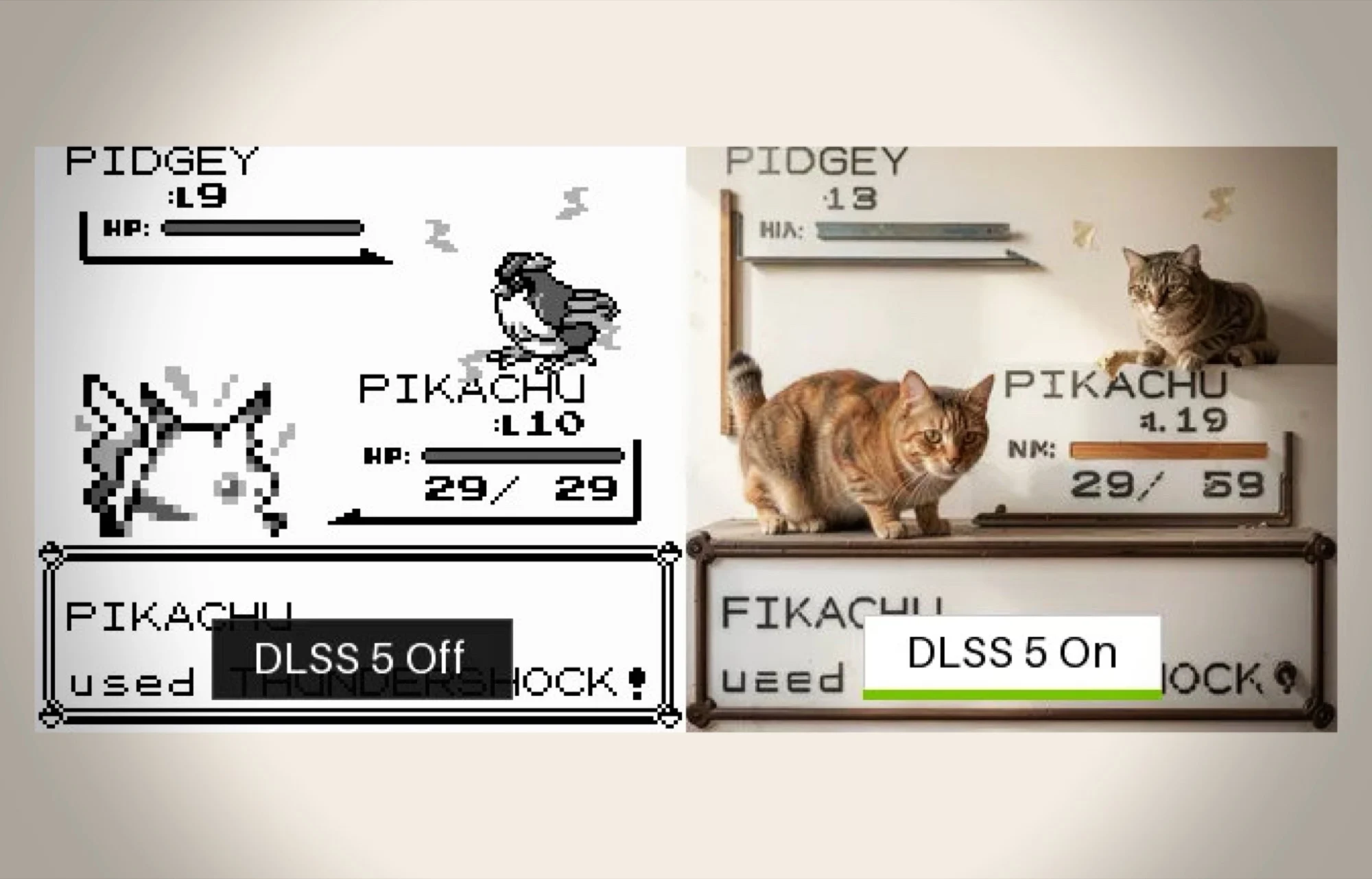
    The more lifelike the original image, the less noticeable the differences in the output from DLSS 5 Anything. However, when it comes to retro games, the results often look just as you would expect an AI remake to appear. For instance, in the original Pokémon games, the AI humorously points out that Nintendo overlooked adding walls to rooms, and both Pidgey and Pikachu seem more like cats in costumes.

    Indie Games and Character Models

    The indie favorite Mewgenics showcases cats of various colors and shapes, but the adorable customization of character models through equipment is lost on the AI. Even the most skilled defense lawyer in gaming, Phoenix Wright, ends up with a surprisingly broad jawline thanks to AI, while his distinctive spiky hair doesn’t quite come off as realistic.

    In Animal Crossing, as any smart AI would realize, it’s not moneybags that sprout from trees, but potatoes.

    Classics Transformed

    Timeless classics like Super Mario World, FTL: Faster Than Light, or The Legend of Zelda: A Link Between Worlds can also be rendered in a more realistic way by the AI, but they lose much of their unique charm in the process.

    Source:
    Link


  • Luna Glass Provides Night Vision Solutions for the Visually Impaired

    Luna Glass Provides Night Vision Solutions for the Visually Impaired

    Key Takeaways

    1. The waitlist for Luna Glass AR glasses is now open, with 500 spots available for the first batch shipping in Q1 2026.
    2. The glasses enhance brightness and contrast of images in real-time, helping visually impaired individuals see better in dark environments.
    3. Users with as little as 10% vision may experience improved night visibility, allowing them to navigate safely outdoors.
    4. The battery life is between 1.0 to 1.5 hours, with USB-C charging for extended use.
    5. The glasses utilize LentinAR’s PinTILT optical module, similar to that in other AR glasses.


    The waitlist for the Luna Glass AR glasses is now opened, offering 500 spots for the next batch that is set to ship in the first quarter of 2026. These glasses are designed to help visually impaired people have a better view of their surroundings during nighttime and in dark settings, enabling them to see and move around safely.

    Enhanced Vision Technology

    The Luna Glass improves brightness and contrast of images that its built-in camera captures in real-time. By utilizing standard augmented reality technology, it projects these enhanced images directly in front of the wearer’s eyes via half mirrors. This setup allows individuals with limited night vision, due to conditions like glaucoma or macular degeneration, to perceive both the actual environment and the improved image at the same time.

    Range of Improvement

    While the degree of improvement at night can differ based on each person’s specific condition, the CEO mentioned that these glasses may assist those who have as little as 10% of their vision left to see better after dark. This innovation extends the time they can safely venture outside alone and helps them notice details they typically miss. The Luna Glass provides a battery life of 1.0 to 1.5 hours and can be charged using a USB-C power bank for longer use.

    Optical Module Insight

    The glasses seemingly incorporate LentinAR’s PinTILT optical module, which is also featured in the Dynabook and NTT AR glasses.

    Source:
    Link


  • Asus Launches 13-Inch Laptop with Up to 96GB VRAM Worldwide

    Asus Launches 13-Inch Laptop with Up to 96GB VRAM Worldwide

    Key Takeaways

    1. Asus introduced the TUF Gaming A14 FA401EA, the first US gaming laptop powered by the Ryzen AI Max+ 392, but limits RAM to 32 GB in the US.
    2. A new Strix Halo laptop, the updated ProArt PX13, features the Ryzen AI Max+ 395 processor and can be customized with up to 128 GB of RAM.
    3. The ProArt PX13 can allocate up to 48 GB of VRAM with 64 GB of RAM and 96 GB with 128 GB, making it suitable for demanding tasks.
    4. Pricing for the ProArt PX13 models varies across markets, with the 64 GB version costing $2,799 in the US and £2,499 in the UK.
    5. The ProArt PX13 has a 60 Hz OLED display and operates at a maximum of 115 W, despite its high-end specifications.


    Earlier this month, Asus introduced the first gaming laptop in the US powered by the Ryzen AI Max+ 392. This laptop has been tested by various YouTubers. However, in the US, Asus limits the TUF Gaming A14 FA401EA to only 32 GB of RAM, while other regions have access to a 64 GB RAM version.

    New Strix Halo Laptop

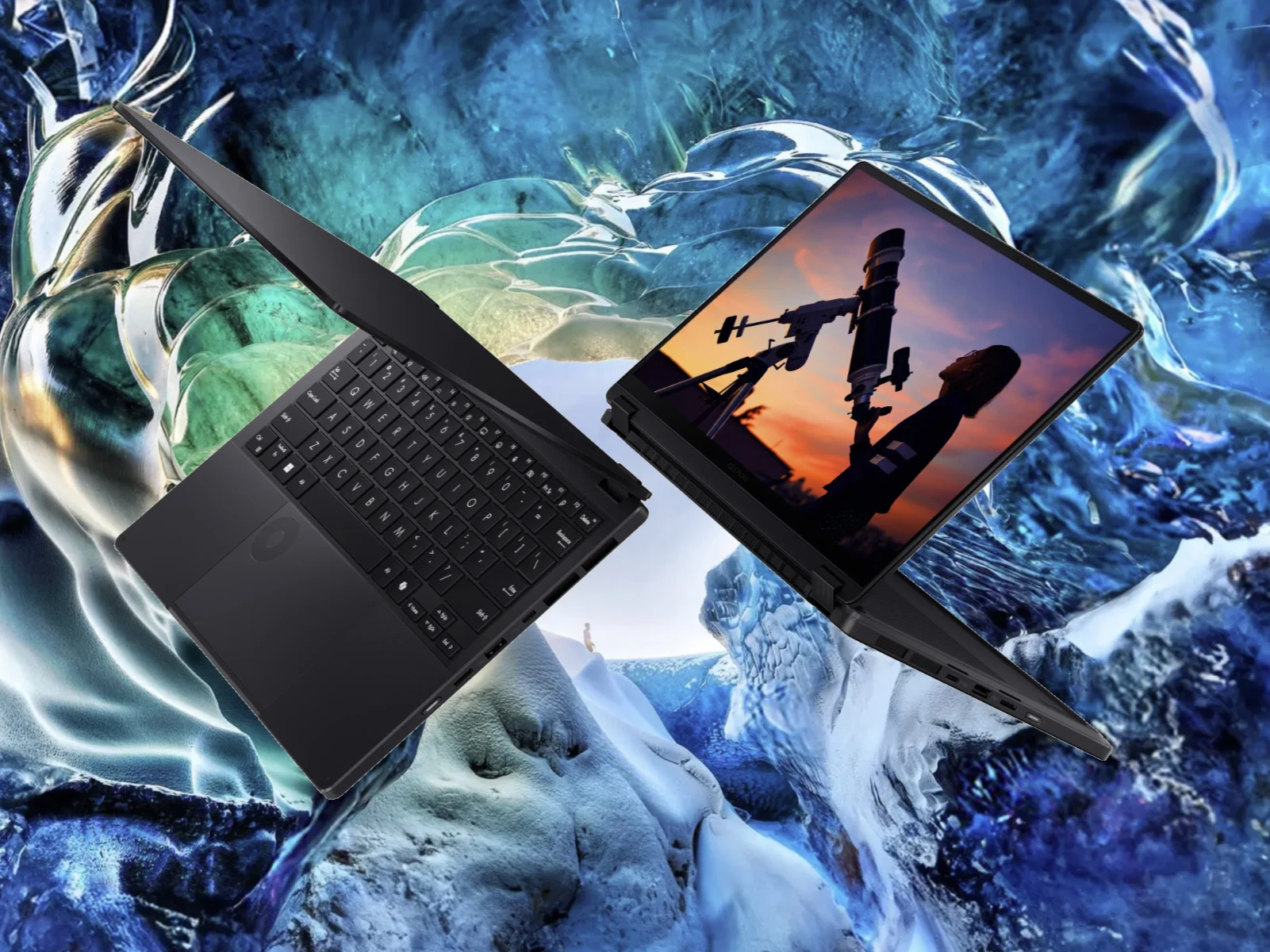
    Additionally, Asus is now offering another laptop based on the Strix Halo in the US. The company has launched an updated version of the ProArt PX13, which was previously equipped with a Ryzen AI 9 HX 370 processor (currently priced at $1,869 on Amazon). This new model, also available in Europe, features AMD’s more robust Ryzen AI Max+ 395 variant and the same Radeon 8060S iGPU found in the TUF Gaming A14 FA401EA. A notable advantage is that the 13.3-inch laptop can be customized with either 64 GB or 128 GB of RAM.

    VRAM Capabilities

    As a result, the ProArt PX13 can allocate up to 48 GB of VRAM when it has 64 GB of RAM. In contrast, the 128 GB RAM versions can reserve 96 GB of VRAM while still keeping 32 GB of RAM available. It’s no surprise that these configurations are pricey. For example, the version with 64 GB of RAM costs $2,799 with a 1 TB SSD, while the model with 128 GB RAM is priced at $2,999.

    Pricing in Different Markets

    Moreover, these models are priced at £2,499 and £2,999 in the UK. In comparison, Asus offers a 32 GB version for €2,799 in the Eurozone. Unfortunately, the new ProArt PX13 is restricted to a 60 Hz OLED display, although it can operate at a maximum of 115 W. For more detailed insights, check out our recent review of the HN7306EA version of the ProArt PX13.

    Source:
    Link


  • Take-Two CEO Calls AI Creation of AAA Games ‘Laughable’

    Take-Two CEO Calls AI Creation of AAA Games ‘Laughable’

    Key Takeaways

    1. Strauss Zelnick believes it’s “ridiculous” to think AI can create engaging AAA games with just one command, emphasizing the unique value of blockbuster franchises like Grand Theft Auto.

    2. Google’s Project Genie is currently a research project for creating user-generated environments, not full games, and has sparked interest in the gaming industry.

    3. Zelnick compares AI-generated music to the gaming sector, noting that while AI can produce songs, they often lack lasting appeal and emotional connection.

    4. The market reacted negatively to Project Genie’s announcement, causing significant stock drops for gaming companies, including Take-Two and Unity, which surprised Zelnick.

    5. Zelnick views AI tools as beneficial for game developers, helping them streamline processes and focus on creativity, while noting that many effective solutions already exist for game development.


    Take-Two Interactive’s CEO, Strauss Zelnick, finds it “ridiculous” to think that AI technologies like Google’s Project Genie can allow developers to make fun and captivating AAA games with just a single command. He firmly believes that AI tools cannot compare to blockbuster franchises such as the Grand Theft Auto series, “not even a tiny bit.”

    Insights on Project Genie

    Zelnick recently had a chat with The Game Business, where he talked about the increasing talk around Google’s experimental AI project. This project lets users craft user-generated environments in real-time using DeepMind’s Genie 3 world model. For the time being, it is still a research initiative aimed at building interactive, explorable worlds rather than full-fledged games. Yet, it has already raised eyebrows in the gaming sector.

    He stated, “The idea that somehow new tools would let someone click a button and create a hit that could be enjoyed by millions globally is laughable. That’s never happened in entertainment.”

    Comparison to AI-Generated Music

    Zelnick drew a contrast with the current landscape of AI-generated music. Tools that rely on prompts allow users to make new songs, but these tracks often lack longevity and appeal.

    He went on to say, “At this moment, there are systems where you can give a prompt and receive a professionally made song back. It sounds like a song, but I challenge you to listen to it more than once. It’s nice for a birthday greeting to your loved one, but that’s pretty much it.”

    Market Reactions

    When Google introduced Project Genie, shares of various gaming companies suffered, with Take-Two dropping by 8%, Roblox by 13%, and Unity experiencing a significant decline of over 24% shortly after.

    Zelnick was taken aback by the market’s response, commenting, “I was somewhat shocked by how the market reacted, as it seemed to view it as a threat to our work, when it’s clear that creation tools are actually advantageous for our industry.”

    He sees AI tools as valuable assets for developers and creators, speeding up their processes and letting them focus more on the imaginative parts of game creation.

    Nonetheless, he emphasized that there are already plenty of effective technical solutions available for game development, leading to thousands of releases each year, as both indie developers and ambitious AAA studios continue to thrive in the gaming world.

    Source:
    Link